
Picture this: it’s a Wednesday evening, and I’m knee-deep in that midweek slump, feeling like a bit of a sweet escape. The kind where comfort meets simplicity. I glanced at the calendar and saw it was nearing August 10th—National S’mores Day. Immediately, a light bulb moment struck! Why not combine the nostalgia of campfire s’mores with a fruity twist to lift my spirits? Enter: S’mores-n-berry Bars. They’re as indulgent as they sound, with a crispy graham cracker base, rich brownie layer, and gooey marshmallow topping that’s lightly kissed by the oven’s broiler for that perfect toasted finish. It’s the kind of treat that’s easy to whip up, yet impressive enough to satisfy any sweet tooth. Jump to Recipe
What You’ll Need
You probably have most of these ingredients lounging in your pantry already. Here’s what you’ll need:
- 1 box of cooked brownie mix
- 1 egg
- 1 cup graham cracker crumbs
- 2 whole graham crackers
- 1 cup mini marshmallows
- 1/2 cup fresh dried raspberries
- 1/4 cup sugar
- 1/2 cup unsalted butter, melted
- 1/4 cup vegetable oil
- 1/4 cup water
How to Make S’mores-n-berry Bars for National S’mores Day – August 10
- Preheat your oven to 325°F. Line an 8-inch-square baking pan with foil, making sure the foil hangs over the edges for easy removal later. Give it a spritz of nonstick cooking spray to make doubly sure nothing sticks.
- In a medium-sized bowl, combine the melted butter, graham cracker crumbs, and sugar until it resembles wet sand. Press this mixture evenly into the bottom of your prepared pan. Bake for about 20 minutes, or until it looks golden and smells like heaven. Set aside.
- Crank up your oven to 350°F. Meanwhile, grab another bowl and mix together the brownie mix, vegetable oil, water, and egg until smooth. Gently fold in the fresh dried raspberries. Pour this luscious batter over the cooled graham cracker crust.
- Bake the brownie layer for about 25 minutes, or until a toothpick inserted into the center comes out clean. This is your cue to remove it from the oven.
- Break up the two graham crackers into small pieces and scatter them artfully atop the brownie layer.
- Scatter the mini marshmallows over the graham crackers. Return the pan to the oven, this time setting it to broil. Watch carefully, as the marshmallows can quickly go from toasty to burnt in a flash! Once they’re golden and bubbly, pull the pan out.
- Allow the bars to cool completely in the pan. Lift them out using the overhanging foil and cut into squares. Enjoy the ooey-gooey goodness!
Cook’s Notes
These bars are as versatile as they are delicious. The graham cracker crust adds an incredible texture contrast to the fudgy brownie and gooey marshmallow topping. Here are a few tips to ensure they turn out perfect:
- If you prefer a denser brownie, add an extra egg to the brownie mixture.
- Store any leftovers in an airtight container at room temperature for up to 3 days. They’ll stay delicious, though the marshmallows might lose a bit of their chew.
- To make these ahead, you can prepare the graham cracker crust and brownie layer a day in advance. Add the graham crackers and marshmallows just before serving for the best texture.
Make It Your Own
- Nutty Twist: Swap out the raspberries for chopped toasted almonds or pecans for a crunchy surprise.
- Berry Medley: Use a mix of freeze-dried strawberries and blueberries instead of just raspberries for a more fruity experience.
- Chocolate Lovers: Add chocolate chips to the brownie mix for extra gooeyness. You can never have too much chocolate, right?
- Salted Caramel: Drizzle caramel sauce over the marshmallows before broiling. A sprinkle of sea salt can elevate these bars to gourmet status.
If you try this, I’d love to hear how it turns out — drop a comment or tag me! S’mores day or not, these bars are a crowd-pleaser every time.
Related update: S’mores-n-berry Bars for National S’mores Day – August 10
Related update: Cherry-Berry Pie With Agave Nectar All-Butter Crust

TL;DR
- High-end credit card perks don’t come free: U.S. merchants baked roughly $198.25 billion of 2025 card fees into prices, shifting costs onto cash and debit users while rewarding premium cardholders [3][4]. (merchantspaymentscoalition.com)
- A Harvard Business School working paper estimates an implicit transfer of about $30 billion a year from cash/debit users—often lower-income households—to rewards card users [2].
- The “easy fix” of cutting interchange looks oversold: after the 2011 Durbin cap on debit, about 77% of merchants did not lower prices, hinting new reforms could enrich large retailers while shrinking consumer rewards [7].
What the source said
NBC News profiled Tiger Fuel in Ruckersville, Virginia, and other small merchants who say rising swipe fees from Visa and Mastercard networks and issuing banks now rival or exceed rent and utilities [1]. Premium rewards cards often carry fees above 2%, and total U.S. merchant card fees hit about $198 billion in 2025, per the Nilson Report and industry tallies [3][4]. The National Retail Federation claims these fees add more than $1,200 a year to the average household’s costs [5]. Harvard researchers estimate roughly $30 billion flows annually from cash/debit users to rewards cardholders, while the Electronic Payments Coalition argues that cash handling also carries costs like theft risk and labor [2][13].
Why it matters
This isn’t “points people vs. Luddites.” It’s a regressive cross-subsidy embedded in 2025 retail pricing: cash and debit users—disproportionately households under $25,000 in income—fund airport lounges, 5x dining multipliers, and companion fares via higher shelf prices, while rewards users get some of it back as points [2][6]. Harvard’s $30 billion estimate and the Federal Reserve’s Diary of Consumer Payment Choice both show who pays and who benefits when merchants recoup acceptance costs through uniform pricing [2][6].
Merchants face a blunt P&L trade-off in 2026: accept card convenience and bigger baskets but pay rising tolls, or push cash/ACH and risk lost sales and chargebacks. Networks (Visa, Mastercard), big issuers (JPMorgan Chase, Capital One, Citi), and loyalty partners (United, Delta, American) live on interchange economics that fund rewards; banks alone collected about $66 billion of interchange revenue in 2025, according to the St. Louis Fed [10]. Policy tinkering can redirect billions across these pipes, but pass-through depends on local competition and merchant power, not promises in a press release.
Original analysis
High-end credit card perks and the cash shopper subsidy
-
Back-of-envelope math, shown:
- Total U.S. merchant card fees in 2025: $198.25 billion (credit + debit) [3][4]. Total U.S. card purchase volume in 2025: $12.498 trillion [3]. Average all-in fee load ≈ 198.25 / 12,498 ≈ 1.59% on carded spend, before acquirer markups and MCC differences [3][4]. For low-margin formats like grocery, that burden explains why fuel stations and c-stores complained first.
- What would a 10-basis-point (0.10%) cut do at the register? On a $100 basket, it saves $0.10; on $1,000,000 in monthly credit sales, it saves $1,000. The proposed Visa/Mastercard settlement’s five-year, 10 bps reduction would be meaningful for thin-margin operators, but small in a supermarket aisle price tag context [8].
-
A contrarian read:
- Consensus: “Rewards are a regressive tax; cap interchange and prices will fall.”
- Pushback: After the 2011 Durbin cap on debit, Richmond Fed surveys found about 77% of merchants did not cut prices; roughly 1–2% lowered them, and others raised them—weak pass-through from lower acceptance costs to shelf prices [7]. If credit caps replay this script, consumers could lose rewards value while prices mostly stay put.
-
A 2×2 to predict pass-through from fee cuts:
- Low ticket, high competition (e.g., QSRs like McDonald’s; MCC 5814): Highest odds of pass-through via value menus and combo pricing to defend share.
- Low ticket, low competition (e.g., captive venues at airports; limited-choice c-stores on highways): Low pass-through; fee relief pads margins or offsets rent.
- High ticket, high competition (e.g., electronics retailers; Home Depot vs. Lowe’s): Moderate pass-through in promos, rebates, or free financing offers.
- High ticket, low competition (e.g., airline direct sales; Delta/American/United): Minimal pass-through; savings more likely to fund loyalty tweaks or fees.
-
A named-stakeholder breakdown:
- Visa and Mastercard: A time-limited 10 bps haircut is manageable; the bigger risk is the Credit Card Competition Act forcing routing choice that could erode network dominance [8][9].
- Large issuers (JPMorgan Chase, Capital One, Citi): Expect incremental rewards repricing—fewer eye-popping multipliers, more annual-fee creep, and tighter lounge/partner access if interchange compresses.
- Small merchants (gas, c-stores, restaurants): Savings from a 10 bps cut are real but thin; dual pricing, PINless debit routing, and steering will likely drive more net benefit in 2026–2027 than headline settlements [4].
- Low-income cash users: The Harvard-estimated $30 billion transfer exists, but history suggests caps won’t automatically flow back as lower prices; cash-acceptance mandates and transparent dual pricing are more targeted [2][11].
What others are missing
The specific angle missing is the break-even basket size and fraud-loss variance by merchant category code: compare fully loaded cash costs (till labor, shrink, armored car, bank fees) against card acceptance (interchange, assessments, chargeback loss) for MCC 5411 (grocery), 5541 (service stations), and 5814 (fast-food/QSR). Industry groups highlight one side—NRF emphasizes card tolls; EPC stresses cash’s hidden costs—yet policymakers rarely see an apples-to-apples, third-party audit by basket size and format [5][13]. A 2026 benchmark that publishes per-transaction cost curves and pass-through elasticities by format would show whether “cash isn’t free” or “cards tax every item” dominates in real stores, not just in D.C. hearing rooms.
What to watch next
- By Q4 2026, Judge Margo Brodie either approves the revised Visa/Mastercard settlement or remands it; my call: not approved in 2026, given retailer opposition and limited structural change [12].
- By June 2027, at least three additional states follow New York’s March 2026 statute and enact cash-acceptance mandates for most brick-and-mortar retailers, citing equity for unbanked consumers [11].
- By 2027 year-end, at least one top-5 U.S. card issuer announces a meaningful rewards devaluation (earn rates or redemption), attributing it to program costs and regulatory pressure around routing and fees [9].
My take
Yes, premium credit card perks are hurting cash shoppers; the ~$30 billion annual transfer is real and persistent in 2024–2026 data [2]. But if Congress or the courts shave interchange without enforcing shelf-level transparency, consumers will likely lose rewards while prices stay sticky. The practical fix is local and testable in 2026: universal cash acceptance, visible dual pricing, and competitive routing that merchants can actually use [11]. If Washington wants broad relief, force price clarity and rivalry—not just a smaller toll collected in the dark [4].
Sources
-
NBC News — How shoppers who pay in cash are subsidizing Americans’ credit card reward points (https://www.nbcnews.com/business/consumer/credit-card-perks-hurt-shoppers-pay-cash-debit-rcna346905) — Reported merchant pain points, cited network/issuer roles, and surfaced household impact claims.
-
Harvard Business School — Interchange Fees and Cross-Subsidies in Consumer Payments (Working Paper 26-069) (https://www.hbs.edu/ris/Publication%20Files/26-069_6c4ebfc5-af17-4744-b8a5-3f2ca740aea7.pdf) — Estimated ~$30B annual transfers from cash/debit users to credit users, with incidence by income.
-
The Nilson Report — Merchant Processing Fees in the United States — 2025 (https://nilsonreport.com/articles/merchant-processing-fees-in-the-united-states-2025/) — Provided 2025 U.S. purchase volume ($12.498T) and context for fee-load calculations.
-
Merchants Payments Coalition — Credit and Debit Card ‘Swipe’ Fees Reach Record $198.25 Billion (https://merchantspaymentscoalition.com/credit-and-debit-card-swipe-fees-reach-record-19825-billion-president-and-congress-call-action) — Cited Nilson’s 2025 fee total and summarized merchant-side advocacy.
-
National Retail Federation — Swipe Fees (https://nrf.com/advocacy/policy-issues/swipe-fees) — Claimed swipe fees are a top cost driver and add “more than $1,200 a year” to average household costs.
-
Federal Reserve Financial Services — 2025 Findings from the Diary of Consumer Payment Choice (https://www.frbservices.org/binaries/content/assets/crsocms/news/research/2025-diary-of-consumer-payment-choice.pdf) — Documented higher cash use among low-income households and transaction-size patterns.
-
Federal Reserve Bank of Richmond — Did the Durbin Amendment Reduce Merchant Costs? Evidence from Survey Results (https://www.richmondfed.org/publications/research/economic_brief/2015/eb_15-12) — Found limited post-cap price reductions, informing pass-through expectations.
-
U.S. SEC — Mastercard filing summarizing proposed settlement terms (10 bps cut; caps) (https://www.sec.gov/Archives/edgar/data/0001141391/000114139125000197/exb991-11102025.htm) — Documented details of the November 2025 revised settlement structure.
-
Congress.gov — Credit Card Competition Act bill page (https://www.congress.gov/bill/119th-congress/senate-bill/3623/all-actions) — Tracked routing-choice legislation that could change network economics.
-
Federal Reserve Bank of St. Louis — Credit and Debit Card Fees Collected by U.S. Banks Rose in 2025 (https://www.stlouisfed.org/on-the-economy/2026/apr/banking-analytics-credit-debit-card-fees-collected-banks-rose-2025) — Estimated banks’ 2025 interchange revenue (~$66B).
-
New York Attorney General — Statewide Cash Acceptance Law (Press Release, March 2026) (https://ag.ny.gov/press-release/2026/attorney-general-james-notifies-new-yorkers-about-new-state-law-requiring-stores) — Confirmed a cash-acceptance mandate trend shaping “cash equity” policy.
-
American Bar Association — In re Payment Card Interchange Fee and Merchant Discount Antitrust Litigation (newsletter) (https://www.americanbar.org/groups/antitrust_law/resources/newsletters/in-re-payment-card-interchange-fee-merchant-discount-antitrust-litigation/) — Summarized settlement posture before Judge Margo Brodie.
-
Electronic Payments Coalition — Cash Costs More Than Credit Cards for Small Businesses (https://electronicpaymentscoalition.org/resources/cash-costs-more-than-credit-cards-for-small-businesses/) — Presented the industry view on cash-handling costs versus card acceptance.
Related update: We recently published an article that expands on this topic: read the latest post.
Related update: We recently published an article that expands on this topic: read the latest post.
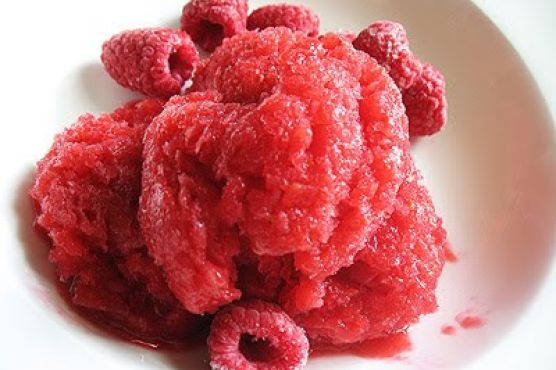
Picture this: it’s a sweltering summer afternoon, and you’re yearning for something refreshing yet a little out of the ordinary. You’ve already got one foot in the kitchen, rifling through the freezer, when you stumble upon a forgotten stash of frozen raspberries. Suddenly, inspiration hits you like a cool breeze. Why not whip up a sorbet that’s as tart as your mood and just a tad mischievous, with a spicy kick to keep things interesting? This Tart Raspberry Sorbet with a Hint of Heat is exactly what you need. It’s the kind of recipe that doesn’t just cool you down but also gives your taste buds a little wake-up call. Plus, it’s ridiculously easy to make—perfect for those moments when you want to impress but can’t be bothered with a culinary masterpiece.
Jump to Recipe
What You’ll Need
You might already have most of these tucked away in your pantry and freezer, which makes this sorbet a breeze to throw together on a whim.
- Frozen raspberries – The star of the show, bringing their tart and vibrant flavor.
- Raspberry jam – For an extra burst of raspberry goodness and a bit of sweetness.
- White grape juice – To lend a subtle sweetness and some liquid gold.
- Cardamom powder – Adds an exotic warmth that pairs beautifully with the raspberries.
- Green chili – Just a little, for that unexpected kick.
- Lime juice – To enhance the tartness and add a citrusy zing.
How to Make Tart Raspberry Sorbet with a Hint of Heat
- In your food processor, combine the frozen raspberries, raspberry jam, and white grape juice. Add a pinch of cardamom powder, a small piece of green chili, and a generous squeeze of lime juice.
- Process the mixture until it’s smooth and vibrant. Listen for the change in sound as the chunks of raspberry become a luscious puree.
- Push the mixture through a fine strainer to remove most of the seeds. This part might seem tedious, but trust me, your teeth will thank you later.
- Transfer the silky mixture to a container, cover, and pop it in the freezer. Every couple of hours, check on it and give it a good stir. This keeps the texture smooth and prevents large ice crystals from forming.
- As the sorbet nears the end of its freezing journey, consider shaping it into enticing balls using an ice cream scoop or a large spoon. It’s not just about looks—it helps the sorbet melt evenly when served.
- Once frozen, let your sorbet thaw for a few minutes before serving. This little pause is crucial, especially if your freezer tends to be overzealous.
Cook’s Notes
Let’s talk about some nuances that can take this sorbet from good to unforgettable. First off, if you’re worried about the heat, start by adding just a sliver of green chili. You can always add more, but you can’t take it out. As for storage, this sorbet keeps well in the freezer for up to two weeks, though it’s best enjoyed within the first few days when the flavors are at their peak.
If you’re planning ahead, make the sorbet the day before you want to serve it. This allows it to firm up perfectly. If you end up with leftovers (unlikely, but it happens), let them soften a bit before diving back in.
Make It Your Own
This sorbet is a canvas for your creativity. Here are a few ideas to make it uniquely yours:
- Swap the raspberries for frozen strawberries for a sweeter, less tart version.
- If you’re a mint fan, add a handful of fresh mint leaves to the food processor for a refreshing twist.
- Looking for an adult-only version? Replace the white grape juice with a splash of Prosecco or a sweet white wine.
- For a nutty contrast, sprinkle a handful of toasted pistachios over your sorbet before serving.
If you try this, I’d love to hear how it turns out—drop a comment or tag me! Your adventures in sorbet-land might just inspire someone else to give it a whirl. Enjoy your chill time!
Related update: Tart Raspberry Sorbet with a Hint of Heat
Related update: S’mores-n-berry Bars for National S’mores Day – August 10
Related update: Pumpkin gnocchi with basil and Parmesan

Picture this: a cozy Sunday afternoon, the type where time seems to slow down and a light drizzle taps rhythmically against your kitchen window. It’s the perfect setting for a baking adventure, and today’s mission is rugelach. This delightful pastry is more than just a treat; it’s a buttery, flaky, nutty explosion of flavor that’s surprisingly easy to pull off. Even if you’re juggling kids, pets, or a mountain of laundry, this recipe fits snugly into your schedule and promises to fill your home with warmth and the irresistible scent of cinnamon. Let’s dive in, shall we?
Jump to Recipe
What You’ll Need
The beauty of this rugelach recipe lies in its simplicity. Chances are, you have most of these ingredients lounging in your pantry or fridge already. Here’s what you’ll need:
- Salted butter – it gives the dough a rich flavor and perfect flakiness.
- Cream cheese – make sure to use a block, not the spreadable kind.
- Salt – just a pinch to balance the sweetness.
- Plain flour – for that tender, delicate texture.
- Egg yolks – they add richness and help bind the dough.
- Vanilla extract – a splash for warmth.
- Caster sugar – both in the dough and as a sweet coating at the end.
- Fruit preserves – I love orange marmalade, but feel free to experiment.
- Walnuts – adds crunch and a lovely nutty flavor.
- Ground cinnamon – because cinnamon and sugar are best friends.
How to Make Rugelach
- Start by leaving your butter and cream cheese out for a couple of hours. They should be soft and spreadable, which is key to working them into a smooth dough.
- Preheat your oven to 180°C (that’s about 356°F for my stateside friends).
- In a large mixing bowl, beat the softened butter and cream cheese together on medium speed until they’re light and fluffy. This should take about 2-3 minutes.
- Add in the egg yolks, vanilla extract, caster sugar, and a pinch of salt. Gradually mix in the flour until everything comes together into a smooth dough.
- While that’s mixing, chop up your walnuts into fine pieces and set them aside. They’ll add the perfect crunch to your rugelach.
- Once your dough is ready, dust your work surface with flour and knead the dough gently into a large block. If your dough feels a bit sticky, sprinkle on some more flour.
- Divide the dough into four equal pieces, keeping the ones you’re not currently using under a damp cloth so they stay moist.
- Roll one piece into a ball, then use a floured rolling pin to flatten it into a circle about 2 to 3mm thick.
- Cut the rolled dough into eight triangles. Like mini pizza slices, but so much better!
- Time to get fruity! Place a teaspoon of your fruit preserves at the wide end of each triangle, spreading it lightly.
- Sprinkle some chopped walnuts over the preserves, then tuck in the sides of the triangle slightly to keep everything tucked in as you roll.
- Roll each piece towards the pointed end, making sure the filling stays inside. Repeat for the other dough pieces.
- Place your rugelach on a baking tray lined with parchment paper.
- Mix caster sugar and ground cinnamon in a small bowl. Melt your butter and brush it over each rugelach, finishing with a generous sprinkle—or a roll—in the cinnamon-sugar.
- Bake for about 35 minutes, or until the rugelach are a deep golden brown and your kitchen smells heavenly.
- Let them cool on a rack before savoring or storing them away (if they last that long!).
Cook’s Notes
Rugelach is all about that flaky, tender dough, so make sure your butter and cream cheese are properly softened. Cold ingredients can lead to a dense pastry instead of the melt-in-your-mouth texture we’re after. If the dough gets too sticky, don’t be shy about adding a little more flour as you roll it out. These pastries store well—just pop them in an airtight container, and they’ll keep for a few days at room temperature or freeze beautifully for up to a month. A quick reheat in the oven or toaster oven revives their just-baked allure.
Make It Your Own
- Swap the orange marmalade for raspberry or apricot preserves for a different fruity twist.
- If you’re not into walnuts, try pecans or almonds for a different nutty bite.
- Add a sprinkle of chocolate chips to the filling for a decadent, chocolatey surprise.
- Feeling spicy? A pinch of cardamom in the sugar-cinnamon mix adds an exotic flair.
If you try this, I’d love to hear how it turns out—drop a comment or tag me on your socials! Cheers to cozy baking sessions and delicious rugelach adventures!
Related update: Rugelach
Related update: Tart Raspberry Sorbet with a Hint of Heat