Yogurt Marinated Lamb Skewers | Made by Meaghan Moineau

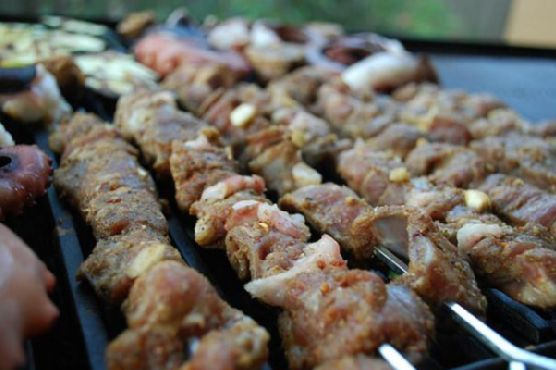
There I was, standing in my tiny kitchen on a Tuesday afternoon, staring at a leg of lamb I’d ambitiously bought during my last grocery run. It was one of those moments where you think, “What have I gotten myself into?” But then inspiration hit me like a delicious lightning bolt: Yogurt Marinated Lamb Skewers. It’s one of those recipes that sounds fancy enough to impress a dinner guest but is secretly simple enough for a weeknight. The magic is all in the marinade, full of spices that soak into the lamb, turning it tender and flavorful. So if you’re looking to impress someone (or just yourself), keep reading.

Jump to Recipe

What You’ll Need

I’m willing to bet you’ve already got most of this stuff hanging out in your pantry. The marinade is what truly makes this dish shine, infusing the lamb with a fragrant mix of spices and creamy yogurt.

  • Vegetable oil
  • Cumin
  • Leg of lamb
  • Nutmeg
  • Paprika
  • Plain yogurt
  • Salt
  • Turmeric

How to Make Yogurt Marinated Lamb Skewers

  1. Start by boning the leg of lamb, if it isn’t already done, and cut it into 1-inch cubes. This size is perfect for skewers and ensures even cooking.
  2. In a large bowl, combine the vegetable oil, cumin, nutmeg, paprika, plain yogurt, salt, and turmeric. Mix until everything is nicely blended and the mixture is aromatic.
  3. Add the lamb cubes to the marinade. Toss them until they’re well-coated. Cover the bowl and pop it into the refrigerator overnight. This is where the magic happens, as the lamb soaks up all those wonderful flavors.
  4. The next day, thread the marinated lamb cubes onto skewers. If you’re using wooden skewers, don’t forget to soak them in water for at least 30 minutes to prevent burning.
  5. Grill the skewers over charcoal, which gives them that beautiful smoky flavor. Cook them for about 7 minutes on each side, until they’re a rich, golden-brown and fragrant.

Cook’s Notes

So, here’s the thing: patience is key! Letting the lamb marinate overnight is what makes it so tender and flavorful. If you’re in a rush, a few hours will do, but try not to skimp on marinating time. As for grilling, charcoal gives the best flavor, but a grill pan on the stovetop works in a pinch. Once cooked, these skewers are best enjoyed fresh, but any leftovers can be stored in an airtight container in the fridge for up to three days. Reheat them gently to avoid drying out the meat.

Make It Your Own

Want to put your own spin on these skewers? Here are some ideas:

  • Swap out the lamb for chicken thighs if you’re looking for a more budget-friendly option.
  • Add a little lemon juice to the marinade for a citrusy kick that pairs beautifully with the spices.
  • Try tossing in some fresh herbs like mint or cilantro at the end for a fresh pop of flavor.
  • For a vegetarian twist, use crispy tofu instead of lamb, letting it marinate just as you would the meat.

If you give these Yogurt Marinated Lamb Skewers a go, I’d love to hear how they turned out for you. Drop a comment or tag me on social media. Let’s make deliciousness together!

Related update: Yogurt Marinated Lamb Skewers

Related update: Knockwurst with sauerkraut

Garaged 1986 Ford Capri Brooklands Revival | Analysis by Brian Moineau

TL;DR

  • A Ford Capri 280 Brooklands that sat immobile since the mid‑1990s has been hauled from a home garage; its 2.8‑liter Cologne V6 turns and sparks but won’t run, a case study in 30‑year storage damage to Bosch K‑Jetronic fuel systems, brake hydraulics, and market value for a 1,038‑unit run. [1][11]
  • The barn‑find video economy can make a Capri 280 “go viral,” yet recommission invoices and originality choices still decide whether the car lands as a ~£30k driver or approaches an outlier ~£50k+ trophy, as seen in UK auction data from 2016–2024. [5][6][8]
  • With Ford Europe reviving the Capri nameplate for a battery‑electric model in July 2024, every road‑ready Brooklands becomes cultural collateral the brand can feature at events like Goodwood, creating second‑order demand for authentic survivors. [3][9]

What the source said

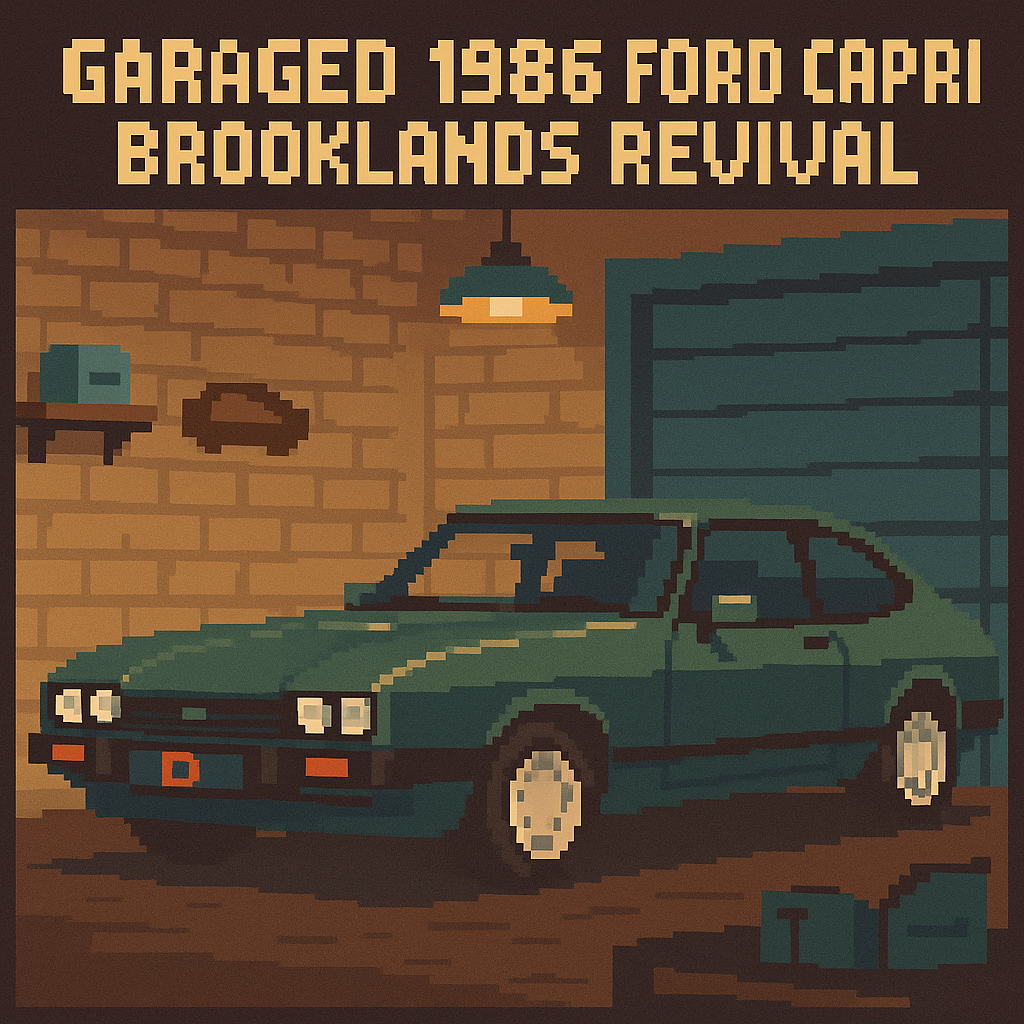
Autoblog and autoevolution recap a Late Brake Show episode in which Jonny Smith helps extract a 1986 Ford Capri 280 “Brooklands,” reportedly number 392 of 1,038, from a tight UK garage after roughly three decades off public roads. The 2.8‑liter V6 cranks and shows spark but backfires and fails to start, indicating clogged injectors, stale fuel, or timing issues typical of long K‑Jetronic layups. The Brooklands spec—Brooklands Green paint, Raven leather Recaros, 15‑inch seven‑spoke wheels, and a limited‑slip diff—mirrors period brochures, and the car cost £11,999 new with quoted figures of 0–60 mph in 7.9 seconds and a 130 mph top speed. The owner, identified as Chris, says it is not for sale on camera. [1][5][11]

Why it matters

UK Ford collectors, auctioneers, and specialists have real money on the line when a numbered Brooklands surfaces, because value on these late‑run Mk3 Capris hinges on mileage, provenance, and how sympathetically the recommission is handled relative to 1987–1989 build norms. Hagerty’s UK guide places strong‑condition 280s broadly in the £30,000–£40,000 band, while exceptional low‑mile examples can exceed £50,000, so quality of mechanical and cosmetic work is not a footnote—it is the spread. [5][6][8]

Ford Europe also benefits when a Brooklands returns to the road, because the July 2024 Capri EV relaunch created marketing gravity around the badge, as shown by the model’s Festival of Speed presence in West Sussex. Heritage‑meets‑modern storylines give Ford inexpensive, authentic content by pairing preserved 1980s 280s with the 2024 EV on press days and social channels. [3][9]

Original analysis

Ford Capri Brooklands: what a 30‑year sleep does to value

Consensus says a garage‑stored Brooklands is a blue‑chip—wash it and watch bids climb—but sales history is spikier. A sub‑1,000‑mile Capri 280 sold for £54,000 at the NEC Classic auction in 2016, yet Hagerty’s 2024 UK guide pegs most concours‑level 280s near the high‑30s, and many used‑mile cars change hands in the low‑ to mid‑30s unless recommissioned to a high standard. The headline “found after 30 years” rarely substitutes for documented fuel, brake, and ignition system work on these Bosch‑injected 2.8s. [5][6][8]

Named‑stakeholder breakdown

  • Ford Europe: Each roadworthy Mk3 Brooklands bolsters the 2024 Capri EV’s heritage narrative; expect brand‑owned media to feature old‑meets‑new pairings at UK events and dealer previews in 2024–2025. [3][9]
  • UK auctioneers (Iconic Auctioneers/Silverstone Auctions, CCA, Collecting Cars): Seller strategies will split cars into “museum‑miles trophies” with high reserves and “sympathetically recommissioned drivers” with broader buyer pools and lower buyer’s remorse. Auction comps from 2016–2024 show both paths can clear £30k, with outliers north of £50k. [6][8]
  • Insurers (Hagerty et al.): Tight bands between #2 and #1 condition mean agreed‑value policies rely on receipts, not thumbnails; underwriters increasingly treat high‑quality video/photo provenance as a credit in 2024. [5]
  • Parts specialists (Capri Gear, Burton Power): Availability of 2.8i‑specific injection pumps, tanks, master cylinders, and interior trim dictates timelines; a Burton Power ATE‑type master cylinder alone lists around £200 in 2024, before lines and calipers. [7]

Back‑of‑envelope calculation: recommission vs. market

  • Assumptions:
    • Labour rate: £80/hour, below the IMI‑reported UK average of ~£99/hour for 2023/24 to reflect indie specialist rates. [10]
    • Time: 30 hours to reach MOT‑ready status (fuel tank clean/swap, lines, filters, pump/injector checks, ignition diagnosis, brake hydraulics overhaul, tyres, fluids). [10]
    • Parts basket: master cylinder (~£207), soft lines/seals, filters/fluids, ignition wear items, four tyres, contingency = £1,500–£2,000. [7]
  • Math (midpoint): Labour 30 × £80 = £2,400; parts ~£1,800; subtotal ~£4,200 before any rust or paint.
  • Value context: Strong drivers transact ~£30,000–£40,000 in 2024 UK data; best‑in‑show, ultra‑low‑mile cars can exceed £50,000 but remain rare. [5][6][8]

Implication: For a ~49,000‑mile example like the Late Brake Show car, a £4–5k mechanical recommission that preserves period parts (e.g., rebuild original calipers, retain factory wheels, choose OE‑spec tyres) aligns costs with a top‑third driver result; chasing concours paint and full trim refresh risks breaching likely sale prices outside the unicorn‑miles bracket. Paper history, not just a viral clip, closes the gap to the upper 30s. [1][5][8]

A contrarian read on storage and scarcity
The UK’s historic fleet is not as scarce in practice as headlines imply: the FBHVC’s 2020 National Historic Vehicle Survey found a large share of historic vehicles registered but SORN’d in any given year, creating a reservoir of cars that periodically re‑enter the market. Buyers therefore discount “sat for decades” unless the end state is documented, road‑ready reliability rather than a static garage extraction. This dynamic keeps average‑mile Brooklands values anchored to condition and receipts rather than the barn‑find narrative alone. [4]

A simple 2×2 to decide your path

  • Axis 1: Originality high vs. low.
  • Axis 2: Use it vs. preserve it.
    • Originality + Preserve: “Glass‑case” approach—retain factory paint, Raven leather, and 15‑inch seven‑spokes; minimal miles; potential to flirt with £45k–£55k if sub‑10k miles and impeccable paperwork. [5][6]
    • Originality + Use: Sympathetic driver—rebuild brakes with OE‑pattern parts, rebuild injectors, fit period‑correct tyres; expect £30k–£40k depending on miles and invoices. [5][8]
    • Low Originality + Preserve: Over‑restored showpiece—fresh paint, repro trim; risks buyer skepticism and can cap at the mid‑30s without provenance. [5]
    • Low Originality + Use: Modified driver—non‑stock suspension or wheels and modern EFI swaps; strong usability but narrower buyer pool, commonly £25k–£32k unless period mods are desirable. [5][8]

Historical analogue
The late‑production, nostalgia‑rich “last of the line” effect has precedent: Ford’s Sierra RS Cosworth (homologation icon, 1986 debut) saw a similar bifurcation after 2010—ultra‑low‑mile, original cars achieved step‑change prices, while driver‑grade examples stayed tightly tethered to condition‑led ranges at UK auctions. That pattern foreshadowed how Brooklands results separated between museum‑miles outliers and recommissioned drivers through the 2016–2024 window. [6][8]

What others are missing

E10 petrol rolled out across the UK in September 2021 raises material‑compatibility risks for 1980s Bosch K‑Jetronic cars like the 2.8i Capri, because ethanol can swell legacy rubber hoses and degrade accumulator diaphragms; many “first start” videos skip the ethanol‑safe hose, seal, and accumulator checklist that prevents leaks and hot‑start issues. A concrete recommission plan should specify E5 sourcing or ethanol‑rated components (R9 hose, compatible injector seals) and document pressure and leak‑down tests, not just a can of fresh fuel. These steps add a few hundred pounds up front but materially improve reliability and underwriting confidence on a car aiming for a £30k–£40k sale. [5][7][13]

What to watch next

  1. By 31 December 2025, at least one UK headline auction (Iconic Auctioneers, CCA, or equivalent) will hammer a Capri 280 above £50,000 only if mileage is under 5,000 and originality is documented with period invoices and MOTs; otherwise, no 280 lot surpasses £50,000 in 2025. [5][6][8]
  2. By Q4 2024, Ford Europe will publish at least one owned‑channel feature pairing a 1980s Capri with the 2024 electric Capri at a UK venue (e.g., Goodwood or a dealer event), evidenced by an official press post or video. [3][9]
  3. By 30 June 2026, parts lead times for key 2.8i items (e.g., new‑old‑stock or OE‑type fuel accumulators or master cylinders) from major UK suppliers will exceed four weeks at least once, visible via public back‑order notices or supplier statements, pushing typical recommission timelines beyond eight weeks. [7]

Sources

[1] The Late Brake Show (YouTube) — Episode on extracting a Capri 280 Brooklands; firsthand observations on starting attempts and storage condition; establishes the ~30‑year layup and car number on camera.
[2] autoevolution — Coverage of the Brooklands garage extraction and spec summary; corroborates the Late Brake Show episode details and long‑term storage claims.
[3] Ford Media Center Europe (July 2024) — Official announcement of the all‑electric Capri; anchors the nameplate’s 2024 relaunch and marketing context.
[4] Federation of British Historic Vehicle Clubs (2020 National Historic Vehicle Survey) — Data on the UK historic fleet’s SORN/licensing patterns; supports the “reservoir” of off‑road cars.
[5] Hagerty UK Price Guide — Ford Capri 280 Brooklands values, production notes, and condition bands; underpins £30k–£40k guidance and concours commentary.
[6] Iconic Auctioneers/Silverstone Auctions (NEC Classic 2016 results) — Documented £54,000 sale of a sub‑1,000‑mile Capri 280; evidences the outlier trophy band.
[7] Burton Power (2024 parts listings) — Pricing and availability for Capri 2.8i brake master cylinders and related components; informs the parts basket.
[8] Classic Car Auctions (CCA) results, 2021–2024 — Multiple Capri 280 hammer prices in the £30k–£40k range; demonstrates the driver‑grade value band.
[9] Goodwood Road & Racing (July 2024) — Coverage of the new Capri at the Festival of Speed; evidences Ford’s heritage‑meets‑modern storytelling opportunities.
[10] Institute of the Motor Industry (IMI) Labour Rates 2023/24 — UK average labour rates; justifies using £80/hour as a specialist midpoint for calculations.
[11] Ford Capri 280 “Brooklands” production notes (period brochures and summaries) — Confirms 1,038‑unit run, Brooklands Green, Raven leather Recaros, 15‑inch wheels, and period performance figures.
[13] UK Department for Transport, E10 petrol rollout (September 2021) — Ethanol content guidance and compatibility notes; grounds the ethanol‑related recommissioning risks.

Related update: We recently published an article that expands on this topic: read the latest post.

Southern 7 Layer Salad in a Mason Jar | Made by Meaghan Moineau

One chilly Tuesday evening last fall, I found myself digging through the fridge, craving something crisp and refreshing amidst all the usual comfort foods. The dilemma? It was one of those weeks where time seemed to vanish, and I needed something quick yet satisfying. That’s when it dawned on me: my favorite Southern 7 Layer Salad — but with a twist! Instead of the classic trifle dish, I opted for a mason jar presentation. Not only does it make for an easy, transportable lunch, but there’s something so charming about seeing those vibrant layers through glass. Plus, let’s be real, salads in mason jars just make you feel like you’ve got your life together. Ready to dive in?

Jump to Recipe

What You’ll Need

Here’s the beauty of this recipe: most of these ingredients are pantry regulars. If you don’t have them all, don’t worry — substitutions are a breeze!

  • Bacon – because everything’s better with bacon, right?
  • Black pepper
  • Eggs – hard-boiled and chopped
  • Lettuce – crisp and refreshing
  • Mayo
  • Frozen peas – they make the salad pop!
  • Red diced bell pepper
  • Sour cream
  • Sugar
  • Yellow or red diced onion

How to Make Southern 7 Layer Salad in a Mason Jar

  1. Prepare the dressing by mixing the mayo, sour cream, sugar, and a dash of black pepper in a small bowl. Give it a good whisk until smooth. Pop it in the fridge to chill while you prep everything else.
  2. Cook the bacon in a skillet over medium heat until it’s wonderfully crisp and the kitchen smells like breakfast heaven. Let it cool on a paper towel-lined plate, then chop it into bite-sized pieces.
  3. Hard-boil your eggs if you haven’t already, then dice them into little chunks. I love using an egg slicer for this — it’s oddly satisfying.
  4. Grab your large mason jars (21oz works beautifully). Start with a couple of spoonfuls of the chilled dressing at the bottom of each jar. This way, when you tip it out to eat, everything ends up nicely coated.
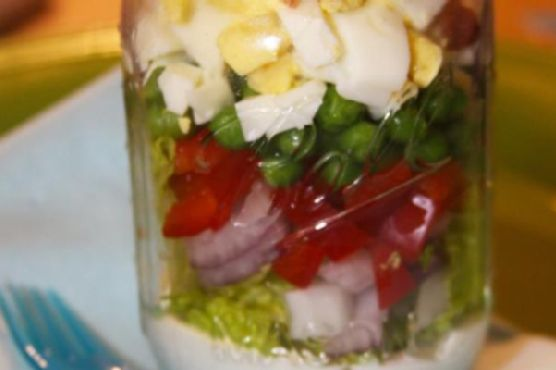
  5. Layer in this order: chopped lettuce, a sprinkle of diced onions, a cheerful scatter of red bell peppers, those poppy little peas, the diced eggs, and finally, the crispy bacon.
  6. Screw the lid on tightly, give it a little shake if you’re feeling adventurous, and either dig in straight from the jar or pour it into a bowl. Enjoy the crunchy, creamy goodness!

Cook’s Notes

Let’s talk practicalities:

– This salad is a fantastic prep-ahead option. You can make all the components the night before. Just wait to add the dressing until you’re ready to dig in to avoid anything getting soggy.
– Storing the salad in the fridge will keep it fresh for up to two days, but honestly, it’s so tasty it’ll probably disappear way before then.
– One potential trip-up: overcooking the bacon or eggs. Keep a close eye on both to ensure they’re just right.

Make It Your Own

Want to mix things up? Here are a few ideas:

  • Swap the bacon for crispy tofu for a vegetarian twist.
  • Use Greek yogurt instead of sour cream for a tangier, lighter dressing.
  • Add shredded cheddar cheese for an extra savory kick.
  • Include sliced avocado for a creamy texture and added health benefits.

So there you have it — my trusty Southern 7 Layer Salad in a Mason Jar! If you try this, I’d love to hear how it turns out. Drop a comment below or tag me on social media with your layered creations. Happy crunching!

Related update: Southern 7 Layer Salad in a Mason Jar

Related update: Avocado and Orange Salad With Orange-Ginger Dressing

Blueberry Almond Crescent Rolls | Made by Meaghan Moineau

Okay, picture this: It’s a lazy Sunday morning, and the sun is peeking through the kitchen window, but you’re still in your pajamas and not quite ready to embrace the day. You crave something sweet but are not in the mood for a mess of bowls and measuring cups. Enter Blueberry Almond Crescent Rolls, the savior for those who want to feel fancy without the fuss. These little guys are like a bakery treat you can whip up faster than you can say “brunch,” and I promise, they’ll make your kitchen smell like a dream. Plus, they’re guaranteed to impress anyone lounging around in their PJs with you! 🍇🥐

Jump to Recipe

What You’ll Need

This is one of those recipes where you might peek into your pantry and realize you’ve got most of it already. Here’s the lineup:

  • 1 can of regular crescent rolls
  • 1/4 cup blueberry jam
  • 4 ounces cream cheese, softened
  • 1/2 cup confectioner’s sugar, divided
  • 1/4 teaspoon almond extract, divided
  • 1 tablespoon flour
  • Pinch of sea salt
  • 1 egg
  • 1 tablespoon water
  • 1 tablespoon milk
  • 2 tablespoons turbinado sugar

How to Make Blueberry Almond Crescent Rolls

  1. Preheat your oven to 375 degrees F. Line a large baking sheet with parchment paper or a silicone baking mat. Trust me, it’s worth it for easy cleanup!
  2. In the bowl of your stand mixer with the paddle attachment—or just a handheld mixer if you’re like me and can’t be bothered—mix together the cream cheese, blueberry jam, 2 tablespoons of confectioner’s sugar, flour, sea salt, and 1/4 teaspoon of almond extract. Blend until smooth, which should take about 30 seconds.
  3. Spread your crescent roll wedges out on a clean work surface. You know the drill: take a generous tablespoon of that heavenly cream cheese mixture and plop it on the wide end of each wedge.
  4. Roll ’em up! Start from the wide end and roll until the narrow end is snug underneath. Nestle them onto your prepared baking sheet.
  5. Whisk the egg and water together to create an egg wash, then brush it over your crescent rolls. Don’t skip this step—it gives them that gorgeous golden glow.
  6. Sprinkle with turbinado sugar. This stuff is like edible glitter, trust me.
  7. Bake for 13-15 minutes, or until they’re puffed and golden. The anticipation will build as your kitchen fills with the scent of warm blueberries and almond.
  8. While they cool slightly on a wire rack, prepare the glaze. In a medium bowl, combine the remaining 1/2 cup of confectioner’s sugar, remaining 1/4 teaspoon of almond extract, and milk. Whisk until smooth. Taste and add a pinch of sea salt if it’s too sweet for your liking.
  9. Drizzle that silky glaze over your crescent rolls and serve immediately. Enjoy the blissful combo of flaky, sweet, and creamy!

Cook’s Notes

  • Don’t overfill the crescent rolls. It may be tempting, but too much filling can cause a messy overflow.
  • If you don’t have turbinado sugar, regular sugar works in a pinch, though it won’t have the same crunch.
  • The rolls are best enjoyed fresh but can be stored in an airtight container at room temperature for up to two days.
  • For make-ahead magic, prepare the cream cheese filling a day in advance and store it covered in the fridge. Let it come to room temp before using.

Make It Your Own

  • Swap the blueberry jam for raspberry or strawberry if that’s more your jam (pun intended!).
  • Add a dash of cinnamon to the cream cheese mixture for an extra layer of flavor.
  • Use orange marmalade and replace the almond extract with vanilla for a citrusy twist.
  • Feeling nutty? Add a sprinkle of chopped almonds inside or on top for added crunch.

If you try this, I’d love to hear how it turns out—drop a comment or tag me! Let’s make every breakfast feel like a special occasion, one crescent roll at a time. 🌟

Related update: Blueberry Almond Crescent Rolls

Related update: Neiman Marcus Oatmeal Chocolate Chip Cookies

Related update: Soft Croatian corn bread – proja

Related update: Avocado Nests