Korean Beef Rice Bowl | Made by Meaghan Moineau

It was one of those chaotic Tuesday nights. You know the ones — the kind where you stare blankly into the fridge, hoping dinner will materialize while the clock ticks ever onward. I was craving something quick and satisfying, with just the right balance of savory and sweet. Enter the Korean Beef Rice Bowl. It’s the kind of recipe that magically turns a handful of ingredients into something that’s not only delicious but feels like a hug in a bowl. Plus, it’s faster than waiting for delivery, and you get all the kitchen glory.

Jump to Recipe

What You’ll Need

You might already have some of these tucked away in your pantry or fridge, just waiting to shine. Here’s the lineup:

  • Beef flank steak, fat-trimmed
  • Korean marinade
  • Green beans
  • Carrot
  • Rice vinegar
  • Asian sesame oil
  • Sugar
  • Salt
  • Salad oil
  • Fat-skimmed beef broth
  • Cooked rice
  • Thinly sliced green onions
  • Sesame seeds

How to Make Korean Beef Rice Bowl

  1. Start by rinsing the beef under cold water, pat it dry, then slice it across the grain into thin, 1/8-inch slices. Aim for pieces that are about 3 inches long. This will help them cook quickly and evenly.
  2. In a small bowl, combine the sliced beef with 1/4 cup of Korean marinade. Let it sit while you prep the veggies to infuse the meat with flavor.
  3. Trim the ends and strings from the green beans and cut them diagonally into 3-inch pieces. Slice the carrot into matchstick-size pieces of the same length.
  4. In a large wok or frying pan over high heat, combine 1/2 cup of water with the green beans and carrot. Cover and stir occasionally, cooking until they’re just tender, about 3 minutes. Drain and promptly immerse them in cold water to stop the cooking. Once cool, drain them again.
  5. In a bowl, toss the drained veggies with a splash of rice vinegar, a drizzle of sesame oil, and a sprinkle of sugar and salt to taste. Give them a quick toss to coat evenly.
  6. Wipe out the wok and place it back over high heat, adding a splash of salad oil. Once the oil is hot, add the marinated beef along with any remaining liquid from the bowl. Stir-fry the meat until it’s no longer pink, approximately 2 minutes.
  7. Pour the remaining marinade and beef broth into the pan with the beef. Stir until the mixture begins to boil, creating a rich and savory sauce.
  8. To assemble, scoop generous portions of warm cooked rice into bowls. Top with the beef and its sauce, then arrange the marinated vegetables on top. Finish with a sprinkle of green onions and sesame seeds for that final burst of flavor.

Cook’s Notes

Here’s a little advice from my kitchen to yours. When slicing the beef, the thinner, the better — it lets the marinade seep through and cooks in a flash. If you can’t find toasted sesame seeds, no worries. Just toss regular sesame seeds in a pan over low heat for a minute until they’re golden and fragrant. This dish comes together in about 30 minutes, making it perfect for those nights when time is of the essence. Leftovers keep well for a couple of days in the fridge, though the rice might absorb some sauce, so maybe keep extra sauce on the side if you plan on having leftovers.

Make It Your Own

Consider these variations to change things up or cater to your dietary needs:

  • Swap out the beef for crispy tofu if you’re going plant-based. Press the tofu to remove excess moisture before marinating.
  • Use boneless chicken thighs instead of beef for a different protein option. They stay juicy and cook quickly.
  • Substitute broccoli or snap peas for the green beans if that’s what you have on hand or prefer.
  • For a spicier kick, add a teaspoon of gochujang (Korean chili paste) to the marinade.

If you try this, I’d love to hear how it turns out — drop a comment or tag me! Remember, your kitchen is your playground, so have fun with it. Happy cooking!

Related update: Korean Beef Rice Bowl

Halo Remade: UE5 Revives Classic Campaign | Analysis by Brian Moineau

TL;DR

  • Halo: Campaign Evolved is a ground‑up remake built in Unreal Engine 5, with Halo Studios saying UE5 let artists iterate faster while staying faithful to 2001’s tone. [1]
  • The real story isn’t just shinier marines; it’s a studio process pivot: rebrand, toolchain reset, and multiplatform launch (including PS5 on July 28, 2026) that rewires Halo’s economics and audience. [2][3][7]
  • Expect a “faithful but moodier” campaign that uses UE5 systems like Lumen and MegaLights to recapture CE’s mystery—if performance and identity hold under cross‑platform constraints. [1][4]

What the source said

Halo Studios’ blog details how the art team approached Halo: Campaign Evolved as a full remake on Unreal Engine 5 led by art directors Chris Matthews and Donnie Taylor. The team describes Project Foundry as a UE5 test bed that shaped biomes—Pacific Northwest, Coldlands, and Blightlands—and workflows later used in missions like Halo and Assault on the Control Room. They credit UE5 tools (Nanite for geometry, Niagara for VFX, Lumen for GI, and MegaLights for area lighting) for collapsing barriers between concept and in‑engine execution, and outline five pillars (military sci‑fi, spectacle, groundedness, storied spaces, intention). Repeated reviews against original Combat Evolved and Anniversary assets preserved tone, with darker, moodier environments preferred over one‑to‑one recreation. [1]

Why it matters

Stakeholders just changed. Microsoft rebranded 343 Industries to Halo Studios in 2024, switched to Unreal, and now ships Halo: Campaign Evolved day‑and‑date on Xbox, PC, and PlayStation 5 on July 28, 2026 (early access July 23). That’s the franchise’s first PlayStation release, expanding the addressable market and diluting “Xbox‑only” identity in favor of reach. [2][3][7]

For Xbox Game Studios and Halo Studios, UE5 is a bet on velocity and predictability: fewer proprietary engine bottlenecks, more standardized talent pipelines, and a fresher art‑to‑runtime loop. For fans, the upside is coherence—a moodier, legible CE rebuilt with modern lighting and VFX. The risk: UE5’s house look and cross‑platform parity erode Halo’s distinctive visual grammar, unless Halo Studios enforces strict art direction and bespoke shaders. [1][4]

Original analysis

Halo: Campaign Evolved and the UE5 trade‑offs

Consensus view: “Unreal guarantees fidelity; therefore, the remake can only win.” My read: fidelity is table stakes; the win condition is authorial restraint.

UE5’s Lumen and MegaLights let artists paint atmosphere with dynamic bounce and dense area lighting at console budgets. That’s ideal for CE’s foggy canyons, Flood gloom, and glassy Forerunner volumes from 2001. But these tools also tempt overspecular materials and noisy contrast that betray Halo’s iconic silhouettes and clean read. If Halo Studios treats UE5 as a scalpel, not a buffet, the remake will feel like our 2001 memories—only sharper; if not, it’ll look like “Unreal Game #417.” [1][4]

A quick performance budget back‑of‑envelope (math)

  • 60 fps frame budget: 1000 ms ÷ 60 = 16.67 ms per frame.
  • 120 fps frame budget: 1000 ms ÷ 120 = 8.33 ms per frame.
  • Split‑screen implies two active cameras; if the team targets 60 fps in co‑op, they must fit culling, lighting (Lumen), and post‑processing within ~16.67 ms while managing doubled visibility and UI work. This pushes material complexity and particle counts to stay within a predictable millisecond budget, especially in effects‑heavy encounters like “The Library.”

A 2×2 framework: Where this remake sits

  • Axes: Engine control (Proprietary → Off‑the‑shelf) vs. Canon stance (Conservative → Reinventive).
  • Quadrants:
    • Proprietary × Conservative: Bungie‑era CE/2 on Blam—tight authorship, minimal drift.
    • Proprietary × Reinventive: Halo 5’s bold silhouettes and VFX excess.
    • Off‑the‑shelf × Conservative: Halo: Campaign Evolved—faithful tone, UE5 under the hood.
    • Off‑the‑shelf × Reinventive: Final Fantasy VII Remake—systemic redesign under modern tech.

Placing Campaign Evolved in Off‑the‑shelf × Conservative sets expectations: technical lift with artistic discipline. The studio’s five pillars and constant cross‑checks against CE/Anniversary aim to keep it there. [1]

Historical analogue: Remakes that reset the bar

Capcom’s Resident Evil 2 (2019) is the blueprint: a respectful reimagining that shipped over 10 million units, proving a classic can be rebuilt as a contemporary hit without losing identity. Square Enix’s Final Fantasy VII Remake surpassed five million shipments and digital sales by August 2020, after clearing 3.5 million in its first three days in April 2020, validating appetite for premium reinterpretations. These projects balanced mood, structure, and modern production tools—exactly the tightrope Halo Studios describes. The lesson: tone is the product; tech is the amplifier. [6][9][8]

Named‑stakeholder breakdown

  • Halo Studios: Gains a standardized pipeline and broader hiring pool via UE5; success here will justify the rebrand and make follow‑ons faster to greenlight. [7]
  • Xbox Game Studios: Expands Halo’s reach with a simultaneous PS5 release, trading platform tribalism for franchise MAU and monetization breadth on July 28, 2026. [2][3]
  • Sony PlayStation: Welcomes the first Halo on PS5; strengthens PS5’s late‑cycle portfolio while normalizing Xbox IP on PlayStation. [3]
  • Epic Games: Lands another flagship UE5 showcase; Lumen and MegaLights appear in front of 20 million‑plus franchise players if engagement resembles Halo Infinite’s 2021 peak. [4][5]
  • The Halo fanbase: Gets a darker, moodier art pass designed to match memory, not footage—if it lands, “the Library problem” (pacing, readability) finally gets a 2026‑grade fix. [1]

Context calibration

Remember Halo Infinite: more than 20 million players tried it shortly after launch thanks to the free‑to‑play multiplayer and Game Pass day‑one distribution. Campaign Evolved lacks F2P PvP at launch and instead courts co‑op, nostalgia, and narrative continuity, but it adds PS5 and UE5 spectacle. That shifts the funnel: fewer zero‑friction trials, more premium intent across three ecosystems, including Sony’s platform. Expect different engagement curves—even if the July 28, 2026 launch window and early‑access upsell echo modern tentpole beats. [5][3][2]

What others are missing

The make‑or‑break factor isn’t “UE5 vs. Slipspace”—it’s Halo Studios’ art governance inside UE5. Lumen and MegaLights can sell mystery, but they also expose mission readability and encounter timing if the team oversaturates scenes or smears contrast across silhouettes. The blog hints at rigorous asset reviews and lore checks; extend that rigor to a studio‑wide rendering bible: materials that keep Covenant armor matte where it must, bespoke BRDFs for Forerunner composites, fog volumes tuned to CE‑era atmosphere, and particle budgets that don’t destroy co‑op clarity. In short: a curated UE5, not default UE5. If those rails hold, the remake’s mood and legibility will feel quintessentially Halo rather than generically “next‑gen.” [1][4]

What to watch next

  1. By launch day on July 28, 2026, Halo Studios ships a “Performance RT” mode on PS5 and Xbox Series X that uses Lumen Hardware Ray Tracing and keeps split‑screen co‑op above 60 fps in most missions.

  2. By September 30, 2026, Xbox Wire publishes a post‑launch beat focused on co‑op completion rates and heatmaps for “The Library” and “Assault on the Control Room,” framing pacing/readability changes as a success metric.

  3. By Q4 2026, Halo Studios announces its next single‑player project still on UE5, confirming that Campaign Evolved’s art/tech stack becomes the long‑term studio baseline.

My take

I’m bullish—conditionally. Halo: Campaign Evolved reads like a studio asserting taste after years of engine drag and post‑launch churn. The choice to chase “how it felt” in 2001 rather than one‑to‑one recreation is the right hill to die on. If Halo Studios keeps silhouettes clean, palettes disciplined, and mood dialed darker—not busier—UE5 will disappear and the ring will feel like myth again; if it leans into generic “cinematic” gloss, it’ll be just another pretty shooter. My bet: the art team lands it, and this becomes the template for Halo’s UE5 future. [1][2][4]

Sources

  1. Inside the Art of Campaign Evolved — Halo Waypoint (https://www.halowaypoint.com/news/inside-the-art-of-campaign-evolved) — Primary source on art pillars, UE5 tool usage, and the Project Foundry workflow behind the remake.

  2. Halo: Campaign Evolved Launches July 28, Pre‑Orders Available Now — Xbox Wire (https://news.xbox.com/en-us/2026/06/07/halo-campaign-evolved-launch-preorder-xbox-games-showcase-2026/) — Confirms July 28, 2026 global launch timing and early access details.

  3. Halo: Campaign Evolved launches on PS5 in 2026 — PlayStation Blog (https://blog.playstation.com/2025/10/24/halo-campaign-evolved-launches-on-ps5-in-2026/) — Establishes day‑and‑date PlayStation 5 release, the franchise’s first on a PlayStation platform.

  4. Lumen Global Illumination and Reflections in Unreal Engine — Epic Developer Community (https://dev.epicgames.com/documentation/en-us/unreal-engine/lumen-global-illumination-and-reflections-in-unreal-engine) — Authoritative documentation on Lumen and its role in UE5 lighting; relevant to the art/tech claims.

  5. Halo Infinite attracts 20 million players to deliver biggest launch in series history — Game Developer (https://www.gamedeveloper.com/business/halo-infinite-attracts-20-million-players-to-deliver-biggest-launch-in-series-history) — Contextual baseline for Halo engagement at launch in the Game Pass era.

  6. Resident Evil 2 Ships Over 10 Million Units Globally! — Capcom (https://www.capcom.co.jp/ir/english/news/html/e220714.html) — Historical analogue showing how a faithful, high‑effort remake can scale to blockbuster sales.

  7. Microsoft rebrands 343 Industries to Halo Studios, reveals new direction for ‘Halo’ franchise — GeekWire (https://www.geekwire.com/2024/microsoft-rebrands-343-industries-to-halo-studios-reveals-new-direction-for-halo-franchise/) — Independent reporting on the rebrand and the strategic UE5 pivot underpinning this project.

  8. Final Fantasy 7 Remake Sales Surpass 3.5 Million in 3 Days — IGN (https://www.ign.com/articles/final-fantasy-7-remake-sales-surpass-35-million-in-3-days) — Early‑window sales benchmark for FFVII Remake’s demand curve.

  9. FINAL FANTASY VII REMAKE surpasses 5 million shipments and digital sales worldwide — Square Enix (https://square-enix-games.com/en_US/news/ffvii-remake-sales) — Confirms 5 million milestone by August 2020, supporting the remake appetite argument.


Ditalini with peas | Made by Meaghan Moineau

Picture this: It’s Wednesday evening, and you’re staring into the abyss of your fridge, wondering how you’ll whip up something delicious without diving into another takeout night. We’ve all been there, right? This moment is precisely when Ditalini with Peas swoops in like a culinary superhero. It’s got the comfort factor of pasta, a delightful pop of sweetness from peas, and the creamy, golden goodness of ricotta and turmeric. Plus, it’s one of those meals where you can almost hear your inner voice singing “I can’t believe it’s not takeout!” as you serve it up. If that sounds good to you, you’re in for a treat.

Jump to Recipe

What You’ll Need

This ingredient list is refreshingly simple, and I’m willing to bet you already have most of these in your pantry or fridge. It’s all about combining these humble ingredients into something greater than the sum of its parts.

  • Coarse sea salt
  • Ditalini pasta
  • Freshly ground black pepper
  • Ham, diced
  • Olive oil
  • Onion, finely chopped
  • Pancetta, diced
  • Parmesan or Grana Padano cheese, grated
  • Ricotta cheese
  • Turmeric, dissolved in 2 ladles of water

How to Make Ditalini with Peas

  1. Start by placing your onion in the olive oil, which is still cold. Cook it gently, adding a teaspoon of water now and then to prevent browning. You’re aiming for it to become soft and translucent, about 10 minutes.
  2. Once the onion is ready, introduce the peas to the party. Add just enough water to cover them, then season with salt and pepper. Cook until the peas are tender. Fresh peas might take anywhere from 5 to 15 minutes, depending on their size and freshness, while frozen peas will need about 10 minutes.
  3. As the peas reach their peak of tenderness, toss in the diced pancetta and ham. Give everything a good stir, then turn off the heat. This is where the magic begins.
  4. Pour in the turmeric-infused water and add the ricotta, sieving it through a colander. Stir until the ricotta melts into the liquid, creating a luscious golden sauce. Keep this mixture warm while you cook the pasta.
  5. Cook the ditalini according to the package instructions. Reserve some of the pasta water before you drain it, just in case you need to loosen the sauce later.
  6. With the pasta drained, immediately toss it into the saucepan with your glorious sauce. Stir until every little piece of ditalini is coated, then serve hot with a generous sprinkle of grated Parmesan or Grana Padano.

Cook’s Notes

Let’s chat about the little things that make a big difference. First, be gentle with the onion and remember that patience is key; you want them soft and flavorful, not browned. When it comes to water, trust your instincts—add as needed to keep things from sticking but not so much that you drown the flavor. If your final dish feels a bit dry, that reserved pasta water you saved is a lifesaver for loosening things up. Leftovers? They’re a joy to have and reheat beautifully with a splash of water or olive oil.

Make It Your Own

This recipe is as versatile as your imagination. Here are some ideas to switch things up:

  • Swap the ham and pancetta for crispy tofu to keep it vegetarian while maintaining that satisfying protein punch.
  • Add a kick of heat with a sprinkle of red pepper flakes during the onion sauté for those who love a bit of spice.
  • Replace the peas with asparagus or broccoli for a different green vibe — just cut them small so they cook in about the same time.
  • Use smoked paprika instead of turmeric for a smokier, earthier flavor profile.

If you try this, I’d love to hear how it turns out—drop a comment or tag me! Cooking is all about sharing the love, and I can’t wait to see how you make this dish your own. Happy cooking, friends!

Related update: Ditalini with peas

Related update: Korean Beef Rice Bowl

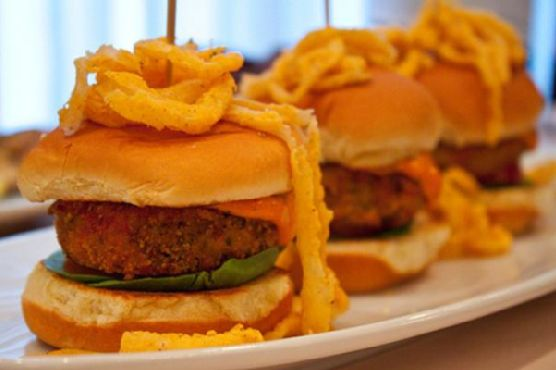
Crawfish Cake Sliders | Made by Meaghan Moineau

Last Tuesday, my kitchen was a whirlwind of chaos. It was one of those evenings where craving something decadent and a bit out of the ordinary hit like a freight train, and all I had was a pantry challenge waiting to happen. After digging through the freezer, I found a bag of crawfish tails, and suddenly, a memory of summer seafood boils with friends came flooding back. The tantalizing mix of spices and seafood was exactly what I needed, but in a form that was quick and easy without compromising on flavor. Enter: Crawfish Cake Sliders. These little beauties pack a punch, they’re crispy on the outside yet tender inside, and they’re kind of impressive when you serve them up — like a casual, yet gourmet, hand-held delight. Perfect for a weeknight dinner or to wow your friends at a gathering.

Jump to Recipe

What You’ll Need

Let’s be honest, if you love a good seafood dish, you’ve probably got most of this on hand already. Here’s what you’ll need to whip up these sliders:

  • 1 teaspoon oil
  • 1 cup chopped red onion
  • 1 clove garlic, minced
  • 1 teaspoon Creole spice (or to taste)
  • 1 pound crawfish tails, thawed if frozen
  • 1 large egg
  • 1/2 cup bread crumbs
  • 8 slider buns
  • 1/2 cup tartar sauce

How to Make Crawfish Cake Sliders

  1. Start by heating 1 teaspoon of oil in a sauté pan over medium heat. Toss in the chopped onion and let it sizzle away with a pop of color from some finely chopped red pepper and celery — sauté these until tender, about 2-3 minutes. The kitchen should start smelling like a savory promise.
  2. Once the veggies are tender, remove the pan from the heat and add the garlic, crawfish meat, and Creole spice. The residual heat will mellow out the garlic and awaken the spices.
  3. Transfer this aromatic mixture into a mixing bowl and let it cool just enough so that it doesn’t scramble the egg. Speaking from experience here, oops!
  4. Mix in the egg and just enough bread crumbs for the mixture to bind together — you’re looking for a consistency that holds but isn’t dry. Taste and adjust the seasonings with salt, pepper, and more Creole spice if you’re feeling bold.
  5. Form the mixture into 8 equal patties and flatten them to about 3/4-inch thick. They should feel sturdy but not densely packed.
  6. Heat the remaining oil in the same sauté pan over medium heat. Cook the patties on both sides until they’re brown and crispy, about 3-4 minutes per side. This is where the magic happens — the aroma alone is worth it.
  7. Once cooked, serve each cake nestled in a slider bun with a generous dollop of tartar sauce. It’s the final touch that brings everything together.

Cook’s Notes

As you embark on this culinary adventure, keep a few things in mind: If using frozen crawfish tails, make sure they’re fully thawed and patted dry to prevent soggy cakes. The mixture should be moist but not wet; too much moisture means your patties might fall apart during cooking. If you need to make these ahead, form the patties and store them covered in the fridge for a few hours. Cooked patties can also be reheated in a 350°F oven until warm.

Make It Your Own

Here’s where you can get creative with these sliders:

  • Spice Swap: Try using Old Bay or a Cajun spice mix if Creole isn’t your thing.
  • Herb Boost: Add chopped fresh parsley or cilantro to the mixture for a fresh twist.
  • Different Sauce: Swap out tartar sauce for a spicy remoulade or even a dollop of garlic aioli for a different flavor profile.
  • Gluten-Free Option: Use gluten-free bread crumbs and buns to make this dish suitable for your gluten-sensitive friends.

If you try this, I’d love to hear how it turns out — drop a comment or tag me! Your kitchen stories make this cooking journey so much more fun. Happy cooking!

Related update: Crawfish Cake Sliders

Related update: Ditalini with peas