
Hotel guests, not new neighbors: why the Animal Crossing 3.0 Resort is bittersweet
The first time I checked into Kapp’n’s Resort Hotel, I squealed when an old favorite — a villager who used to live on my island years ago — wandered past the pier and sighed about missing “the old place.” For a second, I dared to hope: could this be the moment my dream villager would finally move back in? Spoiler: no. The new hotel is joyful, adorable, and full of little stories… but it won’t let those guests unpack for good.
The 3.0 update for Animal Crossing: New Horizons added a lot of shiny stuff — a Resort Hotel where you design themed rooms, new souvenirs, island cleanup services, and Slumber Islands. One of the update’s most lovable hooks is the hotel’s ability to bring huge variety to your island for short visits: up to eight rooms, lots of possible villagers (including former residents), and charming interactions. But there’s a catch that’s left many players deflated: hotel guests are strictly temporary tourists and cannot be invited to permanently move to your island like campers or expedition encounters can. (tech.yahoo.com)
What's happening (and why people are bummed)
- The resort unlocks once your island hits a certain threshold and Kapp’n and family appear — then you can decorate rooms, earn hotel tickets, and attract visitors. It’s a delightful new loop of creativity and rewards. (gamesradar.com)
- Guests will roam your island, take part in Group Stretching, buy souvenirs, and even reminisce if they used to live with you. Those nostalgic lines make the limitation sting more. (tech.yahoo.com)
- Unlike visitors from the Campsite or Island Excursions — who can be persuaded to move in if conditions are right — hotel tourists check in and check out on Nintendo’s schedule. There’s currently no mechanic to make a hotel guest become a resident. (tech.yahoo.com)
- The result: the hotel is a fantastic way to sample the game's enormous villager roster, but it’s not a shortcut to filling an empty plot with a long‑wanted dreamie.
Why Nintendo might have made this choice
We don’t have an official line that spells out the full technical reasoning, but a few sensible possibilities emerge from how the game handles NPC roles:
- Role separation: hotel tourists likely use a different NPC state and dialogue tree than moveable villagers. Letting them switch roles mid-visit could create dialogue, AI, or save‑data complexity. (vice.com)
- Design intention: the hotel is built around short, colorful interactions and collectible souvenirs; making it a recruitment channel might undermine those design goals or the balance of other recruitment systems.
- Stability and save-data safety: other updates have addressed tricky bugs around villagers moving in or plots left sold; Nintendo historically errs on the side of caution with permanent changes to resident status. (en-americas-support.nintendo.com)
What players are saying
The fan reaction is a mixed stew of delight and disappointment:
- Many players love the hotel’s atmosphere, the design opportunities, and how lively it makes islands feel. Decorating rooms and watching a full set of guests mingle is pure vibe. (gamesradar.com)
- Others feel frustrated because the hotel is the most efficient way yet to encounter lots of different villagers at once; not being able to convert that into a permanent recruit feels like a missed chance. Social posts and comment threads lean into the yearning — especially when a beloved ex-resident shows up and can’t stay. (tech.yahoo.com)
Practical tips if you want a specific villager
- Use the hotel to scout: if you spot your dream villager at the hotel, pay attention to their house style, voice lines, and general vibe so you know what to expect when they appear elsewhere. (tech.yahoo.com)
- Keep using Campsite and Island Excursions: those remain the reliable recruitment paths for permanent moves. If you have amiibo cards, campsite invites are still a way to bring particular villagers back for good. (gamefaqs.gamespot.com)
- Stockpile Nook Miles and tickets: more excursions and hotel visits give you more chances to encounter your dream villager through the methods that allow moving in.
A few bright sides
- The hotel is genuinely delightful for island roleplay, photography, and giving your island new energy.
- It’s a great way to re‑meet villagers you haven’t seen in years and to collect new souvenir items tied to decor themes.
- Nintendo has a history of refining mechanics post‑launch, so the community’s feedback could influence future updates. (gamesradar.com)
My take
The Resort Hotel is one of those updates that makes New Horizons feel alive in a fresh way: more faces, more micro‑stories, more scenic chaos. But the inability to recruit tourists into permanent residents is an understandable design decision and yet a bit of a heartache for collectors and sentimental players. For now, treat the hotel as a joyful preview space — a place to fall in love with villagers all over again, then go dig them up the old-fashioned way when you want them home.
Final thoughts
Players will keep sharing screenshots of wistful villagers walking past windmills and beaches, and that emotional pull is a feature, not a bug. The hotel deepens the game's social texture even if it doesn't hand you a new neighbor on a silver platter. If enough players yearn for a bridge between vacationer and resident, Nintendo has shown it will listen — and New Horizons' post‑launch life has taught us that small wishes can become big updates.
Sources
Related update: We recently published an article that expands on this topic: read the latest post.
Related update: We recently published an article that expands on this topic: read the latest post.
Related update: We recently published an article that expands on this topic: read the latest post.
Related update: We recently published an article that expands on this topic: read the latest post.

Please sir, I want some more: Make Jalopnik your go-to on Google Search
You know that feeling when you want more of a specific flavor — be it extra gravy with your fry-up or another Jalopnik teardown of the latest electric crossover? Google’s new “preferred sources” feature lets you feed that appetite directly into Search so your favorite outlets show up more often in Top Stories. If Jalopnik is your jam, here’s how to make it show up more when you hunt for car news, reviews, or the latest automotive chaos.
Why this matters right now
- Google recently rolled out a Preferred Sources option in Search’s Top Stories, letting users prioritize outlets they trust. This isn’t about blocking other voices — it’s about nudging the algorithm toward the sites you love. (blog.google)
- Publishers (including Jalopnik) are encouraging readers to add them as preferred sources because it helps visibility and keeps traffic flowing in a world where discovery has fragmented across platforms. (jalopnik.com)
- For readers, it’s a small personalization that yields a more relevant stream of reporting when searching breaking topics — especially useful for fast-moving beats like cars, tech, and motorsports. (tomsguide.com)
Quick takeaways
- The feature appears in Google Search’s Top Stories and can be accessed from the star/card icon or from a central preferences page.
- You can add as many preferred sources as you like; changes sync to your Google account.
- Adding Jalopnik helps surface more of its articles in searches where Top Stories appear — but you’ll still see other outlets too.
How to add Jalopnik as a preferred source (two easy ways)
- Via a direct Jalopnik link (fastest)
- Click the link Jalopnik provides in their article or site post (they often include a direct link to the Google “Set your preferred sources” tool). Once on Google’s preferences page, type “Jalopnik,” tick the checkbox, and save. Jalopnik’s article highlights this shortcut for readers who want a one-click route. (jalopnik.com)
- From a Google Search results page (discover-as-you-go)
- Search Google for a current car-related topic (for example: “2024 Kia Sorento review” or “EV recalls”). When Top Stories appears, look for the small stacked-card/star icon to the right of the Top Stories header. (tomsguide.com)
- Click that icon to open the “Choose your preferred sources” dialog. Type “Jalopnik” into the search box, check the box next to the publication, then tap “Reload results” to see Top Stories refreshed with your selections. (blog.google)
Tips for getting the best results
- Make sure you’re signed into your Google account — preferences tie to your account and sync across devices.
- Use high-news queries (current events, trending car models, recalls, racing results) to trigger Top Stories and the star icon if you don’t see it for everyday searches.
- Add several sources you trust, not just one; users often pick multiple outlets to keep perspective while prioritizing favorites. Google’s early testers typically added four or more. (blog.google)
- If you change your mind, you can always remove or edit preferred sources from the same dialog or via Google Search personalization settings.
What this means for readers and publishers
- For readers: more of what you like. If Jalopnik’s voice — cranky, irreverent, detail-hungry car coverage — is what you want, Preferred Sources nudges Search to serve it up more often.
- For publishers: a way to court loyal readers directly inside the platform that still sends huge referral traffic. It’s also a reminder that discovery is a two-way street: publishers must keep producing content that readers want to prioritize. (theverge.com)
A couple of caveats
- Preferred sources don’t mean exclusive results. Google will still show other outlets; the feature simply increases the prominence of your chosen sources when relevant.
- Rollout and availability have been region-limited as Google expands the feature; if you don’t see the star icon yet, try updating the Google app or checking your account settings. (theverge.com)
My take
There’s a small, almost comforting delight in tailoring the internet to your tastes — like asking for an extra helping at a diner and being handed exactly what you wanted. Google’s Preferred Sources is that small favor writ large: it doesn’t rewrite the menu, but it nudges the kitchen to plate more of your favorite dish. If Jalopnik’s the publication that makes you laugh, think, and occasionally spit-take coffee when reading about automotive absurdity, this is an easy move to make your searches feel a little more like home.
Sources
Related update: We recently published an article that expands on this topic: read the latest post.

When prediction markets meet college sports: who should hit pause?
The headline landed like a buzzer-beater nobody asked for: on January 14, 2026, the NCAA asked the Commodity Futures Trading Commission (CFTC) to suspend prediction markets from offering trades on college sports until stronger guardrails are put in place. That request — delivered in a letter from NCAA president Charlie Baker and amplified at the NCAA Convention — pulls into sharp focus a fast-moving collision between financial innovation, fan engagement, and the fragile integrity of amateur athletics.
This isn't just a regulatory squabble. It touches students, coaches, parents, regulators, market operators and every fan who cares whether a game is decided on the field or by outside incentives.
What happened and why it matters
- The NCAA formally asked the CFTC on January 14, 2026 to pause collegiate sports markets operated by prediction-market platforms. (espn.com)
- Prediction markets let users buy and sell contracts on yes/no outcomes (for example: “Will Player X enter the transfer portal?”). They are federally regulated by the CFTC, and many platforms argue they are distinct from state-licensed sportsbooks. (espn.com)
- The NCAA’s key concerns include:
- Age and advertising restrictions (prediction markets are often available to 18+ users nationwide, unlike sportsbooks where many jurisdictions set 21+). (espn.com)
- Stronger integrity monitoring and mandatory incident reporting (sportsbooks in many states must report suspicious activity; the NCAA argues prediction markets lack comparable requirements). (espn.com)
- Banning or limiting prop-style markets tied to individual athletes (increasing risk of manipulation or harassment). (espn.com)
- Anti-harassment measures and harm-reduction tools. (ncaa.org)
Why it matters: college athletes are not paid employees in the traditional sense (despite NIL changes), they’re still students whose careers and mental health can be affected by gambling-driven incentives and abuse. Prediction markets—accessible nationally and to younger bettors—create a different risk profile than regulated sportsbooks operating under state gaming laws.
The players on the court
- NCAA: Focused on athlete welfare and competition integrity; willing to work with the CFTC to design safeguards. (ncaa.org)
- Prediction market companies (e.g., Kalshi, Polymarket and others): Regulated by the CFTC and argue they operate as financial exchanges offering contracts between traders, not traditional wagering against a house. They have begun adding integrity partners and monitoring tools. (espn.com)
- CFTC: The federal regulator for event contracts. Historically has allowed event markets but has been cautious about drawing hard lines around sports-related markets. The NCAA’s request asks the agency to take a more active stance. (espn.com)
- State gaming regulators: Some have moved to restrict or challenge prediction markets, arguing those products violate state wagering laws. Recent enforcement actions and cease-and-desist letters show the state-federal regulatory boundary is contested. (barrons.com)
The core tensions
- Jurisdiction and labeling
- Are binary event contracts “financial products” under federal CFTC oversight, or are they sports betting that falls under state gambling laws? The answer determines who writes the rules. (barrons.com)
- Age and accessibility
- Many prediction platforms accept 18-year-olds nationwide; sportsbooks in many states restrict college-sports betting to older age groups or ban in-state college betting entirely. That gap concerns the NCAA. (espn.com)
- Types of markets and harm
- Prop markets or player-specific questions (transfer portal, injuries, playing time) can create perverse incentives and increase risk of manipulation, harassment, or targeted abuse. (espn.com)
- Speed of innovation vs. pace of regulation
- Prediction markets have evolved quickly; regulators and sports governing bodies are scrambling to adapt. That mismatch often leaves safeguards trailing innovation. (barrons.com)
What a workable compromise might look like
- Temporary moratorium: A pause limited in time that gives regulators and the NCAA room to draft specific safeguards tied to college athletics.
- Harmonized minimums: Federal rules requiring age verification (21+ for college sports?), targeted advertising restrictions, and robust geolocation enforcement for in-state protections.
- Integrity reporting: Mandatory, standardized reporting of suspicious activity and cooperation channels between prediction-market operators, leagues, the NCAA and law enforcement.
- Limits on player-level markets: A ban or strict controls on markets tied to individual athletes’ discrete actions (transfers, injuries, disciplinary outcomes), with exceptions only under university/athlete consent.
- Independent monitoring and penalties: Third-party integrity firms with transparent methodologies and enforcement mechanisms that include suspensions or delisting of risky markets.
Those steps would mirror many safeguards already required of licensed sportsbooks while recognizing the structural differences of exchange-style prediction products.
How this could play out
- The CFTC could accept the NCAA’s request and issue a temporary ban or guidance — an outcome that would quickly shape operator behavior and possibly defuse state-level enforcement actions.
- If the CFTC declines to act, states may intensify enforcement, producing a patchwork of restrictions that platforms must navigate, or litigate — a costly, slow path with inconsistent protections for athletes.
- Operators might self-impose stricter controls to avoid reputational and legal risk, especially if major leagues and associations amplify their objections.
Either route raises costs and complexity for prediction markets, but also pushes the industry toward clearer rules and stronger athlete protections.
What fans and college communities should watch
- Will the CFTC respond with emergency measures or a formal rulemaking? Watch for agency statements or action following the NCAA letter (dated January 14, 2026). (espn.com)
- Are states preparing enforcement actions, or crafting laws specifically addressing prediction markets and college-sports exposure? Recent history suggests more state attention is likely. (barrons.com)
- How platforms adjust: whether they pull college markets voluntarily, raise minimum ages, or harden integrity controls.
Something only partly covered in the headlines
Prediction markets aren’t inherently villainous: they can provide price discovery for political events, economic forecasts and even fan engagement when done responsibly. The core issue is context. College sports involve unpaid (in the employment sense) student-athletes, academic obligations and developmental stakes that make the same market structure riskier than in professional sports. That nuance should shape tailored rules, not blanket acceptance or reflexive bans.
My take
The NCAA’s ask is forceful but reasonable: when a new market intersects with young athletes’ careers and safety, regulators and operators should err on the side of stronger protections. A coordinated approach led by the CFTC — working with the NCAA and state regulators — that sets baseline safeguards (age, integrity reporting, limits on individual-player markets) would protect athletes without crushing innovation. If regulators balk, expect a messy, uneven landscape of state responses and legal fights that ultimately does more harm than a short, well-scoped pause would.
Where this leaves us
We’re at a crossroads where technology, finance and sports culture clash. The right answer will balance consumer innovation and market freedom with clear protections for vulnerable participants. The NCAA’s letter forced the conversation into the open on January 14, 2026. The next moves from the CFTC, prediction-market operators and state regulators will determine whether college sports get a pragmatic safety net — or whether the growth of prediction markets continues to outpace the rules meant to keep play fair and players safe. (ncaa.org)
Sources
Related update: We recently published an article that expands on this topic: read the latest post.
Related update: We recently published an article that expands on this topic: read the latest post.
Related update: We recently published an article that expands on this topic: read the latest post.
Related update: We recently published an article that expands on this topic: read the latest post.
Related update: We recently published an article that expands on this topic: read the latest post.
Related update: We recently published an article that expands on this topic: read the latest post.

When Max Verstappen Unveiled a Mustang No One Expected to See
Tucked into a glossy Red Bull YouTube special celebrating 100 years of Ford racing, there was a moment that felt equal parts movie trailer and automotive mic drop. Around the halfway mark, Max Verstappen—helmet off, in full race kit—climbs into a car labeled the "2026 Ford Mustang Dark Horse SC" and proceeds to lay down lap after lap, the car’s supercharger whine threading through the soundtrack. It wasn’t just a cameo; it was a public reveal of a Mustang variant that Ford hadn’t formally introduced yet. For lovers of loud V‑8s, racing theatre, and automotive Easter eggs, that 12‑minute reveal was delicious.
Why this moment matters
- Red Bull and Ford are partners in a high‑visibility motorsport era (Ford joins Red Bull as an F1 power unit partner in 2026), so this cameo reads as more than a stunt—it’s cross‑promotion at scale.
- The Dark Horse name has been Ford’s newer performance halo, and the SC suffix (strongly implied to mean “supercharged”) hints at a top‑tier, track‑focused Mustang that could replace or succeed the spirit of the old Shelby GT500 without using the Shelby badge.
- Using Max Verstappen—arguably the most watched driver in modern motorsport—to debut the car instantly links Ford’s street performance story to the world’s highest level of racing.
The scene: what the video actually showed
- Red Bull posted a roughly 24‑minute video chronicling Ford Racing’s history. At about the 12‑minute mark, Verstappen is shown driving the dark, aggressive Mustang identified on screen as the 2026 Ford Mustang Dark Horse SC. (roadandtrack.com)
- Visual cues: large vented hood, prominent rear wing, widened fenders, low stance and race‑oriented aero—more aggressive than the standard Dark Horse. Audio cues: an unmistakable supercharger whine on acceleration. (carscoops.com)
- Ford’s on‑brand copy in teasers described it as “the most advanced, powerful, and track‑capable Dark Horse ever,” but detailed specs, pricing, and full official reveal timing were still to come when the video surfaced. (roadandtrack.com)
Putting the Dark Horse SC in context
- The Dark Horse family: Ford expanded Mustang options in recent years with the Dark Horse as a performance line distinct from traditional Shelby fare. The automaker appears to be building Dark Horse into a broader performance sub‑brand that emphasizes racing DNA while keeping Shelby separate for now. (roadandtrack.com)
- Powertrain expectations: the SC is widely believed to use a supercharged V‑8—possibly a 5.2‑liter Predator variant or a supercharged 5.0 with heavy rework—placing it between the regular Dark Horse and the limited, GTD‑level supercar aspirants. Rumors and audio evidence point toward north‑of‑700 horsepower territory for this model. (caranddriver.com)
- Market positioning: If the SC truly sits between the base Dark Horse and the GTD, Ford gains a performance halo that can attract track enthusiasts who want a near‑supercar experience without boutique pricing. It also preserves Shelby heritage while creating a new, modernized performance identity.
Why Red Bull’s platform was a smart play
- Reach and spectacle: Red Bull’s YouTube audience is massive and skewed toward motorsport fans; unveiling a new Mustang variant there amplifies buzz faster than a traditional press release.
- Crossovers sell: Verstappen driving a street‑legal (but track‑focused) Mustang creates an aspirational bridge—viewers feel the connection between F1 performance and road cars. That narrative benefits both Ford (brand excitement) and Red Bull (cultural relevance outside F1). (roadandtrack.com)
- Teasing instead of telling: Dropping the car into a heritage reel invites speculation, social media dissection, and earned coverage—exactly what happened across automotive press the next day.
What to watch for next
- Official Ford reveal: teasers suggest a formal unveiling and more concrete specs will follow (Ford had scheduled Season Launch events tied to its Ford Racing program). Keep an eye on Ford’s January 2026 rollout for confirmation of power, weight, and production plans. (fordmuscle.com)
- Production run and variants: will the SC be a regular production model, a limited special, or spawn Track Pack editions? Early reporting hints at Track Pack options and special editions for enthusiasts. (roadandtrack.com)
- Pricing and competition: if the Dark Horse SC lands where many expect (supercharged V‑8, high 600s–800s hp potential), it will be pitched against extreme pony‑car rivals and even some European sport coupes—an interesting value proposition if priced smartly.
Takeaways for gearheads and casual readers
- The Red Bull video was a clever, theatrical reveal: using Verstappen gave the Mustang SC instant headline value and a performance pedigree by association. (roadandtrack.com)
- The Dark Horse SC appears to be Ford’s answer to the need for a modern, track‑focused Mustang with supercharged power—positioned between the standard Dark Horse and the GTD halo models. (caranddriver.com)
- Expect official numbers and more detailed materials from Ford soon—this was an appetizing teaser, not the full meal.
My take
Car reveals used to happen on static stages or at motor shows. Dropping a near‑production, race‑bred Mustang into a Red Bull video with Max Verstappen is the exact opposite: kinetic, viral, and delightfully irreverent. It signals how legacy automakers are leaning on cultural moments and motorsport cachet to make big product statements. If Ford backs the Dark Horse SC with the expected engineering, it could be a brilliantly positioned halo car that sounds as good as it looks—and that, these days, matters almost as much as raw horsepower.
Sources
Related update: We recently published an article that expands on this topic: read the latest post.

The new aristocracy: how AI is minting a class of "Have-Lots" — and why Washington helps keep them that way
AI isn't just rearranging industries. It's rearranging who gets the upside. Over the past two years, the winners of the AI boom have stopped being a diffuse set of tech founders and turned into a concentrated, politically powerful cohort — the "Have-Lots." They're not just richer; they're increasingly invested in preserving the political and regulatory status quo that lets their gains compound. That matters for jobs, markets, and the future of U.S. policymaking.
At a glance
- The AI era has created a distinct elite — the Have-Lots — whose wealth rose far faster than the rest of the country in 2025.
- Their advantage comes from outsized equity positions, privileged access to private deals, and close ties to government.
- That concentration of money and influence makes policy outcomes (taxes, regulation, export controls, procurement) more likely to favor continuity over disruption.
- The political consequence: an intensifying split between those who feel left behind and those who are financially insulated, which fuels polarization and public distrust.
Why "Have-Lots" are different this time
We’ve seen wealth concentration before, but AI is amplifying two key dynamics:
- Ownership leverage. AI value accrues heavily to the owners of critical IP, compute infrastructure, and data. A few companies and their insiders hold disproportionate slices of these assets — and their equity rewards are exponential when AI markets run hot.
- Private-market exclusivity. Much of the biggest early AI upside lives in private financings, venture rounds, and exclusive partnerships. Regular retail investors and most households simply can't access the same terms or allocations.
- Policy proximity. The largest AI players are now deeply embedded in Washington — through advisory roles, executive meetings, and lobbying — giving them influence over trade rules, export controls, procurement decisions, and the pace of regulation.
Axios framed the story as three economies — Have-Nots, Haves, and Have-Lots — and showed how 2025 became a banner year for a narrow group of ultra-wealthy Americans tied to AI and tech. The result: a class that benefits from market booms and tends to favor stability in the institutions that enabled their gains. (axios.com)
How money becomes political staying power
Money buys more than yachts. It buys lobbying, think tanks, campaign influence, and the ability to hire teams that translate business goals into policy narratives. A few mechanisms to watch:
- Lobbying and regulatory capture. Tech companies and large investors spend heavily on lobbying and hire former officials who understand how to shape rulemaking. That raises the cost (and political friction) for hard-curtailing policies.
- Strategic philanthropy and media influence. Big donations to policy institutes and universities can alter the research and messaging ecosystems, steering public debate toward industry-friendly framings.
- Access to procurement and export levers. Large AI firms can influence government purchasing decisions and negotiate carve-outs or implementation details that advantage incumbents. When export controls are on the table, these firms lobby for interpretations that preserve critical markets.
- Defensive investment strategies. The Have-Lots aren't just earning more — they're investing to fortify advantages (exclusive funds, acquisitions, cross-border deals) that make it harder for challengers to scale.
Real-world markers of this dynamic were visible in 2025: outsized gains for several tech founders and investors tied to AI, and public reports of deepening ties between major AI companies and government officials. Those links make changes to the rules — from tougher wealth taxes to stringent antitrust enforcement — both politically and technically harder to push through. (axios.com)
What it means for average Americans and markets
- Wealth inequality meets political inertia. When the richest segment accumulates both capital and influence, reform that would rebalance outcomes becomes more difficult. That leaves many households feeling the economy is working against them even when headline GDP and markets climb.
- Labor displacement and retraining get politicized. Workers worried about AI-driven job loss will look for policy fixes. If those fixes threaten concentrated interests, pushback and gridlock are likely.
- Market distortions. Concentration of AI capital can inflate a narrow set of winners (chipmakers, cloud infra, platform owners) while starving broader innovation in complementary areas. That can deepen sectoral risk even as headline indices rise.
- Policy unpredictability. The tug-of-war between populist pressures and elite influence can produce swings — intermittent regulation, targeted carve-outs, or transactional interventions — rather than coherent long-term strategy.
Where policymakers might push back (and the headwinds)
- Wealth and corporate taxation. Targeted tax changes could blunt accumulation, but they face political, legal, and lobbying resistance — especially if the Have-Lots effectively argue that higher taxes will slow innovation or capital investment.
- Antitrust and competition policy. Strengthening antitrust tools could lower concentration, yet enforcement takes time and expertise, and the enforcement agencies often duel with well-resourced legal teams.
- Procurement reform and open access. Government can favor open standards and wider procurement rules, but incumbents lobby to maintain advantageous arrangements.
- Democratizing access to AI gains. Proposals to expand employee equity, broaden retail access to private markets, or invest in public AI infrastructure could help, but they require political coalitions that cut across partisan lines — a tall order in the current climate.
Axios and reporting elsewhere highlight that many of the Have-Lots actively prefer the current mix of regulation and government interaction because it preserves their returns and strategic position. That creates a structural incentive to resist reforms that would meaningfully redistribute AI-driven gains. (axios.com)
My take
We’re at a crossroads where technological change is colliding with political economy. The Have-Lots are not just a distributional outcome — they're a political force. If the U.S. wants AI broadly to raise living standards rather than concentrate windfalls, the policy conversation needs both humility (tech evolves fast) and muscle (policy and public institutions must adapt faster).
That will mean designing pragmatic, durable interventions: smarter tax code adjustments, stronger competition enforcement, transparent procurement that favors open systems, and public investments in training and AI infrastructure that broaden participation. None are magic bullets, but together they can slow the drift toward a permanently bifurcated economy.
Final thoughts
We can admire the innovation that produced AI — and still question who gets the upside. Right now, the Have-Lots have structural advantages that let them lock in gains and political protections. If that trend continues unchecked, it will shape not only markets, but the public’s faith in institutions. The policy challenge is to make the rewards of AI less gated and the rules of the game more inclusive — a task that will require both political courage and technical nuance.
Sources
Related update: We recently published an article that expands on this topic: read the latest post.
Related update: We recently published an article that expands on this topic: read the latest post.

When the Cardinals Waited to Plug In: Why Late Tech Adoption Can Be a Winning Playbook
There’s a slightly counterintuitive feeling that comes when you watch a team that’s known for tradition—like the St. Louis Cardinals—lean into modern performance tech. It’s comforting and a little thrilling at the same time: the same franchise that treasures history is now measuring spin efficiency in Jupiter and tracking ground reaction forces in the batting cages. But the bigger story here isn’t just “the Cardinals use tech.” It’s about timing: how waiting to adopt new technology can sometimes be an advantage rather than a handicap.
The hook: innovation without the bruises
Imagine buying a brand-new gadget on day one versus buying it after a year of updates, bug fixes, and user feedback. Early adopters get the flash and the bragging rights, but they also wrestle with early faults, awkward workflows, and expensive pivots. Late adopters—if they pick wisely—get the polished version plus a map of what works and what doesn’t.
That’s the thesis behind a recent piece on Viva El Birdos, which walks through the tech the Cardinals are using (and slowly integrating) and argues the club’s later, deliberate approach may spare them many missteps common to teams that plunged in too fast. (vivaelbirdos.com)
Why the Cardinals’ timing looks smart
- They avoid teething problems. Early versions of hardware and software often change dramatically. Wait long enough and vendors iterate toward reliability, better documentation, and sensible workflows.
- They learn from others. By the time a tool reaches them, there’s often a body of case studies—what injuries it predicted poorly, which metrics were noise, how coaches actually use the dashboards.
- They get more interoperable systems. Early sports tech tended to be stovepiped: one vendor’s files didn’t play nicely with another’s. Later entrants often adopt common standards or offer integrations with the ecosystem (TrackMan, Rapsodo, etc.). (trackman.com)
- Budget discipline. Waiting lets a club prioritize spending on proven solutions and the right people to interpret the data, instead of chasing every shiny thing.
The tech the Cardinals are (or likely are) using
Viva El Birdos’ roundup reads like a checklist of modern baseball performance tools—most of which are now common across MLB clubs, though the timing and depth of deployment vary: (vivaelbirdos.com)
- Force plates (e.g., Forcedecks) to measure drive and deceleration forces in pitchers.
- Arm-care and range-of-motion sensors for release-point strength checks and daily self-testing.
- TrackMan for full ball-trajectory and spin metrics—the workhorse of stadium and practice analytics. (trackman.com)
- Rapsodo systems and newer PRO devices for portable, detailed ball-flight and spin data useful in both hitting and pitching work. (rapsodo.com)
- Trajekt pitching simulators that emulate live pitcher release and pitch shapes for hitters.
- Kinatrax and other markerless motion-capture tools that let teams analyze in-game biomechanics without body markers.
- Edgertronic high-speed cameras for frame-by-frame spin and release detail.
- NordBord and groin/hip strength testing rigs to quantify rotational power and injury risk.
- Wearables and embedded sensors (sleeves, shoe plates, GPS/IMUs like Catapult) for workload and fatigue management.
Together, these tools create a matrix of data: mechanical forces, joint kinematics, ball flight, internal workload, and recovery indicators. The real art—and major expense—is turning that matrix into actionable, human-led decisions.
Late adoption: the tradeoffs and practical gains
- Reduced trial-and-error: The Cardinals (and teams that follow this path) can skip failed experiments other teams used as public beta tests.
- Better vendor maturity: Hardware durability, battery life, cloud reliability, and analytics UI often improve significantly after a product’s first 12–24 months on the market.
- Smarter hiring: Rather than hiring a stack of generalists, a team can recruit specialists who know the refined tools and workflows that actually move outcomes.
- Focused integration: Rather than attaching every sensor to every uniform, a later adopter can implement a streamlined stack that interoperates and produces clean signals for coaching and medical staff.
- But: late adoption risks missing early competitive edges and the institutional learning that comes from building expertise over time. The solution is selective adoption—waiting for evidence while experimenting in controlled ways.
How measured adoption looks in practice
- Start with high-signal tools. TrackMan and Rapsodo have become standard for a reason: they provide clear, reproducible metrics that feed scouting, player development, and in-game adjustments. (trackman.com)
- Pilot niche tech where risk is low. Try force plates and markerless capture with a small group (rehab pitchers, minor-league staff) before scaling.
- Build data ops and human interpreters first. Devices generate numbers; the value comes when physiotherapists, pitching coaches, and data scientists translate numbers into biomechanics and training plans.
- Use tech to augment, not replace, judgment. Advanced cameras and sensors illuminate details that were once invisible—use them to inform decisions rather than dictate them.
Lessons for other teams and organizations
- Timing is strategic. You can treat the adoption curve as a resource allocation problem: when do you spend on hardware vs. talent vs. integration?
- Expect consolidation. Vendors consolidate and best practices emerge; buying into a mature standard often means less technical debt.
- Invest in explainability. Coaches need interpretable metrics. If a metric can’t be explained in plain terms (what to change, how to change it, and why it matters), it’s probably not ready for daily use.
- Measure ROI beyond wins. Quantify effects on injury reduction, player availability, and rehab timelines—not just spin rate or exit velocity.
What this means for fans and those who follow the Cardinals
- You’ll see more subtle changes than instant results. Technology rarely instantaneously turns prospects into All-Stars, but it can steadily reduce injury rates, optimize workloads, and eke out small, repeatable performance gains.
- The narrative won’t be “we bought X and won.” It will be slower: better-managed pitchers, smarter rest schedules, individualized development plans—incremental advantages that compound.
A few practical cautions
- Beware metric inflation. More numbers often mean more noise. Teams must test whether a metric predicts outcomes (health, performance) or merely correlates superficially.
- Privacy and player buy-in matter. Wearable tracking and health monitoring require trust, clear consent, and good communication about how data is used.
- Don’t let tech short-circuit human relationships. The best results come when coaches use data as a conversation starter—not a final verdict.
My take
The Cardinals’ approach—methodical, observant, and willing to adopt proven tech rather than chase every novelty—feels like a franchise-calibrated strategy. It leverages one of the club’s true strengths: institutional patience. In a league where marginal gains matter and injuries can derail seasons, late-but-intelligent adoption can deliver a cleaner, sustainable path to competitive advantage.
If you squint, it’s the baseball version of “buy quality after the bugs are fixed.” You still need to spend—and you still must staff the right people—but when done thoughtfully, waiting can be an edge, not a delay.
Quick practical takeaways
- Waiting can be smart—if you use the pause to study outcomes, vendors, and integrations.
- Prioritize high-signal tools (ball flight + workload tracking) before adding niche hardware.
- Invest in interpreters (trainers, biomechanists, data analysts) as much as devices.
- Use pilots to scale safely and won’t overwhelm players or staff.
Sources
Final thought: technology won’t replace baseball’s human core, but the right timing—and the right people interpreting the right signals—can make the difference between expensive experiment and consistent improvement.
Related update: We recently published an article that expands on this topic: read the latest post.
Related update: We recently published an article that expands on this topic: read the latest post.
Related update: We recently published an article that expands on this topic: read the latest post.

Bright screens, bolder colors: the five TVs that stole CES 2026
There’s a special kind of electricity on the CES show floor when TVs hit the stage — that combination of showroom dazzle and honest engineering that hints at how we’ll watch movies, play games, and decorate our living rooms for the next few years. This year felt like a color-and-brightness arms race: OLEDs getting punchier, Mini‑LEDs evolving into RGB light sources, 130‑inch conversation pieces, and the return of the ultra‑thin “wallpaper” TV. Here’s a clear, human take on the five TVs The Verge — and many other reviewers — flagged as the best of CES 2026. (muckrack.com)
What changed at CES 2026 (quick context)
- Big brands leaned into two competing ideas: push OLED brightness and black‑level performance, or chase insane peak brightness and color volume with advanced Mini‑LED / SQD / RGB backlights. (techradar.com)
- Several companies showed commercial‑sized and conceptual displays (including a 130‑inch Micro RGB prototype from Samsung), signaling both consumer and “statement” ambitions. (muckrack.com)
- The showroom theme: more vivid color, more nit peaks, and more attention to reflection control and design (wallpaper‑thin sets are back). (interestingengineering.com)
Quick highlights
- LG’s OLED evolutions: brighter OLEDs, new Primary RGB Tandem panels, and a revived Wallpaper W6. (interestingengineering.com)
- TCL’s X11L SQD Mini‑LED: headline numbers (10,000 nits, huge dimming zones) aimed at HDR supremacy. (interestingengineering.com)
- Samsung’s Micro RGB and S95H OLED: bigger brightness and bold color solutions, plus the 130‑inch spectacle. (tomsguide.com)
- Hisense and other challengers pushed RGB Mini‑LED variations and color coverage that narrow the gap to premium brands. (techradar.com)
Highlights that matter (SEO-friendly bullets)
- CES 2026 TVs: brighter OLEDs, RGB Mini‑LED color, and huge display sizes.
- Brands to watch: LG, Samsung, TCL, Hisense (and the way they borrow ideas from each other).
- Why it matters: better HDR, less blooming, and lifestyle design returning (wallpaper TVs).
The five standouts (what they are and why they matter)
- LG W6 Wallpaper OLED — style with substance
- Why it stood out: LG brought back its ultra‑thin Wallpaper approach with modern OLED tech and a wireless Zero Connect box that actually aims to make a near‑invisible TV practical again. This is lifestyle TV that doesn’t compromise on picture quality. (muckrack.com)
- Who it’s for: design‑first buyers who want the thinnest aesthetic without settling for inferior display tech.
- LG G6 / C6 family — OLED brightness and reflection control
- Why it stood out: LG’s Primary RGB Tandem 2.0 panels and Brightness Booster tech pushed OLED peak luminance higher, while Reflection Free finishes target glare — a meaningful real‑world improvement for bright rooms. (interestingengineering.com)
- Who it’s for: cinephiles who want deep blacks but live in sunlit living rooms.
- TCL X11L SQD‑Mini LED — go‑big spec sheet for HDR
- Why it stood out: TCL doubled down on peak brightness (up to ~10,000 nits claim), a staggering count of local dimming zones, and an UltraColor / SQD system aimed at broad BT.2020 color coverage — a show‑stopping Mini‑LED that challenges OLED’s HDR highlights. (interestingengineering.com)
- Who it’s for: HDR obsessives and gamers who want blinding highlights and strong contrast without OLED burn‑in concerns.
- Samsung S95H and Micro RGB family — new color architecture
- Why it stood out: Samsung continued its Micro RGB push (tiny RGB light sources instead of white LEDs plus a filter) to get purer color and more brilliant highlights. The S95H OLED also pushed brightness while keeping Samsung’s matte anti‑glare approach. And yes, the 130‑inch Micro RGB prototype stole showroom attention. (tomsguide.com)
- Who it’s for: buyers after the loudest, most colorful pictures and those who want a range from compact to jaw‑dropping sizes.
- Hisense and other challengers — RGB mini‑LED that narrows the gap
- Why it stood out: Hisense and similarly aggressive makers showed RGB Mini‑LED variants (and tweaks like adding cyan) to expand gamut and color volume — proof that mid‑market brands are closing the performance gap with household names. (techradar.com)
- Who it’s for: value seekers who want near‑flagship performance without flagship prices.
What the specs actually mean for real viewers
- Peak brightness (nits): It matters for HDR punch — highlights like sun glints, explosions, and specular reflections will genuinely pop on TVs that reach 2,000+ nits, and TCL’s push toward 10,000 nits is about extreme HDR headroom. But showroom claims must be validated in real use. (interestingengineering.com)
- Color volume and BT.2020 coverage: RGB micro/mini‑LED approaches change light generation and can produce richer, more saturated hues than traditional white‑LED plus color filter designs. That’s especially noticeable on vivid HDR content. (tomsguide.com)
- Reflection control: You can have high brightness and great blacks, but if your living room floods the screen with glare, none of it matters. LG’s anti‑reflection focus is a pragmatic advancement. (interestingengineering.com)
The practical caveats
- Show‑floor lighting can make displays look better than they will in your living room. Always wait for in‑home reviews and measured testing before buying. (techradar.com)
- Extreme peak brightness claims are compelling marketing, but power consumption, tone mapping, and real‑world HDR source material will shape the visible difference. (interestingengineering.com)
- New display tech raises price uncertainty and potential early‑production quirks — expect staggered rollouts and model‑by‑model variance.
Buying takeaways
- If you want design first: consider LG’s Wallpaper W6. (muckrack.com)
- If you want HDR highlight intensity: TCL’s X11L is a spec monster worth watching. (androidauthority.com)
- If you want the most vivid colors across sizes: Samsung’s Micro RGB family is pushing what an LED‑backlit TV can do. (tomsguide.com)
- If you want the best balance of deep blacks and improved brightness for bright rooms: LG’s G6/C6 series is promising. (interestingengineering.com)
My take
CES 2026 didn’t produce a single universal “best TV” — it produced directions. LG doubled down on refining OLED for real‑home conditions; Samsung doubled down on color via Micro RGB; TCL chased HDR spectacle with SQD Mini‑LED; and challengers like Hisense kept the pressure on value and performance. For consumers, that’s a win: a broader set of genuinely different choices means you can prioritize design, HDR peak, color fidelity, or value. Wait for measured reviews and pricing, but get excited — TVs are getting interesting again.
Sources
Related update: We recently published an article that expands on this topic: read the latest post.

Ubisoft shutters freshly‑unionised Halifax studio — another rough turn for game workers
The headlines arrived fast: on January 7–8, 2026, Ubisoft announced it would close its Halifax studio, affecting 71 positions — just weeks after the team voted to unionize. The timing has sparked anger, suspicion and an immediate legal response from the union representing those workers. For anyone who cares about the future of games work, this is a story worth unpacking.
Why this feels raw
- The Halifax studio’s union vote was certified in December 2025 after months of organizing. Reports say roughly 74% of the staff voted in favour.
- Ubisoft’s official line: the closure is part of a multi‑year cost‑cutting and restructuring program decided “well before” the union vote, and unrelated to unionization. The company said it will provide severance and career support.
- The union and local labour groups aren’t satisfied. CWA Canada has demanded documents from Ubisoft and said it will pursue legal avenues to ensure workers’ rights weren’t violated.
That collision — a fresh union victory followed almost immediately by a shutdown — is what has made this more than another corporate layoff. It feels like a test of how companies will treat organizing in an industry that has seen a slow but growing wave of labour activity.
A bit of context
- Ubisoft Halifax began life through Longtail Studios and was acquired by Ubisoft in 2015. The team worked on mobile entries tied to major franchises, including Assassin’s Creed Rebellion and Rainbow Six Mobile, and also supported other Ubisoft projects.
- Ubisoft has been through repeated restructuring over the past two years, citing the need to streamline operations and reduce costs across the company. The Halifax closure is one in a string of workforce reductions and strategic moves aimed at reshaping the publisher.
- The industry backdrop matters: studios across gaming have seen union drives and, separately, high‑profile layoffs. Steamrolled timing between organizing wins and job cuts has raised alarm among labour advocates before — and now Halifax is another flashpoint.
Quick points that matter
- Date: the closure was publicly reported in the first week of January 2026 (announcements and union responses appear on January 7–8, 2026).
- Jobs affected: Ubisoft said 71 positions are impacted.
- Union: Halifax staff joined the Game & Media Workers Guild of Canada (affiliated with CWA Canada) in December 2025; the union vote was counted in mid‑December.
- Official claim: Ubisoft maintains the decision predates and is unrelated to the unionization process; union leaders are seeking documentary proof and legal redress.
What this says about unions and company restructuring
- Timing is everything. Even if a closure is genuinely planned months earlier, announcing it immediately after a union certification feeds distrust and raises legitimate legal and ethical questions. Labour law in Canada forbids closing a business because workers unionized, and the union is pursuing discovery to test Ubisoft’s timeline.
- Power dynamics in the games industry are shifting. Studios once run like tightly held creative collectives are now corporate assets within multinational strategies. That shift can incentivize hard cost‑cutting choices, but those choices collide with workers who are trying to secure predictable wages, clear policies and a voice in how their workplaces operate.
- Public perception matters. From a PR and recruitment standpoint, closing a newly unionized studio looks bad — and may accelerate broader industry conversations about whether union rights are truly protected in practice, not just on paper.
Ripple effects to watch
- Legal follow‑through: CWA Canada has demanded internal documents and indicated it will pursue legal avenues if necessary. The outcomes of any investigation or case could set local precedents.
- Industry organizing: unions and organisers will treat Halifax as a cautionary tale and likely adapt strategies (e.g., pushing for information rights, advance notice procedures and legal safeguards) to protect newly certified groups.
- Corporate behaviour: publishers and platform holders will ask themselves — privately or publicly — how to balance restructuring with labour risk. Some firms may change how and when they announce restructuring to avoid the appearance of retaliation; others may double down on cost programs.
A few practical angles for affected workers
- Document everything: emails, timelines, meetings and notices matter in any labour dispute.
- Seek legal and union counsel: local labour law is complex; unions and labour lawyers can help determine whether an unlawful motive can be proven.
- Public record: media coverage, social platforms and solidarity statements can raise pressure — but they’re not a substitute for formal legal steps.
My take
This hurts on a human level — 71 people suddenly out of work, communities and careers disrupted. It also matters politically and culturally. When a newly unionized team is shuttered so quickly after a victory, it sends a chilling message unless the company can transparently show the decision’s true timeline and rationale. Ubisoft’s statement that the closure was part of a two‑year streamlining program may be technically accurate, but timing shapes trust. If companies want to encourage stable workplaces and rebuild credibility after waves of restructuring, they’ll need more than assurances: they’ll need transparent processes and documented timelines that stand up to scrutiny.
If the union obtains documents that corroborate Ubisoft’s explanation, it will help settle the legal side — and the reputation damage might be limited. If the documents raise questions, Halifax could become a landmark case in how labour rights are enforced in the games sector.
What to watch next
- Any documents provided by Ubisoft to CWA Canada and what they reveal about the company’s timeline.
- Statements or follow‑ups from Ubisoft about how severance and career transition support will be delivered.
- Whether the Halifax closure changes union tactics or galvanizes more organizing across Canadian and North American studios.
- Coverage of legal action, which could take weeks or months to unfold.
Final thoughts
The Halifax closure is both a concrete loss and a symbolic moment for the games industry. It shows the tension between corporate restructuring and workplace organising — and the very real legal, ethical and public relations risks that arise when those forces collide. For workers, the lesson is stark: organising can win representation, but it also requires vigilance, legal support and public solidarity to ensure those rights are respected in practice. For companies, the lesson is equally clear: transparency matters. Without it, even defensible business decisions can fracture trust and fuel long sentences in the headlines.
Sources
Related update: We recently published an article that expands on this topic: read the latest post.
Related update: We recently published an article that expands on this topic: read the latest post.
Related update: We recently published an article that expands on this topic: read the latest post.

Motorola’s Moto Watch at CES 2026: long battery, Polar smarts, and a neat shake-up for wearables
You can tell when a company gets serious about a category: it stops making compromises that compromise the story. Motorola’s new Moto Watch, unveiled at CES 2026, reads like a focused second act — a round, 47 mm smartwatch that promises marathon battery life and fitness tracking built on Polar’s decades of sports-science playbook. It’s not trying to be everything to everyone; it’s trying to be a very good fitness-forward watch that won’t need daily charging. (theverge.com)
Why this matters right now
- The smartwatch market is polarized between full-featured, app-rich platforms (think Apple Watch and Wear OS devices) and long-battery, fitness-first wearables (think polar/garmin-style devices).
- Motorola’s new approach pairs hardware accessibility with a trusted fitness partner instead of leaning on Wear OS or the Play Store ecosystem — a move that could reshape expectations for affordable fitness watches on Android phones. (androidcentral.com)
Here are the parts that stood out at CES.
What the Moto Watch actually offers
- Up to 13 days of battery life (about seven days with an always-on display) and a five-minute top-up claim that’s enough for a day. That’s a headline figure that immediately changes the usability equation for users who hate nightly charging. (theverge.com)
- Fitness and wellness tracking “Powered by Polar,” including heart rate, blood oxygen, sleep, hydration reminders, activity score, Smart Calories, Nightly Recharge, and dual-frequency GPS for better location accuracy. Those are Polar’s signature building blocks, now licensed into Motorola’s watch. (polar.com)
- A 47 mm round aluminum case with a stainless crown, Gorilla Glass 3, IP68 + 1 ATM resistance, built-in microphone and speaker for calls, and a 1.43-inch OLED display. Motorola’s design leans classic and wearable rather than sporty gadget-first. (gizmochina.com)
- Motorola isn’t shipping Wear OS on this device; it uses its own software stack with Polar’s analytics. That means fewer third-party apps but potentially better out-of-the-box fitness accuracy. (theverge.com)
Who the Moto Watch is for
- People who want strong health and recovery data without buying a premium Polar or Garmin device.
- Android users who prioritize battery life and reliable fitness metrics over the “smartwatch app” ecosystem.
- Anyone who’s tired of nightly charging and wants a device they can trust on longer trips or during busy workweeks.
What Motorola gains (and gives up)
- Gains:
- Credibility in fitness tracking by licensing Polar’s technology rather than reinventing the science internally. That’s faster to market and offers results that matter to athletes and everyday users alike. (polar.com)
- A clear product positioning: affordable, long-lived, fitness-capable watches under the Moto brand. (prnewswire.com)
- Gives up:
- Deep access to app ecosystems like Wear OS/Google Play and some Android integrations — tradeoffs that could matter to users who want lots of third-party apps and watch-face choice. (androidcentral.com)
Real-world questions to watch for
- How accurate will Polar features be on Motorola hardware compared with Polar’s own watches? Licensing algorithms is one thing; sensor performance and firmware tuning matter too. (polar.com)
- Will the limited app platform be a blocker for users who expect apps, maps, payments, or third-party integrations?
- Pricing and regional availability beyond the U.S. launch on January 22, 2026 — the announced U.S. availability gives an immediate purchase option, but value perception will pivot on final pricing. (prnewswire.com)
Balance of power: a small ripple or a wider shift?
Motorola’s approach is interesting because it’s neither an attempt to out-Apple Apple nor to clone Garmin. It’s a pragmatic middle path: offer premium fitness tech from a trusted partner, simplify software complexity, and deliver a battery life argument that’s easy to explain. If the Moto Watch nails sensor calibration and Polar’s features work as well on Motorola’s hardware as they do on native Polar devices, this could push other mainstream brands to consider licensing expert health stacks instead of building them from scratch.
That said, the broader smartwatch buyer still cares about payments, apps, and third-party ecosystems — areas Motorola appears to deprioritize. So this product may carve a healthy niche rather than rewrite the market.
My take
This feels like a smart, believable product bet. Motorola isn’t trying to win on headline features alone; it’s trying to deliver a consistent experience for people who actually use health metrics day-to-day. Battery life that removes nightly charging and fitness analytics backed by Polar’s reputation are a compelling combination. For many Android users who want trustworthy health data without the premium price tag (or the battery anxiety), the Moto Watch could be an excellent compromise.
If you live in the camp that treats a watch like a tiny smartphone, the tradeoffs here will be obvious. But for everyone else — the runners, the sleep trackers, the people who forgot their charger once and haven’t forgiven their smartwatch since — Motorola’s new tack could resonate.
Notes for shoppers
- The Moto Watch is slated to be available in the U.S. starting January 22, 2026. Pricing details vary by region and trim. Check Motorola’s product pages and trusted reviews for hands-on accuracy reports before buying. (prnewswire.com)
Final thoughts
It’s refreshing to see a mainstream brand make a clean, strategic choice: lean on expertise where it counts, and make durability and battery life non-negotiable. The Moto Watch won’t be for everyone, but it might be exactly what a lot of people have been waiting for — a smartwatch that feels like a watch again, and not a nightly ritual.
Sources
Related update: We recently published an article that expands on this topic: read the latest post.

A premature leap: Wi‑Fi 8 shows up at CES 2026 while Wi‑Fi 7 is still settling in
Hook: It’s funny how tech shows can speed up time. One minute you’re finally swapping out a five‑year‑old router for a Wi‑Fi 7 model, the next you’re gawking at demo gear promising the next generation. At CES 2026, Wi‑Fi 8 wasn’t just a slide in a keynote — it was hardware, chips, and a quirky concept router parading across the show floor, even though the Wi‑Fi 8 standard won’t be finalized for some years. (theverge.com)
Why CES made Wi‑Fi 8 feel urgent
- CES is where vendors show what they can build, not what the standards body has blessed. That’s why early silicon, sample routers, and prototypes often appear long before the IEEE finishes a spec. At CES, MediaTek unveiled its Filogic 8000 family and Broadcom floated new Wi‑Fi 8 radio/APU designs — both aimed at seeding the ecosystem this year. (mediatek.com)
- The pitch for Wi‑Fi 8 isn’t just top speed. Companies are selling lower latency, better reliability in dense environments, improved long‑range uplink performance, and multi‑AP coordination — features that sound tailored for AI, cloud gaming, XR, and crowded smart homes. Those selling points explain why vendors want an early head start. (mediatek.com)
The surprise players and what they showed
- MediaTek: Filogic 8000 family. MediaTek positioned its Filogic 8000 chips as Wi‑Fi 8 “ecosystem leaders” for gateways and client devices, with demonstrations at CES and sampling planned to partners this year. The company emphasized multi‑AP coordination, spectrum coexistence tools, and features aimed at low latency and reliability. (mediatek.com)
- Broadcom: new dual‑band and tri‑band Wi‑Fi 8 silicon. Broadcom announced multiple chips that continue the industry’s pattern of segmenting performance tiers (tri‑band for the high end, dual‑band for cost‑sensitive devices), plus an APU with on‑chip AI/network acceleration. Broadcom’s roadmap suggests consumer products could land later in 2026. (tomshardware.com)
- Asus (and others): concept routers and demos. Asus previewed a quirky ROG NeoCore router and demoed early Wi‑Fi 8 performance claims — tangible proof that OEMs are already experimenting with antenna design, thermal and form‑factor tradeoffs for the next generation. (theverge.com)
The standards and compatibility caveat
- The IEEE 802.11bn (Wi‑Fi 8) standard work is still ongoing and broadly expected to be finalized later — industry reporting and commentary indicate final standardization is not imminent (the Verge notes Wi‑Fi 8 won’t be finalized until around 2028). That means these early products are built to drafts and vendor extensions; firmware updates or driver revisions could be required later to match the final spec. Early adopters may face interoperability quirks. (theverge.com)
- Historically, early silicon and draft‑based products can work fine in practice but sometimes leave features disabled or require post‑release firmware updates to align fully with finalized specs. The split between “headline” tri‑band flagship features and lower‑cost dual‑band variants that happened with Wi‑Fi 7 looks set to repeat. (tomshardware.com)
Who should (and shouldn’t) rush to upgrade
- Consider waiting if:
- You recently bought a Wi‑Fi 7 router or a newer device that meets your needs. The practical benefits of Wi‑Fi 8 for most households aren’t urgent yet. (theverge.com)
- You need rock‑solid compatibility across many devices and don’t want to manage firmware updates or early‑adopter quirks.
- Consider looking sooner if:
- You run latency‑sensitive workloads (cloud gaming, XR, large multi‑AP estates) and the early demo features materially help you.
- You’re a device maker, ISP, or managed‑service provider — early silicon sampling and partnerships help shape product strategy and accelerate real‑world testing. (mediatek.com)
What this means for the Wi‑Fi market and consumers
- Faster doesn’t always equal better. The marketing around Wi‑Fi 8 highlights reliability, coordinated AP behavior, and spectrum efficiency — improvements that matter more in dense, AI‑heavy environments than raw gigabit numbers. Vendors banking on these advantages hope to sell the idea of a smarter network, not just a faster one. (mediatek.com)
- Expect the usual cadence: flagship tri‑band devices first, then more affordable dual‑band parts. That leads to a multi‑tier landscape where “Wi‑Fi 8” on the box won’t always mean the same capabilities — buyer research will stay important. (tomshardware.com)
A few practical signals to watch this year
- Shipping timelines from chip vendors (MediaTek and Broadcom said sampling and partner demos will expand in 2026). (mediatek.com)
- Router firmware updates and Wi‑Fi Alliance guidance about interoperability as the draft evolves. (theverge.com)
- The first wave of consumer routers and laptops claiming Wi‑Fi 8 support — look past the headline and check band support (2.4/5/6 GHz), spatial streams, and multi‑AP features.
What I think
My take: CES 2026’s Wi‑Fi 8 moment is classic tech momentum — vendors racing to showcase capabilities that address real pain points (latency, crowded homes, AI workloads). But for most users, this is a “watch and wait” moment. If you’re a curious power user or work in a domain that benefits from lower latency and coordinated AP behaviors, start tracking chip and router firmware roadmaps. If you just replaced your router or primarily stream movies and web pages, Wi‑Fi 7 will likely serve you well for a while. (mediatek.com)
Quick takeaways
- Wi‑Fi 8 appeared at CES 2026 in the form of chips and concept routers, even though the standard isn’t finalized. (theverge.com)
- Vendors emphasize reliability, low latency, and multi‑AP coordination over headline top speed. (mediatek.com)
- Early products will use draft specs — compatibility and feature sets may shift before the final 802.11bn release. (theverge.com)
Final thoughts
The appearance of Wi‑Fi 8 at CES is exciting and shows the industry trying to get ahead of challenges posed by denser networks and AI workloads. It’s an important moment, but not a consumer emergency. Expect a few waves — vendor demos and silicon samples this year, consumer gear later in 2026, and standards convergence closer to the finalization window. Meanwhile, keep an eye on product reviews and firmware roadmaps if you’re planning an upgrade.
Sources
Related update: We recently published an article that expands on this topic: read the latest post.

A smarter AM5 playground: ASUS’s refreshed ROG, TUF, and ProArt motherboards
Hook: If you’ve built a PC in the last five years you know the motherboard is the multiverse where decisions collide — socket, lanes, cooling, and style. ASUS just redesigned that multiverse for AMD’s AM5 platform, and the result isn’t just more choices: it’s more sensible choices. Whether you want an extreme showcase board for a Ryzen 9000 enthusiast, a no-nonsense gaming rig, or a creator-focused workstation, ASUS’ new AM5 line aims to give each user the tools they actually need — without burying them under features they don’t.
Why this matters right now
- AMD’s AM5 socket (Ryzen 7000/8000/9000 families) has become the backbone for high-performance desktops and workstations. As CPUs push more cores and faster DDR5 memory, the motherboard’s role shifts from “box with slots” to “traffic director” for power, PCIe lanes, and thermal headroom.
- ASUS updated its AM5 family across ROG, ROG Strix, TUF Gaming, Prime, and ProArt lines to better match modern workflows: multi-M.2 storage, WiFi 7 on many boards, improved DDR5 reliability, and cleaner, user-friendly features for builders.
- The change isn’t just about top-tier bragging rights. ASUS brought some refinements down to B850/B840 class boards so mainstream builders benefit from things like tool-free M.2 installation, higher-resolution BIOS UI, and expanded USB options.
What’s new across the lineup
- Enhanced PCIe lane layouts and smarter bandwidth allocation.
- Some boards now allow two PCIe 5.0 M.2s plus multiple PCIe 4.0 M.2s while keeping the primary x16 slot at full bandwidth for GPUs — important for gamers who also want heavy local storage.
- Certain ProArt and Crosshair models support x8/x8 for dual GPU or heavy I/O use.
- Broader DDR5 compatibility and overclocking improvements.
- PCB and manufacturing changes (e.g., low-etch processes, back-drilling, and NitroPath DRAM tweaks) increase stability for high-speed DDR5 kits and push memory OCs further on more boards — not just the flagships.
- More refined DIY and usability features.
- Tool-free M.2 Q-Release, Q-Code/Q-Dashboard improvements, easier graphics card removal mechanisms, and a 1920×1080 BIOS GUI make builds faster and less fiddly.
- Modern connectivity moves.
- WiFi 7 appears on many B850-class boards, along with USB 20 Gbps front-panel headers, USB4/Thunderbolt-capable ports on select models, and more onboard 10 GbE/5 GbE options on ProArt/creator boards.
- Practical cooling and layout upgrades.
- New vapor-chamber-style 3D VC M.2 heatsinks and beefed-up VRM cooling on high-end Crosshair and Glacial boards to sustain heavy loads for gaming, streaming, and AI workloads.
Who each family is for
- ROG Crosshair X870E Glacial / Dark Hero
- For the enthusiast who wants absolute headroom: extreme VRM, multi-M.2 support, premium memory tuning, and flagship aesthetic. These boards are built to be pushed and showcased.
- ROG Strix B850 / X870E Neo series
- For mainstream gamers who want great performance without flagship price tags. They balance lots of USB ports, tool-free install features, and style options (black or white aesthetics).
- TUF Gaming X870 / B850 series
- Durability and value with practical overclocking features (now including asynchronous clock options on select models). Good for long-lived builds and those who want stability-first hardware.
- ProArt B850-Creator WiFi Neo
- Designed for creators and multi-GPU setups on a budget. Dual PCIe 5.0 x16 slots (x8/x8), professional I/O (dual 5GbE, USB 10Gbps Type-C with DP Alt Mode), and understated styling.
- B840 family
- Aimed at efficient, budget-conscious builds — especially good if you don’t plan to overclock or need PCIe 5.0 GPU/M.2 support, and want a cost-effective AM5 platform.
Build-level takeaways
- If you plan heavy local SSD use (many M.2s) and a high-end GPU, check the board’s lane-sharing notes carefully. ASUS’ newer lane layouts aim to preserve GPU x16 on several boards while offering multiple PCIe 5.0 M.2 slots — but exact behavior depends on the model.
- Memory overclocking potential is improving beyond flagship boards thanks to PCB and manufacturing tweaks; you don’t necessarily need the priciest Crosshair to get better DDR5 behavior.
- WiFi 7 and USB4 presence on B850 boards mean next-gen connectivity is trickling down. If future-proofing networking and front-panel bandwidth matters, these midrange boards are compelling.
- Creative pros who want multi-GPU on a budget should look at ProArt’s B850-Creator Neo for x8/x8 GPU support plus robust networking.
Design and build experience: small but meaningful refinements
ASUS invested in what I’d call “boring but delightful” upgrades — things that don’t headline reviews but smooth the building process: clearer BIOS resolution and navigation, real tool-free M.2 install mechanisms, easier graphics-card release systems, and more accessible troubleshooting LEDs or Q-Dashboards. Those are the touches that matter when you’re two hours into a cable tangle and want to finish the build without a meltdown.
My take
ASUS’ refreshed AM5 lineup reads like a maturity update rather than a reimagining. The company is listening: instead of adding ever-more esoteric features only ultra-enthusiasts use, ASUS redistributed practical capabilities across more price points. That means mainstream buyers get genuine improvements — faster memory support, better storage options, and cleaner build workflows — while enthusiasts still have truly overbuilt flagships to chase records with.
If you’re building now and torn between “wait for the next gen” and “pull the trigger,” these Neo/B850 updates make now a reasonable time to build an AM5 machine that will feel modern for years: better memory headroom, improved PCIe flexibility, and contemporary connectivity. The main caveat is to confirm exact lane-sharing and I/O behavior for the specific model you plan to buy — spec sheets still hide the small but critical bandwidth trade-offs.
Choices to consider before buying
- Do you need PCIe 5.0 M.2 slots or will PCIe 4.0 suffice? Multiple 5.0 drives plus a GPU can create sharing limitations on some boards.
- Memory: if you plan high-frequency DDR5, prioritize boards with NitroPath DRAM and the robust PCB treatments ASUS lists for better stability.
- Connectivity: want WiFi 7 or USB4 at the front panel? Those features are now present beyond flagship boards — check the model spec.
- Future upgrades: think about whether x8/x8 GPU support, dual 10GbE, or many M.2s matter down the road — pick a board that aligns with your upgrade path.
Final thoughts
ASUS’ incremental but thoughtful AM5 refresh is a reminder that platform evolution is often about better trade-offs, not just more bling. Builders win when features are sensibly distributed across product lines — and that’s exactly what this lineup aims for. Whether you’re sketching a white-themed showcase, assembling a quiet content-creation workstation, or building a budget Ryzen system, there’s now more chance you’ll find an AM5 board that fits the job rather than forcing compromises.
Sources
Related update: We recently published an article that expands on this topic: read the latest post.
Related update: We recently published an article that expands on this topic: read the latest post.
Related update: We recently published an article that expands on this topic: read the latest post.

A crisis of culture at Meta? Yann LeCun’s blunt warning about the company’s new AI boss
Meta just got slapped with a brutally candid diagnosis from one of AI’s most respected figures. Yann LeCun — often called a “godfather of deep learning” — left the company after more than a decade and, in a recent interview, described Meta’s new AI leadership as “young” and “inexperienced,” and warned that the company is already bleeding talent and will lose more. That’s not an idle jab; it’s a red flag about research culture, trust, and how big tech manages risky bets in the AI arms race. (archive.vn)
Why this matters right now
- Meta is pouring huge sums into building advanced AI and is reorganizing its research and product teams aggressively. That includes big hires and investments — notably a multi-billion-dollar deal tied to Scale AI and the hiring of Alexandr Wang to lead a superintelligence-focused unit. (cnbc.com)
- LeCun’s critique touches three volatile issues for any AI leader: technical strategy (LLMs versus “world models”), credibility (benchmarks and product claims), and people management (researchers’ autonomy and retention). When any two of those wobble, the third can quickly follow. (archive.vn)
Here are the essentials you need to know.
Quick read: the core claims
- LeCun says Alexandr Wang, who joined from Scale AI after Meta’s large investment there, is “young” and “inexperienced” in how research teams operate — and that matters for running a research-first organization. (archive.ph)
- He admits Meta’s Llama 4 release involved fudged or selectively presented benchmark results, which eroded Mark Zuckerberg’s confidence in the team and sparked a reorganization. (archive.vn)
- LeCun warns the fallout has already driven many people out and predicts many more will leave, a claim that signals potential long-term damage to Meta’s ability to compete on talent and innovation. (archive.vn)
The backstory you should understand
- In 2024–2025 Meta moved from internal FAIR-led research to an aggressive, top-down “superintelligence” buildout — hiring LLM and product leaders, dangling massive sign-on packages, and buying a stake in Scale AI to accelerate data and tooling. That shift prioritized speed and scale, sometimes at the expense of slower, curiosity-driven research. (cnbc.com)
- Llama 4 (released April 2025) was supposed to be a showcase. Instead, problems with benchmark presentation and performance led to internal embarrassment and a shake-up of trust at the top. LeCun says that sequence is what allowed external hires to outrank and oversee long-time researchers. (archive.vn)
What’s really at stake
- Talent flight: Research labs thrive on independence, long horizons, and reputational capital. If top researchers feel sidelined or that scientific integrity was compromised, leaving becomes rational. LeCun’s prediction of further departures isn’t hyperbole — it’s an expected consequence when researchers see governance and values shifting. (archive.vn)
- Strategy mismatch: LeCun argues LLMs alone won’t get us to “superintelligence” and advocates world models and embodied learning approaches. A company that bets the house on LLM-styled scale may end up optimized for short-term product wins instead of longer-term breakthroughs. That’s a strategic risk if competitors diversify their research bets. (archive.vn)
- Credibility and product risk: When benchmark results or research claims are questioned, both external trust (partners, regulators, customers) and internal morale suffer. Fixing credibility is slow; losing researcher confidence can be permanent. (archive.vn)
The counter-arguments (and why leadership might still double down)
- Speed and scale can win market share. Meta’s aggressive hiring and buyouts are a play to catch up with OpenAI and Google on productizable models — something investors and product teams pressure for. From a CEO’s lens, fast results can justify restructuring. (cnbc.com)
- Bringing in operationally minded leaders from startups can inject execution discipline. But execution and deep research are different muscles; blending them successfully requires careful cultural work, not just big paychecks. (cnbc.com)
Signals to watch next
- Further departures or public statements by other senior researchers (names, dates, and context matter). (archive.vn)
- How Meta responds publicly to the Llama 4 benchmark questions — will there be transparency, independent audits, or internal accountability? (archive.vn)
- Whether Meta adjusts its investment mix between LLM-driven product work and longer-horizon research (funding, org charts, and research autonomy). (cnbc.com)
My take
Meta’s situation reads like a classic tension between product urgency and scientific method. The company is racing to turn AI into platform-defining products — understandable in a competitive market — but that urgency can be corrosive if it sidelines the culture that produces genuine breakthroughs. LeCun’s critique matters because it’s not just a personality clash: it flags how institutional incentives shape what kinds of AI get built, and who gets to build them.
If Meta wants to be more than a product factory for LLMs, it needs to do more than hire star names or write big checks. It needs governance that protects research autonomy, clearer accountability on research claims, and real career pathways that keep top scientists invested in the company’s long-term vision. Otherwise, the talent and trust losses LeCun predicts will become a self-fulfilling prophecy. (archive.vn)
Final thoughts
Big bets in AI are inevitable, but so is the fragility of research cultures. When a company treats science like a supply chain item instead of a craft, it risks losing the very people who turn insight into impact. Meta’s next moves — rebuilding credibility, balancing short- and long-term bets, and repairing researcher relations — will tell us whether this moment becomes a costly detour or a course correction.
Sources
Related update: We recently published an article that expands on this topic: read the latest post.
Related update: We recently published an article that expands on this topic: read the latest post.

The most effective anti‑surveillance gear might already be in your closet
Intro hook
You’ve seen the flashy anti‑surveillance hoodies and the pixelated face scarves in viral posts — the kind of gear that promises to “break” facial recognition. But the quiet truth, as Samantha Cole reports in 404 Media, is less glamorous and more practical: some of the best ways to evade automated identification are ordinary items people already own, and the cat-and-mouse game between designers and algorithms is changing faster than fashion trends.
Why this matters now
- Surveillance systems powered by face recognition and other biometrics are no longer lab curiosities. Police departments, immigration authorities, and private companies routinely deploy models trained on billions of images.
- The tactics that once worked (painted faces, printed patterns) often have a short shelf life. Algorithms evolve, datasets expand, and a design that confused an older model can fail against a current one.
- Meanwhile, events over the last decade — from the post‑9/11 surveillance build‑out to the explosion of commercial biometric datasets — have created an environment where everyday movement can be tracked and matched by algorithmic tools.
What 404 Media reported
- The article traces the evolution of anti‑surveillance design from early projects like “CV Dazzle” (high‑contrast face paint and hairstyles meant to confuse early algorithms) to modern interventions.
- Adam Harvey and others have experimented with a wide range of approaches: adversarial clothing patterns, heat‑obscuring textiles for drones, Faraday pockets for phones, and LED arrays for camera glare.
- Many commercial anti‑surveillance garments — often expensive and aesthetic — rely on 2D printed patterns that may only briefly succeed against specific systems in controlled conditions.
- Simple, mainstream items (for example, cloth face masks or sunglasses) can meaningfully reduce recognition accuracy, especially when algorithms aren’t explicitly trained for masked faces or occlusions.
What the research and experts add
- Masks and other occlusions do impact face recognition accuracy. Government and scientific studies during and after the COVID era showed that masks reduced performance for many algorithms, with variability across models. (NIST and related analyses documented substantial drops in accuracy for masked faces across multiple systems.) (epic.org)
- Researchers have developed “adversarial masks” — patterned masks specifically optimized to break modern models — and some physical tests show these can dramatically lower match rates in narrow settings. But transferability is a problem: patterns optimized on one model may not work on another, and real‑world lighting, camera angle, and motion complicate things. (arxiv.org)
- Beyond faces, systems increasingly rely on indirect biometric signals (gait, clothing, body shape, contextual tracking across cameras). Hiding a face doesn’t eliminate those other fingerprints; blending in is often more effective than standing out.
Practical, realistic anti‑surveillance strategies
- Use ordinary items strategically.
- Cloth masks and sunglasses: They reduce facial detail and can lower identification accuracy for many models, especially if those models were trained on unmasked faces. (epic.org)
- Hats, scarves, hoods: Useful for obscuring angles or features; effectiveness varies with camera placement and algorithm robustness.
- Favor blending over spectacle.
- High‑contrast, attention‑grabbing patterns can create unique, trackable signatures. In many situations you want to be inconspicuous, not conspicuous.
- Remember context matters.
- Surveillance systems often fuse multiple cues (face, gait, time, location). One trick rarely makes you invisible.
- Protect the data you carry.
- Faraday pouches for devices, selective disabling of location services, and careful app permissions help reduce digital traces that link you to camera sightings.
- Consider threat model and legal environment.
- Different tactics suit different risks. Techniques that help everyday privacy are not the same as methods someone under active legal or state surveillance might need. Laws and local rules (e.g., rules about masking, obstruction) also vary.
The investor’s and designer’s dilemma
- Anti‑surveillance design sits at an odd intersection of ethics, fashion, and engineering.
- Designers want usable, attractive products.
- Security researchers want robust adversarial techniques that generalize across models.
- Consumers want affordable, practical solutions that won’t mark them as an outlier or get them hassled.
- The market incentives are weak: a product that works yesterday can be obsolete tomorrow. That makes sustainable funding and broad adoption difficult.
Key points to remember
- Ordinary clothing items — masks, sunglasses, hats — can still provide meaningful privacy benefits against many facial recognition models. (404media.co)
- High‑profile adversarial wearables are often brittle: they may fail when algorithms or environmental conditions change. (404media.co)
- Systems are moving beyond faces: gait, clothing, and cross‑camera linking reduce the protective power of any single tactic.
- Blending in and reducing digital traces often provide better practical privacy than trying to “beat” recognition with gimmicks.
My take
There’s an appealing romance to specialized anti‑surveillance fashion: it promises the drama of outsmarting surveillance with a bold garment. But the more useful, defensible privacy moves are quieter and more mundane. A cloth mask, a hat pulled low, smart device hygiene, and awareness of how you move through spaces are all things people can use today. Real protection comes from a mix of personal practices and policy: better product choices buy you minutes or hours of anonymity, while public pressure, oversight, and bans on reckless biometric use create lasting impact.
Sources
Related update: We recently published an article that expands on this topic: read the latest post.
Related update: We recently published an article that expands on this topic: read the latest post.

A banner year — and a cautionary tail: how AI powered the S&P’s 2025 jump
Hook: 2025 ended with markets celebrating a banner year — the S&P 500 rose roughly 16.4% — but the party had a clear DJ: artificial intelligence. That enthusiasm pushed big tech higher, buoyed indices, and created intense concentration in a handful of winners. By year-end, some corners of the market had begun to fray, reminding investors that rallies driven by a single theme can be both powerful and fragile. (apnews.com)
What happened this year — the headlines in plain language
- The S&P 500 finished 2025 up about 16.4% as markets digested faster-than-expected AI adoption, a friendlier interest-rate backdrop and renewed risk appetite. (apnews.com)
- AI enthusiasm — from chipmakers to cloud providers and software firms — was the dominant narrative, driving outperformance in tech-heavy areas and across the Nasdaq. (cnbc.com)
- Late in the year some pockets cooled: not every AI-linked stock delivered on lofty expectations, and overall breadth narrowed as gains concentrated in a smaller group of large-cap names. (cnbc.com)
A little context: why 2025 felt different
-
Three key forces aligned. First, companies accelerated spending on AI infrastructure and services; second, markets grew more comfortable with an easing in monetary policy expectations; third, investor FOMO around AI narratives stayed intense. Those forces compounded to lift valuations, especially in firms tied to semiconductors, data centers and generative-AI software. (cnbc.com)
-
But rally composition matters. When a handful of megacaps or a single theme is responsible for a large slice of index gains, headline numbers can mask vulnerability. That dynamic showed up later in the year as some AI-exposed pockets underperformed or stalled — a reminder that concentrated rallies can reverse quickly if growth or profit expectations slip. (cnbc.com)
Why AI became the market’s engine
- Real demand, not just hype: companies across industries rushed to integrate AI for cost savings, automation and new products. That created genuine revenue and margin opportunities for the vendors supplying chips, cloud capacity and software tooling. (cnbc.com)
- Scarcity of supply for key inputs: specialized chips and data-center capacity tightened, lifting the financials of firms positioned to supply AI workloads. Where supply constraints met exploding demand, prices and profits followed. (cnbc.com)
- The reflexive nature of markets: investor sentiment amplified fundamentals. Early winners saw outsized flows, which pushed valuations higher and attracted still more attention — a classic feedback loop. (cnbc.com)
The risks that crept in as the year closed
- Narrow leadership increases systemic sensitivity. When a smaller group of stocks drives the bulk of gains, an earnings miss or regulatory worry can have outsized market impact. (cnbc.com)
- Valuation compression risk. High expectations bake future growth into prices; if execution falters, multiples can re-rate quickly. Analysts flagged restrictive valuations for some AI winners. (cnbc.com)
- Macro and geopolitical overhangs. Tariff talk, geopolitical tensions, and any unexpected shift in Fed policy can flip sentiment — especially when market positioning is crowded. (cnbc.com)
How different investors experienced 2025
- Index owners: enjoyed a strong calendar return, but the headline gain hid concentration risk. Passive investors benefited when the big winners rose, but they also absorbed the downside when those names wobbled. (apnews.com)
- Active managers: some delivered standout returns by being long the right AI plays or adjacent beneficiaries (semiconductors, cloud infra). Others underperformed if they were overweight cyclicals or value stocks that lagged the AI trade. (cnbc.com)
- Long-term allocators: faced choices about whether to rebalance away from hot winners or to add exposure in anticipation of durable structural gains from AI adoption. That debate dominated portfolio meetings. (cnbc.com)
Practical lessons from the 2025 rally
- Look past the headline. A healthy rally ideally shows broad participation; concentration warrants scrutiny. (apnews.com)
- Distinguish durable winners from momentum. Ask whether revenue and profits support lofty valuations, not just whether a story is exciting. (cnbc.com)
- Mind risk sizing. In thematic rallies, position sizing and diversification are practical defenses against sharp reversals. (cnbc.com)
Market signals to watch in 2026
- Earnings delivery from AI-exposed companies — can revenue growth translate into margin expansion? (cnbc.com)
- Fed guidance and real rates — further rate cuts or a surprise tightening would change the calculus on valuation multiples. (reuters.com)
- Signs of broader participation — rotation into cyclicals, value, or international markets would indicate healthier breadth. (apnews.com)
My take
2025 was a clear example of how a powerful structural theme can reshape markets quickly. AI isn’t a fad — the technology has broad, real-world applications — but the market’s tendency to overshoot expectations is alive and well. For investors, the smart posture is curiosity plus caution: follow the business economics underneath the hype, size positions thoughtfully, and don’t confuse headline index gains with uniform, across-the-board strength. (cnbc.com)
Sources
Related update: We recently published an article that expands on this topic: read the latest post.
Related update: We recently published an article that expands on this topic: read the latest post.
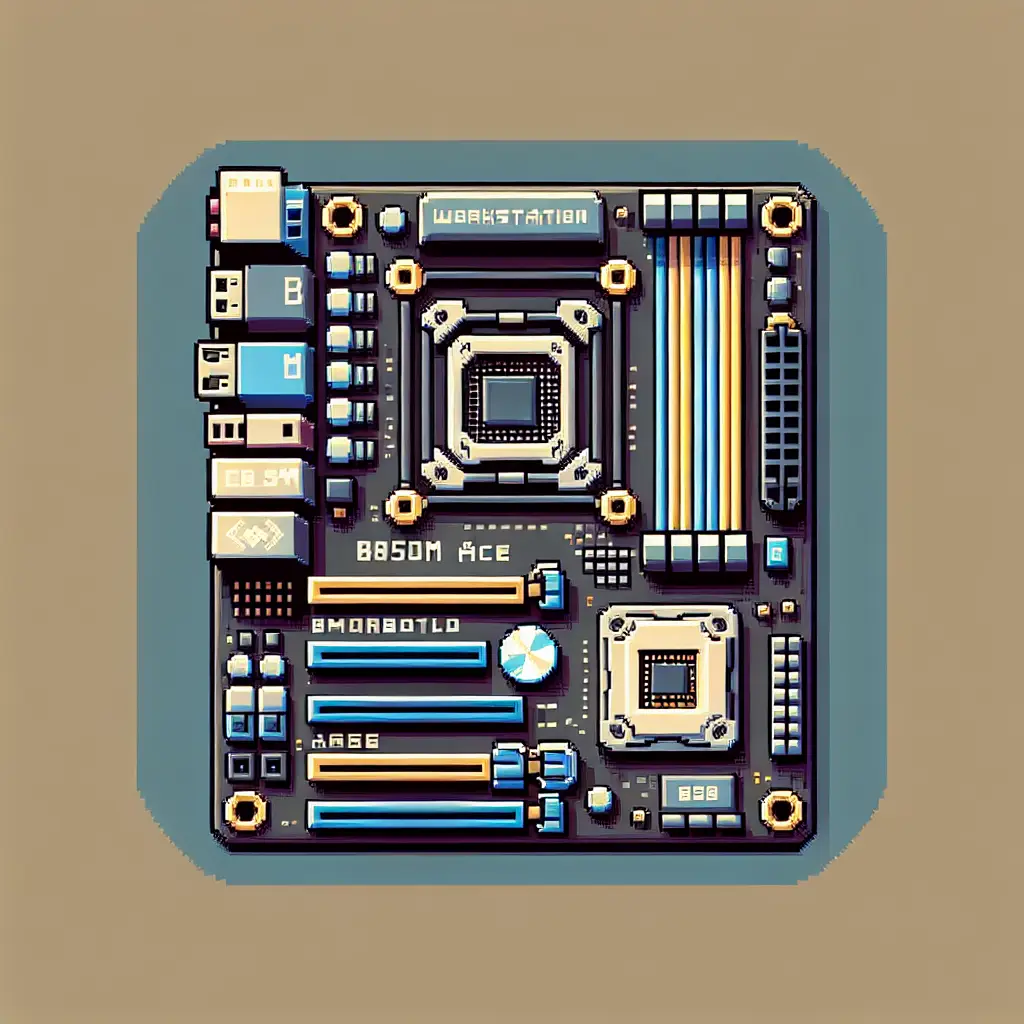
Small board, big ambitions: ASUS Pro WS B850M-ACE SE brings workstation features to microATX AM5 builds
The first time you see the Pro WS B850M-ACE SE you do a double-take — the AM5 socket and the DIMM banks are rotated 90°, giving this microATX board an unconventional layout. That visual oddity is a clue: ASUS didn’t just squeeze desktop features into a smaller footprint. They rethought layout and connectivity to make a compact, IT-friendly workstation that pulls a surprising amount of pro-level hardware into a 244 × 244 mm package.
Below I unpack what makes this board interesting, who it’s for, and why that rotated socket matters beyond aesthetics.
Why this release matters now
- AMD’s AM5 platform continues to expand from mainstream desktop into workstation and server-adjacent use. The B850 chipset fills a sweet spot for builders who want modern AM5 features without an E-ATX footprint.
- ASUS targeted this board at compact workstations and small business servers by adding features you usually see on larger or server boards: onboard BMC with IPMI, a U.2 connector, dual high-speed Ethernet (10 Gb + 2.5 Gb), and PCIe 5.0 support.
- With increasing demand for AI/ML inference at the edge and compact creator rigs, dense connectivity (fast NVMe, multi-Gb networking, remote management) matters as much as raw CPU core count.
Eye-catching specs at a glance
- Form factor: microATX (244 × 244 mm).
- Socket/chipset: AM5 with AMD B850 chipset — supports Ryzen 7000/8000/9000 and EPYC 4005 series.
- Memory: 4 × DDR5 DIMM slots, up to 256 GB, EXPO support (OC up to high speeds).
- Expansion/storage: PCIe 5.0 x16 primary slot, two M.2 slots (one PCIe 5.0 x4), MCIO support and an onboard U.2 connector.
- Networking: onboard 10 Gb Ethernet + 2.5 Gb Ethernet, plus a dedicated 1 Gb IPMI/BMC port.
- Management: onboard BMC (AST2600) with IPMI and ASUS Control Center Express for remote monitoring.
- Extras: front USB-C 20 Gbps header, robust 8+2+1 power stages, 24/7 reliability testing.
(Full tech details on the ASUS product page linked below.)
The rotated socket: what it does and why ASUS might have chosen it
- Space optimization: Rotating the CPU socket (and thus orienting the memory slots along a different axis) rearranges the board’s internal real estate. That allows ASUS to add server-grade features — BMC circuitry, a U.2 connector, MCIO, additional LAN ports — without pushing the layout beyond a microATX size.
- Cooler compatibility trade-offs: Most aftermarket coolers assume the CPU orientation found on ATX boards. While standard AIOs and many air coolers will still fit, tight builds or unusual bracket designs could encounter clearance issues. Builders should check cooler compatibility against the board’s layout.
- Cable routing and case fit: The rotated layout changes cable and fan header positions relative to case panels. For compact workstations and bespoke small-form-factor enclosures, that can be an advantage (shorter NVMe/MCIO traces, better airflow zoning) — just confirm the case supports the positioning.
- Serviceability and pro usage: For IT/enterprise customers, being able to cram more I/O and remote management into a smaller board is a net win; the rotated layout is a practical compromise to prioritize features over standard orientation.
Who should consider the Pro WS B850M-ACE SE
- Small business or home lab admins who need remote management (IPMI) but prefer a compact chassis. The onboard BMC and dedicated management NIC let you monitor and administer systems headlessly.
- Creators and AI/ML hobbyists who want high-bandwidth storage (PCIe 5.0 M.2, MCIO, U.2) and multi-gig networking in a small desktop/workstation build.
- Builders constrained by space who still want PCIe 5.0 graphics or accelerators plus enterprise-grade connectivity.
- Not ideal for people who want plug-and-play compatibility with every consumer cooler or who insist on standard ATX layout expectations without checking clearances first.
Trade-offs and things to check before buying
- Cooler fit: verify your CPU cooler (air or AIO bracket) supports the rotated socket or has enough clearance.
- Case compatibility: microATX cases vary; double-check standoff alignment, IO shield area, and whether front-panel USB-C routing lines up.
- U.2 vs modern NVMe priorities: U.2 remains useful for certain enterprise SSDs and hot-swap setups, but many consumer builds will rely primarily on M.2 drives. If you need U.2 specifically, this board is unusually accommodating for its size.
- Remote management complexity: IPMI/BMC is powerful for IT, but it introduces additional configuration and potential security considerations; treat the BMC interface like any network-facing admin service.
How this fits into the broader AM5 & workstation landscape
ASUS is signaling that AM5 isn’t just for full-size enthusiast motherboards. By putting server-grade features into microATX format, they’re acknowledging a market trend: people want workstation capabilities in smaller form factors for edge inference, compact studios, and dense deployments. Expect more OEMs and board makers to explore similar compromises — squeezing IPMI, multi-gig networking, and industrial storage interfaces into smaller boards — especially as AI workloads demand fast local storage and network throughput.
My take
This is one of those “clever engineering” products: it doesn’t radically change performance specs for consumers, but it democratizes workstation features into a compact footprint that actually makes sense for modern workflows. The rotated socket is a pragmatic design choice rather than a gimmick — it unlocks space for the features that matter to IT and pro users. If you’re building a small workstation with remote management or need industrial storage support in a microATX box, this board is worth a close look. If you’re purely a gaming consumer who swaps coolers and cards frequently, the unusual layout means extra homework before purchase.
Practical buying notes
- Expect pricing to be above typical consumer microATX boards because of the embedded BMC, 10 GbE, and industrial connectors. Retail listings show it in the workstation price band.
- Verify BIOS compatibility with your chosen Ryzen or EPYC 4005 CPU (ASUS lists supported families; check the support page for CPU compatibility).
- For IT deployments, plan for BMC security (firmware updates, network segmentation, credential management).
Final thoughts
ASUS’s Pro WS B850M-ACE SE is a tidy example of product differentiation: same AM5 ecosystem, but a different set of priorities. It’s a microATX motherboard built for professionals who need remote management, industrial storage options and high-speed networking without the bulk of a larger board. The rotated socket is simply the engineering price paid to make all that fit — a smart trade for the intended audience, and a sign that motherboards will keep evolving in form as well as function.
Sources
Related update: We recently published an article that expands on this topic: read the latest post.
Related update: We recently published an article that expands on this topic: read the latest post.

When the Crown Slips: BYD Tops Tesla in the Global EV Race
A short, sharp image comes to mind: the electric vehicle throne — long assumed to be Elon Musk’s exclusive domain — quietly shifting eastward. In 2025, China’s BYD sold more fully electric cars than Tesla, marking the first time Tesla has been definitively overtaken on annual BEV (battery-electric vehicle) deliveries. That moment deserves a second look: it’s not just a change in ledger lines, it’s a sign of how fast the EV playing field is changing.
What happened
- Tesla’s full-year deliveries fell in 2025 to roughly the mid-to-high 1.6 million range, down from about 1.79 million in 2024. Reuters and other outlets reported an annual decline driven by softer demand and the end of a key U.S. federal EV tax credit. (reuters.com)
- BYD’s fully electric (BEV) sales jumped about 28% year-on-year, reaching a figure above 2.2 million BEVs in 2025 — while the company’s total passenger-vehicle deliveries (including plug-in hybrids) were much larger still. That helped BYD claim the top spot for BEV deliveries worldwide. (nasdaq.com)
Why this matters
- Market leadership signals matter beyond ego: they shape investor narratives, supplier leverage, dealer and service footprints, and the direction of R&D budgets.
- BYD’s win highlights a structural reality: scale in China + aggressive product mix (including lower-priced models) + rapid export growth = a powerful engine for volume.
- Tesla’s setback suggests the company faces cyclical and structural headwinds: tougher competition in China and Europe, pricing pressures, and policy shifts (notably U.S. tax credit changes) that can swing consumer demand.
Quick takeaways for busy readers
- BYD surpassed Tesla on annual BEV deliveries in 2025, driven by strong growth at home and surging exports. (forbes.com)
- Tesla’s deliveries fell versus 2024; a key factor was the expiration of a U.S. federal tax credit that had boosted EV purchases. (reuters.com)
- The gap reflects two different strategies: BYD’s high-volume, vertically integrated approach across price segments vs. Tesla’s higher ASP (average selling price) and continued focus on premiuming technology and margins. (statista.com)
The broader context
- China is both the world’s largest EV market and a global manufacturing powerhouse. Domestic scale allows Chinese OEMs to iterate quickly on cost, battery chemistry, and model range — then export those efficiencies abroad.
- BYD’s mix includes a significant volume of plug-in hybrids (PHEVs) alongside BEVs; while the global “BEV crown” is the headline, BYD’s overall passenger-vehicle scale (BEVs + PHEVs) gives it production flexibility and revenue diversification. (nasdaq.com)
- Tesla still holds advantages: brand cachet, software and energy-integration narratives, an established Supercharger network in many markets, and high-margin software/Autopilot services. But those advantages are being contested on price, product breadth, and local partnerships in key markets.
What this could mean going forward
- Competition will intensify on price and features. Expect more affordable models from legacy and new EV players, plus broader rollouts of mid-market tech (e.g., fast charging at lower cost). (autoini.com)
- Global market share could fragment. Tesla may focus on differentiation (software, autonomy, energy) while BYD leverages scale and cost to win mainstream buyers and expand exports.
- Regulation and incentives will remain swing factors. Policy changes (subsidies, tax credits, import rules) can rapidly change demand dynamics across regions.
My take
This shift is important, but not catastrophic for Tesla. It’s a signal that the EV market is maturing: leadership is contestable, and product, price and distribution matter as much as hype. BYD’s ascent is a reminder that manufacturing scale, vertical integration (including battery production) and a broad product ladder can win volume — especially when a domestic market as large as China’s acts as a testing ground and springboard.
For Tesla, the choice is tactical and strategic: defend volume with pricing and localized models where needed, and double down on the unique strengths that keep margins and future optionality intact (software, energy, and autonomy). For BYD, the opportunity is to convert volume into durable share in markets outside China while protecting profitability as it scales globally.
Final thoughts
The EV crown’s relocation tells us less about a single company’s destiny and more about an industry in transition. Expect more headline moments like this: the winners of the next decade will be those who combine scale, speed, and adaptability — and who can turn manufacturing muscle into global, trusted customer experiences.
Sources
Related update: We recently published an article that expands on this topic: read the latest post.
Related update: We recently published an article that expands on this topic: read the latest post.
Related update: We recently published an article that expands on this topic: read the latest post.
Related update: We recently published an article that expands on this topic: read the latest post.
Will your car get CarPlay Ultra? What the rollout really looks like
Hook: Imagine your iPhone not just projecting a map on your car’s center screen, but redesigning the entire cockpit—speedometer, HVAC toggles, media, and more—so the car feels like an extension of your phone. That’s the promise of CarPlay Ultra, Apple’s long‑teased next generation of CarPlay. But will your next (or current) car actually get it? The short answer: maybe—but the reality is more complicated.
Why CarPlay Ultra matters
- CarPlay Ultra is a major rethink of smartphone projection. Instead of one app on one screen, it aims to deeply integrate iPhone-driven UI across every digital display in the vehicle: infotainment, instrument cluster, passenger screens, and even some vehicle controls.
- For drivers, that can mean familiar Apple apps and UI layered into vehicle-critical readouts (speed, RPM, fuel/electric metrics) and direct toggles for climate or ADAS features, provided the automaker allows those hooks.
- For automakers, it’s a trade-off: hand over more in-cockpit control to Apple and offer a seamless iPhone experience, or keep proprietary interfaces and differentiate on software.
The rollout so far
- Apple officially launched CarPlay Ultra in May 2025 and positioned Aston Martin as the first production partner. Aston Martin began offering CarPlay Ultra on new orders in the U.S. and Canada, with software updates promised for recent existing models. (apple.com)
- Beyond Aston Martin, Apple originally listed many automakers as committed partners (a list first shown at WWDC 2022), but several major brands have since walked back plans. Reports in mid‑2025 showed Audi, Mercedes‑Benz, Polestar, Renault, and Volvo stepping away from CarPlay Ultra. Others like BMW, Ford, and Rivian have been noncommittal or shifted strategies. (macrumors.com)
- As of late 2025, automakers that appear committed or likely to offer CarPlay Ultra include Hyundai, Kia, Genesis, Porsche, and a handful of others—while many conservative or in‑house‑first makers (e.g., GM brands, Tesla) are avoiding it altogether. (macrumors.com)
Why many automakers are hesitating
- Control and differentiation: Car manufacturers view the cockpit UI as a brand touchpoint. Giving Apple control over instrument clusters and core displays risks making many cars feel the same—or handing the best UX to Apple rather than the automaker. Several premium brands explicitly cited a desire to keep a “customized and seamless digital experience” under their control. (macrumors.com)
- Technical complexity and safety: Deep integration requires intimate access to vehicle sensors, controls, and diagnostics. That creates safety, certification, and liability questions—plus more engineering work to map vehicle data and controls into Apple’s framework.
- Business model and data: Automakers are building proprietary platforms, app ecosystems, and even voice assistants. Some want to monetize software themselves and retain the data and feature roadmap.
- Cost and timing: Rolling out next‑gen infotainment hardware or performing OTA updates across large model ranges is expensive and takes coordination. Not every refresh cycle lines up with Apple’s timelines.
What this means for you (the driver/buyer)
- If you own or plan to buy an Aston Martin (2025+), you can already experience CarPlay Ultra or expect a dealer update soon. For most buyers, however, availability will depend on brand and model year—don’t assume CarPlay Ultra is coming just because a car has standard CarPlay today. (9to5mac.com)
- If you care deeply about phone‑centric UX and seamless iPhone integration, prioritize brands that have publicly committed to CarPlay Ultra (e.g., Hyundai/Kia/Genesis announcements and Porsche’s stated plans). If you prefer an automaker’s unique digital identity, choose brands that are keeping cockpit control in‑house. (macrumors.com)
- Watch model‑specific announcements and software update policies. Some manufacturers will add CarPlay Ultra to existing cars via dealer updates or OTA, while others will limit it to new hardware platforms.
Roadmap and timing to watch
- Apple initially suggested a broader roll‑out within roughly 12 months after Aston Martin’s launch window (May 2025 → through 2026), but many commitments have slowed or reversed. Expect a staggered, brand‑by‑brand timeline rather than a single universal switch. (9to5mac.com)
- Key indicators to follow:
- OEM press releases confirming specific models and model years that will ship with—or receive updates to—CarPlay Ultra.
- Software update mechanisms: OTA capable platforms are more likely to get retrofits.
- Regulatory or safety certifications that outline how CarPlay Ultra interfaces with driver information systems.
The broader industry tension
- The CarPlay Ultra saga highlights a broader clash between platform companies (Apple/Google) and carmakers: who builds the future car operating system? Google has pushed Android Auto / Android Automotive and AI-powered experiences; Apple wants iPhone continuity in the vehicle. Meanwhile, automakers—especially those building EVs with modern software stacks—are trying to keep users in their own ecosystems.
- Some companies (notably GM) have fully shifted away from smartphone projection in favor of proprietary platforms and voice assistants, showing that the industry is splitting into multiple models for cockpit software. (theverge.com)
A buyer’s checklist
- Before you buy, ask the dealer:
- Will this model support CarPlay Ultra? If yes, when and by what method (factory option, OTA, dealer update)?
- Does the car have the necessary next‑gen infotainment hardware, or will only future model years support Ultra?
- If you already own the model, what are the costs and timing for enabling CarPlay Ultra?
- If you want Apple’s in‑car experience, prioritize brands that have made clear commitments and offered timelines (Hyundai/Kia/Genesis/Porsche are examples to monitor). If you value proprietary experiences, look to brands explicitly keeping in‑house systems.
My take
CarPlay Ultra is an exciting vision—a unified, phone-driven cockpit could make in‑car tech feel simpler and more consistent for iPhone users. But that vision runs headlong into manufacturers’ desire for control, differing product roadmaps, and safety/regulatory complexities. For now, CarPlay Ultra is real but narrow in scope: an elegant, Apple‑led experience available first in a boutique set of vehicles and promising broader availability only if Apple and automakers find a workable balance. Don’t expect a fast, universal switch; expect a patchwork rollout shaped by brand strategy, hardware cycles, and customer demand.
Sources
Related update: We recently published an article that expands on this topic: read the latest post.
Related update: We recently published an article that expands on this topic: read the latest post.