Epic Tech & Game Deals: Stocked and Cut | Analysis by Brian Moineau

Hook: Deals that make you want to hit “Add to Cart” now

If you skim headlines, the phrase Today’s Top Deals: MTG Edge of Eternities, Metal Gear Solid: Master Collection, and Pragmata - IGN probably jumped out at you — and for good reason. Bundles and reissues are back in the mix, beloved physical products are resurfacing, and digital discounts are deep enough to tempt even the most disciplined collector. Today’s roundup highlights a surprising mix: a Magic: The Gathering product resurfacing in stock, a classic Kojima collection on sale, and Pragmata still dropping in price alongside a restock of the Resident Evil Generation Pack.

Why these deals matter right now

We live in a weird crossover of retro revival and collectible scarcity. Publishers and retailers chase both new audiences and collectors who crave physical editions, while digital storefronts push big markdowns to clear inventory. That means deals on things like MTG Edge of Eternities booster boxes, Metal Gear Solid: Master Collection volumes, and Pragmata aren’t just cheap — they’re signals.

  • Gamers get access to preservation-friendly collections (Metal Gear Solid).
  • Tabletop players see rare print runs and bundles reappear (MTG Edge of Eternities).
  • Big-budget PC/console titles (Pragmata, Resident Evil Requiem/Requiem-linked editions) float between full price and surprising discounts as platforms and sales rotate.

Transitioning between hobbies has never been more affordable — or more urgent if you want the physical items before they sell out again.

Today’s Top Deals: MTG Edge of Eternities, Metal Gear Solid: Master Collection, and Pragmata - IGN

Yes, that full phrase belongs here — because it captures the range. On one hand, Magic: The Gathering’s Edge of Eternities items (collector/booster bundles) have been popping in and out of retail stock, making restocks news for dedicated players and speculators alike. On the other, Metal Gear Solid: Master Collection sales keep allowing newcomers to access Kojima’s legacy at a fraction of the usual cost. And then there’s Pragmata: a cinematic, ambitious release that has seen waves of price movement since launch, often included in publisher or platform sales.

What ties these together is timing: whether you’re chasing nostalgia, building a deck, or trying a visually bold sci-fi game, the current retail landscape is giving you chances to buy in cheaper than you might expect.

Snapshot: what’s notable in the current wave of discounts

  • Resident Evil Generation Pack restocks for Switch shoppers have surfaced — a boon for collectors who missed the initial run.
  • The MTG Edge of Eternities collector and booster offerings have returned to some retailers, giving players a chance to secure product without paying aftermarket premiums.
  • Metal Gear Solid: Master Collection Vol. 1 and related packages show up frequently on sales at major retailers, sometimes under $20 for physical or digital editions.
  • Pragmata and other recent Capcom releases have been featured in publisher sales across PC storefronts, creating good windows for price-sensitive buyers.

These kinds of cyclical availability patterns mean being ready — but not panicked. If you want a physical edition, quick action helps; if you’re flexible, waiting for the next platform sale can pay off.

How to decide fast without buying badly

Deals are fun, but the best purchases are intentional. Ask yourself these quick questions before checkout:

  • Do I want this for play or for collection? Physical collector boxes and limited-run packs matter far more to collectors than to players who just want singles or experiences.
  • Is this price lower than the typical sale? Compare with recent sale history (many communities track this).
  • What’s the return policy? Physical resellers and marketplace listings vary — verify before committing.
  • Will this become scarce or is it likely to be reprinted? MTG reprints and Wizards’ distribution strategies are volatile; sometimes a restock means more will follow, sometimes it’s the last run.

Plan for small wins: grab the one or two items you really want now and make a short watchlist for the rest.

Where to watch for similar deals

  • Big seasonal sales (publisher-weekend promotions, Steam/Amazon/Best Buy events) often include collections and recent releases.
  • Specialist stores and TCG retailers announce restocks for collectible products; follow them or join notification queues.
  • Community deal hubs and subreddits are excellent for spotting fleeting price drops and restocks, but cross-check with a retailer before you buy.

In practice, combining automated alerts (price trackers) with a couple of trusted deal communities gives you both speed and context.

My take

There’s a pleasing democratization in this wave of deals: mainstream gamers can finally afford curated retrospectives, while tabletop players get another shot at hot product without paying scalper prices. That said, deals are a two-sided coin — great for buyers who know what they want, and a trap for impulse shoppers chasing “rare” labels.

If you want one piece of advice: prioritize what you’ll actually use. Buy the game you’ll play and the MTG boxes you’ll open or display. The rest will either reappear or teach you patience (and maybe a little restraint).

Final thoughts

This moment feels like a crossover episode between collector culture and everyday gaming life. Whether you’re building a deck, replaying a classic stealth trilogy, or exploring a visually bold new IP, the current deals give you entry points at far lower risk. Keep an eye on restocks — and keep your wants ranked. That’s the best way to win at “deals” without losing your budget.

Sources

Kahlua Tiramisu | Made by Meaghan Moineau

It was one of those rainy Wednesday nights when the craving hit hard. You know the type — the kind where you just need something indulgent to take the edge off the mid-week blues. My mind immediately went to tiramisu, but not just any tiramisu. I wanted something with a little extra kick, a little something-something to make it feel like more than just a dessert. Enter Kahlua Tiramisu. This dish is luxurious yet surprisingly easy, a balance of creamy mascarpone and velvety espresso with a splash of Kahlua for that extra oomph. The best part? You don’t need to be a pastry chef to whip this up. It’s perfect for those nights when you want to impress with minimal effort.

Jump to Recipe

What You’ll Need

Before diving in, take a peek at the ingredient list. Chances are you already have most of this sitting around, just waiting to transform into dessert magic.

  • Mascarpone cheese
  • Vanilla extract
  • Kahlua
  • Espresso
  • Whipping cream
  • Icing sugar
  • Ladyfingers (pick a pack that will fit snugly in an 11×7 dish)
  • Cocoa powder

How to Make Kahlua Tiramisu

  1. In a medium mixing bowl, combine the mascarpone cheese with vanilla extract, Kahlua, and just under half of your freshly brewed espresso. Blend it well until you achieve a smooth, lush mixture.
  2. In another medium bowl, whip the cream with the icing sugar until it holds soft peaks. You want it smooth, like a cloud. Gently fold in the mascarpone mixture until it’s fully incorporated.
  3. Pour the remaining espresso into a wide, shallow dish, ready to soak those ladyfingers. Quickly dip each ladyfinger in, flipping it to coat both sides. Don’t let them soak too long — you want them soft but not mushy.
  4. Arrange the soaked ladyfingers to form a single layer at the bottom of an 11×7 casserole dish. Spread half of your mascarpone mixture over the ladyfingers, covering them evenly.
  5. Repeat the dipping and layering process with the rest of the ladyfingers and mascarpone mixture.
  6. Refrigerate for at least 4 hours, preferably overnight, to let the flavors meld. Just before you’re ready to serve, dust a generous layer of cocoa powder over the top using a fine sieve. For an extra treat, scatter some grated bittersweet chocolate or chocolate curls over the top.

Cook’s Notes

This dessert is a dream for planners. You can make it a day ahead, and it actually tastes better the next day as the flavors have time to develop and deepen. Store leftovers in the fridge, tightly covered, for up to three days. Avoid freezing; it messes with the creamy texture that makes tiramisu so delightful. When dipping ladyfingers, keep it quick! A mere second or so in the espresso will keep them from getting too soggy and disintegrating.

Make It Your Own

  • For a boozier version, swap some of the espresso for extra Kahlua. Your call!
  • Not a fan of Kahlua? Try using a hazelnut liqueur or even a shot of Baileys for a different flavor profile.
  • For a nutty twist, add a layer of crushed toasted almonds in between the mascarpone layers. It adds a lovely crunch.
  • If you’re watching sugar intake, reduce the amount of icing sugar in the whipped cream, or use a sugar substitute that blends well.

If you try this, I’d love to hear how it turns out — drop a comment or tag me! There’s nothing quite like sharing a sweet success. Enjoy your little slice of indulgence!

Related update: Kahlua Tiramisu

Zahabi Urges Chimaev to Train with GSP | Analysis by Brian Moineau

A coach’s open door: Firas Zahabi thinks he can revive Khamzat Chimaev after UFC 328

The morning after UFC 328, Firas Zahabi was blunt and public: Firas Zahabi believes he is the man to revitalize Khamzat Chimaev's career after UFC 328. It wasn't a passive tweet or a wink — Zahabi, head coach at Tristar Gym and longtime mentor to Georges St‑Pierre, openly begged Chimaev to come to Montreal and train with him and GSP. The timing — immediately following Chimaev’s first professional loss to Sean Strickland on May 9, 2026 — shaped the offer into something part diagnosis, part lifeline.

This felt different from the usual post-fight hot takes. Zahabi wasn’t critiquing from the couch; he was extending a practical fix: a coaching environment where stamina, strategy and movement get rebuilt deliberately. For a fighter like Chimaev — explosive, relentless, but visibly gassed and tactically narrow against Strickland — that kind of surgical help can be career-defining.

What happened at UFC 328 and why Zahabi reacted

UFC 328 in Newark saw Sean Strickland edge out Khamzat Chimaev via split decision, taking back the middleweight belt and handing Chimaev his first pro defeat. Official scorecards were 48-47, 48-47, 47-48 in favor of Strickland. Coverage and replay showed a five-round war that turned on conditioning, pacing, and late-round control — areas Zahabi repeatedly cited as fixable with the right camp and planning. (ufc.com)

Zahabi’s message — paraphrased and quoted in outlets that picked up his YouTube remarks — was direct: “Come train with me and Georges St‑Pierre. I promise you won’t fade. I promise you this will never happen to you again.” He doubled down on specifics: improved fitness, refined striking and footwork, and a smarter gameplan that preserves energy across five rounds. Those are exactly the marginal gains that separate a dominant grappler from a complete elite champion. (bjpenn.com)

Transitioning from peak hype to the humility of a loss is messy. For Chimaev, who built his aura on relentless takedown pressure and suffocating intensity, the Strickland fight exposed a hard truth: when plan A stalls, there needs to be a plan B that doesn’t bankrupt your energy reserves.

Why Tristar and Zahabi might actually help

  • Zahabi’s coaching résumé is built on polishing elite-level fighters, most famously Georges St‑Pierre. Tristar’s approach is methodical: technical drilling, pacing strategies, and fight IQ that prioritizes winning rounds over dramatic single moments. That aligns with what Chimaev lacked at UFC 328. (en.wikipedia.org)
  • Tristar offers high-level partners and a blueprint for mid- to long-term rebuilding. It’s not a quick fix — it’s hard, repetitive, and tactical work. For a mercurial, high-energy grappler, that regimen can smooth out the edges and add the endurance to stop burning out after explosive openings.
  • Beyond physical prep, Zahabi promises mental reframing. Losses expose habits; a coach who can retool mental approach — when to press, when to reset, how to steal rounds on points — is worth as much as conditioning.

That’s not to romanticize the move. Fighters are human and ecosystems are complicated. Changing camps or absorbing new coaching philosophies takes time, trust, and buy-in from managers and support teams. But Zahabi’s line about “this will never happen to you again” reads less like bravado and more like confidence born of process. The question is whether Chimaev wants structural help or prefers to double down on his existing methods.

Obstacles and real-world frictions

  • Logistics and loyalties matter. Chimaev trains in a specific crew and has close ties to coaches and teammates. Moving to Montreal or even embedding with Tristar temporarily would require wide agreement from his handlers.
  • Style compatibility isn’t guaranteed. Chimaev’s strength is his ferocious, downhill pressure. Some coaches want to retain that identity while adding nuance; others try to remodel fundamentally. The best outcome would be complementary coaching, not a wholesale identity shift.
  • Public perception and ego play roles. A fighter coming off a loss is already on a narrative knife-edge. Accepting overtures from a legendary coach helps on the optics front, but it also signals vulnerability. That’s fine, and often necessary, but it can be politically delicate.

Still, the upside is large. If Zahabi helps Chimaev add gas tank management, better lateral movement and a selective striking game to complement takedowns, the result could be a more durable—and more dangerous—champion.

Practical ways a Tristar camp could change Chimaev’s trajectory

  • Drill-paced sparring that replicates five rounds at fight-intensity but teaches energy preservation.
  • Footwork and separation work to create entries for takedowns that don’t cost massive bursts every minute.
  • Strategic scenarios: what to do when takedowns aren’t landing, how to secure rounds with positional control or effective striking.
  • Cross-disciplinary conditioning (not just wrestling cardio) to maintain output without sacrificing power.

Those aren’t theoretical. Zahabi’s track record shows teams who emphasize cerebral work and pacing can convert fighters from specialists to well-rounded champions. For Chimaev, that conversion would go a long way toward sustaining a title reign. (en.wikipedia.org)

Quick points to remember

  • Zahabi publicly offered to host Chimaev and bring GSP into the process, emphasizing fitness, striking, and footwork. (bjpenn.com)
  • UFC 328’s official scorecards confirm the split-decision result that ended Chimaev’s undefeated streak. (ufc.com)
  • The path forward is practical but requires buy-in from Chimaev’s camps and a willingness to adapt identity as a fighter.

My take

There’s theater in Zahabi’s plea — the optics of a legendary coach extending a hand to a fallen, charismatic star. But beyond theater is a useful reality: elite athletes rarely plateau because they won’t change; they falter because they can’t adapt fast enough. Zahabi’s offer is the kind of adaptive option Chimaev needs if he’s committed to a long-term run at the top.

If Chimaev accepts, the most interesting outcome won’t be a miracle transformation overnight. It will be a quieter, steadier version of him: smarter pacing, cleaner entries, and the stamina to make seismic takedowns feel like the coup de grâce rather than a desperate bid for survival. That version would be harder to predict — and more dangerous when he does decide to explode.

Sources

Fresh Peach With Goat Cheese Side Salad | Made by Meaghan Moineau

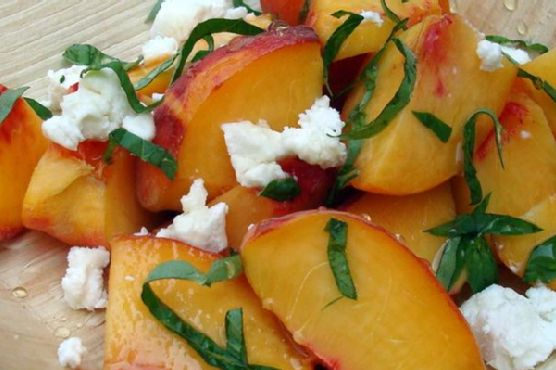
It was one of those sticky summer afternoons, the kind where even the shade feels warm and inviting. I had a couple of peaches lounging on the counter, looking like they might start a protest if not eaten soon. That’s when inspiration struck! I wanted something refreshing but also satisfying, and that’s how this Fresh Peach With Goat Cheese Side Salad came to life. It’s such a delightful surprise: juicy peaches balanced by creamy goat cheese, accented with fragrant basil and a hint of honey sweetness. Plus, it only takes a few minutes to whip up, making it perfect for a spontaneous lunch or a quick dinner side.

Jump to Recipe

What You’ll Need

I bet you have most of these hanging around your kitchen. Here’s what you need for this bite of sunshine:

  • 4 ripe peaches – the juicier, the better
  • 1 tablespoon of honey – for that sweet, sticky goodness
  • Pinch of salt – to make all the flavors sing
  • 1/2 cup of crumbled goat cheese – creamy and tangy
  • A handful of fresh basil leaves – torn for maximum aroma

How to Make Fresh Peach With Goat Cheese Side Salad

  1. Halve and pit the peaches, then slice them into wedges. Place these sun-drenched beauties into a large mixing bowl.
  2. Drizzle the honey over the peach slices. Use your hands to gently toss them until they’re evenly coated. Feel free to sneak a taste here; it’s irresistible!
  3. Sprinkle a pinch of salt over the honeyed peaches. This simple move really brightens up the flavors, trust me.
  4. Now for the aromatic part: gently fold in the torn basil leaves. The smell is going to be like a mini vacation.
  5. Finally, crumble the goat cheese over the top and give it one last gentle toss. The cheese should cling lovingly to the peaches.

Cook’s Notes

Here’s a little secret: no need to be too precise with this salad. It’s all about the balance of sweet and tangy meeting fresh and creamy. If you don’t have ripe peaches, you might need a bit more honey to bring out their sweetness. This salad doesn’t keep well, so aim to enjoy it right away. But if you have leftovers, they’ll still be tasty for a day if stored in the fridge — just expect the basil to do a little wilting dance.

Make It Your Own

Looking to customize this salad? Here are some fun tweaks:

  • Swap the peaches for nectarines or even grilled apricots for a smoky twist.
  • Try using a soft blue cheese instead of goat cheese if you’re feeling adventurous.
  • For a nutty crunch, add a handful of toasted pistachios or sliced almonds.
  • If basil isn’t your thing, mint leaves could bring a refreshing coolness instead.

If you try this, I’d love to hear how it turns out — drop a comment or tag me! I hope this salad brings a burst of sunshine to your table as it did mine. Enjoy every juicy, creamy bite!

Related update: Fresh Peach With Goat Cheese Side Salad

Swiss Chard Wraps | Made by Meaghan Moineau

Picture this: It’s a Wednesday evening, you’re staring blankly into your fridge, mentally calculating the time it takes to defrost a chicken breast versus the desire to just order takeout. Sound familiar? That’s when I stumbled upon the beauty of Swiss Chard Wraps. The first time I made these, I had a surplus of swiss chard and exactly zero motivation to cook anything I couldn’t make in less than 30 minutes. These wraps are fresh, flavorful, and unexpectedly satisfying, and they completely saved dinner that night. They’re packed with vibrant veggies and a spicy kick, and the best part is — they’re ridiculously easy to put together. Plus, they feel like a little bit of a kitchen adventure. Curious yet?

Jump to Recipe

What You’ll Need

Okay, here’s the best part. You likely have most of these ingredients on hand, and if not, they’re easy to grab. Plus, they’re all about that fresh, vibrant taste!

  • Dried swiss chard leaves
  • Orange cauliflower
  • Olive oil
  • Garlic
  • Salt
  • Fresh basil
  • Zucchini
  • Red bell pepper
  • Avocado
  • Trader Joe’s spicy peanut vinaigrette

How to Make Swiss Chard Wraps

  1. Chop off the stems of the swiss chard right where they meet the leaf. I like to leave a little bit of the stem attached to give the wraps some backbone, but you do you.
  2. Take that orange cauliflower, chop it into small pieces, and pulse in a food processor until it resembles rice. Florets and stalks are both fair game.
  3. Heat some olive oil in a sauté pan over medium-high heat. Once it’s shimmering, toss in the garlic and let it sizzle for a minute or two until you smell that glorious aroma and see it start to brown.
  4. Add your cauliflower rice to the pan and cook for about 2-3 minutes. You’ll know it’s done when it turns a vibrant yellow-orange. Sprinkle in a pinch of salt and some chopped basil, then give it a good stir.
  5. If you have a spiralizer, use Blade B to create zucchini noodles. No spiralizer? No problem. Just use a vegetable peeler to make ribbons.
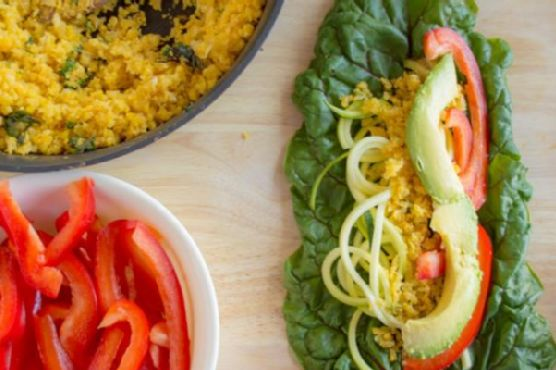
  6. To assemble the wraps, lay a large swiss chard leaf flat. Add some sautéed cauliflower, zucchini noodles, red bell pepper slices, and avocado down the center along the stalk.
  7. Drizzle everything with a bit of spicy peanut vinaigrette and wrap it up tightly. Take a moment to admire your handiwork before diving in.
  8. These wraps are fantastic as a side dish to your favorite protein or even as a light main course. Enjoy them right away for the best experience!

Cook’s Notes

These wraps are freshest when made and eaten right away, but if you’re looking to prep ahead, you can make the cauliflower rice and chop the veggies in advance. Store them separately and assemble the wraps when you’re ready to eat. Leftovers? Pop them in an airtight container and refrigerate. They’ll keep for a day, but trust me, they’ll be long gone before you know it. If you’re watching the salt, taste as you go, especially if your vinaigrette is already salty.

Make It Your Own

Get creative with these wraps! Here are a few ways to mix things up:

  • Swap the avocado for hummus for a creamy, Mediterranean twist.
  • Use crispy tofu instead of the spicy peanut vinaigrette for a protein-packed version.
  • Throw in some shredded carrots for an extra crunch.
  • Experiment with different herbs — mint or cilantro can add new dimensions of flavor.

If you try this, I’d love to hear how it turns out — drop a comment or tag me! These wraps are a staple in my kitchen now, and I hope they become one in yours, too. Happy wrapping!

Related update: Swiss Chard Wraps

Related update: Fresh Peach With Goat Cheese Side Salad

How Europe’s Oil Traders Won Big | Analysis by Brian Moineau

When traders beat drillers: how BP, Shell and TotalEnergies cashed in on Iran war volatility

A funny thing happened while the world was watching tankers and pipelines: trading desks at BP, Shell and TotalEnergies outshine US rivals. Traders at the big European majors turned the chaos from the Iran war into a near-term profit bonanza, using physical assets and deep derivatives benches to exploit price dislocations across crude, refined fuels and LNG markets.

This isn’t just a quirk of accounting. It highlights a structural difference across Big Oil: European groups have built vast, integrated trading machines that can both secure physical flows and place fast, large financial bets when volatility spikes. That mix of scale, optionality and agility turned what looked like a supply shock into cash for shareholders — and a headache for critics.

Why the trading windfall mattered

  • Volatility creates arbitrage. When route closures, outages and sudden reroutings make the same barrel worth different things in different places, traders who control shipping, storage and refinery access can profit from moving oil and paper contracts around the globe.
  • Physical footprint + derivatives = advantage. European majors combine refineries, terminals and fleet with active futures and options desks. That allows them to capture spreads that pure producers can’t.
  • Timing and scale. The shock to supply after late February (the conflict escalated and disruptions around the Strait of Hormuz followed) produced price spikes and extreme short-term moves. That’s where big trading operations shine.

Analysts and company updates suggest the trio’s trading gains were measured in the billions for the first quarter, with estimates varying by methodology — but the scale is unmistakable. These gains helped offset lost upstream output and made headline profits look stronger than many expected.

Trading desks at BP, Shell and TotalEnergies outshine US rivals

Reuters and other outlets have hammered on the contrast: BP, Shell and TotalEnergies run huge trading arms (trading volumes measured in millions of barrels per day), while the largest US producers — Exxon and Chevron — traditionally kept trading tightly tied to internal flows and limited independent market-facing bets.

  • BP, Shell and TotalEnergies trade materially more oil than they produce, giving them the flexibility to act as market makers and arbitrageurs.
  • US majors focus on scale in upstream production and historically restrained their third‑party trading activity, which reduces exposure to the wild swings that create outsized trading profits — but also limits windfall opportunities.

That tradeoff produced a transatlantic divide: European companies benefited immediately from volatility; U.S. giants benefit if and when high prices persist through bigger upstream cash flows.

What actually happened in the market

When physical flows became constrained, several dynamics unfolded at once:

  • Benchmarks jumped and spreads widened. Brent surged into triple digits at times; regional price gaps opened for diesel, jet and gasoline.
  • Cargo routing became creative. Traders rerouted products along unconventional pathways (for instance, shipping from Europe to Asia) to meet local shortages, and those long-route moves created both physical and paper profits.
  • Working capital ballooned. Holding cargoes, longer voyages and larger inventories tied up billions in capital — profitable when prices moved the right way, but risky if they reversed.

So profits were real but paired with elevated balance-sheet and execution risks. Several articles and company comments point out that trading can generate big losses as well as gains; size multiplies both.

The implications — for investors and policy

  • Valuation gaps may widen. If trading becomes a more central, recurring contributor to European majors’ earnings, investors could value them differently versus US peers that remain more upstream-heavy.
  • Earnings quality questions rise. Some investors and policymakers will ask whether volatility-driven trading gains are sustainable, and how transparent companies should be about the breakdown of trading vs. industrial results.
  • Political scrutiny increases. Windfall-style profits from geopolitical shocks often draw political heat and calls for windfall taxes or stricter disclosure — especially when energy prices bite consumers.

Transitioning from short-term effects to longer-term positioning, the story is a reminder that corporate strategy (build trading muscle or double down on production) shapes resilience and winners during crises.

Lessons from the episode

  • Integration pays off in turmoil, but at a cost. Vertical integration allowed majors to capture margin in a market shock — though running such desks requires capital, hedging sophistication and risk controls.
  • Diversification of capabilities matters. Companies that can flexibly combine physical logistics and financial markets will continue to have an edge in stressed energy markets.
  • Volatility is a two-way street. The same market conditions that produced windfalls can quickly reverse, exposing firms with big directional positions to rapid losses.

My take

The Iran war’s market shock underlined a simple truth: in energy markets, optionality is everything. European majors built optionality into their models for decades — partly as a commercial edge, partly to secure supplies for operations and retail networks. That optionality paid off spectacularly this quarter. But the episode also raises awkward questions about transparency, risk and the social licence of companies profiting while supply and consumer prices are under pressure.

If this becomes a recurring playbook — lean into trading to offset weaker upstream positions — investors will need to price those risks and rewards differently. Regulators and policymakers, meanwhile, will likely press for clearer reporting on trading results and for mechanisms to ensure consumers aren’t disproportionately harmed by market gaming during crises.

Final thoughts

Markets are machines for re-pricing risk. When geopolitics rips a hole in supply, the winners won’t always be the biggest pumps in the ground — sometimes they’re the teams that can thread a cargo through a storm and hedge the paper around it. That reality matters for company strategy, investor positioning and how we think about energy resilience in an increasingly unstable world.

Sources