AutoScientist: Automating Fine‑Tuning | Analysis by Brian Moineau

TL;DR

  • Adaption’s AutoScientist automates the fine‑tuning loop by co‑optimizing data and model “recipes,” claiming a 35% average gain over human‑configured runs and a 48%→64% win‑rate jump on in‑house evals, with a 30‑day free trial to spur adoption [1][2].
  • The real economic wedge isn’t “self‑training magic” but cycle‑time compression: fewer failed runs means fewer GPU‑hours and fewer human review cycles in a world where 8×H100 boxes list at ~$49.24/hour on CoreWeave as of 2026‑05 [4].
  • If AutoScientist scales, the center of gravity in AI moves from monolithic labs toward “continuous adaptation” stacks—yet credibility will hinge on public, contamination‑proof evals beyond SWE‑bench (2,294 GitHub issues) or ARC‑AGI (François Chollet’s 2019 challenge), which Adaption says aren’t applicable to its task‑specific tuning claims [1][6][7].

What the source said

TechCrunch reports that Adaption, led by CEO Sara Hooker, launched AutoScientist on May 13, 2026 to automate parts of model training and alignment for teams outside big labs; the product co‑optimizes both data and the model, building on Adaption’s Adaptive Data offering [1]. The company claims AutoScientist more than doubles win rates across models, citing a 48%→64% internal jump, but says benchmarks like SWE‑Bench (2023) and ARC‑AGI (2019) aren’t the right yardsticks because the tool adapts models to specific tasks [1][6][7]. To seed adoption, the lab is offering 30 days of free access via a hosted flow on Together AI and other providers, positioning the launch as a path to broader participation in frontier‑level fine‑tuning [1][2]. Hooker frames the release as expanding access to post‑training beyond a small set of incumbents in San Francisco and London, where most frontier efforts concentrate [1].

Why it matters

  • Stakeholders with the most to gain: mid‑market software companies and domain specialists in finance ops, legal review, and biotech R&D who hold terabyte‑scale proprietary corpora but lack a research team; automated data‑plus‑recipe search can turn those private datasets into tuned models in days instead of weeks, as Adaption’s 35% average gain claim suggests on Together‑hosted runs [2][5].
  • Stakeholders with the most to lose: centralized labs and annotation vendors whose moat rests on scarce talent and slow, manual post‑training; if a reliable loop reduces failed runs and human preference labeling, RLAIF‑style automation trims both GPU hours and label spend, echoing 2023 arXiv results where AI feedback matched RLHF on summarization/dialogue tasks [3][4].

Original analysis

Where AutoScientist fits: a 2×2 of “automation” vs. “capability locality”

  • Axes (2026 framing):
    • X: Capability locality (general alignment → task‑specific adaptation; e.g., ARC‑AGI or SWE‑bench vs. KYC document triage) [6][7].
    • Y: Automation level (manual sweeps/hand‑curation → autonomous loop with Vizier‑style early stopping and RLAIF‑grade AI feedback, 2017→2023) [3][9].
Example Capability locality Automation level Notes
RLHF pipelines (2020–2023) General Low–medium Human preference data; slow and expensive to iterate at scale [3].
Constitutional AI (Anthropic, 2022) General Medium–high AI critiques + rules reduce human labels; early RLAIF signal [8].
AutoScientist (Adaption, 2026) Task‑specific High Co‑optimizes data mixture and training recipes end‑to‑end; reports 35% average gain vs. human configs [2].
In‑house “AutoML for LLMs” (various teams) Task‑specific Medium Hyperparam search + small data curation; usually siloed in 1–2 orgs per vertical.

Consensus says “this democratizes frontier training.” The contrarian read: it only does if the loop produces audited, reproducible gains on public, de‑contaminated evals in 2026, not just on private leaderboards [1][2][6][7][3]. Adaption’s own post cites in‑house vertical evals and Together‑hosted fine‑tuning, while TechCrunch notes SWE‑bench and ARC‑AGI aren’t applicable; that stance is defensible for niche tasks but insufficient for procurement in sectors like banking and healthcare [1][2].

Back‑of‑envelope math: the cycle‑time wedge

  • Assume a typical team explores 10 fine‑tune variants per capability, each a 2‑hour run on an 8×H100 HGX box.
  • CoreWeave’s public on‑demand price for a single 8×H100 instance: $49.24/hour as listed in 2026 [4].
  • Manual loop cost: 10 runs × 2 h × $49.24 ≈ $984.80 per capability (work: 10 × 2 × 49.24 = 984.8).
  • If AutoScientist’s automated loop converges in 3 variants on average: 3 × 2 h × $49.24 ≈ $295.44 (work: 3 × 2 × 49.24 = 295.44).
  • Direct compute savings: ~$689 per capability (984.80 − 295.44 = 689.36). Add one ML engineer‑day saved per loop and you plausibly cut a 5‑day tuning sprint to <1 day, which Adaption explicitly targets with its end‑to‑end loop [2][4].

This is why co‑optimization matters economically in 2026: pruning dead‑end data mixtures and bad training recipes early can kill ~70% of unproductive runs, which reduces GPU burn and calendar time. If you also swap some human preference passes for AI feedback during RL steps—RLAIF achieved results comparable to RLHF on summarization and dialogue in 2023—you compress the annotation bottleneck too [3].

Historical analogue: Google Vizier (2017) and the playbook

In 2017, Google Vizier industrialized black‑box optimization across internal ML stacks at Google, moving teams from “sweep by feel” to Bayesian optimization with early stopping and metadata tracking [9]. Search, ads, and vision systems saw faster convergence and more reproducible wins under a service model, which reduced time‑to‑good‑config for thousands of experiments per quarter [9]. AutoScientist rhymes with that history, except the search space now spans both data and training‑process design, not just hyperparameters; the stakes are LLM post‑training, not CNNs for ImageNet. If Adaption ships Vizier‑grade reliability—transferable priors, safe early stopping, and experiment tracking—the productivity gains compound for orgs that fine‑tune weekly in 2026, not annually [2][9].

Named stakeholder breakdown

  • Adaption: must convert a 35% average uplift and 48%→64% internal win‑rate into third‑party results by summer 2026; the 30‑day free window is a smart way to crowdsource proof via reproducible runs [2].
  • Together AI: benefits if AutoScientist drives more token‑metered fine‑tunes on its platform; its per‑token pricing (published docs) aligns cost with experiment size and encourages more small runs per month [5].
  • Anthropic/OpenAI/Google DeepMind: pressure to show autonomous post‑training loops (RLAIF variants, self‑rewarding) improving task‑specific capability without brittle overfitting; prior art already shows AI‑as‑judge parity with RLHF in some settings as of 2023 [3].
  • CoreWeave/AWS: if automated loops cut total GPU hours per success, infra spend shifts toward “more projects, fewer hours per project,” with lower variance aiding capacity planning for 8×H100 fleets in U.S. regions [4][5].

What others are missing

The missing angle is evaluation governance for self‑improving loops that can “judge hack” themselves; Adaption says public benchmarks like SWE‑bench and ARC‑AGI don’t map to its targeted adaptations, and it uses in‑house domain evals instead [1][2][6][7]. That’s understandable, but reproducibility suffers without open harnesses, contamination audits, and independent graders, because modern LLMs can absorb benchmark artifacts during retrieval‑augmented training. The fix is not to pick a different benchmark; it’s to ship per‑domain, open eval suites with documented construction and grading, akin to SWE‑bench’s 2,294‑task corpus across 12 repos with verified patches and CI checks, so buyers in regulated industries can defend deltas in model risk reviews [6].

What to watch next

  1. By August 31, 2026, at least one independent lab (e.g., an academic group) publishes a head‑to‑head study showing AutoScientist’s co‑optimization beats a strong human‑configured baseline on a public, de‑contaminated domain eval by ≥15% relative margin.
  2. By Q4 2026, Together AI or a comparable host publicly attributes a measurable uptick (>20%) in monthly fine‑tune jobs to automated configuration systems like AutoScientist, citing per‑token billing data in docs or a blog.
  3. By March 2027, a major enterprise (Fortune 500) discloses in an investor filing or case study that automated training loops cut model‑iteration time by ≥50% for a business‑critical workflow (e.g., claims triage or code remediation), with at least one production KPI reported.

My take

AutoScientist is the right bet for 2026: automate the messy parts of post‑training, not just add more GPUs, and turn private data into capability faster with fewer failed runs [2]. I’m bullish on its ability to compress cycle time and spend, especially where proprietary corpora meet repeatable recipes and safe early‑stopping heuristics. But wins on internal evals won’t sway skeptical buyers in finance, health, or gov; publish auditable, contamination‑resistant harnesses and let outsiders reproduce the 35% average gain and 48%→64% win‑rate shift. If Adaption clears that bar by summer, it earns a seat at the frontier; if not, AutoScientist risks becoming another “trust us, it works” tool in a market that finally demands receipts [1][2].

Sources

  1. Adaption aims big with AutoScientist, an AI tool that helps models train themselves — TechCrunch (https://techcrunch.com/2026/05/13/adaption-aims-big-with-autoscientist-an-ai-tool-that-helps-models-train-themselves/) — Launch details, Hooker’s positioning, comments on benchmarks and the 30‑day free period.

  2. AutoScientist: Automating the Science of Model Training — Adaption (https://www.adaptionlabs.ai/blog/autoscientist) — Product claims (35% average gain; 48%→64% win‑rate), Together‑hosted fine‑tuning context, 30‑day free use.

  3. RLAIF vs. RLHF: Scaling Reinforcement Learning from Human Feedback with AI Feedback — arXiv (https://arxiv.org/abs/2309.00267) — Evidence that AI feedback can match RLHF on summarization/dialogue; supports automation of post‑training supervision.

  4. Instance Pricing (NVIDIA HGX H100) — CoreWeave (https://www.coreweave.com/pricing) — Public on‑demand price reference (~$49.24/hour for 8×H100 instances) used in the compute cost math.

  5. Fine‑tuning pricing — Together AI Docs (https://docs.together.ai/docs/fine-tuning-pricing) — Confirms token‑metered fine‑tuning economics and how jobs are costed on Together’s platform.

  6. SWE‑bench: Can Language Models Resolve Real‑World GitHub Issues? — arXiv (https://arxiv.org/abs/2310.06770) — Defines the 2,294‑task benchmark and methodology; context for public, auditable software evals.

  7. ARC‑AGI repository — GitHub (https://github.com/fchollet/ARC-AGI) — Official benchmark repository for ARC‑AGI; illustrates general‑reasoning evals and their limits for task‑specific tuning.

  8. Constitutional AI: Harmlessness from AI Feedback — arXiv (https://arxiv.org/abs/2212.08073) — Anthropic’s 2022 paper introducing rule‑based critique and AI feedback to cut human labels.

  9. Google Vizier: A Service for Black‑Box Optimization — KDD 2017 (https://dl.acm.org/doi/10.1145/3097983.3098043) — Historical analogue for service‑level optimization with Bayesian search and early stopping across Google ML teams.


Related update: We recently published an article that expands on this topic: read the latest post.

Woods’ Prescription Records Sealed | Analysis by Brian Moineau

Tiger Woods’s Prescription Records Will Be Shielded From The Public

Tiger Woods’s prescription records will be shielded from the public after a Florida judge approved a protective order that allows prosecutors to review the golfer’s medication history while keeping those records sealed from public view. The ruling comes as part of the investigation into Woods’s March 27 rollover crash and his subsequent arrest on suspicion of driving under the influence. (defector.com)

The headline reads like the final chapter of a long, public saga. But the ruling raises more questions than it answers: what will prosecutors actually learn from the records, why is privacy being preserved now, and how does this one courthouse decision fit into our hunger for transparency around high-profile incidents?

What the judge approved and what it means

A Martin County judge granted prosecutors access to Woods’s prescription records dating from January 1 through March 27, but only under a protective order. That means attorneys, law enforcement, court experts and Woods’s defense team may see the records — the wider public may not. The subpoena seeks details such as the names of drugs prescribed, dosages, refill dates and any warnings that accompanied the prescriptions. (investing.com)

Put plainly: investigators can use medical data to try to establish whether Woods’s prescriptions could have impaired him on the day of the crash. But the public will not get to read those pages. For victims of high-profile incidents and for a public used to immediate access to information, that difference matters.

Why prosecutors want the records

Prosecutors say prescription histories can show patterns: frequency of refills, dosage changes, and warnings about operating machinery — all of which could be relevant to proving impairment without a clear chemical standard for many prescription drugs. In Woods’s case, sheriff’s deputies reported finding two hydrocodone pills in his pocket at the crash scene, and officials said a breath test showed no recent alcohol consumption. Prescription records can help corroborate what was found at the scene and reveal whether Woods had been taking medications that might impair driving. (apnews.com)

Florida law provides mechanisms to obtain such records during criminal investigations. Defense counsel argued for privacy protections; the court balanced that interest against the prosecution’s need for evidence and chose to limit public disclosure while allowing investigative access. (apnews.com)

The privacy-transparency tension

This case sits at the crossroads of two strong impulses. On one hand, there is a public interest in transparency, especially when a celebrity’s conduct has potential public-safety implications. On the other hand, there are well-established privacy protections for medical records — and they matter for everyone, famous or not.

The protective order is a middle-ground legal tool. It allows the justice system to function by letting prosecutors gather evidence while attempting to prevent the release of sensitive medical details into the public domain. Still, sealing records in a high-profile case often fuels speculation. When the public cannot see evidence, rumor and narrative rush in to fill the gap. (courttv.com)

The facts we already know

  • The crash occurred on March 27 in Jupiter Island, Florida, when Woods’s Range Rover rolled over after an apparent high-speed maneuver; he was later arrested on suspicion of DUI. (apnews.com)
  • Deputies reported no recent alcohol on a breath test but found two hydrocodone pills on Woods at the scene. Woods has pleaded not guilty and has publicly said he will seek treatment. (apnews.com)
  • Prosecutors subpoenaed pharmacy records for the period from January 1 through March 27 to examine prescriptions, dosages, refill patterns and warnings. A judge approved the subpoena but issued a protective order shielding those records from public disclosure. (investing.com)

These are the key touchpoints. They don’t resolve the case; they frame what the prosecution can investigate.

Why the protective order matters beyond fame

Protective orders are not only for stars. They are routine in criminal litigation to safeguard sensitive information that could harm privacy, medical safety, or legal fairness if publicly disclosed. Still, when the subject is someone as well-known as Tiger Woods, the stakes feel different.

Sealing the records protects Woods’s medical privacy but also reduces public insight into a case that involves public safety and law enforcement transparency. Courts often balance these competing needs, but that balance can feel unsatisfying to the public — especially in a digital age where every development becomes fodder for commentary and conspiracy. (sportsanimal920.com)

The wider context: why people care

Woods’s personal history amplifies interest. He’s a household name, a symbol of sporting dominance, and someone who has publicly battled injuries and rehabilitation throughout his career. He survived a major car crash in 2021 and has undergone multiple surgeries; pain management has been part of his life and health story. That context makes prescription records more than dry paperwork — they’re part of a larger narrative about athlete health, chronic pain, and how society treats impairment. (en.wikipedia.org)

Transitioning from sympathy to accountability is hard. The public wants clarity: was this an isolated mistake, a consequence of medical treatment, or something else? The court’s decision to allow prosecutors access while shielding the records shifts that answer away from public view and into the courtroom.

How this might play out

Expect the prosecution to comb the records for patterns that could support a charge of impairment. The defense will likely push back on any evidence it deems invasive or irrelevant. If expert witnesses testify about the effects of prescribed medications, that testimony — though possibly summarized in court filings or hearings — may not disclose the underlying prescription sheets if the protective order holds.

The case could resolve through plea negotiations, dismissal, or trial; any of those outcomes may produce limited public disclosure depending on court rulings. But the limited visibility will keep the public relying on official statements and media reports rather than primary documents. (investing.com)

Final thoughts

High-profile cases like this expose tensions baked into both our legal system and our culture. We want accountability and we want privacy. We want the truth, but we also respect medical secrecy. The court’s protective order is a legal compromise, not a moral verdict.

What matters now is that the process proceeds with rigor. Evidence should be evaluated by experts, not by headlines. If justice requires disclosure, the courts can order it; if privacy is warranted, it should be preserved. Either way, the public deserves clear, careful explanations from those handling the case — because an informed public is less likely to substitute rumor for fact. (apnews.com)

Things to remember

  • The records cover January 1 to March 27, 2026. (investing.com)
  • Access is limited to investigators and legal teams under a protective order; they are not public records at this time. (defector.com)

Sources


Related update: We recently published an article that expands on this topic: read the latest post.

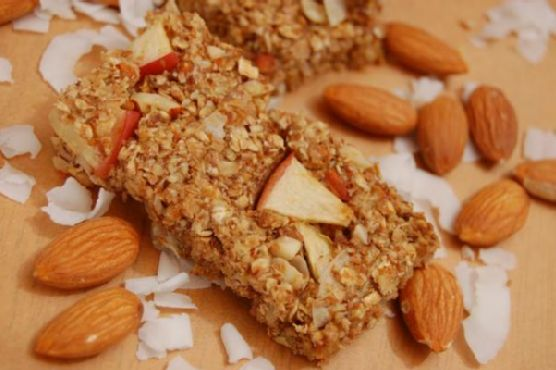
Homemade Apple Almond Granola Bars | Made by Meaghan Moineau

It was one of those late-summer afternoons, the kind where the sun hangs a little lower in the sky and you can just feel fall whispering from around the corner. I found myself digging through the pantry, looking for something to munch on that wouldn’t make me feel guilty later. You know that feeling, right? When you’re just done with salads but not quite ready to dive into pumpkin-everything? That’s when I decided to whip up these Homemade Apple Almond Granola Bars. They’re the perfect transition snack — hearty enough to curb hunger, sweet enough to feel indulgent, but packed with ingredients that say, “Hey, I’m still being healthy!”

Jump to Recipe

What You’ll Need

I love this recipe because you likely already have most of the ingredients lounging in your kitchen. Trust me, it’s all pretty basic, but with a few key players that make these bars special.

  • 2 cups rolled oats
  • 1/4 cup ground flax seed
  • 1/4 cup oat bran
  • 1/4 cup wheat bran
  • 1/2 teaspoon salt
  • 1 teaspoon baking powder
  • 1 teaspoon cinnamon
  • 1/2 cup sugar substitute
  • 1/4 cup unsweetened coconut
  • 1 cup non-fat milk
  • 2 tablespoons sweet honey
  • 1 large egg
  • 1 teaspoon vanilla extract
  • 1 large apple, chopped
  • 1/2 cup sliced almonds

How to Make Homemade Apple Almond Granola Bars

  1. First things first, preheat your oven to 350°F. Grab a 9×13 pan and give it a good spray with non-stick cooking spray. You don’t want any sticking drama later.
  2. In a big mixing bowl, stir together the oats, ground flax seed, oat bran, wheat bran, salt, baking powder, cinnamon, sugar substitute, and coconut. This mixture should look sandy and smell like a cozy cinnamon dream.
  3. Pour in the milk, honey, egg, and vanilla extract. Stir until everything is nice and combined. The mixture will be wet but not soupy.
  4. Fold in the chopped apple and sliced almonds. You want those chunks to be well distributed so every bar gets a piece of the action.
  5. Press the mixture evenly into your prepared pan. Make sure it’s packed tightly, so the bars hold together after baking.
  6. Bake for 15-20 minutes. You’ll know they’re done when the edges are just starting to brown and the kitchen smells like heaven.
  7. Let the bars cool in the pan for about 10 minutes. Then cut them into your desired bar size. Be careful, they’ll still be warm!
  8. Finally, let them cool completely before removing from the pan. This helps them set up nicely.

Cook’s Notes

These granola bars are super forgiving. If your apple is more tart, it pairs beautifully with the sweet honey. The bars are pretty adaptable — you can tweak them based on what you have on hand. Store them in an airtight container, and they’ll stay fresh for about a week, perfect for tucking into lunch boxes or grabbing on your way out the door. If you’re making them ahead, they freeze well too. Just wrap each bar individually and pull one out when you need a quick snack.

Make It Your Own

  • Pumpkin Spice Swap: Trade the cinnamon for an equal amount of pumpkin spice to usher in those autumn vibes.
  • Nutty Buddy: Swap almonds for pecans or walnuts. They add a different crunch and flavor.
  • Chunky Monkey: Throw in some mini chocolate chips or dried banana pieces for a sweeter treat.
  • Berry Burst: Substitute the apple with dried cranberries or raisins for a fruity twist.

If you try this, I’d love to hear how it turns out — drop a comment or tag me! Whether you stick to the script or put your own spin on it, these bars are bound to become a favorite. Happy snacking!

Related update: Homemade Apple Almond Granola Bars

Gingerbread | Made by Meaghan Moineau

It was one of those unexpectedly chilly evenings when I found myself craving warmth, not just from the heater but from something I could savor. The kind of evening where you want to wrap yourself in a cozy sweater and let your kitchen fill with the scent of baking spices. That’s when gingerbread came to mind — the kind that’s rich with molasses and spices, yet so simple to whip up that you almost wonder if you missed a step. This recipe is one of those gems; it’s quick but doesn’t skimp on flavor, comforting with just the right amount of sweetness, and impressive enough if you decide last-minute to invite a friend over for tea. Trust me, you won’t regret letting this gingerbread become part of your chilly evening rituals.

Jump to Recipe

What You’ll Need

Gingerbread is all about those warm, inviting flavors that make your house smell like a dream. Chances are, you’ll already have most of these ingredients tucked away in your pantry:

  • Molasses
  • Salt
  • Eggs
  • Salad oil (use what you have — canola or vegetable oil works great)
  • Sugar
  • Baking soda
  • Boiling water
  • Flour
  • Ground ginger
  • Cinnamon

How to Make Gingerbread

  1. Start by mixing the molasses, salad oil, sugar, ground ginger, cinnamon, and a pinch of salt in a large bowl. Stir them together until the mixture looks smooth and the spices are beautifully fragrant.
  2. Add the eggs into the mix and beat them well. You want the batter to be uniform and glossy.
  3. Dissolve the baking soda in 1/8 cup of boiling water. This step is crucial as it activates the soda, giving your gingerbread the rise it needs. Stir this into your batter.
  4. Gradually add the flour and the rest of the water into the mixture. The batter will be thin, but that’s exactly what you’re aiming for.
  5. Pour the batter into a 9″x13″ pan, spreading it evenly. Bake in a preheated oven at 350°F until the top is done and lightly springy to the touch — your kitchen will smell divine!
  6. If you’re feeling extra indulgent, make the glaze: combine a stick of butter, 1/4 cup milk, and 1 cup brown sugar in a saucepan. Bring the mixture to a boil and let it bubble away for about 4 minutes. Drizzle this heavenly glaze over your gingerbread once it’s out of the oven.

Cook’s Notes

Here’s the thing about gingerbread: it’s forgiving. If you find yourself without ground ginger, a bit of allspice or nutmeg can pinch-hit in a hurry. Store any leftovers tightly wrapped in foil, and they’ll keep well at room temperature for a few days — if they last that long. To really appreciate its flavor, serve it either hot or cold; each temperature brings out different notes in the spices and molasses.

If you’re planning ahead, the gingerbread can be made a day in advance. Just keep it covered and apply the glaze right before serving to maintain that perfect texture.

Make It Your Own

  • Switch up the spices: Add a bit of ground cloves or nutmeg for an extra spice twist.
  • Nutty addition: Stir in a handful of chopped walnuts or pecans for some delightful crunch.
  • Fruity flair: Toss in a handful of raisins or chopped dried apricot before baking for a fruity surprise.
  • Lemon zest: For a citrusy zing, add the zest of a lemon to the batter before baking.

If you try this gingerbread, I’d truly love to know how it turns out — drop a comment or tag me in a post! Your kitchen will thank you for the delightful aroma, and your taste buds will be doing a happy dance. Happy baking!

Related update: Gingerbread

Related update: Gingerbread

Android 17 Brings Gemini AI to Your Phone | Analysis by Brian Moineau

Hook: The AI arms race lands in your pocket

Google previews Android 17 with "Gemini Intelligence" a month before Apple's iOS 27 reveal — and it feels less like a platform update and more like a shove toward phones that think for you. The headline isn't just about timing; it's about a shift in how Android will act: proactive, agentic, and tightly coupled to Google’s Gemini models. (macrumors.com)

What this means right away

  • Android 17 places Gemini Intelligence at the OS level, letting Android automate multi-step tasks across apps and generate context-aware suggestions. (blog.google)
  • Google plans staged rollouts: Pixel and recent flagship devices this summer, broader availability across watches, cars, and laptops later in the year. (blog.google)
  • The move is explicitly competitive with Apple's “Intelligence” branding, signaling a renewed platform rivalry where AI is the centerpiece. (macrumors.com)

Google Previews Android 17 With 'Gemini Intelligence' — what’s new

Google is folding Gemini deeper into the fabric of Android, rebranding a suite of AI features as "Gemini Intelligence" and baking agentic capabilities into the system. That means your phone won't just answer commands — it will offer to complete multi-step tasks like booking rides, filling complex forms from personal data (if you opt in), or building shopping carts from photos. (blog.google)

Other headline features announced at The Android Show include AI-generated widgets, smarter autofill, improved voice dictation that drops filler words, and cross-device sharing improvements similar to AirDrop. Google emphasized privacy and opt-in controls, but also signaled this will require more capable devices with on-device AI accelerators for the best experience. (android.com)

Why the timing matters

Google’s preview landed roughly a month before Apple's iOS 27 reveal, turning this into a public staging of strengths and narratives. Apple has been marketing “Intelligence” as its umbrella for on-device AI; Google’s preemptive showcase reframes the conversation around agency — phones that take actions for you rather than merely providing suggestions. This is competitive posturing, but it also gives developers and users a preview of the direction Android will take. (macrumors.com)

The timing does more than needle Apple — it pressures the ecosystem. OEMs, app makers, and accessory makers must decide how fast to support Gemini Intelligence capabilities and whether to lean on Google’s cloud models, on-device accelerators, or a hybrid approach. That accelerates a hardware and developer cycle that was already underway. (androidcentral.com)

Real user benefits — and the trade-offs

New experiences are compelling:

  • Automated, multi-step tasks will save time for common flows like ordering food or booking travel. (blog.google)
  • Smarter autofill and personal intelligence could reduce the friction of forms and appointments. (techspot.com)
  • On-device features (when available) improve speed and privacy compared with cloud-only approaches. (android.com)

But there are trade-offs to watch:

  • Agency requires access: for Gemini Intelligence to fill complex forms or scan personal mailboxes, users must permit the assistant to read across apps — a potential privacy concern if opt-in defaults or settings are confusing. (blog.google)
  • Hardware fragmentation: Google notes that many Gemini Intelligence features need higher-end devices or specific AI accelerators, so not all Android phones will get the full experience. That could deepen the divide between flagship and budget Android users. (android.com)
  • Developer dependency: apps may need extra integrations or to trust system-level agents to act on their behalf, which raises questions about control, security, and app logic boundaries. (androidcentral.com)

The developer angle

Google’s briefings make clear Android 17 is developer-facing as much as consumer-facing. APIs for automation, richer autofill hooks, and new widget tooling suggest Google wants apps to embrace AI-driven workflows rather than treat AI as a bolt-on. For developers, this is an opportunity and a responsibility: embrace system-level agents to improve UX, but design safe fallbacks and transparent consent flows. (blog.google)

Expect SDK updates, new testing scenarios, and more emphasis on privacy-preserving design patterns. Companies that move quickly will shape how Gemini Intelligence behaves across apps, influencing user expectations for “what my phone can do for me.” (androidcentral.com)

How Apple might respond

Apple’s iOS 27 preview (expected roughly a month after Google’s) will be cast in this new light: is Apple doubling down on on-device, private intelligence, or will it emphasize human control over agency? Google’s preview forces Apple to show whether Siri and Apple Intelligence will remain suggestion-first or take bolder steps toward acting on users’ behalf.

Either way, the competition is good for users: it should accelerate feature rollout, raise standards for privacy and usability, and push both companies to clarify where assistants should act and where people should remain in control. (macrumors.com)

What to watch in the next six months

  • Rollout cadence: which devices get Gemini Intelligence first and which features are gated by hardware. (blog.google)
  • Consent UX: how clearly Google communicates data access and opt-in choices for agentic features. (techspot.com)
  • Developer adoption: whether major apps add deep integrations or resist handing control to system-level agents. (androidcentral.com)

My take

This is a striking moment in mobile OS evolution. Android 17 and Gemini Intelligence move beyond “AI features” into system-level agency, and that changes expectations. I’m excited by the time-saving promise, skeptical about the privacy and fragmentation risks, and curious to see whether Google’s emphasis on opt-in and on-device processing will stand up in practice.

If executed well, Gemini Intelligence could finally deliver the helpful phone many of us imagined when voice assistants first launched — not just reactive tools, but subtle, respectful helpers. If handled poorly, it could become another confusing layer of permissions and uneven experiences across devices. (blog.google)

Sources


Related update: We recently published an article that expands on this topic: read the latest post.


Related update: We recently published an article that expands on this topic: read the latest post.