Crockpot “Refried” Beans | Made by Meaghan Moineau

I was having one of those days where everything was just a bit off. You know, the kind where you realize the night before that you’ll have zero time to cook because every second is spoken for? Yep, that was me. Between juggling work and the kids’ activities, I needed something simple yet satisfying. Enter: Crockpot “Refried” Beans. It’s the perfect blend of effort-saving and comfort-inducing — a culinary hug when you need it most. Plus, it’s a lifesaver for those impulsive taco nights or unexpected guests. There’s something magical about the way this dish makes the whole house smell like you’ve been cooking for hours, even when you haven’t. Cozy, rich, and oh-so-easy.

Jump to Recipe

What You’ll Need

Trust me, you might already have most of these goodies chilling in your pantry. And if not, they’re probably on your next grocery list.

  • Pinto beans – the star of this show, bringing that creamy, earthy flavor we crave
  • Water – keeps things from drying out
  • Canned garlic – because chopping garlic on a busy day? No, thanks
  • Onion – for that sweet, savory backdrop
  • Cumin – a must-have for that warm, smoky depth
  • Black pepper – a touch of heat
  • Salt – brings everything together

How to Make Crockpot “Refried” Beans

  1. Start by rinsing the pinto beans in a colander. Feel each bean quickly as you do this, and pick out any that feel off or look suspiciously shriveled.
  2. Combine the beans, water, canned garlic, onion, cumin, black pepper, and salt in your trusty crockpot. Give it all a gentle stir to mingle those flavors.
  3. Watch for any beans that float to the top — these are the slackers, and we don’t need them here. Skim them off and toss ’em.
  4. Cover the crockpot and let it do its magic on HIGH for 4 hours. Switch to LOW for 2 more hours. Your kitchen will smell amazing by now — the kind of aroma that makes you want to curl up with a good book.
  5. Once the time is up, uncover and assess the liquid situation. Remove any excess, leaving just enough to mash into your perfect consistency. Aim for somewhere between soupy and stiff.
  6. Grab a potato masher and mash away! The beans should be buttery soft and mash to your desired texture without much effort.
  7. Serve them warm, maybe with a sprinkle of cheese or a dollop of sour cream if you’re feeling extra.

Cook’s Notes

Let’s chat practicalities. First, make sure to store these in air-tight containers, where they’ll keep in the fridge for up to 2 weeks. Or, portion them into ziplock bags, squeeze out the air, and pop them in the freezer for those nights you just can’t. Defrost in the fridge or microwave, and they’ll taste like you just made them.

Avoid adding acidic ingredients like tomatoes or lime juice before the beans are fully cooked, or they might stay a little too firm. And one more thing — taste as you go! The right amount of salt can vary depending on your beans and personal taste.

Make It Your Own

Here are a few ideas to switch things up and keep those taste buds entertained:

  • Swap the pinto beans for black beans for a darker, richer version.
  • Add a can of diced green chilies for a hint of heat and tang.
  • Stir in some cooked crumbled bacon for a smoky, meaty twist.
  • Top with cotija cheese and fresh cilantro to make it restaurant-fancy.

If you try this, I’d love to hear how it turns out — drop a comment or tag me! There’s nothing better than seeing your delicious creations. Enjoy those cozy vibes, my friend. 🌮❤️

Related update: Crockpot “Refried” Beans

Related update: Eggplant Fries with Tzatziki Sauce

NJ Transit outage exposes costly gaps | Analysis by Brian Moineau

TL;DR

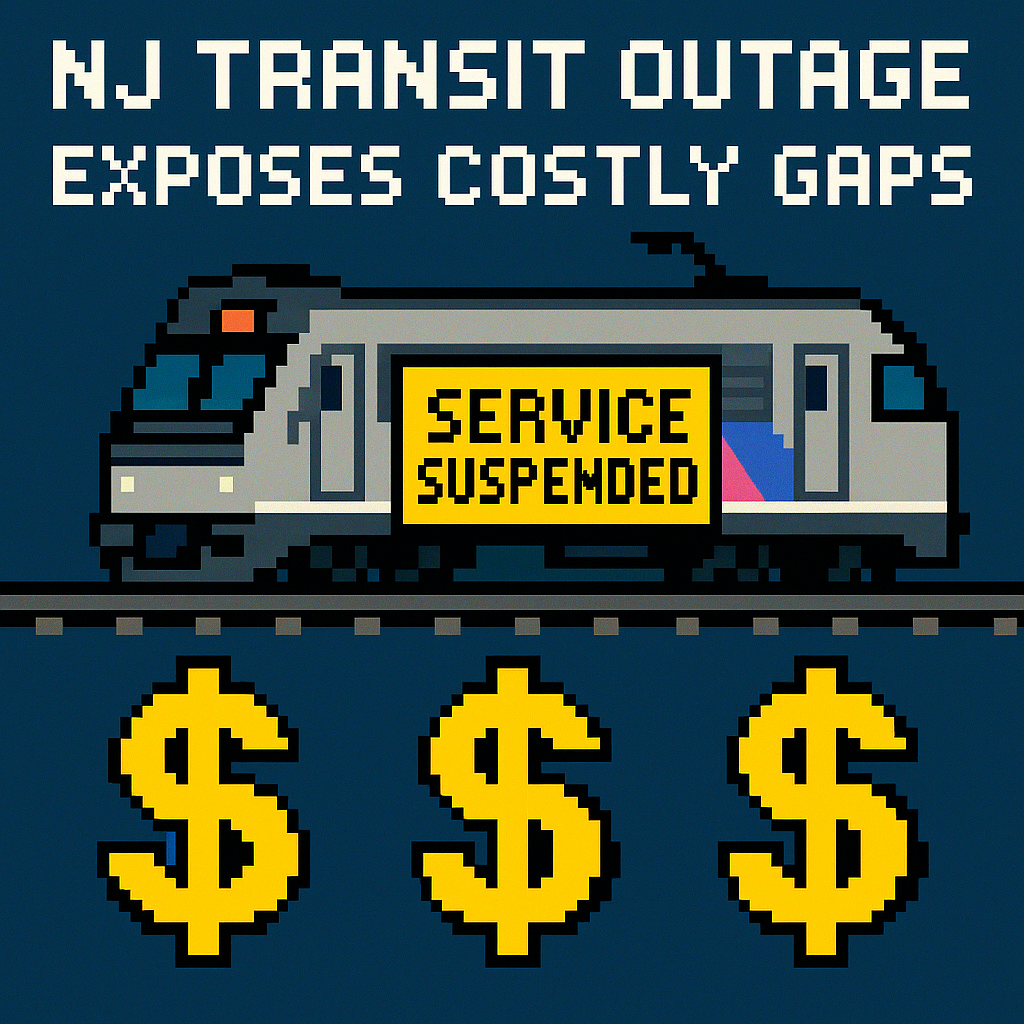
  • NJ Transit resumed a rail line on May 2026 after a downed tree blocked the right‑of‑way; one small incident exposed a large reliability gap in the agency’s story. [1]
  • The real business cost isn’t the outage alone but the compounding hit to labor productivity, customer trust, and schedule churn NJ Transit already anticipates in 2026 due to Portal cutovers and FIFA traffic. [2][3][7]
  • A single hourlong shutdown can vaporize tens of thousands of dollars in commuter time; fast vegetation management and incident‑clearance KPIs will outperform any glossy capital unveiling this summer. [4][5]

What the source said

NJ.com reported that NJ Transit temporarily suspended one of its rail lines after a downed tree blocked the right‑of‑way; service later resumed with delays once crews cleared the obstruction in New Jersey. The bulletin framed it as a discrete, weather‑related incident and pointed riders to alternate options while warning of residual delays. No deep forensics on root cause, asset condition, or clearance times—just the headline, the agency notice, and the all‑clear that followed. It’s a useful alert, but it stops where the business questions start: how often this happens, what it costs riders and employers, and what NJ Transit can do to prevent a next time. [1]

Why it matters

For commuters traveling daily from New Jersey into Newark, Jersey City, and Midtown Manhattan, reliability functions as wage protection tied to the clock and paycheck. Every unplanned shutdown turns paid time into dead time, eroding household budgets and employer scheduling in concrete places, not abstractions. When NJ Transit says “resumes rail line after suspension,” it signals resilience—and exposure to failures likely to recur during the 2026 summer storm season. [2][3]

Stakeholders are not abstract. They’re Fanwood or Summit riders who eat 30–90 minute delays, Midtown employers who lose billable hours, and NJ Transit managers juggling 2026 operations around Portal cutovers, FIFA events, and schedule changes large enough to suspend printed timetables. That cocktail heightens the penalty of each “small” outage—and the premium on faster incident clearance across the Raritan Valley and Morris & Essex corridors. [2][7]

Original analysis

Back‑of‑envelope: what one “downed tree” really costs

  • Assumptions grounded in public data and DOT guidance:
    • Average hourly earnings (New Jersey, private, April 2026): $38.76. [4]
    • Value of personal travel time priced at ~50% of hourly income in federal analyses. [5]
    • Event scope: four trains disrupted (two each direction) with an average passenger load of 450 and average 40 minutes of delay (reasonable for a blockage + ramp‑up). (Derived assumption)
  • Math:
    • Value of time per rider per hour ≈ $38.76 × 0.5 ≈ $19.38. [4][5]
    • Cost per rider for 40 minutes ≈ $19.38 × 0.667 ≈ $12.93. [4][5]
    • Riders affected ≈ 4 trains × 450 ≈ 1,800. (Derived assumption)
    • Aggregate commuter time cost ≈ 1,800 × $12.93 ≈ $23,274. [4][5]
  • Scale risk:
    • Double the impacted trains (to 8) or delay minutes (to 80) and you crest ≈$50,000 for a single incident, before employer‑side frictions. [4][5]

That’s the quiet balance sheet of rail reliability. Two such disruptions in one day rival what some towns budget for a year of contracted tree trimming along a short right‑of‑way segment.

A 2×2 to prioritize fixes

Cause vs. Clearance Speed—what to attack first:

Fast Clearance (≤60 min) Slow Clearance (>60 min)
Predictable cause (trees, routine storms) Targeted vegetation program, pre‑staged crews, local permit MOUs. Low‑cost, high‑ROI. [3] Chronic program failure; schedule risk compounds—escalate contracts, enforce SLAs. [3]
Stochastic cause (brush fires, third‑party wire faults) Pre‑written cross‑honoring + ferry/bus triggers, rider comms templates. [2][3] Capital + interagency—redundancy and joint drills with Amtrak/Port Authority; compress clearance via unified command. [2]

Vegetation sits in the “predictable/fast” cell—exactly where cheap, boring ops win. NJ Transit cites a year‑round tree‑trimming program; the success metric riders feel is clearance time, not clip count. [3]

Named‑stakeholder breakdown

  • NJ Transit Rail Operations: Vegetation and incident clearance are the cheapest dials to turn in a year of unusual schedule complexity; publish a 60‑minute “blockage‑to‑rolling” target and report against it monthly in New Jersey board materials. [3][7]
  • Amtrak (NEC owner): Coordinate playbooks for shared corridors; Portal North Bridge’s March 2026 commissioning helps throughput but not right‑of‑way blockages—joint drills still matter along the Newark–Secaucus stretch. [8]
  • Municipalities along the ROW (e.g., Fanwood, Short Hills): Pre‑approve trimming zones and weekend/night work windows; permitting friction is a hidden cause of slow clearance. May 2026 delays on the RVL after a downed tree at Fanwood showed how local blockages ripple regionally. [6]
  • Employers in Newark/Midtown: Encourage flexible start times on forecast storm days; quantify the lost time and push for performance KPIs in NJ Transit’s board reporting to protect billable hours. [4][5]
  • Riders: Use line‑specific alerts and watch for cross‑honoring triggers; after the May 20, 2026 brush‑fire suspension into/out of Penn Station New York, services resumed with up to 90‑minute delays—plan first/last‑mile accordingly. [2]

Context that changes the calculus in 2026

  • Schedule churn is institutional this year. NJ Transit suspended printed rail timetables for 2026 due to major cutovers and events, increasing communications risk during incidents. [7]
  • Portal North Bridge entering service in March 2026 eases a historic NEC choke point; that buys schedule headroom but won’t stop a maple from falling across a diesel segment. Faster local clearance gains more value because more trains can move once you uncap the blockage. [8]
  • Recent service shocks prove the pattern. A brush fire near the Hudson River tunnel fully suspended service into and out of Penn Station New York on May 20, 2026 before resuming with heavy delays; earlier that week, a downed tree near Fanwood drove 15–40 minute RVL delays. These aren’t rare edge cases; they’re portfolio risk. [2][6]

Contrarian read

  • Consensus: “This was a weather blip—back to normal, nothing to see.”
  • Counter: Frequency plus the 2026 calendar amplifies each “blip” into a measurable labor‑market tax; fixable failures—trees—deserve executive attention on par with rolling stock availability. [2][7]

What others are missing

The vegetation story is a governance story anchored in New Jersey municipalities and NJ Transit’s vendor management. “Tree trimming” sounds like maintenance, but the drag often lives in permits, utility coordination, and crew staging—not chainsaws. NJ Transit references a year‑round program; publish a monthly KPI showing median minutes from “blockage reported” to “first train rolling,” by line and cause, and tie vendor renewals to it. [3]

Couple that KPI with pre‑negotiated municipal MOUs that create 48‑hour fast‑track permits during National Weather Service storm watches across the RVL and M&E/Gladstone corridors. The highest‑yield savings this summer come from shaving 20 minutes off a hundred “small” incidents, not from a ribbon‑cutting.

What to watch next

  1. By July 31, 2026, NJ Transit publicly reports incident clearance times by cause (vegetation, wire, third party) in board or service‑update materials viewable on njtransit.com. [3]
  2. Between June 1 and November 30, 2026, at least two downed‑tree suspensions or major delays occur on the Raritan Valley or Morris & Essex/Gladstone segments, triggering cross‑honoring and residual delays exceeding 45 minutes. [6][3]
  3. By September 30, 2026, NJ Transit issues or amends at least one vegetation‑management contract or municipal MOU explicitly aimed at faster line clearance during storm season, referenced in a board agenda or service advisory. [3]

My take

If I ran NJ Transit in summer 2026, I’d hunt for 60 minutes from first obstruction report to first revenue train. Hit it with pre‑staged crews, pre‑cleared permits with towns like Fanwood and Short Hills, and a published KPI so riders and board members can track progress in New Jersey meetings. [3][7]

Portal North Bridge is the shiny object; the duller one—vegetation—is where the money lives in 2026. A “resumes rail line after suspension from downed tree” shouldn’t be newsworthy by October; make it routine, fast, and boring, and claw back tens of thousands of rider‑minutes every week across Newark–Midtown flows. [4][5][8]

Sources

[1] NJ Transit resumes rail line after suspension from downed tree — NJ.com (https://www.nj.com/news/2026/05/nj-transit-suspends-rail-line-due-to-downed-tree.html) — The alert that service was suspended by a downed tree and later resumed; the starting point for this analysis.
[2] NJ Transit rail service resumes at Penn Station New York after brush fire caused suspension — CBS New York (https://www.cbsnews.com/newyork/news/nj-transit-tracks-secaucus-brush-fire/) — Confirms a recent full suspension/resumption cycle and up to 90‑minute delays on May 20–21, 2026.
[3] NJ TRANSIT Announces Service Updates for Sunday, February 22 — NJ Transit (https://www.njtransit.com/press-releases/nj-transit-announces-service-updates-sunday-february-22) — Describes suspension protocols and references a year‑round tree‑trimming program and standby crews.
[4] Total private average hourly earnings and weekly hours and earnings by state (April 2026) — U.S. Bureau of Labor Statistics (https://www.bls.gov/charts/state-employment-and-unemployment/average-hourly-earnings-and-weekly-hours-and-earnings-by-state.htm) — Provides New Jersey’s average hourly earnings used to value commuter time.
[5] Chapter 9: Sensitivity Analysis (Value of Time ≈ 50% of wage for personal travel) — Federal Highway Administration (https://www.fhwa.dot.gov/policy/23cpr/chap9.cfm) — Cites DOT practice of valuing personal travel time at approximately half the hourly wage.
[6] Delays on May 16, 2026 (downed tree near Fanwood causing 15–40 minute RVL delays) — NJTranshit (https://njtranshit.com/graph/count/2026-05-16) — Concrete example of tree‑related rail disruption and its operational impact.
[7] NJ: NJ Transit just suspended its printed train schedules. What you need to know. — Mass Transit (https://www.masstransitmag.com/rail/news/55368202/nj-nj-transit-just-suspended-its-printed-train-schedules-what-you-need-to-know) — Documents NJ Transit’s decision to suspend printed timetables in 2026 due to extensive schedule changes (Portal cutovers, FIFA).
[8] Portal North Bridge — Wikipedia (https://en.wikipedia.org/wiki/Portal_North_Bridge) — Establishes March 2026 context for Portal North Bridge milestones on the NEC.


Related update: We recently published an article that expands on this topic: read the latest post.

Cauliflower, Brown Rice, and Vegetable Fried Rice | Made by Meaghan Moineau

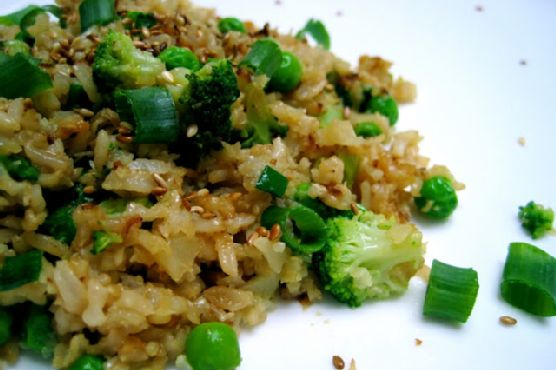
Last Thursday, I found myself staring at a lonely head of cauliflower in the fridge, debating if a second night of sad salad was a culinary sin. With a craving for something warm and satisfying, I decided to whip up a Cauliflower, Brown Rice, and Vegetable Fried Rice. This dish is a lifesaver when you need a quick meal that doesn’t compromise on flavor. It’s like your favorite takeout but with a healthy twist and minimal guilt. Plus, it easily adapts to whatever veggies are hanging out in your fridge. It’s perfect for those busy weeknights when you need something fast but still want to feel like you ate a real meal.

Jump to Recipe

What You’ll Need

The beauty of this recipe is that chances are you already have most of these ingredients tucked away in your kitchen. It’s simple, straightforward, and oh-so-delicious.

  • 1 tablespoon grapeseed oil
  • 1 tablespoon coconut oil
  • 4 stalks green scallions (white and light green parts, chopped; reserve dark tops)
  • 2 cloves garlic, minced
  • 1 medium head of raw cauliflower, stem removed and florets processed into “rice”
  • 2 cups cooked brown rice
  • 1 cup cooked broccoli
  • 1 cup frozen peas
  • 3 tablespoons low sodium soy sauce
  • 1 tablespoon sesame oil
  • Toasted sesame seeds
  • Salt, to taste

How to Make Cauliflower, Brown Rice, and Vegetable Fried Rice

  1. Remove the tough stem from the cauliflower and reserve it for another use. Pulse the cauliflower florets in a food processor until they resemble rice or couscous, yielding about four cups of “cauliflower rice.”
  2. Heat 1 tablespoon each of coconut oil and grapeseed oil in a large skillet over medium heat. Add the minced garlic and chopped white and light green scallion parts. Sauté for about a minute until they’re fragrant.
  3. Add the cauliflower rice to the skillet. Stir to coat with oil, then spread it out in the pan and let it sit undisturbed for a couple of minutes. This encourages caramelization, bringing out its natural sweetness.
  4. Add the cold, cooked brown rice to the skillet along with an additional tablespoon of grapeseed oil or coconut oil. Raise the heat to medium-high. Toss everything together, spreading the mixture out over the whole pan and pressing it into the bottom. Let it sit again for about two minutes to allow the rice to toast slightly.
  5. Add the cooked broccoli and frozen peas to the pan, stirring everything to combine.
  6. Drizzle the soy sauce and sesame oil over the rice mixture. Cook for another minute, then turn off the heat. Stir in the chopped dark scallion tops.
  7. In a separate dry pan, toast some sesame seeds and sprinkle them over the fried rice along with extra raw, chopped scallion tops for an added crunch and flavor boost. Season to taste with salt and additional soy sauce if needed.

Cook’s Notes

This recipe is forgiving and flexible, perfect for those who like to improvise in the kitchen. Start by ensuring your cauliflower is well pulsed; the smaller the bits, the better they’ll absorb the flavors. Don’t rush the caramelization of the cauliflower rice—this step enhances its sweetness and adds depth to the dish.

If you’re planning to make this ahead, you can prepare the cauliflower rice and store it in an airtight container in the fridge for up to two days. The completed fried rice will keep well in the fridge for 3-4 days, making it ideal for meal prep.

Avoid over-salting. Remember that soy sauce adds its own saltiness, so it’s best to season gradually and taste as you go. If you find your fried rice is clumping together, gently break it apart with a spatula.

Make It Your Own

  • Swap the broccoli for snap peas or bell peppers for a different veggie profile.
  • Replace the brown rice with quinoa for an extra protein boost.
  • Try adding a beaten egg to the pan after the garlic for a more traditional fried rice texture.
  • Love heat? Toss in some red pepper flakes or a splash of sriracha for a fiery kick.

If you try this, I’d love to hear how it turns out—drop a comment or tag me on social media! Let’s make sure no more lonely heads of cauliflower go to waste.

Related update: Cauliflower, Brown Rice, and Vegetable Fried Rice

Related update: Crockpot “Refried” Beans

Related update: How to make the World’s Greatest Lasagna Roll Ups

Fresh and Simple Swai Ceviche | Made by Meaghan Moineau

It was one of those freakishly warm spring afternoons when I first craved something light but satisfying. You know, when the sun teases you into thinking it’s okay to pack away your sweaters, only for the evening chill to remind you it’s not quite summer yet. I was rummaging through my fridge, hoping for inspiration, when I stumbled upon some swai fillets tucked behind the carton of eggs. Cue lightbulb moment: ceviche. Fresh, tangy, and with a bit of a kick, this swai ceviche is the kind of dish that feels fancy but comes together with minimal effort. Perfect for those nights when you want to impress without breaking a sweat. Jump to Recipe

What You’ll Need

Most of these ingredients are things you might already have lounging around in your kitchen. The magic is in the freshness and the little kick of spice.

  • 1 pound of diced swai fillets
  • Lime juice from about 4-5 limes
  • 1 red diced shallot
  • 1 cup of diced avocado
  • 1 tomato, diced
  • 1 tablespoon of chile-garlic paste
  • 2 tablespoons of olive oil
  • 1/4 cup of cilantro, chopped
  • Salt and pepper to taste

How to Make Fresh and Simple Swai Ceviche

  1. Place the diced swai fillets in a bowl and cover them with half of the lime juice. Make sure each piece is submerged, then cover and pop it in the fridge for at least 3 hours. This allows the fish to “cook” in the acidity of the lime juice. You’re looking for it to turn opaque and tender.
  2. Once the fish is ready, strain it to remove excess lime juice. Don’t rush this step; too much moisture will make the ceviche soupy.
  3. In another bowl, combine the diced tomato, red shallot, and avocado with the remaining lime juice. Toss gently, so the avocado stays in lovely chunks.
  4. Stir in the swai and chopped cilantro. Give it all a good, gentle mix.
  5. Drizzle with olive oil and add the chile-garlic paste. The sauce gives it that spicy, garlicky punch that makes you go back for more.
  6. Season with salt and pepper to taste. Remember, a little goes a long way, so keep tasting as you go.
  7. Serve immediately with tortilla chips or over a fresh salad. Enjoy the vibrant flavors in every bite!

Cook’s Notes

Don’t skimp on the lime juice – it’s both the cooking agent and flavor base. If you’re not a fan of too much heat, start with half the amount of chile-garlic paste and adjust. This ceviche is best enjoyed fresh, but if you have leftovers, store them in an airtight container for up to a day. The avocado might brown slightly, but the taste will still be lovely.

Make It Your Own

  • Swap the swai for shrimp or scallops if you’re feeling fancy.
  • Add some diced cucumber for extra crunch and freshness.
  • If cilantro isn’t your thing, try using fresh mint or basil for a different herbal note.
  • For a sweeter twist, toss in some diced mango or pineapple.

If you try this, I’d love to hear how it turns out — drop a comment or tag me in your creations! Happy ceviche making!

Related update: Fresh and Simple Swai Ceviche