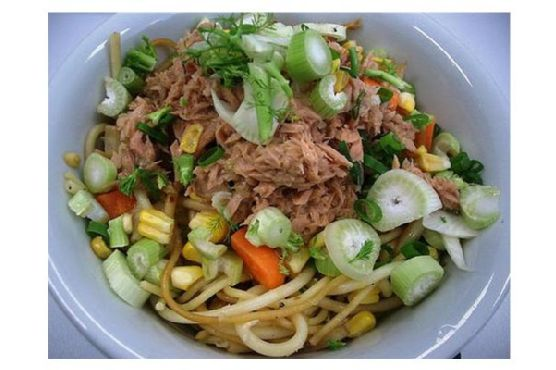
I was standing in my kitchen one Tuesday night, craving something hearty yet low-key — you know, that sweet spot between weeknight ease and weekend indulgence. I scoured my pantry for inspiration and stumbled upon a can of tuna. That’s when it hit me: Pasta With Tuna. This dish is like a warm hug on a plate, combining the creamy comfort of a sauce with the lightness of seafood. It’s quick, it’s satisfying, and yes, it’s got a little kick, thanks to that dash of hot pepper sauce. Perfect when you need to whip up something scrumptious without a ton of fuss.
Jump to Recipe
What You’ll Need
The beauty of this dish is in its simplicity. Chances are you already have most of these lying around in your kitchen:
- Olive oil
- 1 onion, chopped
- Flour
- Non-fat milk
- 1 can water-packed tuna, drained and shredded into chunks
- 1 cup frozen peas
- A bunch of fresh parsley, chopped
- 2-3 green onions, sliced
- 1 cup parmesan cheese, grated
- A dash of pepper sauce
- 1 pound of tubular pasta of your choice
How to Make Pasta With Tuna
- Start by cooking your pasta in a large pot of boiling water until it’s perfectly al dente. You want it to have a nice bite — not too soft.
- Once done, drain the pasta and return it to the warm pot. This keeps it cozy while you work on the sauce.
- Grab a saucepan and heat up a drizzle of olive oil over medium heat. Toss in the chopped onion and sauté until it’s transparent, releasing its sweet aroma.
- Sprinkle in the flour and give it a good stir. Cook for just a few seconds to take off that raw edge.
- Whisk in the non-fat milk, stirring constantly. You’ll see it start to thicken into a creamy base — that’s the magic happening!
- Add in the frozen peas, and let them mingle with the sauce for a couple of minutes until they’re vibrant and heated through.
- Introduce the tuna, breaking it into chunks as you go, followed by the parsley, green onions, and a generous amount of parmesan. Don’t forget that dash of pepper sauce for some zing!
- Pour this delightful sauce over the pasta and stir gently to mix everything together. You want each piece of pasta to be lovingly coated.
- Serve it up immediately, preferably with extra parmesan on top — because why not?
Cook’s Notes
Let’s get real — this dish is pretty forgiving. Don’t sweat the small stuff. If your onions are more golden than transparent, it’s all good. The key is stirring the sauce constantly; it keeps it smooth and prevents lumps. Make it ahead by prepping the sauce and storing it separately from the pasta. When you’re ready to eat, simply reheat them together on the stove. Leftovers? They keep well for up to two days in the fridge. Just note that the pasta will continue to absorb the sauce, so it may be less saucy but still deliciously flavorful.
Make It Your Own
Feeling adventurous? Here are some fab twists to try:
- Swap the tuna for crispy tofu chunks for a vegetarian spin.
- Add a squeeze of lemon juice for a citrusy pop that brightens the flavor.
- Replace the parmesan with feta cheese for a tangy twist.
- Throw in a handful of cherry tomatoes for a burst of sweetness and color.
If you give this pasta dish a try, I’d love to know how it turns out for you! Drop a comment below or tag me on social media with your culinary creations. Bon appétit!
Related update: Pasta With Tuna
Related update: Creamy Mushrooms Over Soba Noodles (Vegan)

TL;DR
- Salesforce guides Q2 FY27 revenue to $11.27–$11.35B, a notch below the ~$11.4B consensus from Bloomberg/Yahoo Finance, which stirs 2026’s “AI-disrupts-SaaS” worries despite record Q1 revenue of $11.1B. [1][2]
- Backing out Informatica, organic growth slows to high single digits; the bear case rests on that math, not on whether Agentforce can run customer support or sales ops in San Francisco or London. [2]
- The hinge is pricing and data control, not demos. Agentforce ARR sits above $1B as of May 2026, but packaging, per-interaction economics, and a $25B bond-financed buyback will shape winners through FY27. [2][6]
What the source said
Bloomberg/Yahoo Finance reported Salesforce guided fiscal Q2 revenue to roughly $11.3B versus ~$11.4B street, and total remaining performance obligations at $67.9B against a $68.9B consensus; it also cited Q1 FY27 revenue of $11.1B, up 13% year over year. The article frames investor concern that AI agents could disrupt SaaS moats and notes Salesforce’s Agentforce for tasks like support ticket resolution and call summarization. It highlights a stronger-than-expected EPS print and says those AI features have not yet reshaped FY27 growth; it also points to weak 2026 share performance alongside peers such as ServiceNow and Adobe. [1]
Why it matters
- CIOs at firms from Chicago to Berlin will decide in 2026 whether to buy Salesforce’s integrated data+workflow stack or assemble a Microsoft Azure + Snowflake architecture with point tools like Zapier and Notion; that choice will set five-year TCO and vendor concentration risk. [2][4]
- For investors, the 2026 scoreboard is organic growth and FCF quality, not keynote sizzle. Salesforce implies mid-to-high single-digit organic growth beneath Informatica and only 4–5% FY27 FCF growth after raising $25B of debt for an accelerated buyback, according to Fortune and IR. That is a capital-allocation signal, not a product one. [2][3]
Original analysis
Salesforce gives lukewarm outlook: what the numbers actually say
What others are missing
The overlooked hinge is unit economics and packaging for digital labor in FY27: Salesforce bakes “slightly above 4 points” of Informatica into Q2 and guides FCF growth to only 4–5% after issuing $25B of debt for an accelerated share repurchase, signaling a clock on monetization. The operational breadcrumbs—52T records ingested into Data 360 (35T via Zero Copy), 1T API calls, and CRPO +14%—show demand, but organic revenue will re-accelerate only if Salesforce simplifies SKUs into usage-grounded tiers and reduces multi-cloud data-access friction in 2026–2027. [2][3]
What to watch next
- By Q2 FY27 results (late August 2026), Salesforce’s organic (ex-Informatica) revenue growth is ≤7% YoY even if total growth lands inside the $11.27–$11.35B guide, confirming the deceleration math above. [2]
- By Dreamforce 2026 (September 2026 in San Francisco), Salesforce ships a usage-tiered Agentforce core SKU—explicit per-interaction or per-agent-minute pricing—alongside seat bundles, reducing pilot-to-production friction.
- By Q4 FY27 earnings (late February 2027), Salesforce or credible outlets disclose Agentforce ARR ≥$1.5B, implying deeper production deployments beyond 2026 pilots. [6]
My take
I don’t buy the “AI kills Salesforce” story in 2026. The give here is go-to-market plumbing, not model quality: data gravity plus native agent workflows inside Customer 360 is defensible, and RPO/CRPO prints back that up. The real risks are self-inflicted—keeping organic growth stuck near 6–7% while consuming balance sheet for buybacks—and they are fixable with cleaner, usage-based Agentforce pricing in 2026. If organic growth stabilizes and packaging tightens by Q2, the stock can rerate off the “disruption” narrative; if not, the market will keep assigning a utility multiple.
Sources
- Salesforce Gives Lukewarm Outlook That Fails to Ease AI Fear — Yahoo Finance/Bloomberg (https://finance.yahoo.com/markets/stocks/articles/salesforce-gives-lukewarm-outlook-fuels-200630699.html) — Q2 revenue guide near $11.3B vs. ~$11.4B consensus, RPO context, and investor AI-disruption framing.
- Salesforce Delivers Record First Quarter Fiscal 2027 Results — Salesforce Investor Relations (https://investor.salesforce.com/news/news-details/2026/Salesforce-Delivers-Record-First-Quarter-Fiscal-2027-Results/default.aspx) — Official Q1 FY27 metrics: revenue, Informatica contribution, RPO/CRPO, Q2/FY27 guidance, Data 360/Zero Copy and API utilization.
- Salesforce turbocharges $25 billion stock buying spree with debt, cuts cash flow guidance in half — Fortune (https://fortune.com/2026/05/27/salesforce-turbocharges-25-billion-stock-buying-spree-with-debt-cuts-cash-flow-guidance-in-half/) — Confirms the $25B bond-financed ASR and frames softer FY27 FCF growth.
- Agentforce Contact Center brings native CCaaS to Salesforce — TechTarget (https://www.techtarget.com/searchcustomerexperience/news/366639947/Agentforce-Contact-Center-brings-native-CCaaS-to-Salesforce) — Details on Agentforce Contact Center and native agent workflows for service.
- Cotización CRM Hoy (May 27, 2026): 1 Año -33.75% — Bloomberg Línea (https://www.bloomberglinea.com/quote/CRM%3AUN/) — Independent snapshot of 2026 YTD and one-year share performance around the print.
- Salesforce falla, por ahora, en su multimillonaria recompra de acciones… — CincoDías (El País) (https://cincodias.elpais.com/companias/2026-05-29/salesforce-falla-por-ahora-en-su-multimillonaria-recompra-de-acciones-para-hacer-frente-a-la-amenaza-de-la-ia.html) — Cites Agentforce ARR above $1B and contextualizes the debt-funded buyback in Spain’s financial press.
Related update: We recently published an article that expands on this topic: read the latest post.
Related update: We recently published an article that expands on this topic: read the latest post.
Related update: We recently published an article that expands on this topic: read the latest post.
Related update: We recently published an article that expands on this topic: read the latest post.
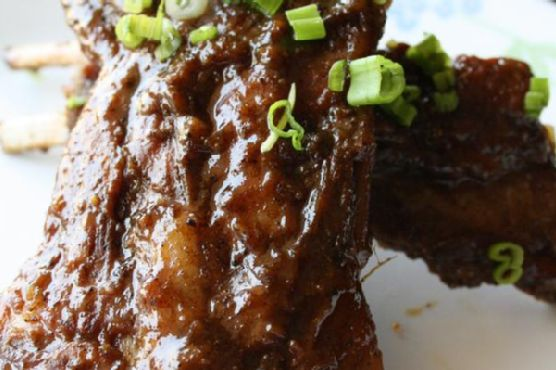
It was one of those soggy Tuesday evenings, you know? The kind where the rain seems endless, and all you want is something warm and comforting. I was rummaging through the pantry, and there it was — a pack of spare ribs that I’d forgotten about. The thought of sticky, tender ribs with a glossy finish gave me just the kind of culinary pep talk I needed. This recipe is one of those gems that feels like a treat but is surprisingly easy to put together. It’s perfect for when you want to impress without spending hours in the kitchen. Spoiler: the magic is all in the marinade.
Jump to Recipe
What You’ll Need
Picture this: a short list of ingredients that packs a punch. Chances are you already have most of this in your kitchen:
- Oil
- Clear honey
- Fresh ginger root
- Dark soy sauce
- Hoisin sauce
- Five-spice powder
- Garlic cloves
- Spare ribs
How to Make Spare Ribs
- Preheat your oven to a toasty 400 degrees. This is your way to crispy, caramelized goodness!
- In a trusty mixing jug, combine the oil, clear honey, freshly grated ginger root, dark soy sauce, hoisin sauce, five-spice powder, and minced garlic cloves. It’s like a flavor bomb waiting to happen.
- Pour this rich, sticky marinade over the spare ribs. For best results, let them soak up all those flavors overnight. But if you’re short on time, a couple of hours will do the trick.
- Arrange the marinated ribs on a rack in a roasting pan. This allows the heat to circulate, giving you that perfect crispy edge.
- Cook them in your preheated oven for around 45 minutes. Halfway through, turn those ribs over so they cook evenly and develop a perfect crust.
- Let them cool down a bit, and serve them when they’re just warm or cold if you prefer. Either way, they’re delicious!
Cook’s Notes
The secret to these ribs lies in the marinade time — the longer, the better. If you’ve got the patience, overnight marinating is where the magic truly happens. As for leftovers, which are rare because they tend to disappear fast, you can store them in the fridge for up to three days. Just reheat them in the oven to bring back that lovely glaze. A common pitfall is skipping the turning step — don’t! It ensures that all sides are equally tantalizingly sticky.
Make It Your Own
These ribs are like a blank canvas — here are some ways to mix things up:
- Swap the spare ribs for chicken wings for a finger-licking appetizer.
- Add a splash of sriracha to the marinade for some heat that’ll warm you from the inside out.
- Replace hoisin sauce with a tablespoon of barbecue sauce for a smoky twist.
- Try adding a tablespoon of orange juice to the marinade for a sweet citrusy note.
If you try this, I’d love to hear how it turns out — drop a comment or tag me! This dish is one of those treasures that makes cooking at home feel both indulgent and gratifying. Enjoy every sticky bite!
Related update: Spare Ribs
Related update: Pasta With Tuna

It was one of those drizzly Sundays when leaving the house was not an option, and the only thing that sounded remotely appealing was the smell of something baking in the oven. I found myself rifling through the pantry, hoping for inspiration, when I spotted a bunch of rather sad-looking bananas. You know the kind—brown, spotty, and begging to be transformed into something wonderful. That’s when it hit me: banana bread! It’s the kind of recipe that feels like a warm hug, and let’s be honest, who doesn’t need one of those every now and then? This banana bread is the perfect quick-fix comfort food—simple enough to whip up on a lazy afternoon but deliciously satisfying as if you spent hours perfecting the recipe. Jump to Recipe
What You’ll Need
Most of these ingredients are probably already lounging around in your kitchen, waiting for their moment to shine.
- 3 ripe bananas
- 1 cup granulated sugar
- 1/2 cup butter
- 1 egg
- 1 teaspoon vanilla extract
- 1 teaspoon baking soda
- Pinch of salt
- 1 1/2 cups all-purpose flour
- 1/2 cup chopped walnuts (optional, but highly recommended!)
How to Make Homemade Banana Bread
- Start by preheating your oven to 350°F (175°C). Trust me, nothing’s worse than a waiting oven when you’re ready to bake.
- In a large mixing bowl, beat together the butter, sugar, vanilla, and egg until the mixture is creamy and smooth. It should look like a pale-yellow fluffy cloud.
- Next, take your bananas. With a potato masher or a simple fork, mash them right into the bowl. It doesn’t have to be perfect; a few lumps are totally fine. Mix well until the bananas are fully incorporated into the creamy mixture.
- Time to bring in the flour, baking soda, and salt. Gently stir them into the wet ingredients. You don’t want to over-mix here; just enough to see no more streaks of flour.
- If you’re feeling nutty, toss in those tasty walnuts and give it another light stir.
- Grab your trusty loaf pan and give it a good spray with non-stick cooking spray. No one likes a sticky situation.
- Pour your banana-y mixture into the prepared loaf pan, smoothing the top with a spatula if needed.
- Place it in the oven and let it work its magic for 55-65 minutes. Your kitchen will soon smell like heaven. It’s ready when an inserted toothpick comes out clean.
Cook’s Notes
This banana bread is a dream to make, but here are a few tips to make sure yours is just as delightful:
- If your bananas aren’t ripe enough, place them in a 300°F oven for 15-20 minutes until they are brown and sweet.
- Store leftovers in an airtight container—it’ll stay fresh and moist for a few days, but I doubt it’ll last that long!
- For extra indulgence, try warming a slice and spreading a little butter on top. Heaven!
Make It Your Own
- Swap the walnuts for chocolate chips if you’re craving a chocolatey twist.
- Replace the granulated sugar with brown sugar for a deeper, caramel-like flavor.
- Throw in a handful of dried cranberries for a tart burst of flavor.
- Try a mix of nuts—pecans, almonds, or hazelnuts can add a delightful crunch.
If you give this banana bread a go, I’d love to hear how it turned out for you. Drop a comment or tag me in your tasty creations on social media! Let’s spread the banana bread love.
Related update: Homemade Banana Bread
Related update: Spare Ribs
Related update: White chocolate-cranberry ice cream
Related update: 5 Minute Gluten Free Wonder Buns