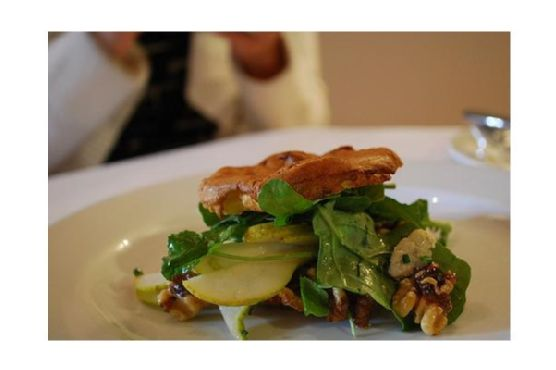
It was one of those fall evenings where the air turned crisp just a little too early for my liking. I found myself staring at a lonely pair of pears on my countertop, wondering how they’d somehow escaped the lunchbox routine all week. Inspired by the chill, a craving for something both comforting and refreshing struck me. This pear salad with walnuts and blue cheese was the answer — a perfect transitional dish that’s light yet satisfying. It’s what happens when you want to feel like you’re eating something fancy, minus the hassle. It’s filling enough for a lunch, or could be a lovely start to a cozy dinner.
Jump to Recipe
What You’ll Need
This salad is the definition of simple elegance, and chances are you already have most of these ingredients at home.
- Pears – ripe but firm enough to hold their shape
- Mixed salad leaves – I’m partial to using a mix that includes curly endive for that extra crunch
- Walnuts – toasted lightly to bring out their nuttiness
- Blue cheese – creamy and tangy, the star of the show
- Lemon juice – for a zesty dressing that cuts through the richness
- Safflower oil – mild and light, perfect for dressings
- Walnut oil – adds a subtle nutty depth
- Chives – delicate oniony flavor
How to Make Pear Salad With Walnuts and Blue Cheese
- Start by prepping your pears. Trim the base of each pear so they can stand upright like little soldiers on your cutting board. This will make slicing them easier and more stable.
- In individual salad bowls, arrange a generous handful of mixed salad leaves. Place one of your sliced pears on top of the greens in each bowl, making sure to fan them out for a bit of flair.
- Now, sprinkle a small handful of celery pieces into each bowl. The celery adds a delightful crunch and freshness to the salad.
- In a small bowl, combine the safflower oil, walnut oil, lemon juice, and a sprinkle of freshly chopped chives. Whisk together until the dressing is emulsified — you’ll know it’s ready when it’s slightly thick and all combined.
- Drizzle the dressing over each salad evenly. You want just enough to coat everything lightly without drowning it.
- Finish by scattering a healthy amount of crumbled blue cheese and toasted walnuts over each salad. These are your flavor bombs, so be generous!
Cook’s Notes
When it comes to choosing your pears, I recommend a variety like Bosc or Anjou for their firmness and sweetness. If your pears are too ripe, they’ll turn mushy in the salad. As for the blue cheese, any creamy variety works, but I find that a strong Roquefort can elevate the dish beautifully. To toast walnuts, simply spread them on a baking sheet and pop them in a 350°F (175°C) oven for about 5-7 minutes, or until they are golden and fragrant. Watch them closely because they can go from perfectly toasted to burnt in seconds! The salad is best served fresh, but you can store leftovers in an airtight container in the fridge for up to a day — just keep the dressing separate to avoid soggy greens.
Make It Your Own
- Swap out the blue cheese for goat cheese if you’re not a fan of strong flavors. It adds a milder creaminess that is just as delightful.
- Use pecans instead of walnuts for a slightly sweeter nutty touch.
- If you’re looking for a bit more protein, add some grilled chicken or crispy tofu to make it a complete meal.
- Drizzle a little balsamic glaze over the top for an added tangy sweetness that complements the pears beautifully.
If you try this, I’d love to hear how it turns out — drop a comment or tag me on Instagram! Your kitchen adventures make my day. Happy cooking!
Related update: Pear Salad With Walnuts and Blue Cheese
Related update: Fall Farro Salad with Pomegranate, Walnut & Truffles
TL;DR
- Federal student loan changes take effect July 1, 2026: SAVE is gone, RAP and Tiered Standard become the default architecture, grad/Parent PLUS borrowing is capped, and autopay yields a 1% interest cut through June 30, 2028. [1][2][3]
- The real economic shock isn’t $10 RAP minimums; it’s the hard $20,000/year Parent PLUS cap and the end of Grad PLUS for new borrowers, which will force families and universities to rethink pricing, packaging, and private credit—fast. [3][5]
- Expect a surge in private lending products pitched at the “PLUS gap,” selective tuition resets in master’s programs, and a messy two‑year scramble as about 7.5 million ex‑SAVE borrowers pick new plans under higher 2026–27 rates. [1][4][7]
What the source said
PBS NewsHour reported that major federal student loan changes start on July 1, 2026. The segment highlighted four headliners: higher interest rates on most new federal loans, a temporary 1% interest discount for borrowers in autopay through June 30, 2028, the elimination of the Biden‑era SAVE plan affecting roughly 7.5 million borrowers, and new borrowing caps for graduate and Parent PLUS loans. PBS previewed the new Repayment Assistance Plan (RAP), noting a $10 minimum payment and an interest subsidy for on‑time payers, while warning of potential payment hikes, rising delinquencies, and borrower confusion. It also flagged caps on graduate/Parent PLUS borrowing as a structural shift that will ripple through household budgets. [1]
Why it matters
-
Households: Parent PLUS caps of $20,000 per year/$65,000 lifetime end the “borrow the rest” era. For any school whose net price exceeds that cap, families must fill the difference from income, savings, institutional aid, or private loans. This creates a predictable, recurring “funding gap” problem for middle‑ and upper‑middle‑income parents starting with the 2026–27 year. [3]
-
Institutions: Eliminating new Grad PLUS and capping Parent PLUS attack two quiet revenue valves that subsidized high‑price master’s programs and undergraduate enrollment smoothing. Schools with high dependence on graduate tuition or on PLUS‑driven yield will feel the cash crunch first, particularly in 2026–27 and 2027–28 as higher fixed rates (e.g., 6.52% undergrad, 8.07% grad unsub, 9.07% PLUS for 2026–27) bite. [3][7]
Original analysis
Consensus says “RAP softens the blow.” I disagree: the real economywide effect is a funding‑source rotation—away from federal parent/grad credit toward family cash, institutional discounting, and private loans—while payments rise modestly for ex‑SAVE borrowers who lose $0 payments. The policy aims to constrain borrowing; it will, but not without second‑order effects in 2026–27 and 2027–28 as private lenders and bursars reset offers. [2][3][4][7]
Named typology: who wins, who loses
- High‑income, high‑debt graduates (>$100k AGI, >$100k debt): Better off choosing Tiered Standard with a 25‑year term; RAP takes up to 10% of AGI and can cost more monthly, though it’s PSLF‑qualifying. [7]
- Low‑income borrowers (<$35k AGI): RAP’s $10 minimum plus interest‑waiver mechanics prevent balance creep; total time to forgiveness is 30 years, not 20–25. [3]
- New Parent PLUS borrowers (all incomes): Locked out of income‑driven plans and PSLF; only Tiered Standard applies, which hardens monthly obligations. [5]
- Universities reliant on Grad PLUS/Parent PLUS: Revenue risk starts day one of 2026–27; program‑level loan limits that colleges can set add a new internal brake on debt‑fueled enrollment. [3][6]
Back‑of‑envelope math 1: the autopay “1% off”
- Example: $30,000 undergraduate Direct loan first disbursed in 2026–27 at 6.52% (fixed). Standard 10‑year amortization → monthly ≈ $340; total interest ≈ $10,777. With the temporary autopay 1% rate reduction (to 5.52%) from July 1, 2026 through June 30, 2028, assume autopay for two full years, then reversion to 6.52%. Savings: Year‑1 average balance ≈ $28,500 → ≈ $285 saved; Year‑2 average ≈ $26,100 → ≈ $261 saved; total ≈ $546 before compounding. Order of magnitude: $500–$600 if you stay in autopay. [2][7]
Back‑of‑envelope math 2: the Parent PLUS “gap”
- Parent PLUS for new borrowers: $20,000 per year cap. Suppose net price after grants and the student’s own federal loans is $35,000 per year at a regional private university. Pre‑cap, a parent could borrow the full $35,000. Post‑cap, annual funding gap = $35,000 − $20,000 = $15,000. Over four years, that’s a $60,000 hole to fill from cash, 529s, institutional plans, or private loans. At $60,000 financed privately at 9% over 10 years, monthly ≈ $760. Families will notice. [3]
2×2: Choosing RAP vs Tiered Standard (new borrowers on/after July 1, 2026)
| Debt size |
Income level |
Likely better plan |
Why |
| Low debt (<$25k) |
Low income (<$35k) |
RAP |
$10 minimum and interest subsidy keep payments tiny and balances from growing; 30‑year horizon is acceptable at low debt. [3] |
| Low debt (<$25k) |
High income (>$100k) |
Tiered Standard (10 years) |
Short term → less total interest; RAP could demand up to 10% of AGI, which may exceed a 10‑year fixed payment. [7] |
| High debt (>$100k) |
Low income (<$35k) |
RAP |
The only path that avoids negative amortization; PSLF‑qualifying if borrower is in public service. [3][7] |
| High debt (>$100k) |
Mid/high income ($60k–$120k) |
It depends; many tilt Tiered Standard (20–25 years) |
RAP scales with income and runs 30 years; Tiered Standard fixes the cost and ends 5–10 years sooner unless pursuing PSLF. [7] |
Historical analogue: 2012 and 2013 quietly reshaped graduate financing. In 2012, subsidized Stafford loans for graduate students were eliminated, shifting grads fully to unsubsidized credit. In 2013, Congress tied new loan rates to the 10‑year Treasury via Public Law 113–28, introducing annual rate resets that reappear in 2026–27 rate tables (6.52% undergrad, 8.07% grad unsub, 9.07% PLUS). Those shifts didn’t collapse graduate enrollment, but they raised costs and nudged borrowers toward PLUS and private loans. Today’s elimination of new Grad PLUS for 2026–27 is that earlier ratchet, turned further. [9][8][7]
Named‑stakeholder breakdown: what this means for them
- U.S. Department of Education: The autopay carrot (1% cut through June 30, 2028) is a portfolio‑health bet to pull borrowers back into on‑time payments as RAP launches and SAVE sunsets, with delinquency rates and IDR uptake as scorecards. [2]
- NASFAA and campus aid offices: They become translators of the new regime—especially “limited exception” grandfathering rules through mid‑2028—while fielding calls about PLUS caps and RAP eligibility. [3][5]
- Private lenders (SoFi, Sallie Mae, Discover): The $20,000 Parent PLUS ceiling and the end of Grad PLUS are product‑development gifts; expect “Parent Loan Gap” and “Graduate Bridge” offerings around $15k–$40k annual shortfalls at 8–12% APRs. [3][7]
- Loan servicers (Aidvantage, Nelnet): Two years of operational churn—autopay enrollments, SAVE exits, RAP onboarding, and plan sunsets by July 1, 2028—will stress call centers and websites; error rates become a reputational risk. [2][3]
- State flagships and tuition‑dependent privates: Parent PLUS caps will hit high‑net‑price campuses harder; smaller privates that leaned on PLUS to close budget gaps may counter with deeper merit aid or cohort caps in 2026–27. [3][7]
What others are missing
Institutions now have explicit authority to set program‑level federal loan caps below new federal maximums. That change lets colleges limit borrowing for, say, a 12‑month master’s with a weak debt‑to‑income track record by setting a program cap that applies to every enrollee in that program. This tool lets CFOs and provosts “de‑risk” debt outcomes but shifts more cost to students or private markets if tuition doesn’t adjust. Expect uneven adoption: tuition‑dependent master’s and professional programs will move first to manage cohort risk and regulatory optics, while brand‑name programs wait. [3][6]
What to watch next
- By December 31, 2026, at least three top private student‑loan brands publicly launch or rebrand “Parent Gap” or “Graduate Bridge” products explicitly marketing around the $20,000 PLUS cap.
- By June 30, 2027, at least 10 accredited institutions publicly adopt program‑level federal loan caps below federal maximums for specific master’s programs, citing new authority in the 2026 final rule.
- By March 31, 2027, RAP becomes the single largest repayment plan by borrower count in ED’s portfolio reports, surpassing legacy IBR/ICR/PAYE as ex‑SAVE borrowers complete transitions.
My take
I’m bullish on RAP as a stabilizer and bearish on universities’ near‑term revenue across 2026–27 and 2027–28. The two‑year window to June 30, 2028—with the autopay sweetener and legacy plan sunsets—gives borrowers a workable glidepath. But the Parent PLUS and Grad PLUS pivots are the real tectonic plates because they cap the federal spigot that masked tuition inflation after 2013. If your business model depended on unlimited parent and graduate federal credit, the next admissions cycle is your stress test. Cut price, boost aid, or prepare to shrink. The policy intent is to constrain borrowing; it will.
Sources
-
How the federal student loan changes could impact borrowers — PBS NewsHour (https://www.pbs.org/newshour/show/how-the-federal-student-loan-changes-could-impact-borrowers) — Broadcast explainer that flags SAVE’s end, RAP’s $10 minimum, higher rates, caps, and an estimated 7.5 million affected SAVE borrowers.
-
U.S. Department of Education Announces Student Loan Interest Rate Reduction — U.S. Department of Education (https://www.ed.gov/about/news/press-release/us-department-of-education-announces-student-loan-interest-rate-reduction) — Official press release confirming the 1% autopay interest reduction through June 30, 2028 and the RAP/Tiered Standard framework.
-
Federal Student Aid Changes from the One Big Beautiful Bill Act — NASFAA (https://www.nasfaa.org/uploads/documents/Federal_Student_Aid_Change_OB3.pdf) — Detailed summary of final regulations: Parent PLUS $20,000/year and $65,000 lifetime caps, graduate/professional caps, $257,500 lifetime limit, RAP mechanics ($10 minimum; 1–10% of AGI), plan sunsets, and Parent PLUS ineligibility for RAP.
-
Education Department directs student loan borrowers in SAVE plan to prepare for repayment — Associated Press (https://apnews.com/article/f4e383b6e80f8f4954a1f17404eea199) — News report that more than 7 million SAVE enrollees received notices to choose a new plan starting July 1, 2026.
-
Federal Parent PLUS Loan Changes: What New Parent Borrowers Need to Know — NASFAA (https://www.nasfaa.org/uploads/documents/OB3_PPLUS_Changes_New_Parent_Borrowers.pdf) — Two‑page brief confirming $20,000/year and $65,000 lifetime caps for Parent PLUS, Tiered Standard as the only repayment, and PSLF implications.
-
Federal Student Loan Program Changes to Take Effect on July 1, Pending Litigation Outcomes or Legislative Action — Faegre Drinker (https://www.faegredrinker.com/en/insights/publications/2026/6/federal-student-loan-program-changes-to-take-effect-on-july-1-pending-litigation-outcomes-or-legislative-action) — Legal analysis summarizing the May 1, 2026 final rule, repayment plan structures, and ongoing lawsuits that could affect implementation.
-
Interest Rates and Origination Fees — Iowa State University Office of Student Financial Aid (https://financialaid.iastate.edu/types-of-aid/loans/federal-loan-resources/interest-rates-and-fees/) — Year‑over‑year federal loan rate table showing 2026–27 increases (6.52% undergrad, 8.07% grad unsub, 9.07% PLUS).
-
Bipartisan Student Loan Certainty Act of 2013 (Public Law 113–28) — Congress.gov (https://www.congress.gov/bill/113th-congress/senate-bill/1334) — Statute that ties new federal loan rates to the 10‑year Treasury, creating annual rate resets.
-
Graduate Students No Longer Eligible for Subsidized Loans — NACUBO (https://www.nacubo.org/News/2012/3/Graduate-Students-No-Longer-Eligible-for-Subsidized-Loans) — 2012 policy change summary confirming elimination of subsidized Stafford loans for graduate students.
Related update: We recently published an article that expands on this topic: read the latest post.
Related update: We recently published an article that expands on this topic: read the latest post.
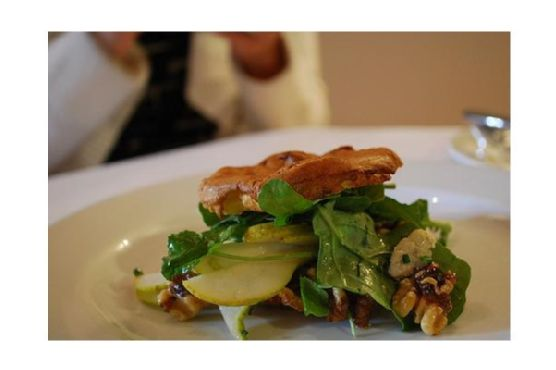
Last Tuesday, I found myself staring into the fridge, the usual weeknight dilemma playing out: what to make that’s quick, refreshing, yet still feels like a treat? I’d been craving something that had all the comforting notes of fall but was light enough to not weigh me down. Enter the pear salad with walnuts and blue cheese, a concoction that seemed to tick every box. This salad is all about contrasts — the creaminess of the blue cheese against the crisp pears, the bitterness of endive softened by the sweet, nutty warmth of walnuts. It’s a symphony of flavors that feels like indulging without the next-day guilt. Ready to dive in? Trust me, it’s a keeper.
Jump to Recipe
What You’ll Need
This recipe doesn’t require a trip to a gourmet store. Odds are you already have most of these ingredients hanging out in your kitchen.
- Pears – Choose ripe, but firm ones.
- Mixed salad leaves – A blend with some curly endive adds a nice bitter touch.
- Lemon juice – For a bright, tangy kick.
- Blue cheese – Go for your fave, the funkier, the better.
- Chives – Finely chopped for a fresh oniony hint.
- Safflower oil – For a neutral base.
- Walnut oil – Adds a toasty depth.
- Walnuts – Toast these for that extra crunch.
How to Make Pear Salad With Walnuts and Blue Cheese
- Start by prepping the pears. Slice a thin piece off their bases so they can stand upright without toppling over. Trust me, this makes the plating look extra fancy.
- In individual bowls, artistically arrange the pears amidst the mixed salad leaves. Think of this as your blank canvas.
- Sprinkle the chopped chives over the leaves, letting them fall where they may — no need for precision here.
- In a small bowl, whisk together the lemon juice, safflower oil, and walnut oil. Aim for a smooth emulsion that coats the back of a spoon.
- Drizzle this dressing lovingly over your salads. You’ll want a nice, even coverage without drowning the ingredients.
- Finish by scattering a generous handful of blue cheese crumbles and toasted walnuts over each salad, letting them nestle into the greens.
Cook’s Notes
Okay, let’s talk about some things to keep in mind. Firstly, when choosing pears, Bartletts or Anjous are my go-to for their texture and sweet flavor. If they’re too ripe, they might collapse under the pressure of the salad fork, so aim for that sweet spot of just ripe.
Toasting the walnuts is a game-changer. Just a few minutes in a dry skillet until they’re golden and fragrant will make a world of difference. Store any leftovers in a sealed container in the fridge, but honestly, this salad is best enjoyed fresh.
If you’re prepping ahead, keep the dressing separate until you’re ready to serve. This keeps the greens from wilting and maintains that fresh, crisp bite.
Make It Your Own
- Don’t love blue cheese? Swap it out for crumbled feta or goat cheese for a milder taste.
- For a protein boost, add some grilled chicken or crispy tofu on top. It turns this salad into a complete meal.
- Try swapping walnuts with pecans for a sweeter, softer crunch.
- If you can’t find curly endive, arugula offers a peppery alternative that pairs wonderfully with the pears and cheese.
If you try this, I’d love to hear how it turns out — drop a comment or tag me! Whether you stick to the script or put your own twist on it, I hope it becomes a staple in your kitchen like it has in mine. Happy cooking!
Related update: Pear Salad With Walnuts and Blue Cheese
Related update: Pear Salad With Walnuts and Blue Cheese
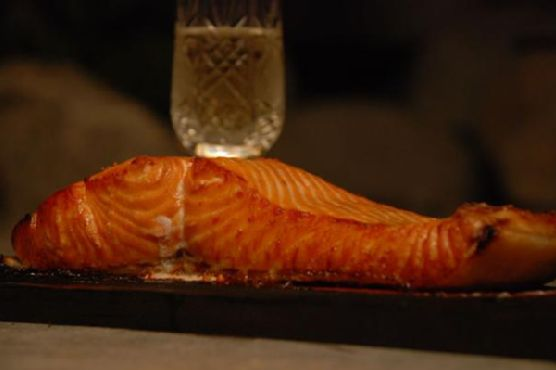
Last Thursday, I found myself staring into the fridge, hoping for inspiration to strike before my toddler demanded dinner. It was one of those days where you need something kinda fancy to feel like an adult—but it also had to be easy enough to not cause a breakdown. Enter: Wildwood Ovens Bourbon Apple Glazed Cedar Plank Salmon. This dish is the answer to those chaotic moments when you want to impress yourself and anyone lucky enough to be at the table. It’s a little sweet, a little smoky, and totally doable on a weeknight. The cedar plank makes it taste like it came from a restaurant, but really you just soaked a piece of wood and turned on the grill. Magic, right?
Jump to Recipe
What You’ll Need
The beauty here is that the ingredient list is straightforward, and there’s a good chance you’ve got most of this hiding in your pantry. A quick run to the store, and you’ll be ready to rock this impressive dish.
- Apple juice
- Brown sugar
- Cedar plank (make sure it’s food-safe!)
- 3-4 garlic cloves, minced
- 1 tsp kosher salt
- Freshly cracked black pepper
- Salmon filet (about 1.5-2 lbs is perfect)
- Bourbon whiskey
How to Make Wildwood Ovens Bourbon Apple Glazed Cedar Plank Salmon
- Start by soaking your cedar plank in water for at least 2 hours. This step is crucial to prevent any unplanned flare-ups and to infuse that lovely woody flavor into your salmon.
- Rinse the salmon under cold water and gently pat it dry with paper towels. This is essential as it helps the seasoning stick better and gives you a nice crisp finish.
- Grab a medium saucepan and set it over medium-high heat. Carefully pour in the bourbon—remember, no free-pouring from the bottle, unless you enjoy spontaneous kitchen pyrotechnics.
- Once the alcohol is reduced and you’ve got just a little left at the bottom of the pan, add in the apple juice, brown sugar, and minced garlic. Keep it on the heat until it’s reduced to about a third of its original volume. You’re looking for something just thinner than syrup.
- Season the salmon generously with salt and freshly cracked black pepper on both sides. Brush the skin side with a bit of olive oil.
- Place the seasoned salmon, skin side down, on the soaked cedar plank. Then, transfer the plank to a medium-high grill or a wood-fired oven preheated to 500°F, positioning it close to the fire for that authentic flavor.
- Using a probe thermometer, start checking the internal temperature of the salmon after about 10 minutes, and then every 5 minutes thereafter. Once it hits at least 100°F, brush on the apple glaze—every few minutes. This layering helps build up that gorgeous, sticky finish.
- Continue cooking until the salmon reaches your desired doneness; I aim for around 135°F for that perfect, juicy flakiness.
Cook’s Notes
Here are some extra tips for nailing this dish every time:
- Make sure your cedar plank is fully submerged while soaking, maybe putting a can or something on top to keep it under water.
- Don’t skimp on the glaze. The more layers you add, the richer the flavor.
- Leftovers (if you have any) can be kept in an airtight container in the fridge for a couple of days. Flake it over a salad for a quick next-day meal!
Make It Your Own
- Swap the bourbon for brandy if you prefer a slightly sweeter glaze.
- For a spicier kick, add a pinch of chili flakes to the glaze.
- No salmon? Try this glaze on chicken breasts or even tofu—just adjust the cooking time accordingly.
- Top with fresh herbs like dill or parsley for a pop of color and flavor right before serving.
If you try this, I’d love to hear how it turns out—drop a comment or tag me on social media! It’s always a win when we can turn a potential kitchen meltdown into a tasty triumph.
Related update: Wildwood Ovens Bourbon Apple Glazed Cedar Plank Salmon
Related update: Meat rolls with prosciutto and sage