
One evening, after a long day of juggling work and kids’ activities, I found myself staring at a couple of lonely zucchinis in the fridge, wondering what on Earth I could make for dinner that everyone would actually eat. There was no time for anything elaborate, and I really didn’t want to resort to cereal again. That’s when it hit me: Mini Zucchini Bites, or as I affectionately call them, Cuadritos De Calabacin. These little guys are a lifesaver — quick to throw together, they make the perfect savory snack or side, and they’ve got enough bacon and cheese to keep the pickiest eaters happy. Plus, I mean, they’re bite-sized, and who doesn’t love a good two-bite treat?
Jump to Recipe
What You’ll Need
Trust me, chances are you already have most of this in your kitchen, which makes it even better for those spontaneous dinner decisions.
- 2 slices of diced bacon
- 1/2 cup white onion, chopped
- 2 cups grated zucchini
- 1 cup grated gouda cheese
- 1/2 cup flour
- 1 teaspoon baking powder
- 1/4 cup vegetable oil
- 2 eggs
- Salt & pepper to taste
- 1 tablespoon butter, melted
- 1/4 cup plain bread crumbs
How to Make Mini Zucchini Bites (Cuadritos De Calabacin)
- Preheat your oven to 375°F, because nothing kills dinner momentum like a cold oven.
- In a sauté pan, cook the diced bacon until it’s perfectly crisp. The goal here is crispy, not soggy, so let it do its thing. Once done, set the bacon aside but don’t ditch the bacon fat.
- With about 2 tablespoons of that glorious bacon fat, sauté the white onion until it turns transparent. You’ll know it’s ready when your kitchen smells heavenly. Set aside.
- In a large mixing bowl, combine the grated zucchini, gouda cheese, flour, baking powder, vegetable oil, eggs, bacon, and onion. Season generously with salt and pepper and mix it until everything is just combined. The mixture will be slightly thick and that’s exactly what you want.
- Grab a 10 x 7-inch baking pan and brush it thoroughly with the melted butter. Then, sprinkle plain bread crumbs to coat — this will give you a nice, crispy edge.
- Pour the zucchini mixture evenly into the prepared pan, spreading it out as needed. Pop it in the oven and let it bake for 45-60 minutes. It’s done when it’s firm and the top is golden brown.
- Once baked, let it rest for about 10 minutes. This resting time is key to letting everything set before you slice them into 2-inch cubes. Serve them warm or cold, they’re delicious either way!
Cook’s Notes
For best results, make sure to squeeze out any excess moisture from your grated zucchini. You want your bites to be perfectly firm, not soggy. If you’re planning ahead, you can mix the ingredients a few hours early, cover it, and keep it in the fridge until you’re ready to bake. As for leftovers, they store well in an airtight container in the fridge for up to 3 days. Just pop them in the oven to reheat, or enjoy them cold, straight from the fridge.
Make It Your Own
- Swap the gouda for sharp cheddar if you’re after a bolder cheese flavor.
- Replace bacon with crispy tofu for a vegetarian twist that’s still hearty and delicious.
- Add a handful of chopped fresh herbs like parsley or dill for an added burst of freshness.
- For a bit of heat, toss in a finely diced jalapeño or a pinch of red pepper flakes.
If you try this, I’d love to hear how it turns out. Drop a comment or tag me in your photos — especially if you’ve made it your own with any fun variations! Enjoy!
Related update: Mini Zucchini Bites (Cuadritos De Calabacin)
Related update: Garlic & Spice Plantain Chips
TL;DR
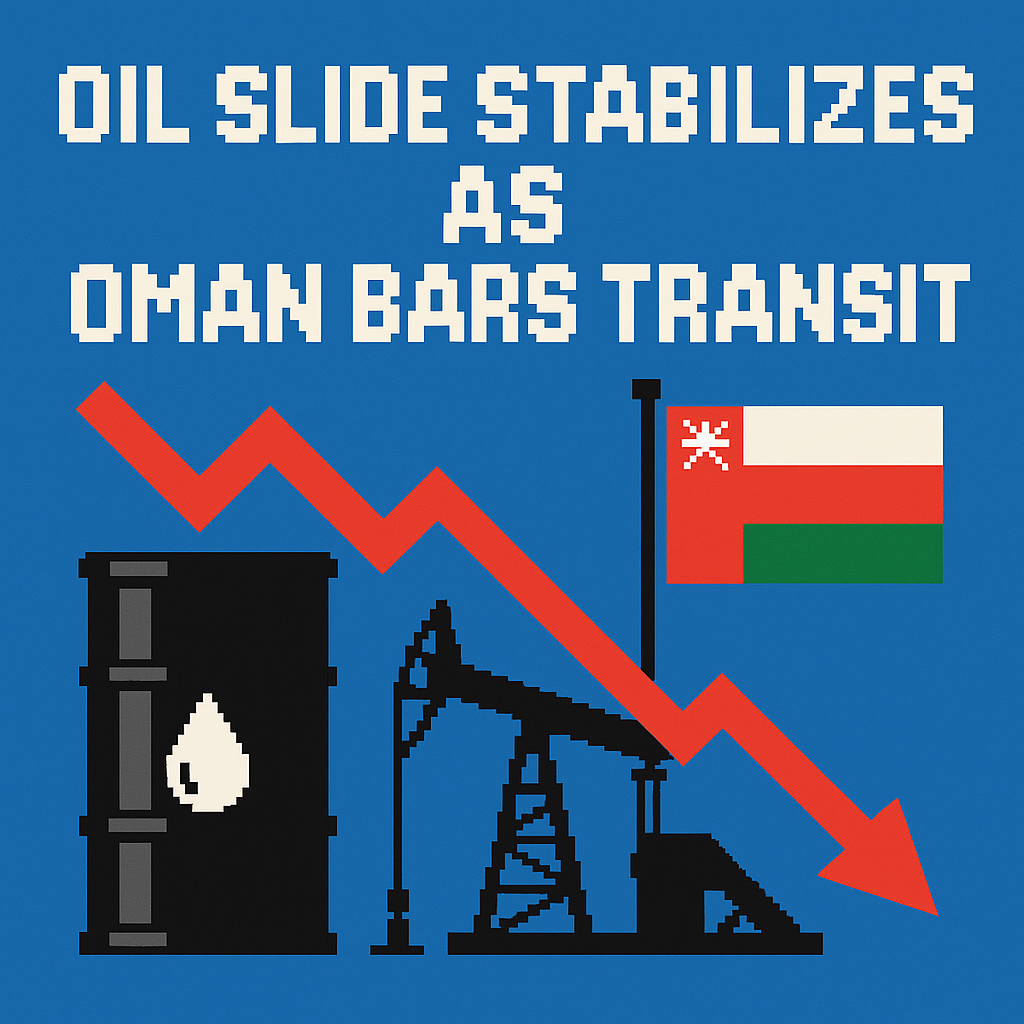
- Oil prices are sliding back toward pre-war levels even after an IRGC drone hit a Singapore-flagged ship on the U.N.-backed route through the Strait of Hormuz; the market is reading Oman’s “no transit fees” stance as a stabilizer. [1][4][5][7]
- The fight isn’t just kinetic; it’s administrative. Control over routing and whether anyone can charge Strait of Hormuz transit fees will decide who sets the rules—and the risk price—for 11,000 stranded seafarers and hundreds of hulls transiting off Oman. [1][6][11]
- Insurers, not admirals, will call the next move: if war-risk premiums stay near ~1% of hull value and fees don’t materialize, Brent likely grinds lower; if fees creep in or drone strikes persist, the per‑barrel “toll” snaps back fast. [5][9]
What the source said
CBS News reported three intertwined developments in June 2026. First, the International Maritime Organization (IMO) paused a planned evacuation corridor for ships after a vessel was struck by a projectile near Oman; a U.S. official said the ship was hit by an Iranian drone. Second, Iran’s Revolutionary Guard warned ships using routes it has not endorsed that they would not have “safe passage guarantees,” amid a tussle over whether Oman and/or Iran can assess “transit fees” in the Strait of Hormuz. Third, IAEA chief Rafael Grossi said “very strong” verification would be needed as part of a broader U.S.–Iran deal, while Donald Trump suggested Iran would buy U.S. farm goods—an assertion Iran’s parliament speaker publicly denied. [1]
Why it matters
Real stakeholders aren’t abstractions; they are Oman’s transport and navy officials directing a corridor that hugs the Omani coast, IRGC Navy commanders trying to reclaim routing authority, 11,000 seafarers waiting on hulls in hot anchorages, and insurers at Lloyd’s deciding whether to underwrite transits at 1% or 3% of hull value. That triangle—route governance, kinetic risk, and insurability—feeds directly into Brent’s curve and LNG availability for Asia. [6][3][5][9]
If Oman’s “no transit fees” position holds and U.N.-coordinated routing restarts safely, the cost stack for each voyage falls: fewer detours, lower war-risk premia, and cheaper oil in spot markets. If Iran manages to impose a de facto regime (fees, “northern route” mandates, harassment), expect shipping to self-insure with higher premia and longer queues that show up in spreads within days. [7][8][5]
Original analysis
Strait of Hormuz transit fees are a governance fight dressed up as tariffs. The consensus view says “fees are off the table; oil goes back to pre-war.” My contrarian read: even without formal tolls, the practical “fee” is already embedded in insurance and routing frictions—and it can reprice overnight.
-
Back-of-envelope: hypothetical toll vs. insurance math
- Scale of the chokepoint. Under normal conditions, ~20 million barrels per day (mb/d) move through Hormuz—about one-fifth of global liquids. [10]
- Suppose Iran or Oman tried a $1/bbl transit fee at full, normal flows: $1 × 20 mb/d × 365 ≈ $7.3 billion/year. At a halved war-time throughput of 10 mb/d, it’s still ~$3.65 billion/year. That’s the prize “fees” chase. [10]
- War-risk premiums already act like a fee. Brokers report Persian Gulf hull war cover near ~1% of a vessel’s insured value, down from peaks in March but still elevated. On a $150 million VLCC, 1% = $1.5 million per transit. With ~2 million barrels aboard, that’s ~$0.75/bbl; at 2–3%, it’s $1.50–$2.25/bbl—bigger than any politically saleable toll. [9]
- Market signal. Brent has traded back toward pre-war prints as traffic inches up via the Omani corridor; that says traders believe the insurance “fee” is easing faster than any political fee can solidify. [5][7]
-
2×2: Who sets the rules vs. how hot the water gets
- UN/Oman-governed + Low kinetic risk: Insurance <1% AWRP; evacuation resumes; Brent stabilizes in the low-to-mid $70s. [3][5]
- UN/Oman-governed + High kinetic risk: Drone or missile harassment raises hull war premia back toward 2%; Brent re-tests high-$70s/low-$80s despite no formal tolls. [4][9]
- Iran-governed (northern route mandates) + Low risk: Administrative friction (approvals, declarations) becomes the implicit toll; insurance ambivalent; muted but sticky ~$1/bbl cost. [1][6]
- Iran-governed + High risk: AWRP >2%, sporadic interdictions; effective “toll” rises to ~$2–$3/bbl; Brent >$85 on event days. [4][9]
-
Named-stakeholder breakdown
- Oman (Foreign Minister Badr Al‑Busaidi): “No transit fees” is Muscat’s competitive edge and legitimacy claim; it keeps the corridor attractive and aligns with IMO guidance. [7]
- IRGC Navy: Hitting a Singapore-flagged ship on the southern track is a veto on routing without Tehran’s say; it’s pressure to force recognition of an Iran-endorsed lane. [4][6]
- IMO (Sec‑Gen Arsenio Dominguez): The pause signals a safety-first bar; restarting requires assurances that insurers and masters accept. [3][2]
- Insurers at Lloyd’s and reinsurance brokers (Howden): They translate risk into the real toll. If AWRP stabilizes near 1%, cargo and hull move; at 2–3%, marginal barrels balk. [9]
- Oil exporters/importers (QatarEnergy, Aramco, Indian refiners): The corridor’s uptime governs Q3 export programs; a 1–2 day pause shuffles dozens of liftings and swaps. [5][7]
-
Historical analogue
The Tanker War of 1984–1988 taught insurers to price the Gulf in percentage points of hull value, not headlines. Then, Additional War Risk Premiums surged into multiple-percent territory; today’s market has already revisited that playbook, peaking higher in March and easing only as corridors gained legitimacy. If attacks resume, expect the AWRP curve—not social media—to dictate freight and flat price within hours. [9]
Bottom line: “No transit fees” doesn’t end the story. It just shifts the toll booth to Lime Street in London. If Muscat can keep underwriters confident and ships hugging its coastline, the embedded “fee” falls and Brent stays heavy; if not, the market will pay—and call it insurance. [9]
What others are missing
Capacity on the evacuation corridor—not the headline of “fees”—is the immediate throttle on flows. The IMO talked about moving more than 11,000 stranded seafarers and began contacting ships; 57 vessels carrying ~1,100 crew reportedly transited before the pause. But coverage largely skips the operational ceiling: how many daily pilotage windows, how many tugs, and whether masters can crew up safely at scale along Oman’s coast. If the corridor can’t process the backlog efficiently, the system pays the toll anyway—via day rates, demurrage, and higher war-risk premia—despite zero formal “transit fees.” Watch throughput and insurer behavior, not just ministerial statements. [6][5][11][3]
What to watch next
- By July 10, 2026, the IMO will announce a phased restart of the evacuation corridor with specific daily transit slots published via Oman’s maritime authorities; if that communiqué doesn’t land, expect AWRP to tick back up. [3][7]
- By July 31, 2026, Brent’s monthly average will print between $70–$80 if Oman’s “no fees” stance holds and no ship is hit on the Omani track for two consecutive weeks; one more strike on that route pushes the monthly average above $82. [5][7][4]
- By August 15, 2026, at least one major P&I club will restore standard Hormuz coverage for the Omani corridor at an Additional War Risk Premium at or below 1% of hull value, citing improved route security and coordination. [9]
My take
Oman just outmaneuvered Tehran. By pledging “no transit fees,” Muscat married legality to practicality and offered underwriters a story they can price in 2026. Iran can still throw drones at hulls, but every attack now looks like a tax on Asia’s refiners—and a direct subsidy to shipowners collecting elevated day rates. Unless Tehran can impose a coherent, low-risk northern lane, the market will default to the Omani corridor and price down the “insurance toll.” I’m fading fee headlines and the next scare pop in Brent; the more interesting long trade is tanker equities while AWRP steps down from 3% toward 1%. [9]
Sources
[1] Iran-U.S. Updates: Iran strikes vessel in Strait of Hormuz amid debate over “transit fees” — CBS News (https://www.cbsnews.com/live-updates/us-iran-war-trump-strait-of-hormuz-oil-prices/) — Live updates that anchor the attack, the IMO pause, the “fees” dispute, and Grossi’s inspection remarks.
[2] UN agency pauses evacuation of ships through the Strait of Hormuz after attack on vessel — AP News (https://apnews.com/article/862164c2aecbdc376dea434198eaf75f) — Confirms the evacuation pause after a ship was hit off Oman.
[3] IMO pauses evacuation in Strait of Hormuz following attack — International Maritime Organization (https://imo-newsroom.prgloo.com/news/imo-pauses-evacuation-in-strait-of-hormuz-following-attack) — Official statement from IMO Secretary-General Arsenio Dominguez on suspending the plan.
[4] Iran strikes cargo ship on U.N.-backed route in Strait of Hormuz — The Washington Post (https://www.washingtonpost.com/business/2026/06/25/ship-attacked-strait-hormuz-iran-threatens-un-backed-route/) — Reports U.S. officials’ assessment that an Iranian drone hit a Singapore-flagged ship using the U.N.-backed route.
[5] Oil back to pre-war levels as Hormuz traffic rebounds — Reuters (via Investing.com) (https://www.investing.com/news/world-news/oil-back-to-prewar-levels-as-hormuz-traffic-rebounds-us-tries-to-reassure-gulf-allies-4760411) — Documents Brent retreat toward pre-war levels and cites early transit numbers under the IMO plan.
[6] UN pauses Hormuz sailor evacuations after “attack” in strait — Axios (https://www.axios.com/2026/06/25/iran-ship-attacked-strait-hormuz-un-sailors-evacuation-paused) — Adds scale: 600 ships stranded and quotes IRGC objections to routes announced “without coordinating” with Iran.
[7] Oman opens temporary maritime corridor through Strait of Hormuz — Anadolu Agency (https://www.aa.com.tr/en/middle-east/oman-opens-temporary-maritime-corridor-through-strait-of-hormuz/3976121) — Omani route details and commitment to freedom of navigation “without imposing transit fees.”
[8] US warns Oman not to engage in facilitating tolls for Strait of Hormuz — Reuters (via Investing.com) (https://www.investing.com/news/world-news/us-warns-oman-not-to-engage-in-facilitating-tolls-for-strait-of-hormuz-4714966) — Shows Washington’s red line on any tolling scheme.
[9] Strait of Hormuz: (Re)insurance impact — Howden Re (April 2026) (https://www.howdenre.com/sites/howdenre.howdenprod.com/files/2026-04/HowdenRe_Strait_of_Hormuz_report_April12026.pdf) — Evidence of AWRP levels (near 1% after March peaks) and voyage cost implications.
[10] The Strait of Hormuz is the world’s most important oil transit chokepoint — U.S. EIA (https://www.eia.gov/todayinenergy/detail.php?id=39932&os=w) — Baseline throughput (20 mb/d, ~20% of global liquids) to size back-of-envelope scenarios.
[11] Stranded Hormuz seafarers begin mass evacuation operation — United Nations (UN Geneva) (https://www.ungeneva.org/en/news-media/news/2026/06/119983/stranded-hormuz-seafarers-begin-mass-evacuation-operation) — Confirms the ~11,000 seafarers figure and IMO-led contact with ships ahead of the pause.
Related update: We recently published an article that expands on this topic: read the latest post.

Picture this: It’s a rainy Tuesday evening, and my craving for something warm, spicy, and comforting kicks in. The kind of craving that hits you like a hug when you’ve had one of those long days. I glance around my kitchen and spot the usual suspects — a can of coconut milk, some soy sauce, and a lonely block of tofu that’s been waiting for its moment. It’s the perfect setup for my Thai Coconut Curry Soup. This soup is a game-changer. Quick to whip up, it’s one of those recipes that feels a touch exotic but is totally doable on a weeknight. It’s cozy, fragrant, and brings just the right amount of heat. Trust me, it’s the kind of dish you’ll be daydreaming about long after your bowl is empty.
Jump to Recipe
What You’ll Need
The beauty of this recipe is that it doesn’t require a mile-long list of specialty ingredients. Chances are you already have most of these in your pantry or fridge:
- Canned light coconut milk
- One can’s worth of water
- Red curry paste
- Fresh ginger paste
- Fresh snow peas
- String beans
- Diced carrot
- Fresh whole Thai basil leaves
- Lime juice
- Low sodium soy sauce
- A few splashes of sesame oil
- Chili powder
- Tofu
- Salt
- Red bell pepper
- Black pepper
How to Make Thai Coconut Curry Soup
- Start by bringing the coconut milk and a can’s worth of water just to a boil. You’ll know it’s ready when it’s steaming and about to bubble over, so keep an eye on it.
- Reduce the heat to a low simmer. Add in the red curry paste and fresh ginger paste. Give it a good whisk until both are well-incorporated, and your kitchen is filled with that heavenly aroma.
- Now, toss in the diced carrots and spices, except for the basil leaves. Cover and let them simmer until the carrots are almost soft. Keep them a bit firm — nobody likes a mushy carrot!
- Add the tofu. Cover your pot again and let it all simmer for a few more minutes. The tofu will soak up all those delicious flavors.
- Time to add the remaining ingredients — snow peas, string beans, lime juice, soy sauce, sesame oil, and chili powder. Cover again and simmer just until the beans turn bright green but stay crisp.
- Garnish with strips of red bell pepper and freshly ground black pepper. If you’re feeling indulgent, add a couple of tablespoons of coconut oil when you put in the tofu. That extra coconut flavor is truly amazing!
Cook’s Notes
When making this soup, remember that the texture of your vegetables matters. You want them crisp and vibrant, not overcooked. If you plan to make it ahead, stop cooking just before adding the snow peas and string beans, and finish it off when you’re ready to serve. Store leftovers in an airtight container in the fridge for up to three days. Reheat gently on the stovetop, adding a splash of water if the soup thickens too much.
Make It Your Own
- Swap the tofu for crispy baked chicken if you’re not feeling the plant-based vibes.
- Add a handful of shrimp in the last few minutes of cooking for a pescatarian twist.
- Stir in a spoonful of peanut butter with the curry paste and ginger for a nutty depth of flavor.
- Throw in a cup of cooked rice noodles at the end for a heartier meal.
If you try this, I’d love to hear how it turns out — drop a comment or tag me! I’m always excited to see your delicious creations. Happy cooking!
Related update: Thai Coconut Curry Soup
Related update: Lemon Chickpea & Tomato Stew
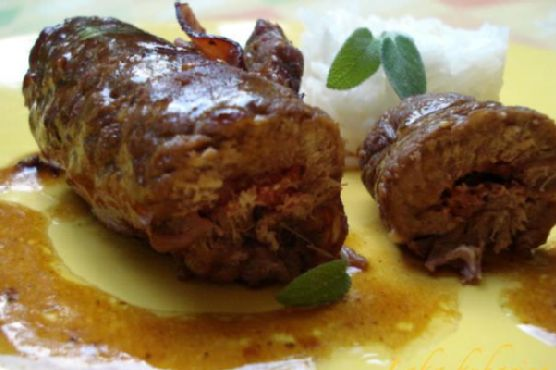
Picture this: It’s a random Tuesday evening, and I’m staring down a fridge that looks like a ghost town. There’s a near-empty bottle of white wine, a few lonely sage leaves, and some beef flank steaks that I really need to use up. That’s when the idea hit me — Meat rolls with prosciutto and sage. With a quick rustle through my pantry, I realized I had everything I needed. This dish is the ultimate hero for those nights when you crave something comforting yet deceptively fancy. You know what I mean? It comes together faster than you’d think, with the sage giving it an unexpected pop of earthy goodness. And guess what? It only looks fussy.
Jump to Recipe
What You’ll Need
You might find that you’ve got most of this hanging around already. No need for a special trip to the store, which is a win in my book.
- Beef flank steaks – Perfect for rolling and full of flavor.
- Similar seasoning (like Vegeta Natur) – Just a sprinkle for a bit of zing.
- Prosciutto – Salty, savory goodness that wraps the steak in love.
- Sage leaves – The secret ingredient that makes this dish sing.
- Corn starch – Magic thickener for the sauce.
- White wine – Adds a splash of sophistication.
- Olive oil – For that sauté start.
- Butter – Because everything’s better with butter.
- Black bell pepper – Freshly cracked for a bit of heat.
How to Make Meat rolls with prosciutto and sage
- First things first, wash and dry those beef flank steaks. Then, get a bit of a workout by flattening them out. This helps them roll up nice and tight.
- Grab your seasoning of choice and rub one side of each steak — you’re giving it a flavor boost.
- Lay a piece of prosciutto and a sage leaf on the other side of the steak. The prosciutto should cover the whole side like a cozy blanket.
- Time to roll! Start at one end and roll the steak up tightly. Secure it with wooden or metal toothpicks. Channel your inner sculptor here.
- In a bowl, whisk the corn starch into the white wine until it’s all mixed up and smooth. This will be your secret sauce.
- Heat up a mix of olive oil and butter in a pan. Once it’s hot, add the rolls and sauté them on all sides until golden brown. Your kitchen will smell amazing right about now.
- Pour in the wine mixture and season with freshly cracked black bell pepper. Give everything a stir.
- Cover the pan and let the rolls simmer on low heat for about 20 minutes. They should become tender and soak up all those flavors.
- Remove the toothpicks before serving. Trust me, no one likes a surprise toothpick in their dinner.
Cook’s Notes
Make sure to flatten those steaks evenly, or they’ll be tricky to roll. You want them to cook evenly, too. If you’re not into sage, a bit of rosemary can be a lovely swap, though the sage really adds something special here. Don’t rush the simmering stage — that’s when all the magic happens and the flavors meld together. Leftovers can be kept in an airtight container in the fridge for up to three days. A quick reheat, and they’re just as delicious.
Make It Your Own
- Swap the beef flank steaks for chicken breast if you’re feeling poultry instead of red meat.
- If you’re not a fan of prosciutto, try using thinly sliced turkey or ham for a different twist.
- For a non-alcoholic version, substitute the white wine with chicken or vegetable broth. You won’t miss a thing!
- Add a sprinkle of crushed red pepper flakes for some heat if you’re feeling spicy.
If you try this, I’d love to hear how it turns out — drop a comment or tag me! Happy cooking, and remember, it’s all about having fun in the kitchen.
Related update: Meat rolls with prosciutto and sage