
I was knee-deep in a midwinter slump, the kind where you just crave a burst of sunshine, when I stumbled upon this idea: Braid sweet citrus-flavored licorice. It’s a bit of a departure from your typical licorice, and honestly, it’s more of a pastry with a playful twist. Picture this: a light, flaky puff pastry with a zesty citrus glaze that dances on your taste buds. Perfect for those days when you need a little joy but aren’t in the mood for anything too fussy or time-consuming.
One of the best things about this recipe is its versatility. It’s a delightful treat that can play the part of a breakfast snack, a tea-time companion, or the unexpected star of a dessert platter. The secret weapon here is the citrus glaze, which brings this pastry to life with a sweet-tart zing. If you’ve got some puff pastry lingering in the freezer and a stash of citrus in the fruit bowl, you’re basically halfway there.
Jump to Recipe
What You’ll Need
Chances are you already have most of this sitting in your kitchen. Let’s keep it simple, shall we?
- Puff pastry Buitoni – the flaky base of our braids
- Fresh cream – to add richness to the glaze
- Grand cru muscovado sugar – for that deep, molasses-like sweetness
- Lemon – zest and juice will do wonders here
- Lime – for that extra citrus punch
- Orange – more zest, more flavor
How to Make Braid Sweet Citrus Flavored Licorice
- Roll out the puff pastry and use a sharp knife to etch designs of strips about 10 cm high and 1 cm wide. Precision isn’t key here, just have fun with it.
- Gently twist each strip on itself. It doesn’t have to be perfect; the twists will bake into beautiful, rustic braids.
- Place the twisted strips spaced apart on a sheet of parchment paper. This prevents them from sticking together as they bake.
- Bake in a preheated oven at 200°C for about 12 minutes, or until they’re golden brown and your kitchen smells like heaven.
- While the braids cool on a wire rack, zest your citrus fruits, and set the zest aside.
- Juice the lime, half of the orange, and half of the lemon. Boil the juices until you reduce it down to about two tablespoons of liquid.
- Remove from heat and stir in the cream and brown sugar until it’s well mixed and dreamy.
- Let the glaze cool until it thickens, then brush it generously over the cooled braids.
- Sprinkle the reserved citrus zest over the glazed braids while they’re still a bit wet to ensure it sticks well.
- Allow the glaze to dry on the wire rack until it hardens slightly. Then, go ahead and devour them!
Cook’s Notes
Don’t stress if your twists aren’t perfect—imperfections add character! Make sure to space them well on the parchment paper to allow for expansion. If your glaze seems too runny, let it cool a bit more; it thickens as it cools. Want to save time? You can make the glaze ahead of time and refrigerate it for up to two days. Just warm it slightly before using. Leftovers can be stored in an airtight container for a couple of days, but honestly, they probably won’t last that long.
Make It Your Own
- Try using blood orange instead of the regular orange for a more intense flavor and color.
- Add a splash of vanilla extract to the glaze for a warm, comforting undertone.
- For a spiced twist, sprinkle a little ground cardamom in with your citrus zest.
- If you’re feeling adventurous, drizzle a bit of melted white chocolate over the top once the glaze has set.
If you try this, I’d love to hear how it turns out—drop a comment or tag me! Enjoy the bright and citrusy vibes these braids bring, no matter what the weather outside is doing. Happy baking!
Related update: Braid sweet citrus flavored licorice
Related update: Basil Coconut Ice Cream

TL;DR
- The Patriots enter the June-to-July 2026 break with a mostly settled roster; the soft spot is edge depth while Harold Landry III continues knee management and rookie Gabe Jacas remains the lone unsigned second-rounder. [1], [7], [12]
- A.J. Brown’s arrival plus a looming Christian Gonzalez mega-extension will redefine New England’s cap identity; the front office has to set terms before veterans report on July 24, 2026. [2], [4], [5]
- Many say “sign another pass rusher now,” but Mike Vrabel’s history and the production baselines for Landry and Dre’Mont Jones support a patient, coverage-first plan if those two hit 75–80% of prior output. [3], [6], [8]
What the source said
A team-run roundup says the defending AFC champs finished OTAs and minicamp on June 12, 2026, and will reconvene at training camp with veterans reporting July 24 and the first public practice July 25 in Foxborough. The post lists Drake Maye as the established QB1, notes positive spring reports on Michael Onwenu’s group, and highlights a defense headlined by Christian Gonzalez and Carlton Davis. Questions remain at edge (Harold Landry III’s rehab timeline; unsigned second-rounder Gabe Jacas), TE2 after Julian Hill’s injury, and several back-end roster spots. Vrabel publicly praised his edge room, and the club is tracking a Gonzalez “mega-extension” while he was limited during minicamp periods. [1], [2]
Why it matters
-
Inside Foxborough, Eliot Wolf and Mike Vrabel must sequence contracts that add A.J. Brown and extend Christian Gonzalez while protecting 2026–2028 cap flexibility around Drake Maye’s below-market rookie window. Miss the timing and you either pay a July premium for pass rush or let a CB1 gain leverage heading into 2027. [4], [5]
-
Outside Foxborough, AFC East rivals have to pick between defending Maye-to-Brown shootouts or hammering the run into New England’s coverage shell and away from Gonzalez’s side. New England’s choice at edge—buy in July or ride internal options—will shape early-down scripts in September divisional games. [2], [3]
Original analysis
Late June 2026 is the pivot point: separate OTA storylines from real constraints before the July 24 report date and July 25 public practice. Two levers will set September margins—edge availability and the timing/structure of a Christian Gonzalez extension. [2]
Contrarian read
- Consensus: sign a veteran edge before camp because Landry is still rehabbing and Jacas isn’t under contract.
- Counter: if Harold Landry III is functional and Dre’Mont Jones stabilizes, Vrabel can manufacture pressure with coverage and games up front without paying a July markup.
- Landry logged 10.5 sacks across 17 games in 2023 (0.62 per game), a usable baseline even with continued knee management into early 2026. [6], [7]
- Jones agreed to three years and $39.5 million after a career-best 7.0 sacks in 2025; at 17 games, that’s 0.41 per game before any scheme bump. [4], [8]
- Vrabel’s June media tone on the edge room skewed confident, not hedged, which signals he sees an acceptable floor to start camp. [3]
Back-of-envelope calculation
- Assume 75% of prior sack rates to reflect Landry’s rehab and Jones settling into a hybrid edge/3T role:
- Landry: 0.62 sacks/gm × 0.75 ≈ 0.47 sacks/gm
- Jones: 0.41 sacks/gm × 0.75 ≈ 0.31 sacks/gm
- Combined ≈ 0.78 sacks/gm. Over 17 games, that’s ~13 sacks from the top two. With rotational, DB, and ILB pressures layered in, team sacks plausibly land in the mid-40s—a range that wins when paired with a CB1 like Gonzalez and an offense boosted by Brown. [6], [8]
2×2: Patriots 2026 roster reality (certainty vs. depth)
| Unit |
Certainty (Talent/Role) |
Depth (2nd/3rd options) |
Read |
| WR (A.J. Brown, Romeo Doubs) |
High |
Medium |
WR1 solved; WR4/5 surplus becomes August trade capital. [4], [9], [10] |
| CB (Christian Gonzalez, Carlton Davis) |
High |
Medium |
Star + steady veteran; Gonzalez deal sets 2027 flexibility. [5], [11] |
| Edge (Landry, Dre’Mont Jones, Jacas) |
Medium |
Low–Medium |
If Landry’s pitch count rises slowly and Jacas starts late, early heat comes from stunts/sim pressures. [1], [3], [8] |
| OL (Michael Onwenu + ascending group) |
Medium–High |
Medium |
Spring reports point up; tackle depth vs. elite fronts remains the test. [1] |
Named-stakeholder breakdown
- Mike Vrabel: He’s signaling coverage-first, pressure-second to start August, and he controls the timing on any external edge addition if September pressure craters. [3]
- Eliot Wolf: He needs a Gonzalez extension at or just above the current CB apex (~$30M AAV) while keeping 2027 escape hatches for cash/Cap 2.0 scenarios. [11]
- Christian Gonzalez: Limited minicamp work tracks with a “protect the asset” posture during negotiations; closing in July avoids a daily question cycle and preserves a full ramp to Week 1. [5]
- Gabe Jacas: As the lone unsigned second-rounder, each unsigned day squeezes install; a PUP start would make 2026 a rotational year capped below starter volumes. [12]
- Dre’Mont Jones: A scheme-versatile piece whose 2025 production bump suggests he can hold early downs while Vrabel dials up movement to free one-on-ones. [8]
Historical analogue
- In 2019, New England finished at or near the top of defensive DVOA by pairing elite coverage with simulated pressure, despite lacking a Bosa/Garrett archetype; the 2019–2020 stretch under Belichick shows the coverage-first blueprint that Vrabel can echo with Gonzalez and a healthy-enough Landry. [13]
What others are missing
The hinge isn’t the July price of an edge; it’s the time-value of a Gonzalez extension. Top-corner AAV has clustered around the $30 million mark, and every new comp tilts leverage toward Gonzalez if Wolf waits past the July 24 report date. A structure with 2026–2027 option bonuses and front-loaded guarantees can pair A.J. Brown’s cap with Gonzalez’s and preserve 2027 room for a Maye renegotiation path; slip a month, and you pay a CB tax or cut depth at safety or guard to fit. [2], [11]
What to watch next
-
By July 24, 2026, Christian Gonzalez signs an extension at or above $30M AAV, announced before or during the report-day window. [2], [5], [11]
-
By July 20, 2026, Gabe Jacas signs his rookie deal but opens camp on PUP or a pitch count; if Landry is active, his Week 1 defensive snap share stays below 35%. [2], [12]
-
Through August 18, 2026 (end of joint practices/preseason Week 2), New England does not add a veteran edge on a multi-year deal; any addition, if made, is one year and under $6 million after late-August cuts. [3], [8]
My take
I’m buying Vrabel’s bet because 10.5 sacks from Landry in 2023 and a career-high season from Jones in 2025 create a real baseline to start camp in July 2026. With Gonzalez erasing one side and Brown changing offensive tenor, a coverage-tilt front can muddy reads and still generate drive-killing pressure. Spend urgency on paperwork, not headlines: close Gonzalez at market-plus, get Jacas under contract and learning, and walk into the July 25 public practice with clarity. If the rush lags by Week 3, cutdown-week veterans will exist—and the same cap dollars will buy more certainty in September. [2], [3], [6], [8]
Sources
-
New England Patriots Official Website — Team-run minicamp/OTA roundup detailing June 12 wrap, July camp dates, and edge/TE2 notes; establishes baseline roster context.
-
NBC Sports ProFootballTalk — Training camp schedule piece confirming veterans report July 24 and first public practice July 25; sets the calendar.
-
Yahoo Sports — Vrabel’s June minicamp comments indicating confidence in the current edge group; informs coaching posture.
-
FOX Sports (AP-sourced) — Report of Dre’Mont Jones agreeing to a three-year, $39.5M contract with New England; anchors contract math.
-
CBS Boston — Coverage of Christian Gonzalez’s limited minicamp work amid extension buzz; frames negotiation timing.
-
NFL.com — Harold Landry III career stats, including 10.5 sacks in 2023 over 17 games; supplies production baseline.
-
Patriots.com — Injury report analysis noting Landry’s knee management into February 2026; contextualizes availability.
-
CBS Sports — Note on Dre’Mont Jones’s 2025 career-high sacks and confirmation of contract terms; informs per-game estimates.
-
Patriots.com — Club announcement of the A.J. Brown trade to New England; establishes WR1 arrival.
-
Associated Press — Independent confirmation of A.J. Brown trade details and context; corroborates transaction.
-
Boston.com — Report outlining current top-corner AAV benchmarks near $30M and Gonzalez’s leverage; supports extension valuation.
-
Pats Pulpit — Note that Gabe Jacas remained the lone unsigned second-rounder entering late June 2026; signals install risk.
-
Football Outsiders — 2019 defensive DVOA rankings showing New England’s coverage-first, simulated-pressure success; provides historical analogue.
Related update: We recently published an article that expands on this topic: read the latest post.
Related update: We recently published an article that expands on this topic: read the latest post.
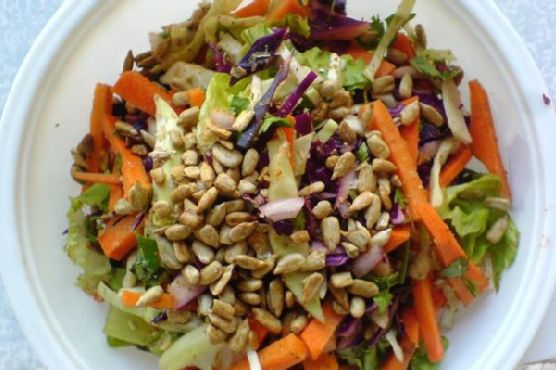
So there I was, standing in the kitchen, mid-week with a craving for something fresh yet satisfying. I’d just finished a long day of work, and the idea of a heavy meal felt like too much. My fridge had the usual suspects: a couple of carrots and half a cabbage from my last attempt at being super healthy. That’s when I remembered this Carrot and Cabbage Salad With Coriander+cumin Dry Rub. It’s one of those recipes that’s surprisingly easy and hits that magical spot between simplicity and flavor explosion. The combination of earthy spices and crunchy vegetables makes it refreshing and comforting at the same time. And the best part? It’s perfect for when you need to throw something together quickly but still feel like a kitchen wizard.
Jump to Recipe
What You’ll Need
You’re in luck because this ingredient list is all about basics that pack a punch. Chances are you already have most of this hanging out in your pantry and fridge.
- Carrots
- Green cabbage
- Red cabbage
- Cumin seed powder
- Ground coriander
- Fresh coriander
- Lime juice
- Olive oil
- Sunflower seeds
How to Make Carrot and Cabbage Salad With Coriander+cumin Dry Rub
- Start by chopping up the carrots and both the green and red cabbage into thin slivers. Aim for uniformity here so every bite is a perfect mix.
- In a large bowl, add the chopped veggies, then sprinkle in the ground coriander and cumin seed powder.
- Pour in the lime juice and olive oil. Now, roll up your sleeves and massage the spices into the veggies. You’ll know you’re done when everything’s lightly coated and you can smell the spices waking up.
- Finish by tossing in the fresh coriander and sunflower seeds. Give it a final stir to distribute these goodies evenly.
- Let the salad sit for a couple of hours. This waiting game is crucial for the spices to seep into the veggies, enriching the flavors.
Cook’s Notes
Don’t skip the resting period. This gives the spices a chance to penetrate the veggies, making them more flavorful. If you’re planning ahead, you can even prepare this salad the day before and let it sit in the fridge overnight. Just give it a quick toss before serving. Leftovers hold up surprisingly well too, so pack some for lunch the next day!
- Be sure to chop the vegetables evenly to ensure each bite is well-balanced.
- Feel free to adjust the lime juice to taste. More lime will give it a zestier kick!
Make It Your Own
- Switch out the sunflower seeds for pumpkin seeds for a different crunch.
- Add thinly sliced red onion or scallions for an extra layer of flavor.
- Replace the olive oil with avocado oil for a different, slightly nuttier taste.
- If you prefer a bit of heat, toss in some thinly sliced chili or a pinch of chili flakes.
If you try this, I’d love to hear how it turns out — drop a comment or tag me! Your variations and tweaks are always inspiring, and who knows, you might come up with the next favorite twist on this dish! 🌿🥕
Related update: Carrot and Cabbage Salad With Coriander+cumin Dry Rub

Picture this: it’s a Tuesday evening, and the week is already feeling like one long, chaotic whirlwind. I’m staring at the contents of my pantry, trying desperately to remember that elusive thing called “meal planning.” But instead of a dinner brainstorm, my mind wanders to something sweet and zesty—something that feels like sunshine on a plate. That’s when I remember the Lemonade Bundt Cake, a marvel of citrusy goodness and simplicity. This cake is like a mood booster in dessert form—tangy, moist, and delightfully easy to whip up with a handful of pantry staples. Whether you need a midweek pick-me-up or a show-stealing dessert for your next get-together, this cake is your answer.
Jump to Recipe
What You’ll Need
This recipe is delightfully straightforward, and chances are you already have most of these ingredients in your kitchen. Here’s what you’ll need:
- Lemon cake mix
- Lemon pudding mix
- 3 eggs
- Sour cream
- Vegetable oil
- Water
- Frozen lemonade concentrate
- Powdered sugar
How to Make Lemonade Bundt Cake
- First up, preheat your oven to 350 degrees. Take a moment to prepare your 10-inch bundt pan by greasing and flouring it. Trust me, this little step saves the cake from dreaded sticking disasters later on.
- Next, grab a large mixing bowl and combine the lemon cake mix, lemon pudding mix, eggs, sour cream, vegetable oil, and water. Mix everything together until you have a smooth, luscious batter that smells like pure lemony magic.
- Pour this gorgeous batter into your prepared bundt pan, smoothing the top with a spatula. Pop it into the oven and let it bake for 50-60 minutes. You’ll know it’s done when a toothpick inserted in the center comes out clean and the cake is a lovely golden hue.
- Once baked, let the cake cool in the pan for about 10-15 minutes. During this time, your kitchen will fill with a tantalizing lemony aroma that’s hard to resist.
- While the cake cools, make the glaze by combining the frozen lemonade concentrate with 1 cup of powdered sugar. Stir in more powdered sugar until the glaze reaches your desired consistency—thick enough to coat but still drizzle-friendly.
- Carefully turn your cake out onto a wire rack. Spoon the glaze generously over the top, allowing it to drip down the sides like a candied waterfall. For an added touch, dust the cake with more powdered sugar if you’re feeling fancy.
Cook’s Notes
This cake is as forgiving as it is delicious. You can make it a day ahead, and it will still taste fresh and fabulous. Just cover it tightly and store it at room temperature. If you’re in a rush, speed up the cooling process by placing the cake in the fridge for a few minutes before glazing. One common mistake is overmixing the batter, which can make the cake dense. Mix just until everything is combined, and you’ll be golden. Leftovers (if there are any!) can be kept in an airtight container for up to three days.
Make It Your Own
Here are a few fun ways to switch things up with this recipe:
- Replace the lemon cake mix with a white or vanilla cake mix for a subtler lemon flavor.
- Swap the lemon pudding mix for vanilla pudding mix if you prefer a less tangy cake.
- Add a handful of poppy seeds to the batter for a delightful crunch and a hint of nuttiness.
- For a berry twist, fold in fresh raspberries or blueberries before pouring the batter into the pan.
If you try this, I’d love to hear how it turns out — drop a comment or tag me! This Lemonade Bundt Cake is a little slice of sunshine, and I hope it brightens your day as much as it does mine. Enjoy every zesty bite!
Related update: Lemonade Bundt Cake
Related update: Braid sweet citrus flavored licorice