Chargers vs. Patriots: Who’s banged up and what it means for Wild Card Sunday
The Chargers opened Wild Card week with a splashy — and a little alarming — injury report. Eight players didn’t practice on Wednesday, including running back Omarion Hampton, and a handful of starters took either veteran rest or limited reps as Los Angeles prepares for a tense trip to New England. That nugget matters: in playoff matchups, small availability swings turn into tactical advantages (or headaches) overnight. (chargers.com)
Quick snapshot
- The Chargers listed eight players as DNP (did not participate) on Wednesday: Omarion Hampton (ankle), Bud Dupree (hamstring), KeAndre Lambert-Smith (hamstring), Kendall Williamson (ankle), Austin Deculus (oblique), plus veteran-rest DNPs for Keenan Allen and Khalil Mack. Jamaree Salyer, Elijah Molden and Donte Jackson were limited. Justin Herbert practiced fully. (chargers.com)
- The Patriots’ report included a few notable absences and limited players (Thayer Munford Jr., Garrett Bradbury, Vederian Lowe among DNPs), but their key defenders have been trending toward participation. The Patriots posted their own update on Thursday that fleshed out those details. (patriots.com)
Why Omarion Hampton’s DNP matters
- Depth at running back is suddenly a storyline. Hampton has been a part of the Chargers’ rotation after returning from a fractured ankle earlier in the season. His absence in practice — particularly with an ankle designation — raises questions about how involved he’ll be on game day, and whether special-teams duties or short-yardage snaps shift to others like Kimani Vidal or Hassan Haskins. (chargers.com)
- In a matchup where the Patriots have shown strength against the run this season, any reduction in the Chargers’ ground-game availability could push the Bolts to rely more on Justin Herbert’s arm and Greg Roman’s passing concepts. Herbert practiced fully, which is an encouraging counterpoint for Los Angeles’ offense. (patriots.com)
Other Chargers to watch
- Bud Dupree (hamstring) — Edge rush depth is critical against a Patriots offensive line that can lean on power runs and play-action. Dupree’s absence would affect pass-rush packages and rotational stamina. (chargers.com)
- KeAndre Lambert-Smith (hamstring) — A younger receiver whose snaps matter in third-down and special-teams packages; a DNP here tightens Keenan Allen/other targets’ workload. (chargers.com)
- Jamaree Salyer & Donte Jackson (limited) — Even limited practice for a left tackle or a cornerback matters: protection and coverage reps are the heartbeat of a game plan. Their statuses over the next couple of days will guide matchups and blocking calls. (patriots.com)
Patriots’ side: stability and nagging issues
- New England’s Wednesday/Thursday reports show several players sidelined by illness and lingering injuries (including Khyiris Tonga still out with a foot issue). But several defensive leaders like Harold Landry and Robert Spillane logged limited work, which hints at a higher likelihood they’ll be close to game-ready. Home-field advantage and healthier participation days give the Pats some margin for error. (patriots.com)
Tactical ripple effects to expect
- Offensive game-planning: If Hampton’s role is reduced, expect more two- and three-receiver sets, as well as early tempo to try to get the Patriots’ linebackers moving sideline-to-sideline. Chargers might lean on quick passes and Herbert’s mobility to create chunks. (patriots.com)
- Special teams: Hampton’s value includes return and coverage snaps; his limited availability could shift responsibilities and slightly alter field-position battles in a game where every yard counts. (nbcsports.com)
- Defensive rotations: Bud Dupree’s absence would change who rushes on obvious passing downs and could mean more snaps for rotational rushers — which affects how the Chargers rush four vs. bring extra blitzers. That shapes how the Patriots’ offensive line chooses protections. (chargers.com)
Things to watch between now and kickoff
- Friday’s and Saturday’s practice reports — coaches will use the remaining days to make final injury designations and game-day decisions. Small changes (limited → full, or DNP → limited) can flip plan priorities. (patriots.com)
- Special-teams depth chart announcements — these usually come late but are especially telling in playoff games when depth is tested. (nbcsports.com)
- Matchup adjustments: If the Chargers are notably shorthanded on the edge or at running back, look for increased usage of quick passes, screens and pre-snap motion to create favorable matchups.
A few practical takeaways
- Expect a Chargers offense that will try to protect Herbert’s left hand by emphasizing timing throws, quick reads and schemed run looks if Hampton’s role shrinks. (patriots.com)
- The Patriots will try to exploit any wear in the Chargers’ front seven and could push tempo if they sense limited depth at edge rush or in the backfield. (patspulpit.com)
- Final rosters and active lists on game day will tell the real story; reports now are useful but fluid. (patriots.com)
My take
This injury report is less about panic and more about contingency planning. The Chargers still have the superstar pieces they need — Justin Herbert practiced fully — but playoff football punishes thinness. If Hampton is limited on Sunday, the Chargers’ coaching staff will need to be creative and protect their offensive rhythm while keeping defenses guessing. On the Patriots’ end, incremental health wins for linebackers and key linemen tilt the edge toward New England’s game-control style at Gillette. Bottom line: availability is itself a tactical advantage in the postseason, and both teams are jockeying for that edge right now. (chargers.com)
Sources
Related update: We recently published an article that expands on this topic: read the latest post.
Related update: We recently published an article that expands on this topic: read the latest post.
Why the Seahawks’ 13-3 win over the 49ers feels like the start of something bigger
A cold afternoon at Levi’s Stadium turned into a warm reminder: this Seahawks team doesn’t just show up — it shuts things down. Seattle’s 13-3 victory over the San Francisco 49ers on January 3, 2026, didn’t just decide the NFC West. It announced to the rest of the conference that the Seahawks are built to win in January — and maybe February too.
What happened (the quick version)
- The Seahawks beat the 49ers 13-3 in Santa Clara to claim the NFC West title and the NFC’s No. 1 seed.
- Seattle finished the regular season 14-3, the most wins in franchise history.
- The game was dominated by Seattle’s defense: the 49ers managed just nine first downs, 173 yards and were 2-for-9 on third down.
- Zach Charbonnet’s early 27-yard touchdown and a late Jason Myers field goal (after some red-zone miscues) were enough because the Seahawks kept San Francisco off the scoreboard for most of the night. (espn.com)
Why this win matters beyond the scoreboard
- Home-field advantage matters. Clinching the No. 1 seed gives Seattle the luxury of playing at home throughout the NFC playoffs — a massive edge when weather, crowd and familiarity become factors. The Seahawks’ path to Levi’s Stadium next month is now much more plausible. (nfl.com)
- Defense is the identity. Seattle didn’t win this game because of an offensive shootout — they won because they made the big stops. Holding a 49ers offense that had been prolific all season to three points is a statement: this defense can control tempo, force mistakes and win tight, ugly postseason-style games. (espn.com)
- Resilience and coaching. This result is also a credit to the staff and the culture Mike Macdonald has been building. The Seahawks finished the season strong (seven straight wins) and did the tough, ugly work necessary to close out a division rival. (nfl.com)
Standout moments and turning points
- Opening punch: Zach Charbonnet’s 27-yard touchdown set the tone early and gave Seattle the confidence to play keep-away with the running game. (espn.com)
- Defensive masterpiece: Boye Mafe’s tip and Drake Thomas’ red-zone interception at the 3-yard line late in the game erased San Francisco’s best chance to come back. That play essentially sealed the win. (nbcsports.com)
- Red-zone misses that didn’t matter (this time): Seattle went 0-for-3 in the red zone and had missed field goals, but the defense compensated. That’s a double-edged sword — great to win despite offensive inefficiency, but worrying if those problems persist into the playoffs. (nbcsports.com)
What this means for the playoffs
- Momentum and matchups: With the No. 1 seed, Seattle avoids a wild-card trip and can tailor a playoff run at home. Historically, having home-field through the conference helps — especially for a team that leans on defense and a ball-control offense. (nfl.com)
- Questions to monitor:
- Can the offense clean up red-zone execution and special teams? Missed opportunities can be the difference in single-elimination football. (nbcsports.com)
- Will the defense sustain this level of pressure against elite postseason quarterbacks? They’ll be tested, but shutting down San Francisco is an encouraging sign. (espn.com)
A few context notes
- This was Seattle’s first NFC West title since 2020 and their first No. 1 seed since 2014; the 14-win mark is a franchise record in the regular season. Those milestones matter for the franchise narrative and fan confidence. (spokesman.com)
- The 49ers walked in on a six-game winning streak and left with a reminder that playoff positioning can pivot on a single late-season matchup. For San Francisco, the loss means heading into the postseason without home-field for at least the opening round. (espn.com)
What to watch next
- Seattle’s divisional-round opponent (and potential Super Bowl path) now depends on remaining wild-card outcomes, but the crucial thing is Seattle gets to play at home.
- Fixing red-zone offense and special teams consistency should be priorities in the next week of practice. If the Seahawks tighten those leaks, their defense and run game could carry them a long way.
- Matchups against top NFC quarterbacks: if the defense can repeat performances like this one, Seattle will be a matchup nightmare.
Final thoughts
There’s a particular thrill watching a team rediscover a defensive identity and pair it with timely offense. This Seahawks squad feels like it knows who it is — not flashy for the sake of flash, but physical, disciplined and opportunistic. Winning at Levi’s Stadium to clinch the division and the No. 1 seed isn’t just a good headline; it’s the kind of statement that reshapes expectations for January. If Seattle can marry this defensive dominance with cleaner offense and steadier kicking, a trip back to Levi’s — for a date on Super Bowl Sunday — no longer sounds far-fetched.
Sources
Related update: We recently published an article that expands on this topic: read the latest post.
Related update: We recently published an article that expands on this topic: read the latest post.
What in the world was Kalen DeBoer thinking on that fourth-down call?
The image is burned in a lot of minds: Alabama lined up to punt from its own 34 on fourth-and-1 in the Rose Bowl, Ty Simpson under center after a timeout, a Wildcat-style shovel pass called — and it fails. Indiana gets a short field, scores, and the game spirals into a 38-3 rout. Curt Cignetti, Indiana’s coach, didn’t just celebrate his team; he took a not-so-subtle jab at Alabama’s identity: this is how you break a program’s will — you run and run until the armor cracks.
Let’s unpack what happened, why the decision landed so badly, and what it might mean for Alabama’s direction under Kalen DeBoer.
The setup: context that matters
- This was the College Football Playoff quarterfinal at the Rose Bowl — the stage is huge and mistakes are amplified.
- Alabama trailed 3-0 at the time. Traditionally, teams would punt in that spot, flip field position, and trust a defense built on physicality to handle the opponent.
- DeBoer’s Alabama this season has been noticeably aggressive on fourth down, gambling often and converting at an impressive clip during the year. That aggressive identity carried into the playoff.
- Curt Cignetti watched the whole sequence and afterward highlighted the old-school, grind-it-out way to beat Alabama: run the ball, wear them down, break their will. He pointed to the running game as the decisive factor in Indiana’s dominance. (archive.vn)
The call itself and why it stung
- Fourth-and-1 at your own 34 is textbook punt territory: even if you convert, you gain a sliver of field position at enormous risk.
- DeBoer dialed a Wildcat shovel pass after lining up in punt formation (with timeouts and a change of formation). The play is creative and has worked for Alabama on other fourth-down gambles this season — but the Rose Bowl felt like a time for prudence. (si.com)
- When the gamble failed, Indiana had a short field and turned it into points. Momentum swung hard, and the game never recovered.
Why the call felt worse than a standard failed gamble:
- It took the ball out of the realm of conservative, historically “Alabama” football (punt/defend/rush).
- It looked, to many observers, like a calculated risk with nothing to gain but pride; the downside was immediate and game-altering.
- DeBoer’s own acknowledgement after the game — “when you fall short, it was the wrong decision” — softened none of the sting. He defended his aggressiveness as belief in his offense and defense, but admitted it backfired. (archive.vn)
Curt Cignetti’s jab and what it signals
- Cignetti praised his team’s physical approach and explicitly contrasted it with what Alabama did: run, wear opponents down, and break wills. His postgame comment — that breaking a team’s will by running the ball is the way to win — landed like a challenge and a coach’s confidence. (archive.vn)
- That comment wasn’t just trash talk. It underscored a theme from the game: Indiana’s toughness on the line and commitment to a grinding identity neutralized Alabama’s creative-but-risky tendencies.
The bigger picture: identity, hiring, and the future
- DeBoer came in as a modern, more “UP-tempo / West Coast / analytics-friendly” type compared to the Nick Saban era. That shift in identity has produced big wins but also moments that test fan patience and program expectations. (washingtonpost.com)
- Goodman’s column framed the fourth-down call as “emblematic” of a larger concern: has Alabama moved away from the kind of physical, field-position-first football that defined its dynasty? And is that change worth it if the program loses some of its traditional edge? (archive.vn)
- One game doesn’t rewrite a coach’s legacy. But playoff losses — especially self-inflicted-looking ones — raise legitimate questions about decision-making in high-leverage moments and whether a new identity is fully rooted.
Why the reaction is so visceral
- Alabama’s brand is expectations. When the Tide isn’t simply better, every unconventional call is scrutinized through the lens of a program used to being “the standard.”
- Fans and columnists aren’t just mad at one play; the shovel pass is shorthand for perceived hubris at a moment that demanded restraint.
- Cignetti’s critique amplified that feeling because it came from the coach who controlled the game plan that exposed Alabama’s flaws. That kind of postgame message cuts deep and sticks in the narrative.
What this means moving forward
- Expect DeBoer (and his staff) to revisit situational decision thresholds. Coaches who gamble must calibrate risk according to stage and opponent.
- The offense will still be creative — that’s part of DeBoer’s appeal — but there will be pressure to demonstrate a tougher, more conservative baseline in short-yardage, field-position-sensitive spots.
- For Indiana, Cignetti’s comments are a statement of identity: physical, relentless, and unapologetically old-school in execution. That identity beat Alabama on a big stage. (crimsonquarry.com)
A quick summary for the short-attention fan
- The fourth-down shovel pass was a high-variance play that backfired in a moment where conservative play was eminently defensible.
- Curt Cignetti used it as a teaching point: wear teams down, and you’ll win the fourth quarter.
- The fallout is less about a single coach’s ego and more about how identity, roster construction, and situational discipline must align at a program with Alabama’s standards.
Final thoughts
Football loves drama; coaches love choices that define them. DeBoer’s aggressiveness delivered wins this season but met its limit in Pasadena. The shovel pass will be replayed, debated, memeified — and then it will do what big coaching moments do: force adjustments. If Alabama wants to reconcile modern creativity with the time-honored “punt-and-pummel” ethos its fans revere, it’ll take more than a press conference apology. It’ll take a roster and a game plan that can absorb and justify those gambles on the sport’s biggest stages.
Notes worth remembering
- One play rarely costs a whole program its soul, but one play can expose where the program still needs tempering.
- Cignetti’s line about “breaking their will” is a useful lens: championships are often won in the trenches, not by flash alone. (archive.vn)
Sources
Related update: We recently published an article that expands on this topic: read the latest post.
Related update: We recently published an article that expands on this topic: read the latest post.

Rosenior rumblings at Stamford Bridge: why Chelsea are eyeing Strasbourg’s boss
There’s a particular kind of drama that comes with managerial change at big clubs — equal parts urgency, half-formed rumours and boardroom chess. Chelsea’s shock split with Enzo Maresca on 1 January 2026 has produced all of that, and now one name is rising to the surface: Liam Rosenior, currently manager of Strasbourg, is being talked about as the leading contender to take over at Stamford Bridge. (aljazeera.com)
What just happened
- Enzo Maresca left Chelsea on 1 January 2026 after a poor run of domestic results and reported tensions with the club hierarchy. He had enjoyed a trophy-laden spell early on — Conference League and Club World Cup success — but form dipped in recent weeks. (aljazeera.com)
- Chelsea are now searching for a replacement as they juggle multiple competitions and a congested fixture list; interim coaching arrangements will cover the immediate short term. (skysports.com)
Why Rosenior is the name on everyone’s lips
- Shared ownership simplifies logistics. Rosenior manages RC Strasbourg — a club linked to Chelsea via the BlueCo ownership structure — which makes him an obvious and accessible option. (reuters.com)
- Recent success and stylistic fit. Rosenior has impressed since arriving at Strasbourg, getting them into European competition and forging a tactical identity that Chelsea’s hierarchy reportedly admires. That alignment with Chelsea’s playing and recruitment philosophy is part of what makes him attractive. (reuters.com)
- He’s pragmatic about the move. Rosenior hasn’t ruled out the Chelsea job but has emphasised that any switch would depend on BlueCo finding a suitable replacement at Strasbourg — a reminder that ownership logistics and timing will be central to whether this becomes reality. (reuters.com)
The alternatives and the board’s dilemma
- Chelsea reportedly have other names on their radar (clubs like Porto have managers attracting attention), and the board will weigh short-term rescue hires against long-term fit. (theguardian.com)
- Mid-season hires can be risky. Chelsea’s ownership has a mixed history with frequent managerial change since the 2022 takeover; any appointment will be judged on whether it stabilises the dressing room and preserves their Champions League ambitions. (theguardian.com)
Why timing matters
- With domestic and European fixtures coming fast, Chelsea need someone who can adapt quickly and secure immediate results while also fitting into a broader sporting structure that now features multiple sporting directors. That’s part of why an internal or closely aligned candidate (like Rosenior) looks appealing — less onboarding friction. (espn.com)
What could slow Rosenior’s move:
- Strasbourg would need a replacement lined up (and BlueCo will want to minimise disruption for both clubs). (theguardian.com)
- Rosenior’s own career calculus: he’s built momentum at Strasbourg and may not want the upheaval of a mid-season jump unless terms and assurances are right. (reuters.com)
Practical short-term reality:
- Expect an interim coach for Chelsea’s immediate fixtures while talks (and due diligence) continue. That’s standard when the club wants to avoid a rushed permanent appointment that could blow up later. (theguardian.com)
Topline points to remember
- Rosenior is currently the leading contender to replace Maresca, but nothing is guaranteed — ownership logistics and Strasbourg’s need for continuity are real constraints. (reuters.com)
- Chelsea’s managerial merry-go-round reflects pressure to win now while also trying to build a long-term recruitment and coaching model under BlueCo. (espn.com)
My take
Chelsea sit at an awkward crossroads: they’ve got ambitious targets and a complex sporting structure that distributes power across multiple directors. Moving for Liam Rosenior would be a practical, low-friction solution — a manager who’s proven he can lift a smaller club and whose proximity (through ownership ties) reduces off-field complications. But it’s a gamble if it’s driven purely by convenience rather than conviction. Rosenior would need clear backing and patience to succeed in London’s pressure cooker; Chelsea need a reset, yes, but a reset with a plan.
Final thoughts
Football hires rarely follow tidy timelines. The Rosenior story is a neat narrative — same ownership, similar playing philosophies, an English coach who’s climbed steadily — but the messy details (timing, replacement at Strasbourg, Chelsea’s appetite for patience) will determine whether this is headline fodder or the next Stamford Bridge chapter. Keep an eye on official club statements and confirmations; January 1, 2026 is the concrete pivot point that started this sequence. (aljazeera.com)
Sources
Related update: We recently published an article that expands on this topic: read the latest post.
Related update: We recently published an article that expands on this topic: read the latest post.
A night of high drama at the World Juniors: Sweden rolls, Canada clears the way
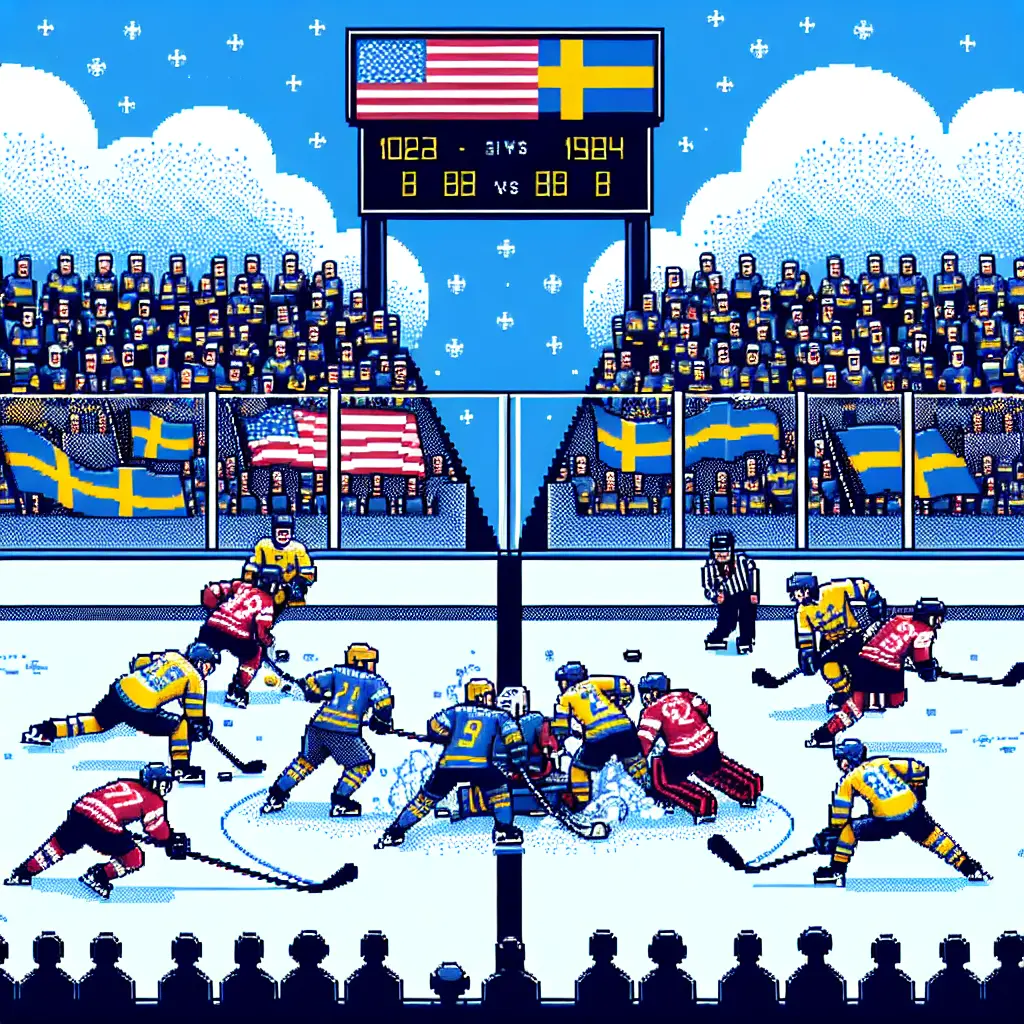
The puck barely left the ice Wednesday night as two of the tournament favorites—Sweden and Canada—put on clinical offensive displays that reshaped group play at the 2026 IIHF World Junior Championship. Sweden’s balanced attack handed the United States a 6-3 loss and finished Group A unbeaten, while Canada leaned on timing and a red-hot Cole Beaudoin to outscore Finland 7-4 and claim first in Group B. If you like speed, finishing and a little junior-level chaos, this was hockey served hot.
Why this matters now
- These games weren’t just group-stage box scores — they set seeding and momentum for the knockout rounds. Sweden’s statement win hands them real control in Group A; Canada’s late goals and depth scoring show a team built for the push toward a medal.
- The World Juniors is where top prospects test themselves under bright lights. Performances here can lift a player’s draft stock and reveal which teams have systems tough enough to survive a seven-game tournament.
What stood out
- Sweden’s two-headed scoring attack: Lucas Pettersson and Eddie Genborg each netted a pair of goals, giving Sweden reliable finishers at key moments. That kind of finishing from the top end makes a team hard to slow down.
- Special teams and short-handed impact: Sweden converted on the power play and even struck short-handed—small margins that widened the gap and exposed lapses in U.S. discipline.
- Canada’s depth production: Cole Beaudoin finished with three points and the Beaudoin–O’Reilly–Desnoyers line provided momentum swings. Multiple contributors (Brady Martin scored twice, Zayne Parekh and Sam O’Reilly each had multi-point nights) underline Canada’s offensive depth.
- Goaltending and timing: Love Harenstram made 28 saves for Sweden in a game where timely saves didn’t steal the outcome but kept the gap manageable. Conversely, netminding inconsistencies and a few defensive miscues cost the U.S. chances to stay close.
Game snapshots
Bigger-picture implications
- Sweden looks like a legitimate gold-medal threat. Unbeaten in group play and with finishers who can convert special-team chances, they’ve staked a claim as a team to fear in the quarters and beyond.
- Canada’s balance matters. Tournament hockey rewards teams that can roll multiple lines and still produce. Their depth scoring reduces the pressure on any single star and helps when matchups get tighter in elimination rounds.
- The U.S. and Finland both have tools to correct course, but the margin for error shrinks in knockout hockey. Discipline and consistency — especially on special teams and defensive-zone coverage — will be critical if either wants to climb the bracket.
Headlines players to watch next
- Lucas Pettersson (Sweden) — timely scoring and a knack for finishing from dangerous areas.
- Eddie Genborg (Sweden) — power-play presence; two-goal nights change games.
- Cole Beaudoin (Canada) — multi-point performances and a reliable scorer on the more physical Canadian forecheck.
- Jack Berglund (Sweden) — playmaking that fuels the top line’s momentum.
My take
The World Juniors keeps delivering the best mix of raw talent and meaningful hockey. Sweden’s 6-3 win over the U.S. felt like more than a group-stage result — it was a reminder that tournament depth and special-teams execution beat sporadic heroics. Canada’s 7-4 victory showed that when a team spreads offense across lines, it becomes very hard to shut down. This tournament still has twists ahead, but after these results, teams that marry discipline with finishing will be the ones lifting trophies.
Sources
Related update: We recently published an article that expands on this topic: read the latest post.
Related update: We recently published an article that expands on this topic: read the latest post.

Last Call for an Icon: Gene Deckerhoff Retires After the 2025 Season
There are voices that become part of a place — not just sound, but memory. For Tampa Bay football, Gene Deckerhoff’s is one of those voices. On December 31, 2025 the Buccaneers announced that after 37 seasons behind the microphone, Deckerhoff will retire at the end of the 2025 NFL season. His signature calls — most famously “Touchdown, Tampa Bay!” and the rallying cry “Fire the Cannons!” — have been the soundtrack for generations of Bucs fans.
Why this matters beyond a broadcast booth
- A team’s identity is shaped as much by the rituals and sounds around it as by players and coaches. Deckerhoff narrated three-quarters of Tampa Bay’s games since 1989 — through expansion growing pains, two Super Bowl championships, and countless local legends — and his cadence and enthusiasm helped seal those moments in memory.
- Radio play-by-play remains intimate and immediate. For many fans (commuters, road-trippers, older fans, and anyone who grew up with AM/FM on a Saturday night), the radio voice is the primary connection to the team. Gene’s retirement is, in part, the end of an era for that way of experiencing football.
- His career is historically significant for the NFL: 37 seasons with one club ranks among the longest-tenured announcers in league history, trailing only a couple of legendary contemporaries.
The arc of a long career
- Joined the Buccaneers radio network in 1989 and completed 37 seasons by the end of 2025.
- Called more than 800 Buccaneers games and delivered over 1,100 touchdown calls for the franchise (team announcement, Dec 31, 2025).
- Narrated both Super Bowl runs (2002 season/Super Bowl XXXVII and the 2020s Super Bowl season), plus countless playoff runs and franchise-defining moments.
- Honors include multiple Florida Sportscaster of the Year awards, the Chris Schenkel Award (2013), and induction into the Florida Sports Hall of Fame.
Memorable calls that live on
- “There it is! The dagger’s in! We’re going to win the Super Bowl!” — Derrick Brooks’ pick-six sealing Super Bowl XXXVII.
- “Gone! Coast to Coast, Rondé Barber!” — Rondé Barber’s 92-yard interception return in the 2002 NFC Championship.
- Simple, human moments like “You go, Joe!” (Joe Jurevicius) that capture emotion as much as the play itself.
These lines aren’t just radio copy; they are part of how fans recall and retell the team’s history.
Transition questions and what comes next
- Who will succeed a voice so closely tied to the franchise? Replacing Deckerhoff won’t be just about finding someone who can call plays — it will mean finding a broadcaster who can connect with the same breadth of fans and become a steady presence across decades.
- How will the team honor this legacy? The Buccaneers will likely create tributes during the remaining 2025 games, and there’s potential for hall-of-fame style recognition given his state- and college-level honors.
- What does this mean for radio-listening culture? Deckerhoff’s retirement highlights how broadcast traditions shift — streaming, TV, and social media shifts audiences, but the appetite for a memorable play-by-play voice endures.
A few takeaways for fans and the franchise
- Gene’s retirement is both a celebration and a milestone: it closes a chapter that began in 1989 and stretches across the modern rise of the Buccaneers.
- Emotional continuity matters. Teams that preserve continuity in their audio and visual identities often keep stronger cross-generational fan bonds.
- The role of a lead play-by-play broadcaster is more than describing action — it’s about framing context, emotion, and lore. Whoever takes over inherits a storytelling mantle.
Final thoughts
It’s tempting to reduce a broadcaster’s value to a list of awards or the tally of games called. The truer measure of Gene Deckerhoff’s impact is in the way entire households and car rides still snap to attention at the cadence of his lines. Retirement is a quiet, graceful curtain call for someone who spent decades turning plays into stories. As the Buccaneers and their fans finish the 2025 season, the last “Touchdown, Tampa Bay!” called by Deckerhoff will feel like the final page of a long, beloved chapter — and the echo of that voice will live on in highlight reels and living-room recollections for many years.
Sources
Related update: We recently published an article that expands on this topic: read the latest post.
Related update: We recently published an article that expands on this topic: read the latest post.
The door is open for the Jaguars to finish the year at No. 1
The NFL’s regular season is the kind of tightrope act that rewards momentum and punishes complacency. With Week 18 looming, Mike Florio’s PFT power rankings still list the Seattle Seahawks at No. 1 — but the narrative crackles: Jacksonville sits within arm’s reach, and one weekend of football could flip the whole script. If you like drama, this is peak NFL scheduling.
Why this moment feels electric
- Seattle has been the storybook top dog all season — steady, defensively stout and riding the kind of late-season form that convinces voters and opponents alike.
- The Jaguars have been on a tear, piling up wins and look every bit like a legitimate title contender. Their climb into the top-five of most national rankings is no accident.
- Week 18 is uniquely volatile: teams fight for seeds, playoff positioning, or just to finish strong. When records are close and stakes are high, power rankings are more than opinion — they’re a snapshot of how the league’s balance of power could shift in 72 hours.
These are the ingredients that make the “Jags could end the year at No. 1” line more than media clickbait. It’s a real possibility amplified by matchups, health, and momentum.
What the outlets are saying
- PFT/NBC Sports kept Seattle at No. 1 entering Week 18 but explicitly noted the continuing opportunity for Sam Darnold and the Seahawks to lock up the top seed — which implies the pecking order is still fluid. (nbcsports.com)
- NFL.com’s Week 18 power rankings place Jacksonville among the top teams and highlight the jaguars’ sustained recent surge — a seven-game win streak and effective two-way play that make them dangerous in any postseason scenario. (nfl.com)
- Local coverage and team angles (e.g., Jaguars media) emphasize confidence and the concrete gains Jacksonville has made this season, underscoring that the team’s ascent is built on results, not hype. (jaguars.com)
How Jacksonville could realistically finish No. 1
- Win and get help: The simplest path is to play like the team they’ve become — win their Week 18 game and let higher-ranked rivals slip. Week 18 produces the weird, wonderful results that turn “ifs” into headlines.
- Tiebreakers and seeding craziness: Power ranking status isn’t identical to playoff seeding, but perception follows results. A decisive Week 18 win by Jacksonville — especially over a quality opponent — would sway both public opinion and ranking panels.
- Momentum matters: Beyond polls and seeding, finishing the regular season at No. 1 gives a psychological edge heading into January. Teams that look and feel dominant at the end of December often carry that identity into the postseason.
What Seattle brings to the table
- Proven consistency: Seattle’s defense and roster construction have kept them at the top of lists all month. They’ve earned respect across national outlets for a reason. Losing the No. 1 moniker won’t happen without them ceding it on the field. (nbcsports.com)
- Control of their destiny (depending on matchup): If the Seahawks win the game that matters in Week 18, they hold the narrative — and the top spot remains theirs.
Matchup and storyline watchlist for Week 18
- Which contenders are playing for seeds versus resting players? Teams that have everything to gain will chase wins; teams with nothing to gain may sit starters, altering the landscape.
- Injuries and health reports that surface late in the week can swing both real outcomes and perception-driven rankings.
- Margin and dominance matter: A one-score squeaker looks different in the next morning’s power rankings than a blowout win.
A quick digest for casual fans
- Yes, Seattle is the No. 1 team in many rankings today.
- Yes, Jacksonville is very much in striking distance.
- Week 18’s results are likely to change both playoff seeding and the national conversation — making the Jaguars’ potential climb to No. 1 feel plausible rather than fanciful.
Final thoughts
Power rankings are part snapshot, part narrative — and that’s why they’re fun. They tell us not just who the “best” teams are today, but who has momentum, identity and the narrative momentum that can carry into January. Right now the Seahawks wear the crown; but the Jaguars’ surge has opened the door. If Week 18 delivers the right mix of wins, blowouts and stumbles, Jacksonville could walk through it.
Enjoy the chaos — Week 18 is the NFL’s last, most theatrical act before postseason lights hit full strength.
Sources
Related update: We recently published an article that expands on this topic: read the latest post.
Related update: We recently published an article that expands on this topic: read the latest post.
Banged up and bracing for the playoffs: what the Packers should do in Week 18
Introduction
The last game of the regular season usually carries either celebration or heartbreak. For the 2025 Green Bay Packers, Week 18 is instead a logistical puzzle: their playoff fate is set (No. 7 seed), but the roster looks like it’s been through a war. Do you rest stars and prioritize health, or play enough to fix glaring problems before a hostile playoff road trip? That tension — between protection and preparation — will shape the next seven days in Green Bay.
Where we are and why it matters
- The Packers clinched a playoff berth but will enter as the NFC’s No. 7 seed, which means an immediate road game in the wild-card round.
- A string of recent injuries and a three-game slide have left the roster thin: season-ending injuries (including Achilles and ankle losses), concussions, and multiple players exiting the most recent game. That makes the Week 18 decision more complicated than a simple “rest everyone” approach.
- Coach Matt LaFleur and staff have signaled discussions are ongoing; nothing is decided. The memory of last season’s finale — when starters suffered injuries that affected postseason availability — is very much on the staff’s mind.
What the practical choices look like
-
Rest the primary starters who are healthy enough to sit.
- Pros: Reduces risk of new injuries to top contributors (QB, key defenders, lead RB), gives time to recover nagging issues.
- Cons: With a 53-man roster and many hurt players already, resting too many starters could force inexperienced backups into key roles and upset team rhythm heading into a hostile playoff matchup.
-
Play to correct schematic and assignment issues.
- Pros: Fixes mental mistakes and alignment problems that showed up recently — especially on run defense — and helps build game-time sharpness before a road playoff game.
- Cons: Increased injury risk; may not be worth it for players with obvious long-term value.
-
A hybrid approach: rest the most injury-prone or fragile starters, play others to keep timing intact.
- Pros: Balances health management with necessary prep; allows coaches to evaluate depth and tweak assignments.
- Cons: Hard to pull off cleanly on a shorthanded roster; some “rested” players may still need limited reps to stay in rhythm.
Key factors the Packers must weigh
- Medical clearance and concussion protocol timelines for Jordan Love and other injured starters.
- The severity and timing of season-ending injuries already sustained — those change what the team can realistically rest.
- Depth chart reality: the Packers are not a 90-man roster in Week 18; they have limited active bodies. If backups would be thrown into critical snaps, the risk shifts.
- The opponent and matchup context: Minnesota’s tendencies and whether Week 18 looks like a realistic dress rehearsal for the likely playoff matchup.
- Psychological and momentum considerations: a team that plays crisp, confident football can carry that energy. Conversely, resting everyone can leave players cold or disrupt continuity.
What I’d expect the Packers to do
- Protect the most critical long-term assets (e.g., starters with lingering injuries or concussion concerns) — let them rest if medical staff advises.
- Keep enough veterans on the field to work out schematic breakdowns and get the defense’s fundamentals — especially to shore up run defense and assignment discipline.
- Use targeted reps for players who need timing (quarterback-room backups practicing with starters in situ, special-teams drills for core units).
- Lean on the depth chart to give younger players meaningful snaps, but avoid risking premium players for vanity reps.
A few smart management moves
- Turn Week 18 into a prioritized rehearsal: run the basic, high-frequency plays the team will rely on in the playoffs rather than trying to invent or fix everything at once.
- Emphasize communication and assignment fundamentals in walkthroughs and practice — many of the recent problems were mental errors, not lack of effort.
- Schedule minute-by-minute medical evaluations and clear communication with players so decisions are transparent going into gameday.
- Prepare contingency plans for short yardage, red zone and special teams scenarios so backups aren’t surprised if thrust into the game.
Things to watch during Week 18
- Official injury reports and any updates to Jordan Love’s concussion status.
- Who actually gets a game-day rest designation and who plays limited snaps.
- Whether the coaching staff simplifies play-calls to protect players from overthinking and reduce the chance of mistakes.
- How the run defense responds if starters play — that was an acute problem recently and could decide whether the unit feels playoff-ready.
What this means for playoff outlook
- Resting judiciously could preserve the roster’s top talents for the wild-card game, but doing too much may leave the team ill-prepared for an aggressive, physical playoff opponent.
- Conversely, playing too many starters in a bid to “fix” problems risks new injuries that would be much costlier in a single-elimination setting.
- The ideal result is a middle path: maintain health while fixing the most glaring, fixable issues and giving key backups a chance to prove they can handle emergency roles.
A few quick takeaways
- The Packers are stuck between risk and reward: protecting star players versus maintaining competitive sharpness.
- Medical clearance — especially for the quarterback — will drive much of the Week 18 plan.
- Given a thin roster, expect a blended strategy: rest where necessary, but play enough veterans to clean up assignment mistakes and stabilize the team’s identity heading into the playoffs.
Final thoughts
This is one of those coaching dilemmas that reveals organizational priorities. Do you prioritize long-term availability over short-term readiness? The smart move is rarely binary. With memories of last season’s finale still fresh and key players banged up, Green Bay’s staff should optimize for availability of their top contributors while using Week 18 as a focused rehearsal: address the defensive misalignments, shore up the run defense principles, and give select backups meaningful reps. If they can find that balance, the Packers will have increased their odds of surviving the first road hurdle — and that’s what matters when you’re the No. 7 seed.
Sources
Related update: We recently published an article that expands on this topic: read the latest post.
Related update: We recently published an article that expands on this topic: read the latest post.
Night of the Purdy Party: How Brock Put the 49ers One Win From the 1-Seed
There are nights when a quarterback doesn’t just play — he takes over the script. On Sunday Night Football, Brock Purdy did exactly that. After a shaky first throw, he rallied to account for five touchdowns (three passing, two rushing) and guided the San Francisco 49ers to a 42-38 win over the Chicago Bears, setting up a winner-take-all Week 18 clash with the Seattle Seahawks for the NFC’s top seed.
This wasn’t tidy. It wasn’t pretty. It was electric, messy, and magnificent — the kind of primetime game that reminds you why football is an emotional sport. Purdy’s performance didn’t just win a game; it extended momentum, ratcheted expectations, and made the 49ers’ late-season narrative impossible to ignore.
Why this game matters beyond the scoreboard
- The 49ers improved to 12-4 and now control the path to the NFC’s No. 1 seed — beat Seattle in Week 18 and they finish with home-field advantage and a first-round bye.
- Purdy’s five-touchdown output marked his second straight game with that many TDs, a rare streak that puts him in historical company.
- The game showcased both San Francisco’s offensive fireworks and defensive vulnerabilities — a reminder that the 49ers’ ceiling is sky-high but not without risk.
What Purdy showed under pressure
Early in the game Purdy’s first pass went the wrong way — a pick-six — and it felt like a potential saboteur for the night. Instead, he flipped the script.
- Poise: Purdy repeatedly converted third downs and escaped from pressure to keep drives alive. Those off-schedule plays defined the late-game push.
- Dual-threat explosiveness: He finished with 303 passing yards and two rushing TDs, becoming the first 49ers QB to have 300+ yards, three pass TDs and two rushing TDs in a single game (team research highlighted after the win). That versatility turns play-calling from a plan into a problem for defenses.
- Clutch: The decisive 38-yard touchdown to Jauan Jennings with 2:15 left was a clean, aggressive strike — the kind of throw that separates good games from signature wins.
Head coach Kyle Shanahan’s postgame praise calling Purdy an “assassin” and saying he was “playing as good as it gets” wasn’t hyperbole. The game mattered in context: it followed a stretch where Purdy had elevated his play and now heads into a season-deciding showdown carrying real momentum.
The big-picture 49ers: offense humming, defense raising questions
This was a team win, but it wasn’t without blemishes.
- Offense: Christian McCaffrey returned with a huge night (140 rushing yards and a TD), the receiving corps made key plays, and even backup tight end Jake Tonges stepped up in George Kittle’s absence. The attack looked balanced and explosive.
- Defense: Allowing 38 points to a Bears team led by rookie quarterback Caleb Williams spotlighted persistent coverage and pressure issues. San Francisco’s defense made enough key plays late, but this unit will need steadier work against Seattle’s attack next week.
- Health and toughness: The 49ers took hits in the trenches and showed resilience; Purdy escaped a few dangerous moments that could have swung the game had things gone differently.
In short: an offense capable of torching any defense, paired with a defense that can be flaky in stretches. That combination makes them thrilling but also fragile.
Moments that mattered
- The pick-six early could have derailed the Niners; instead Purdy’s response set the tone for the rest of the night.
- Purdy’s 3rd-and-long completions and late scramble to keep the final drive alive were game-defining.
- The 38-yard TD to Jennings with 2:15 left — the dagger that ultimately separated the two clubs.
A look ahead: what the Week 18 showdown will decide
- If the 49ers beat the Seahawks in Week 18 (Saturday night), they clinch the NFC West, snag the No. 1 seed, secure a first-round bye, and earn home-field advantage — potentially all the way to the Super Bowl if they keep winning.
- The margin for error is razor-thin: Purdy’s recent run gives San Francisco offensive confidence, but the defense must clean up mismatches against Seattle’s weapons.
A few quick stat nuggets
- Purdy: 24-of-33, 303 passing yards, 3 passing TDs, 1 INT, plus 6 rushes for 28 yards and 2 rushing TDs (game totals as reported after the matchup).
- The 49ers reached 12-4 and have the opportunity to clinch the NFC’s top seed with a win next week.
- Purdy became one of the few quarterbacks in the Super Bowl era to record five offensive TDs in back-to-back games, a feat last done by Russell Wilson in 2020.
My take
This was a defining primetime moment for Brock Purdy and the 49ers’ offense. Purdy’s growth from mid-round prospect to an elite manager-of-chaos has been rapid and intoxicating to watch. The offense is dialed in; the defense is worrisome but still capable of clutch plays. If San Francisco can patch the defensive holes and Purdy keeps producing at this level, they won’t be a one-week wonder — they’ll be the team everyone has to beat in January.
If you’re a 49ers fan, savor the Purdy magic but don’t get complacent. If you’re watching the NFC playoff picture, keep an eye on Levi’s Stadium — the 49ers controlling the 1-seed would completely reshape postseason paths.
Sources
Related update: We recently published an article that expands on this topic: read the latest post.
Related update: We recently published an article that expands on this topic: read the latest post.

Mikaela Shiffrin’s night in Semmering: five-from-five and a reminder that dominance still has edges
There are performances that look effortless on paper and fights that reveal a champion’s guts. Sunday night in Semmering gave us both. Mikaela Shiffrin — the skier who has made technical alpine racing look like a science — added another headline to an already absurd résumé, but this win came with grit, complaint and a reminder that even the best can be pushed to the limit. (fis-ski.com)
Why this race mattered
- Shiffrin won the Semmering slalom to make it five wins from five slalom starts this 2025–26 season — a perfect start in the discipline that keeps the “Mother of Slalom” label feeling earned. (fis-ski.com)
- It was career World Cup victory number 106 for Shiffrin, and her sixth consecutive slalom win counting the final race of last season — milestones that stack up into historical territory. (reuters.com)
- The race was not a stroll: tricky snow, course debates and a razor-thin margin of 0.09 seconds to Camille Rast made this one of the tougher tests she’s faced this season. (fis-ski.com)
The night unfolded like this
The first run felt chaotic. Softer, breaking snow left the lower section especially treacherous and the field visibly frustrated; many racers struggled and race officials even tweaked the course before the second run after skier input. Shiffrin herself called the piste “pretty rotten” and later said parts of the course were “past the limit.” (fis-ski.com)
Shiffrin came out for run two with a different tone — more urgency, fresher aggression. Where the first descent left her fourth and 0.54 seconds behind the leader, her second run was a strategic, full‑throttle masterclass: crisp, snappy turns and one fewer mistake than her nearest rival. That was enough to claw back the deficit and edge ahead by 0.09 seconds for the win. (fis-ski.com)
Camille Rast pushed hard all night and nearly nudged Shiffrin off the top; Lara Colturi continued her breakout season with another podium for Albania, and the race felt like a microcosm of the shifting slalom guard — brilliance from Shiffrin, but not uncontested. (fis-ski.com)
What this says about Shiffrin right now
- Consistency and adaptability: Winning five slaloms from five starts is about more than speed — it’s judgment, recovery and the ability to read conditions and opponents. This Semmering win highlighted all three when it counted. (fis-ski.com)
- Experience under pressure: Several rivals matched or even outskied her at points, but Shiffrin’s race management and capacity to deliver when it mattered turned a tense night into another victory. (reuters.com)
- The narrative is changing around the field: younger names like Lara Colturi are no longer surprises but real threats; Camille Rast’s form shows that margins are getting thinner. That’s good for the sport and makes future matchups more compelling. (fis-ski.com)
The controversy and safety question
This wasn’t just a drama about timing. Skiers criticized the condition of the piste — Shiffrin included — saying parts of the course were beyond acceptable limits and that the snow was breaking down early in the start list. Officials adjusted the course, but the episode revived conversation about athlete safety, course setting and how organizers should respond in night races when temperature swings can wreck the surface. Those debates will likely follow into the next events. (fis-ski.com)
What to watch next
- Kranjska Gora on 4 January will be the first slalom after the New Year and the next chance to measure whether this perfect slalom run continues. The pressure is accumulating on competitors to find a way past Shiffrin — and on organisers to deliver fair, safe racing. (fis-ski.com)
- The duel between established dominance (Shiffrin) and rising stars (Colturi, Rast) will be the storyline to follow; the slalom podium is tightening into a true battlefield. (snowindustrynews.com)
My take
Shiffrin’s win in Semmering felt like a hallmark of greatness: not the effortless triumph that becomes a comfortable stat, but a teeth‑gritted, high‑stakes reply to adversity. That’s compelling sport. The race also underlined an important tension for alpine skiing in 2025–26 — the thrill of elite performance versus the real need for consistent, athlete‑first course management. If we get more nights like Semmering, we’ll get drama and historic numbers, but we’ll also have to keep asking where the safety line is drawn.
Sources
Related update: We recently published an article that expands on this topic: read the latest post.
Related update: We recently published an article that expands on this topic: read the latest post.
Watch the full 90 minutes: Arsenal’s win over Brighton replayed and why it matters
There’s something quietly addictive about watching a full match replay — the little patterns, the substitutions that change momentum, the missed chances that keep you gritting your teeth. Arsenal’s recent 2-1 victory over Brighton at the Emirates is one of those games worth soaking up in full. If you missed it live or just want to relive the tension from start to finish, the club has published the full 90 minutes — and it’s a great way to understand how Arteta’s team are shaping up this season.
What to look for in the full match replay
- Team shape and control
- Early passages show Arsenal’s intent to dominate possession and pin Brighton back through quick transitions and wide overloads.
- Key moments that decided the match
- Martin Ødegaard’s opener and a second-half own goal that ultimately separated the sides are best appreciated in context — the build-up play, pressing triggers and delivery into the box.
- Defensive resilience and goalkeeper saves
- Arsenal’s defending under pressure late on and the intervention from David Raya highlight how small margins mattered.
- Substitute impact and game management
- Watching substitutions unfold in real time reveals how Arteta managed the game clock and personnel to close out the win.
Why this match matters for Arsenal’s season
- Momentum and league position
- The win pushed Arsenal back to the top of the Premier League table, reinforcing their title credentials and providing a confidence boost at a demanding stage of the campaign. (See match coverage.) (reuters.com)
- Squad depth and resilience
- With injuries and hectic scheduling, full-match replays let you see which squad players can step up and how the core starters are coping when forced to do more of the heavy lifting. (arsenal.com)
- Tactical lessons
- Watching every minute helps fans and analysts spot recurring patterns — pressing triggers, how Arsenal create overloads on the flanks, and how they deal with counter-attacks — which are often lost in highlights packages.
Highlights that don’t feel like highlights when you watch them live
- Ødegaard’s finish
- The strike that opened the scoring is cleaner and more clinical when you see the space he was afforded and the movement that created it.
- The own goal off a corner
- An own goal can feel like a fluke on replay, but the replay shows the pressure from the corner routine and why Brighton’s defender ended up turning it into his own net.
- Brighton’s late reply
- Diego Gómez’s goal and the tense final minutes are best appreciated in sequence — how Arsenal reacted, what chances Brighton worked and how the tempo shifted.
A fan’s checklist for watching the replay
- Watch the opening 15 minutes twice: first for general flow, then to study movement and pressing.
- Note player combinations (e.g., Saka/Ødegaard interplay) in different phases: build-up, final third, and transition.
- Time substitutions and their immediate effects — who changes the rhythm?
- Observe set-piece defending and attacking: corners and free-kicks often decide tight games.
Things the replay quietly confirms
- Arsenal’s attacking ideas are producing chances consistently, but finishing still requires ruthlessness.
- Defensive discipline matters: small lapses invite Brighton’s dangerous counters.
- Game management from the bench is evolving; substitutes are becoming a strategic tool, not just fresh legs.
A few takeaways from watching everything
- Winning tight games is a hallmark of title contenders; Arsenal showed the composure to do that here.
- Individual quality (like Ødegaard) plus collective structure (pressing, set-piece routines) makes the difference.
- Full-match replays remain one of the best learning tools for fans who want more than highlight reels.
Final thoughts
If you want to really understand how Arsenal are building their season, skip the 30-second clips for 90 minutes of context. The full replay doesn’t just show the goals — it reveals the patterns, the stresses and the little moments of craft that add up to a result. Whether you’re studying tactics or just savouring the feels of a home win, press play and enjoy the kind of granular storytelling only a full match replay can provide.
Sources
Related update: We recently published an article that expands on this topic: read the latest post.
Related update: We recently published an article that expands on this topic: read the latest post.
When your 2026 Social Security check will hit your account — and why the dates matter
You open your bank app, hold your breath, and wait for that familiar deposit. For millions of Americans, Social Security checks aren’t just a convenience — they’re a predictable, often essential part of monthly budgeting. Good news: the Social Security Administration (SSA) has a steady, predictable schedule for 2026. If you were born on the 1st through the 10th of any month, your benefit will arrive on the second Wednesday of every month.
Below I’ll unpack the calendar, why some people get paid on different days, and a few practical tips to make the schedule work for you.
Quick snapshot you can remember
- Those born on the 1st–10th: payment arrives the second Wednesday of each month.
- Those born on the 11th–20th: payment arrives the third Wednesday of each month.
- Those born on the 21st–31st: payment arrives the fourth Wednesday of each month.
- Exceptions: people who first received Social Security before May 1997 (and some who receive both Social Security and SSI) generally get Social Security on the 3rd of the month; SSI benefits are typically paid on the 1st (or the prior business day if the 1st falls on a weekend/holiday).
(These are the official rules the SSA uses for the 2026 calendar.) (ssa.gov)
Why the schedule looks like this
- Historically, Social Security payments were issued on the 1st of each month. In 1997 the SSA changed the schedule to spread deposits across the month and reduce processing and banking congestion.
- The birthday-based Wednesday schedule simplifies processing: three main payment windows each month (second, third, fourth Wednesday) cover nearly all retirement, disability, and survivor beneficiaries. (ssa.gov)
What to watch for in January 2026 and holidays
- Because of the COLA timing and New Year’s Day, some SSI and early-January payments are adjusted. For example, SSI’s January payment is often issued at the end of December when January 1 falls on a holiday. The SSA also applies the 2026 cost-of-living adjustment (COLA) starting with January 2026 benefits. (ssa.gov)
Practical tips for beneficiaries
- Check your birth-date group and mark the corresponding Wednesday each month on your calendar so you know when to expect funds.
- If you get both Social Security and SSI, note that SSI usually arrives on the 1st and Social Security may follow the 3rd-of-the-month rule if you started benefits before May 1997. Plan for those separate dates. (archive.ph)
- Sign up for a my Social Security account at ssa.gov/myaccount to see personalized notices, COLA letters, and to confirm direct deposit info — especially useful if you travel or worry about mailed notices. (ssa.gov)
- If a scheduled date falls on a weekend or federal holiday, payments are generally issued on the prior business day. That means you may sometimes see your money a day or two earlier. (money.com)
A few calendar specifics (examples from 2026)
- January 2026 deposits (typical pattern): Jan. 14 (born 1–10), Jan. 21 (born 11–20), Jan. 28 (born 21–31). SSI payments tied to January may appear Dec. 31, 2025, because Jan. 1 is a holiday. (archive.ph)
Why this still matters beyond convenience
- For many retirees, survivors, and disabled beneficiaries, Social Security is a primary income source. Knowing exact deposit timing helps with rent/mortgage planning, prescription and medical bills, and avoiding late fees.
- The 2026 2.8% COLA gives beneficiaries a modest bump, but timing matters: if a payment date shifts because of holidays you may need short-term adjustments to cash flow even with the increase. (ssa.gov)
My take
The SSA’s schedule may sound bureaucratic, but it’s quietly practical: spreading payments across three Wednesdays reduces bottlenecks and keeps deposits predictable. If you rely on these funds, a little calendar work now — marking your “your Wednesday” and setting up online alerts — can remove a lot of month-to-month stress.
Sources
Related update: We recently published an article that expands on this topic: read the latest post.
Sam Darnold Goes Back to Carolina — and It Feels Different This Time
There’s something poetic about a quarterback walking back into a stadium where he once had to re-find himself. For Sam Darnold, returning to Bank of America Stadium isn’t a trip down memory lane so much as a checkpoint on a journey that’s gone from “what if” to “why not.” Once the Panthers’ stop on a rocky early-career path, Carolina helped reshape him into the player who’s now a two-time Pro Bowler and a legitimate NFC contender with the Seattle Seahawks.
Why this visit matters
- It’s more than nostalgia. It’s a concrete example of how short chapters can change a career arc.
- Darnold’s story reframes the “bust-to-breakout” narrative into something cleaner: development, patience, and context.
- The contrast between his two stints in Carolina (a starter-in-waiting role in 2021–22) and his current form shows what coaching, learning behind a veteran, and a little momentum can do for a quarterback’s confidence.
A quick timeline that matters
- 2018: Darnold is drafted No. 3 overall by the New York Jets and struggles early in his career.
- 2021–2022: Traded to the Carolina Panthers. He starts games, battles injuries, and finishes strong late in 2022 — a small stretch that mattered more than it looked at the time.
- 2023: Spends a season in San Francisco as Brock Purdy’s backup, learning in a strong offensive system.
- 2024: Breakout year with the Minnesota Vikings — strong statistics, a Pro Bowl nod, and widespread recognition as an improved quarterback.
- 2025: Signs with the Seahawks and returns to Carolina as an established starter, playoff-bound and riding the momentum built over the previous seasons.
How Carolina “paved the way”
Darnold’s comments before the Seahawks’ December 26, 2025 game capture the essence of what those Carolina years meant to him: being around good teammates, weathering adversity, learning the offense, and coming through injury to finish the season on an upswing. That late-2022 stretch — where he helped the Panthers go 4-2 down the stretch and posted multiple games with a passer rating over 100 — became a kind of quiet audition. It didn’t solve everything overnight, but it seeded belief.
Three practical ways Carolina helped:
- Rebuilding mental resilience: The Panthers stint forced Darnold to cope with setbacks and rebuild confidence in-game.
- Learning from teammates and coaches: Exposure to different systems and veteran players gave him new tools to add to his repertoire.
- Creating momentum: Playing well late in the 2022 season opened the door for the next steps — a learning season in San Francisco and the breakout year in Minnesota.
The bigger picture: player development and second chances
Darnold’s arc is a useful case study about NFL careers that aren’t linear. Talent alone rarely tells the whole story; context, coaching, scheme fit, health, and timing all matter. Teams (and players) who are patient and intentional about development can turn perceived “busts” into reliable starters. For Darnold, the time in Carolina didn’t instantly rewrite his narrative — it supplied the pieces he later used to build it.
- Players can rebrand their careers with incremental wins and learning opportunities.
- Backup years (like his time in San Francisco) can be less about sitting on the bench and more about refining decision-making.
- Short hot stretches — the kind Darnold had in Carolina — matter because they provide evidence that a player can win when given the right support.
What to watch when Darnold plays in Carolina
- Poise under pressure: Does he show the same command and decisiveness that powered his 2024 season?
- Pocket movement and quick reads: Those were hallmarks of his improvement in Minnesota and will be critical against Carolina’s schemes.
- Leadership cues: How he interacts with teammates on and off the field shows whether the growth is sustained beyond stats.
Things that make this narrative compelling for Seahawks fans
- Darnold’s success is also a win for Seattle’s offensive staff and the broader rebuild: they signed a quarterback who’s earned momentum and now must prove it again in a new environment.
- If the Seahawks keep winning with Darnold at the helm, his road through Carolina will look less like a detour and more like a necessary milepost.
- The human element — friendships, locker room lessons, and hard-earned confidence — is what converts raw talent into consistent performance.
My take
Sam Darnold’s return to Carolina reads like one of those sports stories you don’t notice until it’s fully formed: a player who kept working, learned from imperfect opportunities, and used them as leverage for a genuine career revival. The Seahawks’ decision to bank on him wasn’t just about stats from one breakout year — it was betting on a player who’s shown the capacity to grow. Whether he cements a long-term legacy in Seattle or continues evolving, that trip back to Bank of America Stadium is a reminder that development often happens in unexpected places.
Sources
Related update: We recently published an article that expands on this topic: read the latest post.
Related update: We recently published an article that expands on this topic: read the latest post.

Bears enter Sunday night in San Francisco with question marks on defense
The Bears are headed to Levi's Stadium under a cloud of uncertainty. With playoff seeding on the line and a primetime national audience watching, Chicago’s defensive corps — normally one of the unit’s strengths this season — looks shakier than you’d like the week before the postseason push. Injuries and an illness bug have left multiple starters listed as questionable or out, forcing the Bears to lean on depth and coaching ingenuity against a 49ers offense that can punish hesitation.
What’s going on (short version)
- Multiple defensive contributors are either ruled out or questionable because of injuries and illness.
- Key concerns include cornerback availability, the status of veteran playmakers in the secondary, and whether linebackers can play at full strength.
- The timing — late December, with seeding implications — makes these absences feel more urgent than they might earlier in the year.
Snapshot of the injury picture
- Nick McCloud: ruled out due to illness.
- Nahshon Wright: hamstring/illness and did not practice late in the week; questionable.
- Josh Blackwell: missed late practices; questionable.
- C.J. Gardner-Johnson: knee but practiced full; questionable.
- T.J. Edwards: dealing with a glute issue; limited in practice and listed as questionable.
- Rome Odunze (offense): ruled out (foot) — not a defensive player, but his absence affects game flow and offensive matchups.
(These notes reflect the team injury report and local media coverage released in the days leading into the Bears–49ers Sunday night game.)
Why this matters — more than just names on a sheet
- Cornerback instability against a pass-heavy 49ers offense is a matchup problem: San Francisco’s route concepts and tight-end usage create high-demand coverage assignments. When your nickel and boundary corners are banged up or sick, you can expect the opponent to attack the seams and force the defense into matchup-based substitutions that invite communication errors.
- Linebacker questions change fit and run-defense responsibilities: If T.J. Edwards is limited or unavailable, the Bears must shuffle reps and responsibility for middle-of-field coverage and run-gap integrity. That can open lanes for playmakers like Christian McCaffrey and force safeties into awkward run-support vs. coverage choices.
- Depth and special teams get tested: Late-week illnesses frequently force elevation of practice-squad players and increased snaps for rotational guys. That’s not inherently bad, but it compresses the margin for error in a game where every possession matters.
How the Bears can cope (practical angles)
- Lean on communication and simplify assignments: When bodies are limited, fewer moving parts helps reduce blown coverages. Expect play calls designed to keep the defense on its heels without relying on complex rotations.
- Prioritize situational football: Limit third-and-long exposure and make the offense earn points. Winning field position and converting turnovers become even more valuable when personnel is stressed.
- Trust experienced depth and scout-prep replacements: The Bears will look to backup corners and special teams standouts who already know the system. Coaching that prepares specific matchups for those replacements can blunt an opposing offense’s best plans.
- Offense must stay on the field: Time of possession becomes a weapon when your defense is undermanned. A ball-control, methodical approach reduces the number of times the defense is forced to make game-altering plays.
Moments to watch on Sunday night
- Early third-down plays: If the Bears struggle to get off the field, that will expose the thin spots in the secondary right away.
- Matchups versus tight ends and slot receivers: How the Bears handle intermediate routes and seams will indicate whether Gardner-Johnson (if active) and the nickel package can hold up.
- Substitution and communication penalties: Pre-snap confusion or repeated personnel errors often reflect last-minute lineup changes due to illness/injury.
A tempered optimism
This team has weathered stretches of adversity before. Coaching adjustments, veteran leadership, and a strong offensive identity can mitigate losses on the other side of the ball — at least to a degree. The 49ers present a stiff test, but football is still decided one play at a time; the Bears’ ability to slog through the ugly sequences and capitalize on turnovers will be decisive.
My take
Injuries and illnesses are part of NFL life, but timing is everything. Facing an elite offense in a primetime setting with multiple defensive starters uncertain elevates the stakes. I expect the Bears to simplify and play disciplined football — they don’t have the luxury of improvisation on defense. If the backups can hold the seams and the offense controls the clock, Chicago can make this a competitive game. If not, the 49ers will likely exploit matchup advantages and put the Bears on their heels.
Sources
Related update: We recently published an article that expands on this topic: read the latest post.
Related update: We recently published an article that expands on this topic: read the latest post.

NHL ramps up before the Milan Olympics — a midseason sprint with big storylines
The holiday lull is over and the NHL hits the gas. Between a first-ever Winter Classic in Florida, milestone chases, the World Juniors and the long-awaited return of NHL players to the Olympics, the next six weeks feel like the sport’s own sprint to the finish before Milan. If you love narratives — comebacks, records, outdoor theatrics and international stakes — this stretch is a confection of them all.
What to watch now that play resumes
-
The league begins a concentrated run of games that ends with NHL players heading to the Milano Cortina 2026 Winter Olympics (Feb 6–24, 2026). Expect coaches to juggle short-term playoff pushes with managing minutes for guys bound for the Italian ice. (Dec 25, 2025). (nhl.com)
-
The 2026 Discover NHL Winter Classic lands in Miami on Jan. 2, 2026 — the first NHL outdoor game in Florida. The New York Rangers meet the Florida Panthers at loanDepot park (with the retractable roof planned to be open), and the event brings with it big fan programming and a docuseries look behind the scenes. It’s a sea change in venue thinking and a test of outdoor hockey in a warm-weather market. (nhl.com)
-
Olympic rosters are being finalized (rosters due Dec. 31, 2025). The NHL’s decision to permit its players back into the Olympics for the first time since 2014 reintroduces the high-stakes international element to the season. Watch how teams manage travel, rest and risk. (nhl.com)
-
Keep an eye on milestone chases: Patrick Kane is within striking distance of 500 career goals and a U.S.-born scoring record; Auston Matthews and Steven Stamkos are closing in on franchise and historical goal marks; Anze Kopitar is on track for his 1,500th game. Those narratives deliver emotional moments and shift midseason storylines. (nhl.com)
-
The 2026 IIHF World Junior Championship — hosted partly in Minnesota — features returning U.S. talent and top draft prospects. That tournament can reshape futures and introduce new names to watch as teams plan for both short- and long-term roster construction. (nhl.com)
Why the Winter Classic in Miami matters
This isn’t just another outdoor game. Staging the Winter Classic at loanDepot park does several things at once:
- Expands the NHL’s brand experiment with non-traditional markets, testing how outdoor spectacle performs in a warm-weather media market.
- Lets the Panthers showcase a franchise narrative: from recent contenders to an outdoor-stage experiment — a symbolic “arrival” for the club.
- Offers broadcast and fan-festival opportunities (including Stanley Cup appearances and concerts) that turn a regular-season game into a multi-day event for casual and die-hard fans alike. (nhl.com)
There are operational challenges, too — ice quality, logistics with a retractable roof and late-December weather — but the NHL has leaned into spectacle before and will treat this as a marquee TV moment.
The Olympic wildcard: ice safety and logistics
The NHL’s return to the Olympics carries baggage: organizers must deliver safe, NHL-caliber rinks. Media reports and league statements in December 2025 raised concern about construction timelines for the main Milan arena; the NHL has made participation conditional on safe, playable ice. That dynamic adds an edge to the next two months — teams and players are preparing for Olympic travel, but final assurances are still being watched closely. (nhl.com)
Teams to watch (who might change the narrative)
- Florida Panthers: Hosting the Winter Classic and balancing superstar returns (e.g., Matthew Tkachuk’s recovery timeline) while sustaining a long playoff window.
- New York Rangers: A franchise comfortable on outdoor stages and positioned to use the Winter Classic momentum.
- Detroit Red Wings (Patrick Kane): A veteran chase that draws attention whenever it nears a historic plateau.
- Toronto Maple Leafs (Auston Matthews): Potential franchise record chase that spikes local and national interest.
- U.S. World Junior team: A chance to keep winning streaks and cement futures for prospects.
Headlines that can swing momentum
- Major milestones achieved (500th goal, 1,500th game) become national news and can help teams ride emotional momentum.
- Olympic roster announcements and any late changes will prompt strategic NHL responses (resting players, minute-management).
- Outdoor-game weather/ice stories — anything from pure spectacle to operational headaches — will dominate sports media cycles the week of Jan. 2 and Feb. 1.
What fans should expect at home and in the stands
- Big TV windows with cross-platform coverage and event-style production around the Winter Classic and Stadium Series.
- Narrative-rich broadcasts: expect heavy features on milestone chase stories and human-interest pieces leading into Olympic rosters.
- For the casual fan, these events are accessible hooks; for die-hards, they matter for playoff positioning and international bragging rights.
Quick takeaways
- The NHL’s pre-Olympic stretch is part spectacle (Winter Classic in Miami) and part consequence (Olympic roster and arena readiness).
- Individual milestones (Kane, Matthews, Kopitar, Stamkos) will punctuate the calendar and shape headlines.
- The international element — returning NHL players to the Olympics — creates both excitement and logistical uncertainty centered on ice safety in Milan. (nhl.com)
My take
This next block of the season feels like a compressed version of why we love hockey: high-stakes individual stories, team pageantry, and national pride all folded into the same calendar. The Winter Classic in Miami is ambitious and symbolic of the NHL’s appetite to push boundaries. The Olympic return adds real drama — it’s a welcome risk, but only if organizers deliver safe, fair ice. If they do, fans get a rare midseason festival: outdoor glamour, milestone theatrics, and an Olympic curtain call.
Sources
Related update: We recently published an article that expands on this topic: read the latest post.
Related update: We recently published an article that expands on this topic: read the latest post.
From bat boy to Winter Classic: how Bill Zito’s Brewers memories shaped a Stanley Cup-winning GM
There’s something deliciously cinematic about a kid who once chased foul balls behind an outfield chain-link turning up decades later to stack fresh ice where grass once grew. Bill Zito’s path—from a Milwaukee Brewers clubhouse attendant in the early 1980s to the general manager of the Florida Panthers—feels less like a straight line and more like a braided rope: different experiences woven together until the tensile strength is unmistakable. With the Panthers scheduled to play the 2026 Winter Classic at loanDepot park (the Marlins’ ballpark) on January 2, 2026, that braid has been brought vividly into focus.
A hook you can picture
Imagine a 16-year-old kid getting ambushed by a laser throw from Reggie Jackson and blowing the return over the outfielder’s head—three times. Rather than dinging his confidence, Jackson stayed, played catch, and mentored him through it. That moment, which Zito still recalls with emotion, is small and human — and it’s the kind of moment that seeds a leadership philosophy more than any playbook ever could.
How a baseball summer taught hockey leadership lessons
- Attention to standards matters.
- As a clubhouse attendant Zito learned the “first-class” routine: keep uniforms clean, supplies stocked, and the environment professional. Those operational standards are the connective tissue of winning franchises.
- Preparation and contingency are everything.
- Baseball’s long seasons teach you to plan for wear-and-tear and surprise problems. Zito credits that mentality for helping the Panthers withstand early-season injuries and other curveballs.
- Culture isn’t loud; it’s consistent.
- Zito watched Brewers players balance irreverence with dignity. The lesson: build a team where chemistry exists under pressure, not just in highlight clips.
- Mentorship turns embarrassment into growth.
- Reggie Jackson’s patience with a nervous kid became a blueprint for how leaders can teach competence without crushing confidence.
These are practical, almost tactile lessons — how to run a room, how to keep things professional under chaos, and how to treat people so they can become their best. Zito didn’t learn them from a seminar; he learned them hauling jerseys, firing up laundry machines at odd hours, and watching pros behave when the lights were brightest.
The Winter Classic as a narrative fulcrum
- Full-circle symbolism.
- The game is literally being played in a ballpark, the same kind of place where Zito once worked. Bringing the Stanley Cup to Milwaukee in 2024 and now hosting an outdoor game in a baseball stadium ties personal history to franchise achievement.
- Cross-sport learning is underrated.
- Front offices in hockey borrow from baseball, basketball and soccer all the time — in scouting, analytics, and operations. Zito’s story makes that borrowing explicit and human.
- Events of this scale reward organizational polish.
- Building an outdoor rink at an MLB venue requires meticulous logistics. The Panthers’ ability to deliver reflects the same operational mindset Zito spent summers cultivating.
Why this matters beyond a feel-good backstory
This isn’t only nostalgia. Zito’s arc is a case study in transferable leadership. Sports organizations frequently fetishize “hockey people,” but the best leaders synthesize culture, systems, and people-smarts from many sources. Zito’s Brewers lessons are evidence that humility, attention to detail, and mentorship are portable assets — whether you’re handing out cleats or negotiating contracts.
- For fans: it reframes the Winter Classic. It’s not just spectacle; it’s a stage that reveals how organizations operate.
- For team executives: Zito’s story underscores investing in operations and culture as competitive edges.
- For young staffers: starting low doesn’t mean staying small; early, close-up exposure to pros can shape future leadership.
Lessons you can apply in any team or workplace
- Do the small things well — they compound.
- Create rituals that standardize quality (prep, cleanliness, readiness).
- Teach patiently when someone falters; mentorship builds capacity.
- Treat contingency planning as a core function, not a checkbox.
Those lessons are easy to summarize and harder to execute consistently. Zito’s advantage is that he learned them in the daily grind, not in theory — and that makes them durable.
My take
There’s a romantic thread here — a kid humbled by Reggie Jackson, later welcomed back with the Stanley Cup — but the romance isn’t what matters most. What matters is how ordinary experiences shape extraordinary leadership. The Winter Classic at loanDepot park is a neat backdrop for that arc: a visible, public symbol of the overlapping seasons of Zito’s career. If you watch the game thinking only about the score, you’ll miss the other victory line: the institutional craftsmanship that makes such moments possible.
Notes for readers tracking the event
- The game is scheduled for January 2, 2026, at 8 p.m. ET.
- Broadcasters and streaming partners include HBO Max, truTV, TNT and regional networks listed in coverage. (Check local listings for final channels.)
Sources
Related update: We recently published an article that expands on this topic: read the latest post.
Related update: We recently published an article that expands on this topic: read the latest post.

Kickoff on Christmas: Vikings vs. Lions — How to Watch, Stream and Listen (Week 17, 2025)
Holiday football has a special vibe — family, food, and that one game that somehow becomes the soundtrack to your afternoon. This year the Minnesota Vikings host the Detroit Lions on Thursday, December 25, 2025, and the matchup comes with an extra twist: it’s part of the Christmas Day triple-header and streams on Netflix. Below is everything you need to know to watch, stream or listen — plus a few pro tips so you don’t miss a single drive.
Quick snapshot
- When: Thursday, December 25, 2025
- Kickoff: 4:30 p.m. ET (3:30 p.m. CT)
- Where: U.S. Bank Stadium, Minneapolis
- Main streamer: Netflix (national streaming rights for the game)
- Local TV: Twin Cities and Detroit viewers may have local over-the-air options
- Radio: Vikings and Lions radio networks; national radio and SiriusXM feeds
Why this one matters
A late-December divisional tilt in Minneapolis on Christmas Day is more than just a regular-season game — it’s the kind of matchup with playoff implications and emotional weight. Even if one or both teams have seen an up-and-down season, Week 17 games can reshape seeding or end hopes before the postseason. Plus, the novelty of a football game on Netflix (and added halftime entertainment for this broadcast) makes this one a must-follow even for casual fans.
Where to watch (video)
-
Netflix (national streaming): This Vikings–Lions game is part of Netflix’s 2025 NFL inventory for Christmas Day. If you have a Netflix subscription and a compatible device (smart TV, streaming stick, gaming console, phone/tablet), you can stream the live broadcast there. Make sure your Netflix app is updated before kickoff. (decider.com)
-
Local over-the-air affiliates: In many NFL windows where a streaming service has national rights, local broadcast affiliates in the home markets still carry the game. If you are in the Twin Cities (Minnesota) or in Detroit, check your local station listings (Vikings and Lions team pages and local TV guides will show the affiliate). If you’re near Minneapolis or Detroit, an antenna or local channel app may be a free option. (detroitlions.com)
-
NFL+ and team apps: For highlights, condensed replays and possibly mobile viewing of local prime-time games, NFL+ (and NFL+ Premium) often supplements fans’ options — though availability depends on the rights rules for that specific broadcast window (mobile restrictions apply). Team apps also typically provide highlights and live local radio audio. (vikings.com)
How to listen (radio and audio streaming)
-
Local radio networks:
- Minnesota: Vikings radio network (KFAN 100.3 FM flagship in Twin Cities; check local affiliates).
- Detroit: Lions radio network (97.1 The Ticket / WXYT-FM and affiliates). (sports.yahoo.com)
-
National and satellite radio:
- SiriusXM typically carries home and away team audio feeds and a national broadcast feed; for this game, SiriusXM lists channels for both team broadcasts and NFL Radio. Streaming through the SiriusXM app is a solid national option. (siriusxm.com)
-
Team and league apps: The Vikings and Lions apps, plus the NFL app (via NFL+), often stream live game audio for local and national listeners on mobile devices. If you travel, this is a convenient backup. (vikings.com)
Local blackout and access notes
-
Streaming exclusivity vs. local blackouts: Even though Netflix holds the national streaming rights for this broadcast window, local over-the-air stations in the teams’ markets typically carry the game for viewers without Netflix. If you live in the Twin Cities or Detroit metro, check local listings ahead of kickoff to confirm the affiliate channel. Out-of-market viewers relying on traditional cable/satellite often need the streaming service carrying the game. (decider.com)
-
Device readiness: Streaming on Christmas Day means higher-than-usual traffic. Update your Netflix app, sign in early, and if you can use a wired connection or strong Wi‑Fi, do so to reduce buffering risk.
Announcers, halftime and extra flavor
- Broadcasters and production: With the NFL expanding partnerships with streamers, expect a production that blends traditional play-by-play with some streamer-style enhancements (camera angles, special features). Some outlets reported a halftime entertainment segment tied to the Netflix presentation in 2025, which points to a more spectacle-driven broadcast than a standard linear TV telecast. (decider.com)
Fan tips and pregame checklist
- Tune in early: Pregame coverage tends to start at least 30 minutes before kickoff on major platforms; being early avoids login or update issues.
- If you travel on holiday: Use the SiriusXM app or local radio stream if you can’t get the Netflix stream.
- Watch the DVR/rewatch options: Netflix or NFL+ may post condensed replays or highlights after the game — great if dinner runs long or you miss part of the action.
- Keep an eye on injury reports and inactives: Week 17 often comes with last-minute roster changes; local beat reporters and the teams’ official pages post the inactives early on game day. (prideofdetroit.com)
What to expect competitively
- Stakes and storylines: Even if one team has had an inconsistent season, Week 17 games can swing playoff positioning or momentum heading into the postseason. Expect both teams to treat this as more than just a holiday showcase. Recent reporting before the game highlighted key injuries and inactives, and both teams’ radio/beat coverage will be useful for late-breaking intel. (prideofdetroit.com)
A few streaming caveats
- Netflix account limits: Make sure your account supports simultaneous streams needed for your household. If multiple people will stream something else in the house on Christmas, that could affect availability.
- Platform compatibility: Netflix supports a wide array of devices, but if you plan to cast from a mobile device, ensure casting is supported and tested beforehand.
- Off-network viewing: If you’re outside the U.S. or traveling, international rights differ — Netflix availability can vary by region. Use local listings or team pages for clarity. (detroitlions.com)
My take
This Vikings vs. Lions Week 17 game arrives with classic holiday energy: family, stakes, and a quirky — but increasingly modern — broadcast arrangement. The Netflix partnership signals how the NFL is reshaping where we watch games, while local radio and team networks preserve the traditional flavors fans love. Whether you’re tuning in for playoff implications or just enjoying a football-filled Christmas, plan your tech, pick your snack, and let the game be the centerpiece of your afternoon.
Sources
Related update: We recently published an article that expands on this topic: read the latest post.
Closing the Year with Purpose: The Cowboys’ Unexpected Summer of Hope
There’s a particular kind of stubborn optimism in football — the kind that refuses to let the season end quietly even when the playoffs are out of reach. After the Dallas Cowboys were officially eliminated from playoff contention in late December 2025, head coach Brian Schottenheimer didn’t send the veterans home early or pivot fully into audition mode. Instead he doubled down on one message: they’re still building something special.
This is not the self-delusion of an owner desperate for headlines or a coach covering for mistakes. It’s a deliberate cultural stance, a claim about identity and process when the scoreboard stings the most.
Why Schottenheimer’s stance matters
- It reframes the end of a disappointing season as an investment period rather than an admission of failure.
- The approach protects the delicate balance between player development, veteran stewardship, and organizational continuity.
- It gives the franchise a narrative heading into 2026: learning, accountability, and sustained standards.
Schottenheimer has been clear: this is year one of a project. That matters for teams that want to avoid the “blow-it-up” cycle and instead create long-term winning habits.
What Schottenheimer actually said
- He emphasized the immediate focus — “playing the Commanders” and taking each game seriously.
- He stressed that players still want to play, want to win, and care about one another.
- He framed culture as intact: practice effort, locker-room cohesion and accountability remain, even if the win-loss column doesn’t show it yet.
- He acknowledged coaching and execution need fixing, calling out that the record shows “we’re not playing good enough football” and “I’m not coaching good enough football,” while insisting culture is not the problem. (DallasCowboys.com)
This mix of accountability and faith in the locker room is a classic leadership posture — own the failures, but insist on the foundations that will allow you to fix them.
The practical choices behind the rhetoric
- Managing veterans: Schottenheimer signaled cautious handling of veteran stars (like Dak Prescott) when games get out of hand, balancing player health with momentum-building.
- Division focus: He pointed out the realistic chance to “go potentially 5‑1 in the division,” reframing the remaining slate into a tangible target that matters to fans and players.
- Play and practice standards: He highlighted that the team continues to practice and prepare hard — the kind of consistency that helps teams rebound faster in Year Two.
These are not poetic platitudes — they’re operational decisions that shape roster usage, coaching priorities in the offseason, and how the front office evaluates progress.
The broader context
- This was Schottenheimer’s first year as head coach, a season with notable roster moves and upheavals (including high-profile trades earlier in 2025) and uneven results on defense and offense.
- Owner Jerry Jones has been publicly intent on “competing now,” which adds pressure to turn culture into wins quickly.
- Despite the misses, Dallas still landed notable individual recognition (e.g., Pro Bowl nods), underscoring that talent exists even if synergy didn’t consistently follow.
Taken together, the season reads like a classic transitional campaign: flashes of high-level play, recurrent structural issues (especially on defense), and a coach trying to install a long-term identity while under immediate-results pressure.
Nuggets for fans and skeptics
- This stance isn’t an excuse: Schottenheimer explicitly took coaching responsibility where due. That kind of candor can buy credibility if next season shows measurable improvement.
- Culture alone won’t win games. The Cowboys will need tangible fixes — schematics, personnel, situational coaching — to translate the “special” rhetoric into wins.
- The remaining games of the 2025 season were being framed as momentum-building opportunities, not consolation prizes. That matters when evaluating offseason momentum and front-office decisions.
What to watch in 2026
- Coaching adjustments: Will Schottenheimer change his staff or scheme emphases to stop the defensive slide?
- Roster moves: Will the front office prioritize pass rush and secondary help to address persistent defensive shortcomings?
- Player development: Can young and new pieces (and veteran leaders) convert late-season effort into early-season cohesion next year?
If the organization truly believes this is a sustainable build, those are the levers they’ll pull.
A short verdict
You can be skeptical — and you should be. “We’re building something special” is a bold claim from a first-year coach whose team missed the postseason. But there’s credibility in Schottenheimer’s blend of ownership and optimism: he admitted coaching shortcomings, praised the locker-room culture, and set practical goals for the remaining games. If Dallas converts that cultural bedrock into clearer strategic fixes (especially on defense), the phrase won’t sound like wishful thinking next fall.
Final thoughts
Good culture is necessary and messy stuff is inevitable. The true test for the Cowboys will be whether the lessons of 2025 produce measurable change in 2026. Fans don’t just want hope — they want progress. For now, Schottenheimer has given the locker room a direction and the franchise a baseline: finish strong, protect the core, and turn culture into consistent execution. That’s a start worth watching.
Sources
Related update: We recently published an article that expands on this topic: read the latest post.