Moderna Settlement Clears Path for Growth | Analysis by Brian Moineau

A clean break for Moderna — and why investors cheered

It felt like a legal cloud that wouldn’t lift: years of headline-grabbing patent fights over the lipid nanoparticle (LNP) delivery systems that made mRNA COVID vaccines effective. On March 3–4, 2026 Moderna announced a settlement that resolves the high-profile litigation with Roivant/Genevant and Arbutus, and markets reacted quickly. Stocks jumped, balance-sheet math shifted, and a central question landed squarely on the table: does settling a legacy pandemic dispute free Moderna to focus on growth, or did the company just write a very large check for certainty?

Below I unpack the settlement, why traders liked it, and what long-term investors should consider next.

Fast summary you can scan

  • Deal headline: Moderna agreed to resolve global litigation with Genevant (Roivant subsidiary) and Arbutus for up to $2.25 billion, with $950 million payable upfront and up to $1.3 billion contingent on a separate appellate outcome. (globenewswire.com)
  • Market move: Moderna shares rose sharply on the news as the settlement removes a major legal overhang that had shadowed the company’s vaccine franchise. (wbur.org)
  • Structural win: The deal reportedly includes no future royalties for Moderna’s future vaccines, which investors saw as preserving long-term gross margins on the company’s infectious-disease portfolio. (bignewsnetwork.com)

Why the settlement mattered (beyond the headline number)

  • Legal overhangs are expensive even when you don’t pay them. For years the uncertainty around LNP patent claims added a risk premium to Moderna’s valuation. Removing that overhang makes future cash flows—and the odds of pipeline monetization—easier to model. (investing.com)
  • The structure is important: $950 million upfront (reported for Q3 2026 timing) and an additional contingent payment tied to an appeal. That means Moderna recognized a near-term charge while keeping a cap on potential future liability. Analysts quoted in coverage framed the payment as material but manageable relative to historical COVID-era revenues. (investing.com)
  • No ongoing royalties for future vaccine use is the strategic nugget. If accurate, Moderna buys freedom to use its platform across upcoming respiratory programs (COVID/flu combos, seasonal vaccines) without a royalty tax on each dose sold—valuable if those programs scale. (bignewsnetwork.com)

What the market priced in (and the immediate reaction)

  • Short-term: equity pop. Traders rewarded clarity; Moderna shares rallied after-hours and into the next session as the legal risk premium evaporated. Coverage noted moves of ~6–10% on the news. (wbur.org)
  • Mid-term: balance-sheet hit, but offset by clarity. Moderna expects to book a $950 million charge in Q1 2026 tied to the settlement; yet management forecasts year-end liquidity that still supports late-stage oncology and respiratory programs. Investors appear to prefer certainty and predictable cash needs over lingering legal risk. (barchart.com)

The investor dilemma: growth runway vs. legacy liabilities

  • Positive case:
    • Clears a multisided legal distraction so management can refocus on regulatory milestones (flu + COVID filings, other vaccine approvals) and clinical readouts. (investing.com)
    • No royalties on future vaccines preserves upside for profitable launches.
    • One-time charge is finite; it’s a controlled cost to eliminate open-ended litigation risk.
  • Cautionary case:
    • The headline figure is large. If contingent payments are triggered or additional litigation emerges (other LNP owners, or parallel suits), the total bill could rise.
    • Paying to end a dispute does not change execution risk on pipeline programs—regulatory setbacks, clinical failures, or slow uptake of new respiratory vaccines would still hurt valuation.
    • The settlement resolves one set of claims but doesn’t eliminate competition or broader IP fights (other players like Pfizer/BioNTech have had their own disputes). (statnews.com)

How different investor types might think about this

  • Short-term traders: the headline is a clean catalyst. The post-announcement rally reflects relief; momentum traders could ride the immediate volatility but should watch upcoming liquidity guidance and any analyst revisions.
  • Long-term investors: focus on the payoff—the settlement reduces a persistent tail risk. The more important drivers remain pipeline success, commercial uptake of future respiratory vaccines, and margin expansion without royalty burdens.
  • Risk-averse holders: analyze cash guidance and balance-sheet effects. Moderna indicated expected year-end liquidity projections that still fund development priorities even after the charge. Verify management’s updated guidance in the next reporting cycle. (barchart.com)

Big-picture takeaways for the biotech space

  • Patent wars over platform technologies (like LNPs) are costly—and their resolution reshapes competitive dynamics. When platform ownership is clarified, winners can invest in scale rather than legal defense.
  • Settlements can be strategically smart: paying to remove a multi-year uncertainty can unlock value that dwarfs the payment itself if it enables faster commercialization of high-margin products.
  • Investors should continue watching IP developments across the industry (including analogous suits involving other vaccine makers), since one settlement doesn’t reset the sector’s legal landscape. (statnews.com)

My take

Moderna’s settlement reads like a pragmatic corporate move: a meaningful but finite payment to replace open-ended legal risk with a cleaner runway for product development and commercialization. For long-term investors the key question is execution—can Moderna convert this clearer path into approved, widely adopted products (seasonal respiratory vaccines, oncology readouts, etc.) that justify the current valuation multiple? If the answer is yes, the settlement will look like a sensible insurance premium; if not, it will be an expensive but ultimately cosmetic fix.

Sources

(Note: this post was inspired by coverage of the Barron's business article headline and synthesized from non-paywalled reporting and the parties' press information cited above.)
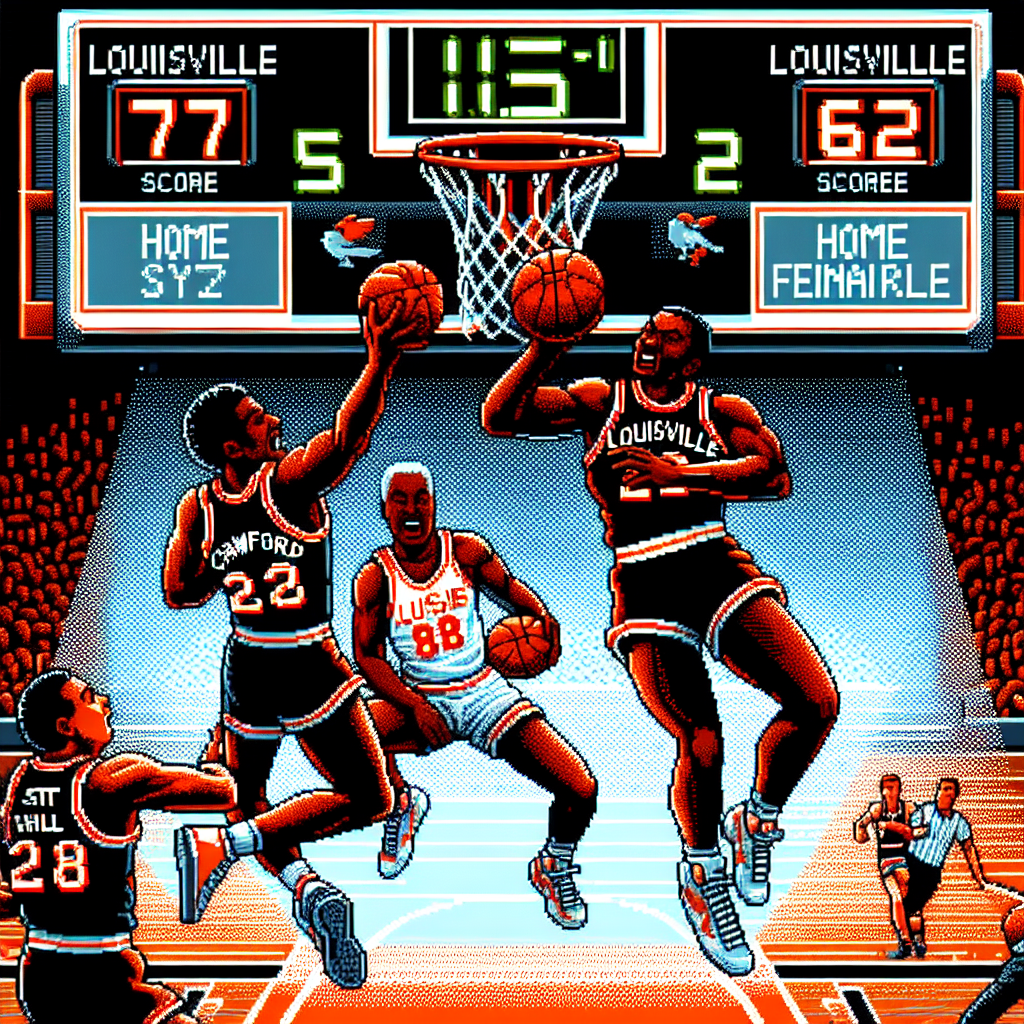

Louisville’s Nasty Bounce-Back Win | Analysis by Brian Moineau

Nasty and Necessary: Louisville Closes the Yum! with a Statement Win over Syracuse

Pat Kelsey used the word “nasty” like he’d found it in a drawer labeled “Things Louisville Has Been Missing” and decided to bring it back into fashion. The result: a 77-62 win over Syracuse in the Cardinals’ regular-season home finale that felt less like punctuation and more like a paragraph break — a clear reset before the chaos of conference tournament time.

The hook: why “nasty” matters

“Nasty” in basketball isn’t just physicality. It’s the scratch-and-claw mentality on defense, the willingness to finish through contact, the gritty plays that don’t show up in highlight reels but swing momentum. Kelsey’s one-word prescription felt like a conscious correction: Louisville hasn’t always been that team this season, but on Tuesday night they were. They defended, they rebounded, they shared the ball, and they protected the home floor when it mattered.

Quick context

  • Final score: Louisville 77, Syracuse 62.
  • Game: Final regular-season home game of the 2025–26 season at the KFC Yum! Center.
  • Why it mattered: After a stretch of uneven results, the Cards needed a confident finish at home heading into the postseason. The win also kept Louisville’s conference résumé intact and gave fans something to cheer about before tournament play.

(Reporting from WDRB and player/coach quotes published after the game provide the basis for this recap and perspective.) (wdrb.com)

What happened — a readable recap

  • Louisville set the tone early with aggressive defense and better execution on offense. Instead of letting Syracuse’s zone create confusion, the Cards attacked the seams, moved the ball, and got looks inside and out.
  • The first half featured strong rebounding and physicality from Louisville, allowing them to build a lead and dictate pace. Syracuse made runs, but Louisville’s toughness repeatedly answered.
  • Down the stretch the Cardinals mixed smart shot selection with assertive drives that forced Syracuse to clamp up, leading to easier baskets and free throws. The 15-point final margin reflected a game where Louisville owned the second half.

Standouts and storyline players

  • Guards who hit timely shots and attacked closeouts helped break Syracuse’s rhythm. Multiple box-score contributors stepped up when the team needed finishing and ball movement. (Postgame quotes and game notes highlighted McKneely’s contributions and other role players who provided lift.) (wlky.com)
  • Pat Kelsey’s coaching: beyond the “nasty” soundbite, the adjustments and motivational tone mattered. The team looked like one that bought into a single-game identity: play tougher than the opponent and the rest follows. (wdrb.com)

What this win tells us about Louisville

  • The Cards can still be a dangerous, physical team. When they commit to that identity they limit the kinds of runs that have cost them in recent weeks.
  • Depth and buy-in are real assets. This wasn’t just star scoring; it was a group performance in which role players help create winning margins.
  • Momentum is fragile — but this game gives Louisville something concrete to carry into the ACC tournament: a confidence-building home finish and a reminder of the style that wins low-possession, grind-it-out conference games.

Three takeaways for fans and bettors

  • Defense first matters: Louisville’s win underscores that when the Cards defend the paint and rebound, they’re difficult to beat.
  • “Nasty” is repeatable when coached: Kelsey’s message — and the team’s response — shows attitude can be a game plan, not just a phrase.
  • Depth wins late: look for bench contributors to be a decisive factor in tournament matchups where every extra possession counts.

My take

This felt like the kind of win that repairs confidence. The scoreline is tidy, but the more important metric is tone: Louisville reclaimed an edge. If the Cards can reproduce the defensive intensity and the willingness to finish through contact, they’ll be tough to handle in the weeks ahead. Keep an eye on how they sustain the “nasty” mentality under tournament pressure — that will tell us whether this was a momentary surge or the start of something steadier.

Sources

Why a Hormuz Blockade Won’t Last | Analysis by Brian Moineau

When the Strait of Hormuz Looms Large: Why a “Second Oil Shock” Feels Real — but May Not Last

The headlines are doing what headlines do best: grabbing your attention. Talk of a blockade of the Strait of Hormuz — the narrow sea lane through which a sizable chunk of the world’s oil flows — triggers instant images of spiking petrol prices, panic buying and a rerun of 1970s-style stagflation. The fear of a “second oil shock” is spreading fast, but a growing body of analysis suggests a prolonged shutdown is structurally unlikely. Below I unpack the why and the how: the immediate risks, the market mechanics, and the geopolitical limits that make an extended blockade a hard-to-sustain strategy.

Why this matters (the hook)

  • Roughly one-fifth of seaborne oil trade funnels past the Strait of Hormuz — so any threat to passage immediately rattles traders, insurers, and policymakers.
  • Energy markets react to risk, not just supply. Even the rumor of a blockade can push prices up and premiums higher.
  • But tangible market shifts, diplomatic levers, and hard logistics place real limits on how long such a chokehold could be maintained.

Pieces of the puzzle: what's pushing analysts toward pessimism about a long blockade

  • Regional self-harm. A full, lasting closure would blow back on Gulf exporters themselves — Saudi Arabia, the UAE, Qatar and Iraq would lose export revenue and face domestic strains. That creates strong deterrence among neighboring states against tolerating or enabling a prolonged shutdown.
  • Military and maritime reality. Iran has capabilities to harass shipping (fast boats, mines, missile strikes), but sustaining a durable, enforced blockade against allied and Western navies is a different proposition. Reopening a major chokepoint in the face of escorts, convoys or international interdiction is costly and risky.
  • Demand-side buffers and rerouting. Buyers, especially in Asia, can and do tap spare production, strategic reserves, and alternative shipping routes and pipelines (though capacity is limited and costly). Oil traders and refiners pre-position supplies when risk rises.
  • Geopolitics and diplomacy. Key buyers such as China and major powers have strong incentives to press for keeping the strait open or mitigating impacts quickly — which can produce fast diplomatic pressure and economic levers to de-escalate.
  • Market elasticity: the first few weeks of a shock generate the biggest headline price moves. After that, markets adjust — inventories, substitution, and demand responses blunt the worst-case scenarios unless the disruption is both broad and prolonged.

A quick timeline of likely market dynamics

  • Week 0–2: Volatility spike. Insurance premiums, freight rates and oil futures surge on risk premia and speculation.
  • Weeks 2–8: Substitution and release. Buyers tap strategic reserves, non-Hormuz export capacity rises where possible, alternative crude grades move through different routes, and some speculative premium fades.
  • After ~8–12 weeks: Structural limits show. If the strait remains closed without major allied inability to reopen it, the world would face real supply deficits and deeper price effects — but many analysts judge that political, military and economic counter-pressures make this scenario unlikely to persist.

Why Japan’s (and other analysts’) view that a prolonged blockade is unlikely makes sense

  • Diversified sourcing and large strategic reserves reduce vulnerability. Japan, South Korea and many European refiners have the logistical flexibility and stockpiles to withstand short-to-medium shocks while diplomatic pressure mounts.
  • China’s role is pivotal. As a top buyer, China benefits from keeping trade flowing. Analysts note Beijing’s leverage with Tehran and its exposure to higher energy costs — incentives that reduce the attractiveness of a sustained blockade for actors that seek to maximize their own long-term economic stability.
  • The cost-benefit for an aggressor is terrible. Any state attempting a long-term closure would suffer massive economic retaliation (sanctions, shipping interdiction, loss of export revenue) and risk full military retaliation — making a long-term blockade an unlikely rational policy.

What markets and businesses should watch now

  • Insurance & freight costs. Sharp rises signal market participants are pricing in heightened transit risk even if supply lines remain open.
  • Inventory and SPR movements. Large coordinated releases (or lack thereof) from strategic petroleum reserves are a strong signal of how seriously governments view the disruption.
  • Alternative-route throughput. Pipelines, east-of-Suez export capacity, and tanker loadings from Saudi/US/West Africa show how quickly supply can be rerouted — and where capacity is already maxed out.
  • Diplomatic climate. Rapid negotiations or public pressure from major buyers (especially China) and coalition naval movements are early indicators that a blockade will be contested and likely temporary.

Practical implications for readers (businesses, investors, consumers)

  • Short-term market turbulence is probable; plan for volatility rather than a long-term structural supply cutoff.
  • Energy-intensive firms should stress-test operations for weeks of elevated fuel and freight costs, not necessarily months of zero supply.
  • Investors should note that energy-price spikes can flow into inflation metrics and ripple through bond yields and equity sectors unevenly: energy stocks may rally while consumer-discretionary sectors weaken.
  • Consumers are most likely to feel higher pump and heating costs in the near term; prolonged shortages remain a lower-probability but higher-impact tail risk.

What could change the calculus

  • An escalation that disables international naval responses or damages a major exporter’s capacity (not just transit).
  • Coordinated action by regional powers that refrains from reopening routes or sanctioning the blockader.
  • A drastically different international response — for example, if major buyers refrain from diplomatic pressure or if maritime insurance markets seize up.

My take

Fear sells and markets price risk — and right now the headline risk is real. But looking beyond the initial price spikes and political theater, the structural incentives on all sides point toward the outcome analysts are describing: short-lived disruption that forces expensive, noisy adjustments rather than a sustained global energy cutoff. The real dangers are in complacency and under-preparedness: even a temporary closure can roil supply chains, push up inflation, and squeeze vulnerable economies. Treat this as a severe-but-short shock on the probability scale, and plan accordingly.

A few actionables for those watching closely

  • Track shipping and insurance rate indicators for real-time signals of market stress.
  • Monitor strategic reserve announcements from major consuming countries.
  • Businesses should scenario-plan for 30–90 day spikes in energy and freight costs.
  • Investors should weigh energy exposure against inflation-sensitive assets and keep horizon-specific hedges in mind.

Sources

Keywords: Strait of Hormuz, oil shock, blockade, energy markets, shipping insurance, strategic petroleum reserves, China, Japan, Gulf exporters.


Related update: We recently published an article that expands on this topic: read the latest post.

World Cup Tension: Iran, War, and Politics | Analysis by Brian Moineau

A World Cup, a War, and a President Who Says He Doesn’t Care

It’s not every day that international sport and geopolitics collide this loudly. With the 2026 FIFA World Cup kicking off in just a few months on June 11, the global spotlight on soccer is supposed to be all about goals, chants and host cities. Instead, a chain of U.S. and Israeli strikes on Iran — and Iran’s own anguished response — has placed Team Melli’s presence in doubt, and President Donald Trump’s brisk reaction to that possibility landed like a cold gust across an already tense field: “I really don’t care,” he told POLITICO when asked if Iran would play this summer. (memeorandum.com)

Below I unpack what’s happening, why this matters beyond sport, and how the World Cup — usually a ritual of global connection — suddenly looks more like a geopolitical test.

The hook: sport as a casualty of escalating conflict

Imagine qualifying for the World Cup — the pinnacle for any footballing nation — and then being told your tournament might be off because your country has been struck and plunged into mourning. That’s the reality Iran faces after airstrikes that killed the country’s supreme leader and triggered a wider confrontation. Iran’s football federation chief, Mehdi Taj, said participation “cannot be expected” in the wake of the attack, citing the national trauma and a mandated 40-day mourning period that disrupts training and domestic competition. (inquirer.com)

Meanwhile, the U.S. president’s terse dismissal — that he doesn’t care whether Iran shows up — turned a sports story into a front-page political flashpoint, because it signals how the administration views the intersection of national security, diplomacy, and even global sporting events. (memeorandum.com)

What actually happened and why it matters for the World Cup

  • Iran qualified for the 2026 World Cup and is scheduled to play group-stage matches in the United States (Los Angeles and Seattle among the venues). (inquirer.com)
  • After the strikes and the resulting instability, Iran’s FA president said preparations and participation are now uncertain; domestic league play and pre-tournament friendlies will be affected by mourning and security concerns. (scmp.com)
  • FIFA has said it’s monitoring the situation, while U.S. officials have suggested exceptions to travel restrictions could be arranged for athletes and staff if necessary — but logistical, legal and security hurdles remain. (inquirer.com)

This isn’t simply a scheduling headache. The potential absence of Iran would reverberate through several arenas:

  • Sporting: lost opportunity for players, fans and federations; bracket integrity and broadcast plans could be affected.
  • Humanitarian and moral: athletes often become symbols in crises — their safety, ability to grieve, or freedom to compete becomes a moral question for organizers and countries.
  • Political messaging: a host nation publicly indifferent to another qualified team’s absence invites accusations of weaponizing sport or trivializing civilian suffering.

Why Trump’s comment landed hard

When a president casually says “I really don’t care” about whether a nation competes in a global sporting event, it does several things at once:

  • It flattens the human element — sidelining athletes, families and fans who see the World Cup as more than geopolitics. (memeorandum.com)
  • It signals to allies and adversaries how sport and diplomacy might be weighed in policy calculus — important when diplomacy, humanitarian concerns, and security are all tangled together. (inquirer.com)
  • It amplifies the narrative in Tehran that the U.S. does not merely disagree with Iran’s government but disdains the country’s place at the global table — making reconciliation or pragmatic solutions politically harder.

Put simply: it’s not just about a match. The remark feeds a broader story line that the U.S. administration’s priority in this moment is military and strategic objectives, with cultural diplomacy — including international sport — treated as expendable. (memeorandum.com)

What FIFA, hosts, and fans face now

  • Contingency planning: FIFA will need to decide whether to allow Iran to withdraw without replacement, find a replacement team (if feasible), or postpone matches — each option carries precedent, legal ramifications, and ticketing nightmares. (global.espn.com)
  • Security and reception: hosting a team from a country currently at war with co-host nations or their allies raises questions about the safety of players, fans and staff, and whether fan travel and visas can be handled without political friction. (inquirer.com)
  • The fan experience: millions already planned travel; rivals, broadcasters and sponsors must weigh reputational exposure against business continuity.

Quick takeaways

  • The Iran national team’s World Cup participation is in serious doubt after U.S.-Israeli strikes and the death of Iran’s supreme leader disrupted preparations. (scmp.com)
  • President Trump told POLITICO “I really don’t care” if Iran plays, a remark that reframes the issue from sport logistics to public diplomacy and political signaling. (memeorandum.com)
  • FIFA and co-hosts face complex choices that mix safety, legal obligations, and optics — and there are no simple or apolitical answers. (global.espn.com)

My take

Sport has a stubborn ability to bring people together — even rivals — in a way that politics rarely does. That’s precisely why the potential absence of Iran from the 2026 World Cup stings: it’s not just a team not showing up, it’s a missed moment for connection at scale. Presidents and policymakers can wage decisions in war rooms, but a World Cup is a global commons where ordinary people — not governments — often find common ground. To shrug at that is to undervalue one of the softest, often most durable tools in international life.

If Iran ultimately misses the tournament, it should be remembered not just as a political footnote but as a human story: players who trained for years, fans who saved to travel, and communities that looked to sport for respite. That loss will be felt in stadiums and living rooms, and its reverberation will outlast any single news cycle. (inquirer.com)

Final thoughts

We’re watching the collision of two powerful realities: the immediacy of armed conflict and the long-simmering global ritual of sport. The outcome is still in flux — and the choices FIFA, the co-hosts, and governments make over the next weeks will tell us how seriously the world takes the idea that some spaces should remain for people, not politics. Even in war, fans want to chant. Even in crisis, players want to play. What we decide about that says a lot about who we are.

Sources


Related update: We recently published an article that expands on this topic: read the latest post.

Dimon: Market Complacency Raises Risk | Analysis by Brian Moineau

Markets are Too Calm — and That’s the Problem, Says Jamie Dimon

There’s a peculiar kind of silence in markets right now — one that sounds less like confidence and more like complacency. That was the blunt message from JPMorgan CEO Jamie Dimon in recent interviews and appearances: asset prices are high, credit spreads are tight, and investors seem to be shrugging off a long list of risks. When one of Wall Street’s most prominent risk-watchers warns that “people feel pretty good,” it’s worth listening.

What happened and why it matters

  • Jamie Dimon has repeatedly warned investors that markets are underestimating risk — from rising inflation to geopolitical flashpoints and stretched credit conditions.
  • His comments have come in public forums (investor days, conferences, TV interviews) over the past year as global headlines — tariffs, geopolitical clashes, and credit concerns — made rounds. Recent press coverage highlighted his concern that markets are acting complacently even after shocks such as renewed geopolitical tensions that lifted oil prices. (marketwatch.com)

Why this matters:

  • Complacency can mask the build-up of systemic risk: elevated valuations and narrow credit spreads mean there is less cushion when a real shock hits.
  • If inflation reaccelerates or a credit cycle worsens, central banks may have less room to respond without causing deeper market dislocations. Dimon explicitly flagged higher inflation risk and a potentially “worse than normal” credit cycle as threats. (benzinga.com)

The investor dilemma: optimism vs. realism

  • Markets have rallied and volatility has fallen — and with that recovery comes a tendency to treat downside scenarios as unlikely. That’s the classic optimism bias at work.
  • Dimon’s argument is the opposite: when valuations look rich and policy levers are constrained (big deficits, limited central-bank flexibility), the probability of a sharper correction or a prolonged tougher patch rises. (cnbc.com)

Practical implications:

  • Earnings expectations may still be too sanguine. If profits disappoint, equity multiples could compress. (cnbc.com)
  • Credit markets are deceptively calm. Narrow spreads don’t reflect borrower weakness or a future tightening in liquidity conditions. (benzinga.com)

Signs that Dimon’s warning isn’t just noise

  • Historical precedent: periods of sustained policy stimulus and low rates have pushed asset prices up before sharp corrections followed (think pre-2008 dynamics). Dimon has drawn attention to how many market participants today lack firsthand experience with a real credit cycle. (benzinga.com)
  • Market reactions to geopolitical events have been muted compared with price moves in commodities (e.g., oil spikes), suggesting investors are selectively ignoring channels that can feed into inflation. Recent coverage showed oil moving while stocks barely flinched. (marketwatch.com)

How investors (and policymakers) might respond

  • Reassess risk budgets:
    • Expect lower forward returns if valuations are high — adjust position sizing accordingly.
    • Stress-test portfolios for higher inflation, wider credit spreads, and slower growth.
  • Watch liquidity and credit indicators closely:
    • Monitor funding costs, loan defaults, covenant loosening, and secondary-market liquidity as early warning signs.
  • Factor geopolitics into scenario planning:
    • Energy shocks, trade disruptions, and cyber/terror risks can transmit rapidly into inflation and supply chain stress.
  • For policymakers: communicate limits. Central banks and fiscal authorities should be candid about trade-offs and constraints to avoid fostering false reassurance.

Quick wins for individual investors

  • Trim concentrated positions and rebalance toward diversified exposures.
  • Maintain a short list of high-quality, liquid assets to lean on if markets reprice.
  • Consider inflation-protected instruments or real assets as partial hedges if inflation risk appears underpriced.
  • Avoid chasing yield in low-quality credit just because spreads are narrow.

What the coverage shows (context)

  • MarketWatch highlighted Dimon’s recent comments noting the disconnect between oil moves and muted equity reactions after a geopolitical spike. (marketwatch.com)
  • CNBC and Bloomberg have traced Dimon’s warnings back through 2025, where he flagged tariffs, deficits, and complacent central banks as sources of risk. (cnbc.com)
  • Analysts and commentators pick up the framing that many market participants haven’t lived through a deep credit downturn and may underestimate how fast conditions can change. (benzinga.com)

My read of those sources: Dimon isn’t trying to be a constant Cassandra. He’s reminding an upbeat market that risk is asymmetric right now — upside may be limited while downside remains meaningful.

A few sharper questions worth watching

  • Will inflation settle back near policymakers’ targets, or will renewed energy or supply shocks re-accelerate prices?
  • How would central banks respond if inflation and growth diverged (stagflation)?
  • Are credit standards loosening quietly in leveraged lending or other pockets that could transmit losses rapidly?
  • How do fiscal dynamics (large deficits) limit policy options in a stress scenario?

Final thoughts

Complacency is seductive: calm markets feel good and reward short-term risk-taking. But markets don’t owe investors perpetually rising prices. Jamie Dimon’s warnings are a useful reality check — not a prediction of imminent doom, but a call to re-evaluate assumptions. For investors, that means humility, active risk management, and scenario planning for outcomes that the market currently underprices.

Sources


Related update: We recently published an article that expands on this topic: read the latest post.

WBDs Surgical Reset of Its Games Pipeline | Analysis by Brian Moineau

Turning the Dials at Warner Bros. Discovery: Rebuilding a Video Game Pipeline After a Brutal 2025

The one-line version: Warner Bros. Discovery (WBD) called 2025 a “significant” year — but the company’s public messaging barely mentioned gaming. Behind the curtain, however, the games business went through a painful correction: studio closures, cancelled projects, big write‑downs and a re-focus on a much smaller slate of franchise titles. That combination looks less like an admission of defeat and more like the start of a surgical reset.

Why this matters right now

  • Games are expensive and slow to make, but when they hit they can be powerful franchise drivers and recurring revenue engines.
  • WBD’s IP library (Harry Potter, Game of Thrones, Mortal Kombat, DC/Batman) is precisely the kind of tentpole catalogue publishers use to build long-term game franchises — if execution and strategy align.
  • Investors and fans watched 2023’s Hogwarts Legacy prove the upside; the messy follow-up years exposed how volatile the returns can be and how quickly a games arm can turn from asset to drag.

Quick highlights from recent coverage

  • WBD closed multiple studios and cancelled a high-profile Wonder Woman game amid poor gaming results and a series of impairments. (The Verge, Game Informer).
  • The company reported large write‑downs tied to titles such as Suicide Squad: Kill the Justice League and MultiVersus, contributing to hundreds of millions in losses in 2024–2025 (Game Informer, Game World Observer).
  • Management has reorganized Warner Bros. Games around four core franchises: Harry Potter, Game of Thrones, Mortal Kombat and key DC properties — with an emphasis on fewer, higher-quality releases (Game Informer, GameSpot).

What “rebuilding the pipeline” looks like in practice

  • Focus on fewer franchises
    • WBD is concentrating resources on a small set of big-name IPs rather than a scattershot of smaller titles. That’s a classic risk-reduction play: anchor future release schedules to proven brands and spend more time and money on polish.
  • Studio consolidation and leadership reshuffles
    • Shuttering underperforming or duplicative teams reduces overhead and lets remaining studios specialize. Promotions and new reporting lines aim to centralize franchise roadmaps and technical services.
  • Hard accounting, softer messaging
    • The company’s earnings and quarterly comments have downplayed gaming in public messages about a “significant” year while simultaneously registering substantial gaming-related impairments and revenue declines.
  • Product-level triage
    • Cancel the projects that won’t meet bar, pause risky experiments, and prioritize sequels, definitive editions and franchise expansions where player demand/brand recognition already exists.

The risk-reward equation

  • Risks
    • Overconcentration: betting the recovery on a handful of franchises risks repeat underperformance if those franchises don’t land.
    • Brand fatigue and controversy: some IPs carry baggage (public controversy around associated creators, franchise overuse, etc.) that can dampen player goodwill.
    • Talent and culture: repeated closures and cancellations can drive away senior devs and creative talent — the very people needed to rebuild quality.
  • Rewards
    • Margin improvement: fewer, more successful AAA releases can stabilize revenue and reduce costly failed launches and marketing waste.
    • Stronger synergy with film/TV: well-made games can extend franchise life, cross-promote, and create long-term player engagement (DLC, live services, sequels).
    • Clear roadmaps can restore investor confidence faster than unfocused output.

What to watch next

  • Release cadence and announcements
    • Are new high-profile sequels or “definitive editions” given meaningful shafts of investment and clear release timelines?
  • Talent retention and studio investments
    • Does WBD invest in the retained studios’ pipelines and technology stacks (central QA, live ops, user research) rather than just cutting costs?
  • Financial transparency for games
    • Will WBD start disclosing more gaming detail (revenue, margins, unit sales for key titles)? That would signal confidence.
  • How the corporate M&A and strategic moves (streaming/studios split, any suitors or deals) affect the games division’s budget and autonomy.

A sharper set of bets — good for players or just accountants?

There’s an honest case to be made that the medicine was overdue. After the runaway win of Hogwarts Legacy in 2023, wildly variable releases through 2024 exposed uneven QA, shaky product-market fit, and probably unrealistic internal expectations about how many new games the company could reliably ship. Pruning the number of simultaneous projects and focusing on stronger oversight can lead to better games — and better player experiences — if the company matches cuts with investments where it counts: time, creative leadership, QA, and post-launch support.

But that outcome isn’t automatic. The danger is turning a creative business into a conservative content machine that milks IP without risking the big creative plays that produce breakout hits. The sweet spot for WBD will be disciplined risk-taking: fewer projects, yes, but the right ones with empowered teams and time to ship polished experiences.

Things I’m keeping an eye on

  • Hogwarts Legacy sequel plans and any “definitive edition” execution (are they meaningful content expansions or thin re-releases?)
  • Rocksteady / Batman rumors — a high-quality single-player Batman game could restore credibility.
  • Any change in how WBD measures and reports gaming performance — more disclosure is a bullish signal for accountability.

Final thoughts

“Rebuilding the pipeline” is the right-sounding phrase for a company that clearly needs course correction. The real test won’t be in corporate slides or PR lines that call 2025 “significant.” It will be in whether, over the next 12–24 months, Warner Bros. Discovery can consistently ship fewer but markedly better games that grow engagement and revenue without repeating the boom‑and‑bust swings of the last two years. If they can pair the IP muscle of Warner Bros. with patient development, a revitalized talent base, and modern live/servicing practices, the division could become a durable growth engine again. If they don’t, the games unit risks becoming an afterthought to a company that increasingly values predictability over play.

What this means for players and fans

  • Lower volume of new announcements in the short term, but (hopefully) higher polish and longer-term support.
  • Expect more sequels, remasters, and franchise expansions tied to big IP rather than original mid‑tier titles.
  • Vocal communities will matter — the company’s ability to listen and iterate post-launch will be crucial to rebuilding trust.

Sources

(Articles cited above are news coverage and reporting on WBD’s gaming strategy, studio closures, write‑downs and reorganization, and reflect public statements and company financial disclosures.)


Related update: We recently published an article that expands on this topic: read the latest post.

Riot’s MMR Reset: What It Means for Climbs | Analysis by Brian Moineau

Why Riot is re-mapping MMR to rank — and why it matters for your climb

When Riot quietly tweaked the way hidden MMR maps to visible ranks, a lot of players felt it immediately: different LP swings, weirder promotion timing, and—if you’re in Iron or Diamond—maybe finally facing opponents who actually match what your rank should mean. Riot’s dev post on March 2, 2026 announced those changes and explained the reasoning: make ranked games feel fairer and more consistent across the entire ladder. This isn’t just technical housekeeping. It’s a nudge at how the whole competitive experience reads to players.

Below I unpack what they changed, why they changed it, who wins (and who doesn’t), and what to expect next for Ranked climbs.

What Riot changed (the short version)

  • Riot adjusted the MMR-to-rank distribution so that the mapping between hidden skill (MMR) and visible rank (Iron → Challenger) better reflects differences in demonstrated ability.
  • At the bottom of the ladder, Iron’s MMR band was shifted so more seasoned-but-struggling players move into Bronze, leaving Iron closer to a true “learning” tier.
  • At the top, the upper Diamond MMRs were pushed into Master’s range to reduce the enormous skill spread inside Diamond and make climbing through Diamond less painful.
  • These shifts widened Master’s MMR range and raised practical LP thresholds for Grandmaster and Challenger, which Riot says they’re monitoring and may adjust before next season.
  • Riot also flagged upcoming work on autofill, role parity, Apex tier duoing, and LP resolution for Master+ games.

(Source: Riot dev post, March 2, 2026.)

Why this matters for players

  • Match quality: Better alignment between MMR and rank should reduce the number of matches where one team contains players who are clearly over- or under-skilled for the division label on their profile.
  • Clarity of skill expectations: If you’re in Gold or Platinum, Riot’s goal is that players within the same rank should share a baseline of game knowledge and macro expectations—making games more predictable for learning and teaching.
  • More meaningful progression: Iron becomes a safer place for real beginners to play without being dominated by veterans who “belong” at higher visible ranks but have stayed in Iron due to LP quirks or alternating demotions/promotions.
  • Harder apex tiers (for now): Master, Grandmaster and Challenger players may see different LP dynamics while Riot balances population vs. MMR spread.

Who benefits and who might feel the friction

  • Beneficiaries

    • Newer players: Iron being more of a true learn-to-play tier can reduce stomps and help new players find teammates with similar fundamentals.
    • Skilled-but-stuck players: People who actually belong in Bronze/low Silver but were trapped in Iron could see more consistent matchmaking.
    • Climbers in Diamond: Narrowing the skill spread within Diamond should make promotions feel more linear and less grindy.
  • Players who may notice pushback

    • Some Master+ players: Wider MMR in Master made LP math shift for Grandmaster/Challenger; Riot is aware and monitoring LP consistency.
    • People used to exploit rank irregularities (smurfs, account sellers): Changes aim to reduce those edge cases, so some old tricks will be less effective.

The broader competitive design thinking

Riot’s changes are a window into how modern competitive systems balance two things that often pull in opposite directions:

  • Psychological progression: Visible ranks and promotions are motivating. Letting players feel upward movement keeps people engaged.
  • Statistical fairness: Matchmaking must pair players of similar demonstrated skill to make games meaningful and teachable.

Too much emphasis on visible progression without aligning the hidden MMR leads to mismatches, confusing LP swings, and a poorer learning environment. Riot’s mapping adjustment is an attempt to reset that balance: keep the motivational benefits of ranks while reducing the mismatch noise.

What to watch next (and practical takeaways)

  • Autofill and role parity tests (noted for 26.4/26.5 rollout) — these directly affect queue fairness and how long you wait to play your chosen role.
  • LP fixes for Master+ — if you play Apex tiers, expect changes aimed at stabilizing +/− LP outcomes.
  • Potential new tier below Iron — Riot hinted they might add a true-stepping-stone tier for fresh players if Iron still isn’t distinct enough.

Practical advice for climbers:

  • Focus on wins, not short-term LP swings. MMR moves your long-term trajectory even when visible LP looks weird.
  • Track average LP gain per win over multiple games—those numbers are the best signal of whether your MMR is above or below your visible rank.
  • If you’re a high-skill player stuck in a low visible rank, expect the system to pull you up faster now that Riot is re-mapping ranges.

A few implementation notes (for context nerds)

  • Riot didn’t change how MMR is calculated per game (it’s still primarily win/loss driven); they changed how that hidden number translates into the visible rank bands.
  • Expanding MMR ranges at the top or shifting bands at the bottom is a blunt tool—effective for population-level fixes, but it requires listening to player data after deployment (which Riot said they’re doing).
  • These changes are iterative. Expect small follow-up patches over the coming months as Riot checks queue times, LP distribution, and player experience signals.

My take

This feels like a long-overdue re-centering. Visible ranks are the social language of League—the badge you and your friends talk about. If that language stops meaningfully matching the players behind the badge, it erodes the ladder’s usefulness for learning and for measuring progress. Riot’s MMR-to-rank re-mapping aims to restore that trust: make ranks informative again, reduce weird LP variance, and give beginners a safer space to learn.

It won’t be perfect overnight—changes like this always create ripple effects—but Riot’s transparency about the goals and the planned follow-ups (autofill, LP fixes, Apex duoing) is a good sign. If you play ranked seriously, keep an eye on your LP per win trends and the Master+/Grandmaster LP behavior Riot said they’ll address.

Sources

Horror Beats Mario: Switch 2 Matches | Analysis by Brian Moineau

When a horror blockbuster outsells a tennis game: why Resident Evil Requiem’s UK launch matters

The moment a survival-horror epic shakes up the UK retail charts and quietly outperforms a bright, family-friendly Mario tennis title is the sort of headline that makes you rethink platform dynamics. Resident Evil Requiem launched on 27 February 2026 and immediately grabbed the number one spot in the UK physical charts — and the details underneath that top line are the interesting part.

Quick snapshot

  • Resident Evil Requiem debuted at number 1 on the UK physical charts the week after its 27 February 2026 release.
  • Platform split for Requiem’s launch week: PS5 54%, PC 36%, Xbox 6%, Switch 2 4%.
  • Industry observers say Requiem’s first-week Switch 2 sales were “broadly the same” as Cyberpunk 2077: Ultimate Edition’s Switch 2 performance last year.
  • Requiem’s launch week physical sales outpaced both Resident Evil 4 (remake) and Resident Evil Village, and — notably for Nintendo watchers — did more in week one than Mario Tennis Fever. (nintendolife.com)

What the numbers are actually telling us

On paper, 4% for Switch 2 looks tiny — and it is small relative to PS5 and PC — but context matters:

  • Switch 2 is still early in its lifecycle and many third-party launches are leaning into game-key cards rather than full cartridges. That affects how some publishers and consumers approach physical copies.
  • Comparing Switch 2 numbers to past Switch/console launches is fraught: the install base, consumer expectations, and distribution choices (real cart vs key card) all change how physical sales look. Yet, the assertion that Requiem’s Switch 2 physical sales mirror Cyberpunk 2077’s Switch 2 week-one is notable because Cyberpunk’s Switch 2 release was an unexpectedly strong third-party showing. (gamesradar.com)

Why a mature, third‑person horror game beating Mario Tennis matters

  • Audience overlap and shelf space — Mario Tennis Fever targets families and casual players; Resident Evil targets an older, franchise-loyal crowd. For Requiem to outsell Mario Tennis in physical UK retail suggests strong core-fan purchases and collector interest (physical editions still matter to that audience).
  • Third-party momentum on Switch 2 — Cyberpunk 2077’s strong Switch 2 performance earlier set a benchmark for how third-party, big-budget Western games could find a market on Nintendo’s new handheld-console hybrid. Requiem showing similar Switch 2 physical traction implies the platform can still be a meaningful revenue source for non-Nintendo AAA titles — even if as a modest slice of the whole. (gamesradar.com)
  • Physical demand persists — Despite an industry tilt to digital, certain franchises drive physical purchases: collectors, special editions, and players who prefer ownership of a tangible product. Requiem’s performance — and the appearance of a “Generation Pack” (Switch 2 exclusive bundle) in the top 10 — highlights how packaging and exclusivity still move units. (nintendolife.com)

Platform strategy and physical formats

  • Game-key cards vs cartridges: Some publishers opt for game-key cards on Switch 2 to save costs and logistics; others release traditional cartridges. CD Projekt’s decision to use cartridges for Cyberpunk previously was singled out as a factor in its strong physical sales on Switch 2. Choices like that affect retail visibility and buyer preference. Requiem’s sales suggest that even with key cards being common, a strong brand will still push physical sales. (gamesradar.com)
  • The long tail matters: Requiem’s launch top spot is an initial snapshot. Sustained sales (and digital performance) will show whether this is a one-week peak or a longer franchise resurgence. Early Steam concurrent peaks and PC success also paint a fuller picture beyond physical UK charts. (gamesradar.com)

Notes for Nintendo and third‑party watchers

  • Don’t read 4% as failure — for Switch 2-specific strategy, small slices can still be profitable, and they often come with higher ancillary revenue (deluxe editions, merch, digital DLC).
  • Comparative benchmarks (like Cyberpunk 2077) matter because they show a precedent: big Western AA/AAA games can carve out a meaningful niche on Switch 2 if handled right.
  • Mario Tennis Fever’s drop behind a mature horror release is a reminder that launch hype doesn’t guarantee sustained retail dominance; competition and catalog dynamics quickly reshuffle the charts. (gamesasylum.com)

What to watch next

  • Week-to-week chart movement for Requiem and Mario Tennis Fever to see whether Requiem holds momentum or if Nintendo-first titles reassert themselves.
  • Digital storefront performance and worldwide sales reports (Capcom’s statements and Steam/PC metrics) for a fuller commercial picture.
  • Whether more publishers choose cartridges over key cards for future Switch 2 releases — decisions here will shape physical retail performance going forward. (gamesradar.com)

Final thoughts

A horror blockbuster topping the UK physical charts and outpacing a Nintendo-branded tennis game is a tidy reminder that the videogame market still loves surprises. It’s not just about platform loyalties; it’s about franchises that capture attention, smart release formats, and the persistent appetite for physical editions among certain buyers. Resident Evil Requiem’s launch week is a useful case study: big-name third-party games can still make an impact on Nintendo’s new hardware, even if they grab only a sliver of the platform split.

Sources

Berkshire’s New CEO Labels Four Forever | Analysis by Brian Moineau

Why Berkshire’s new boss just named four “forever” stocks — and quietly shrugged at two others

When a company built by Warren Buffett hands the reins to Greg Abel, investors listen. In his first shareholder letter as Berkshire Hathaway’s CEO (published in early March 2026), Abel did more than salute the past — he clarified which holdings he views as “forever” and which ones didn’t make that inner circle. The choices are equal parts reassurance and subtle signal about what matters when stewardship changes but the mandate to preserve value doesn’t.

This matters because Berkshire’s portfolio is enormous, concentrated, and iconic. What the company says about its biggest positions matters for markets and for anyone trying to think long term about durable businesses.

What Abel called “forever” — and why it matters

Abel described four holdings as core, long-term positions Berkshire expects to own for decades:

  • Apple
  • American Express
  • Coca-Cola
  • Moody’s

Why those four? The common thread is clarity: strong brand moats, predictable cash flow, management teams Berkshire trusts, and business models that have shown resilience across cycles. Abel’s naming of these companies signals continuity with Buffett’s playbook: identify exceptional businesses, buy sizeable stakes at attractive prices, and hold through time.

A few quick context points:

  • These four companies make up a large portion of Berkshire’s equity portfolio — together they’re a center of gravity for the firm’s public-equity bets.
  • Apple in particular is massive for Berkshire by market value; Coke and AmEx are classic Buffett examples of consumer and financial moats; Moody’s offers a high-margin, durable niche in credit-rating services.

The two notable omissions

Two of Berkshire’s other very large holdings were notably absent from Abel’s “forever” roster:

  • Bank of America
  • Chevron

That doesn’t mean they’re being sold tomorrow. But omission is itself information. In Bank of America’s case, Berkshire has already trimmed its position significantly in recent quarters, and Buffett historically points to stakes he truly intends to “maintain indefinitely” — the omission hints at reduced conviction or simply a pragmatic reweighting. Chevron remains a huge position but is more exposed to commodity cycles and capital allocation debates than the four Abel singled out.

Why this distinction matters for investors

  • Signaling vs. action: Naming a stock as “forever” is not a trade order, but it is a governance signal. It tells shareholders what management views as reliable anchors of capital allocation.
  • Style clarity: The four “forever” names reinforce Buffett-era core principles — brands, margins, predictability — while the omitted names underscore that portfolio composition can shift even at a company famous for buy-and-hold.
  • Succession risk and continuity: Abel’s list reassures those worried that Berkshire might abandon Buffett’s temperament. It also highlights the open question of who will make day-to-day portfolio choices; Abel inherited stewardship responsibilities but doesn’t have the same public track record as Buffett.

How to think about “forever” stocks for your own portfolio

  • “Forever” for Berkshire ≠ forever for every investor. Berkshire’s stake sizes, tax position, and horizon are unique.
  • Look for durable cash flows and pricing power, not just nostalgia. Coca-Cola’s brand vs. Chevron’s commodity exposure illustrates the difference.
  • Be honest about concentration: Berkshire’s approach is concentrated bets. Most individual investors should balance conviction with diversification.
  • Reassess when the business changes, not when the stock price does. Holding forever means monitoring the business — management quality, competitive edge, and capital allocation — not checking charts daily.

A few concrete investor takeaways

  • If you admire Buffett-style investing, study why Apple, AmEx, Coke, and Moody’s fit that mold rather than simply copy the tickers.
  • Treat the omission of Bank of America and Chevron as a reminder that even blue-chip holdings can be downgraded in conviction.
  • For long-term investors, focus on business durability and management incentives; for traders, these signals may matter more for short-term flows than long-term fundamentals.

What this moment reveals about Berkshire itself

  • Continuity with adaptation: Abel’s letter emphasizes sticking to durable businesses while acknowledging an evolving portfolio and new capital-allocation dynamics.
  • Cash pile and patience: Berkshire still holds massive cash reserves — a tactical advantage if valuations wobble and buying opportunities appear.
  • Uncertainty in day-to-day management: With the portfolio’s traditional stewards reshuffled, the market is watching how Berkshire will source new big ideas and allocate capital at scale.

My take

Abel’s naming of four “forever” stocks reads like a careful bridge: it comforts investors who feared a wholesale departure from Buffett’s philosophy, while also hinting that practical decisions — trimming, adding, and pivoting — will continue. For most individual investors, the lesson isn’t to buy these exact names blindly; it’s to adopt Berkshire’s discipline: buy strong businesses with durable advantages and hold them until the story truly changes.

Sources


Related update: We recently published an article that expands on this topic: read the latest post.


Related update: We recently published an article that expands on this topic: read the latest post.

Nightstand-Ready Google TV Projector | Analysis by Brian Moineau

Why I Want a Projector on My Nightstand Right Now

There’s something cozy about waking up to a soft glow on the ceiling and falling asleep to a movie that doesn’t demand a giant TV. Enter the BenQ GV32 — a rotating, Google TV–equipped lifestyle projector that somehow makes bedside streaming feel intentional instead of awkward. After reading the hands-on review and launch coverage, I found myself thinking less about replacing my main TV and more about upgrading how I live with screens in small spaces.

What makes the GV32 feel like a nightstand companion

  • It runs Google TV natively, so you don’t need a streaming stick or extra dongles to open Netflix, YouTube, or Disney+. That alone changes the “put-it-up-and-go” equation for a bedside device.
  • The design prioritizes easy aiming: it tilts vertically up to 135° and rotates a full 360°, so projecting onto a wall or the ceiling is quick and forgiving.
  • Built-in audio is actually useful here — a 2.1 setup with a woofer chamber and 18 W total output gives the kind of punch that portable projectors usually lack.
  • It’s Full HD (1080p) with HDR support and respectable color coverage, meaning shows and movies look good in dim rooms where you’d actually use it as a nightstand piece.
  • USB-C power and DP Alt Mode make it flexible: you can power it from high-capacity power banks and plug in a Switch or laptop with fewer cables.

Those bullets sound like a laundry list of features, but they combine into one thing: a projector that’s designed for bedside life rather than as a living-room centerpiece.

How the GV32 fits into real rooms and real habits

Think about the small-but-functional living spaces a lot of us have now — studio apartments, spare rooms, dorms, guest bedrooms, or even a dedicated nook in a larger home. A wall or ceiling becomes your screen, the GV32 sits on a shelf or nightstand, and you don’t need a permanent mount or complicated wiring.

Practical benefits:

  • Sleep-friendly viewing: Night Shift-like color adjustments and a sleep timer make late-night viewing less harsh on the eyes.
  • Minimal setup changes: Autofocus, keystone correction, and image rotation mean you don’t have to be an AV nerd to get a tidy picture.
  • Flexible audio: The built-in speakers remove the immediate need for a Bluetooth speaker, though the projector can still serve as one if you prefer.

It’s not for every scenario. Bright living rooms will wash it out, and if you’re chasing 4K, ultra-low input lag for competitive gaming, or the absolute highest brightness, this isn’t the replacement for a full home theater. But if your main goal is comfortable, tucked-in viewing without a permanent TV footprint, the GV32 is designed with that life in mind.

Design and daily-use details that stood out

  • Rotating stand: The clever swivel/tilt stand changes where the projector looks without needing to move the whole unit. For ceiling or wall projection, that mechanical flexibility is the product’s personality.
  • Integrated Google TV: Native platform access makes the device feel like a proper smart TV alternative — no separate streamer cluttering the nightstand.
  • Connectivity and power: HDMI 2.0b, USB-A, and USB-C with DisplayPort Alt Mode let you plug in consoles and laptops. USB-C PD power capability means you can run it from a powerful battery pack in a pinch.
  • Picture + audio balance: Full HD resolution and BenQ’s color tuning (Rec.709 coverage and HDR support) with a 2.1 speaker system produce satisfying results for close-range, relaxed viewing.

Who should consider the GV32

  • Small-space dwellers who want a big-picture feel without a bulky screen.
  • People who prefer watching in bed or projecting onto ceilings for a more immersive, low-effort experience.
  • Apartment owners or renters who want to avoid drilling, permanent mounts, or bright TVs in a bedroom.
  • Casual gamers who use a Switch or play non-competitive titles — the USB-C DP Alt Mode and modest input lag make it a reasonable companion.

Who should look elsewhere:

  • Those who need daylight viewing or use a projector as their primary living-room display.
  • Competitive gamers demanding ultra-low latency or 4K resolution.
  • Buyers on strict budgets: the GV32 sits in a midrange price band and competes with other portable models that emphasize battery power or lower cost.

Everyday trade-offs to keep in mind

  • Brightness vs. convenience: With around 500 ANSI lumens, the projector performs best in dim environments — perfect for the bedroom but not for a sunlit living room.
  • Price vs. features: At its launch price, it sits above some ultra-portable options that include batteries or cheaper builds. You’re paying for the Google TV integration, audio quality, and rotation-focused design.
  • Not a full home-theater replacement: This product chooses lifestyle and convenience over raw performance metrics.

Why this product matters beyond specs

What I keep circling back to is how design intent changes usage. Many small projectors feel like compromises: miniaturized TVs that promise portability. The GV32 feels like a rethinking of where a “TV” can live — less about a permanent focal point and more about being an ambient, flexible part of a room’s rhythm. For people who enjoy watching short shows before bed, listening to podcasts on the ceiling, or gaming casually without rearranging furniture, that’s meaningful.

My take

I don’t need a full-time replacement TV in every room, but I love simple things that make life feel a little more comfortable. The BenQ GV32 nails that niche: it’s not the brightest or cheapest, but it’s thoughtful. For the kind of lazy, cozy viewing that happens between the pillows and blankets, this is exactly the sort of device that earns a spot on a nightstand.

Sources

Thompson’s 4.26 Dash: Speed vs. Substance | Analysis by Brian Moineau

Speed steals the spotlight: Brenen Thompson’s 4.26 40-yard dash and what it really means

You don’t have to be a stats nerd to feel the hair-rise moment when a player explodes out of the blocks at the NFL Combine. Brenen Thompson did exactly that on February 28, 2026 — a blistering 4.26-second 40-yard dash that instantly became the headline of the day. It’s the kind of number that lives forever in highlight reels and draft-room spreadsheets alike. (nbcsports.com)

Why one sprint can sting — and why it often doesn’t

  • For receivers, straight-line speed matters more than for most positions. Deep routes, separation on fly patterns, and the ability to turn a short catch into a long one are all magnified by elite speed. Thompson’s run put him in rarefied air among combine performers. (espn.com)
  • That said, the 40-yard dash has limits. Most football plays aren’t 40 yards of full-speed, isolated running down a lane. Change-of-direction, route nuance, hands, body control, and football IQ are equal — if not greater — determinants of NFL success. The history of fast-but-not-elite careers (and slower players who became stars) reminds scouts to balance metrics with tape. (nbcsports.com)

A quick snapshot of the run and its context

  • Where and when: The performance came at the 2026 NFL Scouting Combine in Indianapolis on February 28, 2026. (espn.com)
  • The number: 4.26 seconds — the fastest at the 2026 Combine, and among the fastest in Indianapolis history, sitting very close to the combine record (4.21). (nbcsports.com)
  • The player: Brenen Thompson, listed at about 5-foot-9 and 164 pounds on combine measurement, who set school receiving marks at Mississippi State and posted a 1,000-yard season in 2025. (espn.com)

How scouts — and fantasy players — will read this

  • Immediate upside: A 4.26 legitimizes Thompson’s role as a vertical threat. It flags him as someone who can stretch defenses, win contested timing routes if paired with the right release technique, and flip field position on a moment’s notice. Teams that prioritize speed in their scheme will take notice. (sportingnews.com)
  • Nuance matters: Speed alone won’t mask heavy route-running flaws, small hands, or issues with separation against press coverage. Expect teams to rewatch his college tape for technique on in-breaking routes, contested-catch ability, and how often he converts speed into separation on game-speed routes. (espn.com)
  • Draft impact: A top-40 workout like this typically improves a player’s stock — especially for receivers who were already on the board. But where Thompson lands will depend on positional needs, interviews, medical checks, and his full collection of drills (shuttle, three-cone, catching drills). (cbssports.com)

What the 40 doesn’t tell you — and why that’s important

  • Route-running and nuance: A receiver’s ability to create separation at five and ten yards — using footwork, timing, and deception — is more predictive of consistent production than raw top speed.
  • Play strength and durability: Thompson’s weight (164 pounds at the combine) raises legitimate questions about how he’ll handle physical NFL defensive backs and press coverage, and whether he’ll maintain his health across a pro season. Game tape and medical evaluations will weigh heavily. (espn.com)
  • Special teams and versatility: For some players, elite speed becomes a roster-saving asset on kick returns and punt coverage. Teams value multi-role contributors, especially later-round picks.

Speed snapshot

  • 4.26 seconds at the 2026 Combine puts Thompson in elite company — a headline-making sprint that can and will move evaluators to reexamine him. (nbcsports.com)
  • Historical note: Combine-era leaders like Xavier Worthy (4.21) and John Ross (4.22) show the spectrum of outcomes — blazing time doesn’t guarantee stardom, but it opens doors. (nbcsports.com)

My take

Numbers like Thompson’s 4.26 are a sports lover’s candy: visceral, quantifiable, and instantly memorable. But the real craftsmanship for teams is in converting that pure athleticism into repeatable football plays. If Thompson pairs that speed with improved route nuance, a little added strength, and reliable hands, he could be a matchup nightmare on day one of camps. If he’s purely a straight-line threat, his role will likely trend toward situational downfield plays and special teams. Either way, the run was a statement — one that demands a closer look beyond the stopwatch.

Sources


Related update: We recently published an article that expands on this topic: read the latest post.


Related update: We recently published an article that expands on this topic: read the latest post.

When Love Enables: Ending Family | Analysis by Brian Moineau

When Love Enables Stagnation: Helping an Unmotivated Adult Grandson

A grandfather watches his 26-year-old grandson, fresh with a master’s degree, spend nights gaming and days sleeping while his daughter quietly keeps him afloat. He worries that helping has become enabling — and asks how to break the cycle without wrecking family ties. That exact letter ran in R. Eric Thomas’s “Asking Eric” column in The Washington Post on March 1, 2026, and it’s a situation many families recognize: good intentions that accidentally shop for someone’s excuses.

Below I unpack that dilemma, offer practical ways to hold boundaries with compassion, and suggest next steps families can use to move from enabling to empowering.

Why enabling happens (and why it’s so sticky)

  • Emotional loyalty and love: A parent (or grandparent) often believes shielding a loved one from discomfort is kindness — especially if the child once struggled or is seen as “different.”
  • Fear of fallout: Saying “no” feels like risking rejection, guilt, or family conflict.
  • Immediate relief, long-term harm: Paying bills, excusing behavior, or covering consequences reduces immediate stress but removes incentives for growth.
  • Cultural and economic friction: Today’s job market, mental-health strains, and online lifestyles (overnight gaming, gig economy norms) complicate simple comparisons to earlier generations.

R. Eric Thomas’s advice to the grandfather is practical: start with curiosity and a conversation, ask about goals and obstacles, and work as a coach rather than a commander. He also cautions against simply removing support without a jointly agreed plan — that risks conflict without progress. (R. Eric Thomas, Washington Post, March 1, 2026.)

Practical steps: what the grandfather (and his daughter) can try now

  • Open with curiosity, not accusation
    • Ask specific questions: “What are you trying to do next? What’s gotten in the way of job hunting? What would you like help with this week?”
    • Listen without immediate fixes. People are more responsive when they feel heard.
  • Set clear, limited supports — not blank checks
    • Replace vague “help” with concrete offers (example: “I’ll pay for a resume rewrite if you apply to five jobs this month”).
    • Tie assistance to measurable steps and timelines.
  • Define household expectations
    • If he lives at home, require contributions: chores, job-search hours, partial rent, or a reasonable household role.
    • Create a written, short agreement so expectations are unambiguous.
  • Use natural consequences, not shame
    • Let consequences reflect reality: missed rent means losing privileges; not looking for work may mean a plan to move out.
    • Frame consequences as learning tools, not punishment.
  • Encourage small wins and structure
    • Replace “find a career” pressure with bite-sized goals: apply to X jobs this week, attend one networking event, join a course or volunteer role.
    • Celebrate incremental progress to build confidence.
  • Offer coaching and resources, not rescue
    • Help with practical job-hunt steps (resume, LinkedIn, mock interviews) but don’t submit applications for him.
    • Suggest counseling if there are signs of depression, anxiety, or addiction — mental health often underlies motivation issues.
  • Keep the daughter included and aligned
    • The grandfather and mother should present a united, consistent approach. Mixed signals (one enabling, one enforcing) undermine any plan.
    • Encourage the daughter to set boundaries for her own wellbeing, perhaps starting with a small, enforceable change.

What to avoid

  • Sudden, total withdrawal with no plan — abrupt cutoffs may sever trust and provoke conflict.
  • Rewarding avoidance — paying for leisure, bailing out of obligations, or doing work the grandson can and should do.
  • Moralizing or shaming — lecturing about character rarely motivates sustained change.

Ways to structure a short “family agreement”

  • Duration: 30 or 90 days, then reassess.
  • Responsibilities: hours per week devoted to job search, daily household tasks, and a modest financial contribution if feasible.
  • Support offered: two coaching sessions for resume/CV, one budget review, help researching training programs.
  • Consequences: loss of certain privileges (car use, gaming time, additional allowance) if milestones aren’t met.
  • Check-ins: weekly 20–30 minute progress conversation with one consistent family member acting as coach.

A note on gaming, degrees, and expectations

A master’s degree doesn’t guarantee immediate employment, and the rise of online gaming or nocturnal schedules can be both a symptom and a trap. Distinguish between:

  • Legitimate obstacles (mental-health issues, systemic hiring challenges, skill mismatches) that need support and services.
  • Avoidant patterns (using gaming to escape job search) that need boundary-based redirection.

If the grandson claims he’s applied but isn’t, request proof (copies of applications, timestamps). Tracking progress removes fuzzy excuses and gives everyone factual footing.

Helpful resources and expert perspectives

  • Guidance on moving from enabling to empowering often emphasizes boundaries, measurable expectations, and consistency. Practical guides and therapy-oriented summaries suggest similar steps: set limits, require contribution, and help with skill-building resources. (SkillsYouNeed; BetterHelp.)
  • If mental-health concerns arise, a clinician can check for depression, ADHD, or other conditions that frequently reduce motivation. Professional evaluation is not an admission of failure — it’s a tool.

What to expect: pushback and a path forward

  • Expect resistance at first. Changing learned dynamics triggers guilt, anger, or manipulation attempts.
  • Stay steady. One relaxed boundary breach often erodes progress. Small, consistent enforcement wins over time.
  • Be prepared that change may be slow or incomplete. The family can still reclaim peace and reduce enabling even if the grandson’s trajectory takes time.

What matters most

  • Preserve the relationship, but stop being the only safety net for harmful habits.
  • Turn “help” into a partnership for growth rather than a maintenance contract for stagnation.
  • Keep compassion and accountability in balance.

Three quick reminders

  • Boundaries are acts of love when they teach responsibility.
  • Support can be conditional and still be kind.
  • Professional help (career services or mental-health care) often accelerates progress.

My take

The Washington Post letter is a familiar, aching scenario: the line between help and harm blurs when love tries too hard to protect. The best move usually isn’t dramatic withdrawal but a deliberate, compassionate reframe — from bailing someone out to training them up. That means clear expectations, measurable steps, and the willingness to feel uncomfortable for a while. Over the long run, that discomfort is the bridge to self-reliance and healthier family dynamics.

Sources

Politics, AI, and Markets: Divergent | Analysis by Brian Moineau

Markets on edge: when politics, AI and technicals collide

The opening hook: Markets don’t move in straight lines — they twitch, spasm and sometimes lurch when politics and technology intersect. This week’s action felt exactly like that: a presidential directive touching an AI firm, hotter-than-expected inflation signals and geopolitical jitters combined to push the major indexes below their 50‑day lines — even as equal‑weight ETFs quietly marched to highs. The result is a market with two faces: leadership concentrated in a handful of mega-cap stocks, while breadth measures show a more constructive tape underneath.

What happened, in plain terms

  • A White House move restricting federal use of Anthropic’s AI and related contractor bans rattled investors because it directly ties politics to the AI supply chain and big-cloud platforms. (investors.com)
  • At the same time, a hotter producer-price backdrop and rising geopolitical tensions pushed risk appetite lower, tipping the major indexes below important short- to intermediate-term technical levels (the 50‑day moving averages). (investors.com)
  • Yet equal‑weight ETFs (which give each S&P 500 stock the same influence) were hitting highs, signaling that more of the market — not just the handful of mega-cap names — was showing strength. That divergence (cap-weighted indices weak, equal-weight strong) is crucial to watch. (investors.com)

Why the divergence matters

  • Major-cap concentration: When indexes like the S&P 500 and Nasdaq are buoyed mainly by a few giants, headline readings can mask weakness in the broader market. That’s what cap-weighted indexes do: one or two big winners can hide the rest.
  • Equal‑weight ETFs tell a different story: If an equal‑weight S&P ETF is making new highs, more stocks are participating in the advance — a potentially healthier sign than a rally led by five names. Investors often use this as a breadth check. (investors.com)
  • Technical thresholds (50‑day lines) matter for short-term momentum: many traders and models treat a close below the 50‑day as a warning flag. Seeing major indexes slip below them while equal‑weight funds rally creates a tactical tug-of-war. (investors.com)

The catalysts behind the move

  • Political/AI shock: The Trump administration’s restriction on Anthropic for federal agencies — and related contractor constraints — introduced a direct policy risk to AI vendors and cloud partners. That’s not abstract: it affects large platforms, defense contracting, and the perceived growth runway for AI-oriented businesses. Markets price policy risk quickly. (investors.com)
  • Inflation data and macro noise: Elevated producer prices and the risk that tariffs or geopolitical flareups could keep inflation sticky make the Fed’s path less certain and reduce tolerance for valuation extremes, especially in cyclical and interest-rate-sensitive names. (cnbc.com)
  • Geopolitics and safe-haven flows: Any uptick in global tensions nudges investors toward defense, commodities and some haven assets — and away from crowded growth trades. That dynamic can accelerate short-term rotation. (investors.com)

Where the real strength is: sector and stock themes

  • Memory and AI infrastructure: Semiconductor memory names (Sandisk, Micron, Western Digital) have been bright spots this year, driven by data-center demand for GPUs, memory and AI workloads. Even with headline noise, these parts of the market are benefiting from a secular AI buildout. (investors.com)
  • Stocks to watch ahead of earnings: With earnings season and major reports coming (Broadcom, MongoDB were noted examples in the coverage), traders will pick through guidance and order trends for clues around AI capex and cloud demand. Strong results could re-center the narrative on earnings rather than politics. (investors.com)

Tactical investor implications

  • Watch breadth, not just the headline index: If equal‑weight ETFs are confirming strength, consider using them as a market-health signal. Narrow, mega-cap-led rallies can roll over quickly if the big names stumble. (investors.com)
  • Respect the 50‑day: For many quantitative and discretionary traders, the 50‑day moving average is a key momentum filter. A close below it on the major indexes increases short-term caution. (investors.com)
  • Be selective, watch earnings: Political shocks can be headline-driven and temporary. Focus on companies with durable demand tailwinds (AI, memory, industrials with pricing power). Earnings and guidance will separate transient volatility from real trend changes. (investors.com)

Market psychology and the “policy shock” problem

There’s a subtle behavioral point here: policy shocks — especially those that single out specific firms or technologies — carry outsized psychological weight. They create binary uncertainty (can the company keep selling to government clients?) and can catalyze algorithmic selling, sector rotation and cessation of flows into targeted ETFs. That domino effect can momentarily depress technicals even when the fundamental demand story (e.g., AI infrastructure spending) remains intact. (investors.com)

What I’m watching next

  • Follow-through in equal‑weight ETFs: If they keep rising while cap‑weighted indexes repair and reclaim 50‑day lines, the risk of a broader, sustainable rally improves. (investors.com)
  • Earnings commentary from semiconductor and cloud vendors: Will orders and capex commentary support the memory/AI demand story? Strong guidance could re-center markets on fundamentals. (investors.com)
  • Macro prints: Inflation and jobs data remain the backdrop. Hot prints can amplify policy- and geopolitics-driven selloffs; softer prints can give risk assets room to regroup. (cnbc.com)

Quick takeaways for busy readers

  • Market mood is mixed: headline indices are below their 50‑day lines, but equal‑weight ETFs are making highs — a meaningful divergence. (investors.com)
  • Political moves targeting AI vendors can create outsized short‑term volatility even as the long-term AI investment theme remains intact. (investors.com)
  • Focus on breadth, earnings and macro prints to judge whether this is a temporary tremor or a deeper shift. (investors.com)

Final thoughts

Markets are messy by design — they’re where policy, psychology and profit motives meet. This week’s patchwork action shows why investors should look beyond the headline index and pay attention to breadth signals like equal‑weight ETFs. Political headlines can spark fast moves, but durable trends are usually revealed in earnings, revenue guidance and flow patterns. Keep watch on those real-economy data points; they’ll tell you whether the market’s undercurrent is a blip or the start of something bigger.

Sources


Related update: We recently published an article that expands on this topic: read the latest post.


Related update: We recently published an article that expands on this topic: read the latest post.

Drive‑Thru Violence Shakes Fast‑Food | Analysis by Brian Moineau

A chaotic night at Wendy’s: what the Ewing Township drive-thru video tells us about public safety and fast-food flashpoints

A viral video of violence at a Wendy’s drive-thru in Ewing Township, New Jersey, landed in people’s feeds and raised the same uneasy question: how did a late-night trip for fries and a Frosty turn into breaking windows and attempted assaults? The footage — and the police account that followed — feel like a snapshot of broader tensions playing out in public, commercial and late-night spaces.

What happened (the essentials)

  • Date and place: The incident occurred in the early hours of February 21, 2026, at the Wendy’s on the 1700 block of Olden Avenue in Ewing Township, New Jersey.
  • Who: Police identified three people from Trenton — 23-year-old Honesty Harrison, 18-year-old Saniyah Brittingham and 19-year-old Leah Williford Stevens.
  • Police account: Investigators say the trio damaged property inside the restaurant and attempted to assault employees with various items just before 3 a.m. Two of the suspects face burglary, criminal mischief and unlawful possession of a weapon charges; the third faces burglary and criminal mischief charges. Two turned themselves in; police were asking the public for help locating the third. (Published February 28, 2026). (6abc.com)

Why the video resonated

  • Violence in plain sight: Fast-food restaurants are public, highly visible spaces. Surveillance and phone video make it easy for incidents to spread quickly, sparking community alarm and online debate.
  • Late-night dynamics: After-hours shifts, reduced staffing, and customers under stress (fatigue, alcohol, conflict) can create conditions where small disputes escalate. The Wendy’s video taps into a pattern we’ve unfortunately seen in other fast-food altercations across the country. (cbsnews.com)
  • Emotional response: Viewers don’t only react to the specific actors in the clip — they react to the vulnerability of workers and the breakdown of ordinary civility where people expect quick service and little drama.

Broader context and patterns

  • Not an isolated phenomenon: Incidents at drive-thrus and fast-food locations — from assaults to robberies to crashes into buildings — recur in local news. Those stories highlight vulnerabilities: 24/7 operations, limited security presence late at night, and the physical layout of drive-thrus that can funnel conflict into tight spaces. (cbsnews.com)
  • Worker safety as a policy issue: The footage revives policy questions about protection for frontline employees — from better lighting and barriers to panic buttons, clearer late-night staffing protocols, and collaboration with local police.
  • Social-media ripple effects: Viral video can accelerate investigations (public IDs, tips) but also inflame speculation. Responsible reporting and community restraint help ensure investigations proceed fairly.

What to watch next

  • Legal outcomes: Charges listed in early reports may change as prosecutors review evidence and surveillance is formally entered into court records. Expect updates from local law enforcement and county prosecutors. (6abc.com)
  • Business and community response: Restaurants often respond with temporary closures, revised opening hours, or added security measures after violent incidents. Community leaders may call for interventions to address root causes (youth outreach, mental health supports, curfews).
  • The missing suspect: As of the report, one person had not been located; public tips to police were encouraged. That kind of public lead can be decisive in fast-moving local investigations. (6abc.com)

What this means for customers and workers

  • For customers: Keep interactions calm, especially late at night. If you witness violence, prioritize safety — get to a safe place, call 911, and preserve video only for law enforcement if you're asked to share it.
  • For workers: If your workplace lacks emergency procedures, raise the issue with management. Small protections — training on de-escalation, clear lockup procedures, access to a manager or dispatcher — can make a big difference.
  • For businesses: Reassess late-night staffing, lighting, camera coverage, and partnerships with local police. Investing in safety is both a moral and a business imperative.

Key takeaways

  • The February 21, 2026 Wendy’s incident in Ewing Township shows how quickly late-night disagreements can escalate into property damage and attempted assaults. (6abc.com)
  • Fast-food locations remain vulnerable because of hours of operation, limited security, and layouts that concentrate conflict. (cbsnews.com)
  • Video can spur rapid public reaction and aid investigations, but it also requires careful handling to avoid rushed judgments and misinformation.

My take

The clip is jarring, partly because it strips away the mundane expectation of a frictionless, anonymous late-night purchase. It’s a reminder that public safety and civility depend on small systems — sensible operating policies, visible deterrents, and community supports — not just individual good behavior. Protecting workers and customers doesn’t require grand gestures; it requires practical, often inexpensive steps plus clear communication and community cooperation.

Sources

Day 2 NFL Combine Winners and Losers | Analysis by Brian Moineau

Who Won and Who Lost on Day 2 of the 2026 NFL Combine

The combine is where tape meets timers — and on Day 2 in Indianapolis that collision produced winners and losers in equal measure. Friday’s focus on defensive backs and tight ends turned the spotlight on speed, burst and catch radius, and a handful of prospects answered with headline-making numbers while others left more questions than answers. Here’s a readable take on Chad Reuter’s Day 2 stock report and what it means for the draft board.

Why Day 2 mattered

  • Day 2 showcased cornerbacks, safeties and tight ends — positions where physical testing can dramatically reshape projections.
  • Athletic testing (40-yard dash, 10-yard splits, vertical/broad jumps) matters, but so do on-field drills and how a player’s testing complements his tape.
  • With the draft less than two months away (April 23–25, 2026 in Pittsburgh), a strong combine can vault a mid-round candidate into Day 2 consideration — and a subpar one can push a potential Day 2 pick toward Day 3 or beyond.

Quick hits from the report

  • Daylen Everette (Georgia, CB) ran like a man bringing a clipboard: a 4.38 40 with a 1.54 10-yard split, 37.5" vertical, clean ball skills in drills — an eye-opener that could bump him toward Round 2 if teams buy the athletic testing over middling 2025 tape. (NFL.com)
  • Kenyon Sadiq (Oregon, TE) posted absurd testing for a tight end: 4.39 40 at 241 pounds and explosive jumps — the sort of numbers that turn a positional projection into a fringe first-round conversation. (NFL.com)
  • Conversely, Davison Igbinosun (Ohio State, CB) disappointed in quickness measures and change-of-direction, with a 10-yard split and vertical that left evaluators uneasy about his twitch and hip fluidity. (NFL.com)
  • Max Klare (Ohio State, TE) elected not to run or jump, a decision that puts more burden on his pro day to show athletic upside after a season of lower volume. (NFL.com)
  • The safety room was deep; Emmanuel McNeil-Warren’s testing was fine but buried by multiple elite showings — a reminder that a solid workout alone sometimes isn’t enough in a stacked group. (NFL.com)

Players who boosted their stock

  • Daylen Everette (Georgia, CB)
    • Why it matters: Size + speed + ball skills. Even if 2025 tape wasn’t elite, the combine provided measurable upside that teams can project into coverage roles and special teams. A true jump in perceived upside.
  • Kenyon Sadiq (Oregon, TE)
    • Why it matters: Rare athletic profile for a true Y/T tight end. At 241 pounds with sub-4.4 speed and elite jumping traits, he checks boxes teams love for mismatches and vertical threats.
  • John Michael Gyllenborg (Wyoming, TE)
    • Why it matters: Measured well and displayed athleticism after a 2025 season hampered by injury — good combine + prior tape = a clearer path into Day 2/Day 1 considerations.

(Notes: Other outlets echoed these risers and flagged more CBs and TEs who stood out; strong performances from guys such as Treydan Stukes and Tacario Davis were also highlighted around the web.) (nfl.com)

Players who took a step back

  • Davison Igbinosun (Ohio State, CB)
    • The problem: Stiff hips, a 10-yard split and vertical that didn’t sell starter-level quickness. That combination can flatten an inside/outside projection for Day 2 teams. (nfl.com)
  • Max Klare (Ohio State, TE)
    • The problem: Not testing at the combine hands the narrative control back to teams — and in a deep TE class, missing measurable chances to separate is costly. (nfl.com)
  • Emmanuel McNeil-Warren (Toledo, S)
    • The problem: Solid testing but overshadowed by elite numbers from several safeties; the result is a plateau rather than a springboard. (nfl.com)

How teams will likely react

  • For bigger boards (top-64), measurable athleticism still rules the margins. A player like Sadiq suddenly has first-round buzz because he offers mismatch traits that modern offenses covet.
  • For corners and safeties, scheme fit matters. Teams will weigh hip fluidity and short-area quickness more heavily than dash times alone — but poor short-area testing can still knock a player down boards.
  • Players who skipped events (like Klare) will be triaged: teams will either bet on tape and medicals or wait for pro-day verification. That uncertainty often pushes a player's value down in the pre-draft market.

What to watch next

  • Pro days: Players who didn’t test fully or underwhelmed will get a last chance at their schools. How many will hit new heights on turf they know?
  • Positional comparables: As scouts stack TEs and DBs side-by-side, look at route versatility, contested-catch ability and film on third-down reps — combine numbers are context, not destiny.
  • Team-specific needs: A borderline prospect can leap into Day 2 if a team with scheme alignment believes the testing matches their plan.

My take

The combine remains a noisy but useful market signal. Day 2’s winners were the players whose testing reinforced a believable NFL role: size, burst and clean hands for TEs; size, speed and explosiveness for DBs. But film still matters. If a prospect runs fast but can’t flip his hips in coverage, teams will downgrade him; if a player posts eye-popping numbers but lacks tape, expect conservative, upside-themed drafting.

In short: Day 2 created compelling narratives — some will hold, some will be revised at pro days and in private visits. For draft-watchers, the best strategy is to let the combine refine — not overwrite — what the tape already told you.

Final thoughts

The combine is where certainty is smoothed into probability. A single 40 time or vertical jump won’t determine a career, but it can change the odds. For prospects like Everette and Sadiq, Friday gave them momentum to carry to team meetings and interviews. For others, it set a clearer, humbler path forward. The next month of pro days and interviews will tell us how many of these movements were seismic and how many were just noise.

Sources


Related update: We recently published an article that expands on this topic: read the latest post.


Related update: We recently published an article that expands on this topic: read the latest post.

Samsung Unpacked 2026: Phones as Partners | Analysis by Brian Moineau

A new chapter for Galaxy: what Samsung actually announced at Unpacked 2026

Samsung's Unpacked on February 25, 2026 landed like a weather front for mobile tech — not a single dramatic lightning strike, but a sweep of changes that together reframe what a smartphone can do. From the S26 Ultra's built-in Privacy Display to earbuds that talk back to AI and “agentic” assistants that act for you, this event wasn't just about specs. It was about shifting phones from reactive tools into proactive partners.

Below I break down the headlines, give the context you need, and share what the changes mean for privacy, daily workflows, and whether it's worth upgrading.

Quick snapshot

  • Event date: February 25, 2026 (Galaxy Unpacked, San Francisco).
  • Ships: Galaxy S26 series and Galaxy Buds4 line are slated to be available from March 11, 2026.
  • Themes: agentic AI (phones acting on your behalf), hardware privacy (Privacy Display), camera and performance refinements, and refreshed earbuds with tighter AI integration.

What matters most right now

  • Privacy Display: a hardware-layer privacy solution built into the S26 Ultra’s OLED that limits side viewing — useful in crowded places and for safeguarding on-screen data.
  • Agentic AI: Samsung positions Galaxy AI as more than assistants that answer questions; it will proactively perform tasks, leverage on-device Personal Data Engine (PDE), and work with partners like Google (Gemini) and Perplexity.
  • Buds4 and Buds4 Pro: redesigned earbuds with improved audio, new gesture and head controls, and closer integration with Galaxy AI.
  • Pricing and release: preorders opened after Unpacked; S26 series ships March 11, 2026 with U.S. pricing shifts (S26 and S26+ up $100 vs. predecessors; Ultra holds at $1,299 in the U.S., per reporting).

A few high-level takeaways

  • Privacy and AI are front-and-center, not afterthoughts.
  • Samsung is treating AI as infrastructure — deeply embedded, cross-device, and designed to act for you.
  • Hardware innovations (display tech, thermal design) support those AI ambitions by enabling sustained on-device processing.
  • The product lineup is evolutionary in many specs, but the platform changes (PDE, agentic features) create new user scenarios that may drive upgrades.

The Galaxy S26 series: subtle redesigns, big platform bets

  • Design and performance:
    • The S26 Ultra swaps titanium for lighter aluminum for better thermal control and adds a larger vapor chamber; Samsung claims significant NPU and CPU improvements for the Ultra’s custom AP. These changes are meant to sustain AI-heavy workloads on-device.
  • Cameras and displays:
    • Improvements in apertures, image processing, and a 200 MP main sensor on the Ultra continue Samsung’s push on computational photography. The Ultra keeps flagship camera capabilities (including 8K options) while adding a display technology that’s the real eye-catcher this year.
  • Privacy Display (S26 Ultra headline):
    • This is a display-integrated approach to “shoulder surfing”: when enabled the screen remains clear for the person directly in front of it but darkens or blacks out when viewed from the side. You can configure it per app or area (notifications/passwords), and there’s a “Maximum Privacy Protection” mode for especially sensitive content.
    • Importantly, this is hardware-level masking integrated into the OLED panel rather than a simple software filter — which reduces the chance of easy circumvention and preserves front-view clarity.
  • Pricing and availability:
    • Preorders followed Unpacked and shipping begins March 11, 2026. U.S. pricing shows S26 and S26+ up about $100 versus last year, while the Ultra stays around $1,299 (regional prices vary).

Why this matters: Samsung is answering two real user pain points — public privacy and AI usefulness — with hardware plus platform improvements. That combination is more compelling than incremental megapixel or battery gains alone.

Agentic AI: a phone that does more than answer

  • Agentic AI concept:
    • Samsung framed agentic AI as the phone taking action on your behalf: scheduling, summarizing conversations, searching and even completing tasks (via partnerships and Google Labs previews of Gemini 3).
  • Personal Data Engine (PDE) and security:
    • The PDE organizes on-device data so AI can use context sensibly, and Knox/KEEP/Knox Vault aim to isolate and protect that data. Samsung emphasizes that privacy/security sit at the architecture level.
  • Partners and assistants:
    • Galaxy devices will ship with multiple AI assistants available: Bixby, Google’s Gemini, and Perplexity (with “Hey Plex” wake-word support for Perplexity features).
  • Day-to-day features:
    • Examples shown include contextual nudges during chats (Now Nudge), natural-language photo edits (Photo Assist), multi-object Circle to Search, call screening and summaries, and proactive document scanning/cleanup.

Why this matters: agentic features are a step beyond voice queries. If executed well and securely, they could reduce friction — fewer taps, fewer app switches. The risk is user trust: people will need to feel confident the AI acts correctly and respects privacy boundaries.

Galaxy Buds4 and Buds4 Pro: tighter audio and smarter ears

  • Design and hardware:
    • A refreshed “blade” look, smaller earbud heads, IP54/IP57 dust-water ratings, and an 11 mm wide woofer in the Pro that increases speaker area and bass response.
  • AI and safety features:
    • Super Clear call quality, better ANC, siren detection that boosts ambient awareness, and head gesture controls for hands-free interactions.
  • Integration:
    • Deep integration with Galaxy AI and multi-assistant voice control means the earbuds become more than audio peripherals — they’re conversational endpoints and modes of invoking assistants.

Why this matters: earbuds are now an important interface for agentic AI. Improvements in call clarity and environmental awareness fit a world where voice and context increasingly drive interactions.

The privacy and ethics question

  • Hardware privacy vs. software privacy:
    • The Privacy Display protects visual eavesdropping, but it doesn't (and can't) address data collection, profiling, or how AI services handle information. Samsung’s architectural protections (PDE, KEEP) are meaningful, but trust depends on transparent policies and implementation details.
  • Agentic risks:
    • When AI acts for you, mistakes can multiply. Mis-scheduled meetings, incorrect actions, or poor judgment in sensitive contexts are real concerns. User control, clear undo/consent flows, and conservative defaults will be crucial.
  • Ecosystem complexity:
    • Multiple assistants (Bixby, Gemini, Perplexity) increase choice but also fragmentation and potential confusion. How Samsung surfaces which assistant is acting — and how data is shared between them — will affect adoption.

My take

Samsung didn’t just refresh a spec sheet at Unpacked 2026 — it laid foundational pieces for phones that act. The Privacy Display is a smart, tangible response to a mundane yet widespread annoyance (shoulder-surfing), and the agentic AI push is the kind of platform-level ambition needed to make mobile AI meaningfully useful. That said, agentic AI’s success will depend on careful rollout: predictable behavior, robust privacy controls, and sensible defaults.

If you’re someone who uses a phone for work, reads sensitive content in public, or loves productivity shortcuts, the S26 Ultra’s mix of hardware privacy and agentic AI previews is compelling. If you’re more conservative about AI acting on your behalf, watch for early user reports about accuracy, transparency, and how personal data is handled before committing.

Sources


Related update: We recently published an article that expands on this topic: read the latest post.

Nano Banana 2: Google’s Photorealism Leap | Analysis by Brian Moineau

A photo editor that bends reality — sometimes spectacularly: Nano Banana 2, hands-on

Google just pushed another fast, polished step into the world where photos are as editable as text. Nano Banana 2 (officially Gemini 3.1 Flash Image) stitches the speed of Gemini Flash with the higher-fidelity tricks of Nano Banana Pro, and it’s now the default image model sprinkled across Google apps. That means anyone with access to Gemini, Search’s AI mode, or Google Lens can iterate edits and generate photorealism at four‑K resolutions in seconds.

This post walks through what Nano Banana 2 does well, where it still trips up, and what that means for creators, storytellers, and anyone who scrolls through images online.

Why this matters right now

  • Generative image models have shifted from novelty to everyday tools: marketing assets, social posts, family edits, quick mockups.
  • Google’s decision to make Nano Banana 2 the default across Gemini, Search, Lens, AI Studio, and Cloud brings higher-fidelity editing and faster iteration to a massive user base.
  • Improvements in text rendering, subject consistency, and web-aware generation make these tools more practical — and more potentially misleading — in real contexts.

What Nano Banana 2 actually brings to the table

  • Speed meets polish: It combines the “Flash” speed of Gemini with many of the Pro-level visual improvements (textures, lighting, higher resolution up to 4K). This means faster A/B iterations without waiting for long renders.
  • Better text and data visuals: Google highlights improved on-image text rendering and the ability to pull up-to-date web information for infographics and diagrams. That’s useful for mockups, posters, or quick data-driven visuals.
  • Consistent subjects and object fidelity: The model claims to keep the look of up to five characters consistent across edits and maintain fidelity for up to 14 objects in a single workflow — handy for sequential scenes or branded assets.
  • Platform integration and provenance: Outputs are marked with SynthID watermarking and C2PA content credentials to help identify AI-generated media. The model is rolling out across multiple Google products and available through APIs and Google Cloud integrations.

Where it dazzles

  • Photo edits that keep small details: When the source image contains distinct clothing patterns or jewelry, Nano Banana 2 often reproduces those subtle cues faithfully, even when the pose or scene changes.
  • Faster creative loops: For designers or social creators who test many variants, the speed difference is a real productivity win.
  • Cleaner text in images: Marketing mockups and greeting-card style images benefit from much less “wobbly text” than older models produced.

Where it still shows its seams

  • Reality punctured, not perfected: In tests reported by WIRED and hands-on reviews, faces and compositing can look unconvincing — heads pasted on mismatched bodies, odd facial proportions, or age morphing that overshoots the prompt.
  • Web-aware but fallible: The model uses real-time web context for things like weather or infographics, but it can pull stale or misaligned data (for example, an incorrect date) and embed that into an image. A human still needs to fact-check.
  • The uncanny valley remains for complex, bespoke scenes: Fast, high-energy action shots or implausible body positions sometimes return caricatured or “decoupaged” results rather than seamless photorealism.

The ethical and social brushstrokes

  • Democratised manipulation: Making high-quality image editing and realistic generation free and widely available lowers the technical barrier for image-altering content — both creative and deceptive.
  • Better provenance helps but isn’t foolproof: SynthID/C2PA metadata can indicate AI origin, but watermarks aren’t impossible to strip and content credentials aren’t universally checked by platforms or viewers.
  • Verification becomes more important: As generative visuals look more convincing, media literacy — checking sources, reverse image search, and trusting verified channels — becomes a practical necessity.

Use cases that feel right for Nano Banana 2

  • Rapid marketing and ad mockups where many variants are needed quickly.
  • Content that benefits from localized text and translations embedded directly into visuals.
  • Creative storytelling where consistent subject appearance matters (storyboards, character sequences).
  • Fun personal edits and social content — with a grain of skepticism about realism.

My take

Nano Banana 2 is a strong, pragmatic step forward: it doesn’t magically fix every compositing or realism problem, but it makes high-quality editing and generation markedly faster and more accessible. That combination is powerful — and a bit disquieting. When tools make it trivially easy to produce photorealistic fictions, the onus shifts further to platforms, creators, and consumers to signal intent and vet facts. Google’s provenance efforts are a positive move, but they’re not a substitute for skepticism.

If you’re a creator, think of Nano Banana 2 as an accelerant for ideas — great for drafts, storyboards, and mockups — but not always final-deliverable certainties for pixel-perfect realism. If you’re a consumer, keep the verification habits tight: check dates, look for provenance metadata, and assume an image could be crafted rather than captured.

Plausible next steps for the technology

  • Continued improvements in face/pose blending and consistency across complex scenes.
  • Wider adoption of content credentials by social platforms and image-hosting services.
  • More nuanced UI signals in apps (clearer provenance badges, easier access to creation metadata) so viewers can instantly tell when something is AI-made.

A few short takeaways

  • Nano Banana 2 makes pro-level image edits much faster and more widely available.
  • It improves text rendering, subject consistency, and fidelity, but can still produce unconvincing faces and compositing errors.
  • Provenance tools are baked in, but human verification remains essential.
  • For creators it’s a productivity boost; for the public it heightens the need for media literacy.

Sources


Related update: We recently published an article that expands on this topic: read the latest post.

DOLs New Rule Redefines Worker Status | Analysis by Brian Moineau

A clearer line — or a slipperier slope? Why the DOL’s new contractor rule matters

Imagine you run a small business and hire freelancers one week and temp workers the next. One morning you open email and see the Department of Labor has proposed a rule meant to make it “clearer” whether someone is an employee or an independent contractor. Relief — or dread — sets in, depending on whether you value flexibility or worry about legal exposure.

The DOL’s February 26, 2026, proposal rescinds the Biden-era 2024 rule and returns to a streamlined “economic reality” approach that highlights two core factors: (1) the employer’s control over the work and (2) the worker’s opportunity for profit or loss from initiative or investment. The agency says the change aligns with decades of federal court precedent and aims to reduce litigation and confusion. But the move has stirred a predictable clash: business groups and many gig‑economy firms applaud the clarity and flexibility; labor advocates warn it could strip important wage-and-hour protections from millions of workers.

What the proposal does — in plain English

  • Replaces the 2024 DOL rule on classification with an analysis similar to the 2021 approach centered on the “economic reality” test.
  • Emphasizes two “core factors” as most important:
    • How much control the employer has over the worker’s tasks and work conditions.
    • Whether the worker has a realistic chance to make (or lose) money through their own initiative or investment.
  • Lists additional, secondary factors (skill level, permanence of the relationship, integration into the employer’s business).
  • Notes that actual practice matters more than what contracts say on paper.
  • Extends the same analysis to related federal statutes that use the FLSA’s definition of “employ.”
  • Opens a 60‑day public comment period closing April 28, 2026. (The DOL published the NPRM on Feb 26, 2026.)

Quick takeaways for different readers

  • For small-business owners:
    • The rule aims to make classification simpler and more predictable if finalized.
    • Expect a window for asking the DOL clarifying questions through the comment process and compliance programs.
  • For independent workers and gig economy participants:
    • The proposal could preserve or expand contractor status for many workers who value autonomy — but it also risks reducing access to minimum wage and overtime protections for others.
  • For labor advocates and employees:
    • Fewer workers classified as employees means fewer covered by wage-and-hour protections, collective bargaining leverage, and employer-provided benefits.
  • For lawyers and HR teams:
    • This will be fertile ground for litigation and for careful internal policy rewrites while the proposal moves through rulemaking.

Why the DOL framed this as “clarity” — and why clarity is complicated

The DOL’s framing rests on two arguments:

  1. Federal courts have long used a flexible economic‑reality inquiry rather than a rigid checklist, so regulations should reflect that precedent.
  2. A simpler core-factor approach reduces litigation and administrative burden for employers and helps workers know where they stand.

That logic is sensible in theory: predictable rules reduce uncertainty and compliance costs. But the devil is in the facts. Worker misclassification has two faces:

  • Some businesses genuinely misuse contractor labels to avoid overtime, payroll taxes, and benefits.
  • Some workers rely on genuine independent contracting for flexibility, higher hourly rates, and entrepreneurial control.

A rule that tilts too far toward flexibility risks enabling the first problem; a rule that tilts toward strict employee classification risks undermining the second. The 2024 rule leaned toward protecting workers by enumerating multiple factors; the 2026 proposal re-centers the analysis on control and profit/loss — factors employers often find easier to point to.

Likely effects — practical and political

  • Short term:
    • Companies that depend on contractor models (ride-hailing, delivery, certain professional services) will welcome a looser test and may pause internal reclassification drives.
    • Unions and worker-advocacy groups will mobilize public comments and legal challenges if the final rule substantially reduces employee coverage.
  • Medium term:
    • We can expect more Section-by-Section guidance requests, DOL compliance assistance calls, and possibly increased use of the PAID self-reporting program by employers uncertain about past classifications.
  • Long term:
    • The regulatory pendulum has swung several times in recent administrations. Unless Congress acts to codify a standard, future administrations or courts could reverse course again. That means businesses and workers face recurring uncertainty unless legislative clarity is achieved.

Real-world scenarios (simple illustrations)

  • A freelance graphic designer who sets her rates, works for many clients, and invests in her own software: likely independent contractor under the proposal.
  • A delivery driver required to follow company-set routes, schedules, and branding, whose earnings are largely determined by company assignments: closer to employee under the control core factor.
  • A construction subcontractor who invests in equipment and hires helpers: the profit/loss and investment factor could weigh toward independent contractor status even if they work primarily for one general contractor.

My take

The DOL’s stated goal of aligning regulations with long-standing court precedent and promoting predictability is reasonable. Businesses and independent workers deserve clearer guidance. But regulatory clarity should not become a shortcut for stripping protections. The two-core-factor approach can be useful, but success will depend on how the DOL defines and applies “control” and “opportunity for profit or loss” in practice — and on whether the agency’s examples and enforcement priorities protect vulnerable workers who lack genuine bargaining power.

The rulemaking process — public comments and later enforcement — will be the real battleground. Employers should review classification practices now, document actual working arrangements (not just contracts), and consider submitting informed comments. Workers and advocates should press the DOL to ensure the new framework doesn’t enable broad misclassification that escapes the protections Congress intended in the FLSA.

Final thoughts

This is a consequential regulatory moment with real money and livelihoods at stake. The DOL’s proposal could simplify life for many businesses and solidify independence for some workers — but it could also leave others with fewer protections. Watch the comment period (closes April 28, 2026) and the DOL’s examples closely; those details will determine whether the rule promotes honest flexibility or invites abusive classification.

Sources

Paul Skenes: Proudly Wearing USA Colors | Analysis by Brian Moineau

When Paul Skenes Says “I’m Never Saying No,” It’s Not Just Baseball — It’s a Statement

If you thought Team USA’s hockey gold stirred the pot, wait until the World Baseball Classic arrives and Paul Skenes takes the hill. The Pirates’ young ace didn’t offer a tepid, neutral soundbite when asked about representing the United States — he gave the kind of full-throated yes that turns a sports story into something bigger: identity, pride, and the culture wars that keep showing up in sports coverage.

Skenes’ line — effectively, “If I ever get the chance to do this, I’m never saying no” — is simple, direct, and unglamorous. But in 2026, when the World Baseball Classic puts country jerseys back under the spotlight, simple things can become cultural Rorschach tests. OutKick’s take (loud, partisan, and gleefully provocative) frames that answer as fuel for the right’s narrative that “lefty sports media” will be outraged. Other outlets treat it as what it most likely is: a top player eager to compete for his country.

Below I run through the context, why the reaction matters beyond headlines, and what this moment says about sport, fans, and media.

The set-up: Skenes, Team USA, and the WBC stage

  • Paul Skenes is among the game’s brightest young pitchers — a former Air Force Academy cadet turned LSU national champion, No. 1 overall pick, and immediate frontline starter in MLB.
  • Team USA for the 2026 World Baseball Classic has been building star power: Aaron Judge as captain, high-profile pitchers (including Skenes), and a roster meant to fix the pitching shortfalls that dogged the 2023 squad.
  • The WBC is different than the regular season: short tournaments, national jerseys, and emotions that bring out patriotism and critique in equal measure. Players say it feels like playoff baseball; fans and media often treat it like geopolitics in cleats.

(Sources: MLB, CBS, Fox Sports.) (mlb.com)

Why a straightforward “I’ll always say yes” matters right now

  • It underscores a rare thing in modern pro sports: player enthusiasm for international competition. That alone helps legitimize the WBC’s prestige.
  • It invites interpretation. In today’s polarized media ecosystem, a short quote becomes raw material. Outlets on the right will frame it as patriotic defiance; critics will scrutinize the broader symbolism (which players wear the star, what national representation means, etc.).
  • Skenes’ background — Air Force Academy, collegiate national team experience — makes his answer resonate differently than if it came from a player without military ties or prior Team USA history. That personal history amplifies the authenticity people read into his words. (mlb.com)

What we’re likely to see in coverage — and why it matters

  • Polarized headlines: Expect the extremes. Some pieces will paint Skenes as emblematic of unapologetic national pride; others will analyze how the WBC interacts with social and political narratives. OutKick’s headline is an example of the first approach — combative and performative. (outkick.com)
  • Sports-as-culture coverage: The WBC will be less about batting averages for many readers and more about what the event means culturally — unity, protest, representation, or division. That’s not new, but tournaments focused on national teams concentrate those conversations.
  • Player reactions will matter more than ever: If Skenes and other high-profile athletes lean into patriotism-themed messaging, the storylines will feed themselves; if they avoid politics and focus on competition, the coverage may pivot back to tactics and rosters.

What this says about fans and the media ecosystem

  • Fans want narratives. A player who pledges to “never say no” gives them a clean, emotional story to latch onto. National-team competition sells easily because it taps into identity.
  • Media incentives push toward extremes. Outlets that traffic in outrage or confirmation bias will squeeze a soundbite for clicks. Balanced outlets will contextualize Skenes’ quote with his history and the WBC’s competitive stakes. Both approaches coexist — and both shape public perception.
  • The athlete’s control is limited. Skenes can make a heartfelt statement; how it’s amplified is up to dozens of editors, columnists, podcasters, and social-media users. That’s the modern cost (and reach) of five words on a microphone.

Notes on the bigger baseball picture

  • Team USA’s pitching concerns from 2023 were real; adding Skenes addresses that on-paper weakness and raises expectations that the U.S. can contend for gold again. (cbssports.com)
  • The WBC’s March schedule and host cities (including pool play sites) mean the spotlight will be intense and geographically diverse — big markets, international stages, and the chance for narrative-heavy games (e.g., the U.S. versus Japan rematch potential). (mlb.com)

Notes for readers skimming headlines

  • OutKick’s piece uses partisan framing and rhetorical provocation to stoke reaction; other outlets (MLB.com, CBS, Fox Sports) focus more on Skenes’ enthusiasm and the team-building aspect. Read both types of coverage to separate spin from context. (outkick.com)

A few takeaways worth bookmarking

  • The simplest athlete quotes can become cultural flashpoints in today’s media climate.
  • Paul Skenes’ commitment to Team USA is both a purely sporting plus (better rotation) and a flashpoint for national narratives.
  • Expect WBC coverage to mix game analysis with broader cultural framing — sometimes in the same headline.
  • If you prefer calmer coverage, prioritize direct interviews and league reporting over partisan commentary.

My take

I think Skenes’ answer is exactly what most athletes mean when they talk about representing their country: pride, competitiveness, and a rare chance to wear a different uniform. The rest — outrage, triumphalism, hot takes — is a noisy overlay that tells us as much about the media and fans as it does about the player.

If you want hard baseball reasons to care, Skenes’ presence materially strengthens Team USA’s rotation. If you want cultural reasons, his background and the current media moment guarantee the conversation will be louder than the quote. Both are true, and both are interesting.

Sources


Related update: We recently published an article that expands on this topic: read the latest post.


Related update: We recently published an article that expands on this topic: read the latest post.

Raiders’ Price Tag: Two Firsts for Crosby | Analysis by Brian Moineau

“Crosby is available, at the right price” — what the Raiders’ steep asking price really means

Introduction hook

You don’t ask for two first-round picks and a player unless you’re trying to change the timeline of a franchise. When the Las Vegas Raiders reportedly told the league they’d only move Maxx Crosby for “two first-round picks and a player,” the sports world did that rare thing: it paused, re-routed conversations, and started imagining blockbuster scenarios. This isn’t just trade chatter — it’s a statement about value, identity and how teams decide between today’s best edge rusher and the uncertain currency of draft capital.

Why the demand is headline-worthy

  • Maxx Crosby is not just a good player. He’s a franchise-defining edge rusher — multi-time Pro Bowler, game-wrecker, and the kind of disruptive force that can flip playoff games.
  • But asking for a package on the scale of what the Cowboys received for Micah Parsons (two first-rounders plus a player) is aggressive. It signals that the Raiders view Crosby as an asset worth anchoring a rebuild or accelerating a contender — not a role player you move for mid-round picks.
  • The timing is notable: Las Vegas holds the top pick in the 2026 draft and looks poised to draft a rookie quarterback to reset the franchise timeline. Moving Crosby would be a clear pivot toward a multiyear rebuild with draft capital as the currency.

Context and relevant background

  • Crosby signed a big extension in 2025 and has remained an elite pass rusher through the 2025 season. Yet the Raiders’ 2025 campaign fell apart; internal friction (including Crosby leaving the facility after being told he wouldn’t play late in the season) was widely reported and raised the specter of an uneasy split. (nbcsports.com)
  • The precedent matters: the Packers–Cowboys–Parsons/Kenny Clark trade set a recent market benchmark for elite edge rushers. That deal involved two first-round picks plus a starting defensive lineman, and teams around the league are using it as a template. The Raiders’ price mirrors that template. (nbcsports.com)
  • Media and analytic outlets have started producing mock trades and lists of suitors (49ers, Bills, etc.), showing there’s real marketplace interest — but also serious complications like salary-cap math and what “a player” actually looks like in a package. (si.com)

What the asking price actually buys Las Vegas

  • Two first-round picks: draft capital lets the Raiders either (a) restock talent over multiple positions, (b) trade back for roster depth, or (c) acquire young, cost-controlled starters to pair with a rookie QB. High picks = flexibility.
  • A player in the return package: that’s the immediate plug-and-play piece — someone who can replace snaps or contribute right away. For a defense, this is typically a starting DL, LB, or complementary edge who can ease the loss of Crosby’s production.
  • In sum: Las Vegas would be exchanging a short-term superstar for a blended pathway back to sustained competitiveness — a classic “win-now” player swapped for long-term optionality.

How contenders and rebuilders should think about this

  • Contenders with a short window (Buffalo, 49ers, Cowboys-style teams) might justify giving up premium picks if they view Crosby as the missing piece to reach — and win — a Super Bowl. The calculus: guaranteed elite pass rush now vs. gambled future talent.
  • Rebuilders should sniff for picks, not players. If a team is four-plus years away from competing, taking the draft capital and flipping it into more picks or young talent is better than mortgaging the future for a veteran.
  • Salary-cap and contract length matter. Crosby’s extension matters to any acquiring team: paying elite money for a 28–29-year-old rusher changes the calculus on how many picks or players teams are willing to include. (nbcsports.com)

Risks and counterarguments

  • Age and wear: Crosby is in his late 20s. Elite pass rushers can remain dominant into their 30s, but injuries and diminishing returns are a real risk.
  • Changing team dynamics: Trading away a cultural leader and face of the defense can destabilize a locker room — even for a rebuild. Crosby’s footprint in Las Vegas isn’t just statistical; it’s identity.
  • Overpaying based on narrative: The Parsons trade set expectations. But Parsons was younger at the time of that deal and carried a different profile. Some insiders (e.g., Ian Rapoport) have warned that Crosby’s market might not match Parsons’ exactly. (raidersbeat.com)

Possible landing spots and what they’d owe

  • San Francisco: A natural fit defensively; they’ve been floated in multiple mock trades and could offer a combination of picks and role players. But their picks are late in Round 1, changing the value calculus. (si.com)
  • Buffalo: Has the playoff window and might be willing to sacrifice picks and a player to add an immediate game-wrecker for Josh Allen. Cap room and roster construction could complicate the deal. (cbssports.com)
  • Other contenders (teams like Detroit, Dallas-style suitors) could also be in the mix depending on how aggressive they want to be and what they can move without gutting depth.

Practical red lines for the Raiders

  • Don’t accept just quantity of picks — quality matters. Two late firsts are not the same as two early ones.
  • The “player” must be a starting-caliber contributor, or the Raiders should remain resolute and let Crosby walk if the market is insufficient.
  • If the franchise plans to draft a franchise QB with the No. 1 pick, any trade must leave the roster competent enough to give that QB a chance to develop; trading every veteran piece for picks would be self-defeating.

A few scenarios that make sense

  • Championship push: A contender gives two early firsts + starting DL — Raiders say yes to accelerate contention.
  • Balanced rebuild: Two mid/late firsts + a young starting-caliber player + a future pick swap — Raiders negotiate, keep cap flexibility, and restock.
  • No fair offer: Raiders keep Crosby, ride with him and the top draft pick — accept that a core veteran-plus-rookie rebuild can be compelling if managed well.

My take

Maxx Crosby is a rare commodity, but the Raiders’ asking price is as much a narrative plaster as it is a negotiating stance. By demanding two first-round picks and a player, Las Vegas is protecting its ability to reshape its roster while signaling that it won’t settle for pennies on the dollar for one of the league’s premier pass rushers. Teams should pay attention: a deal could reshape multiple rosters this spring, but it will require the right mix of draft capital, a reliable immediate contributor, and the willingness to absorb a significant contract.

Final thoughts

Trades like this are chess, not checkers. Crosby’s availability — “at the right price” — gives contenders a chance to flip a calculus and rebuilders a shot at reloading. Whether the Raiders get their exact asking price or a negotiated variant, the discussion alone highlights how much teams now value elite edge disruption. Expect heavy phone traffic, creative offers, and a price discovery process that will occupy the next few weeks of the offseason.

Sources


Related update: We recently published an article that expands on this topic: read the latest post.


Related update: We recently published an article that expands on this topic: read the latest post.