Toyota’s $1B U.S. Boost: Jobs and Strategy | Analysis by Brian Moineau

Why Toyota’s $1 billion U.S. push matters — and what it signals for American manufacturing

Toyota to invest $1 billion to increase U.S. production in Kentucky, Indiana plants — that headline lands like a familiar drumbeat, but it’s worth listening to closely. Beyond the dollars, the move is a window into how the world’s largest automaker is balancing electrification, hybrid demand, political pressure to reshore, and the economics of making cars in America. This post unpacks the news, the context, and what it could mean for workers, communities, and the broader auto market.

A quick snapshot of the announcement

  • Toyota said it would invest roughly $1 billion to expand production at its Kentucky and Indiana plants as part of a broader commitment to boost U.S. manufacturing.
  • The investment is tied to Toyota’s multi-pathway approach: increasing hybrid capacity now while preparing for more battery-electric vehicle (BEV) production over time.
  • The move sits alongside a larger pledge — Toyota announced plans to invest up to $10 billion in U.S. manufacturing over the next five years — and a string of other recent investments in U.S. battery and assembly operations. (Sources below.)

Now let’s zoom out and connect the dots.

The bigger picture: why Toyota is accelerating U.S. plant investments

There are at least three big forces pushing Toyota’s decision.

  • Demand dynamics. Hybrid vehicles still command strong buyer interest in the U.S., and Toyota leads in hybrid tech. Investing in U.S. plants to increase hybrid production shortens supply chains and helps meet local demand faster.
  • Policy and geopolitics. Governments on both sides of the Pacific have nudged automakers toward local production and domestic battery supply, from tax credits to trade rhetoric. A visible U.S. footprint helps Toyota remain aligned with incentives and reduce tariff or political risk.
  • Long-term electrification strategy. Toyota’s “multi-pathway” approach — investing in hybrids, BEVs, hydrogen, and battery tech — requires flexible, modernized plants. Some of the funds go to retooling and capacity that can serve hybrid and future electrified models.

Transitioning into electrification while keeping hybrids competitive is an expensive balancing act. The $1 billion is one piece of that puzzle.

What this means for Kentucky and Indiana

  • Job stability and creation. Expansions typically bring both direct manufacturing hires and upstream supplier work. Communities that host Toyota plants can expect a short-to-medium-term boost in economic activity.
  • Plant evolution. Facilities in Kentucky and Indiana have already received substantial past investments; this new money will often target hybrid assembly lines, powertrain machining, paint and body upgrades, and battery pack assembly lines. That makes the plants more flexible for different vehicle architectures.
  • Local economies. Increased plant investment tends to ripple outward — local suppliers, logistics, and service sectors often see gains. State and local governments usually support these moves with tax incentives or workforce training programs.

Yet it’s not an automatic win. Automation trends mean that not every dollar translates into proportionate new hiring, and the type of skills required is shifting toward electrified systems and software.

How Toyota’s strategy differs from rivals

Many automakers have publicly committed massive BEV build-outs. Toyota, by contrast, has been more cautious with an explicit multi-pathway stance. Two differences stand out:

  • Hybrid-first emphasis. While players such as Ford, GM, and Hyundai have accelerated pure BEV programs, Toyota continues to view hybrids as a transitional technology with sustained market demand — hence investment in hybrid capacity at U.S. plants.
  • Measured BEV expansion. Toyota has invested in large U.S. battery facilities and BEV assembly plans, but it hasn’t pivoted overnight. The company is layering BEV investments (battery plants, new assembly lines) on top of expanding hybrid production.

That hedging may feel conservative — but it reduces exposure to a single technological bet as consumer adoption and battery supply chains continue evolving.

Risks and open questions

  • Timing and execution. Announcing dollars is one thing; getting lines retooled, suppliers aligned, and product ramped is another. Delays or cost overruns could blunt the impact.
  • Labor dynamics. Automakers are modernizing plants with more automation; the jobs added may be fewer or require different skills than traditional assembly roles. Workforce training will be pivotal.
  • Market shifts. If BEV adoption accelerates faster than expected, investments tilted toward hybrids could lose value; conversely, if hybrids remain dominant in many buyer segments, Toyota’s emphasis could pay off handsomely.

These uncertainties make each investment a strategic bet, not just an economic one.

Toyota to invest $1 billion to increase U.S. production in Kentucky, Indiana plants — a closer read

This specific $1 billion move is best viewed as tactical within a far larger playbook. It strengthens Toyota’s near-term ability to supply the U.S. market with electrified vehicles that consumers are still buying today (hybrids), while keeping the door open to scale BEV production as battery supply and customer adoption mature.

  • It reduces logistics friction by localizing production.
  • It signals to policymakers and consumers that Toyota is committed to U.S. manufacturing.
  • It preserves product flexibility at key North American plants.

Taken together, the dollars both respond to immediate market needs and buy Toyota time to execute longer-term electrification goals.

My take

Automotive transitions are multi-decade endeavors, not quarterly decisions. Toyota’s latest investment is pragmatic: it shores up capacity where demand exists today while continuing to lay groundwork for tomorrow’s BEV reality. Economically, it’s smart risk management. Politically and socially, it helps anchor manufacturing jobs in U.S. communities that have been partners for decades.

For the regions involved, the announcement is welcome news — but communities, workers, and policymakers will need to push the conversation beyond headlines. Workforce training, supplier development, and local infrastructure planning will determine whether the investment translates into durable prosperity.

Final thoughts

The headline — Toyota to invest $1 billion to increase U.S. production in Kentucky, Indiana plants — captures the money, but the more interesting story is strategy. Toyota is threading a needle: scaling hybrids now, investing in batteries and BEVs for the future, and doing both on U.S. soil. That layered approach won’t satisfy every investor or activist, but it reflects a company trying to manage technology risk, political realities, and market demand all at once.

If the past few years taught us anything, it’s that the auto industry will continue changing fast. Bets like this one reveal which way the wind is blowing — and which communities might ride it.

Sources


Related update: We recently published an article that expands on this topic: read the latest post.


Related update: We recently published an article that expands on this topic: read the latest post.

Related update: We recently published an article that expands on this topic: read the latest post.


Related update: We recently published an article that expands on this topic: read the latest post.

Japanese Chicken Donburi | Made by Meaghan Moineau

It was one of those evenings where the fridge seemed to be giving me the silent treatment—half-empty, a bunch of odds and ends staring back at me. I was craving something warm and comforting, but not the usual suspects. Enter: Japanese Chicken Donburi. It’s the kind of dish that feels luxurious but is secretly a weeknight warrior, ready in under 30 minutes. Plus, it’s a one-pan wonder, which means less time scrubbing pots and more time enjoying a cozy meal. The mix of tender chicken, silky eggs, and a touch of soy sauce can turn any ordinary evening into a mini celebration. Spoiler: It’s about to become your new dinner staple.

Jump to Recipe

What You’ll Need

Here’s the kicker—chances are, you’ll find most of these ingredients in your kitchen already. This recipe is all about bringing simple items together for a meal that’s anything but ordinary.

  • 2 tablespoons salad oil
  • 1 small onion, chopped
  • 1 tablespoon fresh ginger, minced
  • 2 cups **fat-skimmed chicken broth**
  • 2 tablespoons **soy sauce**
  • 1 tablespoon sugar
  • 1 pound **boned, skinned chicken breast**, cut into bite-size pieces
  • 4 cups baby spinach leaves
  • 4 large eggs
  • 2 cups **cooked rice**
  • 1 **diced roma tomato**

How to Make Japanese Chicken Donburi

  1. In a deep 10-inch or 12-inch frying pan over high heat, stir the salad oil, onion, and ginger until the onion is lightly browned and fragrant, about 2 minutes.
  2. Add the chicken broth, soy sauce, and sugar to the pan. Stir until the sugar dissolves.
  3. Gently introduce the chicken pieces to the pan. Bring the mixture to a boil, ensuring the chicken is cooked through yet tender.
  4. Add the baby spinach on top, cover the pan, and cook until wilted, about 1 minute.
  5. While waiting, beat the eggs in a small bowl until blended.
  6. Reduce the heat to low. Evenly distribute the mixture in the pan and pour in the eggs. Use a spatula to nudge the vegetables and chicken slightly so the egg can seep through the sauce.
  7. Cover and cook until the eggs are softly set, about 2 to 2 1/2 minutes.
  8. Spoon the cooked rice into bowls, creating a cozy bed.
  9. Top each bowl with the egg-spinach mixture, making sure to include some of that savory sauce.
  10. For a fresh finish, sprinkle the diced roma tomato over each serving.

Cook’s Notes

This dish is a dance of flavors and textures, and it’s pretty forgiving. If you like your eggs a little firmer, let them cook just a bit longer under the lid. And if you’re making this ahead, store the components separately; the rice, chicken, and egg mixture will keep well in the fridge for up to two days. When you’re ready to enjoy, just heat them up and assemble. A quick note: If your chicken pieces are on the thicker side, make sure they’re cooked through by cutting into the largest piece to check.

Make It Your Own

Consider these variations to fit your mood or what you have on hand:

  • Swap the **chicken** for crispy tofu to keep it vegetarian but still satisfying.
  • Use **quinoa** instead of rice for a protein-packed twist.
  • For a spicier kick, mix a bit of **sriracha** into the broth before adding the chicken.
  • Replace **baby spinach** with bok choy for a more traditional touch.

If you try this, I’d love to hear how it turns out — drop a comment or tag me! Cooking is about creativity and connection, and I’m excited to see how Japanese Chicken Donburi finds a spot at your table. 🍚🥢

Related update: Japanese Chicken Donburi

Related update: Vietnamese Pancakes with Vegetables, Herbs and a Fragrant Dipping Sauce (Bánh Xèo)

Related update: Oxtail Ragout

Darling’s Buzzer Beater Sends St. John’s | Analysis by Brian Moineau

A buzzer beater that rewrote a 27-year script

Dylan Darling hit a driving layup at the buzzer — his only basket of the game — and with that single, decisive act St. John’s sent the Red Storm back to the Sweet 16 for the first time since 1999. It was the kind of March Madness moment that feels both improbable and inevitable: a player who’d struggled all night collecting himself, taking the shot he’d called for himself, and flipping a frantic game into legend.

There was more than drama on the line. St. John’s blew a 13-point lead in the final minutes, Kansas clawed back, and two Hall of Fame coaches — Rick Pitino and Bill Self — faced off in another chapter of college basketball history. In the end, it wasn’t the star-heavy stat line or the late free throws that decided the game. It was a gutsy decision and an old-fashioned finish.

What happened — the play, the comeback, the context

With 3.9 seconds left in a tie game, St. John’s had possession at midcourt. Dylan Darling, who had missed his first four field-goal attempts, decided he wanted the ball. He attacked the rim, banked a right-handed layup in — the only bucket he’d make all night — and was swarmed by teammates and fans as the final horn sounded.

Earlier, the Johnnies built a 13-point cushion, spearheaded by Zuby Ejiofor and Bryce Hopkins, each scoring 18 points. But late-game defense faltered, Kansas tightened the screws, and the momentum shifted hard. Still, when it mattered most, Pitino’s team made the play that counted.

This result sends St. John’s (30-6) into the Sweet 16 and marks a turning point for a program that has been rebuilding its national reputation under Pitino. For Kansas, a program used to deep tournament runs, the loss is another early exit that will invite questions about execution in pressure moments.

Why the finish matters beyond the highlight

  • It capped a narrative arc. St. John’s began the season with questions and has grown into a resilient, physical squad. Returning to the second weekend of the NCAA Tournament ends a drought that stretched back to the late 1990s.
  • It highlights team identity. The Johnnies’ season has been defined by defense, toughness, and complementary scoring. Darling’s heroics came after Ejiofor and Hopkins carried much of the load, showing the depth and buy-in of the roster.
  • It underscores the human element of March. Tournament basketball rewards confidence and decisiveness. Darling’s choice to “want the ball” despite cold shooting exemplifies the blend of bravado and belief that fuels postseason lore.

Darling’s shot: confidence over logic

Statistically, Darling had no business being the focal point at the end. He was 0-for-4 from the floor and had struggled to find rhythm. Yet he called for the play, attacked decisively, and used the element of surprise — and maybe a coach’s trust — to generate the game-winner.

That tension between form and faith is what makes moments like this addictive. Coaches will tell you to ride your hot hand; sometimes you ride the cold hand because the player displays poise. Pitino’s public praise afterward — amused and proud — captured that balance: a coach who trusts his players, even when the numbers argue otherwise.

The coaching subplot: Pitino vs. Self, generations and storylines

This matchup also offered a novelty: Rick Pitino and Bill Self, both Hall of Famers and long-time adversaries in the sport, squared off in March Madness for only the second time. The game felt like a passing-of-eras piece of theater — older, decorated minds coaching youthful, hungry rosters in a tournament where reputations are both used and remade.

Pitino’s St. John’s has steadily rebuilt credibility; this win fast-forwards the program’s narrative. Meanwhile, Kansas will have to recalibrate, asking how a late collapse and a buzzer-beater can be prevented next season.

Momentum and what comes next for St. John’s

Advancing to the Sweet 16 isn’t just a headline. It’s a recruiting boost, a program-defining weekend, and an emotional release for a fan base that has waited nearly three decades. The Red Storm now have a chance to prove this win wasn’t a singular moment but part of a sustainable rise.

That said, Sweet 16 matchups are pressure-cooker affairs. Opponents will study how St. John’s navigated late-game chaos and will test whether Darling’s heroics are repeatable clutch or a one-night miracle. The team’s interior strength with Ejiofor and the scoring of Hopkins give them a foundation, but consistency — especially in closing minutes — will be the true test.

Lessons from the chaos

  • Momentum can swing violently. A 13-point lead evaporated; timeout usage, fouling strategy, and defensive focus in the final minutes matter more than a lead’s size.
  • Leadership shows in unlikely ways. Darling’s willingness to take the decisive shot speaks to the culture Pitino has fostered: players confident to make decisions when the lights are brightest.
  • March rewards belief. Upsets and buzzer-beaters are not anomalies as much as they are the product of preparation matched with nerve.

Final thoughts

There’s a reason March Madness is shorthand for unpredictability. On any given night, the player with the quiet stat line can become the story’s center with a single play. Darling’s buzzer-beating layup will be replayed, GIF’d, and tattooed into the memories of St. John’s fans for years. But beyond the spectacle is a reminder: tournaments are built on moments of daring, and sometimes the bravest thing is to keep believing in yourself when the numbers say otherwise.

No matter how long a program waits, a single play can rewrite its narrative. For St. John’s, that rewiring happened in 3.9 seconds.

What to remember

  • St. John’s returned to the Sweet 16 for the first time since 1999.
  • Zuby Ejiofor and Bryce Hopkins each scored 18 points and anchored the game before Darling’s finish.
  • Dylan Darling’s driving layup at the buzzer was his only field goal of the night.
  • The win highlights team depth, coaching trust, and the mercurial magic of March.

Sources


Related update: We recently published an article that expands on this topic: read the latest post.


Related update: We recently published an article that expands on this topic: read the latest post.

Lebanese Kibbeh | Made by Meaghan Moineau

It was one of those Wednesday evenings when the fridge was looking particularly uninspiring, and the clock was ticking towards dinner time. My mind was juggling between making something quick, comforting, and, above all, something that wouldn’t require a trip to the store. That’s when I decided to whip up some Lebanese Kibbeh. With its flavorful layers and aromatic spices, it’s like a warm hug on a plate — quick to assemble but impressive enough to make you feel like a culinary genius. Plus, the way the kitchen smells when the Kibbeh is baking — it’s like a magical invitation for everyone to gather around the table.

Jump to Recipe

What You’ll Need

This recipe is all about transforming simple pantry staples into something extraordinary. Chances are you already have most of these ingredients in your kitchen:

  • Bulgur wheat
  • Lean lamb or veal
  • Onion
  • Butter
  • Salt & fresh ground pepper
  • Sprig of mint
  • Oil
  • Pine nuts
  • Ground allspice
  • Greek yogurt
  • Garlic
  • Fresh mint for garnish

How to Make Lebanese Kibbeh

  1. Preheat your oven to 375°F. This way, it’ll be all set to go once your Kibbeh is assembled.
  2. Rinse the bulgur wheat in a sieve, giving it a good shake to remove excess moisture. You want it just damp enough to blend easily.
  3. In a large bowl, mix the lean lamb, onion, and a generous seasoning of salt and pepper. Roll up your sleeves and knead until you get a thick, cohesive paste.
  4. Add the rinsed bulgur wheat into this meaty mix and blend until it’s all one happy family.
  5. For the filling, warm up the oil in a frying pan over medium heat. Toss in the onion and cook until golden — your kitchen should start smelling amazing right about now.
  6. Add the lamb (or veal) to the pan, stirring occasionally until the meat is evenly browned. Mix in the pine nuts, allspice, and another hit of salt and pepper.
  7. Oil up a large baking dish and spread half of the lamb and bulgur mix over the bottom, pressing it down to form an even layer.
  8. Spoon the flavorful filling over this layer, then top it with the remaining lamb and bulgur mix. Press down firmly using the back of a spoon for a neat finish.
  9. Pour melted butter over the top. Trust me, this is the magic touch that will make the top irresistibly crispy and golden.
  10. Slide the dish into the oven and let it bake for 40-45 minutes, until the top is beautifully browned.
  11. While the Kibbeh bakes, whip up a quick yogurt dip by blending Greek yogurt with crushed garlic. Spoon it into a bowl and finish with a sprinkle of chopped mint.
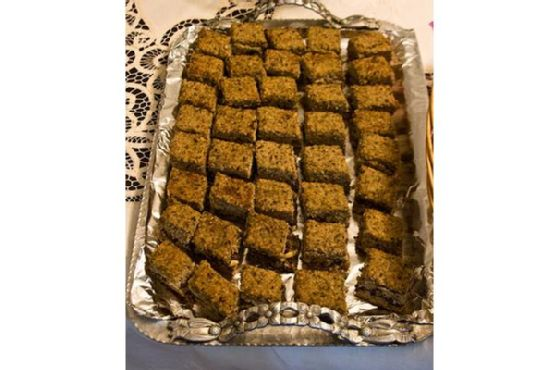
  12. Once your Kibbeh is done, let it rest for a few minutes before cutting into squares or rectangles. Serve it up with the yogurt dip and garnish with fresh mint.

Cook’s Notes

Making Kibbeh is quite forgiving if you keep a few things in mind. First, if your bulgur wheat seems too wet, squeeze it out well; excess moisture can make the layers soggy. When layering in the baking dish, press down firmly to avoid any air pockets. If you’re making this ahead, you can easily assemble the dish a few hours earlier, refrigerate it, and pop it in the oven when you’re ready. Leftovers are delightful for lunch the next day — simply reheat in a low oven until warm.

Make It Your Own

  • Switch up the protein: Try using ground beef or turkey for a different twist on the classic.
  • Nutty variation: Substitute the pine nuts with chopped walnuts for a different crunch.
  • Spice it up: Add a pinch of cayenne pepper to the filling if you like a bit of heat.
  • Herbaceous twist: Mix in some chopped parsley or cilantro into the bulgur mix for extra freshness.

If you try this, I’d love to hear how it turns out — drop a comment or tag me on social media! Cooking is all about sharing the love, after all. Let me know what variations you come up with. Happy cooking!

Related update: Lebanese Kibbeh

Related update: Japanese Chicken Donburi

Xocai Oatmeal Dark Chocolate No-Bake Cookies | Made by Meaghan Moineau

There I was, staring into my pantry on a rainy Wednesday afternoon, feeling the familiar pang of craving something sweet but not wanting to turn on the oven. You know those days when you just need a chocolate fix without all the fuss? That’s when I remembered these delightful little bites of joy: Xocai Oatmeal Dark Chocolate No-Bake Cookies. They’re the perfect balance of chocolatey goodness and wholesome oats, plus a breeze to whip up. What’s not to love about a recipe that feels like a treat but is secretly kind of healthy?

Jump to Recipe

What You’ll Need

This ingredient list is all about simplicity and, chances are, you already have most of these hanging out in your kitchen. Here’s what you’ll need:

  • Butter substitute (for that creamy texture without the extra calories)
  • Xocai healthy chocolate nugget (the star of the show with its rich, dark chocolate flavor)
  • Oats (old-fashioned or quick oats both work perfectly)
  • Peanut butter (for that nutty, irresistible taste)
  • Soy milk
  • Sugar substitute (to keep things sweet but light)
  • Vanilla (a splash for that extra depth of flavor)

How to Make Xocai Oatmeal Dark Chocolate No-Bake Cookies

  1. In a medium saucepan, combine the butter substitute, Xocai chocolate nugget, oats, and peanut butter. Heat this mixture over medium heat, stirring gently to keep things smooth.
  2. Once everything is well-mixed and starting to melt together, increase the heat slightly and bring the mixture to a gentle boil. Keep stirring, and let it boil for five minutes. The mixture should become glossy and aromatic, like the best kind of hug in a pot.
  3. Remove the saucepan from the heat and stir in the soy milk, sugar substitute, and vanilla. This is where the mixture starts to transform into cookie magic.
  4. Finally, fold in the remaining Xocai chocolate nugget pieces. You want them to stay somewhat intact for that delightful chocolate burst in every bite.
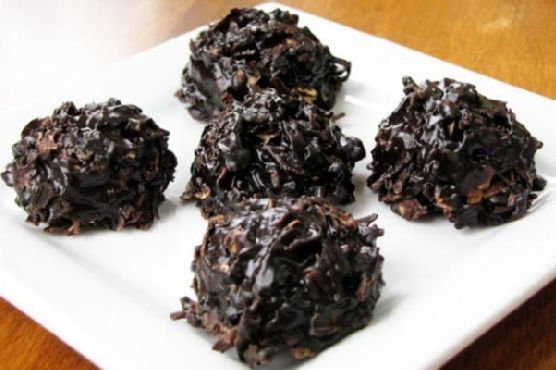
  5. Spoon the mixture onto wax paper or foil, allowing the cookies to cool and harden. They’ll set as they cool, becoming perfectly chewy and rich.

Cook’s Notes

These cookies are incredibly forgiving, but here are a few tips to make them extra perfect:

  • Make sure to stir constantly while boiling; this prevents the mixture from sticking to the pan or burning.
  • If the cookies aren’t hardening, pop them in the fridge for a quicker set.
  • Store the cookies in an airtight container at room temperature for up to a week, but I bet they won’t last that long!

Make It Your Own

  • Swap the peanut butter for almond or cashew butter for a different nutty twist.
  • Use almond milk instead of soy milk if that’s what you have on hand.
  • Add a handful of shredded coconut to the mix for a tropical flair.
  • Try adding a pinch of sea salt on top before they set for a sweet and salty combo.

If you try this, I’d love to hear how it turns out — drop a comment or tag me! There’s nothing better than sharing these little pieces of happiness with you all. Happy no-baking!

Related update: Xocai Oatmeal Dark Chocolate No-Bake Cookies

Related update: Cinnamon & Sugar Roasted Chickpeas

Google Messages’ Quiet, Useful Upgrades | Analysis by Brian Moineau

What’s new with Google Messages this March?

The headline you’ve probably seen — What new Google Messages features are rolling out [March 2026] – 9to5Google — captures exactly the slow, tease-y way Google ships changes to its messaging app. Google Messages for Android keeps evolving, and this March’s rollouts feel less like a single “big bang” update and more like a steady stream of practical additions that quietly make conversations better. In this post I’ll walk through the most useful changes, why they matter, and what this incremental approach says about Google’s strategy for RCS and SMS messaging. (9to5google.com)

Fresh features you might already have (or will see soon)

  • Real-time location sharing inside conversations — Google is adding a robust location-sharing flow so you can share your live location directly in a Messages chat for a set time, and stop sharing whenever you like. This ties into Google’s broader “Find Hub” capabilities and feels like closing a long-standing gap versus dedicated apps. (androidauthority.com)

  • @mentions for group chats — Finally: you can flag a particular person in group texts so they get pinged even if they’ve muted that conversation. It’s small, but in active groups this reduces the “who was that for?” noise. The feature has been in progressive rollout and appears in A/B tests before wider availability. (9to5google.com)

  • Trash folder for deleted messages — A safety net for accidental deletes. Instead of losing threads forever, Messages now offers a Trash folder where recently deleted messages linger for some days. It’s the kind of quality-of-life fix that people notice the moment it’s there. (androidcentral.com)

  • UI and media tweaks — Gallery and camera flows keep getting polishing: a cleaner media picker and updated sharing UI to make photos and clips easier to find and send. These are the iterative design moves that reduce friction when you’re trying to send something quickly. (androidpolice.com)

Transitioning from small fixes to bigger platform shifts, these changes are part of a broader Pixel/Android feature push that Google bundles into monthly Pixel Drops and wider “New on Android” updates. (blog.google)

Why the March 2026 rollouts matter

First, Messages is no longer “just SMS.” It’s the front line for Google’s hopes around RCS — richer messaging with typing indicators, read receipts, media sharing, and now better cross-platform functionality as Apple and Google experiment with interoperable encrypted RCS. Improvements like location sharing and mentions are practical signs that Google wants Messages to be a daily utility, not an afterthought. (9to5google.com)

Second, Google’s A/B testing approach means not everyone sees everything at once. That slow, selective rollout helps Google gather usage patterns and catch bugs before wider release, but it’s also frustrating for users who read about a feature and don’t have it yet. For power users, this creates a staggered experience across friends and devices. (9to5google.com)

Third, the integration with Pixel Drops and the broader Android feature set shows an ecosystem play: Messages benefits from platform-level services (like Find Hub) and the Pixel team’s cadence, which sometimes speeds the delivery to Google’s own phones before others. That’s worth remembering when you’re juggling rollout timelines across brands. (blog.google)

The product trade-offs behind steady rollouts

  • Pros of gradual rollouts:

    • Safer launches with real-world telemetry.
    • Ability to experiment and refine without massive fallout.
    • Easier detection of device- or carrier-specific issues.
  • Cons for users:

    • Fragmented experience — your friend might have a feature you don’t.
    • Feature fatigue — incremental updates feel less exciting.
    • Confusion about what’s “available” versus “in testing.”

This balancing act is exactly what you’d expect from a platform at the center of messaging between Android, carriers, and now interoperable standards. Google wants to push RCS into everyday use, but it’s tethered to the realities of carriers, device makers, and cross-platform support.

How this fits into the RCS and competition story

Google has been nudging Messages toward parity with apps like iMessage and WhatsApp for years. The big picture includes RCS adoption, end-to-end encryption efforts, and UI parity with modern chat features. March’s additions — practical sharing tools and group management improvements — are less flashy than OTT platform rivalry, but they’re the plumbing that makes RCS useful day-to-day.

Also, the timing with Pixel Drops and “New on Android” releases shows that Google layers messaging updates onto broader OS and Pixel feature sets — which helps integration but can delay access for non-Pixel users. Expect more iterative improvements rather than a single revolutionary update. (9to5google.com)

What to watch next

  • Wider rollout of encrypted or cross-platform RCS messages between Android and iPhone.
  • Further integration with Find Hub and Google services (e.g., travel, location recovery).
  • UI refinements that take redundancy out of conversations — better search, smarter media handling, and clearer group management.

These are the areas where Messages could evolve from “good” to “essential” for people who already text a lot.

Brief takeaways

  • Google Messages in March 2026 is improving through practical additions like live location sharing, @mentions, and a Trash folder.
  • Rollouts are incremental and A/B tested — expect staggered availability.
  • The changes support Google’s long-term push to make RCS a reliable, everyday messaging standard across Android (and potentially beyond).

Final thoughts

These updates don’t scream reinvention, but they are surprisingly impactful in daily use. Small fixes — a Trash folder, the ability to nudge someone in a group, or sharing your location without leaving the chat — reshape how you actually text. That’s the quiet power of thoughtful product iteration: it doesn’t always make headlines, but it improves the minutes of your life you spend tapping “Send.”

Sources


Related update: We recently published an article that expands on this topic: read the latest post.