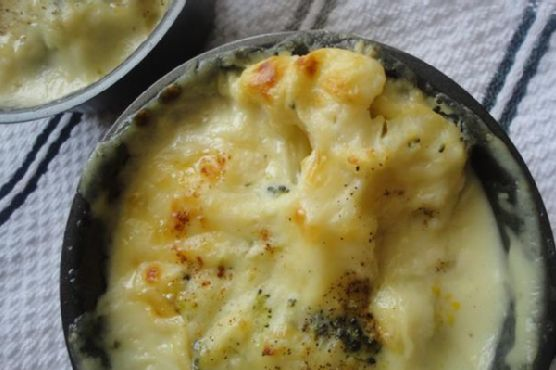
I recently found myself staring at a half-head of cauliflower and some broccoli florets, both on the brink of overstaying their welcome in my crisper drawer. It was one of those evenings, you know? When the day has been a bit too long, and you need comfort but don’t want to weigh yourself down with a heavy meal. Enter this Cauliflower and Broccoli Gratin with Camembert Cheese. It’s the kind of dish that feels a little fancy — thanks to the gooey, rich camembert — yet it’s simple enough to whip up on a busy weeknight. Plus, it transforms those neglected veggies into something fabulous and satisfying. Let’s not forget, it’s a great way to sneak in some greens under all that cheesy goodness.
Jump to Recipe
What You’ll Need
For this dish, the ingredients are delightfully simple, and you might already have most of them chilling in your kitchen. Here’s what’s going into our cozy gratin:
- 1 head of cauliflower
- 1 bunch of broccoli
- 2 tablespoons of butter
- 2 tablespoons of flour
- 1 cup of milk
- Salt and pepper to taste
- 200g camembert cheese, cut into cubes, plus extra to put on top
- 1 cup of breadcrumbs
How to Make Cauliflower and Broccoli Gratin With Camembert Cheese
- First, preheat your oven to 180 degrees C (or 350 degrees F). It’s always nice to have it ready and waiting.
- In a large pot of boiling water, parboil the broccoli and cauliflower. You’re looking for tender-crisp veggies here — about 10-15 minutes should do the trick.
- Once your veggies are done, drain them well and set them aside. They’ll be ready to soak up that cheesy sauce.
- In a saucepan, melt the butter over medium heat. When it’s completely melted and starts to bubble, sprinkle in the flour. Stir constantly until it forms a smooth paste, which takes about a minute.
- Slowly whisk in the milk. Keep stirring until the mixture thickens to a nice, creamy consistency.
- Now, add in the camembert cubes. Stir until the cheese is fully melted and the sauce is smooth. Season with salt and pepper to your liking.
- Combine your cheese sauce with the parboiled veggies, ensuring they’re well coated.
- Transfer everything into a baking dish. Top with extra camembert chunks and breadcrumbs for that crispy, golden finish.
- Pop it in the oven for about 20 minutes or until it’s golden and bubbling on top. Your kitchen will smell heavenly!
Cook’s Notes
Let’s talk about some little tips that will make this dish even better. If you’re short on time, you can parboil the veggies in advance and keep them in the fridge until you’re ready to assemble the gratin. For storage, this dish keeps well in the fridge for up to three days — just reheat it in the oven to keep the top crispy. One common mistake is overcooking the veggies during parboiling. You want them to maintain some bite since they’ll continue cooking in the oven.
Make It Your Own
Here are some fun variations to shake things up if you feel like experimenting:
- Swap the camembert for a sharp cheddar if you prefer a stronger cheese flavor.
- Throw in some crispy bacon bits for an extra savory kick.
- Use panko breadcrumbs instead of regular ones for an even crunchier topping.
- Add a pinch of nutmeg to the cheese sauce for a warm, aromatic twist.
If you try this, I’d love to hear how it turns out — drop a comment or tag me! It’s always so fun to see your creations and variations. Enjoy the cheesy goodness!
Related update: Cauliflower and Broccoli Gratin With Camembert Cheese

TL;DR
-
A Jaylen Brown acquisition forces Portland to solve hard CBA math: Brown’s 2026–27 salary projects at $57.1M with a 15% trade kicker and no player option, which tightens matching bands for apron-pressured teams under the 2023 CBA changes [1][2][8].
-
Portland can assemble the ask on paper—unprotected firsts in 2029 from Boston and Milwaukee plus swap rights with the Bucks in 2028 and 2030—but those assets likely land in the 20s, pushing Boston to demand an elite young player as the headline return [4].
-
If Portland just moved Jerami Grant’s $34.2M 2026–27 slot to add Ja Morant’s $42.2M, the Blazers lost their cleanest matching ballast; without Grant, a two‑team Brown deal probably requires Scoot Henderson (year‑4 rookie‑scale in the low‑teens) or Shaedon Sharpe plus multiple firsts, or a three‑team structure to hit 100% matching targets [3][5][2][9].
What the source said
Local and national chatter has linked Portland to star‑wing pursuits since 2023, in part because the Blazers control extra firsts: Milwaukee’s unprotected 2029, Boston’s unprotected 2029, and swap rights with Milwaukee in 2028 and 2030, all recorded on RealGM’s picks ledger [4]. Jaylen Brown’s supermax details—$57.1M in 2026–27, a 15% trade kicker, and no player option—frame Boston’s leverage and the outgoing‑salary bar Portland must clear if it wants to stack Brown beside a young core in the Pacific Northwest [1].
Why it matters
Jaylen Brown (born 1996 and All‑NBA in 2023) is a win‑now piece whose prime‑priced seasons collide with Portland’s youth arc and the 2023 CBA’s apron tripwires that restrict aggregation and salary matching for high‑spend teams starting in 2024–25 [7][2][8]. That timing pressure shapes who moves first: picks, kids, or both.
The asset map is real, not theoretical. Portland’s pick chest features the 2029 BOS 1st, the 2029 MIL 1st, and 2028/2030 MIL swaps; those are valuable but project as late if the Bucks and Celtics remain contenders through 2029, which is why Boston will likely push for Scoot Henderson or Shaedon Sharpe rather than a picks‑only offer [4].
Original analysis
-
Back‑of‑envelope cap/trade math
-
Brown’s 2026–27 number is $57.1M. For an apron‑sensitive buyer, the post‑2023 CBA removes the old 125%+ buffer at higher tiers and introduces tighter, sometimes 100%, matching requirements and aggregation limits once teams cross aprons; that reduces “one big contract + kids” optionality [1][2][8].
-
If Portland already swapped Jerami Grant’s $34.2M (2026–27) to bring in Ja Morant’s $42.2M, the most direct ballast (Grant) is gone. Replacing it requires either (a) a star‑plus‑kids stack or (b) a three‑team build where a neutral club “rents” $20M–$30M of expiring money to square the 100% calculus [3][5][2][8].
-
Shown work example, two‑team try: Morant ($42.2M) is off‑limits. A plausible stack could be Scoot Henderson (year‑4 rookie‑scale in the low‑teens) + Deni Avdija ($13.1M in 2026–27) + smaller contracts. Even with Scoot’s low‑teens and Avdija’s $13.1M, you still trail Brown’s $57.1M by several million, forcing more players or a third team to bridge the gap [9][6][1].
-
Pick payload math: Suppose the ask is four firsts. Portland can deliver 2029 BOS 1st (unprotected), 2029 MIL 1st (unprotected), plus two of: 2028 MIL swap value (if favorable), Portland’s own out‑year firsts within Stepien limits, or additional swaps. Count meets four, but expected value skews late‑first; Boston will price that discount into its player demand [4][2].
-
A quick 2×2: headline piece vs. cap path
-
Headline = blue‑chip (Sharpe/Scoot) + Two‑team path: Cleanest valuation for Boston; worst for Portland’s age curve and depth.
-
Headline = blue‑chip + Three‑team path: Smoother matching via cap‑sponge; still costly but preserves some rotation balance.
-
Headline = non‑blue‑chip + Two‑team path: Likely dead on arrival; picks won’t offset late‑first risk.
-
Headline = non‑blue‑chip + Three‑team path: Possible only if third team adds present‑day value Boston prefers to far‑out picks.
-
Named‑stakeholder breakdown
-
Joe Cronin (Blazers GM): With Morant at $42.2M anchoring the books, Cronin must keep enough surplus‑value contracts (e.g., Avdija at $13.1M in 2026–27 on a descending four‑year, $55M deal) and at least one of the two premium prospects to avoid a second‑apron ceiling [3][6][8].
-
Brad Stevens (Celtics POBO): Brown’s supermax and trade kicker don’t block a deal; they raise the asset floor. Stevens will prioritize a blue‑chip player plus multiple firsts he can re‑route into another star hunt under Stepien‑compliant timing [1][2][4].
-
Deni Avdija and Donovan Clingan: Avdija’s descending deal (~$13.1M in 2026–27) and Clingan’s rookie‑scale years are precisely the contracts that make multiple maxes feasible without gutting the spine [6].
-
Contrarian read
-
Consensus: “Pile four firsts on the table and finish it.”
-
Counter: Losing Jerami Grant’s $34.2M matching slot to add Morant’s $42.2M moved Portland from “cleanest match” to “most complex path.” In a system that compresses aggregation and enforces tighter matching around aprons, complexity is cost—and Boston can take equal pick counts from teams with simpler money [5][3][8].
What others are missing
Analyses that sketch “Grant + picks” frameworks ignore the post‑Grant ledger and the 2023 CBA’s aggregation and apron restrictions that kick harder from 2024–25 forward; the absent $34.2M slot means Portland either headlines with Sharpe/Scoot or recruits a third team with $20M–$30M of expiring salary to reach Brown’s $57.1M without tripping second‑apron landmines [5][1][2][8].
What to watch next
-
By July 31, 2026: Any credible report of substantive Boston–Portland talks will include at least three first‑round picks, with one explicitly identified as either the 2029 BOS 1st or the 2029 MIL 1st; if neither pick appears, treat the “talks” as posturing [4].
-
By August 31, 2026: If a three‑team framework leaks, a third club with $20M–$30M of expiring salary will be named as the cap‑sponge to satisfy near‑100% matching around apron constraints; track whether that team extracts a first or a swap for its trouble [2][8].
-
By opening night of 2026–27: If Brown is not in Portland and remains on Boston’s roster at $57.1M, expect at least one on‑record executive quote about the difficulty of two‑team matching under the new apron rules, confirming that cap math—not just price—stalled a deal [1][2][8].
My take
I would set a hard rule: keep Deni Avdija’s $13.1M 2026–27 value deal and Donovan Clingan’s rookie‑scale years intact, and do not headline with both Scoot Henderson and Shaedon Sharpe in the same outgoing. Brown’s $57.1M slot and 15% kicker are manageable only if Portland protects surplus‑value contracts and at least one premium prospect to avoid second‑apron rigidity in 2026–27 and beyond [1][2][6][8]. If Boston insists on a blue‑chip plus three or four firsts drawn from the 2029 BOS/MIL pool and Portland’s own out‑years, I’d pivot to a three‑team design; if that still prices in both Sharpe and Scoot, I’d pass and conserve the 2029 capital for the next distressed‑star window [4][2].
Sources
-
Spotrac — Jaylen Brown Contract. What this contributes: precise 2026–27 salary ($57.1M), supermax terms, trade kicker, and lack of player option.
-
Larry Coon’s NBA CBA FAQ. What this contributes: trade‑matching bands, Stepien Rule mechanics, apron restrictions, and aggregation limits under the 2023 CBA.
-
Spotrac — Ja Morant Contract. What this contributes: Morant’s 2026–27 salary (~$42.2M) used in matching examples.
-
RealGM — Portland Trail Blazers Future Draft Picks. What this contributes: confirmation of the 2029 BOS 1st (unprotected), 2029 MIL 1st (unprotected), and 2028/2030 MIL swap rights.
-
Spotrac — Jerami Grant Contract. What this contributes: Grant’s 2026–27 salary (~$34.2M) that previously served as matching ballast.
-
Spotrac — Deni Avdija Contract. What this contributes: four‑year, $55M structure and the $13.1M 2026–27 salary on a descending deal.
-
Basketball‑Reference — Jaylen Brown bio/accolades. What this contributes: 1996 birth year and 2023 All‑NBA selection for age/timeline context.
-
Hoops Rumors — 2023 CBA second‑apron/trade restrictions explainer. What this contributes: practical description of tightened 100% matching scenarios and aggregation limits.
-
Spotrac — Scoot Henderson Contract. What this contributes: rookie‑scale framework supporting a “low‑teens” 2026–27 estimate for Year 4.
Related update: We recently published an article that expands on this topic: read the latest post.
Related update: We recently published an article that expands on this topic: read the latest post.
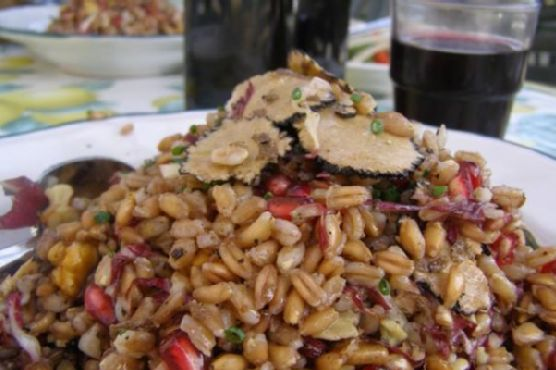
It was one of those evenings when the crisp air makes you crave something grounded yet bright—think cozy sweater vibes but on a plate. I had just returned from the farmers market, pomegranates in hand, and a desire for something different but not overly complicated. That’s how this Fall Farro Salad with Pomegranate, Walnut & Truffles was born. It’s the kind of dish that combines hearty farro with the tangy pop of pomegranate seeds, and the rich aroma of truffles—a little bit of everything deliciously fall. It’s a perfect weeknight meal that’s just as impressive for a weekend get-together, and the best part is how ridiculously easy it is to put together. I mean, we’re talking about strong flavors that do all the heavy lifting for you. Jump to Recipe
What You’ll Need
This salad’s ingredient list is refreshingly straightforward, yet it packs a punch with gourmet vibes. Chances are you already have most of these at home, except maybe the truffle mushroom, but trust me, it’s worth the small trip.
- Extra virgin olive oil
- Farro
- Parmesan (shaved into ribbons)
- Pomegranate (seeds)
- Radicchio (thinly sliced)
- Salt and pepper
- Truffle mushroom
- Vinegar
- Walnuts
How to Make Fall Farro Salad with Pomegranate, Walnut & Truffles
- Begin by rinsing the farro under cold water. In a large pot, bring plenty of cold water to a boil. Add a good pinch of salt along with the farro. If you have any vegetable scraps handy, toss them in for extra flavor. Cook until al dente, about 20-35 minutes. Taste a grain—it should be tender with a slight chew.
- While the farro cooks, prep the other ingredients. Shave the parmesan into delicate ribbons, thinly slice the radicchio, and remove the pomegranate seeds. You know you’re doing it right when your cutting board looks like a painter’s palette.
- In a small skillet, toast the walnuts over medium-low heat until they’re golden and fragrant. Keep an eye on them—they can go from toasty to burnt in a blink.
- Once the farro is ready, drain and let it cool slightly. Toss it into a big bowl with the radicchio, pomegranate seeds, walnuts, and parmesan ribbons.
- Drizzle with extra virgin olive oil, a splash of good vinegar, and season with salt and pepper. Mix gently, ensuring everything is well coated but not bruised.
- Finally, thinly slice the truffle mushroom and gently fold it into the salad. The aroma should start to bloom, lacing through the entire dish.
Cook’s Notes
Farro can be cooked ahead of time, making this salad a great option for meal prep. Just cool it completely before storing it in an airtight container in the fridge. When ready to assemble, allow it to return to room temperature for the best texture.
Watch out for overcooking the farro—it should retain some chewiness to balance the other textures of the salad. And remember, a little truffle goes a long way. You want it to complement, not overpower.
If you have leftovers, store the salad and dressing separately for up to two days to keep everything fresh and crunchy.
Make It Your Own
- Swap the truffle mushroom for a sprinkle of truffle oil if you’re in a pinch—it gives a similar aroma boost.
- Use feta cheese instead of parmesan for a tangier bite.
- Not a fan of radicchio? Substitute with baby kale or arugula.
- For a heartier version, add roasted butternut squash or sweet potato cubes.
If you give this recipe a whirl, I’d love to hear how it turned out—or any fun twists you added! Drop a comment or tag me on your food adventures. Happy cooking!
Related update: Fall Farro Salad with Pomegranate, Walnut & Truffles
Related update: Cauliflower and Broccoli Gratin With Camembert Cheese
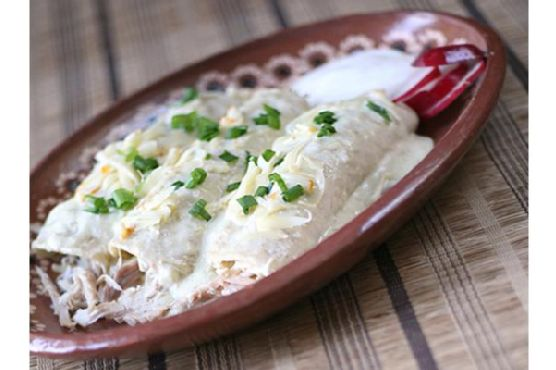
Let’s talk about the time I ambitiously decided to make enchiladas on a Wednesday night after one too many hours of doom-scrolling through Instagram. You know the ones—cheesy, gooey, and utterly comforting. I could already taste the spicy tang of green chilies, imagining it would somehow transform my week. Spoiler: it did. This Enchiladas Verdes recipe is not only a delicious weeknight hero but also a dish that’s forgiving enough for any kitchen mishaps. Didn’t roll the tortillas tight enough? No worries; it’s all going to melt together in a cheesy, saucy hug anyway. And trust me, the result is so satisfying, you’ll forget about that midweek slump. Jump to Recipe
What You’ll Need
What’s fantastic about this dish is you might already have most of the ingredients lounging around in your kitchen. If not, the list is simple and straightforward.
- Skinless boneless chicken breast or a quick swap with a store-bought rotisserie chicken.
- Green Anaheim chili peppers – these are the stars of the show.
- Canola oil
- Flour
- White diced onion
- White corn tortillas
- White shredded cheese
- Queso fresco
- Sour crema
- Salt
- Water
- Suero or buttermilk (canned buttermilk works, too)
How to Make Enchiladas Verdes (Green Enchiladas)
- Preheat your broiler and get those green chili peppers ready for roasting. Choose firm, meaty peppers—no wrinkles, please!
- Rinse the peppers and lay them on a foil-lined cookie sheet. Slide them under the broiler and keep an eye on them. Within minutes, you’ll see the skin begin to blister and turn black.
- Flip the peppers after about 5 minutes to get all sides evenly blistered. Once done, pop them into a plastic bag and cover with a towel, letting them cool. This makes peeling off the blackened skin a breeze.
- For the sauce, blend those roasted peppers, flour, and half of your suero or buttermilk until smooth and creamy. Pour this mixture into a skillet over medium-low heat.
- As it warms, gradually stir in more suero or buttermilk. Season with salt—around 2 teaspoons usually does the trick. If it’s too spicy for your taste, add crema. Too thick? Dribble in some water.
- Now, the chicken. Either boil your chicken breasts in a pot until done or just shred a rotisserie chicken. The choice is yours.
- For stacked style enchiladas, fry your tortillas in hot oil just until they’re soft, then drain. Dip each in the sauce before layering on plates with chicken, cheese, and onion. Go for three layers per serving.
- If you prefer oven-baked, preheat to 350°F. Spread sauce at the bottom of your baking dish, fry and fill the tortillas, then roll them up seam down in the dish.
- Drench with more sauce and sprinkle with crumbled queso fresco. Bake until everything’s gloriously warm, about 15 minutes.
- Serve with a dollop of sour crema and get ready to conquer the rest of your week!
Cook’s Notes
Here are a few tips I’ve picked up along the way:
- These enchiladas are flexible with make-ahead options. Prepare the sauce and chicken in advance, then just assemble when you’re ready.
- Store leftovers in an airtight container in the fridge for up to three days. Reheat in the oven for best results.
- Don’t skip the roasting of peppers, as it’s essential for that smoky flavor. If you find peeling them tricky, let them steam longer in the plastic bag.
Make It Your Own
- For a vegetarian spin, swap out chicken with crispy tofu or sautéed mushrooms.
- Mix in some black beans with the chicken for added texture and protein.
- Try using a mix of different cheeses like mozzarella for an extra gooey factor.
- Add avocado or cilantro as a fresh topping before serving.
If you try this, I’d love to hear how it turns out—drop a comment or tag me on social media! Enjoy your cozy, midweek escape with these Enchiladas Verdes.
Related update: Enchiladas Verdes (Green Enchiladas)
Related update: Baked Sirloin Steak