Easy Chicken Tikka Masala | Made by Meaghan Moineau

It was one of those evenings when the rain was coming down hard, and I was craving something that felt like a warm hug — that’s when I decided to whip up my go-to Easy Chicken Tikka Masala. You know those nights when takeout sounds tempting, but you also feel like cooking something that’s a little bit special? This dish is perfect for that. It’s like a midweek savior: indulgent enough to feel like a treat but simple enough that you won’t be left with a mountain of dishes. Plus, the aroma of spices simmering on the stove is pure magic. Let’s get you sorted with everything you need to make this cozy delight.

Jump to Recipe

What You’ll Need

This ingredient list is a mix of pantry staples and some spices that really make the magic happen. Chances are you already have most of this on hand, but a trip to the spice aisle might be in order if you’re missing some key players.

  • Chicken breasts – about two or three, cubed
  • Grape seed oil – or any neutral oil
  • Onion – finely chopped
  • Garlic – four cloves, minced
  • Garam masala
  • Cumin
  • Coriander
  • Turmeric
  • Cardamom
  • Cinnamon
  • Fresh ginger – grated
  • Cayenne pepper
  • Paprika
  • Tomato paste
  • Chopped tomatoes – fresh or canned
  • Water
  • Plain yogurt
  • Fresh coriander – for garnish
  • Salt – to taste

How to Make Easy Chicken Tikka Masala

  1. In a small bowl, mix together all the spices, including the grated ginger. This is the magic blend that will bring everything to life.
  2. Heat the grape seed oil in a large saucepan over medium heat. Add the chopped onion and cook until they turn a beautiful golden brown, releasing their sweetness.
  3. Add the minced garlic to the pan, and cook for just about a minute until it becomes fragrant. Make sure not to burn it!
  4. Stir in your pre-mixed spices. Let them cook for a minute or two to infuse the oil with all those wonderful flavors. Your kitchen should smell amazing by now.
  5. Mix in the tomato paste, stirring until everything is well combined. The paste will deepen in color and start clinging to the onions and garlic.
  6. Add the chopped tomatoes and pour in the water. Let this simmer gently, and season with salt to taste. You’ll see the sauce start to thicken.
  7. Introduce the chicken pieces to the pan, stirring well to coat them thoroughly with the sauce. Allow everything to simmer until the chicken is cooked through and the sauce has thickened even more, which should take around 12 minutes.
  8. Stir in the plain yogurt and continue to simmer for an additional 5 minutes. The yogurt adds a lovely creaminess that ties everything together.
  9. Garnish with freshly chopped coriander and serve hot, ideally with a fluffy pile of basmati rice to soak up all that goodness.

Cook’s Notes

Okay, let’s talk shop. First off, if you can, prep your ingredients before you start cooking — it makes everything flow so much smoother. This dish loves to be made ahead of time because the flavors deepen as it sits. Just store it in the fridge for up to three days and reheat gently. If it thickens too much, a splash of water or extra yogurt will loosen it right up.

A common pitfall is rushing the onion step — give them the time they deserve to turn that perfect golden brown. Also, feel free to adjust the cayenne pepper to your heat preference; it’s your dinner, after all.

Make It Your Own

Let’s personalize this bad boy a bit:

  • Swap the chicken for crispy tofu for a vegetarian twist. Just press and cube your tofu, then fry until crispy before adding it into the sauce.
  • Use coconut milk instead of yogurt for a dairy-free version that brings a subtle sweetness to the mix.
  • Add a handful of spinach to the sauce right before serving for a pop of color and some extra nutrients.
  • For a richer sauce, toss in some cashew cream – simply soak cashews in water, then blend until smooth.

If you try this, I’d love to hear how it turns out — drop a comment or tag me on social media with your delicious creations! Enjoy every bite, friends.

Related update: Easy Chicken Tikka Masala

Related update: Valentine's Chicken Marsala

Why Smart Rings Beat Glasses for AI | Analysis by Brian Moineau

TL;DR

  • The Verge’s David Pierce (July 28, 2026) argues a whisper-ready smart ring is the most practical AI gadget right now; I agree—and I’ll show why rings beat glasses on input speed and social acceptability in public spaces like the NYC subway and London buses [1].
  • The near-term moat isn’t microphones; it’s OS-grade “universal dictation” and Bluetooth LE Audio Microphone Control (MICP/MICS) that let accessories inject text anywhere as if they were native keyboards, across iOS and Android in 2026–2027 [2][4].
  • Health-ring incumbents (Ōura, Ultrahuman) have scale but no voice capture in 2024; upstarts (Sandbar, Core Devices/Pebble) are shipping purpose-built voice rings, and preorder anecdotes plus demo units suggest real demand in H2 2026 [1][3][5].

What the source said

David Pierce at The Verge (published July 28, 2026) says smart rings, not glasses, are the best near-term AI gadget because a finger mic makes dictation fast and discreet in crowded places like cafés and trains [1]. His piece centers on Sandbar’s Stream ring, which routes speech-to-text into any app on iOS and macOS, and contrasts it with Core Devices/Pebble’s Index 01, which records short press-to-speak notes on-wrist [1][2][3]. Pierce name-checks entrants like Vocci and argues phones are clumsy for capture, while rings reduce activation time by moving the mic within centimeters of your mouth [1]. He frames the category as “keep the phone in your pocket, capture more thoughts per day,” a claim supported by hands-on demos in July 2026 [1].

Why it matters

  • There’s a fight over the next default input for AI: glasses push camera-first; rings push mic-first, with Apple, Google, Microsoft, and Meta all controlling text boxes and permissions in 2026 [1]. If “press-to-dictate from your finger” becomes as universal as Command‑V, the winners will ship OS-level dictation routing and make Bluetooth LE Audio mics behave like native keyboards across iOS/macOS and Android/Windows [2][4].
  • Incumbents already seeded millions of fingers with health rings; Ōura reported 2.5 million rings sold as of June 14, 2024, proving daily wear at scale in the U.S., EU, and Japan [5]. Once text capture sticks, that installed base becomes a ready audience for voice-enabled SKUs, accessories, or firmware paths from 2025–2027 [5].
  • Privacy law pressure matters: Illinois’s Biometric Information Privacy Act (BIPA, 2008) makes indiscriminate ambient voice capture risky; a close-talk ring that records only when pressed narrows exposure compared to room mics in offices in Chicago or Springfield [6].

Original analysis

Contrarian read for 2026–2027: smart rings will own high-frequency, short-form input (ideas, reminders, captions) over the next 18–24 months because they minimize two frictions that phones and glasses share—activation time and social cost in libraries, meetings, and transit [1].

2x2: Where smart rings beat

  • Axes: speed to capture (slow → fast) vs social friction in public (high → low)
Low social friction High social friction
Slow capture Phone typing Meeting recorder pucks
Fast capture Smart rings (press, whisper, send) Smart glasses voice commands

The finger-to-mouth gesture is short and private; Pebble says Index 01 is tuned for close-talking at roughly 5–20 cm, signaling personal notes rather than room capture, which reduces bystander concerns under BIPA-like regimes in Illinois (2008) and similar EU norms [3][6].

Back-of-envelope: the “micro‑memo” economy

  • Baseline: Ōura reported 2.5 million rings sold by June 2024 [5]. Assume 10% of that audience (250,000 people) buys a voice‑first ring as a second device by December 2027.
  • Usage proxy: Pebble reports testers average about 1 minute of recordings per day [3]. Calculation: 250,000 users × 1 minute/day = 250,000 minutes/day. Annualized: 250,000 × 365 = 91,250,000 minutes/year. If a typical note is 15 words, that’s 91,250,000 × 15 = 1,368,750,000 words/year ≈ 1.37 billion words/year [3][5].
  • Revenue sketch: With an average selling price (ASP) of $99, device revenue = 250,000 × $99 = $24,750,000, excluding software [back-of-envelope]. If even 25% of users buy a $5/month AI service, MRR = 62,500 × $5 = $312,500; annualized ARR ≈ $3.75 million.

Plumbing, not placement, is the moat

  • Sandbar’s “Universal Dictation” target implies more than a mic; you need low-power uplink via Bluetooth LE Audio and a way to inject text as if from the OS keyboard or IME without bouncing through a single app, across iOS/macOS and Android/Windows in 2026–2027 [2][4].
  • Bluetooth LE Audio includes Microphone Control Profile/Service (MICP/MICS), which lets accessory microphones behave like first‑class citizens with lower latency and better battery characteristics during multi-device switching; this is the substrate rings need to feel native on press-whisper-release workflows [4].

Historical analogue (2007): iPhone OS 1.0 shipped without copy/paste, and third‑party workarounds felt brittle until Apple added system primitives in 2009; rings will feel “toy-like” until OSes add universal dictation APIs that treat them like keyboards, not peripherals [historical context].

Named-stakeholder breakdown

  • Sandbar (Stream): Must lock in universal dictation paths on iOS/macOS and Android/Windows, ship multipoint that survives handoffs between a MacBook and iPhone, and prove sub‑200 ms press‑to‑capture latency in 2026 demos [2][4].
  • Core Devices/Pebble (Index 01): Needs crystal-clear messaging on “close-talk only,” a robust press-to-record UX, and an on-device buffer for subway tunnels and flights; shipping updates through 2026 should show battery life in hours and days, not vague ranges [3].
  • Ōura and Ultrahuman: With >2.5 million combined units in market by mid‑2024, either can add a voice-capable SKU or a snap-on mic module by 2027 to defend share and ARPU [5].
  • Apple, Google, Microsoft: Control the OS text stack—keyboards, IMEs, accessibility APIs—and can grant or restrict background dictation; expect private “Made for iPhone” or Android partner tracks to become kingmakers in 2026–2027 [4].
  • Meta and Snap: If glasses win later, they still benefit from ring remotes; a $99 ring that triggers Meta Ray‑Ban dictation without raising your voice on a San Francisco bus would expand daily use cases in 2026–2027 [1].

What others are missing

Most coverage focuses on mic quality and battery life, but the gating factor is OS permissioning for “keyboard-equivalent” text injection via IME/HID paths; without first-party hooks on iOS/macOS and Android/Windows, rings remain glorified voice memo apps that can’t fill text fields in Slack, Gmail, or Notion at work [2][4]. A second blind spot: privacy liability under BIPA (2008) and EU ePrivacy rules is lower for close-talk, press-to-speak devices than for always-listening glasses, which shapes enterprise adoption in places like Illinois and Germany in 2026–2027 [6]. Finally, reviewers rarely quantify press-to-text latency under everyday interference (coffee grinders, wind at 10–15 mph, subway screech); the winner will publish reproducible sub‑200 ms end-to-end figures with MICP/MICS while roaming between phone and laptop [4].

What to watch next

  1. By March 31, 2027, at least one major OS vendor (Apple, Google, Microsoft) will ship a documented API that allows third‑party accessories to inject systemwide dictation as a trusted input method (IME/keyboard-equivalent), verifiable in public developer docs [4].

  2. By December 31, 2027, cumulative shipments of voice‑first smart rings (Sandbar, Core Devices/Pebble, or similar) will exceed 300,000 units, evidenced by public company disclosures or third‑party import/sales trackers, not just anecdotal reviews [1][3][5].

  3. By June 30, 2027, Bluetooth SIG materials or firmware releases will reference at least one ring product using MICP/MICS for prioritized mic routing with measured end‑to‑end dictation latency under 250 ms in a public demo or white paper [4].

Sources

[1] The Verge (David Pierce, July 28, 2026) — Hands-on report arguing rings beat glasses for near-term AI input; provides concrete product examples and public demo context.

[2] Sandbar product materials (2026) — “Universal Dictation” positioning and claims about cross‑device speech‑to‑text across iOS and macOS; indicates OS-level ambitions.

[3] Core Devices/Pebble blog (Index 01, 2026) — Press-to-record, close-talk tuning, and tester usage (~1 minute/day) inform the short-form capture model.

[4] Bluetooth SIG documentation on LE Audio MICP/MICS (2020–2024) — Specifies microphone control and service profiles that enable native-like accessory mic behavior and lower-latency switching.

[5] Business Wire (Ōura press release, June 14, 2024) — Confirms 2.5 million rings sold, establishing form-factor adoption and a plausible upgrade base.

[6] Illinois General Assembly, Biometric Information Privacy Act (740 ILCS 14/2008) — Framework for voice and biometric privacy risk; supports the close-talk, press-to-speak compliance thesis.

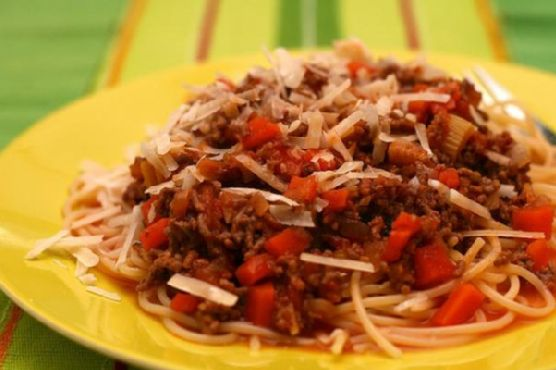
Best Ever Bolognese Sauce | Made by Meaghan Moineau

Last Tuesday, I found myself staring at a sorry-looking fridge, wondering how on earth I could whip up a dinner that wouldn’t just be another sad reheated pizza. I wanted something that felt like a hug at the end of a long day but didn’t require a trip to the store. That’s when the idea of Bolognese Sauce hit me like a blast of garlic in hot oil. It’s one of those dishes that feels special but is secretly a cinch if you’ve got some basics on hand. Imagine sinking into a bowl of pasta with a sauce that’s rich, flavorful, and satisfying — all while secretly feeling triumphant that you pulled it off. Trust me, this recipe is the kind of kitchen magic that turns an ordinary evening into something a little more extraordinary.

Jump to Recipe

What You’ll Need

This Bolognese is refreshingly straightforward with a few ingredients that might already be lurking in your pantry or fridge. Let’s check them out:

  • Olive oil
  • Thick-cut diced bacon
  • Yellow white onion
  • Carrot
  • Celery
  • Garlic cloves
  • Fresh thyme
  • Ground pork
  • Ground veal
  • Dry red wine
  • Bay leaves
  • Canned beef broth
  • Canned tomato puree
  • Pasta of your choice
  • Parmesan cheese, for serving

How to Make Best Ever Bolognese Sauce

  1. Grab your trusty heavy large pot and heat the olive oil over medium-high heat. Once shimmering, toss in the bacon. Sauté until the bacon is just beginning to brown, about 5-6 minutes. The smell will be irresistible.
  2. Add the onion, celery, carrot, garlic, and thyme. Stir them around for about 5 minutes until they soften and the aromatic explosion makes your kitchen feel like an Italian trattoria.
  3. Time to add the ground pork and veal. Break them up with a spatula, and cook until the meat is brown and cooked through, about 10 minutes. You’ll know it’s ready when the meat is no longer pink and is nicely browned.
  4. Pour in the wine and add the bay leaves. Let everything simmer until the liquid is slightly reduced, around 10 minutes. The edges of the pot will start to bubble in the most delightful way.
  5. Add the beef broth and tomato puree. Reduce the heat to medium-low and let the sauce thicken, which should take about an hour. Stir often to prevent sticking and ensure everything melds beautifully.
  6. Season your masterpiece with salt and pepper to taste. You’ll want to sneak a taste now, but try to resist!
  7. Meanwhile, boil your pasta in a large pot of boiling salted water. Aim for al dente — firm to the bite but not crunchy. Drain it well.
  8. Transfer the pasta to the pot with the sauce and toss until everything is coated in that luscious sauce. Serve with a generous grating of Parmesan cheese. Voilà! Dinner is served.

Cook’s Notes

When making this Bolognese, patience is your best friend. Letting the sauce simmer for a full hour allows the flavors to deepen and mingle into something truly delicious. Keep an eye on the pot and give it a stir every so often. If the sauce gets too thick for your liking, a splash of pasta water can loosen things up nicely.

As for leftovers, this sauce is a gift that keeps on giving. Store it in an airtight container, and it will happily live in your fridge for up to 3 days. Or freeze it for those days when you need a dinner win without working for it.

Make It Your Own

Here are a few fun variations to consider:

  • Swap out the ground veal for ground beef if that’s what’s handy or preferred.
  • For a lighter option, replace the thick-cut diced bacon with pancetta or turkey bacon.
  • Make it vegetarian by using a meat substitute or adding lentils instead of pork and veal.
  • Feeling spicy? Add a pinch of red pepper flakes when you’re sautéing the garlic and veggies.

If you try this, I’d love to hear how it turns out — drop a comment or tag me in your kitchen adventures! Remember, cooking is about experimenting and making it your own, so don’t be shy to tweak it to your taste. Happy cooking!

Related update: Best Ever Bolognese Sauce

Make Olive Garden’s Delicious Pasta Fagioli At Home | Made by Meaghan Moineau

It was a Tuesday night, and I was staring into the abyss of my pantry, feeling utterly uninspired. You know those evenings when you just want something comforting yet deceptively simple? That’s when this Pasta Fagioli came to my rescue. This recipe is like a warm hug in a bowl, and it’s impressive enough to make it look like you put in way more effort than you actually did. Plus, let’s face it, anything reminiscent of Olive Garden’s cozy vibes has a special place in my heart. So, let’s dive into this perfect weeknight dish that’ll leave everyone asking for seconds.

Jump to Recipe

What You’ll Need

You might already have most of these on hand, saving you a trip to the store — and that’s a win in my book!

  • Lean ground turkey
  • Olive oil
  • Onions, chopped
  • Carrots, diced
  • Celery stalks, diced
  • Garlic cloves, minced
  • Diced canned tomatoes
  • Canned red kidney beans
  • Canned white kidney beans
  • Canned great northern beans
  • Canned beef broth
  • Pasta sauce
  • Zucchini, diced
  • Italian seasoning blend
  • Fresh ground pepper
  • Whole wheat penne pasta
  • Parmesan cheese, for serving

How to Make Olive Garden’s Delicious Pasta Fagioli At Home

  1. Start by browning the lean ground turkey in a large soup pot over medium heat until it’s nicely browned and fragrant. Once done, drain the turkey in a colander to get rid of any excess fat.
  2. In the same pot, heat a generous drizzle of olive oil over medium heat. Add the onions, carrots, celery, and garlic. Stir often for about 2 minutes until the veggies are just starting to soften and your kitchen smells amazing.
  3. Return the browned turkey to the pot. Stir in the diced tomatoes, all the canned beans, beef broth, pasta sauce, chopped zucchini, a splash of water, Italian seasoning, and a good grind of fresh pepper.
  4. Bring the soup to a boil, then reduce the heat to a gentle simmer. Cover the pot and let it cook for about 50 minutes. Trust me, this is where the magic happens, as all the flavors meld together.
  5. After 50 minutes, stir in the whole wheat penne pasta. Cover again and cook for another 10 minutes, or until the pasta is perfectly al dente and the soup is bubbling at the edges.
  6. Ladle the hearty soup into bowls and, if you’re feeling fancy, top each serving with a sprinkle of grated Parmesan cheese. It’s time to dig in!

Cook’s Notes

This Pasta Fagioli is one of those soups that tastes even better the next day, once the flavors have had more time to meld. Store any leftovers in an airtight container in the fridge for up to 3 days. If you’re planning to freeze it, I’d recommend leaving the pasta out and cooking it fresh when you’re ready to serve. Just reheat the soup gently on the stove and add freshly cooked pasta just before serving.

Watch out for overcooking the pasta, since it can get mushy if left too long in the hot soup. If you prefer a thicker soup, you can mash a few of the beans before adding them to the pot, which creates a lovely, rich texture.

Make It Your Own

Here are a few ideas to switch things up and make this recipe truly yours:

  • Swap the ground turkey for crispy tofu or chicken sausage for a different protein vibe.
  • Want it spicy? Add a pinch of red pepper flakes or a splash of hot sauce while the soup simmers.
  • Use any small pasta shape you have on hand like ditalini or elbows if you’re out of penne.
  • Throw in a handful of fresh spinach or kale at the end for a boost of greens.

If you try this, I’d love to hear how it turns out — drop a comment or tag me! Your feedback makes my day, and I’m always here to answer any questions you might have. Happy cooking!

Related update: Make Olive Garden’s Delicious Pasta Fagioli At Home

Related update: Best Ever Bolognese Sauce

Related update: Thai Coconut Curry Soup