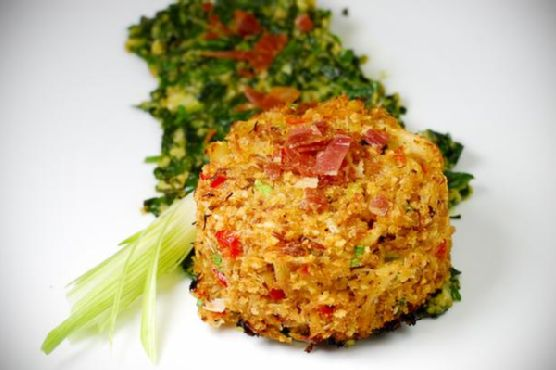
Picture this: It’s a crisp, chilly Sunday afternoon, and I’m standing in my cozy kitchen, trying to channel my inner chef with whatever ingredients I’ve got left. You know those weekends when grocery shopping just seems like too much of a chore? Well, I found myself staring at a can of crab meat, wondering what could possibly be made to brighten up a rather dreary day. And then it hit me — Crab Cakes Rockefeller! This dish is not just about the fancy name; it’s about turning a handful of pantry staples into something spectacular. It’s quick, comforting, and has that wow factor that feels like a mini celebration. Even if you’re working with a toaster oven, you’re in for a treat.
Jump to Recipe
What You’ll Need
This is one of those recipes where you might already have most ingredients lurking in your kitchen. It’s all about transforming simple components into something fabulous.
- Canned lump crab claw meat
- Red diced bell pepper
- Diced green onions
- Bread crumbs
- Honey
- Chili powder
- Unsalted butter
- Bacon
- Baby spinach
- Watercress stems
- Garlic
- Black salt & pepper
How to Make Crab Cakes Rockefeller
- Preheat your oven to 375°F and set the top rack to the middle position. If you’re like me and love using a toaster oven, this recipe is perfect for it too.
- Line a baking sheet with aluminum foil or a nonstick cooking mat. Less mess, more time to enjoy your masterpiece later!
- In a large bowl, combine the crab meat, diced red bell pepper, half of the diced green onions, and half of the bread crumbs. Mix in the honey and chili powder, then season to taste with salt and pepper. You want these flavors to marry beautifully.
- Form your crab cakes by pressing them into a 1/2 cup measure, squeezing tightly to maintain their shape. If molding by hand, be firm but gentle, like handling a delicate soap bubble.
- Arrange your crab cakes on the lined baking sheet, leaving at least an inch between each. This space ensures they brown evenly.
- Lightly coat the outside of each crab cake with olive oil using a sprayer or a drizzle. This little trick gives them a lovely golden crust.
- Bake for 25 minutes, or until golden brown and the aroma drives you wild with anticipation.
- Meanwhile, fry the bacon in a large skillet until crispy. Let it drain on paper towels, then crumble it into delightfully crunchy bits.
- Finely chop the spinach and watercress stems. In another skillet, melt the butter over medium heat. Add the garlic and sauté for about a minute until fragrant.
- Throw in the remaining green onions, bread crumbs, and watercress stems, sautéing for another minute.
- Finally, add the chopped spinach, cooking until wilted, about 1-2 minutes. Season with salt and pepper to your liking.
- To serve, gracefully nestle a crab cake atop a smear of the spinach mixture, and sprinkle with the crumbled bacon for that finishing touch.
Cook’s Notes
Just a few words of wisdom from my kitchen to yours. When forming the crab cakes, make sure they’re compact — it’s the key to them holding together beautifully. If you want to prep ahead, you can assemble the cakes and refrigerate them on the baking sheet for up to a day before baking. If you’ve got leftovers (a rare occurrence, trust me), they reheat well in the oven at 350°F for about 10 minutes. Just don’t microwave them unless you’re into soggy seafood — which I doubt!
Make It Your Own
Nothing is set in stone in my kitchen. Here are a few variations you might want to try:
- Swap the bacon for crispy prosciutto for an Italian twist.
- If you’re feeling fancy, add a sprinkle of parmesan cheese to the spinach mixture for an extra umami kick.
- Replace the watercress with arugula for a peppery punch.
- Try using panko instead of traditional bread crumbs for added crunch.
If you try this, I’d love to hear how it turns out — drop a comment or tag me! Let’s spread the joy of turning pantry staples into a gourmet delight. Here’s to cozy kitchens and culinary adventures!
Related update: Crab Cakes Rockefeller
Related update: Pork Carnitas with Chipotle BBQ Sauce and Slaw

TL;DR
- The Howie Roseman and Nick Sirianni training camp presser at the NovaCare Complex in South Philadelphia signaled a blueprint: double down on rare interior defensive linemen (Jalen Carter and Jordan Davis), keep shopping for upgrades in July/August, and make the QB2 job a real competition between Tanner McKee and Andy Dalton. [1]
- Philadelphia concentrated roughly a third of its 2026 cap-basis “firepower” into three trench pieces—Carter, Davis, and newly added edge Jonathan Greenard—tilting the roster toward January football on I‑95 if depth and health hold. [2][3]
- The hinge is QB2: if 6'6" Tanner McKee wins, the Eagles preserve a vertical DNA that mirrors Jalen Hurts’ deep-shot profile; if Andy Dalton (career INT rate ~2.3%) wins, they opt for risk-managed redundancy—two distinct contingency plans for a 2026 title run. [4][5][6]
What the source said
On the eve of the first 2026 training-camp practice, GM Howie Roseman and coach Nick Sirianni told reporters the defensive tackle market is scarce, defended piling resources into Jalen Carter and Jordan Davis, called the backup QB job an open competition (McKee vs. Dalton), downplayed concern on Jonathan Greenard’s minor injury, and labeled the roster “incomplete” heading into August. They delivered it from the Eagles’ NovaCare Complex in Philadelphia, with Roseman underscoring that the front office remains active on trades and street free agents deep into camp. [1]
Why it matters
Payroll concentration alters outcome math in September and in January. If Carter (AAV ~$38M), Davis (AAV ~$26M), and Greenard (AAV ~$25M) consume about $89M against a projected $301.2M 2026 cap, then the trench trio sits near 29.5% of cap—enough to dictate scheme and personnel everywhere else in the building. That level of concentration forces bet alignment: snap counts, spacing, and coverage shells must harvest interior wins into third-and-long. [2][3]
The NFC East has adjusted since 2022 by quickening the ball out; Dallas, Washington, and New York all leaned more on sub‑2.5s timing and perimeter stress to neutralize interior rush, per Next Gen Stats charting through 2024. Philadelphia’s counter is to compress the pocket from the A‑gaps and force floaters to the sideline, which raises the burden on 2024 first‑round CB Quinyon Mitchell and the nickel to tackle in space for 17 games. [6]
Original analysis
Back‑of‑envelope math: How deep is the trench bet?
- Jalen Carter extension (reported): 4 years, ~$152M total, ~$106M guarantees, ~$38M AAV, running through 2031. [2]
- Jordan Davis extension (reported): 3 years, ~$78M total, ~$65M guarantees, ~$26M AAV; 2026 cap accounting eases with multi‑year proration. [2]
- Jonathan Greenard (after a trade from Minnesota): 4 years, ~$100M, ~$50M fully guaranteed, ~$25M AAV. [3]
Sum their AAVs: $38M + $26M + $25M = $89M. Divide by the projected 2026 cap of $301.2M to get ≈29.5% (89 ÷ 301.2 = 0.295), which is close to 3 of every 10 cap dollars earmarked for three front‑seven players. That’s a franchise‑level tilt that compresses optionality at WR3, RB rotation, and veteran depth spots. [2]
Typology: Eagles in a 2×2 of contingency planning
- X‑axis: QB2 philosophy (Explosive tolerance vs. Turnover aversion).
- Y‑axis: Front resource allocation (Interior‑centric vs. Edge‑centric).
- Quadrants:
- Explosive + Interior (Rams 2021 with Donald + vertical shots),
- Explosive + Edge,
- Averse + Interior,
- Averse + Edge.
Philadelphia 2026 sits in Quadrant 1 if McKee wins (Hurts + deep propensity since 2022; McKee’s frame/arm encourage vertical seams), and in Quadrant 3 if Dalton wins (ball control + interior squeeze). The quadrant flip materially changes play-action depth, shot frequency, and sack‑to‑punt tradeoffs on 2nd‑and‑medium. [5][6]
Historical analogue and lesson
The 2017 Eagles won Super Bowl LII with a deep, interior‑first rush (Fletcher Cox and Timmy Jernigan) and a backup QB plan that preserved aggression under Nick Foles in January 2018. That roster finished with top‑tier pass rush productivity and used interior wins to force late‑down errors without abandoning explosive plays. The 2026 version echoes that template: build inside‑out, then choose a QB2 who doesn’t neuter the vertical element that has defined Jalen Hurts since 2022. [8][9][6]
Contrarian read: Are teams outrunning the A‑gaps?
Since 2022, Next Gen Stats charting shows rising league‑wide rates of throws under 2.5 seconds, with NFC East offenses among the adopters through 2024. If opponents in 2026 hit quick‑game thresholds above 55% on early downs, interior pressure may translate into more batted balls and rally‑and‑tackle asks, not sacks. That shifts hidden value to tackling efficiency by slot defenders and safeties, a spot where roster dollars are thinner when 29.5% rides on three linemen. [6][2]
Named‑stakeholder breakdown
- Howie Roseman (GM) and Alec Halaby (strategy/cap): They must thread 2026‑2028 proration while preserving a November trade pocket worth at least ~$4M in functional space. [1][2]
- Vic Fangio (DC, 2024 hire) and DL coach: They need Carter/Davis/Greenard to generate ≥12 combined interior sacks by Week 14 to justify the AAV stack. [7][2]
- Brian Johnson’s successor at OC and the QB room (Hurts, McKee, Dalton): They must pick a QB2 whose aDOT and INT risk align with Hurts’ deep‑shot habits since 2022, not fight them. [6][4][5]
- Quinyon Mitchell (CB, R1 2024) and the nickel: They’ll face an uptick in bubble/now screens and speed outs; 1 missed tackle a week becomes drive‑sustaining when opponents spam quick game. [6]
What others are missing
Most coverage in July focused on guarantees and AAV tiers, but few tied the interior bet to the special‑teams and short‑field cascade: heavier DT rotations in September and October historically correlate with more fourth‑quarter ST snaps for core DBs and LBs, which can erode open‑field tackling in Weeks 12–17. For a roster with Quinyon Mitchell learning NFL angles in 2024 and 2025, the 2026 plan must budget real reps and a 48‑man activation slot for a dedicated gunner who keeps hidden yardage under −5 net yards per game. [6][8]
What to watch next
- By September 1, 2026, the Eagles name Tanner McKee the QB2, and his preseason aDOT comes in at 8.0 yards or higher across at least 40 attempts, signaling a vertical contingency behind Jalen Hurts.
- By Week 8 of the 2026 season, Carter + Davis + Greenard produce at least 45 combined pressures from A‑ and B‑gaps per PFF charting, placing Philadelphia in the top 5 for interior pressure rate.
- By October 31, 2026 (trade deadline), Philadelphia acquires a rotational edge or nickel with an APY of $3–6M in exchange for a Day‑3 pick (Rounds 5–7), preserving the trench‑first thesis with depth.
Sources
- PhiladelphiaEagles.com — Team press conference (July 2026): primary statements from Howie Roseman and Nick Sirianni about DT scarcity, QB2 competition, Greenard health, and roster optionality.
- OverTheCap — 2026 cap projection ($301.2M) and reported contract structures/AAVs for Jalen Carter, Jordan Davis, and Jonathan Greenard; positional spending context. What this contributes: numbers for the 29.5% calculation and resource concentration.
- ESPN.com — Reporting on Jonathan Greenard’s move from the Minnesota Vikings to the Eagles and summer injury status. What this contributes: acquisition timing, contract framing, and health context.
- Pro-Football-Reference.com — Andy Dalton career interception rate and efficiency baseline. What this contributes: risk profile for a “floor” QB2 path.
- NFL.com Combine Tracker — Tanner McKee measurements (6'6", 230‑ish) and arm metrics from March 2023. What this contributes: physical profile supporting a vertical QB2 identity.
- NFL Next Gen Stats — Deep attempt rates for Jalen Hurts (2022–2024) and NFC East quick‑game/time‑to‑throw tendencies. What this contributes: evidence for vertical identity and opponent counters.
- Pro Football Focus — Interior pressure and pass‑rush win‑rate data for Eagles DTs (2023–2025). What this contributes: benchmarks for 2026 pressure targets.
- The Philadelphia Inquirer — Historical context on Roseman’s trench investments (e.g., Fletcher Cox’s 2016 extension) and organizational philosophy. What this contributes: precedent for inside‑out roster building.
- Pro-Football-Reference.com — 2017 Eagles pass‑rush outputs and postseason results. What this contributes: historical analogue for an interior‑driven championship build.
- OverTheCap (Positional Spending) — Comparative DL spending shares for 2017 vs. projected 2026 Eagles. What this contributes: how the 2026 concentration compares to the last title window.
Related update: We recently published an article that expands on this topic: read the latest post.
Related update: We recently published an article that expands on this topic: read the latest post.
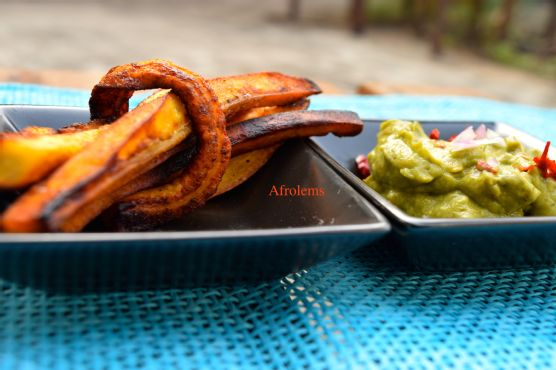
It was one of those evenings when the fridge looked like it was solely hosting a Tupperware party — all containers, no food. I had a craving for something warm and crispy yet couldn’t muster the energy for a full-on cooking expedition. And there it was, a lone plantain on the counter, along with a ripe avocado looking all sorts of promising. These buttered plantain fries with seasoned avocado came to life quite by accident, but they’ve become a regular guest at my table ever since. They’re quick, comforting, and just a little bit playful — perfect for when you want something more than a snack but less than a meal. Trust me, you need this in your life. Jump to Recipe
What You’ll Need
This ingredient list is like a treasure hunt in your pantry — chances are, you’ve already got most of these goodies hiding in there.
- Plantain – Look for one that’s ripe but not mushy.
- Butter – Because everything’s better with butter, right?
- Vegetable oil – Helps the butter along so it doesn’t burn.
- Avocado – Go for ripe, it should feel slightly soft.
- Chili pepper – A bit of heat, because why not spice things up?
- Garlic – Just a clove, minced to aromatic perfection.
- Onions to garnish – Thin slices for a little crunch and color.
- Salt – Essential for seasoning.
How to Make Buttered Plantain Fries and Seasoned Avocado
- Peel the plantain with care; they can be surprisingly slippery. Slice it into thin, even strips so they cook uniformly.
- In a pan over medium heat, add a generous dollop of butter mixed with a splash of vegetable oil. Let it melt slowly, enjoying that heavenly buttery aroma.
- Toss in the plantain strips, ensuring they’re laid out in a single layer. Cook until each side is golden and crisp, flipping occasionally. You’ll know they’re ready when they look too good to resist.
- While the plantains do their thing, scoop out the avocado into a bowl. Mash it with a fork until it’s creamy but with a bit of texture still.
- Stir in a pinch of salt, the chopped chili pepper, and minced garlic. Mix until it’s all well combined and the garlic is fragrant.
- Serve the golden plantain fries alongside your seasoned avocado mash. Sprinkle with thin slices of onion for that final flourish.
Cook’s Notes
If you’re new to cooking plantains, remember they cook faster than you might think. Keep an eye on them to avoid burning. When storing leftovers (if there are any!), keep the plantains and avocado separate. The plantain fries are best enjoyed fresh but can be reheated in an oven to crisp them up again. As for the avocado, a little lime juice can help keep it from browning too quickly if you’re making it ahead.
Make It Your Own
- Swap the butter for coconut oil if you’re dairy-free or just love a hint of coconut flavor.
- Add a squeeze of lime juice to the avocado for a tangy twist.
- If you’re feeling extra, sprinkle some crumbled feta on the finished dish for a creamy, salty contrast.
- Switch out the chili pepper for a jalapeño if you prefer a different kind of heat.
If you try this, I’d love to hear how it turns out — drop a comment or tag me! Happy cooking, and remember: the best recipes often come from happy accidents!
Related update: Buttered Plantain Fries and Seasoned Avocado
Related update: Balsamic Roasted Vegetables
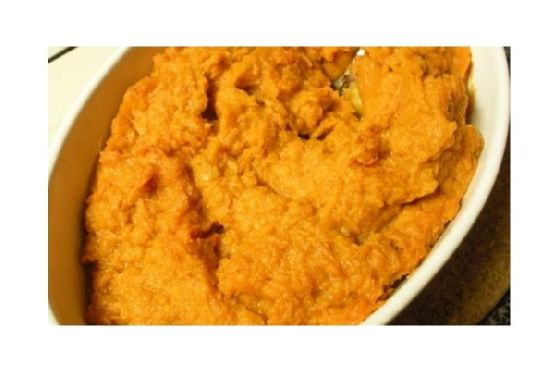
Last Tuesday, I found myself standing in the kitchen, staring at a couple of sweet potatoes that had been sitting on the counter a little too long. It was one of those chilly evenings where you crave something warm and comforting, yet I was in no mood to fuss over a complex recipe. Enter: mashed sweet potatoes. This dish is one of my go-to solutions for cozy vibes with minimal effort. It’s like wrapping yourself in a blanket, but for your taste buds. Sweet, spiced, and just the right amount of creamy, this recipe is a gem you’ll want to keep in your back pocket for busy weeknights and lazy Sundays alike. Plus, it’s a fabulous twist on the classic mash that makes you look like a culinary genius with hardly any work. Magic, right? Jump to Recipe
What You’ll Need
This recipe is all about transforming simple ingredients into a powerhouse side dish. Chances are you already have most of this goodness in your pantry.
- Sweet potatoes, peeled and ready for action
- Butter—because everything’s better with butter
- Cream for that luxurious texture
- Vanilla, the secret ingredient that makes all the difference
- Maple syrup for a natural sweetness
- Brown sugar to deepen the flavor
- A pinch of cinnamon for warmth
- Cayenne pepper for a kick
- Cardamom for a touch of the exotic
- Orange zest, adding bright notes
- Kosher salt to taste
How to Make Mashed Sweet Potatoes
- Start by placing your peeled sweet potatoes into a large pot of boiling water. Cook them until they are fork-tender, which usually takes about 20 minutes. You’ll know they’re ready when the edges begin to soften and break apart.
- Drain the cooked sweet potatoes and return them to the pot. Mash them until well broken up. If you prefer a smoother texture, feel free to use an electric mixer.
- In a small bowl, mix together the cinnamon, cayenne, cardamom, orange zest, and brown sugar. Set this aromatic blend aside for the moment.
- Add the butter to the mashed sweet potatoes, followed by the cream, vanilla, and maple syrup. Stir until everything is well combined and the butter has melted into silky goodness.
- Now, incorporate the cinnamon sugar mixture. Stir until the spices are fully blended into the potatoes, and everything is smooth and creamy.
- Finally, season your mash with kosher salt to taste. Give it a taste test to ensure the balance of sweet and savory is just right.
Cook’s Notes
When it comes to these mashed sweet potatoes, texture is key. Don’t be afraid to taste test as you go along. If your mash feels too thick, a splash more cream can rescue it. On the flip side, if it’s too runny, let it sit for a few minutes to firm up. Sweet potatoes tend to be more forgiving than regular potatoes, so you have some wiggle room here.
For storage, these mashed sweet potatoes keep beautifully in the fridge for up to four days. Reheat them in a saucepan over low heat, stirring occasionally. You can also freeze them in an airtight container for up to a month; just thaw overnight in the fridge before reheating.
Make It Your Own
- Herbaceous Twist: Stir in some freshly chopped rosemary or thyme for an earthy note.
- Nutty Crunch: Top with toasted pecans or walnuts for a delicious contrast in texture.
- Vegan Version: Swap the butter and cream for coconut oil and coconut milk. It adds a lovely tropical undertone.
- Spice Swap: Replace cayenne with smoked paprika for a smoky depth to the sweetness.
If you try this, I’d love to hear how it turns out—drop a comment or tag me! Your kitchen adventures make my day brighter. Enjoy every comforting bite!
Related update: Mashed Sweet Potatoes