
Ford recalls 272K EVs over rollaway risk | Analysis by Brian Moineau

A familiar wobble in the EV transition: Ford recalls more than 270,000 vehicles over roll-away risk

You’re halfway through your day, you click the car into Park, and—nothing obvious seems wrong. But a nagging software glitch could mean “Park” didn’t actually secure the drivetrain. That’s the blunt problem behind Ford’s latest recall: a software issue in the integrated park module that can let certain electric and hybrid vehicles roll away.

This recall landed December 19, 2025, and it’s one more reminder that the shift to electrified powertrains is as much about software reliability as it is about batteries and motors. (abcnews.go.com)

Highlights you can skim

  • Ford is recalling roughly 272,645 vehicles in the U.S. over an integrated park module that may fail to engage Park. (reuters.com)
  • Affected models include select 2022–2026 F-150 Lightning BEVs, 2024–2026 Mustang Mach‑E crossovers, and 2025–2026 Maverick pickups. (fordauthority.com)
  • Ford will provide a free software update delivered over-the-air (OTA) or at dealers; owner notices are expected beginning February 2, 2026. (fordauthority.com)

Why this matters beyond a sticker headline

Automakers have long had mechanical fail-safes (parking pawls, physical linkages and mechanical brakes). With electrified drivetrains and more functions controlled by software, the safety envelope depends increasingly on code. That introduces a few realities:

  • Software can be patched remotely, which is faster than a traditional parts campaign — but OTA updates rely on a secure, reliable update process and that owners allow or receive them. (fordauthority.com)
  • Recalls affecting high-profile EV and hybrid models intensify scrutiny of testing and validation practices across the industry. Consumers expect EVs to be modern in both hardware and software; lapses undercut trust. (reuters.com)
  • Even when nobody has reported accidents or injuries, a potential rollaway is serious: vehicles that move unexpectedly can injure pedestrians, damage property, or start chain-reaction crashes. Regulators classify that as a meaningful safety risk. (reuters.com)

What Ford owners should know and do

  • Affected count and models: about 272,645 U.S. vehicles — certain F-150 Lightning (2022–2026), Mustang Mach‑E (2024–2026), and Maverick (2025–2026). (reuters.com)
  • Remedy: Ford will issue a free park-module software update, via OTA or at dealers. Owner notifications are scheduled to begin February 2, 2026. The recall is logged under Ford reference 25C69. (fordauthority.com)
  • Immediate practical steps: until you get the update, use the physical parking brake every time you park, avoid steep inclines when possible, and follow any owner-letter instructions. If you’re unsure whether your VIN is affected, contact Ford customer service at 1-866-436-7332 or check NHTSA. (abcnews.go.com)

Bigger picture: what this says about EVs and risk

This recall is not an indictment of electrification. It’s a snapshot of where we are: cars are now rolling computers on wheels, and that brings powerful benefits (remote fixes, analytics, smoother integration) but also new single points of failure. Regulators like NHTSA are adapting to software-driven recalls, and manufacturers are racing to balance speed-to-market with deeper software validation.

Two structural tensions show up here:

  • Speed vs. robustness: OTA updates let manufacturers fix issues faster than the old parts-and-dealer model, but pushing software updates at scale requires rigorous testing and a secure distribution pipeline. (fordauthority.com)
  • Perception vs. reality: frequent software-related recalls can fuel headlines that EVs are “unreliable,” even when fixes are straightforward and remedial. Communicating transparently and quickly is everything. (reuters.com)

My take

Recalls like this are frustrating but inevitable as vehicles become more software-defined. The good news: the fix is software, which Ford can distribute without waiting for physical parts. The not-so-good news: repeated software-related recalls risk eroding consumer confidence unless manufacturers pair fixes with clearer testing and faster, more proactive communication.

For owners, cautious behavior (using the parking brake until your update arrives) is prudent. For Ford and other automakers, the path forward is plain: invest more in pre-release software validation and make OTA rollouts bulletproof — because patches are only as good as the systems that deliver them.

Sources


Related update: We recently published an article that expands on this topic: read the latest post.



Related update: We recently published an article that expands on this topic: read the latest post.

Watercress Salad With Miso-Lime Dressing | Made by Meaghan Moineau

Watercress Salad With Miso-Lime Dressing

Intro

There’s something about the crisp, refreshing bite of a fresh salad that can transport you to a summer day, no matter what the season. This Watercress Salad with Miso-Lime Dressing is not just a dish; it’s a journey back to the lush gardens of my childhood. I fondly remember visiting my grandmother’s garden every summer. Her garden was abundant with vibrant greens, each leaf kissed by the sun. Among the rows of vegetables and herbs, watercress was always my favorite. The spicy, peppery leaves were irresistible, and I would often sneak a handful to munch on while she wasn’t looking. It’s no surprise that watercress remains a beloved ingredient in my kitchen. This recipe is inspired by those summers, combining the freshness of garden greens with a tangy miso-lime dressing that brings everything together in a perfect harmony of flavors.

Why You’ll Love It

This salad is a celebration of flavor and texture. It’s not just a salad; it’s an experience. Here’s why you’ll fall in love with it:

  • Fresh and Nutritious: Packed with vibrant greens and crunchy vegetables, this salad is a powerhouse of nutrients.
  • Easy to Make: With simple steps and readily available ingredients, you can whip this salad up in no time.
  • Flavorful Dressing: The Miso-Lime Dressing is the star, offering a perfect balance of tangy, sweet, and savory flavors.
  • Versatile: Great as a side dish or a light meal, and easily customizable to suit different tastes and dietary needs.

Ingredients

  • Fresh sprouts
  • Fresh mung bean sprouts
  • Entire green onions, sliced
  • Grape tomatoes, halved
  • Diced orange bell pepper
  • Cilantro, chopped
  • Sesame seeds
  • Watercress leaves
  • Miso-lime dressing (recipe follows)
  • Fresh squeezed lime juice
  • Sesame oil
  • White miso

Instructions

  1. In a large bowl, toss together the fresh sprouts, mung bean sprouts, sliced green onions, grape tomatoes, diced orange bell pepper, chopped cilantro, and sesame seeds.
  2. In a small bowl, whisk together the fresh squeezed lime juice, sesame oil, and white miso to create your Miso-Lime Dressing.
  3. Pour the dressing over the mixed sprouts and vegetables in the large bowl. Toss until everything is evenly coated.
  4. Divide the watercress leaves evenly among four plates, creating a bed for the salad.
  5. Top each plate with the mixed sprout salad, evenly distributing the Miso-Lime Dressing among them.
  6. Serve immediately and enjoy the delicious flavors!

Tips

  • Choose Fresh Ingredients: Fresh, high-quality ingredients make all the difference. Look for crisp, vibrant watercress and sprouts for the best flavor and texture.
  • Miso-Lime Dressing Consistency: Adjust the dressing’s consistency by adding a little water if it’s too thick or more lime juice for extra tang.
  • Toast the Sesame Seeds: For an added depth of flavor, lightly toast the sesame seeds before adding them to the salad.

Variations & Substitutions

Feel free to make this salad your own by experimenting with different ingredients and flavors:

  • Protein Boost: Add grilled chicken, shrimp, or tofu for a more filling meal.
  • Nutty Flavor: Swap sesame seeds for toasted almonds or pine nuts for a different crunch.
  • Spicy Kick: Add a dash of chili flakes or sliced jalapeños for some heat.
  • Other Greens: If watercress is unavailable, arugula or baby spinach make excellent substitutes.

Storage

This salad is best enjoyed fresh, but if you have leftovers, store them in an airtight container in the refrigerator for up to two days. Keep the dressing separate if you plan to store the salad for later, to prevent the greens from wilting.

FAQ

Can I make the dressing ahead of time?

Absolutely! The Miso-Lime Dressing can be made in advance and stored in the fridge for up to a week. Just give it a good shake or stir before using.

Is this salad vegan-friendly?

Yes, this salad is naturally vegan. Just ensure that all your ingredients, especially the miso, are vegan-certified if you follow a strict vegan diet.

Can I use another type of miso?

White miso is recommended for its mild flavor, but if you prefer a stronger taste, yellow or red miso can be used. Keep in mind that they will affect the overall flavor of the dressing.

Nutrition

This refreshing salad is not only delicious but also packed with nutrients. Watercress is a superfood rich in vitamins A, C, and K, while the sprouts provide a good source of protein and fiber. The Miso-Lime Dressing adds a healthy dose of probiotics thanks to the fermented miso, making this dish both tasty and nourishing.

Conclusion

Whether you’re looking to add more greens to your diet or simply searching for a delightful salad to brighten up your meals, this Watercress Salad with Miso-Lime Dressing is a fantastic choice. With its refreshing flavors, easy preparation, and health benefits, it’s a dish that you’ll want to make again and again. I hope this salad brings a bit of the garden’s joy to your table, just as it does to mine. Enjoy every crunchy, flavorful bite!

Related update: Watercress Salad With Miso-Lime Dressing

Related update: Yorkshire Pudding

Related update: Traditional Panzanella

DOJ Moves to Cut Real Estate Commissions | Analysis by Brian Moineau

Why the DOJ’s New Statement on Real-Estate Competition Matters More Than Your Agent’s Business Card

The Department of Justice just stepped into a corner of American life that affects nearly everyone who ever thinks about owning a home: how real-estate brokers compete — and how much that competition (or lack of it) costs buyers and sellers. The Antitrust Division filed a statement of interest on December 19, 2025, backing claims that industry practices and trade-association rules have suppressed competition and helped keep U.S. broker commissions stubbornly high. That legal posture may seem arcane, but its consequences ripple across home prices, agent business models, and how homes are marketed.

Why this is catching people’s attention

  • Buying a home is the largest purchase most Americans make. Small percentage points in commission structures can equal thousands of dollars.
  • U.S. broker commissions have long lingered around 5–6% — roughly double or triple what buyers pay in many other developed countries.
  • The DOJ is no longer sitting on the sidelines. Its statement of interest signals regulators are prepared to treat trade-association rules and brokerage practices as potential antitrust problems.

If you follow housing headlines, this is part of a steady drumbeat: lawsuits, regulatory probes, and court rulings over the last several years have put the National Association of Realtors (NAR), MLS rules, and various local listing practices under sustained scrutiny. The DOJ’s filing doesn’t decide a case — but it frames how the courts and the public should view the competitive stakes.

What the DOJ filing says (plain English)

  • The Antitrust Division told a federal court that competition among real-estate brokerages is “critical” for protecting homebuyers.
  • It emphasized that trade-association rules can — and should — be subject to antitrust scrutiny when they have the effect of limiting competition (for example, if they facilitate price-setting or discourage lower-cost business models).
  • The filing clarifies that such association rules aren’t automatically exempt from horizontal price-fixing rules under the Sherman Act.

Put another way: the DOJ is reminding courts that rules made by associations of businesses — even long-standing industry norms — can be unlawful when they restrain competition.

The backstory you should know

  • Plaintiffs and plaintiffs’ lawyers have sued brokerages and MLS operators in multiple high-profile cases alleging that sellers have been pressured (directly or indirectly) to pay buyer-agent commissions, keeping listing commissions artificially high.
  • NAR faced a landmark $1.8 billion jury verdict in earlier litigation, followed by proposed settlements and continued investigations. The DOJ has previously criticized some proposed settlements as inadequate and has even withdrawn support when it believed consumer protections were insufficient.
  • Courts have reopened and re-examined the DOJ’s authority to investigate NAR and related policies, and regulators (including the FTC in earlier years) have published studies on competition in the brokerage industry.
  • Specific rules such as the “Clear Cooperation Policy” and MLS compensation disclosure practices have been lightning rods — regulators worry these can limit alternative business models and private/alternative listing platforms.

All of this reflects an ongoing shake-up: traditional ways of buying and selling homes are colliding with new platforms, discount brokerages, and regulators pushing for clearer competition.

Who wins and who loses if the DOJ’s view carries the day

  • Winners

    • Consumers (potentially): stronger competition could mean lower effective commissions, better transparency, and more choice in how to buy/sell homes.
    • Alternative brokerages and technology platforms: if association rules that favor legacy models are curtailed, disruptive or low-cost models get room to grow.
    • Innovators who offer à la carte services or flat-fee models.
  • Losers

    • Incumbent brokers and large brokerages that rely on the status quo and network effects in MLS systems.
    • Trade associations or cooperative rules that restrict how members offer or disclose compensation.

Expect incumbents to push back — through legal defenses, lobbying, and tweaking business practices — while challengers and consumer advocates press for change.

What this could mean for buyers, sellers, and agents

  • Buyers and sellers might see more transparent commission arrangements and increased availability of low-fee alternatives, especially in competitive markets.
  • Sellers could gain more explicit control over how their listings are marketed and how buyer-agent compensation is offered or disclosed.
  • Agents may have to adapt by differentiating services (rather than relying on commission norms), experimenting with pricing models, or specializing more to justify higher fees.

Change won’t be instantaneous: court cases move slowly, and industry practices are embedded. But the DOJ’s statement accelerates a momentum that’s been building for years.

Things to watch next

  • How courts treat the DOJ’s statement of interest in the Davis et al. v. Hanna Holdings case and related litigation.
  • Any changes to MLS rules or to NAR policies negotiated as part of litigation or settlement agreements.
  • Legislative or regulatory steps at the state or federal level aimed at commission disclosure, MLS practices, or antitrust enforcement in real estate.
  • Market responses: will brokerages voluntarily offer new pricing structures, or will they double down on traditional models?

Key takeaways

  • The DOJ is explicitly framing real-estate brokerage rules as an antitrust issue — not a marginal industry debate.
  • Longstanding commission norms in the U.S. are a major target because they have substantial consumer cost implications.
  • If courts and regulators press reforms, consumers could gain more pricing options and transparency; incumbents may see their business models disrupted.

My take

This is an important pivot in how we think about housing-market fairness. Real-estate brokerage hasn’t been treated like other competitive markets in part because tradition and local practices insulated it. The DOJ’s recent posture signals that tradition alone won’t defend practices that suppress competition or keep consumers paying more than they otherwise might. For buyers and sellers, the promise is more choice and clearer pricing. For agents, the challenge is to prove value beyond a commission number — or adapt their pricing.

The change won’t be painless; entrenched systems and powerful networks don’t unwind quickly. But a marketplace where brokers compete on price, service quality, and transparency — rather than on opaque norms — is better for most consumers. That’s worth watching, and potentially worth celebrating.

Sources

Valentine Hearts | Made by Meaghan Moineau

Valentine Hearts: A Sweet Treat for Your Loved Ones

Intro

Valentine’s Day has always held a special place in my heart. I remember the first time I tried these delightful Valentine Hearts was when I was visiting my grandmother. She had a knack for turning simple ingredients into something extraordinary. As she pulled these puff pastry hearts out of the oven, the warm aroma filled her cozy kitchen. We sat together, enjoying each bite, savoring the sweet and slightly tangy taste of strawberries mingling with creamy crème fraiche and rich chocolate. Now, I make these every year, sharing the love and nostalgia with my family and friends.

Why You’ll Love It

These Valentine Hearts are a perfect blend of simplicity and elegance. Whether you’re an experienced baker or a novice in the kitchen, you’ll find this recipe easy to follow and incredibly rewarding. Here’s why you’ll love making and sharing these with your loved ones:

  • Quick and Easy: With minimal preparation time, you can whip up a batch of these delightful treats in no time.
  • Deliciously Decadent: The combination of flaky pastry, sweet strawberries, creamy crème fraiche, and rich chocolate is nothing short of divine.
  • Visually Stunning: These heart-shaped pastries are not only tasty but also a feast for the eyes, making them perfect for special occasions.
  • Customizable: You can easily adjust the filling to suit your taste or dietary needs.

Ingredients

  • Puff pastry
  • 1 egg for glazing
  • Castor sugar
  • Canned crème fraiche
  • Fresh strawberries
  • Plain chocolate

Instructions

  1. Preheat your oven to 220 degrees C (425 degrees F).
  2. Thaw the puff pastry sheet according to the instructions on the box.
  3. Unroll the pastry sheet and use a heart-shaped cookie cutter to cut out approximately 8 hearts. I find a medium-sized cutter works best.
  4. Prick each heart with a fork to prevent it from puffing up too much.
  5. Brush the hearts with beaten egg and sprinkle lightly with castor sugar.
  6. Place the hearts on a greased baking sheet and bake in the preheated oven for about 10 minutes or until they are risen and golden brown.
  7. Allow the hearts to cool completely on a wire rack.
  8. Once cooled, slice fresh strawberries and split each pastry heart horizontally with a sharp knife.
  9. Sandwich the halves together with crème fraiche and sliced strawberries.
  10. Drizzle melted plain chocolate over the top and dust with a little more castor sugar before serving.

Tips

Here are some tips to ensure your Valentine Hearts turn out perfectly:

  • Keep the Pastry Cold: For the best texture, make sure your puff pastry is cold when you work with it. If it gets too warm, pop it back in the fridge for a few minutes.
  • Even Baking: Rotate your baking sheet halfway through baking to ensure even browning.
  • Sharp Knife: Use a sharp knife to slice the hearts horizontally for a clean cut.

Variations & Substitutions

If you want to put your own twist on these Valentine Hearts, here are some ideas:

  • Fruit Variations: Try using raspberries or blueberries instead of strawberries for a different flavor profile.
  • Chocolate Substitution: White chocolate or milk chocolate can be used in place of plain chocolate for a sweeter option.
  • Dairy-Free Option: Substitute crème fraiche with a dairy-free cream alternative to make these suitable for lactose-intolerant guests.

Storage

These Valentine Hearts are best enjoyed fresh, but if you need to store them, here’s how:

  • Refrigeration: Store any leftovers in an airtight container in the fridge for up to 2 days. The pastry may lose some of its crispness, but they’ll still taste delicious.
  • Freezing: You can freeze the baked hearts without filling. Once completely cool, place them in a freezer-safe bag or container. When you’re ready to serve, thaw them at room temperature and then fill as directed.

FAQ

Can I make Valentine Hearts ahead of time?

Yes, you can prepare the pastry hearts a day in advance and store them in an airtight container once they’re completely cool. Fill them with crème fraiche and strawberries just before serving for the best texture and flavor.

What can I use instead of crème fraiche?

If you can’t find crème fraiche, you can substitute it with whipped cream, mascarpone cheese, or even Greek yogurt for a tangier twist.

Nutrition

While I don’t have exact nutritional information for this recipe, it’s worth noting that these Valentine Hearts are a treat to be enjoyed in moderation. The puff pastry and chocolate contribute to the calorie count, while the strawberries add a dose of vitamins and antioxidants.

Conclusion

Valentine Hearts are more than just a dessert; they’re a token of love and a nostalgic nod to cherished memories. Whether you’re sharing them with a loved one or treating yourself, each bite is a reminder of the joy and warmth that comes from creating something special. I hope this recipe brings as much happiness to your home as it has to mine. Happy baking, and Happy Valentine’s Day!

Related update: Valentine Hearts

Related update: Croissants With Sesame Seeds (Kifli)

Oxtail Ragout | Made by Meaghan Moineau

Oxtail Ragout: A Hearty and Flavorful Comfort Food

Introduction

Oxtail ragout is more than just a dish; it’s a nostalgic journey back to cozy family dinners where the warmth of the kitchen was only rivaled by the warmth of the company. I fondly remember my grandmother simmering a pot of this rich and aromatic stew on the stove, the scent of spices weaving through the house and creating an irresistible invitation to gather around the table. This recipe has been lovingly passed down through generations in my family, and I’m thrilled to share it with you, keeping the tradition alive.

Why You’ll Love It

There are countless reasons to fall in love with oxtail ragout. It’s a dish that speaks to the heart and soul, offering a depth of flavor that is both comforting and luxurious. The tender, fall-off-the-bone oxtails are infused with aromatic spices and the vibrant acidity of tomato juice, creating a perfect balance. This slow-cooked masterpiece is ideal for chilly evenings, family gatherings, or any occasion where you want to impress your guests with minimal effort. Plus, the process of preparing this dish is as rewarding as the end result, turning simple ingredients into a culinary delight.

Ingredients

  • Whole allspice
  • Whole bay leaf
  • Flour
  • Garlic
  • Lemon juice
  • Onion
  • Oxtails
  • Paprika
  • Bell pepper
  • Salt
  • Tomato juice
  • Water

Instructions

  1. In a shallow dish, combine 1 teaspoon of salt, pepper, paprika, and flour. Mix thoroughly to create a seasoned flour mixture.
  2. Roll the oxtails in the seasoned flour, ensuring they are evenly coated.
  3. In a large pot, heat some fat until it is hot, then add the oxtails, browning them thoroughly on all sides. This step is crucial for developing a deep, rich flavor.
  4. Add the remaining ingredients except for the lemon juice, ensuring the oxtails are fully submerged in the liquid.
  5. Cover the pot and let the mixture simmer gently for about 3 hours. This slow cooking process will tenderize the oxtails and allow the flavors to meld beautifully.
  6. Before serving, remove the whole allspice and bay leaf. Add a splash of lemon juice to brighten the flavors.

Tips

For the best results, use fresh oxtails from a reputable butcher, as the quality of the meat can significantly impact the final dish. Browning the oxtails thoroughly is essential for achieving a rich flavor, so take your time during this step. Additionally, consider using a heavy-bottomed pot or Dutch oven to ensure even cooking and prevent scorching.

Variations & Substitutions

Feel free to adapt this recipe to suit your taste and dietary preferences. If you’re looking to add more vegetables, carrots and celery can be excellent additions, providing extra depth and texture to the stew. For a spicier kick, add a pinch of cayenne pepper or diced chili. If you’re avoiding gluten, you can substitute the flour with a gluten-free alternative like cornstarch or rice flour.

Storage

This oxtail ragout stores beautifully, making it perfect for meal prep or leftovers. Once cooled, transfer the stew to an airtight container and refrigerate for up to 3 days. For longer storage, freeze the ragout in individual portions for up to 3 months. Reheat gently on the stovetop or in the microwave, adding a bit of water or broth if needed to reach the desired consistency.

FAQ

Can I make oxtail ragout in a slow cooker?

Absolutely! After browning the oxtails, transfer them to a slow cooker along with all the other ingredients except for the lemon juice. Cook on low for 8-10 hours or on high for 4-5 hours. The slow cooker method is a great way to develop deep flavors with minimal effort.

What should I serve with oxtail ragout?

Oxtail ragout pairs wonderfully with a variety of sides. Consider serving it over creamy mashed potatoes, polenta, or egg noodles to soak up the delicious sauce. A crisp green salad or steamed vegetables can also complement the richness of the dish.

Nutrition

This oxtail ragout is rich and hearty, providing a good source of protein from the oxtails and plenty of vitamins and minerals from the vegetables. While it is a flavorful indulgence, it is also relatively high in fat due to the nature of oxtails, so it’s best enjoyed as part of a balanced diet.

Conclusion

Oxtail ragout is a dish that brings warmth and joy to any table, capturing the essence of comfort food at its best. Whether you’re making it for the first time or adding it to your regular rotation, this recipe is sure to become a cherished favorite. As you enjoy each flavorful bite, may it transport you to cherished memories and new gatherings filled with love and laughter. Happy cooking!

Related update: Oxtail Ragout

Related update: Broccoli and Cheese Phyllo Pie

Delaware Reinstates Musk’s $56B Tesla Pay | Analysis by Brian Moineau

A landmark reversal, and a corporate culture shockwave

Elon Musk just won a long-running legal battle that’s been rattling the halls of corporate America. On December 19, 2025, the Delaware Supreme Court reinstated the 2018 Tesla compensation package that a lower court had tossed out — a deal originally valued at about $56 billion and now worth many times that as Tesla’s stock has soared. The ruling closes a chapter that prompted Musk to move Tesla’s legal home from Delaware to Texas and reignited a debate about where, and how, big public-company pay deals should be approved.

Why this matters (beyond a billionaire’s bank account)

  • The decision restores a compensation plan that a Chancery Court judge had voided for violating fiduciary norms — but the state high court said complete rescission was “inequitable” because Musk had met the performance milestones and had effectively gone unpaid for six years.
  • The case became a testing ground for how courts balance board conflicts, shareholder oversight, and the practical reality of performance-based pay tied to long-term company outcomes.
  • The fight triggered a ripple effect: companies rethinking Delaware incorporation, states tweaking corporate law, and boards re-evaluating governance to avoid similar litigation.

Quick context and timeline

  • 2018: Tesla’s board approves an unprecedented performance-based package for Musk, tied to ambitious market-cap and operational milestones.
  • 2018–2023: Tesla hits many of those milestones as it scales production and global reach.
  • January 2024: Delaware Court of Chancery Judge Kathaleen McCormick voids the package, finding it unfair and improperly approved by a board too close to Musk.
  • 2024–2025: Appeals, re-votes by shareholders, interim replacement grants from Tesla, and a headlines-filled tug-of-war.
  • December 19, 2025: Delaware Supreme Court unanimously reinstates the 2018 package, overturning the rescission and finding that cancelling the award would unjustly leave Musk uncompensated for years of effort.

(Sources below provide fuller legal and factual detail.)

A few takeaways for investors, boards, and the corporate governance crowd

  • Delaware remains powerful — but its standing is contested. The decision shows the Delaware Supreme Court can pull back from a Chancery Court’s tougher remedy while still acknowledging board lapses. That subtlety matters for companies deciding where to incorporate.
  • Performance-based pay is legally risky when process is sloppy. Courts will scrutinize how boards set and approve outsized CEO awards, especially when the CEO has outsized influence over directors.
  • Shareholder votes are not a magic shield. Even if shareholders ratify a decision, courts will still examine whether legal procedures and fiduciary duties were observed.
  • The practical outcome matters: the court noted Musk actually hit the milestones. That facts-over-form approach signals judges may be reluctant to strip compensation tied to real, demonstrable results.

The investor dilemma

For long-term investors the ruling is two-sided:

  • Upside: Restoring the package reduces legal uncertainty around Tesla’s historical governance and may remove a variable that had been depressing sentiment.
  • Concern: The broader precedent could embolden founder-friendly compensation structures elsewhere, raising governance risks at other companies and potentially increasing agency costs for outside shareholders.

Boards and compensation committees will need to reconcile ambition with defensible process — ambitious stock awards can drive growth incentives, but they must be immaculately documented and approved to survive judicial review.

What this means for Delaware, and why Musk moved Tesla to Texas

Musk’s decision to reincorporate Tesla in Texas was both symbolic and practical: many executives worried Delaware’s courts would be hostile to director-friendly decisions, or would craft remedies perceived as excessive. The Delaware Supreme Court’s reversal tempers that narrative, but the episode already nudged some companies toward “Dexit”—the movement of incorporations to more management-friendly states like Texas or Nevada — and spurred Delaware lawmakers to consider legal tweaks to shore up competitiveness.

Expect two competing trends:

  • Delaware tightening or clarifying statutes and corporate processes to retain incorporations.
  • Boards elsewhere adopting charter or bylaw changes, forum-selection clauses, and stronger process controls to reduce litigation risk.

My take

This ruling is less about vindicating one man and more about rebalancing practical fairness with legal principle. The Chancery Court’s original decision underscored how badly corporate processes can fail when directors are too close to management. The Supreme Court’s reversal, however, emphasized real-world outcome: Musk delivered. That tension — between process and result — will define governance debates for years.

If anything, the episode is a wake-up call. Boards should assume every blockbuster compensation package will be scrutinized not just by shareholders and proxy advisors, but by judges who will ask two simple questions: Were the governance procedures sound, and did the company actually get what it paid for? If you can’t answer both convincingly, expect trouble.

Final thoughts

The Delaware Supreme Court’s reinstatement of the 2018 Tesla package likely closes a legal saga, but it opens policy and boardroom conversations that will affect compensation design, corporate domicile choices, and shareholder protections across the market. For companies and investors alike, the lesson is to build both ambitious incentives and bulletproof processes — because in today’s climate, one without the other is asking for a courtroom, and possibly a very public corrective.

Sources


Related update: We recently published an article that expands on this topic: read the latest post.


Related update: We recently published an article that expands on this topic: read the latest post.


Related update: We recently published an article that expands on this topic: read the latest post.

Puka Nacuas Post Fuels NFL Officiating | Analysis by Brian Moineau

Puka Nacua: From Beloved Overachiever to Social Media Headline

A 24‑year‑old receiver goes for 225 yards and two touchdowns in a heartbreaker at Lumen Field — and instead of leaving the story with the stat line, he adds a deleted X post and a league fine to the narrative. The result: a fast, messy reminder that modern athletes live—and sometimes err—out loud.

Why this mattered right away

  • The game: Los Angeles Rams at Seattle Seahawks, December 18, 2025 — a 38–37 Seahawks overtime win at Lumen Field.
  • The performance: Puka Nacua hauled in 12 catches for 225 yards and two touchdowns, his best single-game yardage total to date.
  • The firestorm: Moments after the loss Nacua posted (then deleted) a provocative X message criticizing the officials and echoed earlier comments he made during a livestream. The NFL has since fined him $25,000 for criticizing officiating. (reuters.com)

A hook: greatness on the stat sheet, judgement off it

There’s something magnetic about an underdog turned breakout star — the humble kid who becomes indispensable. Nacua’s on‑field leap this season turned him into that player for the Rams. But in the span of 48 hours he went from celebrated overachiever to an athlete whose social media missteps threaten to become the off‑field subplot to his breakout year. The clash between elite performance and impulsive public moments is the modern NFL’s recurring drama.

The sequence of events (clear, specific dates)

  • December 16–17, 2025: During a livestream with internet personalities, Nacua criticized NFL officials, saying “the refs are the worst” and accusing them of making calls for attention. That comment drew scrutiny. (nfl.com)
  • December 18, 2025: In the Rams’ 38–37 overtime loss at Lumen Field, Nacua recorded 12 receptions for 225 yards and two TDs. After the game he posted on X: “Can you say i was wrong. Appreciate you stripes for your contribution. Lol.” The post was deleted soon after. (sports.yahoo.com)
  • December 19, 2025: The NFL announced a $25,000 fine for his comments criticizing officiating; media outlets reported his explanation that the deleted post was “a moment of frustration.” (reuters.com)

What’s at stake

  • Reputation: Nacua is widely liked for his work ethic and humility. Repeated high‑profile missteps risk changing his public image from “lovable overachiever” to someone more polarizing. (latimes.com)
  • Discipline and finances: The NFL enforces rules against public criticism of officials. Fines are immediate, and repeated incidents can draw stiffer penalties or suspension risk in escalatory scenarios. (nfl.com)
  • Contract leverage: Nacua is approaching free‑agency and extension conversations. Off‑field behavior is part of the evaluation for teams and public perception can influence negotiations and endorsements. (latimes.com)

The bigger picture: athletes, social media, and instant consequence

We’re living in an era where a locker room rant, a live stream, or a scowl in postgame footage becomes permanent content. That dynamic compresses the window for reflection between an emotional moment (say, the gut‑wrenching last play of a loss) and a tasteless social post. For young stars, the learning curve now includes not only game film study but platform management.

  • Athletes’ impulses are real and human; the platform effect is instantaneous and amplifying.
  • Teams increasingly expect media savvy and restraint from marquee players.
  • Leagues will fine to enforce perceived integrity of officiating and to deter public undermining of officials.

Not the first, won’t be the last

Every season produces a handful of high‑profile social media misfires. What matters is the follow‑through: sincere apology, corrective behavior, and time. Nacua apologized about a related incident earlier in the week and characterized the deleted tweet as a brief lapse; coach Sean McVay offered public support while also underscoring the need for growth. How Nacua responds over December and into the offseason will shape whether this becomes a minor bump or a recurring storyline. (washingtonpost.com)

What fans and media should watch next

  • How Nacua conducts himself in upcoming media availability and whether he offers a clearer public acknowledgement of mistake.
  • Any follow‑up action by the NFL beyond the $25,000 fine.
  • Whether the Rams emphasize media training as part of player development, especially for young stars entering contract seasons.

Practical keywords for searching fresh updates: Puka Nacua deleted tweet, Rams Seahawks December 18 2025, NFL fines Nacua $25,000, Nacua officiating comments.

Key points to remember

  • Nacua’s performance at Lumen Field (225 yards, 12 catches) was elite on December 18, 2025. (sports.yahoo.com)
  • He made critical comments about officials during a livestream, then posted and deleted a mocking X message after the Rams’ 38–37 overtime loss. (nbcsports.com)
  • The NFL fined him $25,000 for his public criticism of officiating. (nfl.com)

Final thoughts

Talent opens doors, but judgment keeps them open. Puka Nacua’s on‑field rise this season is undeniable; his instant popularity came from state‑of‑mind football and relatable humility. The current controversy is a teachable moment: for Nacua, for the Rams, and for a league balancing player expression with the integrity of the game. If he learns and adapts, this will be a footnote to a spectacular season. If not, it could become a pattern that distracts from what he does best — making plays.

Sources


Related update: We recently published an article that expands on this topic: read the latest post.


Related update: We recently published an article that expands on this topic: read the latest post.

Croissants With Sesame Seeds (Kifli) | Made by Meaghan Moineau

Croissants With Sesame Seeds (Kifli)

Intro

There’s something undeniably magical about the aroma of freshly baked croissants wafting through the house. For me, it transports me back to the cozy kitchen of my grandmother’s home, where she would lovingly prepare these delicate pastries for our family gatherings. Her version, known as “Kifli,” was always adorned with a sprinkle of sesame seeds, adding a delightful crunch to each bite. I’m excited to share this cherished recipe with you, hoping it brings the same warmth and joy to your home as it has to mine over the years.

Why You’ll Love It

This recipe for Croissants With Sesame Seeds, or Kifli, is a delightful twist on traditional croissants. You’ll love how the sesame seeds add a subtle nutty flavor and extra texture. The process of making these croissants is a labor of love, but the result is a batch of soft, flaky pastries with a golden, crisp exterior. Whether you’re serving them for breakfast, brunch, or a special occasion, these croissants are sure to impress your family and friends.

Ingredients

  • 1 cup milk (lukewarm)
  • 1 tablespoon dry active yeast
  • 1 tablespoon sugar
  • 6 cups flour (plus 2 tablespoons for yeast mixture)
  • 1/2 teaspoon baking powder
  • 1 teaspoon salt
  • 1/2 cup vegetable oil
  • 4 eggs (separated, yolks for brushing)
  • 1 cup margarine (for baking sheet)
  • Sesame seeds (for topping)

Instructions

  1. In a large, deep mixing bowl, pour in the lukewarm milk. Stir in the sugar, 2 tablespoons of flour, and the yeast. Let stand for ten minutes until foamy.
  2. Add in the baking powder, salt, vegetable oil, egg whites, and 6 cups of flour. Stir with a wooden spoon until the mixture is well incorporated. You may need to use your hands towards the end to bring the dough together.
  3. Transfer the dough to a lightly floured surface and knead it for 10 minutes until smooth and elastic.
  4. Place the dough in a large bowl, cover it with a kitchen towel, and let it stand for one hour until it doubles in size.
  5. Preheat the oven to 375°F (190°C).
  6. Bring the dough back to your working area and knead it again for another 5 minutes to ensure all air bubbles are out.
  7. Form the dough into a log and cut it into 5 or 6 equal pieces. Keep the pieces you’re not working with covered.
  8. Take one piece and roll it out to a size as big as a medium pizza. With a knife, cut the rolled-out dough into 8 equal slices.
  9. Beginning at the widest point of each slice, roll it towards the narrowest point to form a croissant shape.
  10. Place the croissants on a lightly greased baking sheet. Repeat with the remaining dough pieces.
  11. In a small mixing bowl, whisk the 4 egg yolks and brush each croissant with the egg yolk mixture.
  12. Top each croissant with sesame seeds and place a few small pieces of margarine throughout the baking sheet.
  13. Bake for 15 to 20 minutes, or until the croissants are golden brown.
  14. Once baked, cover the croissants with a kitchen towel while they cool slightly. Serve immediately or store in an airtight container.

Tips

Here are some helpful tips to ensure your croissants turn out perfectly:

  • Ensure your milk is lukewarm, not too hot, to activate the yeast properly.
  • Kneading the dough properly is crucial for that perfect flaky texture. Don’t rush this step!
  • Covering the dough with a towel while it rises prevents it from drying out.
  • Brushing with egg yolk not only helps the sesame seeds stick but also gives the croissants a beautiful golden color.

Variations & Substitutions

Feel free to experiment with this recipe by trying different variations:

  • Cheese Kifli: Add a sprinkle of grated cheese inside the dough before rolling for a cheesy twist.
  • Sweet Kifli: Add a spoonful of jam or Nutella before rolling the dough for a sweet version.
  • Butter Substitute: If you prefer, you can use butter instead of margarine for a richer flavor in the baking sheet.

Storage

Store any leftover croissants in an airtight container at room temperature for up to two days. For longer storage, freeze them in a sealed bag for up to a month. To reheat, simply pop them in the oven at 350°F (175°C) for a few minutes until warm.

FAQ

Can I use instant yeast instead of active dry yeast?

Yes, you can substitute instant yeast for active dry yeast in this recipe. You can add it directly to the flour without the need to dissolve it first. Keep in mind that the rising time may be slightly shorter.

Why are my croissants not as flaky as expected?

Achieving the perfect flaky texture involves proper kneading and ensuring all air bubbles are eliminated during the second kneading. Make sure your dough is well kneaded and rolled out evenly to achieve the best results.

Can I make the dough ahead of time?

Yes, you can prepare the dough a day in advance. After the first rise, punch it down and refrigerate overnight in an airtight container. Allow it to come to room temperature before proceeding with the recipe.

Nutrition

While these croissants are a delightful indulgence, it’s good to be mindful of their nutritional content. Each croissant is approximately 250 calories, with a balance of carbohydrates, proteins, and fats. Enjoy them as part of a balanced diet!

Conclusion

Making these Croissants With Sesame Seeds (Kifli) is not just about creating a delicious pastry; it’s about crafting a moment of nostalgia and warmth. Whether you’re sharing them with loved ones or savoring them with a cup of coffee, these croissants are sure to become a beloved tradition in your home. Happy baking!

Related update: Croissants With Sesame Seeds (Kifli)

Related update: Valentine Hearts

Related update: Upside-Down Blueberry Puffs Brunch

Bland’s Foot Injury Threatens Cowboys Run | Analysis by Brian Moineau

When a Season Tilts: DaRon Bland, the Cowboys’ Corner, and the Fragility of Momentum

A gut-punch moment for Cowboys fans: DaRon Bland — the All-Pro corner who altered games with his ball-hawking instincts — is now a realistic injured‑reserve candidate because of a foot issue that surfaced during preparations for the Week 16 matchup against the Los Angeles Chargers. That single sentence carries ripple effects for Dallas’s defense, roster decisions and the feel of the locker room the rest of the way.

Quick hits you should know

  • DaRon Bland was added to the Cowboys’ practice/injury reports Dec. 18, 2025, after a foot problem that sidelined him during midweek practice and made him unlikely to play Sunday versus the Chargers. (dallascowboys.com)
  • The team signaled the injury could be serious enough to require placing Bland on season‑ending injured reserve, which would end his 2025 campaign with three games remaining. (dallascowboys.com)
  • Bland’s availability has been a recurring storyline since 2024, when a foot stress fracture forced him to miss significant time; durability is becoming a concern for a player on a big contract and with All‑Pro pedigree. (dallasnews.com)

The context: why this matters beyond one roster move

Bland is not just “a corner” for the Cowboys — he’s a playmaker with a history of flipping field position and generating turnovers. In 2023 he exploded onto the national radar, leading the league with nine interceptions and returning an unprecedented five for touchdowns. The Cowboys leaned on that playmaking ability as a cornerstone of their secondary identity.

When a player like Bland becomes unavailable late in the season, several things happen at once:

  • Opposing offenses adjust, targeting the side away from the team’s most disruptive defender. That can force the Cowboys to rotate coverages more or rely on less‑proven teammates.
  • The coaching staff suddenly faces pressure to retool matchups and potentially increase Trevon Diggs’ snaps (if/when he’s available), or to accelerate the development of younger corners. Reports indicate the Cowboys were already juggling Diggs’ status and other cornerback windows. (dallascowboys.com)
  • The front office and medical staff must balance short‑term competitiveness against long‑term health. Putting Bland on IR could protect his recovery and the team’s future investment, but it also concedes immediate defensive continuity.

What the roster implications look like

  • If Bland lands on injured reserve: Dallas must hollow out a starting-caliber role across the secondary for the remaining three games, or shuffle Diggs and backups into heavier duty. The team has options — returning players from the practice squad window, flipping nickel personnel, or leaning on coverage schematics that mask inexperience — but none are perfect substitutes for an All‑Pro. (dallascowboys.com)
  • If Bland avoids IR and misses only a few games: the Cowboys preserve a matchup advantage for the playoffs (in a healthy scenario), but risk aggravating the injury and possible surgery/longer absence later. Given Bland’s recent foot history, conservative management is a rational path. (dallasnews.com)

What this means for the Chargers game — and the rest of the month

Even if Bland is inactive Sunday, the Cowboys can still defend well on schematic strength and pass rush. Still, his absence compresses margin for error: coverages that rely on tight single‑coverage outside could be more vulnerable, and Dallas may have to trust inexperienced alignments in crucial moments.

For the Chargers game specifically, expect the Cowboys to:

  • Mix zone and help over the top to keep receivers away from the sideline where young corners can get isolated.
  • Increase safety rotation and safety‑to‑slot matchups to account for mismatches.
  • Consider elevating practice‑squad or depth corners to provide fresh legs and special‑teams value.

My take

It’s disappointing on a human level — no player wants to see a season end in a quiet medical room rather than the bright lights of a game. For the Cowboys, this moment reveals two hard truths: elite playmakers are also fragile, and a good roster is built not only with stars but with dependable depth plans. I’d rather see the team make the prudent medical call even if it costs the next three games. Protecting Bland’s long‑term health preserves the investment and gives Dallas a chance to start 2026 with one of its best defenders healthy.

Final thoughts

Injuries are the cruel equalizer of the NFL. The way Dallas responds — schematically and in roster moves — will show whether the organization learned from past seasons about building sustainable depth. Fans should brace for a few imperfect weeks, but also remember that smart, measured decisions now could be the difference between a recovered All‑Pro next fall and a chronic problem that lingers beyond one campaign.

Sources


Related update: We recently published an article that expands on this topic: read the latest post.


Related update: We recently published an article that expands on this topic: read the latest post.

Agedashi Tofu | Made by Meaghan Moineau

Agedashi Tofu: A Crispy Delight with a Silken Heart

Intro

There’s something magically comforting about a perfectly prepared dish of Agedashi Tofu. I remember the first time I encountered this delightful appetizer at a cozy Japanese restaurant tucked away in a busy Tokyo street. The warmth of the tofu, crisp on the outside and soft within, felt like a welcoming embrace. As the waiter set down the plate, the steam rose into the air, carrying the tantalizing aroma of fried goodness mixed with a hint of the savory hoisin sauce. That experience is forever etched in my memory as a moment of pure culinary joy. Today, I’m excited to share with you a simple yet authentic recipe for Agedashi Tofu, allowing you to recreate this beautiful dish in your own kitchen.

Why You’ll Love It

Agedashi Tofu is a dish that truly delights the senses. Its crispy exterior gives way to a soft, creamy interior, creating a contrast that’s both exciting and comforting. The sprinkle of fresh green onions adds a burst of color and a fresh, zesty flavor that complements the rich hoisin sauce perfectly. This recipe is straightforward and quick to prepare, making it an excellent choice for both weekday dinners and special occasions. Whether you’re a seasoned tofu lover or new to this versatile ingredient, this dish is sure to win you over.

Ingredients

  • 1 block silken tofu
  • Cornstarch, for dredging
  • Oil, for frying
  • 2 green onions, finely chopped
  • Hoisin sauce, for drizzling

Instructions

  1. Cut the tofu into 12 equal-sized cubes, handling gently to avoid breaking.
  2. Place the cornstarch on a plate or in a shallow bowl. Dredge each tofu cube in the cornstarch, ensuring all sides are coated thoroughly.
  3. In a medium-sized frying pan, heat enough oil so that the tofu cubes will be half-submerged when placed in the pan. The oil should be hot but not smoking.
  4. Fry the tofu cubes in the hot oil for 3 to 5 minutes on each side, or until they are golden brown and crispy. Avoid overcrowding the pan to ensure even frying.
  5. Once fried, remove the tofu cubes and let them drain on paper towels to remove excess oil.
  6. Place the tofu cubes on a serving dish. Sprinkle the chopped green onions over the top and drizzle with hoisin sauce.
  7. Serve immediately while the tofu is still warm and crispy.

Tips

For the best results, use silken tofu, which provides a creamy texture that contrasts beautifully with the crispy exterior. Be gentle when handling the tofu to keep it from breaking apart. Ensure your oil is hot enough to achieve that perfect crispiness without absorbing too much oil. A quick test is to drop a small piece of tofu into the oil; if it sizzles and rises to the surface, the oil is ready.

Variations & Substitutions

If you’re looking to add a twist to this classic dish, consider these variations:

  • Spicy Kick: Add a dash of chili oil or sprinkle some red pepper flakes on the tofu for a spicy version.
  • Gluten-Free: Substitute the hoisin sauce with a gluten-free alternative or tamari sauce.
  • Extra Flavor: Add a splash of soy sauce or ponzu to the hoisin for additional depth of flavor.

Storage

Agedashi Tofu is best enjoyed fresh for maximum crispiness. However, if you have leftovers, store them in an airtight container in the refrigerator for up to two days. Reheat in a hot pan with a little oil to restore some of the crispiness before serving. Avoid microwaving as it can make the tofu soggy.

FAQ

Can I use firm tofu instead of silken tofu?

While the recipe traditionally uses silken tofu for its creamy texture, you can use firm tofu if you prefer a slightly denser texture. The cooking method remains the same, but you might find the firm tofu easier to handle without breaking.

What oil is best for frying tofu?

Use a neutral oil with a high smoke point, such as vegetable oil, canola oil, or peanut oil. These oils will ensure your tofu crisps up nicely without imparting any unwanted flavors.

Is hoisin sauce necessary, or can I use something else?

Hoisin sauce adds a sweet and savory flavor that complements the tofu well. However, if you prefer a different taste, you can use soy sauce, teriyaki sauce, or even a splash of your favorite dipping sauce to customize the dish to your liking.

Nutrition

This delightful dish is not only tasty but also relatively low in calories, especially when compared to other fried foods. Tofu is a great source of protein and contains essential amino acids. It also provides iron, calcium, and other important minerals, making it a nutritious choice for vegetarians and meat-eaters alike. The key to keeping this dish healthy is to enjoy it in moderation and to thoroughly drain the tofu after frying to remove excess oil.

Conclusion

Agedashi Tofu is a beloved dish in Japanese cuisine, celebrated for its textural contrast and simple yet satisfying flavors. By following this recipe, you can bring a taste of Japan into your home and share a dish that’s sure to become a favorite at your dining table. Whether you’re reminiscing about a past trip or creating new memories with loved ones, this Agedashi Tofu recipe is a warm, inviting choice that promises to delight with every crispy bite. Enjoy!

Related update: Agedashi Tofu

chettinad egg curry | Made by Meaghan Moineau

Chettinad Egg Curry

Intro

Growing up in a bustling South Indian household, weekends were often synonymous with the aromatic allure of traditional dishes wafting through the air. One such dish that always found its way to our dining table was the Chettinad Egg Curry. My grandmother, with her deft hands and generous heart, would conjure up this spicy, fragrant curry that would leave us all licking our fingers. Her secret? The perfect blend of spices and the love she infused into every meal she prepared. Today, as I share this recipe with you, I hope it brings the same warmth and joy to your table as it did to mine.

Why You’ll Love It

Chettinad Egg Curry is a delightful explosion of flavors that will transport you straight to the heart of Tamil Nadu. Its rich, spicy, and aromatic profile is a true representation of the Chettinad cuisine. This dish is not just about the taste; it’s a sensory experience. With the perfect balance of heat from the chilies and warmth from the spices, combined with the creamy texture of coconut, this curry is a feast for your taste buds. It’s versatile, pairs wonderfully with rice or roti, and is sure to be a crowd-pleaser at any gathering.

Ingredients

  • 2-3 green cardamoms (elaichi)
  • 4-5 red chilies
  • 1 small cinnamon stick
  • 1/2 cup grated coconut
  • 2 tbsp coriander seeds
  • 1 tsp cumin seeds
  • A sprig of curry leaves
  • 6 cooked eggs
  • Fresh coriander leaves for garnish
  • 1 tbsp ginger garlic paste
  • 3 tbsp oil
  • 1 large onion, chopped
  • 1/2 tsp pepper
  • 1 tbsp poppy seeds
  • Salt to taste
  • 2 large tomatoes, chopped

Instructions

  1. Heat a pan and dry roast the coriander seeds, cumin seeds, poppy seeds, red chilies, cinnamon stick, and cardamoms until aromatic. Allow them to cool before grinding them into a fine powder.
  2. Add the grated coconut to the grinder and blend everything into a smooth paste, adding a little water if necessary.
  3. In the same pan, heat oil and sauté the onions until they turn golden brown. Add the ginger garlic paste and sauté until the raw smell disappears.
  4. Add the chopped tomatoes and cook until they become soft and mushy.
  5. Mix in the ground spice paste and cook on a low flame until the oil begins to separate from the masala.
  6. Add the curry leaves, pepper, and salt. Stir well to combine.
  7. Gently place the cooked eggs into the curry and simmer for about 5-7 minutes, allowing the eggs to absorb the flavors.
  8. Garnish with fresh coriander leaves before serving.

Tips

For the best results, always use fresh spices. Toasting the spices before grinding enhances their flavor and aroma. Adjust the number of chilies based on your spice tolerance. If you prefer a thicker curry, reduce the amount of water added to the coconut paste.

Variations & Substitutions

You can substitute the eggs with paneer or tofu for a vegetarian version. For a creamier texture, add a splash of coconut milk towards the end of cooking. If poppy seeds are not available, you can use cashews as a substitute.

Storage

Store any leftover curry in an airtight container in the refrigerator for up to 3 days. Reheat on the stovetop or in the microwave before serving. This curry also freezes well for up to a month. To retain its flavors, thaw it in the refrigerator before reheating.

FAQ

Can I make this curry less spicy?

Absolutely! To make the curry less spicy, reduce the number of red chilies or use milder varieties. You can also add a splash of coconut milk to mellow the heat.

What can I serve with Chettinad Egg Curry?

This curry pairs wonderfully with steamed rice, biryani, or any flatbread like roti or naan. It can also be served with dosa for a delicious South Indian breakfast.

Nutrition

While the exact nutritional content can vary based on serving sizes and specific ingredients used, Chettinad Egg Curry is generally high in protein due to the eggs and rich in essential vitamins and minerals from the spices. It’s a wholesome dish that can be part of a balanced diet when enjoyed in moderation.

Conclusion

Chettinad Egg Curry is more than just a dish; it’s a culinary journey that takes you to the vibrant streets of Tamil Nadu. Its robust flavors and aromatic spices make it a standout dish that is sure to impress your family and friends. Whether you’re a seasoned cook or a beginner, this recipe is a delightful adventure in the kitchen. So, gather your ingredients and embark on this flavorful journey. Happy cooking!

Related update: chettinad egg curry

Related update: Oxtail Ragout

Instacart $60M Settlement Exposes Fees | Analysis by Brian Moineau

A delivery fee that wasn’t really free: why Instacart’s $60M FTC settlement matters

The headline is crisp: Instacart will pay $60 million in consumer refunds to settle allegations from the Federal Trade Commission that it misled shoppers about fees, refunds and subscription trials. But the story beneath the dollar figure is about trust, the fine print of digital commerce, and how big platforms nudge behavior — sometimes at consumers’ expense.

Why this feels familiar

  • App-first shopping promised convenience and transparency. Instead, many consumers discovered surprise service fees, hard-to-find refund options, and automatic subscription charges after “free” trials.
  • Regulators have been sharpening their focus on online marketplaces and subscription rollovers for years. This enforcement action is a continuation of that trend — and a reminder that “free” often comes with strings.

Quick takeaways

  • The FTC’s settlement requires Instacart to refund $60 million to affected customers and to stop making misleading claims about delivery costs, satisfaction guarantees, and free-trial enrollment practices. (ftc.gov)
  • The agency found consumers were often charged mandatory “service fees” (up to ~15%) even when pages advertised “free delivery,” and refund options were buried so customers received credits instead of full refunds. (ftc.gov)
  • The ruling highlights broader scrutiny of gig-economy and platform pricing tactics, including questions about how personalized pricing or A/B experiments can affect fairness and transparency. (apnews.com)

What the FTC said, in plain language

According to the FTC, Instacart used three main tactics that harmed shoppers:

  • Advertising “free delivery” for first orders while still charging mandatory service fees that increased total cost. (ftc.gov)
  • Promoting a “100% satisfaction guarantee” that rarely produced full refunds; instead customers typically received small credits and the real refund option was hard to find. (ftc.gov)
  • Enrolling consumers into paid Instacart+ memberships after free trials without adequately disclosing automatic renewal and refund restrictions. Hundreds of thousands were allegedly billed without receiving benefits or refunds. (ftc.gov)

Instacart denies wrongdoing in public statements, but agreed to the settlement terms to resolve the case and move forward. Media coverage notes the company faces additional scrutiny about dynamic-pricing tools. (reuters.com)

Ripples beyond one company

  • Consumer protection implications: The decision reinforces that platform marketing and UI flows are subject to consumer-protection rules. “Free” claims, subscription opt-ins, and refund pathways must be clear and conspicuous.
  • Competitive implications: When fees are hidden or refunds hard to obtain, the advertised prices don’t reflect true cost — skewing how users compare services and potentially disadvantaging competitors who are more transparent.
  • Product and design lessons: Companies that rely on A/B tests, progressive disclosure, or dark-pattern-like flows should expect regulators to scrutinize whether those designs mislead consumers or obscure costs.

For shoppers and product teams: practical lessons

  • Shoppers: Read the total cost at checkout, not the headline promise. Watch free-trial end dates and whether a membership will auto-enroll you. Look for full-refund options rather than platform credits.
  • Product teams: Make price components and membership rollovers explicit in UI text and flows. If refunds differ from credits, state it plainly. If you use experiments or personalization that affect price, document and vet them for fairness and clarity.

My take

This settlement is less about a single headline number and more about the power imbalance in platform commerce. Apps can design paths that nudge behavior, and when transparency lags, that nudge becomes a money-making lever. Regulators stepping in signals a larger cultural shift: consumers and watchdogs expect platform economics to be auditable and understandable. For companies, that means honesty in marketing and user flows isn’t just ethical — it’s a business risk-management imperative.

Sources


Related update: We recently published an article that expands on this topic: read the latest post.

Rivian Digital Key: Wallet-Based Access | Analysis by Brian Moineau

A key in your pocket: Rivian Digital Key brings Gen 2 cars into your phone wallet

There’s a tiny moment of delight when you walk up to your car, your phone in your hand (or not), and the vehicle simply knows you’re there. Rivian just made that moment more seamless. On December 18, 2025, Rivian began rolling out Rivian Digital Key for Gen 2 R1T and R1S vehicles — a native digital-wallet car key experience for iPhone, Apple Watch, Google Pixel, and Samsung devices that lets owners unlock, share, and start their Rivian without the dedicated fob or the Rivian app’s Bluetooth-only workflow.

This isn’t just another “app feature” patch. It marks a bigger shift toward platform-level convenience, tighter hardware integration (Ultra-Wideband and NFC), and the standardization of car access across ecosystems.

Why this matters now

  • Smartphones have increasingly replaced physical items (boarding passes, credit cards, transit passes). Car keys are the next obvious candidate — but only when the integration is reliable and secure.
  • Rivian’s Gen 2 cars were built with newer connectivity and UWB hardware that make native wallet keys practical in ways first-gen Bluetooth approaches weren’t.
  • By supporting Apple Wallet, Google Wallet, and Samsung Wallet, Rivian avoids locking users into a single OS and taps into the “works-as-you-expect” experience people now expect from modern devices.

What Rivian Digital Key does

  • Native wallet integration: Add your Rivian Gen 2 car key to Apple Wallet (iPhone & Apple Watch), Google Wallet (Pixel), and Samsung Wallet.
  • Multiple unlocking modes: Ultra-Wideband (UWB) for precise hands-free proximity; NFC fallback that can work even when the phone is in power-reserve (Rivian notes up to ~5 hours on supported devices).
  • Key sharing: Send digital keys to family and friends instantly — no physical handoffs.
  • Broader device support: Works across major smartphone ecosystems to maximize owner convenience.
  • Requirements and flow: The feature arrives with Rivian’s 2025.46 OTA and Rivian Mobile App update (3.8.0); some Android implementations require recent OS versions (Android 15 / One UI 7.0 mentions in reporting).

(Technical specifics and exact device compatibility can vary; check your vehicle’s OTA status and the latest Rivian app release notes before expecting the feature on your car.)

How this compares to the old way

  • Old: Rivian’s earlier digital key used the Rivian app and Bluetooth Low Energy. It worked, but could be slower, less precise, and was app-dependent.
  • New: Keys live at the OS level (Wallet apps), enabling Express/Power Reserve, tighter proximity detection through UWB, native watch support, and a fallback NFC path if the battery is depleted. In short: faster, more reliable, and more integrated.

The broader context

  • Rivian is part of a broader industry trend: automakers are adopting the Car Connectivity Consortium (CCC) standards and integrating with phone wallet ecosystems. Apple Car Key and similar Android standards have been rolling out across several manufacturers in recent years.
  • This update arrives alongside other notable 2025.46 features (Universal Hands-Free driving modes and other Gen 2 improvements), signaling Rivian’s push to refine both autonomy and convenience features in tandem.
  • The move also reflects product lifecycle strategy: many automakers concentrate new platform-level integrations on newer vehicle generations, which can leave earlier owners waiting or requiring hardware retrofits.

Opportunities and caveats

  • Opportunities:

    • Simpler sharing: temporary or permanent digital keys can replace lending physical fobs.
    • Reduced lockout worry: Express/Power Reserve offers peace-of-mind if your phone dies.
    • Cross-platform parity: support for iOS and major Android ecosystems lowers friction for households with mixed devices.
  • Caveats:

    • Compatibility: older phones or Gen 1 vehicles may not gain the same functionality.
    • Security and privacy: while wallet-based keys typically have strong device-level protections, owners should follow best practices (device passcodes, biometric locks, OS updates).
    • Reliance on hardware: UWB and NFC behaviors depend on device and vehicle hardware; real-world performance can vary by device model and environmental conditions.

What this means for owners and would-be buyers

  • Gen 2 Rivian owners should look for the 2025.46 OTA and update the Rivian app (3.8.0+), then follow the wallet setup flow to add the car key.
  • If you’re evaluating Rivian vs. other EVs, consider how important native wallet integration is to your daily routine. For many buyers, the convenience of wallet-based keys will be a useful tie-breaker.
  • If you own a Gen 1 R1 and hoped for parity, note that many of these features rely on Gen 2 hardware and may not be fully transferable without retrofits.

A few practical tips for setup

  • Update the Rivian mobile app to the version that mentions wallet support (3.8.0 or later) and ensure your vehicle has received the 2025.46 OTA.
  • For iPhone owners: confirm iOS 17.4.1+ and Wallet readiness; for Apple Watch, make sure NFC works and watchOS is up to date.
  • For Android owners: check Google Wallet or Samsung Wallet compatibility and any OS version requirements (reporting has referenced Android 15 / One UI 7.0 for some features).
  • Keep your device OS updated and enable device-level protections (Face ID/Touch ID, PIN/passcode) for security.

My take

Rivian Digital Key is one of those “small” features that changes daily life more than you’d expect — especially once you get used to your phone being the primary interface for everything. By moving car access into native wallets and leveraging UWB/NFC, Rivian has reduced friction and added resilience (power reserve) against common real-world annoyances. It’s also a vote of confidence in cross-platform standards: owners shouldn’t need to swap ecosystems to get convenience parity.

That said, manufacturers must balance excitement with clarity: clear communication about device and vehicle compatibility will be crucial to avoid confusion, particularly between Gen 1 and Gen 2 owners. If Rivian keeps this momentum — and continues to make ownership feel like a continuous software upgrade — these moments of polish could become a meaningful competitive advantage.

Final thoughts

Digital keys are a practical example of how cars are becoming platforms rather than standalone devices. When automakers, OS vendors, and standards groups converge on simple, secure experiences like this, the payoff is everyday delight: fewer fumbling moments at the door, easier sharing with family, and one less physical item to misplace. Rivian’s rollout for Gen 2 is a smart step in that direction — now it’s about execution, clarity, and getting the experience right for every owner and device.

Sources


Related update: We recently published an article that expands on this topic: read the latest post.

Related update: We recently published an article that expands on this topic: read the latest post.


Related update: We recently published an article that expands on this topic: read the latest post.

Quick N’ Easy Basil Pesto | Made by Meaghan Moineau

Quick N’ Easy Basil Pesto

Intro

There’s something truly magical about the aroma of fresh basil wafting through the kitchen. It takes me back to my childhood, sitting at my grandmother’s kitchen table, eagerly watching as she crafted her signature pesto. The vibrant green of the basil, the nutty aroma of the pine nuts, and the sharp, tangy scent of freshly grated parmesan — these are the sensory memories that have stayed with me. Today, I want to share a simplified version of her recipe that retains all the charm and flavor of the traditional dish, while being quick and easy enough for anyone to make. Whether you’re a seasoned cook or a kitchen novice, this Quick N’ Easy Basil Pesto is sure to become a favorite in your home, just as it has in mine.

Why You’ll Love It

Our Quick N’ Easy Basil Pesto is a delightful blend of fresh ingredients that can elevate any meal. Here are just a few reasons why you’ll fall in love with this recipe:

  • Simple and Fast: With just a handful of ingredients and a few minutes, you can whip up a batch of homemade pesto.
  • Versatile: Use it as a pasta sauce, a sandwich spread, or a topping for grilled meats and veggies.
  • Rich in Flavor: Each bite delivers a burst of fresh, nutty, and cheesy goodness.
  • Customizable: Easily tweak the ingredients to suit your taste or dietary needs.

Ingredients

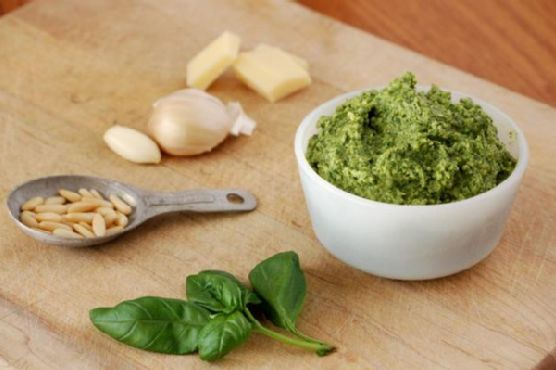
  • 2 cups fresh basil leaves, packed
  • 1/2 cup olive oil, plus more if needed
  • 1/3 cup pine nuts
  • 2 cloves garlic
  • 1/2 cup freshly grated parmesan cheese

Instructions

  1. Begin by washing and drying the basil leaves thoroughly.
  2. In a food processor, add the basil leaves, pine nuts, and garlic. Pulse a few times until coarsely chopped.
  3. With the processor running, slowly drizzle in the olive oil until the mixture is smooth and creamy.
  4. Add the parmesan cheese and pulse until well combined. Check the consistency; if it’s too thick, gradually add more olive oil until you achieve the desired texture.
  5. Taste and adjust seasoning if necessary. Remember, fresh pesto is best enjoyed within 24 hours.
  6. For longer storage, scoop the pesto into muffin cups lined with plastic wrap and freeze for future use.

Tips

To ensure your pesto is perfect every time, consider these tips:

  • Quality Ingredients: Use the freshest basil and highest quality olive oil you can find for the best flavor.
  • Toasting Nuts: Lightly toasting the pine nuts before adding them to the processor enhances their flavor.
  • Consistent Texture: Add olive oil slowly to control the texture of your pesto. You can always add more, but you can’t take it out!

Variations & Substitutions

One of the joys of making pesto is its flexibility. Here are some ideas to switch things up:

  • Nut Alternatives: Swap pine nuts for walnuts, almonds, or even sunflower seeds for a different flavor profile.
  • Cheese Options: Try Pecorino Romano or a vegan parmesan for a unique twist.
  • Herbal Variations: Substitute part of the basil with spinach, arugula, or parsley for a diverse taste.

Storage

Fresh pesto is best enjoyed within 24 hours for optimal flavor. If you need to store it longer, here are some options:

  • Refrigeration: Keep it in an airtight container with a thin layer of olive oil on top to prevent browning. It should last for up to a week.
  • Freezing: Freeze in muffin cups lined with plastic wrap for individual portions. Once frozen, transfer them to a zip-lock bag. They can last in the freezer for up to three months.

FAQ

Can I make pesto without a food processor?

Absolutely! If you don’t have a food processor, a blender can work as an alternative. You can also use a mortar and pestle for a more traditional approach, though it will take more time and effort.

Is there a way to make this recipe vegan?

Yes, you can make a vegan version by substituting the parmesan cheese with nutritional yeast or a vegan cheese alternative. This will still give you that cheesy flavor without using dairy.

Nutrition

This recipe is nutrient-dense, providing healthy fats from the olive oil and pine nuts, vitamins from the basil, and protein from the cheese. It’s a great choice for those looking to add more wholesome ingredients to their diet without sacrificing flavor.

Conclusion

Making your own basil pesto is a rewarding experience, connecting you to the vibrant flavors of fresh ingredients and the timeless traditions of Italian cooking. Whether you’re using it to dress up a pasta dish, spread on a sandwich, or as a dip, this Quick N’ Easy Basil Pesto is sure to become a staple in your culinary repertoire. So why not gather your ingredients, and embark on a delicious journey of flavor and nostalgia, just like the one I enjoyed with my grandmother so many years ago.

Related update: Quick N' Easy Basil Pesto

Grasso’s Tough Stance Shapes Michigan | Analysis by Brian Moineau

A moment of truth in Ann Arbor: Grasso’s message and what comes next for Michigan athletics

The video dropped on a quiet Wednesday night, but its ripples are anything but quiet. Interim University of Michigan president Domenico Grasso spoke directly to the community about the investigation into the athletic department and the search for a new football coach after the abrupt firing of Sherrone Moore. The tone was firm, the message blunt: the university will “leave no stone unturned,” and the next coach must embody the “highest moral character.”

Below I walk through what Grasso said, why the expanded Jenner & Block probe matters, how the coaching search is being framed now, and the larger cultural questions Michigan faces.

Quick snapshot

  • Who spoke: Interim President Domenico Grasso.
  • What happened: Grasso posted a video update expanding an existing investigation into former coach Sherrone Moore to a broader review of the athletics department’s culture, conduct, and procedures.
  • Who’s investigating: Chicago law firm Jenner & Block, already involved in related reviews.
  • Coaching search stance: Michigan is prioritizing moral character and leadership in its next head coach.

Why the video mattered — the human angle

Hook: Colleges are built on reputations that take generations to earn and seconds to erode. Grasso’s message landed as an attempt to stop the erosion.

Grasso’s address was not just PR; it was an attempt to re-center the conversation on values and accountability. For students, staff, alumni and donors who felt blindsided and betrayed by the Moore episode, the video did three things simultaneously:

  • Acknowledged hurt and disillusionment without downplaying it.
  • Announced concrete next steps (expanded independent review, a contact line for tipsters).
  • Signaled that personnel decisions — including further terminations if warranted — are possible based on the probe’s findings.

That combination matters. When an institution signals both empathy and action, it reduces the vacuum where rumor and distrust grow.

The investigation: why expanding to the whole athletics department matters

Grasso expanded an already ongoing Jenner & Block review into a broader look at the department’s culture and procedures. That’s notable for several reasons:

  • It moves the response beyond a single “bad actor” narrative to a systemic inquiry.
  • It shifts focus from only disciplinary outcomes to process and prevention — how the department handles reports, training, supervision, and compliance.
  • Using outside counsel with prior experience at Michigan (Jenner & Block) provides legal thoroughness, but also raises questions about institutional self-reflection versus external accountability. Independent reviews can be rigorous, but their credibility hinges on transparency about methodology and follow-through on recommendations.

In short, it’s the difference between fire-fighting and re-building a safer structure.

The coaching search: character first

Grasso was emphatic that Michigan will hire someone “of the highest moral character” who will be a role model and “with dignity and integrity be a fierce competitor.” That language does two jobs:

  • It narrows the public field of acceptable candidates to those without serious prior controversy.
  • It signals to recruits, parents, and donors that the university intends leadership who reflect institutional values — not only on-field success.

Practically, that will complicate a search if the market of high-profile, proven coaches includes names with baggage. But in a post-scandal moment, optics and message matter almost as much as playbooks.

What to watch next

  • The Jenner & Block timeline and level of disclosure. Will the university publicly release findings or only act on specific recommendations?
  • Whether the athletics compliance and ethics office receives sustained structural investment (staffing, reporting lines, independence).
  • How the Regents and athletic director Warde Manuel participate in the search and the response; leadership alignment will be crucial.
  • The selection criteria and vetting process used for the next head coach — especially how background checks and cultural fit evaluations are handled.

Broader context

This moment at Michigan is part of a larger pattern across college athletics — from misconduct revelations to debates over governance and athlete welfare. Universities are under intense pressure to reconcile competitive ambition with ethical stewardship. Grasso’s remarks reflect that balancing act: a commitment to on-field excellence, paired with an insistence that athletics must live up to the university’s broader mission.

What doesn’t solve the problem overnight

  • A single firing, even if necessary, won’t fix systemic problems.
  • A PR-forward video won’t replace transparent processes that build trust over time.
  • Hiring a high-profile coach without structural changes risks repeating the same vulnerabilities.

My take

Grasso’s statement felt necessary and measured — a leader trying to steady a shaken community while promising rigorous scrutiny. The test, though, is not in the words but the deeds that follow: open, credible investigations; real investments in compliance and culture; and a search for a coach that privileges character as highly as wins. If Michigan matches the force of its rhetoric with transparent action, this moment could become a turning point rather than a stain.

Sources


Related update: We recently published an article that expands on this topic: read the latest post.


Related update: We recently published an article that expands on this topic: read the latest post.

Blackberry Balsamic Drumsticks | Made by Meaghan Moineau

Blackberry Balsamic Drumsticks

Intro

There’s something magical about the combination of sweet and savory that brings back memories of family gatherings and warm summer nights. Growing up, Sundays were reserved for family dinners at my grandmother’s house. She was a culinary wizard who could transform any simple ingredient into a feast fit for royalty. Her secret? A garden brimming with fresh produce and an innate sense for pairing unusual flavors. One summer evening, she introduced us to a dish that would become a family favorite: Blackberry Balsamic Drumsticks. These succulent pieces of chicken, infused with the essence of ripe blackberries and aromatic balsamic vinegar, were a revelation. It’s a dish that not only tantalizes your taste buds but also carries the warmth of those cherished family moments. Today, I’m excited to share this special recipe with you, hoping it brings as much joy to your table as it has to mine.

Why You’ll Love It

Blackberry Balsamic Drumsticks are a delightful blend of sweet, tangy, and savory flavors that will have your taste buds dancing with joy. The unique combination of fresh blackberries and balsamic vinegar creates a mouthwatering glaze that elevates ordinary chicken drumsticks to a gourmet level. Not only is this dish incredibly tasty, but it’s also easy to prepare, making it perfect for both weeknight dinners and special occasions. The marinade, enriched with rosemary and mustard, infuses the chicken with a depth of flavor that is both comforting and sophisticated. Plus, who doesn’t love a dish that can be prepped in advance and left to marinate while you enjoy your day?

Ingredients

  • 8 skin-on chicken drumsticks
  • 1 cup fresh blackberries
  • 1/4 cup balsamic vinegar
  • 1/4 cup demerara sugar
  • 1 tablespoon fresh rosemary, chopped
  • 2 tablespoons butter
  • 2 tablespoons whole grain mustard
  • Salt and pepper to taste

Instructions

  1. Place blackberries, butter, 1/4 cup water, rosemary, sugar, and vinegar in a small saucepan.
  2. Cook over medium-high heat, stirring occasionally, until the mixture is slightly reduced, about 10-15 minutes.
  3. Remove from heat and stir in mustard, salt, and pepper. Allow the marinade to cool.
  4. Place the drumsticks in a large ziplock bag. Pour the cooled marinade over the top and seal the bag.
  5. Toss to coat the drumsticks evenly with the marinade.
  6. Refrigerate and marinate for 24 hours, allowing the flavors to infuse.
  7. When ready to cook, preheat the oven to 375°F (190°C).
  8. Arrange drumsticks on a cookie sheet lined with tin foil.
  9. Bake for 25 minutes, turning once halfway through the cooking time.
  10. Serve hot with your preferred side dish.

Tips

For the best results, use fresh blackberries when in season. They impart a natural sweetness and vibrant color to the dish. If fresh rosemary isn’t available, dried rosemary can be used, but use only half the amount as dried herbs are more potent. When cooking the marinade, keep an eye on it to prevent it from reducing too much, as it should remain syrupy and flavorful.

Variations & Substitutions

If you’re looking to switch things up, consider these variations:
Spicy Kick: Add a pinch of red pepper flakes to the marinade for a spicy twist.
Herbal Infusion: Substitute thyme or sage for rosemary for a different herbal note.
Sweetness Swap: Honey or maple syrup can be used in place of demerara sugar for a different sweetness profile.
Chicken Cuts: If drumsticks aren’t your preference, this marinade works wonderfully with chicken thighs or wings as well.

Storage

Leftover drumsticks can be stored in an airtight container in the refrigerator for up to 3 days. To reheat, place them in an ovenproof dish and warm at 350°F (175°C) until heated through. For a quick option, you can also microwave them on medium power. The flavors deepen over time, making leftovers equally enjoyable.

FAQ

Can I use frozen blackberries?

Yes, frozen blackberries can be used if fresh ones are unavailable. Ensure they are fully thawed and drained before adding to the marinade to avoid excess liquid.

Is it necessary to marinate the drumsticks for 24 hours?

While marinating for 24 hours yields the best flavor, if you’re short on time, even a few hours will still impart a delicious taste. Aim for at least 4 hours if possible.

Can I grill the drumsticks instead of baking them?

Absolutely! Grilling adds a smoky flavor that complements the sweet and tangy glaze. Grill the drumsticks over medium heat, turning frequently, until cooked through.

Nutrition

While exact nutritional values can vary based on portion size and specific brands of ingredients used, each serving of Blackberry Balsamic Drumsticks is approximately 250 calories. This includes a good amount of protein and some natural sugars from the blackberries and demerara sugar.

Conclusion

Blackberry Balsamic Drumsticks are more than just a meal; they’re a culinary experience that combines the richness of tradition with the excitement of bold flavors. Whether you’re gathering with family or hosting friends, this dish is sure to impress and become a staple in your recipe repertoire. Give it a try, and let the flavors transport you to a place of comfort, warmth, and delightful nostalgia. Happy cooking!

Related update: Blackberry Balsamic Drumsticks

Related update: chettinad egg curry

Insmed pivots after brensocatib setback | Analysis by Brian Moineau

A surprising pivot from Insmed: what the BiRCh results mean for brensocatib and the company’s strategy

The biotech world loves dramatic arcs: a promising molecule rises, investors cheer, and then — sometimes — the plot takes an unexpected turn. On December 17, 2025, Insmed released topline results from the Phase 2b BiRCh study of brensocatib in chronic rhinosinusitis without nasal polyps (CRSsNP). The verdict was blunt: the study did not meet its primary or secondary efficacy endpoints. Insmed immediately discontinued the CRSsNP program, while also announcing the acquisition of a Phase 2-ready monoclonal antibody, INS1148, to bolster its respiratory and inflammatory pipeline.

Let’s unpack what happened, why it matters, and where Insmed might reasonably go from here.

Quick summary of the news

  • Date of announcement: December 17, 2025.
  • Study: Phase 2b BiRCh — brensocatib versus placebo in CRSsNP, 24 weeks, ~288 patients across 104 sites.
  • Result: Neither the 10 mg nor 40 mg dose met the primary endpoint (change in sinus Total Symptom Score) or secondary endpoints.
  • Safety: No new safety signals; tolerability consistent with prior studies, including in the higher 40 mg arm.
  • Immediate corporate action: Insmed discontinued the CRSsNP development program for brensocatib.
  • Simultaneous strategic move: Acquisition of INS1148 (OpSCF), a monoclonal antibody intended for interstitial lung disease and moderate-to-severe asthma; Insmed plans Phase 2 development.

Why the BiRCh failure matters

  • Brensocatib had momentum. The drug showed promising results in non-cystic fibrosis bronchiectasis (NCFB) and had become a central part of Insmed’s growth story. Expectations built around expanding brensocatib into other inflammatory and respiratory indications.
  • CRSsNP is biologically complex with no reliable animal models. Insmed described the BiRCh trial as a proof-of-concept aimed at testing whether brensocatib’s DPP1 inhibition could translate into symptom relief. The neutral result gives a clear — if disappointing — answer.
  • Financial and R&D implications. Discontinuing a development program reduces near-term R&D spend on that indication, but it also cuts potential long-term upside if CRSsNP had proven a meaningful market. The market reaction (sharp stock drop reported in related coverage) reflects lost optionality and investor re-pricing of future revenue scenarios.
  • Scientific signal. The lack of efficacy despite adequate dosing (including the company’s highest dose tested) raises mechanistic questions about neutrophil serine protease inhibition in CRSsNP specifically. It also tempers optimism for other indications where the drug’s mechanism is less directly validated.

What the data showed (topline numbers)

  • Primary endpoint (28-day average of daily sTSS at Week 24):
    • Placebo LS mean: -2.44
    • Brensocatib 10 mg LS mean: -2.21
    • Brensocatib 40 mg LS mean: -2.33
  • Safety: Treatment-emergent adverse events were similar between arms; no new safety concerns, and serious adverse event rates were low and comparable.

Those numbers show minimal separation from placebo on symptom improvement — the clinical signal simply wasn’t there.

The strategic pivot: INS1148 acquisition

  • What Insmed bought: INS1148 is a monoclonal antibody (formerly OpSCF) that targets a specific isoform of Stem Cell Factor (SCF248). The proposed advantage is to block the inflammatory cascade downstream of c-Kit signaling while sparing homeostatic/tissue-healing pathways.
  • Initial focus: Insmed plans Phase 2 programs in interstitial lung disease and moderate-to-severe asthma. This aligns with the company’s pulmonary focus and offers a new, complementary modality (mAb vs small-molecule DPP1 inhibitor).
  • Why this matters: Acquiring a clinical-stage asset diversifies Insmed’s pipeline at a time when brensocatib’s expansion into CRSsNP is off the table. It signals the company is doubling down on respiratory/inflammatory areas while mitigating the impact of the BiRCh result.

The investor dilemma

  • Near-term pain: Market volatility is expected after a late-2025 negative readout on an eagerly watched indication. Analysts and short-term traders will re-evaluate revenue forecasts and valuation multiples.
  • Longer-term perspective: Insmed still has commercial momentum from brensocatib in bronchiectasis (marketed as Brinsupri in some territories), other ongoing studies (e.g., hidradenitis suppurativa CEDAR study), and now INS1148 to potentially broaden indications. For investors with a multi-year horizon, the company’s runway and portfolio execution matter more than a single failed indication.
  • Risk-reward recalibration: The failure reduces optionality and likely moderates peak-sales estimates for brensocatib overall. But the absence of new safety signals and the company’s ability to redeploy capital toward a novel mAb program may keep upside for those who believe in Insmed’s broader strategy.

What this means for brensocatib’s other programs

  • Hidradenitis suppurativa (HS) and other non-pulmonary indications may be scrutinized more closely. A lack of efficacy in CRSsNP doesn’t doom those programs, but it raises caution and increases the value of positive, indication-specific data.
  • For bronchiectasis, prior strong late-stage results remain intact. Regulatory and commercial timelines for that indication are independent of the CRSsNP result, but market expectations may be tempered.

Takeaways for clinicians, patients, and industry watchers

  • Clinicians and patients with CRSsNP: The BiRCh data suggest brensocatib will not become an option for CRSsNP. Patients should continue following evidence-based care and consult their physicians for approved therapies and management strategies.
  • Industry watchers: This is a reminder that translating mechanism-based therapies into symptom relief in human disease is hard, especially in diseases lacking translational animal models. Creative acquisitions (like INS1148) are a common industry response to maintain pipeline momentum.

My take

Insmed’s BiRCh outcome is a textbook example of how clinical development reorders expectations. The result is disappointing, but not catastrophic: the company still has a commercially relevant product in bronchiectasis and a pipeline it can re-shape. Acquiring INS1148 is a pragmatic move — it signals an appetite to diversify modality risk and lean into respiratory immunology with a different mechanism.

Failures like this sting publicly because they are visible and immediate. But they can also sharpen corporate focus. If Insmed executes well on ongoing brensocatib programs and advances INS1148 thoughtfully into Phase 2, the company can emerge with a clearer, perhaps stronger strategic identity — albeit one that looks different than the path investors may have anticipated at the start of 2025.

Further reading

  • Insmed press release: “Insmed Provides Clinical and Business Update” (December 17, 2025) — for the full topline text and company commentary.
  • Reuters and other industry coverage — for market reaction and context around brensocatib’s prior successes in bronchiectasis.

Sources


Related update: We recently published an article that expands on this topic: read the latest post.

Pesce Returns: Devils vs. Golden Knights | Analysis by Brian Moineau

Devils vs. Golden Knights: Pesce’s Return and a Week of Ripples Across the NHL

A game-changing lineup note can feel small on paper — a defenseman sketching his name back onto the roster sheet — but it can also tilt momentum, chemistry and confidence. That’s the vibe coming out of the NHL’s latest status report: Brett Pesce is back with the New Jersey Devils for their showdown with the Vegas Golden Knights, while elsewhere the league is navigating absences that matter — Darcy Kuemper to injured reserve for the Los Angeles Kings and Jack Eichel and Shea Theodore sidelined for Vegas.

Why this matters beyond one game

  • The Devils get a reliable, puck-moving right-shot defenseman back in their top-four pairing; that’s not just defensive depth, it’s a strategic reset for breakout plays and power-play support.
  • For Vegas, missing Eichel and Theodore in the same night forces lineup shifts and tests the depth that has been their identity since the club’s first run.
  • The Kings’ placing Darcy Kuemper on IR is a reminder of how fragile goaltending depth can be — and how quickly team plans pivot when a veteran netminder hits the shelf.

These pieces interact league-wide: a returned defenseman affects matchups; a star out changes the opponent’s scouting report; a goalie on IR forces AHL call-ups and can reshape division standings over a month.

The immediate headlines

  • Brett Pesce returned from a hand injury and was in the Devils’ lineup for their game against Vegas after practicing earlier in the week. He hadn’t played since October 26 and had been paired with Luke Hughes when active. (NHL.com) (nhl.com)
  • The Golden Knights were missing Jack Eichel (illness) and Shea Theodore (upper-body injury) for that matchup, a significant dent given Eichel’s role as the team’s driving offensive center and Theodore’s importance on the right side of the Vegas blue line. Coach Bruce Cassidy labeled both as day-to-day. (Reuters / The Hockey News) (reuters.com)
  • Darcy Kuemper of the Kings was placed on injured reserve after taking a blow to the head in a game vs. Dallas; the IR designation sidelines him for at least seven days and prompted the Kings to recall depth goaltenders. (Reuters) (reuters.com)

How Pesce’s return changes the Devils

  • Stabilizes a top-four role: Pesce brings a steady right-side presence who can log heavy minutes against opponents’ top lines.
  • Improves transition play: Pesce’s mobility and outlet passing help New Jersey move the puck quickly out of danger — important against teams that pressure high and force turnovers.
  • Short-term boost to confidence and matchup flexibility: even a single healthy defenseman returning lets the coach stagger minutes differently, shelter younger d-men and create fresher matchups late in games.

If Pesce can pick up where he left off — averaging close to 20 minutes a night this season before injury — the Devils get a measurable upgrade in both five-on-five defense and special teams options.

What Vegas loses (and how they cope)

  • Losing Jack Eichel for a game or two creates an immediate offensive vacuum. He’s not only a point producer but a center who controls tempo and draws opponents’ top defenders.
  • Shea Theodore’s absence undermines Vegas’ transitional game and their power-play quarterbacking from the right point.
  • Coach Bruce Cassidy’s “shuffle the lines” approach (moving veterans into different roles, sliding other blueliners up) is sensible short-term, but sustained absences would force long-term lineup changes and increased minutes for depth pieces like Braeden Bowman or retooled forward lines.

Depth is the Golden Knights’ historical strength, but stars like Eichel and Theodore are the difference-makers in tight games and playoff scenarios.

The Kings and the ripple effects of goaltender injuries

  • Kuemper’s IR placement after a head blow leaves Los Angeles relying on backups who haven’t carried the same workload or statistical consistency this season.
  • Goaltending injuries create immediate roster churn: recalls, emergency starts, and, at worst, a stretch where defensive systems must compensate for a less consistent netminder.
  • The Kings’ short-term objectives become preserving points while protecting their starter’s recovery timeline — and that can influence in-game risk tolerance (less aggressive pinch play, more conservative breakouts).

Even when the skater landscape feels noisy, the goaltender’s health often determines whether a team can stay competitive through a streaky month.

A few practical reading points for fans and bettors

  • Watch first-period matchups: With Pesce back, Devils’ defensive zone pairings and matchup decisions will change. That affects puck possession and early shot suppression metrics.
  • Track Vegas’ special teams: Without Theodore and Eichel, see how the Golden Knights reassign power-play duties and who quarterbacking from the point — that will indicate whether they can maintain their penalty efficiency.
  • Monitor Kings’ netminder starts: Kuemper’s return-to-play date is not fixed; short-term results under the backup can swing LA’s place in the standings quickly.

Quick takeaways

  • Pesce’s return gives the Devils an upgrade on the right side of their defense and immediate matchup flexibility. (nhl.com)
  • Vegas missing Eichel and Theodore in the same game is significant; their day-to-day status could affect short-term results and lineup chemistry. (reuters.com)
  • Kuemper on IR forces the Kings to rely on depth goalies, which can expose defensive vulnerabilities until he’s cleared to return. (reuters.com)

My take

This is the kind of week that separates team depth from team identity. The Devils get a measured upgrade with Pesce back — it won’t single-handedly change their season, but it makes life easier for Luke Hughes and the forwards relying on steady exits. Vegas’ versatility will be tested without Eichel and Theodore, and how they respond will tell us whether their depth remains as formidable as advertised. As for the Kings, protecting Kuemper’s recovery is priority one; riding a backup through December can be survivable, but the calendar doesn’t pause for goaltender injuries.

Sources


Related update: We recently published an article that expands on this topic: read the latest post.

Minted Pea & Spinach Soup | Made by Meaghan Moineau

Minted Pea & Spinach Soup

Intro

As the days grow shorter and the air turns crisp, there’s nothing quite like a warm bowl of soup to bring comfort and warmth to your soul. Growing up, I fondly remember my grandmother’s kitchen, where the scent of fresh herbs and simmering vegetables filled the air. Her minted pea soup was a family favorite, and every spoonful felt like a warm hug. Today, I’m excited to share my own version of this nostalgic dish, with a delightful twist of spinach for added nutrition and flavor. It’s a simple, yet satisfying recipe that I’m sure will become a staple in your kitchen as well.

Why You’ll Love It

This Minted Pea & Spinach Soup is a delightful fusion of flavors that is both refreshing and comforting. Here are a few reasons why you’ll fall in love with this recipe:

  • Quick and Easy: With just a few simple steps, you’ll have a delicious soup ready in no time.
  • Nutritious: Packed with vitamins and minerals from peas and spinach, this soup is as healthy as it is tasty.
  • Versatile: Perfect as a starter or a light meal, and easy to customize to your taste.
  • Comfort in a Bowl: The creamy texture and soothing flavors make this soup the ultimate comfort food.

Ingredients

  • 2 cups chicken stock
  • 1/2 cup cream
  • 1 teaspoon canned dried mint
  • 1 cup milk
  • 2 cups frozen peas
  • 2 diced potatoes
  • Salt & pepper to taste
  • 2 cups fresh spinach
  • 1 teaspoon sugar
  • 1 cup water
  • 1/2 cup yoghurt

Instructions

  1. Place the diced potatoes in a medium-sized pot with a little bit of water and some salt & pepper. Place the lid on and cook for 20 minutes until almost soft.
  2. Add the frozen peas and cook for a further 5 minutes until the potatoes are soft and cooked through.
  3. Add the fresh spinach and cook for an additional 3-5 minutes, until wilted.
  4. Remove the pot from heat and let it cool for a few minutes. Then, blend to a puree with an immersion blender.
  5. Return the pot to the stovetop, adding the cream, milk, water, and chicken stock. Re-heat for a few minutes until piping-hot.
  6. Add the yoghurt, dried mint, sugar, salt, and pepper to taste and stir through.
  7. Serve immediately, scattered with some crispy croutons or bacon bits. For a unique twist, fry up some cheesegrillers in thin slices with a bit of sweet chili sauce and use as a topper.

Tips

  • For a smoother texture, strain the soup through a fine mesh sieve after blending.
  • Adjust the seasoning to your preference, adding more mint or sugar for a balanced flavor.
  • Garnish with fresh mint leaves for a pop of color and added freshness.

Variations & Substitutions

This soup recipe is highly adaptable. Here are some variations and substitutions you can try:

  • Vegetarian Version: Substitute the chicken stock with vegetable stock for a vegetarian-friendly option.
  • Dairy-Free: Use coconut milk or almond milk instead of cream and milk for a dairy-free alternative.
  • Add Protein: Stir in some cooked chicken or tofu for added protein and texture.

Storage

This soup stores beautifully, making it perfect for meal prep:

  • Refrigerator: Store in an airtight container in the refrigerator for up to 3 days.
  • Freezer: Freeze in individual portions for up to 3 months. Thaw overnight in the refrigerator before reheating.

FAQ

Can I use fresh peas instead of frozen?

Yes, you can use fresh peas if they are in season. Simply adjust the cooking time to ensure they are tender before blending.

Is it necessary to use an immersion blender?

An immersion blender is convenient for making a smooth puree directly in the pot. However, if you don’t have one, you can carefully transfer the soup to a countertop blender and blend in batches.

Can I make this soup ahead of time?

Absolutely! This soup can be made a day in advance and stored in the refrigerator. Reheat gently on the stovetop before serving.

Nutrition

This soup is not only delicious but also packed with nutrients:

  • Calories: Approximately 180 per serving
  • Protein: 5g
  • Fat: 8g
  • Carbohydrates: 22g
  • Fiber: 4g

Conclusion

Minted Pea & Spinach Soup is a delightful blend of flavors that brings warmth and nourishment to any table. Whether you’re reminiscing about childhood memories or creating new ones, this soup is sure to become a cherished favorite. Enjoy it on a chilly day, share it with loved ones, or savor it in solitude with a good book. No matter how you choose to enjoy it, this soup is a reminder that comfort can be found in the simplest of ingredients. Happy cooking!

Related update: Minted Pea & Spinach Soup

Related update: Spicy Lemongrass Soup

Apple Engineers Teach Factories AI Quality | Analysis by Brian Moineau

Why Apple engineers are checking bacon labels — and why that matters for U.S. manufacturing

The image is deliciously odd: senior Apple engineers hunkered down beside a label press in Vermont, teaching a 54-person label maker how to use cameras and open-source AI to spot slightly off-color bacon packaging before it ships. It’s the kind of moment that makes headlines because it’s unexpected — but the story behind it reveals something more consequential about tech, supply chains, and how large companies can influence manufacturing on the ground.

What happened (the quick version)

  • Apple launched the Apple Manufacturing Academy in Detroit this year in partnership with Michigan State University as part of a broader U.S. manufacturing investment program.
  • Through the Academy and follow-up consultations, Apple engineers have been working with smaller manufacturers — not just Apple suppliers — on practical problems: sensor deployments, predictive maintenance, and computer vision for quality control.
  • A notable example: ImageTek, a small label printer in Vermont, received help creating a computer-vision tool that flagged bacon labels with a wrong tint before they reached a customer. That catch likely saved contracts and revenue. (Reported by WIRED on December 17, 2025.)

A few things that make this worth watching

  • It’s hands-on, real work. This isn’t a glossy PR class where executives talk about strategy; Apple staff are helping with shop-floor problems: cameras, algorithms, Little’s Law to find bottlenecks, and low-cost sensor networks. For many small manufacturers, that level of applied engineering is prohibitively expensive or simply unavailable.
  • The help is practical and tactical, not just theoretical. Small manufacturers described the Apple teams as candid, experienced, and willing to hand off code and guidance rather than locking up IP. That lowers friction for adoption.
  • The timing is strategic. Apple’s program ties into a much larger U.S. investment push (Apple increased its U.S. commitment and opened a server factory in Houston, among other moves). Helping suppliers and adjacent manufacturers strengthens the domestic ecosystem that supports high-tech production.
  • It’s a PR win — and potentially a policy lever. Demonstrating concrete investments in U.S. manufacturing can influence political conversations about tariffs, incentives, and reshoring.

Lessons for small manufacturers

  • Define a clear problem statement. Apple’s Academy reportedly prioritizes companies that can articulate a concrete challenge. That turns vague interest into feasible pilots.
  • Start with affordable pilots. ImageTek’s camera-and-vision setup sits beside the press for now — a low-risk way to prove value before full integration. Polygon expects to spend around $50k for fixes that might otherwise cost ten times as much through traditional consultancies.
  • Data-based decisions beat “muddle through” approaches. Sensors and simple analytics can quickly surface root causes — humidity, worn rollers, timing issues — that manual inspection can miss.

What this means for bigger debates

  • Reshoring isn’t just about moving final assembly. Building resilient supply chains requires investment across tiers — tooling, sensors, software skills, testing culture, and quality processes. Apple’s effort suggests that the “soft infrastructure” of expertise and training matters as much as factory square footage.
  • Large firms can raise the tide, but they won’t (and likely won’t want to) carry every ship. Apple’s engineers can seed capability and show paths; scaling will require equipment vendors, local consultants, community colleges, and public programs.
  • There are potential tensions. Even if Apple hands off code and claims no ownership now, tighter relationships between platform companies and small manufacturers raise questions about dependency, standards, and who benefits from later upgrades or downstream sales.

Examples from the Academy that illuminate the approach

  • ImageTek (Vermont): AI-enabled color-checking on labels prevented a costly quality slip for a food customer.
  • Amtech Electrocircuits (Detroit area): Sensors and analytics to reduce downtime on electronics lines used in agriculture and medicine.
  • Polygon (Indiana): Industrial engineering advice using Little’s Law to map bottlenecks and inexpensive sensor-driven diagnostics to double throughput ambitions.

These are small, specific wins — but they’re the kinds of wins that add up to stronger local competitiveness.

Practical takeaways for manufacturers and policymakers

  • Manufacturers: invest in problem definition, partner with programs that provide both training and hands-on follow-through, and pilot low-cost solutions first.
  • Industry groups and community colleges: scale hands-on curricula that teach applied machine vision, sensors, and basic industrial engineering so more firms don’t have to rely on a single large corporate partner for expertise.
  • Policymakers: incentive programs that combine capital grants with training and technical assistance amplify impact. The “last mile” of deployment is often where public funding can make a difference.

My take

It would be easy to write this off as a cute PR vignette — Apple folks inspecting bacon labels — but that misses the point. The striking detail is not the bacon; it’s the mode of intervention: experienced engineers applying practical, low-cost fixes and coaching teams how to adopt them. That’s the kind of catalytic help small manufacturers often lack. If Apple’s effort scales — through the Academy’s virtual programs, MSU partnership, and other ecosystem players — it could help lower the barriers for many businesses to adopt modern manufacturing methods. That’s not just good for those companies’ bottom lines; it’s how a sustainable, competitive domestic manufacturing base gets rebuilt: one practical fix at a time.

Final thoughts

Technology giants stepping into the training and transformation space changes the game from “let’s talk about reshoring” to “let’s make factories measurably better.” The story of bacon labels is an entertaining hook, but the enduring value will be measured in throughput, contract wins, and a generation of smaller manufacturers who can compete because they were taught how to instrument and measure their own operations. If more big firms follow suit — and if public institutions and local trainers scale these methods — U.S. manufacturing may indeed get a meaningful productivity boost.

Sources