Cream Cheese Stuffed Chicken Breasts | Made by Meaghan Moineau

Picture this: It’s a Wednesday night, and I have exactly 45 minutes to whip up something that feels a little fancy but won’t leave me with a mountain of dishes. That’s when I remember my trusty cream cheese stuffed chicken breasts. It’s the kind of meal that sounds like it took hours, but really, it’s a bit of kitchen magic that you can pull together with everyday ingredients. And let’s be honest, who doesn’t love a good creamy-cheesy-bacon combo? The first time I made it, I almost skipped the tarragon — but trust me, it’s the game-changer that makes this dish sing.

Jump to Recipe

What You’ll Need

This list is pretty much pantry-basics-plus-bacon. You might even have everything you need already, minus a quick trip to the fridge:

  • Skinless boneless chicken breasts
  • Cream cheese
  • Bacon
  • Olive oil or unsalted butter
  • Diced onion
  • Garlic
  • Salt
  • Black pepper
  • Fresh tarragon

How to Make Cream Cheese Stuffed Chicken Breasts

  1. Preheat your oven to 350°F. This is your moment to take a deep breath and envision the golden deliciousness to come.
  2. In a small skillet, warm the butter or olive oil over medium-low heat. Add the diced onions and let them sweat it out until they’re soft and translucent, about 5 minutes. Toss in the garlic and stir for another minute until it’s fragrant enough to make you weak in the knees.
  3. While that cools, grab another skillet and give the bacon a gentle sauté over low heat. You want it soft and a little bit rendered, not crispy. Paper towel it up and let it chill.
  4. Place the chicken breasts between two sheets of waxed paper, and give them a good, even pounding to about 1/4-inch thickness. Channel your inner zen and season them with salt and pepper.
  5. Combine the cooled onion-garlic mix with the cream cheese. Spread a generous dollop of this goodness in the center of each chicken breast.
  6. Roll or fold the chicken around the cream cheese mixture. Tuck the ends under and secure these delightful little packages with toothpicks. Don’t worry if they look a bit rustic, that’s part of the charm.
  7. Sprinkle fresh tarragon over the rolled chicken. Wrap each piece with bacon, giving them a cozy little blanket.
  8. Place your chicken rolls in an 8×11 baking dish and drizzle with melted butter. Pop them in the oven for 25 to 30 minutes. They’re done when the chicken is cooked through, the bacon is browned, and the cream cheese is irresistibly melty.
  9. Serve immediately and watch them disappear. Seriously, they’re magic.

Cook’s Notes

A few things to keep in mind while you’re chef-ing it up:

– Make sure the onions and garlic are cool before mixing them with the cream cheese. Otherwise, things might get a bit too melty too soon.
– If you’re making this ahead, you can assemble the chicken rolls and keep them in the fridge for a few hours. Just bake them right before you’re ready to eat.
– Leftovers? Store them in an airtight container in the fridge for up to two days. Reheat gently in the oven to keep that bacon crisp.

Make It Your Own

Here’s where you can get a little playful:

  • Swap the chicken for crispy tofu for a vegetarian twist that still brings all the creamy-bacon vibes (yep, vegetarian bacon exists!).
  • Add some chopped spinach to the cream cheese mixture for a pop of color and a little extra nutrition.
  • Try prosciutto instead of bacon for a slightly saltier, more gourmet flavor.
  • Experiment with herbs — basil or rosemary could take this dish in a deliciously different direction.

If you try this, I’d love to hear how it turns out — drop a comment or tag me! Your kitchen adventures are what make this all so fun. Happy cooking!

Related update: Cream Cheese Stuffed Chicken Breasts

Related update: Crock-Pot: Asian-Style Country Ribs with Black Bean Garlic Sauce

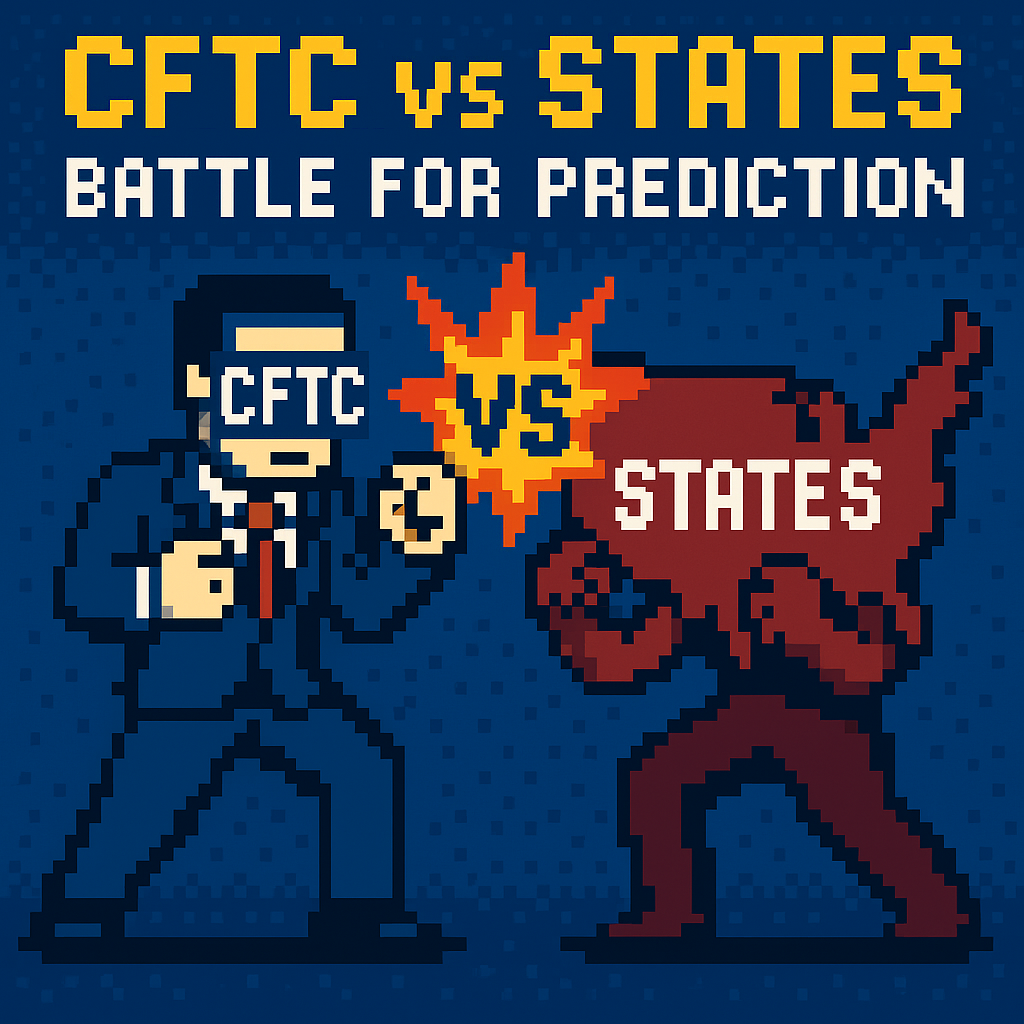
CFTC vs States: Battle for Prediction | Analysis by Brian Moineau

TL;DR

  • The CFTC just proposed a rule to codify what prediction markets can list, carving out a path for sports contracts while drawing a hard line against wagers tied to war, terrorism, assassination, and other “enumerated activities” under Section 5c(c)(5)(C) of the Commodity Exchange Act. [1][2]
  • If even 5% of 2025’s $166.94B U.S. sportsbook handle migrates to CFTC‑regulated venues, that’s an ~$8.35B swing in notional volume and a meaningful new revenue stream for exchanges like Kalshi; state sportsbooks will fight to keep it. [2][4][8]
  • The real battle is jurisdiction: a one‑commissioner CFTC under President Trump is asserting exclusive federal authority over prediction markets, setting up court fights with state gaming regulators that will shape who gets the economics—and the rules. [2][3][6][7]

What the source said

In June 2026, the Wall Street Journal reported that a Trump‑led CFTC plans to clarify what prediction markets may legally offer via a new rule that defines a review process and the “public interest” standard. The Journal said sports contracts would largely be permissible, whereas wagers tied to sensitive topics—wars, terrorism, assassinations—would be restricted as “enumerated activities.” The move targets ambiguity that has fueled lawsuits and uneven enforcement across platforms like Kalshi and Polymarket since at least 2012. The proposal opens a formal public comment period and tees up federal–state clashes over whether event contracts sit under the Commodity Exchange Act or state gambling codes. [1]

Why it matters

Two ecosystems collide: federally regulated derivatives exchanges such as Kalshi (a DCM under the CEA) and state‑regulated sportsbooks like DraftKings, FanDuel, and Fanatics. The American Gaming Association reported $166.94B in 2025 U.S. sports betting handle and $16.96B in revenue, so even small share shifts matter to P&Ls and tax receipts. If CFTC‑supervised “sports trading” offers lower friction than parlay‑heavy sportsbooks, time and dollars will migrate. [4]

Regulatory turf is equally material. The CFTC’s NPRM claims these markets fall under the CEA and outlines a 90‑day contract‑by‑contract review with “public interest” factors, pitting Washington against state gaming commissions in jurisdictions like New York and Nevada. The outcome will define whether event contracts scale like futures or remain a boutique product fenced by 50 state regimes. [2][3][7]

Original analysis

Consensus read: “The CFTC is effectively legalizing prediction markets, so volumes will explode and sportsbooks will be sidelined.” My take: not so fast. The proposal mostly clarifies what’s out—the “enumerated activities” in Section 5c(c)(5)(C): terrorism, assassination, war, gaming, and illegality—and how the CFTC will decide if a contract is contrary to the public interest. It nods to many sports outcomes in principle but keeps a 90‑day federal review per listing, which tempers speed and breadth. That’s a green light, not the Autobahn. [2]

  • Back‑of‑envelope math

    • 2025 U.S. sportsbook handle: $166.94B; revenue: $16.96B. If 5% of that handle pivots to CFTC‑regulated sports event contracts by 2027, notional equals 0.05 × $166.94B = ~$8.35B. [4]
    • Exchange economics: Kalshi’s fee schedule charges cents per contract; near $0.50 mid‑prices, that maps to roughly 30–60 bps all‑in per round‑trip. On $8.35B, 0.30%–0.60% implies ~$25M–$50M in annualized fees for one venue; at 10% migration, double the range. [8][4]
    • State impact: With a typical 9%–10% sportsbook hold, $8.35B of diverted handle equates to ~$750M in lost gross gaming revenue; at 10%–20% tax rates, states forgo ~$75M–$150M per year across major markets like New Jersey and Pennsylvania. Expect hardened opposition. [4]
  • A 2×2 to read the rule’s effect (my typology)

    • Axes: Manipulability/insider risk (low↔high) vs. real‑economy/hedging utility (low↔high).
    • Low risk / high utility (Green): “NBA Finals winner,” “season‑long batting average,” “Olympic medal counts.” Expect smoother approvals: outcomes are televised, settled by third‑party stats providers, and leagues like the NBA run integrity programs. [2][3]
    • High risk / high utility (Amber): “Fed cuts by X bps next meeting,” “U.S. CPI above Y% next month.” Useful hedges but sensitive to leaks; April 2026 self‑betting by a U.S. House candidate on Kalshi underscores insider exposure that surveillance must catch. [2][9]
    • Low risk / low utility (Gray): “Celebrity pregnancy by Q4,” “new album release date.” Thin societal utility; the public‑interest test will likely deprioritize or deny. [2]
    • High risk / low utility (Red): “Assassination,” “terror incidents,” “active theater‑of‑war outcomes.” The NPRM aims to exclude these systematically under Rule 40.11. [2]
  • Historical analogue that actually predicts behavior

    • In 2012, the CFTC used a 90‑day review to block Nadex political event contracts under Rule 40.11, citing the public‑interest standard. The 2026 NPRM revives that scaffold but expressly tolerates many sports outcomes, signaling a cleaner, more durable process and fewer ad‑hoc staff letters. Expect formal dockets and repeatable screening criteria. [5][2]
  • Named‑stakeholder implications

    • Kalshi (DCM): Clearer path to list U.S. sports and macro contracts, subject to 90‑day reviews and surveillance proofs; slower than a sportsbook’s daily menu. [2]
    • Polymarket: Positive sports signaling, but U.S. scale still hinges on registration and whether federal preemption over states holds in court; bans on war/terror curtail viral tail events. [2][3]
    • DraftKings/FanDuel/Fanatics: Face a federally supervised substitute with lower take rates and different unit economics; expect lobbying and litigation to classify event contracts as “gaming.” [3][4]
    • State gaming regulators/AGA: Tax base at the margin is at risk; anticipate coordinated challenges to federal preemption and integrity claims in venues like the Second and D.C. Circuits. [3][7]
    • Leagues and data vendors (NFL/NBA, Sportradar/Stats Perform): As CFTC markets grow, official data deals and integrity MOUs may mirror futures‑market surveillance models, with per‑event fees and T+0 settlement feeds. [2][3]

Two underestimated constraints loom. First, the Commission is a one‑member shop under Chair Michael S. Selig, which invites process challenges to any final rule and to exclusive‑jurisdiction assertions. Second, the NPRM’s 90‑day, multi‑factor, contract‑by‑contract screen will throttle the “long tail” listings that drive cult engagement, unless the CFTC standardizes families of sports contracts. Expect early volume to cluster in a few high‑liquidity markets with robust surveillance. [6][2][7]

What others are missing

Coverage has fixated on “pro‑sports, anti‑war,” but the commercial hinge is federal preemption paired with standardization. If exclusive jurisdiction survives in court, a DCM can offer a national sports product insulated from 50 state codes, while a Rule 40.11‑driven taxonomy lets brokerages such as Robinhood or Coinbase embed cash‑settled markets via APIs under federal KYC/AML. That combination enables distribution at scale and forces futures‑style surveillance across venues, rather than state patchworks. The NPRM’s 90‑day process and factor test become a template for comparable disclosures, error‑handling, and settlement sources across exchanges. [2][3][7]

What to watch next

  1. By Q4 2026, at least one top‑five U.S. sportsbook publicly partners with a CFTC‑regulated exchange or files to list a sports event contract through a DCM affiliate, seeking federal cover for nationwide distribution. [2][3]

  2. By March 2027, a federal court issues a merits ruling in a state–federal dispute that affirms or rejects the CFTC’s exclusive jurisdiction over prediction markets, materially changing venue operations in at least three states. [7]

  3. Within 12 months of the rule’s finalization in 2026, the CFTC publishes at least one determination rejecting a proposed geopolitical/violence‑adjacent contract under amended Rule 40.11, setting a binding precedent on “involve” and “public interest.” [2]

My take

This 2026 NPRM is a pragmatic swing: fence out the toxic stuff, normalize the rest under Rule 40.11 and a 90‑day review. If the CFTC finalizes cleanly and wins the preemption fight, prediction markets will look like low‑fee, high‑liquidity retail derivatives that Wall Street can distribute without state silos. I’d bet medium‑term winners are regulated exchanges that operate like brokerages and the leagues that sell them data rights. The losers are anyone betting that state‑by‑state de‑platforming can halt a national market. [2]

Sources

[1] Trump Regulator Proposes New Rules on What’s Allowed on Prediction Markets — Wall Street Journal (https://www.wsj.com/finance/regulation/trump-cftc-prediction-markets-betting-rules-1aea5c9d) — Original report that a Trump‑era CFTC is proposing formal boundaries for prediction markets, including likely bans on war/terror contracts.

[2] CFTC Seeks Public Comment on Notice of Proposed Rulemaking Concerning Event Contracts Involving Enumerated Activities — CFTC (https://www.cftc.gov/PressRoom/PressReleases/9249-26) — The official NPRM: 90‑day review, “public interest” factors, and the terrorism/assassination/war/gaming/illegality screen; references sports contracts.

[3] Feds move to formally allow sports “trading” on prediction markets — Axios (https://www.axios.com/2026/06/10/cftc-prediction-markets-sports-event-contract-rules) — Independent confirmation that the proposal opens a lane for sports event contracts and includes industry reaction.

[4] Commercial Gaming Revenue Hits $78.7 Billion in 2025, Driving Record $18.1 Billion in Gaming Taxes Nationwide — American Gaming Association (https://www.americangaming.org/commercial-gaming-revenue-hits-78-7-billion-in-2025-driving-record-18-1-billion-in-gaming-taxes-nationwide/) — Baseline sports betting economics: $166.94B handle and $16.96B revenue in 2025.

[5] CFTC Issues Order Prohibiting North American Derivatives Exchange’s Political Event Derivatives Contracts — CFTC (https://www.cftc.gov/PressRoom/PressReleases/6224-12) — The 2012 precedent: 90‑day review and prohibition of political event contracts under Rule 40.11.

[6] Exclusive: Prediction markets and sports betting are “two separate things,” regulator says — Axios (https://www.axios.com/2026/05/12/prediction-markets-cftc-selig-regulation) — Chair Michael S. Selig’s stance on separating prediction markets from sportsbooks; context on the one‑commissioner CFTC.

[7] CFTC Reaffirms Exclusive Jurisdiction over Prediction Markets in U.S. Circuit Court Filing — CFTC (https://www.cftc.gov/PressRoom/PressReleases/9183-26) — The agency’s legal brief asserting federal preemption over prediction markets, foreshadowing court fights with states.

[8] Fee Schedule (Feb. 2026 update) — Kalshi (https://kalshi.com/docs/kalshi-fee-schedule.pdf) — Primary documentation of cents‑per‑contract trading fees used to approximate exchange‑level economics.

[9] Kalshi suspends Democratic U.S. House candidate for bet on own primary race — Axios Local (Twin Cities) (https://www.axios.com/local/twin-cities/2026/04/22/kalshi-suspends-democratic-us-house-candidate-matt-klein-primary-race-bet) — Concrete example of insider‑trading risk the rule aims to contain.


Related update: We recently published an article that expands on this topic: read the latest post.

Chocolate Crinkle Cookies | Made by Meaghan Moineau

It was a typical Wednesday evening, and I found myself rummaging through the pantry, desperately seeking something to satisfy my sweet tooth. The weather outside was chilly, the kind of evening that begged for something cozy and chocolatey. In the midst of my search, I stumbled upon a forgotten container of dark cocoa powder wedged between bags of flour and sugar. It was then that the idea struck me — Chocolate Crinkle Cookies. These cookies are like a warm hug: comforting, slightly crunchy on the outside, chewy on the inside, and oh-so-chocolaty. Perfect for a spontaneous midweek baking session, especially when they’re this easy to make. Within an hour, my kitchen was filled with the scent of rich cocoa, and I knew I’d found my new favorite go-to treat for those cold, restless evenings.

Jump to Recipe

What You’ll Need

Imagine the delight of realizing that you already have most of these ingredients lounging in your pantry. Here’s what you need to create these delightful cookies:

  • Vegetable oil – keeps the cookies moist
  • Sugar – for sweetness and texture
  • Vanilla extract – adds a lovely aroma
  • Eggs – the glue that binds
  • Dark cocoa powder – the heart of the chocolatey goodness
  • Flour – the base of any good cookie
  • Baking powder – gives those crinkles their puff
  • Confectioners’ sugar – for that signature snowy look

How to Make Chocolate Crinkle Cookies

Ready to dive into the wonderful world of crinkly cookies? Here’s the step-by-step:

  1. Start by mixing the vegetable oil, sugar, and vanilla extract in a mixing bowl. You’ll know it’s right when the mixture looks like wet sand glistening in the sun.
  2. Add the eggs one at a time, mixing well after each addition until the batter is silky and smooth.
  3. Incorporate the dark cocoa powder into the mixture, slowly stirring until it turns into a rich, dark chocolate color.
  4. Combine the flour and baking powder with the wet ingredients. Continue mixing until you have a smooth dough that’s slightly thicker than cake batter.
  5. Chill the dough in the refrigerator for at least 4 hours. This step isn’t just a suggestion — it’s crucial for achieving perfect crinkles.
  6. When you’re ready, preheat your oven to 350°F. Line a cookie sheet with greaseproof paper or a nonstick silicone mat.
  7. Using an ice cream scooper, scoop out the dough and roll each ball generously in confectioners’ sugar. Make sure they’re well-coated for that iconic crinkle effect.
  8. Place the dough balls on the cookie sheet, leaving about 2 inches of space between each to allow for spreading.
  9. Bake for 12 minutes. You’ll know they’re done when the edges are firm and the tops have a cracked, powdered sugar crust.
  10. Let the cookies cool on the sheet initially, then transfer them to a wire rack to finish cooling completely. This helps them firm up nicely.

Cook’s Notes

Let’s chat kitchen wisdom for a second. The dough is sticky, and that’s normal — resist the urge to add more flour! Chilling the dough helps it firm up enough to handle, so don’t skip that step. If you’re in a pinch, you can speed-chill in the freezer for about 30 minutes. These cookies are best enjoyed fresh, but they’ll keep in an airtight container for about a week. To revive day-old cookies, zap them in the microwave for a few seconds — they’ll taste freshly baked!

Make It Your Own

Feeling adventurous? Here are a few ways to tweak these cookies to suit your mood:

  • Swap out the dark cocoa powder for regular cocoa powder if you prefer a milder chocolate flavor.
  • Add a teaspoon of espresso powder to the dough for a subtle coffee kick that pairs beautifully with the cocoa.
  • Fold in some chocolate chips or chunks just before chilling for an extra burst of chocolate in every bite.
  • For a festive twist, mix in a teaspoon of peppermint extract or a handful of crushed candy canes.

If you try this, I’d love to hear how it turns out — drop a comment or tag me! Whether you’re indulging alone or sharing with loved ones, these Chocolate Crinkle Cookies are sure to bring a smile. Happy baking!

Related update: Chocolate Crinkle Cookies

Related update: Mangoes with Rum and Ice Cream

Stuffed Pork Tenderloin with Marsala-Port Sauce | Made by Meaghan Moineau

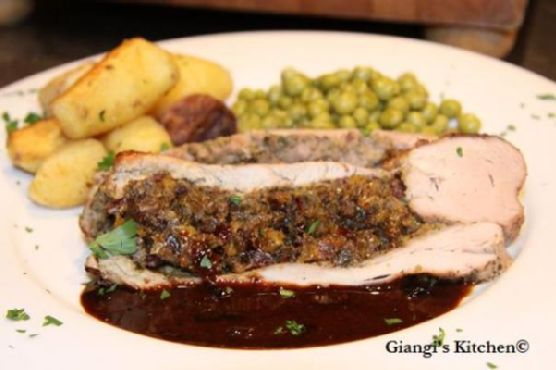
The other night, I found myself aimlessly scrolling through my pantry, wanting something that felt both fancy and comforting. You know those days when takeout just won’t do, but you don’t want to slave away in the kitchen either? Well, that was me. I stumbled on this Stuffed Pork Tenderloin with Marsala-Port Sauce recipe, and let me tell you, it hit every craving. It’s one of those dishes that sounds impressive (trust me, it is), but it’s actually pretty straightforward. Plus, talk about using up those dried fruits that have been lingering in the cupboard! Juicy pork, rich sauce, and a stuffing that makes you feel like you’re indulging at a fancy restaurant—all without breaking a sweat.

Jump to Recipe

What You’ll Need

The magic of this recipe lies in its simplicity—most of these ingredients might already be lounging in your kitchen. It’s all about those pantry staples coming together in the most delightful way. Check it out:

  • 1 shallot, finely chopped
  • 1 yellow onion, diced
  • 1 cup mushrooms, chopped
  • 1/4 cup dried apricots
  • 1/4 cup raisins
  • 1/4 cup dried cranberries
  • 1/4 cup flat leaf parsley, chopped
  • 2 pounds pork tenderloin
  • 1/2 cup Marsala wine
  • 1/2 cup Port wine
  • 2 tablespoons butter
  • 1/4 cup heavy cream
  • 2 tablespoons olive oil
  • Salt and pepper to taste

How to Make Stuffed Pork Tenderloin with Marsala-Port Sauce

  1. Preheat your oven to 450°F (230°C). This is crucial to get that perfect sear and juicy interior.
  2. Warm 1 tablespoon of olive oil in a large skillet over medium heat. Toss in the onions, shallots, and mushrooms. Stir occasionally until the onions are translucent and everything smells mouthwateringly fragrant.
  3. Remove the skillet from heat. In a small food processor, combine the cooked onion mixture with the dried apricots, raisins, cranberries, and parsley. Pulse just enough to achieve a minced, well-combined filling.
  4. Cut the pork tenderloin in half crosswise. Butterfly each section, being careful not to cut all the way through the meat. Generously season both sides with salt and pepper.
  5. Spread the onion-mushroom mixture onto one side of each butterflied section. Place the other half over the mixture, sealing the edges with toothpicks. Give both sides another generous seasoning with salt and pepper.
  6. In the same skillet, warm another teaspoon of olive oil over medium heat. Carefully sear the pork tenderloin on each side for 3-5 minutes until it’s gorgeously brown.
  7. Transfer the skillet to your hot oven. Roast for 20-30 minutes, or until the juices run clear. This is your cue that the pork is perfectly cooked.
  8. Remove from the oven, transferring the pork to a dish. Cover it with foil to let it rest and lock in those juicy flavors.
  9. Discard any excess fat or stubborn bits in the skillet. Pour in the Marsala and Port wines. Bring to a boil, gently scraping up those flavorful browned bits from the bottom.
  10. Pour in any juices from the resting pork, reducing the sauce until it measures about 1/2 cup. Remove from heat and swirl in the butter and cream until melted and luxurious.
  11. Remove the toothpicks from the pork, slice it crosswise, and plate it up. Drizzle that divine sauce over the top or serve it on the side for dipping.

Cook’s Notes

Let’s chat practicalities! This dish is perfect for a special dinner, but it can definitely be prepped ahead. You can assemble the pork with the stuffing a day before—just wrap it up tightly and refrigerate, then bring it to room temperature before cooking. Keep an eye on your sauce; don’t let it reduce too much, or you’ll end up with something more akin to caramel than sauce. Leftovers? They’re even better the next day. Store them in an airtight container in the fridge for up to three days. Reheat gently, so the pork doesn’t dry out.

Make It Your Own

You can totally switch things up depending on what you’ve got lying around or what you’re in the mood for. Here are a few ideas:

  • Swap the pork for chicken breast if you’re feeling poultry. Just adjust the cooking time accordingly.
  • No Marsala? A dry sherry or even a splash of brandy can stand in beautifully.
  • Try adding some crushed walnuts to the stuffing for a crunchy surprise.
  • If dried fruit isn’t your thing, substitute with chopped apples for a fresh twist.

If you give this a whirl, let me know how it turns out! Drop a comment or tag me in your culinary creations. I can’t wait to hear what you think. Enjoy every flavorful bite!

Related update: Stuffed Pork Tenderloin with Marsala-Port Sauce

Related update: Cream Cheese Stuffed Chicken Breasts