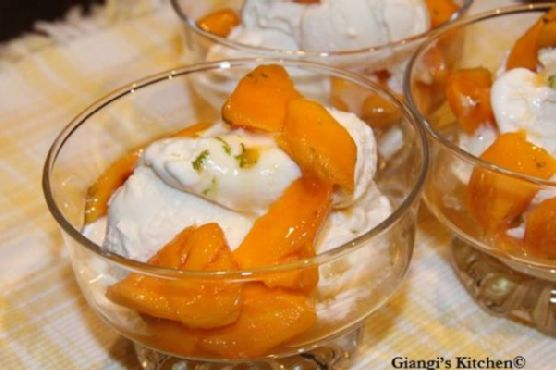
Mangoes with Rum and Ice Cream | Made by Meaghan Moineau

Picture this: It’s a balmy summer evening, and I’m rummaging through my kitchen, desperate for something sweet. There, on the counter, sits a perfectly ripe mango, glistening like it’s daring me to turn it into something spectacular. That’s when it hits me—Mangoes with Rum and Ice Cream. It’s the kind of dessert that feels both indulgent and delightfully easy. The rum-soaked mangoes are a tropical escape with every bite, and the ice cream? Pure creamy bliss. It’s the dessert that says, “I see your heatwave and I raise you a cooling, boozy treat.” Plus, it’s a breeze to whip up, so you can spend less time in the kitchen and more time savoring summer’s finest.

Jump to Recipe

What You’ll Need

If your pantry is anything like mine, you might already have most of what you need. The key is in a few star ingredients that really bring the magic.

  • Mangoes – ripe and juicy
  • Sugar
  • Dark Rum
  • Fresh lime juice
  • Lime rind
  • Vanilla Ice Cream

How to Make Mangoes with Rum and Ice Cream

  1. Start by peeling your mangoes. Make sure to remove all traces of green-colored flesh; you want the mangoes to be perfectly ripe and sweet.
  2. Next, slice the mango flesh away from the pit and cut it into pieces about a half-inch thick. Discard the pit and any fibrous bits that might cling to it.
  3. In a bowl, combine the sugar, dark rum, freshly grated lime rind, and lime juice. Give it a good mix until the sugar starts to dissolve.
  4. Add the mango slices to the rum mixture. Gently stir so each piece is bathed in that luscious liquid. The aroma will start to swirl around you, making your kitchen smell like a tropical paradise.
  5. Cover the bowl and let it chill in the fridge for a couple of hours. This wait is key as it allows the flavors to meld beautifully.
  6. When you’re ready to serve, scoop some vanilla ice cream into chilled glasses. Spoon the rum-soaked mangoes on top, making sure each serving gets a generous amount of the fragrant syrup.

Cook’s Notes

Here’s the thing about this recipe: it’s pretty forgiving. Just make sure your mangoes are ripe; underripe ones can be a bit tart and don’t soak up the rum as well. If you’re in a pinch and can’t find fresh lime, a good quality bottled lime juice will do, but fresh really gives it that zing. For storing leftovers, keep the mango mixture in an airtight container in the fridge, but I doubt there will be any left! The flavors deepen over a day or two, so if you make it ahead, it only gets better. Just store the ice cream separately.

Make It Your Own

  • Swap the Rum: If dark rum isn’t your thing, try using coconut rum for a creamy twist.
  • Add Some Heat: A pinch of chili flakes can add a surprising kick to the sweet and boozy mixture.
  • Try a Sorbet: Replace the vanilla ice cream with a mango or coconut sorbet for a lighter version.
  • Go Nutty: Sprinkle some toasted coconut flakes or chopped macadamia nuts over the top for added texture.

If you try this, I’d love to hear how it turns out—drop a comment or tag me! Your feedback and variations are always a treat to read. Enjoy every sweet, boozy bite! 🍨🥭

Related update: Mangoes with Rum and Ice Cream

Related update: Lemonade Bundt Cake

Related update: Eggplant pizzette

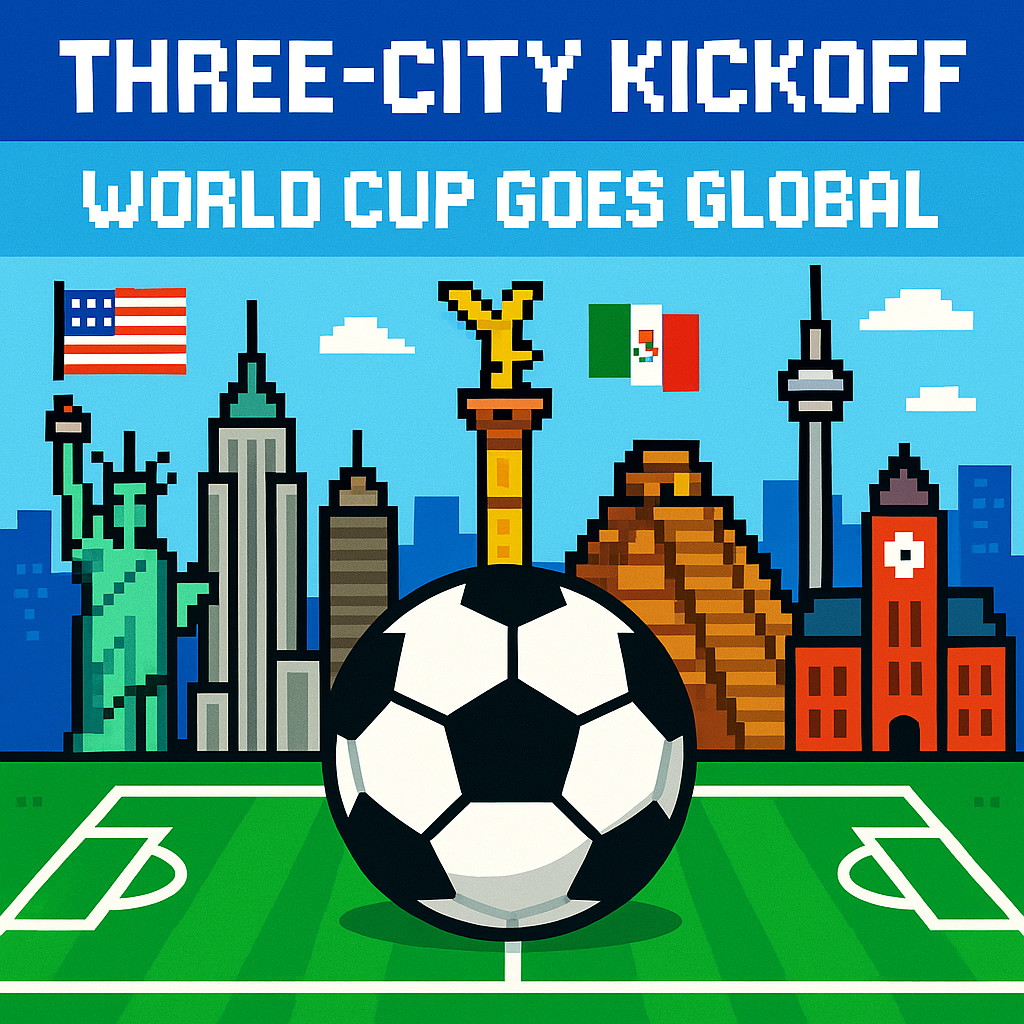
Three-City Kickoff: World Cup Goes Global | Analysis by Brian Moineau

TL;DR

  • The 2026 FIFA World Cup opening ceremonies are a three-city flex: Mexico City launched on June 11 with Shakira, Burna Boy, and the anthem “Dai Dai,” while Toronto and Los Angeles follow on June 12 with big-name slates—staking a claim that the tournament is as much culture as football. [2][3][4][5]
  • The expanded 48‑team, 104‑match format sets an attendance record path; even a conservative 45,000 average would top USA ’94’s 3.59 million, while 60,000–70,000 averages imply roughly 6.2–7.3 million tickets used. [7][8][9]
  • The staggered ceremonies are schedule and monetization architecture: they stretch prime viewing windows across time zones, create more sellable tentpoles for FOX/FS1 and Telemundo/Peacock, and smooth urban operations across three host nations. [4][6]

What the source said

CBS News reports that the largest FIFA Men’s World Cup ever has begun across the U.S., Mexico, and Canada—with three opening ceremonies instead of one. Mexico City’s Azteca show featured Shakira before Mexico beat South Africa 2–0, while Toronto and Los Angeles host their ceremonies on June 12 ahead of Canada–Bosnia and the U.S.–Paraguay. The piece lists artist lineups (Shakira, Burna Boy, Michael Bublé, Alanis Morissette, Katy Perry, LISA, and more), gives kickoff times in ET/PT, notes the 48‑team expansion to 104 matches, and describes stepped‑up U.S. security in host metros. It also flags Toronto’s BMO Field temporary expansion and points fans to live coverage. [1]

Why it matters

Three opening ceremonies signal a new tournament logic for a 48‑team, 104‑match event spread across 16 host cities in the U.S., Mexico, and Canada in 2026. FIFA is multiplying cultural touchpoints that sell ad spots, sponsor activations, and social clips while easing pressure on single venues like SoFi Stadium (Inglewood) and BMO Field (Toronto). The commercial upside concentrates with rights‑holders FOX/FS1 and Telemundo/Peacock and with FIFA’s 2023‑approved format change. [6][7][12]

The downside risk sits with city operations chiefs and transit systems—LA Metro, the Toronto Transit Commission (TTC), and Mexico City’s STC Metro—plus artists tied to production glitches and federations facing a supersized spotlight. U.S. security agencies already elevated their posture around host metros per CBS News, and Toronto’s organizers must sync ceremony timing to a 3:00 p.m. ET kickoff window. In 2026, optics ride alongside outcomes. [1][5]

Original analysis

  • Back‑of‑envelope: the attendance ceiling

    • Total matches: 104. If average in‑stadium attendance hits only 45,000, the tournament draws ≈4.68 million (104 × 45,000), already beating USA ’94’s 3.59 million (3,587,538). If it averages 60,000, that’s ≈6.24 million; at 70,000, ≈7.28 million. Even without universal sellouts, the record falls. [7][8][9]
    • Reference points: USA ’94 totaled 3.587 million across 52 matches; Qatar 2022 drew about 3.4 million across 64 matches. [8][9]
  • Named‑stakeholder breakdown (what this means for them)

    • FIFA: A three‑ceremony format creates three distinct inventory peaks (Mexico City June 11; Toronto and Los Angeles June 12), each with sponsorable “moments.” That spreads risk and magnifies social engagement spikes around official assets like the anthem. [3][4][5]
    • FOX/FS1 and Telemundo/Peacock: A primetime USMNT vs. Paraguay at SoFi (9:00 p.m. ET) sets up a ratings test against 2022’s USA–England Black Friday benchmark near 20 million combined viewers in the U.S. [6][10][11]
    • BMO Field (Toronto): Temporary capacity to ≈45,000 turns Canada’s opener into a full‑stadium TV picture, narrowing the optics gap with NFL‑scale U.S. venues and stress‑testing modular seating at international scale. [12]
    • Mexico City (Azteca): Opening match plus opening ceremony equals global first impression; a 2–0 win over South Africa gives the host’s narrative momentum on day one. [2]
    • Artists/labels: “Dai Dai” as the official anthem debuts live to cross‑market audiences; Shakira and Burna Boy span Latin America, Africa, and U.S. diaspora fandoms, a positioning built for Global 200 lift next chart week. [3][2]
  • A 2×2: What the three opening ceremonies optimize

    • Axis 1: Nation‑branding vs. Global‑pop spectacle.
    • Axis 2: Fan atmosphere vs. Broadcast‑first staging.
    • Mexico City (Nation‑branding × Fan atmosphere): Azteca’s history and a Latin‑leaning lineup (Shakira, Maná, J Balvin) deliver heritage and terrace color on camera. [2][3]
    • Toronto (Nation‑branding × Broadcast‑first): Canadian icons (Alanis Morissette, Michael Bublé) and a tight pre‑kickoff window match domestic pride with TV pacing inside BMO Field. [5][12]
    • Los Angeles (Global‑pop spectacle × Broadcast‑first): Katy Perry, LISA, Future, Anitta, Rema, and Tyla anchor a clip‑engineered show in a U.S. primetime slot from SoFi’s stage. [4][6]
  • Contrarian read

    • Consensus: “Three ceremonies are pure sizzle.”
    • Counter: They are scheduling infrastructure. FIFA and broadcasters are distributing tentpoles across time zones—Mexico City midday local on June 11; Toronto afternoon ET; USA primetime PT/ET on June 12—to widen contiguous viewing blocks for a 39‑day, 104‑match product. That is revenue design, not ornament. [4][6][7]

What others are missing

The three‑ceremony design is an operations‑and‑monetization hack, not just a highlight reel. Staggered start times build a rolling “live” window—Mexico City spectacle feeds Toronto’s afternoon slot, which hands off to L.A. primetime—keeping FOX/FS1 and Telemundo/Peacock in near wall‑to‑wall event mode for two calendar days. That yields more makegoods capacity, more local sponsor activations per host committee, and thinner peaks for security and transit versus one mega‑ceremony. With SoFi’s USMNT kickoff at 9:00 p.m. ET and Toronto’s at 3:00 p.m. ET anchoring different dayparts, this is inventory and incident‑risk management by design. [6][5][4]

What to watch next

  1. By June 27, 2026 (end of the group stage), FIFA’s cumulative attendance tally surpasses 3.6 million, eclipsing USA ’94 before the knockouts begin. [7][8][9]
  2. By June 15, 2026 (first ratings day after the U.S. opener), USA–Paraguay delivers at least 21 million combined U.S. viewers across English and Spanish platforms, topping the ~20 million from USA–England in 2022. [6][10]
  3. By June 12, 2026 (post‑game Toronto), BMO Field’s announced attendance for Canada–Bosnia is ≥44,000, showing the ≈45,000 temporary build‑out can run at scale. [12][5]

My take

I’m bullish on the three‑ceremony model because it converts a 39‑day, 16‑stadium, three‑federation puzzle (USSF, FMF, Canada Soccer) into serialized appointment TV that flatters each country’s identity while hardening FIFA’s commercial spine. The football will write its own stories, but the stagecraft is already earning its keep with primetime U.S. placement at 9:00 p.m. ET and a format approved in March 2023 that expands total inventory to 104 matches. If the U.S. opener clears 21 million combined viewers, brands will treat the rest of the USMNT slate like NFL‑adjacent tentpoles. [6][7][10]

Sources

[1] CBS News — Report on triple opening ceremonies across U.S., Mexico, and Canada; includes artist lineups, kickoff times, venue notes, and U.S. security posture.
[2] Reuters — Match report from June 11, 2026: Mexico 2–0 South Africa at Estadio Azteca and coverage of the Mexico City opening ceremony.
[3] FIFA Media Release (June 2026) — Announcement of the official 2026 anthem “Dai Dai” and participating artists including Shakira and Burna Boy; frames global music strategy.
[4] Los Angeles 2026 Host Committee / SoFi Stadium advisory — LA opening ceremony lineup and timing; confirms primetime window and production scale.
[5] City of Toronto / Host City Toronto briefing — Toronto ceremony slate (Alanis Morissette, Michael Bublé) and same‑day timing ahead of Canada–Bosnia at BMO Field.
[6] FOX Sports and Telemundo Deportes programming advisories — U.S.–Paraguay kickoff at 9:00 p.m. ET and distribution across FOX/FS1 and Telemundo/Peacock; primetime positioning.
[7] FIFA Council decision (March 2023) — 2026 format approval: 48 teams and 104 matches; provides the structural basis for schedule and inventory.
[8] FIFA World Cup USA 1994 statistics — Total attendance of 3,587,538 across 52 matches; historical benchmark.
[9] FIFA / BBC Sport summaries for Qatar 2022 — Approximate total attendance around 3.4 million across 64 matches; recent comparator.
[10] Sports Business Journal (Nov 2022) — USA–England combined U.S. audience near 20 million across English and Spanish; benchmark for 2026 ratings expectations.
[11] Telemundo Deportes (Nov 2022) — Spanish‑language audience records for USA–England, including broadcast and streaming totals; supports combined‑viewership math.
[12] Maple Leaf Sports & Entertainment (MLSE) / BMO Field construction brief — Temporary expansion plan to roughly 45,000 capacity for 2026; operational implications for Toronto matches.
Related update: We recently published an article that expands on this topic: read the latest post.


Related update: We recently published an article that expands on this topic: read the latest post.

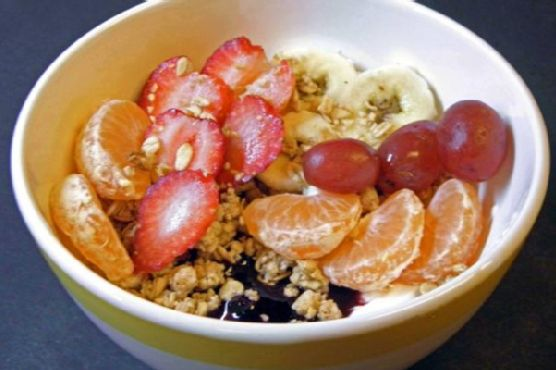
Home made organic maple granola with fresh fruit | Made by Meaghan Moineau

One chilly Sunday morning, I found myself staring at a nearly empty pantry, craving something cozy and sweet without stepping out into the biting cold. That was the day my homemade organic maple granola was born, and let me tell you, it was like a warm hug in a bowl. There’s just something magical about the way the house smells when this granola is baking—sweet, nutty, and comforting. The best part? It’s ridiculously easy to make. You’ll end up with hearty, golden clusters that are perfect to pair with fresh, juicy fruit. Now, this recipe is a staple in my home, perfect for those days when you want something wholesome and satisfying, without a lot of fuss.

Jump to Recipe

What You’ll Need

The beauty of this granola lies in its simplicity and versatility. You might already have most of these ingredients lurking in your kitchen!

  • Rolled oats
  • Dark brown sugar
  • Maple syrup
  • Vegetable oil; peanut oil is preferred
  • Salt
  • Cashew pieces
  • Slivered almonds
  • Dried cranberries
  • Dried raisins
  • Fresh fruit (to serve)

How to Make Home made organic maple granola with fresh fruit

  1. Preheat your oven to 250°F. This low temperature ensures the granola dries out rather than burns, for that perfect crunch.
  2. In a large bowl, combine the rolled oats, cashew pieces, slivered almonds, salt, and dark brown sugar. Give it a good stir to distribute the sugar evenly.
  3. Pour in the maple syrup and vegetable oil. Mix everything until the oats and nuts are well coated. You should be able to smell the sweetness already!
  4. Spread the mixture thinly and evenly onto two baking sheets with sides about an inch high. Trust me, the thin layer is key for even baking.
  5. Bake for 45 to 60 minutes, stirring carefully every 15 minutes. Don’t forget to swap the positions of the trays each time you stir them. This little dance ensures even browning.
  6. You’ll know it’s done when the granola looks tan—not dark—and feels slightly crisp to the touch. It will harden more as it cools.
  7. Remove the trays from the oven and let the granola cool completely. Once cooled, mix in the dried cranberries and raisins.
  8. Store your granola in sealed plastic bags or containers. It’ll stay fresh for up to two weeks, unrefrigerated.
  9. Serve your granola with a handful of fresh fruit. Enjoy every crunchy, sweet bite!

Cook’s Notes

This granola is super forgiving, but here are a few tips to keep it foolproof. Remember to stir it gently to keep those lovely clusters intact. If you don’t have peanut oil, any neutral oil like canola will work in a pinch, but peanut oil does add a subtle, nutty flavor that’s just divine. Make sure to let it cool completely before storing, as any trapped heat can make it soggy. If you somehow don’t finish this in two weeks (but let’s be real, you will), just pop it in an airtight container in the freezer for longer storage.

Make It Your Own

Here are some fun tweaks to make this granola truly yours:

  • Swap the cashews and almonds for your favorite nuts like walnuts or pecans for a different flavor profile.
  • Add a teaspoon of cinnamon or a pinch of nutmeg to the oat mixture for a warm spice kick.
  • Try using honey instead of maple syrup for a different kind of sweetness.
  • Sprinkle some coconut flakes into the mix before baking for a tropical twist.

If you try this, I’d love to hear how it turns out — drop a comment or tag me! Happy granola-making, friends!

Related update: Home made organic maple granola with fresh fruit

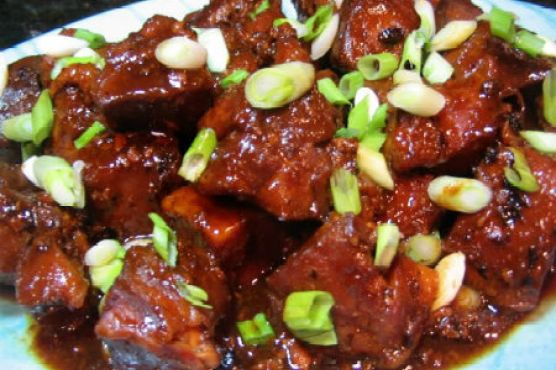
Crock-Pot: Asian-Style Country Ribs with Black Bean Garlic Sauce | Made by Meaghan Moineau

Picture this: It’s a chilly Tuesday evening, and I’ve just walked in from a day that felt three years long. My stomach is grumbling louder than my thoughts, and the last thing I want is a kitchen marathon. That’s when my trusty Crock-Pot and this Asian-Style Country Ribs with Black Bean Garlic Sauce recipe save the day. It’s one of those magical dishes that feels like a warm hug—comforting and flavorful yet deceptively simple. I swear, the first time I made it, I was convinced it was a culinary miracle. Not only does it take just 10 minutes to prep, but the result is rich and complex, like you’ve been slaving away for hours. Seriously, if you can operate a can opener, you can make this. Jump to Recipe

What You’ll Need

You’ll love how this recipe leans on pantry staples, with just a couple of special ingredients that pack a punch. Chances are you already have most of this. Here’s what you’ll need:

  • Boneless pork ribs
  • Cooked black bean garlic sauce from a jar
  • Low sodium soy sauce
  • Chicken stock
  • Dark sesame oil
  • Fresh garlic
  • Ginger root
  • Honey
  • Black coarsely cracked pepper
  • Cornstarch
  • Green scallions

How to Make Crock-Pot: Asian-Style Country Ribs with Black Bean Garlic Sauce

  1. Begin by mincing your fresh garlic and ginger root. Trust me, the aroma is going to be your first reward.
  2. In a small bowl, mix together the black bean garlic sauce, low sodium soy sauce, chicken stock, dark sesame oil, honey, and the minced garlic and ginger. This is your magic potion.
  3. Place your boneless pork ribs into the Crock-Pot. Pour the sauce mixture over them, ensuring each rib is drenched in deliciousness.
  4. Add cracked black pepper over the top. It will give a subtle heat that ties everything together.
  5. Set your Crock-Pot on low and let it work its magic for 5 to 6 hours. You’ll know it’s ready when the meat is tender and falling apart.
  6. In the last 15 minutes of cooking, whisk together cornstarch with a bit of cold water. Stir it into the sauce in the Crock-Pot to thicken it slightly.
  7. Just before serving, sprinkle sliced green scallions over the top. They’ll add a fresh crunch and a pop of color.

Cook’s Notes

Okay, a couple of things to keep in mind: Don’t let the ribs go past the 6-hour mark, or you’ll end up with mushy meat instead of that perfect fall-apart texture. If you’re juggling tasks, you can prep everything the night before, store it in the fridge, and just dump it all into the Crock-Pot in the morning.

Leftovers are gold! Store them in an airtight container, and they’ll keep in the fridge for up to three days. Just reheat slowly on the stovetop or microwave. If the sauce thickens too much, a splash of chicken stock will do the trick.

Make It Your Own

  • Swap the pork for chicken thighs: They cook beautifully in the sauce and stay juicy.
  • Add a kick with Sriracha: Mix a tablespoon into the sauce for some heat.
  • Go vegetarian with tofu: Use firm tofu, cut into large cubes, and reduce cooking time to 3 hours.
  • Try a citrus twist: Add a tablespoon of orange zest to the sauce for a fresh, zesty note.

If you try this, I’d love to hear how it turns out—drop a comment or tag me! Your kitchen deserves this kind of effortless magic, and so do you.

Related update: Crock-Pot: Asian-Style Country Ribs with Black Bean Garlic Sauce

Related update: Balsamic-Honey Chicken Drumsticks