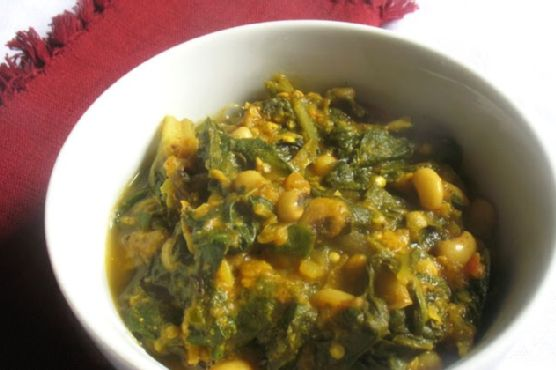
Spicy Black-Eyed Pea Curry with Swiss Chard and Roasted Eggplant | Made by Meaghan Moineau

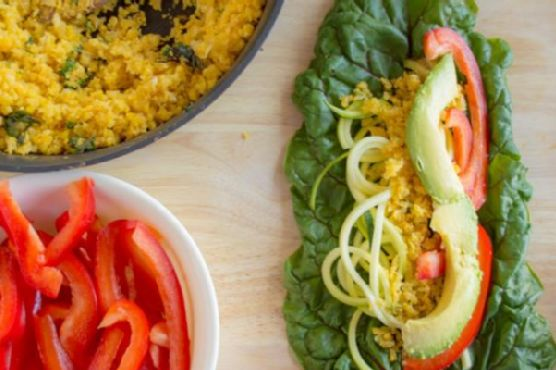
Spicy Black-Eyed Pea Curry with Swiss Chard and Roasted Eggplant

Intro

There’s a certain magic that happens in the kitchen when the aroma of spices fills the air, reminiscent of home-cooked meals that warm the heart and soul. I remember the first time I encountered black-eyed peas in a dish. It was at a family gathering during the holidays, where each dish had its own story and tradition. My grandmother, with her gentle hands and warm smile, would serve a spicy black-eyed pea curry that quickly became the centerpiece of our gatherings. Her secret? A generous helping of roasted eggplant and leafy greens that made the dish as hearty as it was flavorful. Inspired by those cherished moments, I’ve recreated this Spicy Black-Eyed Pea Curry with Swiss Chard and Roasted Eggplant, a dish that’s both comforting and nourishing, perfect for sharing with loved ones.

Why You’ll Love It

This curry is a delightful fusion of flavors and textures. The creamy black-eyed peas intertwine with the smoky, tender roasted eggplant, while the Swiss chard adds a burst of color and nutrition. The medley of spices, including curry powder, garam masala, and cumin, creates a rich, aromatic base that elevates the humble ingredients into a memorable meal. Whether you’re a seasoned cook or a beginner looking to explore new flavors, this recipe is both accessible and rewarding. It’s a versatile dish that can be enjoyed on its own or paired with rice or bread for a complete meal.

Ingredients

  • 1 cup cooked dried black-eyed peas
  • 1 tablespoon curry powder
  • 1 teaspoon garam masala
  • 1 eggplant, preferably Italian globe
  • 1 teaspoon ground coriander
  • 1 teaspoon ground cumin
  • 1/2 teaspoon ground mustard powder
  • Juice of 1 lemon
  • 2 tablespoons olive oil
  • 2-3 red or green chilies, finely chopped
  • Sea salt to taste
  • 2 shallots, finely chopped
  • 2 cups Swiss chard, trimmed and chopped
  • 1 large tomato, chopped
  • 1/2 cup water, plus more as needed

Instructions

  1. Rinse the black-eyed peas and soak them in several inches of water for 6 hours or overnight. Drain and rinse again. Transfer to a large saucepan, cover with fresh water, and bring to a boil. Reduce heat to medium-low, cover, and simmer for 40 to 60 minutes until the peas are tender but not falling apart. Drain and set aside.
  2. To prepare the eggplant, cut off the stem and bottom edge, then halve it lengthwise. Score the flesh into a diagonal pattern, being careful not to cut through the skin. Sprinkle with salt and let it sit for 40 minutes. Rinse and squeeze out excess water.
  3. Brush the eggplant with olive oil and place it in a roasting pan. Bake in a preheated 400°F oven until the flesh appears collapsed and wrinkly, about 30-40 minutes. Remove from heat, let cool for 10 minutes, then scoop out the flesh. If too watery, drain using a strainer. Set aside.
  4. In the same saucepan used for the black-eyed peas, heat the olive oil over medium heat. Add shallots and chilies, sautéing for 2-3 minutes.
  5. Add curry powder, garam masala, ground coriander, cumin, and mustard powder. Stir for another minute until fragrant.
  6. Add the chopped tomato and cook for a few more minutes. Then, add the roasted eggplant and cooked black-eyed peas, stirring frequently.
  7. Pour a few tablespoons of water into the pan. Gradually add Swiss chard, allowing it to wilt before adding more. Add more water as necessary to maintain desired consistency.
  8. Stir in the lemon juice and salt to taste. Remove from heat, cover, and let the curry sit for a few minutes before serving.

Tips

For best results, ensure the black-eyed peas are cooked perfectly tender but not mushy. The eggplant’s roasting time may vary depending on its size; keep an eye on it to achieve the desired texture. Adjust the level of spice by adding more or fewer chilies, based on your heat preference.

Variations & Substitutions

Feel free to experiment with different greens such as spinach or kale if Swiss chard is unavailable. For an added protein boost, consider tossing in some cooked chickpeas. If you prefer a milder curry, use less curry powder and add a dollop of coconut milk for creaminess.

Storage

Store any leftovers in an airtight container in the refrigerator for up to 3 days. This curry also freezes well; simply thaw and reheat on the stove over low heat, adding a splash of water if needed to reach the desired consistency.

FAQ

Can I use canned black-eyed peas for this recipe?

Yes, you can use canned black-eyed peas if you’re short on time. Just be sure to rinse and drain them thoroughly before adding them to the dish.

What other vegetables can I add to this curry?

Feel free to add other vegetables such as bell peppers, zucchini, or carrots. Just be sure to adjust the cooking time accordingly so that all the vegetables are tender.

Is this recipe vegan?

Yes, this Spicy Black-Eyed Pea Curry with Swiss Chard and Roasted Eggplant is entirely vegan, making it a delicious choice for those following a plant-based diet.

Nutrition

This curry is a nutritious powerhouse, rich in fiber, vitamins, and minerals. Black-eyed peas are an excellent source of protein and iron, while Swiss chard provides vitamins A, C, and K. Eggplant adds antioxidants and dietary fiber, making this dish both wholesome and satisfying.

Conclusion

Embark on a culinary adventure with this Spicy Black-Eyed Pea Curry with Swiss Chard and Roasted Eggplant. It’s a dish that brings warmth to the table and joy to those who share it. Whether you’re reminiscing about childhood memories or creating new ones, this curry is sure to become a beloved staple in your kitchen. Enjoy the rich tapestry of flavors and the simplicity of ingredients that come together in this heartwarming meal. Happy cooking!

Related update: Spicy Black-Eyed Pea Curry with Swiss Chard and Roasted Eggplant

Related update: Pork Menudo

Benavidez Dominates Yarde, Targets Ramirez | Analysis by Brian Moineau

David Benavidez pulverizes Anthony Yarde in Riyadh and immediately sets his sights on Zurdo Ramirez

An electric night in Riyadh ended with David “The Monster” Benavidez reminding the boxing world why he’s one of the sport’s most dangerous punchers — and why his plans don’t stop at light heavyweight. In a seventh-round TKO, Benavidez dismantled Anthony Yarde to retain the WBC light-heavyweight crown, then announced a blockbuster move up to cruiserweight to challenge Gilberto “Zurdo” Ramirez. The result was clinical, the post-fight declaration bold, and boxing’s landscape just tilted again.

Quick hits from the night

  • Location: ANB Arena, Riyadh, Saudi Arabia.
  • Result: David Benavidez defeated Anthony Yarde by TKO (7th round).
  • Stakes: Benavidez retained the WBC light-heavyweight title.
  • Immediate announcement: Benavidez said he’ll move up to cruiserweight to face Gilberto “Zurdo” Ramirez on May 2 (reported as being aimed for Las Vegas).
  • Why it matters: Benavidez not only defended his belt but telegraphed ambitions to be a three-division titlist — a storyline that reshapes match-making at 175 and 200+ pounds.

How the fight played out

Benavidez paced himself early, using range and feints to measure Yarde. Once he turned the pressure up, the bout became a textbook display of his strengths: tireless forward momentum, volume punching, and sudden, brutal bursts that left Yarde on the back foot. As the rounds progressed, Benavidez moved from probing jabs to waves of combinations that tested Yarde’s chin and resolve.

The referee stepped in late in round seven after Benavidez had Yarde trapped and unloading. There was controversy in the round — Benavidez landed while Yarde took a knee and was penalized a point — but that did little to change the trajectory. When the stoppage came it felt inevitable: Benavidez had broken the British challenger down with relentless work rate and accuracy.

Why this matters beyond one result

  • Benavidez cemented his status as a top light-heavyweight and a genuine threat to the division’s elite — especially Dmitry Bivol, who holds multiple titles at 175. Benavidez’s size, speed and finishing ability make him a stylistic problem for most top light-heavyweights.
  • The announced jump to fight Gilberto “Zurdo” Ramirez at cruiserweight changes the narrative. If that matchup happens, Benavidez would be testing his power and frame against bigger men, pursuing multi-division legacy. That’s an attention-grabbing, high-reward — and high-risk — career move.
  • For Anthony Yarde, the loss raises questions about taking another elite-level step. He showed heart and moments of effectiveness, but again came undone against sustained pressure from a volume puncher. Yarde’s future at the top level may hinge on how he adjusts to that style or whether he chooses different matchups.
  • Promoters and networks will now juggle bigger picture options: Benavidez vs. Bivol, Benavidez vs. Artur Beterbiev, or Benavidez moving up to Ramirez. Each path has different commercial and sporting implications.

What the numbers and performances suggest

  • Benavidez is undefeated and now has multiple stoppages at light-heavyweight since moving up. His work rate and punch output stood out: not just landing power shots, but chaining combinations that accumulated damage.
  • Yarde remained dangerous in spots — single big shots and flashes of countering ability — but he struggled to consistently create separation or sustain offense against Benavidez’s pressure.
  • The immediate claim that May 2 would host Benavidez vs. Ramirez is significant but still needs contracts and confirmation from both camps and sanctioning bodies. Announcements from a fighter or promoter are one thing; finalized, signed purses and dates are another. The likely stage (Las Vegas) and the involvement of Golden Boy (Ramirez’s promoter) were reported in the aftermath.

Three main takeaways

  • Benavidez is not just a big light-heavy — he’s a relentless pressure fighter with finishing instincts who has arrived as a marquee champion at 175.
  • The proposed move to fight Gilberto “Zurdo” Ramirez could vault Benavidez into a rarefied legacy conversation — if he succeeds against bigger opposition.
  • Matchmaking and title unification at light-heavy could pivot depending on Benavidez’s next move: stay and chase Bivol/Beterbiev, or chase history by moving up.

My take

There’s something unapologetically cinematic about Benavidez’s trajectory: a powerful, aggressive fighter who keeps stepping into progressively bigger rooms. The Yarde win was both a statement and an audition — it said: I’m the kind of champion who doesn’t just keep belts, he seeks harder enemies. Moving to challenge Ramirez at cruiserweight is risky and smart at the same time; risk because size and style differences at 200+ pounds are real, smart because the reward — multi-division status and mainstream buzz — can be enormous.

If Benavidez wants to be remembered as one of the era’s true threats, he has to keep choosing the hardest questions. Tonight he answered one decisively. The next one — against Ramirez or another big name — will tell us whether he’s a two-weight terror or a generational force.

Sources


Related update: We recently published an article that expands on this topic: read the latest post.


Related update: We recently published an article that expands on this topic: read the latest post.

Chris Pauls Hometown Farewell Hint | Analysis by Brian Moineau

A hometown goodbye? Chris Paul’s quiet hint that an era may be ending

When Chris Paul posted a short highlight reel from his childhood through his Wake Forest days and two decades-plus in the NBA about 90 minutes before the Los Angeles Clippers faced the Charlotte Hornets in Charlotte, it didn’t read like a routine social-media nostalgia drop. The caption — “Back in NC!!! What a ride…Still so much left…GRATEFUL for this last one!!” — carried a tone heavy with gratitude and finality. For a player who has defined the point guard position for a generation, the moment felt like one of those slow-motion exits athletes and fans dread but secretly expect.

Below I unpack the scene, why this matters beyond a single game, and what Paul’s likely farewell tells us about legacy, leadership, and how modern athletes manage the end of a storied career.

Quick snapshots you should know

  • The post and video were shared about 90 minutes before tipoff of the Clippers vs. Hornets game in Charlotte, North Carolina.
  • Paul, 40, returned to the Clippers on a one-year contract this season and is playing in a greatly reduced role.
  • He hails from Winston-Salem and starred at Wake Forest — making a return to North Carolina emotionally significant and a natural setting for a goodbye.
  • Media reports and team comments framed the video as a possible hint at retirement; Paul did not discuss his future publicly after the game. (Sources below.)

Why that clip mattered more than highlights

Athletes post highlight reels all the time. What made Paul’s video feel different?

  • Timing: Posting on the same day he was playing his final scheduled game in his home state created an unmistakable narrative arc — boy from Winston-Salem returns as an NBA legend.
  • Language: “What a ride…Still so much left…GRATEFUL for this last one!!” reads like both gratitude and a gentle closing chapter. It leaves room for emotion without forcing a definitive announcement.
  • The career arc: Paul’s résumé — Rookie of the Year, multiple All-Star nods, elite passer and defender, leader of multiple franchises — makes any hint of retirement a national moment. He’s not just any veteran; he’s a generational floor general whose style of play and leadership leaves an outsized imprint.
  • The silence that followed: Declining interviews and slipping out quietly after the game amplified the sense that this was a personal moment Paul wanted to hold close rather than stage publicly.

The broader context: what retirement would mean

  • A generational shift at point guard: Paul’s combination of court vision, clutch playmaking, and defensive instincts set a template for modern point guards. His likely retirement would mark the true end of an era that included peers like Tony Parker, Deron Williams, and others who shaped the 2005–2015 NBA landscape.
  • Legacy beyond stats: Paul’s impact stretches to how teams value leadership, competitive intelligence, and mentorship. He revived careers, elevated young teammates, and frequently served as the identity-anchor for franchises.
  • The narrative arc of modern NBA careers: Paul’s possible exit also highlights a modern reality — star players today move through multiple teams, reinvent themselves, and manage public farewells across social platforms rather than in single, orchestrated press conferences.

Moment by moment: what unfolded in Charlotte

  • Paul shared the career-spanning video on social media ahead of the Clippers-Hornets matchup in Charlotte, his home state.
  • The game played out and Paul, who is in a limited role this season, did not avail himself to media in the postgame window.
  • He left the arena quietly and spent time with family — a portrait of a player choosing intimacy over spectacle at a potentially emotional career milestone.

What to expect next

  • Official clarity: An explicit retirement announcement could come soon, or Paul may choose to confirm his plans at season’s end. Both paths are common — some athletes retire immediately; others finish the final year on the roster.
  • The Hall of Fame discussion: When Paul does step away, his case for the Hall of Fame will be robust — from assist and steal totals to All-NBA and All-Defensive honors and influence on teammates.
  • A cascade of tributes: Expect social-media reflections, team retrospectives, and ESPN-style documentaries that will retell Paul’s story through teammates, rivals, and coaches.

A few takeaways

  • Paul’s video was more than nostalgia — it read as a controlled, emotionally resonant signal about the twilight of a luminous career.
  • The quiet exit in his home state fits a player who has often let his on-court voice lead his narrative off the court.
  • Whether he formally announces retirement now or later, the league and basketball culture will feel the absence of his leadership and craft.

Final thoughts

Watching Chris Paul return home — highlight reel, family hugs, a quiet walk out of Spectrum Center — felt like a respectful reminder that sports are as much about people and places as they are about points and assists. If this is the bookend to his playing days, it’s a graceful one: not bombastic, not performative, but deeply human. Paul’s career rewrote how teams think about the point guard position, and the way he may choose to leave — with control, dignity, and an eye toward the next chapter — is fitting for someone who made the game look like chess as much as athletics.

Sources


Related update: We recently published an article that expands on this topic: read the latest post.


Related update: We recently published an article that expands on this topic: read the latest post.

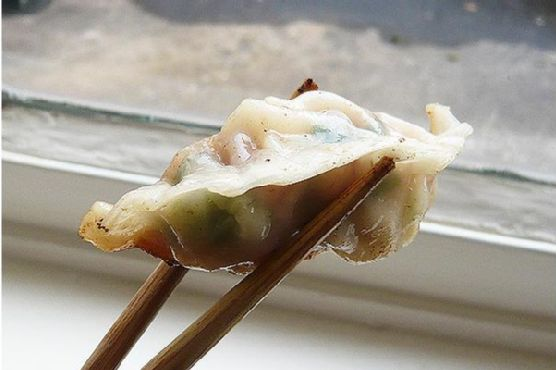
Japanese Gyoza Pot Stickers | Made by Meaghan Moineau

Japanese Gyoza Pot Stickers

Intro

There’s something truly magical about gathering around the kitchen table with loved ones, folding gyoza wrappers, and sharing stories. I remember as a child, watching my grandmother skillfully pleat the edges of these delightful Japanese pot stickers, her hands moving with a rhythm that spoke of years of practice. The savory aroma of sizzling gyoza would fill the room, creating an atmosphere of warmth and anticipation. Today, I share with you a recipe that brings back those cherished memories and allows you to create your own.

Why You’ll Love It

This Japanese Gyoza Pot Stickers recipe is a perfect blend of savory and umami flavors wrapped in a tender yet crispy shell. Not only are they incredibly delicious, but they’re also versatile and can be served as appetizers, snacks, or even a main course. The combination of seasoned ground beef with aromatic vegetables and the unique touch of chili sesame oil makes each bite an explosion of flavor. Plus, making them from scratch is a fun and rewarding experience that allows you to create a connection with this beloved Japanese tradition.

Ingredients

  • Black pepper, to taste
  • 1 cup cabbage, finely chopped
  • 1 teaspoon chili sesame oil
  • 1/4 cup dried mushrooms, soaked in warm water and chopped
  • 2 teaspoons grated ginger root
  • 3 to 4 green onions, finely chopped
  • 1 pound ground beef
  • 2 tablespoons salad oil
  • 1 teaspoon sesame oil
  • 2 tablespoons Kikkoman soy sauce
  • 1 tablespoon cooking wine
  • Gyoza wrappers

Instructions

  1. Chop the cabbage finely and place it in a colander. Pour boiling water over the cabbage, then let it cool until it’s comfortable to touch. Squeeze the cabbage well to remove excess water.
  2. In a large bowl, combine the cabbage, chopped green onions, chopped mushrooms, and grated ginger.
  3. In a separate bowl, mix the ground beef with cooking wine, soy sauce, sesame oil, and black pepper. Add the vegetable mixture to the beef and mix well.
  4. Place about 1 teaspoon of filling in the center of a gyoza wrapper. Fold the wrapper in half and pleat the edges to seal. If the edges do not stick, dampen the inside edge with a little water before pleating.
  5. Heat 2 tablespoons of salad oil in a pan over medium heat. Place the gyoza in the pan, flat side down.
  6. At the edge of the pan, carefully pour in a little water, up to 1/4 of the depth of the pot stickers. Cover the pan, reduce the heat to low, and let the gyoza simmer until all the water has evaporated.

Tips

For the best results, make sure not to overfill the gyoza wrappers as this can make sealing difficult and lead to bursting during cooking. When pleating the edges, use a firm but gentle touch to ensure they are securely sealed. Additionally, using a non-stick pan can help prevent sticking during the cooking process.

Variations & Substitutions

If you prefer a vegetarian version, simply replace the ground beef with finely chopped tofu or a plant-based meat substitute. You can also experiment with different vegetables such as carrots or bell peppers to add a unique twist. For a spicier kick, increase the amount of chili sesame oil or add a dash of hot sauce to the filling mixture.

Storage

To store leftover gyoza, let them cool to room temperature before placing them in an airtight container. They can be refrigerated for up to 3 days. For longer storage, consider freezing them in a single layer on a baking sheet before transferring to a freezer bag. Frozen gyoza can be cooked directly from the freezer, just increase the cooking time slightly.

FAQ

Can I make the gyoza filling in advance?

Absolutely! You can prepare the filling up to a day in advance and store it in the refrigerator. This can actually help the flavors meld together, resulting in a more flavorful filling.

What if I can’t find gyoza wrappers?

If gyoza wrappers are unavailable, you can use wonton wrappers as a substitute. They may be slightly thinner, so handle them with care when pleating and sealing.

How do I prevent the gyoza from sticking to the pan?

Ensure your pan is well-oiled and preheated before adding the gyoza. A non-stick pan can also help. If they do stick, allow them to cool briefly before gently loosening with a spatula.

Nutrition

This gyoza recipe offers a balanced combination of protein, vegetables, and healthy fats. Each serving (4-5 pot stickers) contains approximately 250 calories, 14g of protein, 20g of carbohydrates, and 12g of fat. Adjust the portion size based on your dietary needs and preferences.

Conclusion

Making Japanese Gyoza Pot Stickers at home is a delightful experience that brings the authentic flavors of Japan into your kitchen. Whether you’re recreating cherished family memories or starting new traditions, these pot stickers are sure to become a favorite. Enjoy the process of crafting each gyoza, savor the rich and complex flavors, and share them with those you love. Happy cooking!

Related update: Japanese Gyoza Pot Stickers

Related update: Spicy Black-Eyed Pea Curry with Swiss Chard and Roasted Eggplant

Related update: Curry Leaves Potato Chips

$20 Fast‑Food Wage: Hype vs. Reality | Analysis by Brian Moineau

How a $20 fast‑food wage became a political punchline — and what the data actually shows

Who doesn’t love a good one‑liner? When former President Trump said California’s $20-per-hour fast‑food minimum wage was “hurting businesses,” the quote fit neatly into a familiar story: big wage hike → shuttered restaurants → unhappy voters. But real life, as usual, refuses to be tidy. The first year after California’s sectoral wage increase has produced a muddled mix of headlines, studies and anecdotes — and the truth sits somewhere in the middle.

What happened and why it mattered

  • In September 2023 California passed AB 1228, creating a Fast Food Council and setting a $20 minimum wage for fast‑food workers at chains with 60+ locations nationwide, effective April 1, 2024. (gov.ca.gov)
  • The policy targeted roughly half a million workers and was one of the largest sector‑specific wage hikes in recent U.S. history.
  • Opponents warned of rapid price inflation, job losses, reduced hours and store closures. Supporters argued workers needed a living wage and that higher pay could reduce turnover and boost consumer demand.

Headlines vs. data: why simple answers don’t fit

Political rhetoric loves certainty, but economists use careful comparisons. Since April 2024 the evidence has been mixed:

  • Studies and analyses finding minimal negative effects:

    • Research from UC Berkeley’s Institute for Research on Labor and Employment and related teams report that wages rose substantially, employment held steady, and menu price impacts were modest (single‑digit percent increases for typical items). These studies emphasize higher worker earnings without detectable job losses in the fast‑food sector. (irle.berkeley.edu)
    • Other academic teams (Harvard Kennedy School / UCSF) reached similar conclusions about pay gains and limited staffing impacts. (gov.ca.gov)
  • Studies and analyses finding measurable job declines:

    • Working papers using Bureau of Labor Statistics payroll data (Quarterly Census of Employment and Wages) — and critiques from policy groups like the Cato Institute — estimate a small but nontrivial reduction in fast‑food employment in California relative to other states, translating into thousands of jobs potentially lost or displaced. These analyses point to a 2–4% differential decline in sector employment in the year after the law passed. (nber.org)
  • Industry and media snapshots added color (and noise):

    • Chains and franchisee groups announced price increases and operational changes; some local closures and staffing adjustments were reported in the press and by trade groups. At the same time, state officials pointed to jobs data showing growth in fast‑food employment in some months. Media outlets highlighted both anecdotes of closures and studies showing limited harm. (cnbc.com)

The upshot: different data sources, time frames, and methods yield different estimates. Short‑run payroll snapshots can show dips that later rebound; survey‑based and restaurant‑level pricing studies can miss informal shifts (delivery volume, operating hours, mix of part‑time vs full‑time). Context, timing and research design matter.

Four reasons the debate stayed messy

  • The policy was sectoral and targeted. It applied only to large chains (60+ locations), leaving many small restaurants out of scope — which complicates comparisons and “one‑size” conclusions. (gov.ca.gov)
  • Timing and price pass‑through. Chains can respond by raising prices, squeezing profits, automating, or changing franchise decisions. Price increases were modest on average per some studies, but consumer behavior and foot traffic patterns varied across markets. (irle.berkeley.edu)
  • Geographic and local wage baselines differ. Many California cities already had higher local wages, so the bite of a statewide $20 floor varied by city and region. (cnbc.com)
  • Data source differences. Administrative payroll counts, operator surveys, foot‑traffic trackers and economist regressions each capture different slices of reality. Survey respondents tend to report the most painful anecdotes; large administrative datasets smooth over firm‑level churn but can lag. (nber.org)

What the evidence implies for workers, employers and voters

  • Workers: Many fast‑food employees saw meaningful pay bumps. For low‑paid workers, a reliable raise can improve household finances and reduce turnover — which itself can save restaurants hiring and training costs. Several academic teams documented substantial wage gains. (irle.berkeley.edu)
  • Employers: Large national chains and well‑capitalized operators can typically absorb or pass through costs more easily than small franchisees and mom‑and‑pop operators. Some franchisees reported tightening margins or operational shifts. Franchise structure therefore matters for who feels the pain. (cnbc.com)
  • Consumers: Menu prices rose in many places but, according to some detailed price studies, by relatively modest amounts for common items. Still, for price‑sensitive customers, even small increases can change visit frequency over time. (irle.berkeley.edu)
  • Policy makers: The California experiment shows that sectoral wage rules are feasible and politically potent — but also that they require monitoring, local nuance and careful evaluation to spot unintended consequences.

What to watch next

  • Updated employment and payroll reports for 2024–2025 (BLS QCEW, state employment dashboards).
  • Fast‑food council adjustments: the law created a Fast Food Council that can change wage floors going forward — any upward tweaks will reignite debates. (gov.ca.gov)
  • New peer‑reviewed studies that reconcile firm‑level evidence with state administrative data. The early literature includes conflicting working papers; later, more refined analyses will matter for policy learning. (nber.org)

Key points to remember

  • Big, immediate headlines are tempting, but the empirical record is mixed — some rigorous studies find little harm to employment, others find modest job declines.
  • The distribution of effects matters: workers gained wages, while some operators (especially small franchisees) faced higher costs and operational strain.
  • Policy design (who is covered, how enforcement works, and whether wages are phased or sudden) shapes outcomes as much as headline wage numbers do.

My take

Policies that push wages up for low‑paid workers deserve scrutiny, not sloganeering. California’s $20 experiment shows that meaningful wage increases can lift paychecks without catastrophic collapse — but they are not costless. The right takeaway is pragmatic: expect tradeoffs, design for local differences, measure outcomes rigorously, and be ready to adjust. Political one‑liners make for headlines; careful evidence makes for better policy.

Sources


Related update: We recently published an article that expands on this topic: read the latest post.


Related update: We recently published an article that expands on this topic: read the latest post.

chilli chicken | Made by Meaghan Moineau

Chilli Chicken: A Spicy Delight to Warm Your Heart

Intro

Growing up, there was always a dish that brought a gleam to my eyes and warmth to my heart: my grandmother’s Chilli Chicken. I remember the tantalizing aroma wafting through her cozy kitchen on chilly evenings, drawing us in like moths to a flame. The sizzle of the chicken hitting the hot pan was music to our ears, and her special blend of spices was the magic that made it all come together. Today, I’m thrilled to share this cherished recipe with you, so you too can bring a touch of spice and nostalgia to your home.

Why You’ll Love It

If you’re a fan of bold flavors and a little heat, this Chilli Chicken recipe is sure to become a favorite in your household. Not only does it pack a punch with its spicy kick, but it’s also incredibly versatile and can be customized to suit your taste preferences. Perfect for a cozy family dinner or a festive gathering, this dish is a surefire crowd-pleaser. Plus, it’s a great way to introduce a bit of culinary adventure into your weeknight meals with minimal fuss.

Ingredients

  • 2 boneless chicken breasts, cut into bite-sized pieces
  • 1 bell pepper / capsicum, sliced
  • 1 onion, sliced
  • 2 green chilies, slit
  • 2 tablespoons corn flour
  • 2 teaspoons red chili powder
  • 1 teaspoon pepper powder
  • 3 tablespoons oil
  • 2 tablespoons soya sauce
  • 2 tablespoons chilli sauce
  • 1 tablespoon vinegar
  • 1 tablespoon sugar
  • 2 cloves garlic, minced
  • Spring onions, chopped, for garnish

Instructions

  1. Find complete instructions on Swasthi’s recipes.

Tips

For the best results, use fresh ingredients wherever possible. Make sure to cut the chicken and vegetables into uniform pieces to ensure even cooking. Don’t overcrowd the pan when frying the chicken, as this will steam rather than sear the meat, resulting in a loss of texture. Lastly, taste as you go—adjust the seasoning and spice levels to suit your palate.

Variations & Substitutions

Feel free to experiment with this recipe by adding your favorite vegetables such as broccoli, carrots, or mushrooms. If you prefer a less spicy version, reduce the amount of chili powder or omit the green chilies. For a gluten-free alternative, use tamari instead of soy sauce. Vegetarian? Swap out the chicken for paneer or tofu for a delightful meat-free version.

Storage

Chilli Chicken can be stored in an airtight container in the refrigerator for up to three days. For longer storage, you can freeze it for up to a month. To reheat, simply thaw overnight in the refrigerator and gently warm in a pan over medium heat, adding a splash of water if necessary to maintain its saucy consistency.

FAQ

Can I make this dish ahead of time?

Absolutely! Chilli Chicken can be prepared ahead of time and stored in the refrigerator. The flavors will meld beautifully, making it even more delicious the next day. Just reheat and serve.

What can I serve with Chilli Chicken?

This dish pairs wonderfully with steamed rice, fried rice, or noodles. You could also serve it with a simple side of stir-fried vegetables for a complete meal.

Is there a way to reduce the spiciness?

If you’re sensitive to heat, you can tone down the spiciness by reducing the amount of chili powder and green chilies. Adding a little more sugar can also help balance the heat.

Nutrition

Chilli Chicken is a protein-rich dish with a moderate amount of carbohydrates and fats. The exact nutritional values will depend on the specific quantities and brands of ingredients used, but on average, a serving provides approximately:

  • Calories: 250
  • Protein: 20g
  • Carbohydrates: 15g
  • Fat: 10g

Keep in mind that nutritional values can vary, so it’s always a good idea to check the ingredients you use if you’re tracking your intake.

Conclusion

Chilli Chicken is more than just a dish; it’s an experience that brings people together with its vibrant flavors and comforting warmth. Whether you’re recreating cherished memories or forging new ones, this recipe is sure to become a staple in your culinary repertoire. So roll up your sleeves, gather your ingredients, and embark on a flavorful journey that promises to delight your taste buds and warm your heart. Enjoy every bite!

Related update: chilli chicken

Related update: Moroccan Carrot Soup

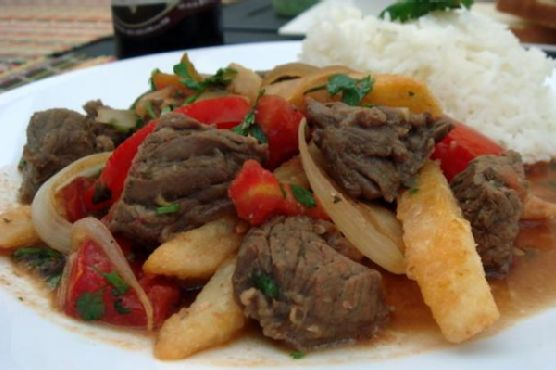
Liz’s Lomo Saltado | Made by Meaghan Moineau

Liz’s Lomo Saltado

Intro

Welcome to my kitchen! Today, I’m sharing a recipe that’s close to my heart – Liz’s Lomo Saltado. This dish takes me back to my childhood, where Sundays were reserved for family gatherings around a table brimming with laughter, love, and delicious food. My grandmother, Liz, would prepare this Peruvian classic with such passion and precision, ensuring every bite was a burst of flavor. Her secret? A perfect balance of spices and fresh ingredients. I hope this recipe brings you a taste of Peru and a touch of nostalgia, just as it does for me.

Why You’ll Love It

Lomo Saltado is a dish that beautifully combines the flavors of Peru with Asian influences. You’ll love it because:

  • Simple and Quick: This recipe comes together in just about 30 minutes, making it a perfect weeknight meal.
  • Flavorful Fusion: The blend of soy sauce, cumin, and red wine vinegar creates an irresistible savory and tangy profile.
  • Versatile: It’s perfect for meat lovers but can be adapted for vegetarians too.
  • Colorful Presentation: The vibrant mix of peppers and tomatoes makes this dish as visually appealing as it is delicious.

Ingredients

  • 1 lb beef tenderloin, cut into chunks
  • 1 tsp cumin
  • 1 tsp complete seasoning
  • 1 green bell pepper, sliced
  • 1 red bell pepper, sliced
  • 1 yellow onion, sliced
  • 2 garlic cloves, minced
  • 1 jalapeno pepper, minced
  • 2 tbsp red wine vinegar
  • 3 tbsp soy sauce
  • 2 plum tomatoes, cut into chunks
  • 1 bag of frozen french fries
  • Fresh cilantro, chopped for garnish

Instructions

  1. Prepare the frozen french fries according to package directions. Set aside when complete and keep warm.
  2. Heat a large wok or skillet over medium-high heat.
  3. Sauté the onions and bell peppers until translucent, about 10 minutes.
  4. Add the garlic and jalapeno and cook for an additional minute. Mix everything until combined.
  5. Add the beef chunks, cumin, complete seasoning, soy sauce, and red wine vinegar. Mix well and cook until beef is no longer pink, about 5 to 7 minutes.
  6. Add the tomato chunks, cover, and cook for an additional 5 minutes.
  7. When ready to serve, add the french fries and toss everything gently together.
  8. Serve lomo saltado over a bed of white rice and garnish with freshly chopped cilantro leaves. Enjoy with aji sauce on the side.

Tips

  • For the best results, use fresh and high-quality beef tenderloin. The tenderness of the meat is key to a great Lomo Saltado.
  • Don’t overcook the vegetables. They should remain slightly crisp to add texture to the dish.
  • Feel free to adjust the amount of jalapeno based on your spice preference. You can remove the seeds to lessen the heat.

Variations & Substitutions

If you’re looking to make this recipe your own, consider these variations and substitutions:

  • Vegetarian Option: Replace beef with mushrooms or tofu. You can still use the same marinade and cooking process.
  • Different Meats: Try using chicken or pork if you prefer a different protein.
  • Alternative Peppers: Use poblano or Anaheim peppers instead of bell peppers for a different flavor profile.

Storage

Leftovers can be stored in an airtight container in the refrigerator for up to 3 days. To reheat, warm in a skillet over medium heat until heated through. It’s best to keep the fries separate until serving to maintain their texture.

FAQ

Can I make Lomo Saltado in advance?

Yes, you can prepare the meat and vegetable mixture in advance and store it in the refrigerator for up to 24 hours. Reheat before serving and add the fries fresh for the best taste and texture.

What can I serve with Lomo Saltado?

Lomo Saltado is traditionally served with white rice, but you can also serve it with quinoa or a side salad for a lighter option. Aji sauce is a popular accompaniment that adds a nice spicy kick.

Nutrition

This dish is a good source of protein and vitamins from the fresh vegetables. However, if you’re watching your sodium intake, consider using a low-sodium soy sauce.

Conclusion

Liz’s Lomo Saltado is more than just a meal; it’s a celebration of flavors and cultures coming together in a single dish. Whether you’re making it for a family gathering or a cozy dinner at home, this recipe promises to deliver both warmth and satisfaction. I hope you enjoy making and eating it as much as I do. Don’t forget to share your experience and let us know how it turned out!

Related update: Liz’s Lomo Saltado

Related update: chilli chicken

Fed Split Drives Sudden Market Rally | Analysis by Brian Moineau

Stocks Rally as Rate-cut Odds Soar: Why a Single Fed Voice Moved Markets

Markets can be moody, and on November 21, 2025 they were downright fickle. One speech from a senior Fed official — New York Fed President John Williams — was enough to flip investor sentiment, send stocks higher and reprice the odds of a rate cut at the Fed’s December meeting. But the story isn’t just about a single quote; it’s about how fragile market expectations have become and why investors now have to navigate a Fed that sounds increasingly divided.

An attention-grabbing moment

  • In prepared remarks delivered at a Central Bank of Chile event on November 21, 2025, John Williams said he “still see[s] room for a further adjustment in the near term” to move policy closer to neutral.
  • Markets reacted fast: major indexes rallied intraday (the Dow, S&P 500 and Nasdaq all jumped), bond yields fell and CME Group’s FedWatch tool sharply increased the probability priced in for a 25-basis-point cut at the December 9–10 Fed meeting. (forbes.com)

That single dovish tilt — from a Fed official who sits permanently on the Federal Open Market Committee — was enough to reverse a recent shift toward pausing further easing. But Williams’ view wasn’t unanimous inside the Fed: other officials publicly backed holding rates steady for now, keeping uncertainty high. (forbes.com)

Why Wall Street cared so much

  • Expectations rule short-term flows. Futures and options markets move quickly when a credible policymaker signals a change. Williams is influential; his willingness to countenance another cut pushed traders to reprice December odds aggressively. (forbes.com)
  • Rate-sensitive sectors react fast. Homebuilders, gold, and consumer discretionary names — equities that benefit when borrowing costs fall — saw notable gains as investors positioned for easier policy. Technology and cyclical names that had previously weathered a hawkish Fed also saw rotations. (investopedia.com)
  • Bond markets set the backdrop. Treasury yields fell on the news, reflecting both the revised odds of policy easing and a quick move toward safer, lower-yield pricing. That in turn supports equity valuations by lowering discount rates for future earnings. (mpamag.com)

The Fed’s internal tension

  • Williams emphasized the labor market softness and said upside inflation risks had “lessened somewhat,” arguing there’s room to nudge policy toward neutral. But other officials and many market analysts remained cautious, pointing to still-elevated inflation readings and patchy labor data as reasons to hold steady. (forbes.com)
  • The result is a split Fed narrative: a powerful, market-moving voice saying “near-term cut possible,” and several colleagues advocating patience. That split creates whipsaw risk — big moves when each new datapoint or comment arrives.

What investors should watch next

  • The December 9–10 FOMC meeting calendar date. Markets have reweighted odds, but a true signal will come from Fed communications and incoming data between now and the meeting. (investopedia.com)
  • Labor-market indicators. Williams flagged downside risks to employment; if payrolls and wage growth weaken, the Fed’s tolerance for cuts grows. Conversely, stronger-than-expected job prints or stubborn inflation would swing the pendulum back. (forbes.com)
  • Fed rhetoric cohesion. Look for whether other Fed officials echo Williams’ tone or double-down on restraint. If the Fed’s public messaging becomes more uniform, the market’s volatility should ease. If the split persists, expect continued intra-day reversals. (finance.yahoo.com)

What this means practically:

  • Portfolio positioning may tilt toward rate-sensitive sectors if cuts look probable, but the risk of being wrong is real — a single stronger data release could flush those positions.
  • Volatility will remain elevated while the Fed’s internal debate plays out and the economic data stream remains mixed.

Quick takeaway points

  • A single influential Fed official can materially shift market expectations; John Williams’ “near-term” comment on Nov 21, 2025 did exactly that. (forbes.com)
  • Markets now price a much higher chance of a December rate cut, but the Fed is not united — several officials have favored maintaining current rates. (reuters.com)
  • Incoming labor and inflation data, plus the Fed’s subsequent communications, will determine whether this rally has legs or is a short-lived repricing.

My take

This episode is a reminder that markets trade not only on data but on narratives. A narrative shift — in this case, that the Fed might ease sooner — can drive swift, meaningful reallocation across assets. For investors, the sensible middle path is to respect the potential for policy easing while protecting against the opposite outcome. In practice, that means balancing exposure to assets that benefit from looser policy with hedges or sizing discipline in case the Fed leans back into restraint.

Sources

(Note: the Forbes story that prompted this piece ran on November 21, 2025; Reuters and Investopedia provide non-paywalled coverage and context cited above.)


Related update: We recently published an article that expands on this topic: read the latest post.


Related update: We recently published an article that expands on this topic: read the latest post.

Why 25% of the Unemployed Are Degreed | Analysis by Brian Moineau

A surprising flip: college grads are 25% of the unemployed — what that really means

You’ve probably heard the headline: Americans with four‑year degrees now make up a record 25% of the unemployed. It sounds like a sudden education crisis — but the story is subtler, and more revealing about how the U.S. labor market is changing.

This post unpacks why that 25% number matters, what’s driving it, and what it means for workers, employers, and anyone trying to read the economy’s next moves.

Why the headline feels wrong (and why it’s not)

  • A rising share of unemployed workers holding bachelor’s degrees does not automatically mean college is devalued.
  • Two broad forces are at work at the same time:
    • The share of U.S. workers with bachelor’s degrees has been steadily increasing for decades — more degree‑holders in the labor force means degree‑holders also make up a larger slice of any labor statistic, even unemployment.
    • White‑collar hiring has cooled sharply during recent hiring cycles, and layoffs in certain industries (notably tech and other professional sectors) have put more degree‑holders into unemployment than in prior years.

In short: more college‑educated people are in the workforce than before, and many of the jobs that typically employ them have slowed hiring or cut back.

The bigger context you should know

  • Educational attainment has risen across generations. The Pew Research Center notes that the share of workers with at least a bachelor’s degree climbed substantially over the last two decades. As degrees become more common, statistics that show the distribution of unemployment naturally shift. (pewresearch.org)
  • At the same time, macro shifts have curtailed hiring in white‑collar roles. Firms in technology, finance, and professional services trimmed headcount in recent years, and many employers have become more cautious about new hires — a trend highlighted across reporting on 2024–2025 labor developments. This increases the visibility of unemployed degree‑holders in headline snapshots. (reuters.com)
  • The Bureau of Labor Statistics still shows that, on average, higher education correlates with lower unemployment rates and higher earnings — the “education pays” pattern remains intact when you look at unemployment rates by attainment, not just shares of the unemployed. That nuance matters: degree‑holders still tend to have lower unemployment rates than less‑educated peers. (bls.gov)

What the 25% figure actually signals

  • It signals a slowdown in the kinds of hiring that have absorbed college grads in prior cycles — recruiting freezes, slower openings in corporate roles, and sectoral layoffs. Those trends push degree‑holders into unemployment faster than replacements arrive.
  • It also signals composition change: as more people obtain four‑year degrees, they become a larger slice of both the employed and unemployed populations. A record share of unemployed degree‑holders can therefore reflect both real job losses in certain sectors and a long‑term shift in worker education levels.
  • It is not, by itself, proof that a bachelor’s degree no longer opens doors. The BLS data continue to show lower unemployment rates and higher median earnings for those with bachelor’s and advanced degrees compared with less‑educated workers. (bls.gov)

Who’s most affected

  • Workers in mid‑career white‑collar roles tied to corporate spending, advertising, or enterprise tech have felt the most abrupt swings. Tech layoffs beginning in 2022–2023 and periodic waves of cuts among professional services have a disproportionate effect on degree‑holding unemployment.
  • New graduates may face softer entry markets when employers pull back on hiring, while mid‑career professionals can be hit by structural shifts (outsourcing, AI tools changing role scopes, demand slowdowns).
  • Geographical and industry differences remain large: local markets and certain occupations still have strong demand for degree‑level skills.

What workers and employers can do now

  • For workers:
    • Build adaptable skills that translate across roles (data literacy, project management, communication).
    • Consider expanding the toolkit beyond a single specialization — short courses, certificates, and targeted reskilling can help in tighter markets.
    • Network intentionally and consider lateral roles that keep you employed while you pivot.
  • For employers:
    • Reassess talent pipelines: if hiring is slow, invest in retention, internal mobility, and upskilling rather than broad layoffs that can hollow out future capacity.
    • Be explicit about which skills are truly mission‑critical; avoid relying on degree as a blunt proxy for ability.

A few caveats for reading labor headlines

  • Watch denominators: percent shares are sensitive to who’s in the labor force. More degree‑holders overall naturally raises their share of unemployment unless hiring rises proportionally.
  • Check both unemployment rates (chance of being unemployed within a group) and shares of the unemployed (composition across groups). They tell different stories.
  • Sector and age breakdowns matter. National aggregate headlines can mask very different trends across industries and regions.

Key takeaways

  • The 25% headline is real, but it’s a composite effect: more degree‑holders in the workforce plus weaker white‑collar hiring.
  • Education still correlates with lower unemployment rates and higher earnings — the value of a degree hasn’t been overturned by this statistic alone. (bls.gov)
  • The labor market is shifting: employers and workers both need to focus more on adaptable, demonstrable skills than on credentials alone.
  • Read both rates and shares, and look beneath national headlines to industries, age groups, and local markets for the clearest signal.

My take

This is a useful corrective to a simple narrative that “college equals job security forever.” The modern labor market rewards adaptability as much as credentials. For policy and corporate leaders, the right response isn’t to declare degrees obsolete, but to invest in continuous training, clearer signals of skill, and pathways that let degree‑holders reskill into growing roles. For individuals, the smartest hedge is to pair credentials with a mindset and portfolio of skills that travel across jobs and sectors.

Sources


Related update: We recently published an article that expands on this topic: read the latest post.

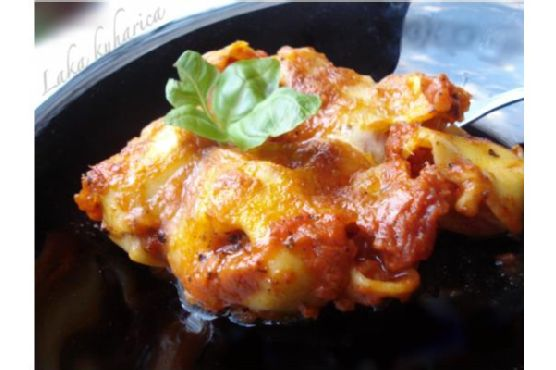
Baked Tortellini In Red Sauce | Made by Meaghan Moineau

Baked Tortellini In Red Sauce

Intro

Growing up, Sunday family dinners were a beloved ritual in our home. The tantalizing aroma of tomatoes and garlic simmering on the stove would draw everyone into the kitchen, setting the stage for an evening of laughter, stories, and delicious food. One of my all-time favorite dishes from those cherished meals was my grandmother’s Baked Tortellini in Red Sauce. With its warm, comforting flavors and perfectly baked, cheesy top, it’s a dish that brings back fond memories each time I make it. Today, I’m thrilled to share this beloved recipe with you, hoping it becomes a staple in your home too.

Why You’ll Love It

This Baked Tortellini in Red Sauce is the epitome of comfort food, combining the richness of a homemade tomato sauce with the creamy, satisfying texture of cheese-filled tortellini. It’s a dish that feels both indulgent and heartwarming, perfect for a cozy family dinner or a special gathering with friends. The ingredients are simple, yet they come together to create a symphony of flavors with every bite. Plus, it’s easy to prepare, making it perfect for those busy weeknights when you crave something homemade without the fuss.

Ingredients

  • 2 cloves garlic, minced
  • 1/2 cup grated Grana Padano cheese
  • 1 cup coarsely grated mozzarella
  • 2 tablespoons olive oil
  • 1 medium onion, chopped
  • 1 teaspoon dried oregano
  • Salt and pepper to taste
  • 1 teaspoon sugar
  • 2 cans (14 ounces each) chopped tomatoes with juice
  • 1 pound fresh tortellini

Instructions

  1. Preheat your oven to 240°C (464°F) and lightly oil a baking dish.
  2. In a large pan, heat the olive oil over medium heat. Add the chopped onion and minced garlic, sautéing for about 5 minutes until the onion is translucent.
  3. Season the onion and garlic with salt, pepper, and dried oregano.
  4. Add the chopped tomatoes and their juice to the pan. Stir to combine and season again with salt, pepper, and oregano.
  5. Bring the mixture to a boil, then sprinkle in the sugar and reduce the heat. Let it simmer on low heat for 20 minutes, allowing the flavors to meld. Adjust seasoning to taste.
  6. While the sauce is simmering, bring a pot of salted water to a boil. Plunge the fresh tortellini into the boiling water and cook just until they float to the surface. Drain and return them to the pot.
  7. Toss the cooked tortellini with the tomato sauce, ensuring each piece is well coated.
  8. Transfer the tortellini and sauce mixture to the prepared baking dish. Sprinkle evenly with the grated Grana Padano and mozzarella cheese.
  9. Bake in the preheated oven for 20-25 minutes, until the cheese is golden and bubbly and the surface is well baked.
  10. Remove from the oven and let the dish stand for 5 minutes before serving. Enjoy with a fresh green salad for a complete meal.

Tips

For an even richer flavor, consider adding a splash of red wine to the tomato sauce as it simmers. If you prefer a spicier kick, a pinch of red pepper flakes can elevate the dish nicely. Remember to taste and adjust the seasoning of the sauce before combining it with the pasta.

Variations & Substitutions

Feel free to customize this recipe to suit your taste or dietary needs. Substitute the Grana Padano cheese with Parmesan for a slightly different flavor. For a vegetarian version, ensure your tortellini is filled with cheese or vegetables. You can also add sautéed mushrooms or spinach for an extra layer of flavor and nutrition.

Storage

Leftovers can be stored in an airtight container in the refrigerator for up to 3 days. To reheat, simply place the tortellini in a preheated oven at 180°C (356°F) until warmed through, or microwave individual portions until hot.

FAQ

Can I use frozen tortellini instead of fresh?

Yes, you can use frozen tortellini. Simply follow the package instructions for cooking time, and proceed with the recipe as directed.

Is it possible to make this dish ahead of time?

Absolutely! You can prepare the tomato sauce and cook the tortellini ahead of time. Combine them in the baking dish, cover and refrigerate for up to a day. When ready to serve, sprinkle with cheese and bake as directed, adding a few extra minutes to the baking time if needed.

Nutrition

While the exact nutritional information will vary based on the brands and specific ingredients used, a generous serving of this baked tortellini dish is a good source of protein and calcium, thanks to the cheese and pasta. For those watching their sodium intake, consider using low-sodium canned tomatoes and adjusting the amount of salt added throughout the recipe.

Conclusion

There’s something truly special about a dish that can transport you back in time, evoking memories of family gatherings and cherished moments. This Baked Tortellini in Red Sauce is not only a simple, satisfying meal but also a culinary hug that brings warmth and comfort to the table. Whether you’re making it for your family or sharing it with friends, it’s sure to become a favorite in your home, just as it has in mine. Enjoy every bite and the memories it creates!

Related update: Baked Tortellini In Red Sauce

Related update: Liz's Lomo Saltado

Nerds to Playoffs: Harvard vs Yale Stakes | Analysis by Brian Moineau

Harvard vs Yale: When “The Game” gained a playoff heartbeat

There’s something deliciously ironic about calling Harvard and Yale “nerds” only to watch them sprint for a postseason berth. The oldest rivalry in American college football — simply called “The Game” — has always been about history, pageantry and bragging rights. This year, it finally has an extra line on the résumé: the winner will earn the Ivy League’s first-ever automatic bid to the FCS playoffs. That changes everything and makes Saturday’s showdown feel less like a ceremonial finish and more like a genuine playoff play-in.

Why this year matters

  • The Ivy League voted this offseason to allow its champion to accept an automatic bid to the NCAA FCS playoffs, ending an era that dated back to World War II. That means the 141st Harvard–Yale meeting isn’t just for pride — it’s for a national tournament spot. (The decision itself was driven by student-athlete advocacy and a shifting view inside the league about postseason participation.)
  • Harvard arrived unbeaten (9–0, 6–0 Ivy) and nationally ranked inside the FCS top 10; Yale (7–2, 5–1 Ivy) was sitting behind them with a legitimate shot to take the title via a head-to-head tiebreaker. The tease: a perfect season for Harvard, or a classic upset that hands Yale a historic berth.
  • Beyond wins and losses, this is a milestone in the sport’s arc: programs that once shaped early college football — and then stepped away from postseason play for principle — are re-entering the national conversation, even if it’s at the FCS level.

A rivalry steeped in history — and now new stakes

The Game dates to 1875, back when college football looked nothing like the TV spectacle it is today. Harvard and Yale, along with Princeton, played outsized roles in the sport’s early evolution. For decades the Ivies deliberately kept postseason football off the calendar, wary of the commercialization and time demands that accompany extended seasons. That stance created an old-world mystique: for many Ivy players the regular season — culminating in The Game — literally was the end of the line.

This year, students helped change that. Grassroots pressure and evolving attitudes about competitiveness and exposure pushed league leadership to reverse course. The result is a rare collision of tradition and modernity: mud-streaked traditions, fight songs and generational pageantry meeting the bracketed logic of a national playoff.

What to watch on the field

  • Matchup balance: Harvard’s offensive consistency this season put them among the FCS elite in scoring; Yale’s defense has been a top-tier unit. When offense meets defense in a rivalry like this, expect tight games and late drama — recent editions of The Game have regularly been decided by a touchdown or less.
  • Motivation layers: For seniors on both teams this is more than a rivalry win; it could extend careers into December and create first-ever playoff memories for programs that haven’t played postseason football in a century.
  • Stakes ripple effects: If Yale wins, it clinches the automatic bid. If Harvard wins and stays undefeated, they’ll likely earn the automatic berth and could be in position for a seeded spot in the FCS bracket — which affects possible matchups and travel.

Perspective: what this means for college football

  • Tradition vs. expansion: The Ivies were one of the last holdouts on postseason play. Their entrance into the FCS playoffs won’t upend the national championship picture, but it signals how even the most tradition-minded conferences are re-evaluating participation in postseason competition.
  • Recruiting and profile: Postseason eligibility changes perceptions. For some recruits, the chance to play in the FCS playoffs — to play beyond November — matters. For the programs, it’s a chance to showcase their teams nationally and to test program-building philosophies against different styles of FCS opponents.
  • Cultural payoff: The Game has always been more than a scoreboard: it’s a cultural touchstone (parodied and celebrated in pop culture for decades). Adding playoff implications layers drama onto those traditions rather than replacing them.

A few things I’m curious about

  • How will Ivy programs fare against traditional FCS powers when styles and rosters differ (Ivy players often balance academics and athletics in ways distinct from many FCS programs)?
  • Will playoff exposure nudge other small, tradition-rich conferences to reconsider postseason strategies — or will the Ivies remain a unique experiment in balancing heritage and modern competition?
  • Will the crowds and national interest this season change the way broadcasters and networks value Ivy matchups in future scheduling?

A quick takeaway roundup

  • The Game now carries a tournament ticket on the line for the first time since the Ivy postseason ban was lifted.
  • Harvard’s undefeated run and Yale’s resilience mean this edition is both a classic rivalry contest and a high-stakes playoff decider.
  • The Ivy League’s shift represents a broader negotiation between college-football tradition and the modern appetite for postseason play.

My take

There’s a satisfying symmetry to watching two of the sport’s oldest programs re-enter the postseason conversation. The Game was always about more than 60 minutes on a November afternoon; it was a cultural ritual. But rituals can evolve. Letting the winner walk into the FCS playoffs doesn’t cheapen the history — it amplifies it. If anything, this season proves tradition and ambition aren’t mutually exclusive: sometimes they make each other better.

Sources


Related update: We recently published an article that expands on this topic: read the latest post.


Related update: We recently published an article that expands on this topic: read the latest post.

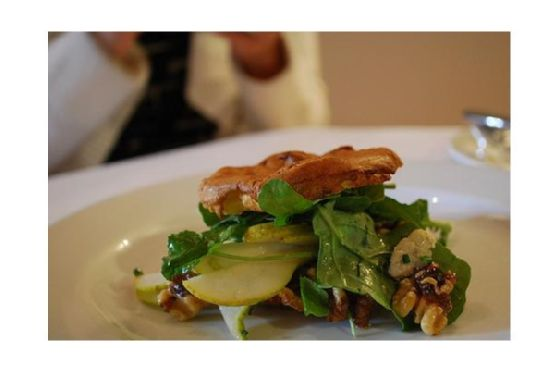
Pear Salad With Walnuts and Blue Cheese | Made by Meaghan Moineau

Pear Salad With Walnuts and Blue Cheese

Intro

There’s something inherently magical about the crispness of autumn, the way the air turns cooler, and the leaves transform into a symphony of warm hues. As a child, this season always meant family gatherings where we would indulge in hearty meals that celebrated the bounty of the harvest. One dish that has always stood out in my memory is my grandmother’s pear salad. It was a delightful mix of sweet and savory, with juicy pears, crunchy walnuts, and the bold flavor of blue cheese. This salad was more than just food; it was a celebration of the season’s best offerings, a dish that brought everyone together, and left you feeling warm and content. Today, I’m thrilled to share this beloved recipe with you, hoping it brings the same warmth to your table as it has to ours.

Why You’ll Love It

This pear salad with walnuts and blue cheese is a perfect blend of flavors and textures. Here’s why you’ll fall in love with it:

  • Balance of Flavors: The sweetness of pears complements the tangy blue cheese, while the walnuts add a savory crunch.
  • Healthy and Nourishing: Packed with vitamins, antioxidants, and healthy fats, this salad is as nutritious as it is delicious.
  • Quick and Easy: With minimal prep time, this salad is perfect for a quick meal or a stunning appetizer.
  • Visually Stunning: The vibrant colors of the salad leaves, pears, and cheese make this dish as beautiful as it is tasty.

Ingredients

  • 4 ripe pears
  • 1 cup crumbled blue cheese
  • 1/4 cup finely chopped chives
  • 6 cups mixed salad leaves (such as curly endive)
  • 2 tablespoons lemon juice
  • 3 tablespoons safflower oil
  • 1 tablespoon walnut oil
  • 1 cup walnuts, toasted and roughly chopped

Instructions

  1. Prepare the pears by cutting the base so they stand straight. This not only makes for an appealing presentation but also ensures the pear remains stable in the bowl.
  2. Arrange one pear and a generous handful of mixed salad leaves in individual serving bowls.
  3. Add a scattering of chopped celery to each bowl for added crunch.
  4. In a separate bowl, whisk together the lemon juice, safflower oil, and walnut oil to create the dressing. Drizzle the dressing over each salad.
  5. Finish by sprinkling the crumbled blue cheese and toasted walnuts evenly over each salad.
  6. Serve immediately and enjoy the delightful flavors of autumn.

Tips

For the best experience, ensure your pears are ripe but still firm to the touch. This will give you the perfect balance of sweetness and crunch. Toasting the walnuts enhances their flavor, so don’t skip this step! If you prefer a milder cheese, consider using gorgonzola instead of blue cheese.

Variations & Substitutions

  • Cheese: Swap blue cheese for feta or goat cheese for a different flavor profile.
  • Nuts: Pecans or almonds can be used as alternatives to walnuts for some variety.
  • Extra Add-ins: Add dried cranberries or pomegranate seeds for a touch of sweetness and color.
  • Dressing: A honey-mustard vinaigrette can be a delightful alternative to the walnut oil dressing.

Storage

This salad is best enjoyed fresh. However, if you need to prepare it in advance, keep the dressing separate and add it just before serving to prevent the salad leaves from wilting. Store any leftovers in an airtight container in the refrigerator for up to a day.

FAQ

Can I use canned pears instead of fresh ones?

While fresh pears offer the best texture and flavor, you can use canned pears in a pinch. Just ensure they are well-drained and not overly sweetened.

What can I use if I’m allergic to nuts?

If you have a nut allergy, try substituting the walnuts with sunflower seeds or pumpkin seeds for an added crunch without the risk.

How can I make this salad vegan?

To make this salad vegan, simply omit the cheese or use a vegan cheese alternative. Ensure the dressing is also free from animal products, perhaps using a balsamic vinaigrette instead.

Nutrition

Each serving of this pear salad is approximately 250 calories, with 18 grams of healthy fats, 5 grams of protein, and 20 grams of carbohydrates. It is a good source of fiber, vitamin C, and antioxidants, making it a nutritious choice for any meal.

Conclusion

This pear salad with walnuts and blue cheese is a tribute to the flavors of fall, a dish that is as nourishing as it is delectable. Whether you’re serving it as a starter at a dinner party or enjoying it as a light lunch, it’s sure to impress with its complex flavors and beautiful presentation. I hope this recipe becomes a staple in your home, just as it has in mine, creating new memories and bringing joy to your dining table.

Related update: Pear Salad With Walnuts and Blue Cheese

Related update: Japanese Gyoza Pot Stickers

Related update: Thai Cucumber Salad (By Roz)

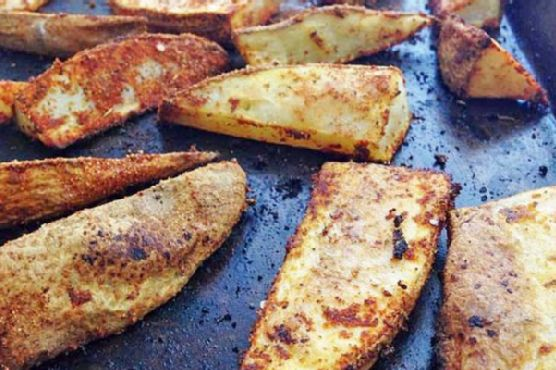
Cajun Potato Wedges | Made by Meaghan Moineau

Cajun Potato Wedges

Intro

There’s something truly magical about the aroma of spices mingling with the earthy scent of potatoes roasting in the oven. It takes me back to my childhood, where Sunday afternoons meant the whole family gathered in the kitchen, eagerly awaiting my grandma’s famous Cajun Potato Wedges. Her kitchen was a haven of warmth and laughter, with the spicy aroma of these wedges filling the air. Each bite was a burst of flavor, a perfect balance of heat and comfort. Today, I’m excited to share this beloved recipe with you, inviting you to create your own cherished memories with these delicious Cajun Potato Wedges.

Why You’ll Love It

These Cajun Potato Wedges are not just another side dish; they are a flavorful adventure for your taste buds. With their crispy exterior and fluffy interior, they bring a delightful texture that pairs perfectly with the bold, spicy seasoning. Whether you’re serving them as a snack, a side dish, or even a party appetizer, these wedges are sure to be a hit. Plus, they’re easy to make and don’t require any fancy ingredients—just good old-fashioned pantry staples with a Cajun twist.

Ingredients

  • 3-4 russet potatoes
  • 2 tablespoons olive oil
  • 1 teaspoon salt
  • 1 teaspoon cayenne pepper
  • 1 teaspoon garlic powder
  • 1 teaspoon onion powder
  • 1 teaspoon paprika
  • 1 teaspoon Italian seasoning
  • 1/2 teaspoon black pepper

Instructions

  1. Preheat your oven to 425 degrees Fahrenheit (220 degrees Celsius).
  2. Wash and scrub the russet potatoes thoroughly. Slice each potato into ½ inch thick wedges, about half the length of the potato.
  3. In a small bowl, combine the cayenne pepper, garlic powder, onion powder, paprika, Italian seasoning, salt, and black pepper. Mix well to create the spice mixture.
  4. Spray a cookie sheet with olive oil cooking spray to prevent sticking.
  5. Place the potato wedges on the cookie sheet. Drizzle with olive oil and toss to coat evenly.
  6. Sprinkle the spice mixture over the potatoes, ensuring each wedge is well-seasoned. Toss again if necessary to distribute the spices evenly.
  7. Bake in the preheated oven for 25 minutes. Remove from the oven, flip the wedges over, and return to the oven for an additional 5 minutes, or until the wedges are golden brown and crispy.
  8. Once done, remove from the oven and let them cool slightly. Serve warm with your favorite dipping sauce.

Tips

For the crispiest wedges, make sure not to overcrowd the pan. This allows for better air circulation and even cooking. Also, keep the potato skins on for added texture and nutrition. If you want an extra kick, feel free to adjust the amount of cayenne pepper to your taste. Remember, the key to perfect wedges is a hot oven and a good toss of oil and spices.

Variations & Substitutions

Feel free to get creative with this recipe! You can substitute sweet potatoes for a different flavor profile or add Parmesan cheese for a cheesy twist. If you prefer a milder version, reduce the cayenne pepper or omit it altogether. You can also experiment with different herbs and spices, such as rosemary or thyme, to suit your personal taste.

Storage

These Cajun Potato Wedges are best enjoyed fresh from the oven. However, if you have leftovers, store them in an airtight container in the refrigerator for up to 3 days. To reheat, simply place them on a baking sheet and warm in the oven at 350 degrees Fahrenheit (175 degrees Celsius) until heated through. This will help retain their crispiness.

FAQ

Can I make these potato wedges in an air fryer?

Yes, you can! Prepare the wedges as instructed and preheat your air fryer to 400 degrees Fahrenheit (200 degrees Celsius). Arrange the wedges in a single layer in the air fryer basket and cook for 15-20 minutes, shaking the basket halfway through, until they are crispy and golden.

What dipping sauces go well with Cajun Potato Wedges?

These wedges are versatile and pair well with a variety of dipping sauces. Consider serving them with ranch dressing, spicy aioli, or a tangy barbecue sauce. For a healthier option, try a Greek yogurt dip with herbs.

Nutrition

While I don’t have exact nutritional information, these Cajun Potato Wedges are a great source of carbohydrates and provide some fiber, especially if you leave the skins on. The olive oil adds healthy fats, and the spices contribute antioxidants. Just remember to enjoy them in moderation as part of a balanced diet.

Conclusion

These Cajun Potato Wedges are more than just a recipe; they’re a gateway to cherished memories and new traditions. Whether you’re looking to spice up your dinner routine or impress guests at your next gathering, these wedges are sure to deliver. Easy to prepare and bursting with flavor, they embody the essence of comfort food with a kick. So gather your ingredients, preheat your oven, and let the aroma of Cajun spices fill your home. Enjoy every crispy, savory bite!

Related update: Cajun Potato Wedges

Destiny 2 Renegades trailer leaks early | Analysis by Brian Moineau

A leaked trailer, a livestream, and a whole lot of Star Wars vibes: Destiny 2’s Renegades gets an early reveal

The internet loves a good whoops — especially when it involves a high-profile game and a shiny trailer. Hours before Bungie planned to show the next big slice of Destiny 2, a Renegades launch trailer slipped into the wild as a YouTube ad. Suddenly Guardians everywhere got an unplanned first look at story cinematics, new characters, and ship designs that look like they borrowed a few pages from a galaxy far, far away.

This little leak matters more than a clickbait misstep. It gives us a peek not only at Bungie’s marketing timing but at the tone and direction of an expansion that is explicitly inspired by Star Wars. Here’s what stood out, why the leak stings and excites at once, and what it might mean for players and Bungie heading into Renegades’ December launch.

What this leak shows

  • The trailer surfaced as a YouTube advertisement, visible before Bungie’s scheduled developer livestream revealed the expansion properly.
  • Footage includes story cinematics, a new cast of characters tied to the Lawless Frontier setting, and ship/vehicle designs that lean heavily into Star Wars aesthetics — from lightsaber-like melee weapons to blaster-style guns and walker-like machines.
  • The spotlight in the clips is on a criminal-underworld angle: missions such as smuggling, bounty-hunting, and sabotage across frontier planets, plus a social hub called Tharsis Outpost. These elements were also highlighted in Bungie’s official Renegades materials, suggesting the leak matched what Bungie intended to reveal. (thegamepost.com)

Why the timing matters

  • Trailers are choreographed moments: reveals, livestreams, and publisher messaging are coordinated to build hype, control narrative, and protect surprises. A leak short-circuits that plan, forcing reaction tweets, rapid clarifications, and potentially spoiling big reveals for viewers who wanted the livestream experience.
  • For Bungie, which has had to rebuild trust after rocky updates earlier in the year, losing control of a primary reveal is awkward — but the footage itself serves the game’s marketing well if fans respond positively. Early footage often spreads fast and can either amplify interest or intensify scrutiny. (gamesradar.com)

The content itself: what Renegades looks like

  • Star Wars-inspired motifs are everywhere: blaster-style exotics, lightsaber-adjacent melee tools (the game describes new “Blaster” weapons and the Praxic Blade-like items), and frontier maps that echo Tatooine, Hoth, and Dagobah vibes. Bungie is leaning into the mash-up intentionally — Renegades is billed as “Star Wars–inspired” and themed with syndicate underworld gameplay. (press.bungie.com)
  • New gameplay hooks: a Lawless Frontier mode with high-risk contracts (smuggling, bounty hunting, sabotage), opt-in PvPvE Invasion mechanics, and a Notoriety system for reputation and loot — all pointing toward Guilty-pleasure, cinematic missions rather than a simple seasonal add-on. (press.bungie.com)

How the community might react

  • Nostalgia and skepticism in equal measure: players who enjoyed Destiny’s cinematic, loot-driven spin will likely be intrigued by the cinematic trailer and Star Wars nods. Others, still critical of certain monetization and balance choices from prior updates, will watch carefully for how much of the new content is gated or monetized. Early leaks accelerate that conversation and can make the first impressions last.
  • A leak can also fuel hype in a useful way. If the trailer wins hearts, Bungie still gets a viral marketing boost (albeit on someone else’s schedule). If fans react negatively, the company must respond fast during the scheduled livestream to reframe or clarify. Recent reporting shows Bungie has been juggling communication and roadmap expectations — Renegades launches at a sensitive moment. (gamesradar.com)

What Bungie’s official rollout still brings

  • Bungie’s livestreams and ViDocs usually add context: release cadence, new systems, balance notes, and exact launch dates. The planned developer livestream — which Bungie scheduled to debut the official Renegades launch trailer — remains the definitive source for details like pre-order bonuses, exact mechanics, and release timing (Renegades is slated to launch December 2, 2025). The livestream also typically lists platform support and edition differences. (bungie.net)

The marketing lesson inside a leak

  • Control what you can, respond fast to what you can’t. Leaks are part of modern entertainment marketing; the damage is often proportional to how well a publisher reacts. A prompt, transparent livestream with additional details and developer commentary can turn a leak into an amplified reveal rather than a smear.
  • For players, a leak is a preview — but not the full story. Cinematics tease tone and design; developer streams and patch notes reveal mechanical truth.

My take

Seeing Renegades’ trailer early is a bittersweet treat. On one hand, the visuals and the Lawless Frontier setup look bold and cinematic, and the Star Wars-inspired touches are likely to pull in both Destiny and sci-fi fans. On the other hand, the moment underscores how tightly labeled expectations and communication matter right now for Bungie: they’ve got to answer lingering player concerns about monetization and long-term direction while delivering a fun, coherent expansion.

If Renegades nails gameplay loops (the contracts, Notoriety rewards, and the new Blaster archetype) and keeps progression and monetization fair, this early trailer could become a memorable hype moment. If not, the leak just gave fans a head start on criticism.

Final thoughts

Leaks will come. What matters is the product behind the footage and how Bungie uses its next livestream to connect the dots. Expect the official reveal to add context, specifics, and answers — and check patch notes when Renegades lands on December 2, 2025, to see how the promise lines up with play.

Sources


Related update: We recently published an article that expands on this topic: read the latest post.


Related update: We recently published an article that expands on this topic: read the latest post.


Related update: We recently published an article that expands on this topic: read the latest post.

Casey Bloys Charts HBO’s Future Slate | Analysis by Brian Moineau

The calm in the storm: Casey Bloys, HBO’s slate and the future of Harry Potter on TV

You could feel the tension in the room even before Casey Bloys stepped up at HBO’s Hudson Yards preview: Warner Bros. Discovery had just opened the books to potential buyers, and the entire media world was trying to guess what a sale might mean for HBO and Max. Bloys responded the way a programming executive does best — not with panic, but with clips, clarity and confidence about the shows that will keep viewers tuning in.

Below I unpack what he said, why it matters for fans and the industry, and how the Harry Potter TV series and a new “Max originals” strategy fit into a broader playbook for durable streaming relevance.

Why this moment feels bigger than a regular slate preview

  • Warner Bros. Discovery’s strategic review and potential sale have media watchers asking whether HBO will be reshaped, split off, or folded into a new owner.
  • At the same time, HBO and Max are trying to deliver 52 weeks of appointment viewing — and a marquee, high-risk project like the Harry Potter series is both a content coup and an operational headache.
  • Bloys’ message was steady: focus on programming, minimize distraction, and design shows that can return audiences habitually.

What Bloys said that matters

  • He downplayed personal or organizational worry about the sale timeline, telling staff and reporters the best response is to keep making the best programming possible.
  • On Harry Potter: Season 1 is filming in the U.K. while writers are already working on Season 2 scripts. The goal is to minimize gaps between seasons — difficult given the scale, effects and the child/teen cast’s ages, but clearly prioritized.
  • On Max originals: Bloys defined them as a more specific tier of programming — cost-efficient, elevated series with higher episode counts that can return each year, modeled after hits like The Pitt, which delivered habitual (weekly) viewing and strong awards recognition.

Highlights from the slate and strategy

  • Emphasis on shows that can build routine viewing across the year — not only prestige limited series, but serialized, returning properties that justify more episodes and quicker turnarounds.
  • Investment in large franchise adaptations while trying to manage risk: Harry Potter is a global tentpole, but it requires logistical finesse and sensitivity around the surrounding cultural controversies.
  • Creative continuity: HBO is signaling it wants to move fast on successful shows (shorter turnaround between seasons) without sacrificing production quality.

What the Harry Potter timeline actually implies

  • Shooting Season 1 while writers draft Season 2 signals HBO’s attempt to compress development timelines and avoid a long hiatus that would undercut momentum.
  • Practical limits remain: heavy VFX, child actors aging, and large-scale production logistics mean “no huge gap” is aspirational — but the intent is clear.
  • Bloys’ comments suggest a target in the 2026–2027 window remains plausible (industry reporting has placed the series aiming for late 2026 to early 2027), though such targets are always contingent on post-production and scheduling realities.

The strategic pivot: Max originals as a complement to prestige

  • Bloys framed Max originals as a deliberate product: slightly leaner in cost per hour than flagship HBO prestige but engineered to return audiences consistently across many weeks.
  • This is a two-pronged approach: keep HBO’s prestige identity intact while building a steady engine of returning serialized content to improve subscriber retention and fill calendar gaps.
  • The success of The Pitt (emblematic habitual viewing and awards) is being used as proof-of-concept — and a model to replicate at scale.

Why this approach matters for viewers and the business

  • For viewers: more predictable seasons, more serialized shows that reward regular watching, and a pipeline that mixes prestige with dependable weekly drama.
  • For the business: habitual viewing helps subscriber retention, and a clearer definition of “Max original” gives programming and marketing teams a sharper product strategy to pitch to audiences and potential buyers.
  • For talent and creators: the push to shorten gaps between seasons can be appealing (steady work) but also risky if schedules compress too much.

My take

HBO is, as ever, playing to its strengths: prestige storytelling plus a growing appetite for serial, returning formats. Casey Bloys’ steady tone at Hudson Yards was intended to reassure both creators and the market that content remains the center of gravity even amid corporate maneuvering. The Harry Potter TV adaptation is the most visible test of that posture — ambitious, high-stakes and emblematic of why studios and streamers still believe event television matters.

If HBO can pull off shorter turnarounds without compromising quality, it would be a meaningful competitive edge in a crowded streaming landscape. The gamble will be balancing speed and scale with the careful craft that made HBO a cultural barometer in the first place.

A few practical questions to watch next

  • Will the buyer (if WBD is sold) maintain HBO/Max’s creative autonomy, or will cost rationalization change the slate?
  • Can production schedules realistically deliver the compressed season-to-season cadence Bloys described for large VFX-heavy shows?
  • How will the Harry Potter series navigate ongoing public scrutiny related to the franchise’s creators while still courting a global family audience?

Final thoughts

Bloys’ message was less about ignoring the sale and more about controlling what HBO can control: the shows. In an era where corporate strategy and creative ambition often collide, that’s a pragmatic — and slightly old-school — stance. For viewers, the takeaway is straightforward: expect both prestige and more dependable serialized fare from HBO/Max in the near term. For the industry, the real story will be whether this dual strategy can produce hits that both win awards and keep people watching week after week.

Sources

Wild Blueberry Lemon Muffins | Made by Meaghan Moineau

Wild Blueberry Lemon Muffins

Intro

There’s something inexplicably comforting about the aroma of freshly baked muffins wafting through the house. It takes me back to Sunday mornings in my grandmother’s cozy kitchen, where the sun would gently stream through the lace curtains, casting delicate patterns on the worn wooden table. Those mornings were filled with the chatter of family and the irresistible scent of golden-brown muffins cooling on the counter. Today, I’m thrilled to share a recipe that captures that warmth and nostalgia: Wild Blueberry Lemon Muffins. These muffins combine the tartness of lemons with the sweet burst of wild blueberries, creating a delightful treat that’s perfect for breakfast, brunch, or any moment in between.

Why You’ll Love It

These Wild Blueberry Lemon Muffins are the embodiment of simple pleasures. Each bite offers a perfect balance of sweetness and tartness, with the wild blueberries providing juicy pops of flavor. The muffins are moist, tender, and crowned with a tangy lemon glaze that elevates them from ordinary to extraordinary. Whether you’re hosting a brunch or looking for a delightful weekday breakfast, these muffins are sure to impress. Plus, they’re incredibly easy to make, requiring just a few staple ingredients and minimal effort.

Ingredients

  • 2 cups all-purpose flour
  • 2 teaspoons baking powder
  • 1/4 teaspoon salt
  • 1/2 cup unsalted butter, softened
  • 1 cup granulated sugar, plus 1/8 cup for lemon zest
  • 1 large egg
  • 1 cup buttermilk
  • 1 teaspoon vanilla extract
  • 1 tablespoon fresh lemon juice
  • 1 tablespoon lemon zest
  • 1 cup canned wild blueberries, drained
  • 1 cup powdered sugar

Instructions

  1. Preheat your oven to 375°F (190°C). Line 16 muffin cups with paper liners.
  2. Mash 1/8 cup of sugar with the lemon zest in a small bowl until the sugar is moistened and fragrant.
  3. In a medium-sized bowl, whisk together the flour, baking powder, and salt. Set aside.
  4. Using an electric mixer, beat 1 cup of sugar and the softened butter together in a large bowl until light and fluffy.
  5. Add the egg to the butter mixture, beating well after each addition.
  6. Mix in the buttermilk, vanilla extract, and lemon sugar gradually, ensuring each ingredient is fully incorporated.
  7. Slowly add the flour mixture to the wet ingredients, mixing until the batter is smooth and free of lumps.
  8. Fold in the wild blueberries gently with a large spatula, being careful not to crush them.
  9. Divide the batter equally among the prepared muffin tins, filling each about 3/4 full.
  10. Bake for about 35 minutes, or until a cake tester inserted into the center of a muffin comes out clean.
  11. Allow the muffins to cool in the pan for a few minutes before transferring them to a wire rack.
  12. Prepare the lemon glaze by combining the lemon juice, remaining lemon zest, and powdered sugar in a small bowl.
  13. Spoon about 1 tablespoon of glaze over each muffin, letting it drip down the sides.

Tips

For the best muffins, ensure your butter is at room temperature before you start. This allows it to incorporate more air, resulting in fluffier muffins. Also, when folding in the blueberries, do so gently to avoid breaking them and turning your batter purple. Finally, don’t skip the glaze—it’s what ties everything together with a delightful zing!

Variations & Substitutions

If you can’t find canned wild blueberries, fresh or frozen ones will work just as well. Just make sure to pat them dry if using frozen to avoid excess moisture. For a dairy-free version, substitute the buttermilk with almond milk mixed with a splash of lemon juice. You can also try adding a handful of chopped nuts, like almonds or walnuts, for some extra texture.

Storage

These muffins are best enjoyed fresh, but they can be stored in an airtight container at room temperature for up to three days. If you want to keep them longer, they freeze beautifully. Just wrap each muffin individually in plastic wrap and place them in a resealable plastic bag. They can be frozen for up to two months. To enjoy, simply thaw at room temperature or warm them in the oven for a few minutes.

FAQ

Can I use regular blueberries instead of wild blueberries?

Absolutely! Regular blueberries can be used as a substitute if wild blueberries aren’t available. Keep in mind that wild blueberries tend to be smaller and more intensely flavored, so you might notice a slight difference in taste and texture with regular blueberries.

How can I make my muffins rise higher?

To achieve higher rising muffins, make sure your baking powder is fresh. Additionally, starting with a higher oven temperature for the first 5 minutes of baking can create a burst of steam, which helps the muffins rise. Then, reduce the temperature to the specified 375°F for the remainder of the baking time.

Can I make these muffins gluten-free?

Yes, you can make these muffins gluten-free by using a gluten-free all-purpose flour blend. Ensure the blend contains xanthan gum or a similar binding agent, which helps mimic the texture of traditional flour.

Nutrition

Each muffin is approximately 210 calories, with 8g of fat, 32g of carbohydrates, and 2g of protein. The nutritional content can vary slightly based on ingredient brands and portion sizes.

Conclusion

These Wild Blueberry Lemon Muffins are more than just a treat; they’re a little piece of nostalgia wrapped in a paper liner. With their sunny lemon flavor and sweet blueberries, they’re sure to brighten any day. Whether you enjoy them with a cup of tea or as a grab-and-go breakfast, these muffins are a delightful reminder of the simple joys in life. I hope this recipe brings as much joy to your kitchen as it has to mine. Happy baking!

Related update: Wild Blueberry Lemon Muffins

Las Vegas GP Night Race: Stats & Strategy | Analysis by Brian Moineau

Neon, brakes and big-picture drama: why Las Vegas matters for the 2025 finale

There’s something intoxicating about a street circuit that runs down the Strip: the lights, the straights that make your stomach drop, and the knowledge that one small mistake can echo through an entire championship. The 2025 Las Vegas Grand Prix arrives as the first race of the season’s final triple-header, and it’s built to serve fireworks — on-track and in the standings. This guide walks through the stats, the setup, and the tactical thinking you’ll see under the neon for the Las Vegas night race.

Snapshot — what to watch this weekend

  • Date and format: Las Vegas is a night race on the 6.201 km Las Vegas Strip Circuit. Free Practice 1 and 2 are scheduled for Thursday evening (Nov 20), FP3 and Qualifying on Friday (Nov 21), and the 50-lap Grand Prix on Saturday (Nov 22). (formula1.com)
  • Race position in season: Round 22 of a 24-race calendar — the start of the final triple-header (Las Vegas → Qatar → Abu Dhabi). (formula1.com)
  • Key championship context: Lando Norris arrives in form after back-to-back poles and wins; there are still 83 points available across the three remaining events, so the title fight is alive. (formula1.com)

Quick facts that shape the weekend

  • Track length: 6.201 km — one of the longest on the calendar. (formula1.com)
  • Lap record: 1:34.876 (Lando Norris, McLaren, 2024). (formula1.com)
  • Safety Car and VSC probabilities: listed high (both around 50%), reflecting the tight walls and potential street-circuit incidents. (formula1.com)
  • Typical pit-stop time loss: ~20 seconds (including the stationary 2.5s). (formula1.com)

These numbers aren’t trivia — they’re the inputs teams use when deciding how aggressive to be on tyre choice, fuel load and overtaking strategy.

What the drivers and engineers will be sweating

  • Tyre warm-up: cold evening air plus long straights makes bringing tyres into the working window hard — especially for qualifying laps. Pirelli and the teams stress tyre warm-up and management as the main challenge. Short prep laps before a flying lap become invaluable. (formula1.com)
  • Low downforce demand: the long straights encourage trimmed setups, which increases the car’s sensitivity and makes braking zones trickier; traction out of corners becomes paramount. (formula1.com)
  • Braking hotspots: Turn 6→7 and Turn 12 were highlighted as heavy-braking, make-or-break areas where locking up or poor exits cost big time. Expect drivers to sacrifice apexes for exit speed. (formula1.com)
  • Track surface & street-circuit quirks: manhole covers and surface transitions are not theoretical — the Las Vegas layout has produced sessions disrupted by shifting covers in past events, and teams will be hyper-aware of debris and kerb behaviour. (Event-day reporting from practice sessions has shown such risks remain real.) (talksport.com)

Strategy primers — how the race could play out

  • One-stop vs. two-stop: with a 20s pit loss and relatively high straight-line speed, teams will weigh degraded grip vs. track position. If tyre degradation is moderate (as Pirelli’s C3–C5 selection and compound updates suggest), a one-stop is feasible — but safety car interruptions or graining could force strategies to diverge. (formula1.com)
  • Qualifying premium: the difficulty warming tyres for a hot lap makes qualifying position extra valuable — a clean run is worth more here than at many permanent circuits. Expect high emphasis on nailing the final run in Q3. (formula1.com)
  • Safety car leverage: given the elevated SC/VSC probabilities, opportunistic pit stops under neutralized conditions could reshuffle the order. Teams will have contingency plans to exploit any mid-race interruption. (formula1.com)

Drivers and teams to keep an eye on

  • Lando Norris / McLaren: hot form heading in; if McLaren can nail qualifying and manage tyres into the race, Norris will be the benchmark. (formula1.com)
  • Oscar Piastri / McLaren: close in the fight but inconsistent recently — a weekend swing for or against him could decide the title. (formula1.com)
  • Max Verstappen / Red Bull: out of the lead by points but still supremely dangerous — Red Bull will chase race pace and strategy to claw ground back. (formula1.com)
  • Mercedes and Ferrari: fighting for P2 in the constructors’ table; Las Vegas could offer a big pay-off if they balance performance with reliability and risk management. (formula1.com)

Race-day narrative threads to watch

  • Can tyre upgrades and compound choices reduce last year’s graining and allow more aggressive strategies? Pirelli’s notes suggest improved mechanical properties in the 2025 tyres, which could make medium compounds more viable. (formula1.com)
  • Who handles the cold-track tyre window better at night? The sessions are running earlier this year, which should slightly ease cold conditions — but cold remains a limiter. (formula1.com)
  • How teams respond to on-track disruptions (manhole covers, debris, safety cars) will reveal operational strength. Quick decisions under caution could swing the race. Recent practice interruptions underline this fragile element. (talksport.com)

What the numbers suggest about the championship

  • With 83 points left across three events, nothing’s settled. A strong Las Vegas haul could put a driver on the verge of sealing the title in Qatar or Abu Dhabi; a poor weekend and the pendulum swings the other way. Expect calculated aggression from those who need to claw points back. (formula1.com)

My take

Las Vegas is a cocktail of extremes: raw speed down the Strip married to the unforgiving intimacy of a street track. That mix rewards the precise, punishes the overeager, and creates strategic chaos when the safety car comes out — which it often will. For fans, that makes for one of the most entertaining and consequential rounds of the year: expect drama, late-race gambits, and a championship narrative that could be rewritten under neon.

Sources


Related update: We recently published an article that expands on this topic: read the latest post.


Related update: We recently published an article that expands on this topic: read the latest post.

Swiss Chard Wraps | Made by Meaghan Moineau

Swiss Chard Wraps

Intro

There’s something magical about the simplicity and freshness of handmade wraps, especially when they bring back memories of sunny days spent in the garden with my grandmother. As a child, I would watch her transform vibrant, crisp produce into delightful meals, and her swiss chard wraps always stood out as a favorite. The rich greens of the chard leaves, paired with the vibrant colors of fresh vegetables, made each bite a burst of flavor and nostalgia. Today, I want to share with you this cherished recipe, hoping it brings as much joy to your table as it always has to mine.

Why You’ll Love It

These Swiss Chard Wraps are not only visually stunning but also packed with nutrients and flavor. The combination of fresh vegetables with a hint of spicy peanut vinaigrette makes them a delightful and healthy option for lunch or dinner. They are perfect for those who are looking for a gluten-free and vegan-friendly meal that doesn’t compromise on taste. Whether you’re serving them as a side to your favorite protein or enjoying them on their own, these wraps are sure to satisfy.

Ingredients

  • Dried swiss chard leaves
  • Orange cauliflower
  • Olive oil
  • Garlic
  • Salt
  • Fresh basil
  • Zucchini
  • Red bell pepper
  • Avocado
  • Trader Joe’s spicy peanut vinaigrette

Instructions

  1. Chop off the stems of the swiss chard at the point where it meets the leaf. You could stem the swiss chard entirely, but I like leaving a bit of stem with the leaves to give better structure to the wraps.
  2. Chop the cauliflower into small pieces and pulse them in a food processor until it looks like rice. I usually pulse the cauliflower florets and the stalk together.
  3. Place the olive oil in a sauté pan over medium-high heat. Once the pan is hot, add the garlic and let it fry for about a minute or two, or until the garlic starts to brown.
  4. Add the pulsed cauliflower rice and cook it for about 2-3 minutes. The cauliflower should turn into a vibrant yellow-orange color when it is cooked.
  5. Add a pinch of salt and chopped basil to the cauliflower and stir.
  6. Spiralize the zucchini with Blade B to create zucchini noodles. If you do not have a spiralizer, just create zucchini ribbons with a vegetable peeler.
  7. To assemble the wraps, place a large leaf flat down. Add a bit of sautéed cauliflower, zucchini noodles, red pepper, and avocado along the swiss chard stalk.
  8. Drizzle a bit of vinaigrette on top of the vegetables and wrap everything up.
  9. Enjoy these wraps as a side to your favorite protein! Feel free to dip these wraps in more sauce.
  10. These wraps are best consumed when they are freshly made. Refrigerate any leftovers in an airtight container.

Tips

For the best results, ensure your swiss chard leaves are fresh and dry. This will make them easier to work with and keep your wraps from becoming soggy. Be gentle when wrapping to avoid tearing the leaves, and feel free to secure them with toothpicks if needed.

Variations & Substitutions

If swiss chard isn’t available, you can substitute with large kale or cabbage leaves. For those who enjoy a bit more heat, consider adding sliced jalapeños or a sprinkle of chili flakes. The vinaigrette can also be swapped out for your favorite dressing if you prefer a different flavor profile.

Storage

These wraps are best enjoyed fresh, but if you have leftovers, store them in an airtight container in the refrigerator for up to two days. When ready to eat, let them sit at room temperature for a few minutes for the best texture.

FAQ

Can I prepare the ingredients ahead of time?

Yes, you can prepare the cauliflower rice and chop the vegetables ahead of time. Store them in separate containers in the fridge to keep everything fresh. Assemble the wraps just before serving for the best results.

What can I serve with these wraps?

These wraps pair beautifully with grilled chicken or tofu for added protein. A side of quinoa or a light soup would also complement the meal nicely.

Are these wraps suitable for meal prep?

While these wraps are best consumed fresh, you can prepare the components in advance and assemble them when you’re ready to eat. This will help maintain their texture and flavor.

Nutrition

Each wrap is packed with vitamins and minerals from the fresh vegetables, providing a healthy dose of fiber, antioxidants, and healthy fats, particularly from the avocado and olive oil. It’s a low-calorie meal that’s both satisfying and nourishing.

Conclusion

Swiss Chard Wraps are a delightful way to enjoy a fresh, nutritious meal that’s easy to prepare and full of flavor. I hope this recipe brings a touch of sunshine to your kitchen and inspires you to get creative with your wraps. Whether you’re reminiscing about gardening days gone by or creating new memories with your loved ones, these wraps are sure to become a favorite in your home. Enjoy every bite!

Related update: Swiss Chard Wraps

Related update: Cajun Potato Wedges

Marinated Flat Iron Steak | Made by Meaghan Moineau

Marinated Flat Iron Steak: A Flavorful Delight

Intro

There’s something incredibly nostalgic about the sizzle of a steak hitting a hot grill. Growing up, summer evenings were often spent in the backyard with my family, gathered around the barbecue as the aroma of marinated meat filled the air. My dad would always let me help prepare the marinade, and I remember the joy of mixing the ingredients together, the sharp tang of balsamic vinegar mixing with the earthy aroma of fresh herbs. This Marinated Flat Iron Steak recipe brings back those cherished memories and promises to create new ones for your family and friends.

Why You’ll Love It

This Marinated Flat Iron Steak recipe is a delicious blend of simplicity and flavor, perfect for weeknight dinners or weekend gatherings. Here’s why you’ll love it:

  • Quick and Easy: With a straightforward marinade and minimal prep time, this recipe fits perfectly into busy schedules.
  • Flavorful: The combination of balsamic vinegar, dijon mustard, and fresh herbs infuses the steak with a vibrant taste.
  • Versatile: Whether you’re hosting a summer barbecue or looking for a cozy indoor dinner, this steak is a crowd-pleaser.
  • Memorable: Each bite is a reminder of sunny days and joyful gatherings, making it not just a meal, but a shared experience.

Ingredients

  • Balsamic vinegar
  • Dijon mustard
  • Flat iron steak
  • Garlic cloves
  • Ginger
  • Fresh herbs: rosemary
  • Lemon zest
  • Lemons
  • Mayonnaise
  • Olive oil
  • Salt and pepper

Instructions

  1. Cut the flat iron steak lengthwise to form two equal strips.
  2. In a large baking pan or Ziploc bag, combine balsamic vinegar, dijon mustard, minced garlic, grated ginger, chopped fresh rosemary, lemon zest, juice of the lemons, mayonnaise, olive oil, salt, and pepper to form the marinade.
  3. Add the steak strips to the marinade, ensuring they are well-coated. Cover, or seal the bag, and place in the refrigerator for at least an hour, or overnight for deeper flavor.
  4. Preheat your BBQ to high heat. Once hot, place the marinated steaks on the grill.
  5. Cover and cook for 3 minutes on one side.
  6. Flip the steaks and cook the other side for another 3 minutes, or until they reach your desired level of doneness.
  7. Remove from the grill and let the steaks rest for 5 minutes before slicing and serving.

Tips

To ensure your steak is perfectly cooked and flavorful, consider these tips:

  • Marinate Longer: For a more intense flavor, let the steak marinate overnight.
  • Room Temperature: Allow the steak to come to room temperature before grilling for even cooking.
  • Rest the Meat: Letting the steak rest after cooking will help retain its juices, ensuring a juicy bite.

Variations & Substitutions

This recipe is wonderfully adaptable to suit your tastes and dietary needs:

  • Herbs: Swap rosemary for thyme or oregano for different herbal notes.
  • Citrus Twist: Use lime or orange zest instead of lemon for a different citrus profile.
  • Spicy Kick: Add a pinch of red pepper flakes to the marinade for some heat.
  • Dietary Adjustments: For a dairy-free version, ensure your mayonnaise is plant-based.

Storage

If you have leftovers, store them properly to maintain their flavor:

  • Refrigeration: Store cooked steak in an airtight container in the refrigerator for up to 3 days.
  • Freezing: You can freeze the cooked steak for up to 2 months. Wrap it tightly in plastic wrap and place in a freezer-safe bag.
  • Reheating: Reheat gently in a skillet over medium heat or in the oven to prevent the steak from drying out.

FAQ

Can I use a different cut of steak?

Absolutely! While flat iron steak is great due to its tenderness and flavor, you can use this marinade with other cuts like flank steak, skirt steak, or even ribeye. Just adjust the cooking time based on the thickness and type of steak.

What side dishes pair well with this steak?

This steak pairs wonderfully with a variety of sides. Consider serving it with grilled vegetables, a fresh garden salad, or creamy mashed potatoes for a complete meal.

How do I know when the steak is done?

Use a meat thermometer to check the internal temperature. For medium-rare, aim for 135°F (57°C), for medium 145°F (63°C), and for well-done, 160°F (71°C). Remember that the steak will continue to cook a bit as it rests.

Nutrition

While the exact nutrition can vary based on the size of your steak and the exact amount of marinade, a typical serving of this marinated flat iron steak provides essential nutrients like protein, healthy fats from olive oil, and vitamins from the herbs and lemon. It’s a wholesome choice that fits well into a balanced diet.

Conclusion

Creating delicious meals that bring people together is a true joy, and this Marinated Flat Iron Steak recipe is perfect for just that. With its rich flavors and simple preparation, it’s sure to become a favorite at your table, just as it has been at mine. Whether you’re reminiscing about past gatherings or creating new memories, this dish is a wonderful way to celebrate the joy of cooking and sharing good food with loved ones.

Related update: Marinated Flat Iron Steak

Related update: Swiss Chard Wraps

Related update: Baked Tortellini In Red Sauce

Nvidia Earnings: Verdict for AI Leadership | Analysis by Brian Moineau

Nvidia at the Crossroads: Big Expectations, Bigger Questions

The buzz was electric heading into Nvidia’s fiscal third-quarter earnings on November 19, 2025. After years of setting the bar for AI-driven growth, NVDA arrived at the report with sky-high expectations — and a chorus of voices telling investors to either hold fast for the long haul or tighten the seatbelt for a fast ride down if things go wrong.

This post digests a recent TipRanks piece featuring top investor Adria Cimino, places that view against the broader market backdrop, and offers a grounded take on what mattered (and what still matters) after the results landed.

Why this quarter felt different

  • Nvidia’s leadership in AI datacenter GPUs — particularly the Blackwell family — had been fueling extraordinary demand across cloud providers and enterprise AI deployments. Analysts and market narratives had tilted heavily bullish going into the print. (tipranks.com)
  • At the same time, high-profile skeptics and macro concerns introduced volatility risk: a few big shorts and notable institutional moves (for example, some stake sales) added a frisson of near-term unpredictability. That’s one reason commentators cautioned about big swings around the release. (tipranks.com)
  • TipRanks highlighted a common investor dilemma: impressive fundamentals and growth potential versus frothy multiples and the risk of sentiment-driven pullbacks. Adria Cimino framed it as a long-term buy thesis tempered by a recommendation to manage position sizing if you’re nervous. (tipranks.com)

What the market and the headlines were expecting

  • Street consensus headed into the report expected another blowout quarter driven by datacenter revenue and continued strength in AI capex; pre-report estimates centered on revenue in the mid-$50 billions and elevated margins. (nasdaq.com)
  • Analysts broadly favored Nvidia: the consensus on TipRanks showed heavy Buy support and an average 12‑month target implying material upside from then-current prices. But that bullishness coexisted with warnings about valuation and concentration risk. (tipranks.com)

The real outcome (brief recap with context)

Nvidia reported fiscal Q3 results on November 19, 2025 that materially beat expectations: revenue and EPS were well above consensus, driven by an outsized datacenter performance and sustained demand for the Blackwell GPUs. The company also issued bullish guidance for the following quarter. Market reaction was positive, with shares moving higher after the print. (kiplinger.com)

How to read Cimino’s view now

  • The TipRanks piece distilled a pragmatic long-term endorsement: Cimino views Nvidia’s multiple as justifiable given the company’s earnings power and secular position in AI infrastructure, but she also urged that investors consider locking in gains or trimming exposure if they’re uncomfortable with near-term volatility. (tipranks.com)
  • That advice maps well to a risk-management playbook: for long-term believers, dollar-cost averaging or holding but trimming size can reduce regret if sentiment shifts; for traders, earnings-driven swings create opportunities — and risks — for quick profits or losses.

Three practical investor angles

  • For long-term holders:
    • Nvidia’s structural leadership in AI hardware makes a compelling case to stay invested, particularly if you’re multi-year focused and can stomach large interim drawdowns. The company’s margin profile and datacenter growth were strong evidence for that thesis. (proactiveinvestors.com)
  • For swing traders:
    • Earnings and guidance often generate high intraday volatility. Having a pre-defined plan (entry, stop-loss, position size) is crucial. The presence of big shorts and institutional stake moves can amplify moves. (barrons.com)
  • For cautious or value-oriented investors:
    • Consider taking partial profits after a long run-up or using hedges (like options strategies) to protect gains while retaining upside exposure. Pay attention to guidance consistency and signs of demand broadening beyond hyperscalers.

Signals to watch next

  • Datacenter demand durability beyond hyperscalers — broad adoption across industries reduces concentration risk.
  • Gross margin trajectory and supply-chain signals; Nvidia’s margins historically exceeded many peers, but sustaining that while scaling is key. (tipranks.com)
  • Management guidance and commentary about customer mix, international demand, and inventory dynamics.
  • Macro and sentiment shifts: headline shorts, large stake sales, or regulatory news can create outsized price moves detached from fundamentals. (barrons.com)

What this means for the average investor

  • The take from TipRanks — and echoed by many analysts — is straightforward: Nvidia’s business fundamentals justify a bullish long-term stance, but the stock’s multiple and the market’s sentiment make it a bumpy ride. If you believe in Nvidia’s multi-year role powering AI infrastructure, align your allocation and expectations to that horizon. If you’re near-term focused, prepare for volatility or consider reducing concentrated exposure. (tipranks.com)

My take

Nvidia’s Q3 showed why it’s central to the AI hardware story: the results validated the demand thesis. But market leadership comes with higher scrutiny and a premium multiple — and that premium is sensitive to sentiment swings. For investors, the most productive move is usually not to chase headlines but to match allocation to conviction and to protect against the inevitable short-term noise. Treat NVDA like a powerful engine: tremendous upside with a throttle that occasionally sticks.

Sources


Related update: We recently published an article that expands on this topic: read the latest post.


Related update: We recently published an article that expands on this topic: read the latest post.