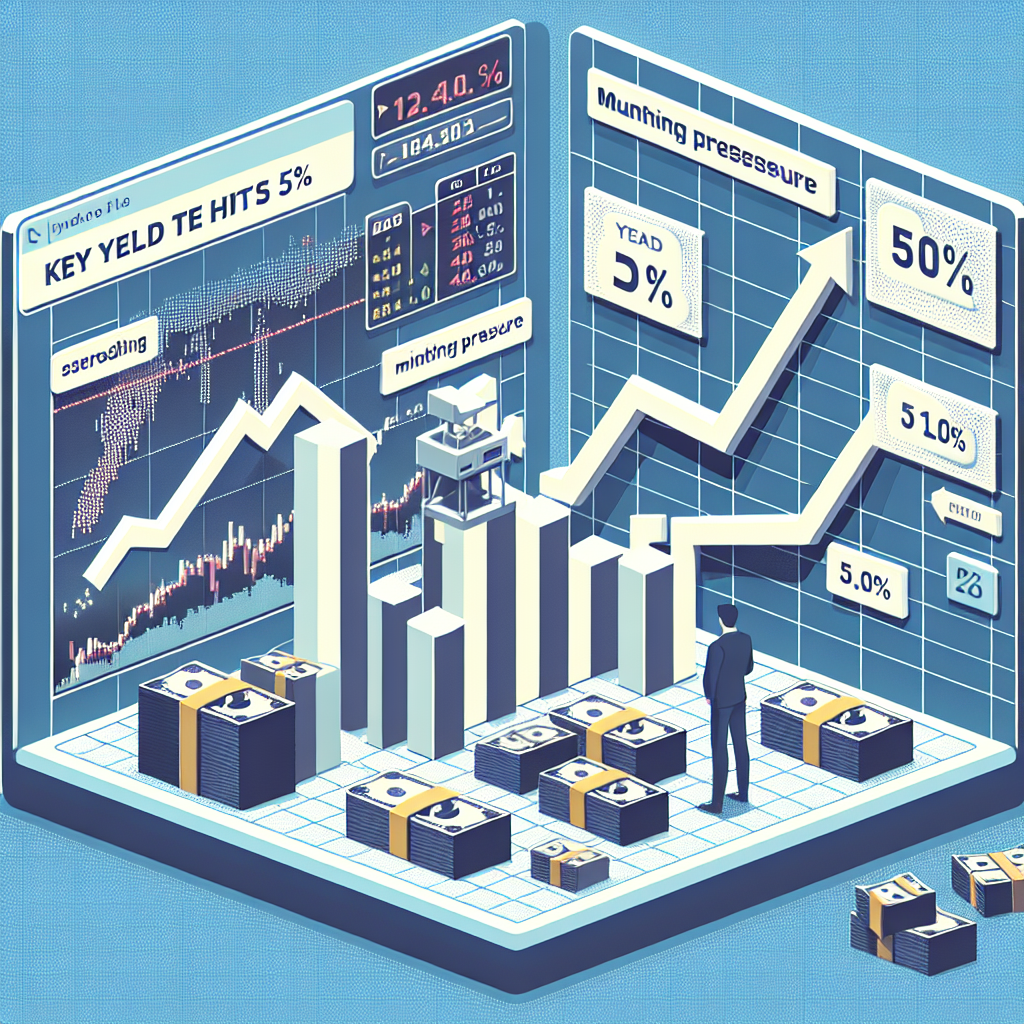
30-Year Yield at 5%: Pressure on Borrowing | Analysis by Brian Moineau

The long end is talking: why the 30‑year yield hovering around 5% matters

The yield on 30‑year US government debt hovered around 5% this week, and that simple sentence carries a lot of freight. Long‑term Treasury yields aren’t just an abstract market statistic — they’re a price signal that ripples into mortgage rates, corporate borrowing costs, pension funding, and how investors price risk across the global economy. When the 30‑year yield touches a round number like 5%, markets and money managers pay attention because it’s both psychological and practical: borrowing math changes, balance sheets flex, and strategy conversations shift.

Let’s walk through why this move is more than noise, what’s driving it, and what to watch next.

Why a 5% 30‑year yield is news

  • A higher 30‑year yield means the government pays more to borrow for three decades. That raises the baseline for long‑term interest rates across the economy.
  • Mortgage rates tend to track the long end; when the 30‑year Treasury rises, so does the cost of a 30‑year fixed mortgage, squeezing housing affordability.
  • Pension plans and insurers mark long liabilities to market prices; sustained higher yields alter funding ratios and the economics of fixed‑income allocations.
  • The long end reflects expectations about inflation, growth, fiscal policy and global demand for safe assets — it’s where the “what‑do‑we‑really‑expect over decades” conversation happens.

Put simply: moves at the long end force investors and policymakers to re‑ask the question, “How expensive will money be for the next generation?”

The yield on 30‑year US government debt hovered around 5% — what pushed it there?

Several factors have conspired to nudge the long‑end higher:

  • Inflation and inflation expectations: Even if headline CPI has cooled from its peak, stickier or unpredictable prices keep investors demanding higher compensation for tying money up for 30 years.
  • Fed policy and rate path bets: If markets push back expectations for Federal Reserve rate cuts — or see a risk the Fed may stay restrictive longer — long yields can rise as investors price in a higher neutral rate or slower easing.
  • Fiscal dynamics and issuance: Large or persistent deficits mean more Treasury supply. If global demand for long‑dated paper softens, yields need to move up to attract buyers.
  • Geopolitical and market stress: Events that change risk perceptions (commodity shocks, trade disruptions, regional conflicts) can alter both inflation expectations and safe‑asset flows, putting upward pressure on long yields.
  • Technicals and liquidity: Auction weakens, lower foreign buying, or flows out of long‑duration ETFs can amplify a move once it starts.

Those forces don’t act in isolation. The market is sensitive to small changes in each — and when they line up, the long end can move quickly.

What it means for everyday markets and people

  • Mortgages and housing: Long‑term mortgage rates often move with the 30‑year Treasury. A sustained rise toward or above this 5% zone lifts monthly payments for new homebuyers and can chill refinancing activity.
  • Corporate borrowing and investment: Companies issuing long‑dated bonds face higher interest costs, which can alter capital expenditure plans and valuations.
  • Risk assets: Higher long yields can make bonds more attractive versus stocks, or at least raise the hurdle rate for equities — especially for growth companies whose valuations rely on low discount rates.
  • Government interest expense: Higher long yields increase the present value cost of future debt. For a large issuer like the U.S., that matters for budget math if yields stay elevated.
  • Savers and retirees: Higher yields on long Treasuries can be a silver lining for savers who can ladder or buy duration; but pension plans may mark down liabilities, creating funding headaches.

A closer look at the signal: is this a temporary blip or a regime shift?

This is the central debate. A few ways to think about it:

  • Temporary shock view: If the rise is driven by a transitory supply/demand mismatch, geopolitical blip, or a momentary repricing of Fed timing, yields can retreat once the shock subsides.
  • Structural view: If the market is re‑establishing a higher equilibrium for long rates — because inflation expectations have permanently risen, fiscal pressures are larger, or the global appetite for long duration has waned — then 5% may be the new normal for the long end (or a floor, not a ceiling).

History shows both patterns: yields spike and fall around shocks, but they also trend to new ranges when the macro backdrop changes. The cadence of incoming inflation data, the Fed’s communications and Washington’s fiscal trajectory will be the deciding factors.

What investors and policymakers should watch next

  • Inflation prints and the Fed’s language about policy normalization or cuts.
  • Treasury auction results and demand from core buyers (domestic real money managers, foreign central banks).
  • Data on mortgage rates and housing activity — they’ll reveal how the rate move is transmitting to the real economy.
  • The shape of the yield curve: persistent steepening or flattening tells different stories about growth and recession risk.
  • Global yields: long bonds elsewhere moving higher can validate a global re‑pricing, while an isolated U.S. rise points to domestic fiscal or policy drivers.

Market mood and strategy implications

  • For fixed‑income investors: higher long yields reopen income opportunities — ladders and high‑quality duration can become attractive again — but timing matters if volatility spikes.
  • For equity investors: reassess duration risk in portfolios, favor cash‑generating businesses if discount rates rise, and watch sectors more sensitive to financing costs.
  • For households: locking mortgage rates or reassessing refinancing math may make sense if you expect yields to stay higher for months.
  • For policymakers: a durable rise in long yields forces honest conversations about deficit paths and monetary‑fiscal interactions.

My take

The 30‑year yield flirting with 5% is a reminder that the bond market often gets ignored until it tugs on the rest of the economy. This isn’t an automatic recession signal — but it is a market vote demanding clarity. Investors and policymakers should treat the move as both a risk and an opportunity: risk if it’s the start of a sustained repricing that pressures growth; opportunity if elevated yields buy savers and long‑duration buyers income they haven’t seen in years.

In short: markets are asking for a clearer plan — on inflation, on Fed timing, and on fiscal responsibility. How those answers arrive will determine whether 5% is a headline or the new baseline.

A few practical takeaways

  • Revisit duration exposure: consider whether you want to lock yields now or wait for volatility to subside.
  • Homebuyers: check refinance vs. purchase math quickly — small yield moves change monthly payments meaningfully.
  • Watch the data calendar: inflation, payrolls, and Treasury auctions will shape the next moves.

Sources


Related update: We recently published an article that expands on this topic: read the latest post.



Related update: We recently published an article that expands on this topic: read the latest post.

Crockpot “Refried” Beans | Made by Meaghan Moineau

So there I was, staring at a pantry full of canned goods and feeling absolutely uninspired. You know those moments, right? When dinner needs to magically appear, but the motivation to whip up something grand is nowhere to be found? That’s when my trusty crockpot became my salvation, and this Crockpot “Refried” Beans recipe was born. Packed with hearty pinto beans and a kiss of cumin, it’s the kind of dish that mellows me out on a hectic Tuesday evening. Not to mention, it’s an absolute breeze to prepare. Whether you’re looking for a simple side or a filling for your tacos, this dish has you covered.

Jump to Recipe

What You’ll Need

Picture this: a short list of ingredients, most of which are probably lurking in your pantry right now. We’re talking about pantry staples here, folks, nothing too fancy.

  • Pinto beans – the star of our show, dried and ready for action
  • Water – simple enough
  • Canned garlic – because chopping fresh is overrated (or maybe just too much effort today)
  • Onion – for that subtle depth of flavor
  • Cumin – gives that warm, earthy vibe to our beans
  • Black pepper – just enough to make things interesting
  • Salt – essential seasoning, obviously

How to Make Crockpot “Refried” Beans

  1. Rinse those pinto beans in a colander. Seriously, give them a good rinse until the water runs clear, and make sure to pick out any bad beans that are looking questionable.
  2. Combine all of the ingredients into your trusty crockpot. Toss the rinsed beans in, add the water, canned garlic, onion, cumin, black pepper, and salt. Give it a little stir to distribute the flavors.
  3. Notice any beans floating to the top? Go ahead and remove those. Floating beans often mean they’re not quite right, and we’re all about quality here.
  4. Cover the crockpot, set it on HIGH, and let it work its magic for 4 hours. The kitchen will start to smell warm and inviting — almost like a hug.
  5. After the 4 hours are up, switch the setting to LOW and let it continue to cook for another 2 hours. Patience, my friend, is key.
  6. Once cooked, uncover the crockpot and assess the liquid situation. Remove any excess liquid, but leave enough to reach your desired consistency when mashed. Remember, we’re aiming for somewhere between very liquidy, restaurant-style beans and the thicker, canned kind.
  7. Mash the beans using a potato masher. Go as smooth or chunky as you like — it’s your masterpiece.
  8. Serve them warm, and soak in the satisfaction of a meal well-crafted with minimal effort.

Cook’s Notes

So, a few things to keep in mind: using dried beans means you get to control the texture and sodium levels, which is a total win-win. As for storage, pop any leftovers into air-tight containers and they’ll chill in the fridge for up to 2 weeks. If you’re more of a plan-ahead person, freeze the beans in ziplock bags to enjoy at a later date. Just remember to thaw them in the fridge overnight before reheating.

Make It Your Own

Experimenting is half the fun, right? Here are a few ways to switch things up:

  • Swap the pinto beans for black beans for a subtly different flavor profile.
  • Feeling adventurous? Add a diced jalapeño to the crockpot for a spicy kick.
  • Toss in a handful of chopped cilantro after mashing for a fresh, herbaceous finish.
  • For a smoky twist, stir in a teaspoon of smoked paprika with the other spices.

If you try this recipe, I’d love to hear how it turned out! Drop a comment or tag me in your kitchen adventures. Happy cooking!

Related update: Crockpot "Refried" Beans

Brunson Burns 76ers in Knicks Blowout | Analysis by Brian Moineau

Jalen Brunson torches 76ers as Knicks extend playoff dominance in Game 1 blowout

The headline — "Jalen Brunson torches 76ers as Knicks extend playoff dominance in Game 1 blowout" — felt like a punctuation mark on a sentence the Knicks have been writing all postseason. Brunson poured in 35 points (27 in the first half) as New York demolished Philadelphia 137–98 in Game 1 of the Eastern Conference semifinals at Madison Square Garden, a statement that screamed: the Knicks are peaking and they mean business. (au.sports.yahoo.com)

The rhythm of this win was familiar. After closing out Atlanta with a dominant defensive performance, New York arrived in the series with fresh legs and a blueprint: clamp early, move the ball, and let Brunson get downhill. The result was an efficient offensive night paired with suffocating team defense, forcing the 76ers into flashes of panic rather than flow. (ca.sports.yahoo.com)

Why this Game 1 mattered

  • It set the tone for a series that many expected to be tightly contested.
  • It highlighted the Knicks’ postseason identity: defense first, Brunson-initiated chaos second.
  • It underscored a matchup problem the 76ers still haven’t solved — Brunson’s ability to score in waves and make the right reads. (nba.com)

What looked like one lopsided night on the scoreboard also matters psychologically. In the playoffs, blowouts can become momentum avalanches: bench minutes for role players, breathing room for coaches to experiment, and a reminder to the opponent that adjustments have to be significant, not incremental.

Jalen Brunson torches 76ers — how he did it

Brunson didn’t just pour in points; he dictated tempo. He attacked early, punished Philly’s coverages in the pick-and-roll, and didn’t wait for the game to find him. Twenty-seven first-half points aren’t an anomaly — they’re a pattern Brunson has established against this franchise before — and Monday’s outing felt like déjà vu for Sixers defenders. (thescore.com)

Two things stood out about Brunson’s night:

  • Precision in pick-and-roll: Brunson and the Knicks used screens to create separation and mismatches, forcing the 76ers to choose between conceding 2-point looks or scrambling the rotation and surrendering threes.
  • Aggressive reads: When defenses over-helped, Brunson hit cutters and shooters. When space remained, he attacked the rim with authority, earning points and easy looks for teammates.

The broader consequence: when Brunson is flowing, New York’s offense operates at another gear — opponents can’t simply live with one-on-one defense and hope for the best.

The supporting cast and the defence

Brunson’s night was the headline, but the supporting chapters were equally important. New York’s defense turned possessions into transition opportunities and frustrated Philadelphia into poor shot selection. The Knicks forced turnovers and rebounds at critical stretches, and their bench preserved the margin once the starters headed to the showers. (gmanetwork.com)

Kevin Durant-style comparisons aren’t necessary here; the Knicks’ balanced approach — a defense-first identity that funnels play into Brunson and a set of role players who understand when to be selfless — is what created the blowout. The team’s recent run, including the series-clinching performance against Atlanta, suggested they’d carry momentum forward. Monday confirmed it. (sports.yahoo.com)

What Philly needs to fix, fast

  • Better containment in the pick-and-roll: the 76ers repeatedly found themselves a step late.
  • More physicality without fouling: disrupting Brunson’s rhythm is easier if help-side rotations are confident and clean.
  • Offensive ball movement: when Philadelphia got stagnant, the Knicks’ defense tightened and punished poor shot choices. (nba.com)

The Sixers also showed fatigue from a longer, tougher first-round series. Rest advantages in playoff matchups aren’t trivial. New York had more days off; Philly had to battle through seven games. That difference had tangible consequences on energy and execution down the stretch.

The bigger picture for the Knicks

This blowout is more than a single-game highlight reel. It’s a season-long story bending toward postseason legitimacy. The Knicks have been building defensive habits all year and now see those habits pay dividends when the stakes rise. From coaching adjustments to role clarity, this team looks like it’s learning how to close the door on opponents. (skysports.com)

If New York continues to play like this — disciplined defensively, opportunistic in transition, and letting Brunson orchestrate when necessary — they’re not just contenders in the East; they’re a matchup problem for anyone who doesn’t have a plan to slow Brunson and beat the Knicks’ length.

What to watch next

  • Will Philly change coverage schemes to double or trap Brunson earlier?
  • Can the Sixers find consistent secondary scoring to relieve pressure?
  • How deep can New York’s bench minutes be leveraged without losing edge?

Adjustments will come fast in a best-of-seven. Game 1 gave the Knicks the built-in advantage of breathing room and the luxury to test new looks. It also put the onus on the 76ers to respond with something meaningful, not incremental.

Final thoughts

Monday’s blowout was a confluence of preparation, rest, and elite execution. Jalen Brunson torched the 76ers, but the larger narrative is about a Knicks team entering its prime in playoff conviction. This wasn’t a fluke — it was a notice. For the 76ers, the path forward is straightforward in words and much harder in practice: tighten defense, increase ball movement, and find ways to blunt Brunson’s heat. For Knicks fans, savor the moment — the Garden felt electric because the team earned it.

Sources


Related update: We recently published an article that expands on this topic: read the latest post.


Related update: We recently published an article that expands on this topic: read the latest post.

Baked Eggs and Bacon Cream In Spinach Fettuccine Nests | Made by Meaghan Moineau

It was one of those evenings when I craved something that felt indulgent but didn’t require hours of kitchen labor. You know the days—when the sun sets a bit too early, and your energy to cook dwindles with it. That’s when my Baked Eggs and Bacon Cream In Spinach Fettuccine Nests came to the rescue. With its luscious bacon cream sauce, the comfort of pasta, and the elegance of a baked egg, this dish feels like a warm hug in a bowl. Plus, it’s surprisingly quick to whip up, leaving you time to savor a glass of wine (or two) while it bakes. Jump to Recipe

What You’ll Need

This recipe is perfect for when your pantry is doing most of the work. Chances are you already have most of these staples on hand.

  • Bacon – the smoky heart of the dish
  • Butter – for richness
  • Parmigiano-Reggiano – freshly shredded, please
  • Heavy cream – because we’re not skimping on comfort
  • Fresh eggs – the crowning glory
  • Nests of spinach fettuccine – adds a pop of color and nutrition
  • Salt and pepper – the classic duo
  • Scallions – for that fresh finish

How to Make Baked Eggs and Bacon Cream In Spinach Fettuccine Nests

  1. Start by slicing your bacon into small pieces. Cook them in a skillet over medium heat until they’re crispy and golden. The smell will be irresistible!
  2. Meanwhile, bring a pot of salted water to a boil. Drop in your spinach fettuccine nests and cook until just shy of al dente, about 10 minutes.
  3. In a separate large pan, melt the butter over high heat. Once melted, pour in the heavy cream and whisk to combine. Let it simmer gently.
  4. Add three-quarters of your shredded Parmigiano-Reggiano to the cream, stirring until it melts into a smooth, fragrant sauce. Throw in most of the crispy bacon, stirring to integrate all those flavors.
  5. Drain the pasta, reserving a bit of the cooking water. Toss the pasta into the cream sauce, adding a splash of the pasta water to keep things silky. Mix until well coated.
  6. Butter two medium ramekins and twirl half of the pasta mixture into each, leaving a small well in the center. Sprinkle with the remaining bacon pieces.
  7. Crack an egg into the center of each pasta nest. Be gentle, aiming to keep the yolk whole for that perfect Instagram moment.
  8. Bake in a preheated 350°F oven for about 15 minutes, or until the egg whites are set but the yolks remain tantalizingly runny.

Cook’s Notes

This dish is best enjoyed fresh out of the oven when the eggs are still runny and the pasta is perfectly creamy. If you need to prepare parts in advance, you can make the bacon and sauce ahead of time and store them separately in the fridge. Just reheat gently before proceeding with the recipe.

  • Storage Tips: Leftovers can be stored in an airtight container for up to two days. Reheat in the oven to preserve the texture of the egg.
  • Common Pitfall: Don’t overcook the pasta initially, as it will continue to cook while baking.
  • Make-Ahead Tip: Prepare the pasta nests and bacon cream sauce the night before, then assemble and bake when ready to serve.

Make It Your Own

  • Vegetarian Twist: Swap crispy tofu for bacon, seasoning it with smoked paprika to mimic that smoky flavor.
  • Cheese Swap: Try Pecorino Romano instead of Parmigiano-Reggiano for a sharper bite.
  • Herbal Boost: Add fresh thyme or basil to the sauce for an added layer of aroma.
  • Spicy Kick: Toss in a pinch of red pepper flakes or drizzle some hot sauce over the top before serving.

If you try this recipe, I’d love to hear how it turns out! Drop a comment below or tag me when you share your delicious results. Happy cooking, my friends! 🍳🥓

Related update: Baked Eggs and Bacon Cream In Spinach Fettuccine Nests

Related update: Vegetarian Mushroom Shepherd's Pie

Apple Cheddar Turkey Burgers With Chipotle Yogurt Sauce | Made by Meaghan Moineau

Last Tuesday, after a long day at work and an unexpected downpour that left me semi-drenched on my way home, I found myself craving something warm and hearty but also a little adventurous. That’s when I remembered my go-to Apple Cheddar Turkey Burgers with Chipotle Yogurt Sauce. They’re a delicious twist on your classic burger — a little bit cozy, a little bit spicy, and deeply satisfying. Plus, they’re quick enough to whip up on a weeknight without losing any of that “special dinner” vibe. Perfect for when you need comfort food that feels like a treat. Trust me, your taste buds will thank you. Jump to Recipe

What You’ll Need

This recipe is a gem because most of these ingredients are pantry staples, with a few stars that elevate the whole dish. It’s likely you already have everything you’ll need.

  • 1 whole diced apple
  • 1 cup bread crumbs
  • 1 pound ground turkey
  • 1 tablespoon chipotle hot sauce
  • 1 small onion, finely chopped
  • 1/2 cup plain yogurt
  • Salt and pepper, to taste
  • 1 cup shredded sharp cheddar cheese
  • Diced garnish (optional, but recommended for extra crunch!)

How to Make Apple Cheddar Turkey Burgers With Chipotle Yogurt Sauce

  1. In a large bowl, mix together the diced apple, bread crumbs, ground turkey, chipotle hot sauce, chopped onion, salt, and pepper. Get in there with your hands — it’s the best way to ensure everything is evenly combined.
  2. Once everything is well mixed, shape the mixture into 4-6 patties, depending on your preferred size. You want them to be about 1 inch thick so they cook evenly.
  3. Preheat your grill or skillet over medium heat. Add the patties and cook for about 2 minutes on each side. You’ll know they’re done when the juices run clear, and the outside is golden brown and slightly crispy.
  4. While the burgers are cooking, stir together the plain yogurt and chipotle hot sauce in a small bowl. Adjust the heat level with more sauce if you like it spicier.
  5. Once the burgers are cooked, top each with a generous sprinkle of shredded cheddar cheese. Allow it to melt slightly before removing the patties from the grill or pan.
  6. Serve the burgers topped with a dollop of chipotle yogurt sauce and a sprinkle of your favorite diced garnish. Enjoy immediately while they’re warm and melty!

Cook’s Notes

These burgers are as versatile as they are tasty. If you find yourself with leftovers, they store well in the fridge for up to three days. Just reheat them in a pan over low heat to avoid drying out the turkey. To make these ahead, you can prepare the patties and sauce the night before and keep them refrigerated until you’re ready to cook.

  • Ensure your apple is diced finely to mix well with the turkey and keep the patties from falling apart.
  • Don’t rush the cooking. Medium heat is key to achieving that perfect golden crust while keeping the inside juicy.

Make It Your Own

  • Swap the turkey for beef if you’re feeling more traditional but still want that apple-cheddar flair.
  • Try using smoked gouda in place of cheddar for a deeper, smokier flavor.
  • For a vegetarian twist, use a black bean and quinoa mix instead of turkey. It pairs surprisingly well with the apple and cheddar!
  • If you’re not into chipotle, substitute with your favorite barbecue sauce for a different kind of smoky heat.

If you try this, I’d love to hear how it turns out — drop a comment or tag me! Your feedback means the world and inspires my next kitchen adventure. Happy cooking! 🍔

Related update: Apple Cheddar Turkey Burgers With Chipotle Yogurt Sauce

Related update: Baked Eggs and Bacon Cream In Spinach Fettuccine Nests

Coinbase trims 14% to go AI‑first | Analysis by Brian Moineau

Coinbase cuts headcount by 14% citing AI acceleration — what it really means

Coinbase cuts headcount by 14% citing AI acceleration — a blunt headline that landed this week and rattled employees, investors, and anyone watching how AI reshapes work. The move, announced May 5, 2026, will affect roughly 700 people as CEO Brian Armstrong said the company is “rebuilding around AI-native pods” and tightening costs amid a weak crypto market. (bloomberg.com)

Why this matters now

This isn’t just another layoff. The announcement signals two simultaneous trends: crypto’s ongoing revenue pressure and a wave of companies rethinking organizational design around AI tools. Coinbase framed the cut as both cost management in a volatile market and a deliberate pivot to operate with AI-first teams. Investors initially cheered the efficiency story, sending shares up in early trading. (investing.com)

  • The timing: crypto trading volumes and transaction fees have been under pressure for months, squeezing exchanges’ top lines. (investing.com)
  • The framing: Coinbase explicitly tied the restructuring to AI — joining a shortlist of firms saying AI changes how work gets done. (axios.com)
  • The reaction: markets often reward visible cost discipline; that partly explains the positive share response. (fxleaders.com)

The investor dilemma and operational reality

Investors want tidy narratives: lower costs, higher margins, smarter tech. But the operational reality is messy. Replacing or reshaping roles because "AI changes how we work" is easier to announce than to execute cleanly. Analysts and reporters note that companies often mix automation rationale with market-driven cost cuts — the two are not mutually exclusive. (axios.com)

There’s also execution risk. Cutting experienced engineers and managers can speed short-term savings but may weaken institutional knowledge. Several outlets pointed out Coinbase also plans to move to smaller, “player-coach” teams and lean into AI-assisted workflows — a model that assumes AI tools can reliably augment fewer humans. That assumption has benefits, but it carries edge-case and maintenance risks. (fortune.com)

How AI is being used as a reason — and a tool

Companies increasingly say AI is “changing how we work.” At Coinbase, leadership argues AI can automate repetitive tasks, accelerate product iteration, and let smaller teams deliver more. But outside observers warn of “AI-washing” — where firms lean on AI as a convenient justification for layoffs they might have planned anyway. The truth often sits between: AI does enable productivity gains, but structural and market pressures usually drive the timing and scale of cuts. (axios.com)

Practical examples likely at Coinbase:

  • AI-assisted code generation and testing to accelerate engineering throughput.
  • Automation of customer support triage and fraud detection.
  • Data-driven decision systems that reduce headcount need in certain operational roles. (techcrunch.com)

What this means for employees and the industry

For affected employees, this is immediate and painful. For the industry, it’s a marker: major crypto infrastructure players are reshaping around AI, not just market cycles. That has several implications:

  • Hiring will shift toward AI-native skills — prompt engineering, model ops, and human-in-the-loop design. (techcrunch.com)
  • Companies will invest more in tooling that amplifies individual contributor output. (spendnode.io)
  • Policymakers and labor advocates will watch closely; mass layoffs framed by AI claims raise questions about retraining and workforce transitions. (axios.com)

Transitioning long-tenured teams into “AI-supported” operations isn’t just a tech migration — it’s a cultural and governance challenge. Leaders need to preserve critical institutional knowledge while adopting new workflows that center models and automation.

A closer read on the market reaction

Short-term market moves after layoffs are predictable: investors reward visible cost control. Coinbase’s shares rose in early trading on the restructuring news, suggesting Wall Street views the plan as a path to leaner margins and eventual profitability improvements. Yet markets also price in execution risk and the macro environment; a bounce on the day of the announcement is not a guarantee of sustained outperformance. (fxleaders.com)

Analysts cautioned that weak crypto volumes still pose a revenue ceiling. In other words, AI efficiencies can help margins but don’t fully replace top-line growth from higher trading activity or new product monetization. (investing.com)

What to watch next

If you’re tracking this story, keep an eye on three things:

  1. SEC disclosures and filings for details on affected roles and severance — they can reveal the scale and geography of cuts. (forbes.com)
  2. Hiring patterns at Coinbase in the next quarter — are they hiring AI specialists, or shifting roles offshore? (fortune.com)
  3. Product and uptime signals — when you trim teams, bug rates and customer support metrics can wobble; investors will watch for signs of degradation. (techcrunch.com)

Changing work, changed expectations

AI is a powerful amplifier. It will let smart teams move faster and, in some cases, reduce the need for large armies of specialists. But proclaiming AI as the singular cause of layoffs oversimplifies reality. Market forces, past hiring decisions, and strategic pivots all play their part.

Companies that succeed will be those that pair automation with deliberate knowledge transfer, careful role design, and meaningful support for people displaced by change. Without that, short-term savings risk long-term capability loss. (axios.com)

Final thoughts

Coinbase’s 14% reduction is a clear signal: the crypto industry is entering a new phase where AI is as central to strategy as product and regulation were before. That’s exciting and unsettling in equal measure. For employees, the shift underscores the importance of AI-adjacent skills and adaptability. For investors, it’s a reminder that efficiency matters — but so does growth. Watch how Coinbase balances AI-enabled productivity with the human expertise that keeps complex systems running; that balance will determine whether this cut becomes a smart reset or a cautionary tale. (bloomberg.com)

Further reading

  • Coinbase to Cut 14% of Staff, Citing Volatile Markets and AI — Bloomberg. (bloomberg.com)
  • Coinbase to lay off 14% of staff as part of broader restructuring — TechCrunch. (techcrunch.com)
  • AI becomes the easy alibi for waves of layoffs — Axios. (axios.com)
  • Coinbase didn’t just lay off 14% of its staff due to AI — Fortune. (fortune.com)
  • Coinbase cuts 14% of staff as AI reshapes how crypto companies operate — CoinDesk (via aggregated reports). (siliconreport.com)

Sources


Related update: We recently published an article that expands on this topic: read the latest post.