GT3 Evolution: Race-First Tech Rewrites | Analysis by Brian Moineau

TL;DR

  • The latest GT3 evolution—race-first cars reverse-homologated for the road from Mercedes-AMG and Toyota—exists as a 2024–2026 development trend, and SRO’s Stéphane Ratel says the sky isn’t falling as long as prices stay compatible with customer racing [1].
  • Expect sticker sensitivity: if these cars land materially above Porsche’s 911 GT3 R (992) 2023 list of €511,000 before VAT, the privateer math breaks; if they don’t, Balance of Performance (BoP) and FIA/SRO production rules moderate any “arms race” [2][3][4][7].
  • The real shift isn’t just aero and carbon—it’s industrialized GT3 by factory units (e.g., AMG Customer Racing in Affalterbach, Germany) and data-rich development loops tuned to BoP-era racing, with Toyota GAZOO Racing’s GR GT3 program following a similar template [1][6][7].

What the source said

Sportscar365 reported in 2024 that SRO’s Stéphane Ratel is “not concerned” by the newest GT3 generation being developed as race cars first and then homologated as road cars—specifically the upcoming Mercedes-AMG GT3 and Toyota GR GT3—and he tied category health to customer pricing, not headline performance [1]. He rejected a slide toward GTE’s fate, reiterating that GT3’s core is customer racing rather than factory-only budgets, a stance forged during SRO’s stewardship since the 2000s [1]. Ratel also observed that modern road cars keep getting larger and heavier, which nudges manufacturers toward track-first GT3 solutions that can later be road-legalized in small runs to satisfy homologation [1].

Why it matters

  • Privateer teams and series organizers absorb the biggest risk in 2024–2027: teams fund GT3 via paid seats and sponsorship within a defined cost envelope, so a sudden step-change in base price or lifecycle costs jeopardizes entries at anchor events like the CrowdStrike 24 Hours of Spa in Belgium and LMGT3 at the 24 Hours of Le Mans in France (first run under LMGT3 rules in 2024) [3].
  • OEMs such as Mercedes-AMG and Toyota can gain packaging headroom with race-first designs while maintaining presence across WEC, IMSA, and GT World Challenge, but overpricing chokes their customer base and invites BoP clawbacks that erase outright performance gains anyway [1][7].

Original analysis

The latest GT3 evolution, defined

Two programs epitomize the “race-first, road-second” playbook in 2024–2026: Mercedes-AMG’s next GT3 (signaled by SRO and team chatter) and Toyota’s GR GT3, positioned to replace the Lexus RC F GT3 by mid-decade [1][6]. AMG develops and supports customer cars from Affalterbach in Baden-Württemberg, while Toyota GAZOO Racing has publicly shown GR GT3 concept hardware since the Tokyo Auto Salon 2022 and continued track testing in Japan [6][1].

  • Historical analogue with a lesson: Maserati’s MC12 (2004–2006) and Ford’s GT (2016) were race-first homologation projects that won at the top level, but their categories (GT1, GTE) inflated and fractured under cost and factory-centric logic; Autosport’s 2024 analysis warns that trendlines can repeat without guardrails, which GT3 now has via customer focus and BoP [5][3].

A quick 2×2: Where the new cars sit

  • X-axis: Development order (Road-first ↔ Race-first)
  • Y-axis: Program posture (Customer-led ↔ Factory-led)
Quadrant Traits Examples Strategic tell
Road-first / Customer-led Heavier roots, broad parts supply BMW M4 GT3 Predictable cost, big customer base
Road-first / Factory-led Halo-flavored, selective customers Ferrari 296 GT3 Premium pricing, curated support
Race-first / Customer-led Lean homologation, customer scale aim Toyota GR GT3 (targeting Lexus RC F GT3 replacement) Needs aggressive price discipline
Race-first / Factory-led Bespoke hardware, tight factory loop Next Mercedes-AMG GT3 Highest risk of sticker creep

Evidence in 2024: Sportscar365 explicitly named the upcoming Mercedes-AMG GT3 and Toyota GR GT3 as race-first programs and reported Ratel’s focus on customer pricing as the gating factor, which signals strong factory posture and scale ambitions for both [1].

Back-of-envelope: where the price pain starts

  • Benchmark: Porsche’s 911 GT3 R (992) announced for the 2023 season carried a €511,000 list price before VAT/options per Porsche Motorsport’s 2022 release [2].
  • Hypothesis: If a race-first homologation premium of +10–12% appears, base list hits about €562,000–€573,000 (calc: €511,000 × 1.10 = €562,100; × 1.12 = €572,320).
  • Implication: For a two-car privateer that replaces chassis every four seasons, a €51,000–€62,000 per-car delta adds roughly €25,500–€31,000 per year across the pair (math shown: €51,000 ÷ 4 = €12,750; × 2 cars = €25,500; €62,000 ÷ 4 = €15,500; × 2 cars = €31,000). That excludes spare kits, crash damage, and inflation.

This rough cut explains why Ratel fixates on price over raw performance, because BoP will trim laptime deltas while invoices remain untouched [1][7].

A contrarian read

  • Consensus: Race-first GT3s will out-tech the class and force an arms race, repeating GTE’s collapse.
  • Counter: The guardrails are stronger this time.
    • Production hurdles: FIA Appendix J (Article 257A) sets minimum GT3 production cadence—commonly cited as 10 cars in 12 months and 20 in 24—which demands real customer scale rather than unicorn specials, pressuring OEMs to price within reach [4].
    • BoP realities: WEC/SRO compress cars into a performance window with weight, restrictors, ride heights, and power maps based on homologation data and in-race telemetry, which sands down track-first advantages within a few events [7].
    • Institutional memory: The ACO/FIA ended GTE and launched LMGT3 in 2024 precisely to re-center on customer cars and curb factory cost inflation, signaling low appetite for a repeat arms race at Le Mans or elsewhere [3].

If prices land inside the Porsche/Ferrari band from 2023–2024, race-first GT3s will be fine-tuned, not class-breaking [2][3].

What others are missing

The software-and-data stack is the quiet separator in 2024–2026 development, not just carbon layups and kinematics; FIA WEC’s BoP process ingests homologation and live sensor data, so OEMs that build robust calibration pipelines will converge faster inside the BoP box and hand privateers better setup baselines and tire management over 60–90 minute stints [7]. AMG’s Customer Racing operation in Affalterbach and Toyota GAZOO Racing’s GR GT3 program can centralize aero maps, cooling packages, and power delivery updates across customer fleets via standardized data schemas, which shortens iteration cycles between Spa-Francorchamps and Fuji Speedway test loops [1][6][7]. The brands that treat GT3 as software-defined racing—iterating dash maps, torque shaping, and cooling strategies within BoP limits—will compound gains that customers can feel in stint stability and reduced parts burn [7].

What to watch next

  1. By December 31, 2026, Mercedes-AMG publicly lists or communicates to series organizers a base customer price for its new GT3 at or above €600,000 ex-VAT, confirming whether a race-first premium materialized.
  2. By June 30, 2027, either the new AMG GT3 or Toyota GR GT3 wins at least one LMGT3-class race in the FIA WEC, demonstrating that track-first packaging converts to results under BoP.
  3. By March 31, 2027, Toyota announces GR GT3 customer deliveries with an initial production plan consistent with the FIA/SRO “10 in 12 months/20 in 24 months” cadence, indicating genuine customer scale.

My take

I’m with Ratel—cautiously—because 2024’s GT3 guardrails (BoP and production rules) create a ceiling on runaway performance but not on costs [1][4][7]. If AMG and Toyota keep base pricing within shouting distance of Porsche’s €511,000 2023 benchmark, this evolution looks like healthy modernization rather than a 2000s GT1 relapse [2]. The real risk is sticker shock that hollows the privateer middle by 2027; if that happens, GT4 absorbs refugees and LMGT3 grids thin, starting with non-factory blue-chip entries at Le Mans and Spa [3]. My call: factory-run data programs will decide winners more than exotic hardware, and customer economics will decide whether those winners have anyone to race against.

Sources

  1. Sportscar365 — “Ratel Not Concerned About Latest GT3 ‘Evolution’” (2024) — Interview/report with Stéphane Ratel tying GT3 health to customer pricing and flagging Mercedes-AMG/Toyota programs.
  2. Porsche Newsroom — “New Porsche 911 GT3 R to race from 2023” (2022) — Establishes the €511,000 pre-VAT list price benchmark for the 992 GT3 R.
  3. FIA WEC — “What’s new to the WEC in 2024?” (2024) — Documents LMGT3 replacing GTE and sets grid context for customer GT racing.
  4. FIA — “Appendix J to the International Sporting Code — Article 257A (GT3), 2024” — Provides GT3 homologation and production cadence requirements used by FIA/SRO.
  5. Autosport — “The threat the new Toyota GR and Mercedes GT3s pose to the category” (2024) — Independent analysis of race-first GT3 risks and historical echoes from GT1/GTE.
  6. Toyota Global Newsroom — “TOYOTA GAZOO Racing unveils GR GT3 Concept at Tokyo Auto Salon 2022” (2022) — Confirms GR GT3 concept hardware and intent for a race-first program.
  7. FIA WEC — “Sporting Regulations 2024” — Explains LMGT3 BoP mechanisms (data inputs, weight, restrictors, ride height, power maps) and update cadence.


Related update: We recently published an article that expands on this topic: read the latest post.


Related update: We recently published an article that expands on this topic: read the latest post.
Gluten Free Dairy Free Sugar Free Chinese Chicken Salad | Made by Meaghan Moineau

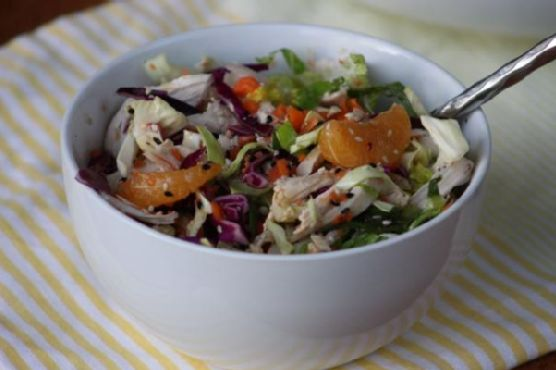
Picture this: it’s a chilly Tuesday evening, and I’m rummaging through my pantry, hoping to conjure up something light yet filling for dinner. The usual suspects—pasta, rice, potatoes—just weren’t cutting it. I craved something crunchy, vibrant, and tangy, but with one big catch: it had to fit in with my gluten-free, dairy-free, and sugar-free lifestyle. That’s when the idea struck! A Chinese Chicken Salad, but not just any salad—one packed with flavors, textures, and a zing that makes your taste buds do a happy dance. This salad is a savior for those nights when you need something quick to whip up yet impressive enough to make you feel like a gourmet chef. Plus, all you need is a handful of ingredients you probably already have lurking in your fridge and pantry. Trust me, this is not your average salad—it’s a celebration in a bowl!

Jump to Recipe

What You’ll Need

Chances are you already have most of this. Here’s what you’ll need to gather:

  • Green cabbage
  • Red cabbage
  • Romaine lettuce hearts
  • Scallions
  • Carrots
  • Fresh satsuma mandarins
  • 1 mandarin (cut crosswise then tablespoon into jar over a strainer) (juice)
  • Bone-in shredded chicken breasts, roasted
  • Sesame oil
  • Extra virgin olive oil
  • Apple cider vinegar
  • White sesame seeds
  • Black sesame seeds
  • Kosher salt
  • Black pepper
  • Xylitol

How to Make Gluten Free Dairy Free Sugar Free Chinese Chicken Salad

  1. Start by prepping the veggies. Finely slice the red and green cabbage and the romaine lettuce hearts. You want them to be thin and delicate, so they soak up all the dressing goodness.
  2. Trim the ends off the scallions, then finely slice both the white and green parts. This will add a lovely sharpness to the salad.
  3. Peel and grate the carrots. If you’ve got a mini food processor, throw them in there for a quick chop.
  4. Peel the satsuma mandarins, then carefully remove the pith from the slices. This step is key to ensure that you don’t get any bitter bites in your salad.
  5. In a large bowl, combine all your prepped veggies and the shredded chicken. Toss them together to mix it up nicely.
  6. For the dressing, whisk together the mandarin juice, sesame oil, apple cider vinegar, extra virgin olive oil, and a touch of xylitol for sweetness. Add a pinch of kosher salt and a crack of black pepper for seasoning.
  7. Drizzle the dressing over your salad and give it a thorough toss, ensuring every piece is coated beautifully.
  8. Sprinkle the white and black sesame seeds over the top for that perfect finishing touch.

Cook’s Notes

One thing I’ve learned with this salad is that the fresher your ingredients, the better it will taste. If you’re making it ahead of time, keep the dressing and the salad separate until you’re ready to serve; this will keep everything crunchy and fresh. Leftovers can be stored in an airtight container in the fridge for up to two days, but trust me, it’s so delicious it might not last that long! Common mistakes include over-dressing or not balancing the flavors, so taste as you go. If you’re not a fan of xylitol, feel free to adjust the sweetness with another sugar substitute of your choice.

Make It Your Own

  • Swap the chicken for crispy tofu to make it vegetarian and just as satisfying.
  • Use napa cabbage instead of romaine for a different take on texture.
  • Add a sprinkle of roasted almonds for a nutty crunch.
  • For a spicier kick, toss in some thinly sliced jalapeños.

If you try this, I’d love to hear how it turns out—drop a comment or tag me! This salad is a little bowl of joy that can brighten any day, and I can’t wait for you to experience it. Enjoy!

Related update: Gluten Free Dairy Free Sugar Free Chinese Chicken Salad

Related update: Middle Eastern Chopped Salad

Roasted Strawberry Coconut Milk Ice Cream | Made by Meaghan Moineau

Picture this: it’s the peak of summer, and I’m standing in my kitchen, trying to figure out a way to cool off and use up the abundance of strawberries I overzealously picked at the farm last weekend. That was the moment when the idea of roasted strawberry coconut milk ice cream popped into my head. This recipe is a savior when the sun is relentless, with its creamy texture and the lush, roasted notes of strawberries and vanilla that take me to a blissful place. Plus, it’s a dairy-free treat that doesn’t skimp on flavor. One bite, and it’s like a mini-vacation!

Jump to Recipe

What You’ll Need

Chances are you already have most of this in your pantry or fridge. We’re keeping it simple, yet the flavors are anything but.

  • 1 pound fresh strawberries
  • 1/2 cup raw cane sugar, divided
  • 1 can full-fat coconut milk
  • 1 teaspoon ground cardamom
  • 1 vanilla bean

How to Make Roasted Strawberry Coconut Milk Ice Cream

  1. Preheat your oven to 350°F (175°C). Hull and halve the strawberries, then toss them with 1/4 cup of the raw cane sugar. Spread them out on a baking sheet lined with parchment paper. Roast in the oven for about 25 minutes, until they’re soft, syrupy, and a little caramelized around the edges.
  2. In a saucepan over medium heat, combine the full can of coconut milk, the remaining 1/4 cup of raw cane sugar, and the cardamom. Using a small knife, split the vanilla bean lengthwise and scrape the seeds into the coconut milk mixture. Toss in the vanilla pod too, because why not? Let it heat gently until it’s steaming and the sugar dissolves completely.
  3. Remove the saucepan from the heat and let the mixture steep for about 10 minutes, allowing the vanilla to infuse through the coconut milk. Remove the vanilla bean pod after steeping.
  4. Once the strawberries have cooled slightly, blend them until smooth (a few chunky bits are fine if you like texture). Stir the strawberry puree into the coconut milk mixture, giving it a pretty pink hue.
  5. Transfer the mixture to a bowl and refrigerate until thoroughly chilled, at least a couple of hours. If you’re impatient like me, you can speed this up by placing the bowl in the freezer and stirring every 15 minutes.
  6. Pour the chilled mixture into an ice cream maker and churn according to the manufacturer’s instructions until it reaches a soft-serve consistency.
  7. Transfer to an airtight container and freeze for at least four hours or until firm enough to scoop.

Cook’s Notes

This ice cream is best made a day in advance to allow the flavors to meld and develop. If you find yourself without an ice cream maker, no worries! You can pour the chilled mixture into a loaf pan, freeze it, and stir every 30 minutes for a few hours until it starts to freeze evenly. Just keep in mind that the texture won’t be as creamy as churned. Store leftovers (if there are any!) in the freezer for up to two weeks, but it’s so good, I doubt it’ll last that long.

Make It Your Own

  • Swap the strawberries for raspberries or blackberries for a tangy twist.
  • Add a tablespoon of balsamic vinegar with the strawberries before roasting for a sophisticated touch.
  • Stir in some chopped dark chocolate right before the ice cream sets for a delightful crunch.
  • Boost the flavor with a tablespoon of rum or bourbon in the coconut milk mixture before chilling.

If you try this, I’d love to hear how it turns out — drop a comment or tag me! Making this ice cream is like hitting pause on summer’s heat, and I hope it brings you as much joy as it does me. Enjoy! 🍓🌴

Related update: Roasted Strawberry Coconut Milk Ice Cream

Related update: Vanilla Cream Cakes, Easy and Fluffy Holiday Cakes

Crockpot “Refried” Beans | Made by Meaghan Moineau

I was having one of those days where everything was just a bit off. You know, the kind where you realize the night before that you’ll have zero time to cook because every second is spoken for? Yep, that was me. Between juggling work and the kids’ activities, I needed something simple yet satisfying. Enter: Crockpot “Refried” Beans. It’s the perfect blend of effort-saving and comfort-inducing — a culinary hug when you need it most. Plus, it’s a lifesaver for those impulsive taco nights or unexpected guests. There’s something magical about the way this dish makes the whole house smell like you’ve been cooking for hours, even when you haven’t. Cozy, rich, and oh-so-easy.

Jump to Recipe

What You’ll Need

Trust me, you might already have most of these goodies chilling in your pantry. And if not, they’re probably on your next grocery list.

  • Pinto beans – the star of this show, bringing that creamy, earthy flavor we crave
  • Water – keeps things from drying out
  • Canned garlic – because chopping garlic on a busy day? No, thanks
  • Onion – for that sweet, savory backdrop
  • Cumin – a must-have for that warm, smoky depth
  • Black pepper – a touch of heat
  • Salt – brings everything together

How to Make Crockpot “Refried” Beans

  1. Start by rinsing the pinto beans in a colander. Feel each bean quickly as you do this, and pick out any that feel off or look suspiciously shriveled.
  2. Combine the beans, water, canned garlic, onion, cumin, black pepper, and salt in your trusty crockpot. Give it all a gentle stir to mingle those flavors.
  3. Watch for any beans that float to the top — these are the slackers, and we don’t need them here. Skim them off and toss ’em.
  4. Cover the crockpot and let it do its magic on HIGH for 4 hours. Switch to LOW for 2 more hours. Your kitchen will smell amazing by now — the kind of aroma that makes you want to curl up with a good book.
  5. Once the time is up, uncover and assess the liquid situation. Remove any excess, leaving just enough to mash into your perfect consistency. Aim for somewhere between soupy and stiff.
  6. Grab a potato masher and mash away! The beans should be buttery soft and mash to your desired texture without much effort.
  7. Serve them warm, maybe with a sprinkle of cheese or a dollop of sour cream if you’re feeling extra.

Cook’s Notes

Let’s chat practicalities. First, make sure to store these in air-tight containers, where they’ll keep in the fridge for up to 2 weeks. Or, portion them into ziplock bags, squeeze out the air, and pop them in the freezer for those nights you just can’t. Defrost in the fridge or microwave, and they’ll taste like you just made them.

Avoid adding acidic ingredients like tomatoes or lime juice before the beans are fully cooked, or they might stay a little too firm. And one more thing — taste as you go! The right amount of salt can vary depending on your beans and personal taste.

Make It Your Own

Here are a few ideas to switch things up and keep those taste buds entertained:

  • Swap the pinto beans for black beans for a darker, richer version.
  • Add a can of diced green chilies for a hint of heat and tang.
  • Stir in some cooked crumbled bacon for a smoky, meaty twist.
  • Top with cotija cheese and fresh cilantro to make it restaurant-fancy.

If you try this, I’d love to hear how it turns out — drop a comment or tag me! There’s nothing better than seeing your delicious creations. Enjoy those cozy vibes, my friend. 🌮❤️

Related update: Crockpot “Refried” Beans

Related update: Eggplant Fries with Tzatziki Sauce

NJ Transit outage exposes costly gaps | Analysis by Brian Moineau

TL;DR

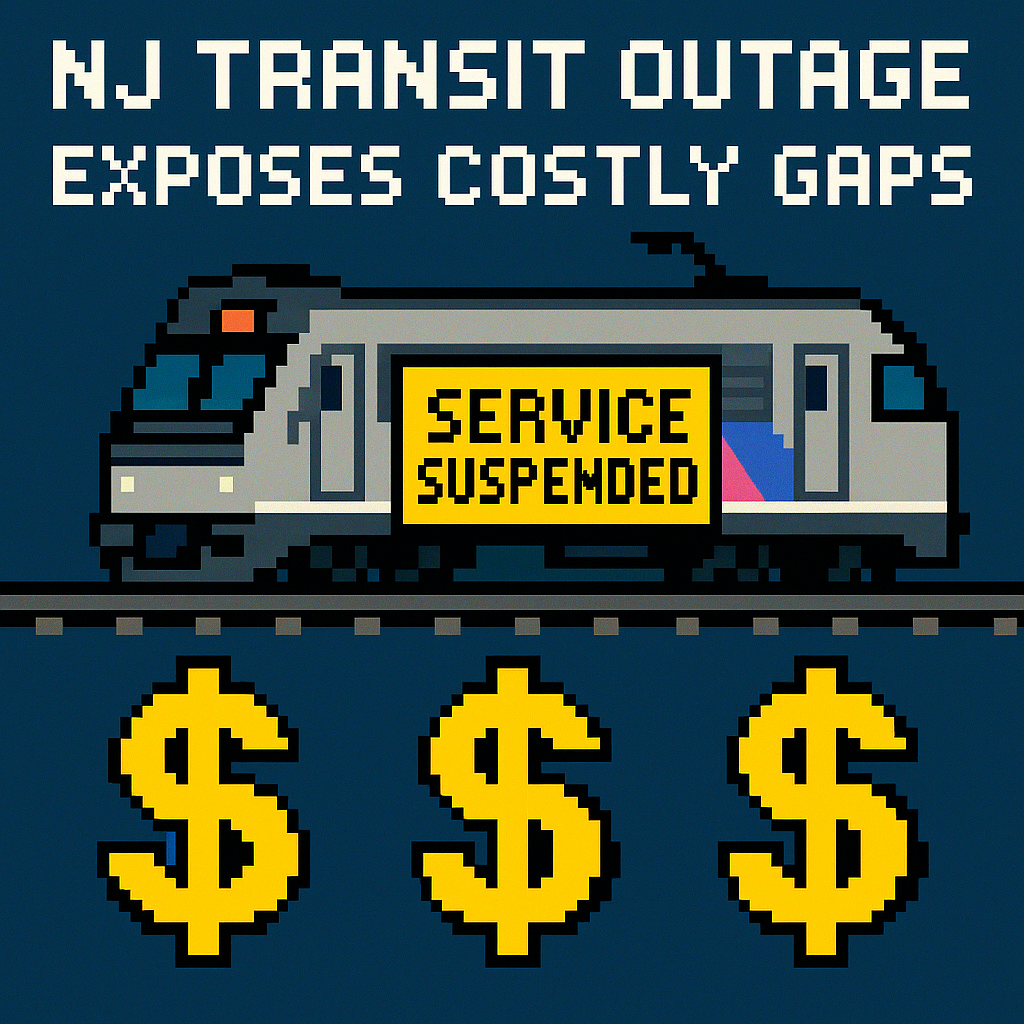
  • NJ Transit resumed a rail line on May 2026 after a downed tree blocked the right‑of‑way; one small incident exposed a large reliability gap in the agency’s story. [1]
  • The real business cost isn’t the outage alone but the compounding hit to labor productivity, customer trust, and schedule churn NJ Transit already anticipates in 2026 due to Portal cutovers and FIFA traffic. [2][3][7]
  • A single hourlong shutdown can vaporize tens of thousands of dollars in commuter time; fast vegetation management and incident‑clearance KPIs will outperform any glossy capital unveiling this summer. [4][5]

What the source said

NJ.com reported that NJ Transit temporarily suspended one of its rail lines after a downed tree blocked the right‑of‑way; service later resumed with delays once crews cleared the obstruction in New Jersey. The bulletin framed it as a discrete, weather‑related incident and pointed riders to alternate options while warning of residual delays. No deep forensics on root cause, asset condition, or clearance times—just the headline, the agency notice, and the all‑clear that followed. It’s a useful alert, but it stops where the business questions start: how often this happens, what it costs riders and employers, and what NJ Transit can do to prevent a next time. [1]

Why it matters

For commuters traveling daily from New Jersey into Newark, Jersey City, and Midtown Manhattan, reliability functions as wage protection tied to the clock and paycheck. Every unplanned shutdown turns paid time into dead time, eroding household budgets and employer scheduling in concrete places, not abstractions. When NJ Transit says “resumes rail line after suspension,” it signals resilience—and exposure to failures likely to recur during the 2026 summer storm season. [2][3]

Stakeholders are not abstract. They’re Fanwood or Summit riders who eat 30–90 minute delays, Midtown employers who lose billable hours, and NJ Transit managers juggling 2026 operations around Portal cutovers, FIFA events, and schedule changes large enough to suspend printed timetables. That cocktail heightens the penalty of each “small” outage—and the premium on faster incident clearance across the Raritan Valley and Morris & Essex corridors. [2][7]

Original analysis

Back‑of‑envelope: what one “downed tree” really costs

  • Assumptions grounded in public data and DOT guidance:
    • Average hourly earnings (New Jersey, private, April 2026): $38.76. [4]
    • Value of personal travel time priced at ~50% of hourly income in federal analyses. [5]
    • Event scope: four trains disrupted (two each direction) with an average passenger load of 450 and average 40 minutes of delay (reasonable for a blockage + ramp‑up). (Derived assumption)
  • Math:
    • Value of time per rider per hour ≈ $38.76 × 0.5 ≈ $19.38. [4][5]
    • Cost per rider for 40 minutes ≈ $19.38 × 0.667 ≈ $12.93. [4][5]
    • Riders affected ≈ 4 trains × 450 ≈ 1,800. (Derived assumption)
    • Aggregate commuter time cost ≈ 1,800 × $12.93 ≈ $23,274. [4][5]
  • Scale risk:
    • Double the impacted trains (to 8) or delay minutes (to 80) and you crest ≈$50,000 for a single incident, before employer‑side frictions. [4][5]

That’s the quiet balance sheet of rail reliability. Two such disruptions in one day rival what some towns budget for a year of contracted tree trimming along a short right‑of‑way segment.

A 2×2 to prioritize fixes

Cause vs. Clearance Speed—what to attack first:

Fast Clearance (≤60 min) Slow Clearance (>60 min)
Predictable cause (trees, routine storms) Targeted vegetation program, pre‑staged crews, local permit MOUs. Low‑cost, high‑ROI. [3] Chronic program failure; schedule risk compounds—escalate contracts, enforce SLAs. [3]
Stochastic cause (brush fires, third‑party wire faults) Pre‑written cross‑honoring + ferry/bus triggers, rider comms templates. [2][3] Capital + interagency—redundancy and joint drills with Amtrak/Port Authority; compress clearance via unified command. [2]

Vegetation sits in the “predictable/fast” cell—exactly where cheap, boring ops win. NJ Transit cites a year‑round tree‑trimming program; the success metric riders feel is clearance time, not clip count. [3]

Named‑stakeholder breakdown

  • NJ Transit Rail Operations: Vegetation and incident clearance are the cheapest dials to turn in a year of unusual schedule complexity; publish a 60‑minute “blockage‑to‑rolling” target and report against it monthly in New Jersey board materials. [3][7]
  • Amtrak (NEC owner): Coordinate playbooks for shared corridors; Portal North Bridge’s March 2026 commissioning helps throughput but not right‑of‑way blockages—joint drills still matter along the Newark–Secaucus stretch. [8]
  • Municipalities along the ROW (e.g., Fanwood, Short Hills): Pre‑approve trimming zones and weekend/night work windows; permitting friction is a hidden cause of slow clearance. May 2026 delays on the RVL after a downed tree at Fanwood showed how local blockages ripple regionally. [6]
  • Employers in Newark/Midtown: Encourage flexible start times on forecast storm days; quantify the lost time and push for performance KPIs in NJ Transit’s board reporting to protect billable hours. [4][5]
  • Riders: Use line‑specific alerts and watch for cross‑honoring triggers; after the May 20, 2026 brush‑fire suspension into/out of Penn Station New York, services resumed with up to 90‑minute delays—plan first/last‑mile accordingly. [2]

Context that changes the calculus in 2026

  • Schedule churn is institutional this year. NJ Transit suspended printed rail timetables for 2026 due to major cutovers and events, increasing communications risk during incidents. [7]
  • Portal North Bridge entering service in March 2026 eases a historic NEC choke point; that buys schedule headroom but won’t stop a maple from falling across a diesel segment. Faster local clearance gains more value because more trains can move once you uncap the blockage. [8]
  • Recent service shocks prove the pattern. A brush fire near the Hudson River tunnel fully suspended service into and out of Penn Station New York on May 20, 2026 before resuming with heavy delays; earlier that week, a downed tree near Fanwood drove 15–40 minute RVL delays. These aren’t rare edge cases; they’re portfolio risk. [2][6]

Contrarian read

  • Consensus: “This was a weather blip—back to normal, nothing to see.”
  • Counter: Frequency plus the 2026 calendar amplifies each “blip” into a measurable labor‑market tax; fixable failures—trees—deserve executive attention on par with rolling stock availability. [2][7]

What others are missing

The vegetation story is a governance story anchored in New Jersey municipalities and NJ Transit’s vendor management. “Tree trimming” sounds like maintenance, but the drag often lives in permits, utility coordination, and crew staging—not chainsaws. NJ Transit references a year‑round program; publish a monthly KPI showing median minutes from “blockage reported” to “first train rolling,” by line and cause, and tie vendor renewals to it. [3]

Couple that KPI with pre‑negotiated municipal MOUs that create 48‑hour fast‑track permits during National Weather Service storm watches across the RVL and M&E/Gladstone corridors. The highest‑yield savings this summer come from shaving 20 minutes off a hundred “small” incidents, not from a ribbon‑cutting.

What to watch next

  1. By July 31, 2026, NJ Transit publicly reports incident clearance times by cause (vegetation, wire, third party) in board or service‑update materials viewable on njtransit.com. [3]
  2. Between June 1 and November 30, 2026, at least two downed‑tree suspensions or major delays occur on the Raritan Valley or Morris & Essex/Gladstone segments, triggering cross‑honoring and residual delays exceeding 45 minutes. [6][3]
  3. By September 30, 2026, NJ Transit issues or amends at least one vegetation‑management contract or municipal MOU explicitly aimed at faster line clearance during storm season, referenced in a board agenda or service advisory. [3]

My take

If I ran NJ Transit in summer 2026, I’d hunt for 60 minutes from first obstruction report to first revenue train. Hit it with pre‑staged crews, pre‑cleared permits with towns like Fanwood and Short Hills, and a published KPI so riders and board members can track progress in New Jersey meetings. [3][7]

Portal North Bridge is the shiny object; the duller one—vegetation—is where the money lives in 2026. A “resumes rail line after suspension from downed tree” shouldn’t be newsworthy by October; make it routine, fast, and boring, and claw back tens of thousands of rider‑minutes every week across Newark–Midtown flows. [4][5][8]

Sources

[1] NJ Transit resumes rail line after suspension from downed tree — NJ.com (https://www.nj.com/news/2026/05/nj-transit-suspends-rail-line-due-to-downed-tree.html) — The alert that service was suspended by a downed tree and later resumed; the starting point for this analysis.
[2] NJ Transit rail service resumes at Penn Station New York after brush fire caused suspension — CBS New York (https://www.cbsnews.com/newyork/news/nj-transit-tracks-secaucus-brush-fire/) — Confirms a recent full suspension/resumption cycle and up to 90‑minute delays on May 20–21, 2026.
[3] NJ TRANSIT Announces Service Updates for Sunday, February 22 — NJ Transit (https://www.njtransit.com/press-releases/nj-transit-announces-service-updates-sunday-february-22) — Describes suspension protocols and references a year‑round tree‑trimming program and standby crews.
[4] Total private average hourly earnings and weekly hours and earnings by state (April 2026) — U.S. Bureau of Labor Statistics (https://www.bls.gov/charts/state-employment-and-unemployment/average-hourly-earnings-and-weekly-hours-and-earnings-by-state.htm) — Provides New Jersey’s average hourly earnings used to value commuter time.
[5] Chapter 9: Sensitivity Analysis (Value of Time ≈ 50% of wage for personal travel) — Federal Highway Administration (https://www.fhwa.dot.gov/policy/23cpr/chap9.cfm) — Cites DOT practice of valuing personal travel time at approximately half the hourly wage.
[6] Delays on May 16, 2026 (downed tree near Fanwood causing 15–40 minute RVL delays) — NJTranshit (https://njtranshit.com/graph/count/2026-05-16) — Concrete example of tree‑related rail disruption and its operational impact.
[7] NJ: NJ Transit just suspended its printed train schedules. What you need to know. — Mass Transit (https://www.masstransitmag.com/rail/news/55368202/nj-nj-transit-just-suspended-its-printed-train-schedules-what-you-need-to-know) — Documents NJ Transit’s decision to suspend printed timetables in 2026 due to extensive schedule changes (Portal cutovers, FIFA).
[8] Portal North Bridge — Wikipedia (https://en.wikipedia.org/wiki/Portal_North_Bridge) — Establishes March 2026 context for Portal North Bridge milestones on the NEC.


Related update: We recently published an article that expands on this topic: read the latest post.
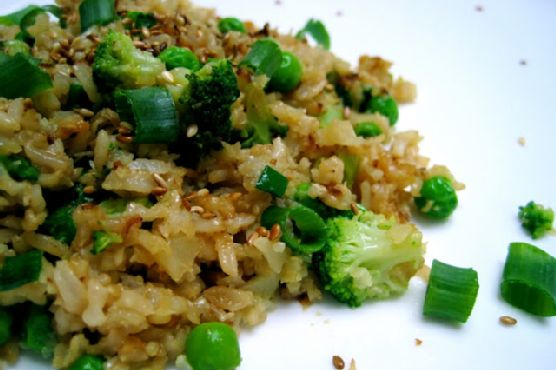
Cauliflower, Brown Rice, and Vegetable Fried Rice | Made by Meaghan Moineau

Last Thursday, I found myself staring at a lonely head of cauliflower in the fridge, debating if a second night of sad salad was a culinary sin. With a craving for something warm and satisfying, I decided to whip up a Cauliflower, Brown Rice, and Vegetable Fried Rice. This dish is a lifesaver when you need a quick meal that doesn’t compromise on flavor. It’s like your favorite takeout but with a healthy twist and minimal guilt. Plus, it easily adapts to whatever veggies are hanging out in your fridge. It’s perfect for those busy weeknights when you need something fast but still want to feel like you ate a real meal.

Jump to Recipe

What You’ll Need

The beauty of this recipe is that chances are you already have most of these ingredients tucked away in your kitchen. It’s simple, straightforward, and oh-so-delicious.

  • 1 tablespoon grapeseed oil
  • 1 tablespoon coconut oil
  • 4 stalks green scallions (white and light green parts, chopped; reserve dark tops)
  • 2 cloves garlic, minced
  • 1 medium head of raw cauliflower, stem removed and florets processed into “rice”
  • 2 cups cooked brown rice
  • 1 cup cooked broccoli
  • 1 cup frozen peas
  • 3 tablespoons low sodium soy sauce
  • 1 tablespoon sesame oil
  • Toasted sesame seeds
  • Salt, to taste

How to Make Cauliflower, Brown Rice, and Vegetable Fried Rice

  1. Remove the tough stem from the cauliflower and reserve it for another use. Pulse the cauliflower florets in a food processor until they resemble rice or couscous, yielding about four cups of “cauliflower rice.”
  2. Heat 1 tablespoon each of coconut oil and grapeseed oil in a large skillet over medium heat. Add the minced garlic and chopped white and light green scallion parts. Sauté for about a minute until they’re fragrant.
  3. Add the cauliflower rice to the skillet. Stir to coat with oil, then spread it out in the pan and let it sit undisturbed for a couple of minutes. This encourages caramelization, bringing out its natural sweetness.
  4. Add the cold, cooked brown rice to the skillet along with an additional tablespoon of grapeseed oil or coconut oil. Raise the heat to medium-high. Toss everything together, spreading the mixture out over the whole pan and pressing it into the bottom. Let it sit again for about two minutes to allow the rice to toast slightly.
  5. Add the cooked broccoli and frozen peas to the pan, stirring everything to combine.
  6. Drizzle the soy sauce and sesame oil over the rice mixture. Cook for another minute, then turn off the heat. Stir in the chopped dark scallion tops.
  7. In a separate dry pan, toast some sesame seeds and sprinkle them over the fried rice along with extra raw, chopped scallion tops for an added crunch and flavor boost. Season to taste with salt and additional soy sauce if needed.

Cook’s Notes

This recipe is forgiving and flexible, perfect for those who like to improvise in the kitchen. Start by ensuring your cauliflower is well pulsed; the smaller the bits, the better they’ll absorb the flavors. Don’t rush the caramelization of the cauliflower rice—this step enhances its sweetness and adds depth to the dish.

If you’re planning to make this ahead, you can prepare the cauliflower rice and store it in an airtight container in the fridge for up to two days. The completed fried rice will keep well in the fridge for 3-4 days, making it ideal for meal prep.

Avoid over-salting. Remember that soy sauce adds its own saltiness, so it’s best to season gradually and taste as you go. If you find your fried rice is clumping together, gently break it apart with a spatula.

Make It Your Own

  • Swap the broccoli for snap peas or bell peppers for a different veggie profile.
  • Replace the brown rice with quinoa for an extra protein boost.
  • Try adding a beaten egg to the pan after the garlic for a more traditional fried rice texture.
  • Love heat? Toss in some red pepper flakes or a splash of sriracha for a fiery kick.

If you try this, I’d love to hear how it turns out—drop a comment or tag me on social media! Let’s make sure no more lonely heads of cauliflower go to waste.

Related update: Cauliflower, Brown Rice, and Vegetable Fried Rice

Related update: Crockpot “Refried” Beans

Related update: How to make the World’s Greatest Lasagna Roll Ups

Fresh and Simple Swai Ceviche | Made by Meaghan Moineau

It was one of those freakishly warm spring afternoons when I first craved something light but satisfying. You know, when the sun teases you into thinking it’s okay to pack away your sweaters, only for the evening chill to remind you it’s not quite summer yet. I was rummaging through my fridge, hoping for inspiration, when I stumbled upon some swai fillets tucked behind the carton of eggs. Cue lightbulb moment: ceviche. Fresh, tangy, and with a bit of a kick, this swai ceviche is the kind of dish that feels fancy but comes together with minimal effort. Perfect for those nights when you want to impress without breaking a sweat. Jump to Recipe

What You’ll Need

Most of these ingredients are things you might already have lounging around in your kitchen. The magic is in the freshness and the little kick of spice.

  • 1 pound of diced swai fillets
  • Lime juice from about 4-5 limes
  • 1 red diced shallot
  • 1 cup of diced avocado
  • 1 tomato, diced
  • 1 tablespoon of chile-garlic paste
  • 2 tablespoons of olive oil
  • 1/4 cup of cilantro, chopped
  • Salt and pepper to taste

How to Make Fresh and Simple Swai Ceviche

  1. Place the diced swai fillets in a bowl and cover them with half of the lime juice. Make sure each piece is submerged, then cover and pop it in the fridge for at least 3 hours. This allows the fish to “cook” in the acidity of the lime juice. You’re looking for it to turn opaque and tender.
  2. Once the fish is ready, strain it to remove excess lime juice. Don’t rush this step; too much moisture will make the ceviche soupy.
  3. In another bowl, combine the diced tomato, red shallot, and avocado with the remaining lime juice. Toss gently, so the avocado stays in lovely chunks.
  4. Stir in the swai and chopped cilantro. Give it all a good, gentle mix.
  5. Drizzle with olive oil and add the chile-garlic paste. The sauce gives it that spicy, garlicky punch that makes you go back for more.
  6. Season with salt and pepper to taste. Remember, a little goes a long way, so keep tasting as you go.
  7. Serve immediately with tortilla chips or over a fresh salad. Enjoy the vibrant flavors in every bite!

Cook’s Notes

Don’t skimp on the lime juice – it’s both the cooking agent and flavor base. If you’re not a fan of too much heat, start with half the amount of chile-garlic paste and adjust. This ceviche is best enjoyed fresh, but if you have leftovers, store them in an airtight container for up to a day. The avocado might brown slightly, but the taste will still be lovely.

Make It Your Own

  • Swap the swai for shrimp or scallops if you’re feeling fancy.
  • Add some diced cucumber for extra crunch and freshness.
  • If cilantro isn’t your thing, try using fresh mint or basil for a different herbal note.
  • For a sweeter twist, toss in some diced mango or pineapple.

If you try this, I’d love to hear how it turns out — drop a comment or tag me in your creations! Happy ceviche making!

Related update: Fresh and Simple Swai Ceviche

Alouette Chicken Paprika | Made by Meaghan Moineau

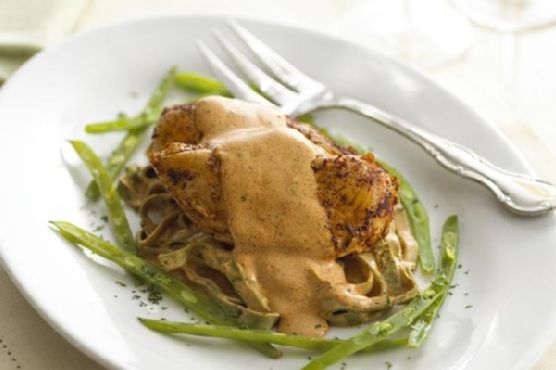
So there I was, standing in my kitchen, staring down a package of chicken breasts and wondering how on earth I was going to make an exciting dinner out of them—again. It was one of those evenings where you just want something easy yet indulgent, and frankly, I felt like a culinary magician without a wand. That’s when it hit me: Alouette Chicken Paprika. This dish has saved my weeknight dinners countless times, thanks to its creamy, savory sauce and that lovely paprika kick. It feels fancy enough to impress anyone you might have over but is straightforward enough to whip up after a long day. Trust me, once you try it, you’ll be hooked.

Jump to Recipe

What You’ll Need

The beauty of this recipe is that you probably already have most of these gems in your kitchen. It’s a pantry hero, with a few special players like Alouette Garlic & Herbs Spreadable Cheese that make it sing.

  • 2 tablespoons butter
  • 4 boneless chicken breast halves
  • 1 teaspoon garlic powder
  • 1 container Alouette Garlic & Herbs Spreadable Cheese
  • 1/2 cup milk
  • 6 teaspoons paprika

How to Make Alouette Chicken Paprika

  1. In a small bowl, blend the garlic powder with 6 teaspoons of paprika until well combined. Coat each chicken breast generously with this mixture, making sure they’re evenly covered.
  2. Melt the butter in a skillet over medium heat. Add the chicken and sauté for about 5 minutes on each side. You’ll know it’s ready to move on when the chicken is golden and slightly crisp at the edges.
  3. Cover the skillet, reduce the heat to low, and let the chicken simmer for 15 minutes. This is your chance to let the flavors mingle and intensify.
  4. Once done, remove the chicken from the skillet but keep that liquid gold in there—you’re going to need it!
  5. In another bowl, combine the milk, Alouette Garlic & Herbs Spreadable Cheese, and any remaining paprika. Mix until smooth and dreamy.
  6. Pour this cheese mixture into the skillet, stirring well with the reserved liquid. Let it simmer for a couple of minutes until the sauce is smooth and slightly thickened.
  7. To serve, generously pour this creamy, aromatic sauce over the chicken. If you’re feeling extra indulgent, use any remaining sauce over a bed of rice, pasta, or potatoes.

Cook’s Notes

When cooking the chicken, make sure not to rush the sautéing step. That golden color adds layers of flavor that are worth the wait. If the sauce seems too thick, a splash more milk can save the day. For leftovers, store the chicken and sauce separately in airtight containers in the fridge for up to 3 days. The sauce will thicken as it chills, so warming it gently on the stovetop with a bit of extra milk will bring it back to life.

Make It Your Own

  • Swap the chicken for crispy tofu for a vegetarian twist—just coat and cook the same way.
  • Love smoky flavors? Use smoked paprika instead of regular for an extra punch.
  • Add a handful of sautéed mushrooms to the sauce for more earthiness and texture.
  • Try coconut milk in place of regular milk for a dairy-free and slightly exotic option.

If you try this, I’d love to hear how it turns out—drop a comment or tag me! Your feedback is like the perfect spice blend for my recipe collection!

Related update: Alouette Chicken Paprika

Related update: Cauliflower, Brown Rice, and Vegetable Fried Rice

Satellites Turning Wildlife Into Sensors | Analysis by Brian Moineau

TL;DR

  • Tracking animal panic from space just moved from demo to deployment: ICARUS 2.0’s “Raven” microsatellite launched on May 3, 2026, with more launches queued, turning wildlife into real-time sentinels for conservation and security. [2][3][4]
  • The upside is clear—algorithmic “panic signatures” can flag human intrusions using accelerometer and topology features from tagged herds [6]—but the bottleneck is economics and ops: tagging 100,000 animals implies tens of millions in annual service fees plus nine-figure hardware. [1][8][9][10]
  • The real fight won’t be in orbit; it’ll be in governance: data permissions, cyber-hardening of open-band tags, and integrating alerts into ranger playbooks without flooding teams with false positives. [6][7]

What the source said

The BBC Future piece on 21 May 2026 reports that scientists are training algorithms to read “patterns of panic” among wildlife—measurable movement signatures when animals react to threats—so rangers can interdict poachers in near real time. Testing at Namibia’s 169 km² Okambara reserve uses staged intrusions and drones to record dispersal patterns among species like springbok, zebra, and giraffe. The initiative plugs into ICARUS (“Internet of Animals”), a satellite-enabled system spearheaded by Martin Wikelski at the Max Planck Institute of Animal Behavior, with an ambition to tag 100,000 animals globally by 2030; modern tags capture GPS, activity, and vitals using solar and supercapacitors for multi‑year lifetimes. [1]

Why it matters

  • For African parks agencies (SANParks in South Africa and MEFT Namibia), every minute shaved off response time can determine whether a 1,000‑kg white rhino walks away or becomes a carcass; a spaceborne “panic network” that triangulates humans via animal behavior extends ranger reach without adding patrol boots. [1][6]
  • For technologists (Max Planck, Talos, EnduroSat, CTT, Telonics), wildlife telemetry is crossing a scale threshold: from isolated collars to constellations, from post-hoc datasets to operational systems, creating line items for hardware, airtime, and data ops alongside stricter stewardship for endangered-species data. [2][3][4][6][7]

Original analysis

Tracking animal panic from space: where the breakthrough really is

The news isn’t “we can tag animals.” It’s that ICARUS 2.0 restored and expanded the space segment lost after the ISS-based system went dark post‑2022, and it’s now on a clear cadence: a first receiver returned on November 28, 2025; the first independent Max Planck/Talos satellite, Raven, reached orbit on May 3, 2026; additional spacecraft are planned through 2027. That’s the pivot from research project to service. [3][2][4]

The second breakthrough is algorithmic. A 2021 Scientific Reports study demonstrated near–real-time poacher detection and localization using movement features from accelerometers and group topology, automating “panic signature” alerts without a human watching dots on a map. That’s what makes the method operational rather than a pretty visualization. [6]

But the hard part is below the headline. Who pays for 24/7 telemetry and alerting, and who owns risk when a false alarm pulls rangers off a hot zone? Movebank’s governance gives data owners control and embargo options for sensitive species, but operationalization means live streams, stricter access control, and auditable trails. The distance between a public database with delayed data and a secured, low-latency alert bus is non-trivial. [7]

Back‑of‑envelope: what does 100,000 tagged animals really cost?
  • Hardware: Use a mid-range wildlife GPS/telemetry price point of ~$1,500 per collar (public agency budgets show that’s realistic). For 100,000 animals: $1,500 × 100,000 = $150,000,000 capex over the deployment cycle. [9]
  • Connectivity/operations: A commercial satellite collar service at $35/month for one fix per hour is not unusual: $35 × 100,000 = $3,500,000 per month, or ~$42,000,000 per year. Many parks need more frequent fixes in hot zones, pushing opex higher. [10]
  • Context: Older estimates put GPS collars at $800–$2,000 even before today’s satellite refresh; those bands still frame the order of magnitude. The economics aren’t crazy for a multiyear program, but they are programmatic, not “free with launch.” [8]

Math aside, this cost structure implies clear stratification: CTT LifeTags operating at 434 MHz for ubiquitous “sentinels” in SANParks units, heavier Iridium/Argos‑class satellite collars for apex indicators, and burst-mode fixes only when anomaly detectors trip to conserve airtime. [5]

A 2×2 to sort the tools that will actually scale
High communications resilience (global, jam-resistant) Low communications resilience (local, easy to jam)
High signal fidelity (clear panic signatures) Satellite collars (Argos/Iridium-class); ICARUS ear/neck tags feeding Movebank and real-time alerting. Pros: global reach; Cons: opex heavy. [2][3][7] Local VHF/UHF tags + dense ground towers (Motus/CTT IoW). Pros: cheap tags; Cons: coverage gaps; unlicensed bands can be jammed. [5]
Low signal fidelity (coarser cues) Constellation-linked acoustic/seismic arrays for elephants or gunshots; robust backhaul but noisy signals. [3][7] Ad hoc camera traps or consumer drones without mesh backhaul. Pros: low cost; Cons: latency, manual review. [10]

The right mix per park won’t be ideological; portfolios will pair ICARUS satellites and Movebank alerting with Motus/CTT towers and acoustic lines along known ingress routes to water points and fencelines. [2][5][7]

Contrarian read
  • Consensus: “With enough tags and satellites, we’ll outpace poachers.”
  • Counter: Poachers adapt faster than satellites launch. Expect radio jamming and data‑poisoning attempts against open-band tags (434 MHz is widely used), social engineering to access dashboards, and panic‑signature confusion during tourist high season. Without red‑team testing and rate‑limited alerting, you risk false-positive fatigue that hands initiative back to criminals. Governance and cyber are as critical as orbits and algorithms. [5][7][6]
Named-stakeholder breakdown
  • Max Planck Institute of Animal Behavior (Martin Wikelski): Moves from science to service provider; must harden Movebank’s “operational edge” while growing a global user base in 2026–2027. [3][7]
  • Talos (Germany) + EnduroSat (Bulgaria): Space hardware through 2027; success hinges on cadence and downlink latency SLAs that rangers actually feel during night patrols. [2][6]
  • Cellular Tracking Technologies and Telonics: Beneficiaries of an “ear-tag first” model; they win if parks standardize on interoperable devices and data plans rather than bespoke one-offs across reserves. [5][11][12]
  • SANParks (South Africa) and MEFT (Namibia): If live alerts shave minutes off intercepts, they can bend the poaching curve faster than dehorning alone; budgets must shift from capex to recurring telemetry opex in FY2026–FY2028. [1][10]

What others are missing

Coverage fixates on satellites and charismatic megafauna; the blind spot is the control plane. Movebank rightly lets data owners restrict sensitive streams, but an operational poaching alert bus needs zero‑trust policies, granular role-based access, and regionally mirrored infrastructure so a single compromise can’t de‑cloak endangered animals. Meanwhile, many low-mass tags operate on open 434 MHz or VHF bands, which are easy to jam or spoof without spectrum enforcement. Pair ICARUS alerts with authenticated, encrypted device telemetry and red‑teamed dashboards, or expect attackers to evolve from bolt cutters to SDR kits within a season. The decisive frontier isn’t orbital—it’s secure, boring systems engineering. [7][5]

What to watch next

  1. By Q4 2026, at least two African reserves will disclose arrests or interdictions directly triggered by ICARUS-linked “panic signature” alerts shared with rangers.
  2. By June 2027, ICARUS 2.0 will have at least four operational satellites on orbit, short of the publicly discussed six-satellite ambition but sufficient for sub-hour alert latency in southern Africa. [4]
  3. By 2027 migration season, a peer‑reviewed field study will show that mixed sentinel cohorts (e.g., zebra + giraffe + cheetah) improve poacher localization accuracy by >20% versus single-species tagging. [6]

My take

If conservation agencies want fewer carcasses and more live rhinos, they should treat ICARUS 2.0 and Movebank as critical infrastructure, not episodic grants: fund the satellite cadence anchored by Raven’s May 3, 2026 launch, subsidize telemetry opex for SANParks and MEFT units that standardize on vetted CTT/Telonics devices, and require third‑party red‑team audits before any alerting pipeline goes live. That blend of concrete financing, interoperable hardware, and boring-but-secure ops will do more in 2026–2027 than any single collar drop. [2][5][7][12]

Sources

  1. We can now track animal panic from space. Here’s why it matters — BBC (https://www.bbc.com/future/article/20260521-tracking-animal-panic-from-space) — Field experiment at Okambara, ICARUS context, and the 100,000‑animal goal by 2030.

  2. ICARUS launches second system into orbit — Max Planck Society (https://www.mpg.de/26446105/icarus-launches-second-system-into-orbit) — Confirms May 3, 2026 launch of the Raven microsatellite and outlines additional launches.

  3. Icarus returns to space — Max Planck Society (https://www.icarus.mpg.de/126426/news_publication_25661928_transferred?c=2482) — Documents the November 28, 2025 return to orbit and partnership with Talos for subsequent receivers.

  4. ICARUS – Tierbeobachtung aus dem Weltall — University of Konstanz (https://www.uni-konstanz.de/universitaet/aktuelles-und-medien/themen-schwerpunkte/max-planck-institut-fuer-verhaltensbiologie/icarus/) — University overview of the roadmap: first satellite in Nov 2025, second in spring 2026, target of six by mid‑2027.

  5. Tag Deployment (Motus/CTT) — Motus Wildlife Tracking System (https://docs.motus.org/en/about-motus/quick-reference/tag-deployment) — Details CTT tag families (LifeTag/PowerTag) and their 434 MHz operation, relevant to scaling and security considerations.

  6. Timely poacher detection and localization using sentinel animal movement — Scientific Reports (https://pmc.ncbi.nlm.nih.gov/articles/PMC7907380/) — Peer‑reviewed evidence that animal movement features can detect and localize human intrusions.

  7. Movebank data policy — Movebank (https://www.movebank.org/cms/movebank-content/data-policy) — Explains owner-controlled permissions, embargo options, and handling of sensitive species data.

  8. GPS collars help wildlife researchers answer important questions — Popular Science (https://www.popsci.com/story/technology/things-researchers-learn-from-gps-collars/) — Provides typical collar cost ranges ($800–$2,000) for context.

  9. NDOW budget (GPS/VHF collars priced at $1,500) — Nevada Department of Wildlife (https://www.ndow.org/wp-content/uploads/2023/04/8a_Heritage-Proposals_NDOW.pdf) — Concrete public-sector pricing used in the cost model.

  10. Margo Luminous Satellite Tracking Collar (pricing) — Margo Supplies (https://us.margosupplies.com/product/margo-luminous-satellite-tracking-collar/) — Lists $35/month data plan for one GPS fix per hour, anchoring opex assumptions.

  11. TALOS and EnduroSat to Build “Internet of Animals” Satellite Constellation — EnduroSat (https://www.endurosat.com/news/talos-and-endurosat-to-build-internet-of-animals-constellation/) — Confirms TALOS–EnduroSat partnership and Raven’s role in the ICARUS 2.0 constellation.

  12. GPS/Argos Solar Eartag — Telonics (https://www.telonics.com/products/gps4/gps-argos-eartag-solar.php) — Shows commercial availability of solar ear‑tag form factors for large mammals, relevant to sentinel deployment.

Easy Baked Parmesan Chicken | Made by Meaghan Moineau

Last Tuesday, I found myself staring into the fridge, contemplating my dinner choices. It was one of those days when the work seemed endless, and my energy level was as flat as a pancake. You know what I mean, right? When the day is long, but your patience is short? In times like these, I crave something that’s both comforting and ridiculously easy to make. Enter: Easy Baked Parmesan Chicken. The result? A dish that’s cozy enough for a solo dinner yet impressive enough for unexpected guests. Plus, the oven does most of the heavy lifting while you unwind with a glass of wine. Let’s dive in!

Jump to Recipe

What You’ll Need

This recipe is all about simplicity, and chances are you already have most of the ingredients chillin’ in your pantry or fridge.

  • 4 skinless, boneless chicken breast halves
  • 1 egg
  • 1 cup Italian bread crumbs
  • 2 cups pasta sauce (your favorite brand or homemade!)
  • 1 cup shredded mozzarella cheese
  • 1/2 cup grated parmesan cheese

How to Make Easy Baked Parmesan Chicken

  1. Preheat your oven to 400°F (200°C). The warm-up is key for that golden finish.
  2. Crack the egg into a shallow bowl and whisk it up like you’re making a mini omelet.
  3. Coat each chicken breast in the egg, letting the excess drip off, then roll it in breadcrumbs until it’s snugly coated.
  4. In a 13×9-inch baking dish, arrange the chicken breasts in a single layer. Make sure they’re not too cozy — social distancing for the chicken is important for even cooking!
  5. Bake the chicken uncovered for 20 minutes. The edges will start to brown and the kitchen will smell divine.
  6. Pour the pasta sauce over the chicken, covering each piece generously. Think of it as giving the chicken a warm tomato blanket.
  7. Sprinkle the mozzarella and parmesan cheese over the top. This is where the magic happens — golden, bubbly goodness incoming.
  8. Return the dish to the oven and bake for an additional 10 minutes. The cheese should be melted, bubbly, and just beginning to brown. Check that the chicken reaches 170°F and is no longer pink inside.
  9. Serve immediately, either on its own or over your favorite pasta. Enjoy the cheesy, saucy goodness!

Cook’s Notes

If you’re planning ahead or happen to have leftovers (lucky you!), this dish stores well in an airtight container in the fridge for up to three days. For reheating, skip the microwave unless you like rubbery chicken — instead, pop it back in the oven until warmed through.

A common pitfall is not letting the excess egg drip off the chicken before coating with breadcrumbs. Trust me, a thin coat is all you need for that perfect crisp. Another tip? Let the chicken rest a minute before serving — just enough time to pour yourself another glass of wine.

Make It Your Own

  • Swap the chicken for crispy tofu slices if you’re feeling a vegetarian vibe. Just press the tofu well to get rid of excess moisture.
  • Use panko breadcrumbs instead of Italian for an extra crunch factor.
  • Going gluten-free? Opt for gluten-free breadcrumbs and gluten-free pasta sauce.
  • Add sliced fresh basil or a sprinkle of red pepper flakes just before serving for an aromatic kick.

If you try this, I’d love to hear how it turns out — drop a comment or tag me! Let’s keep the deliciousness going. 🍽️

Related update: Easy Baked Parmesan Chicken

Related update: Alouette Chicken Paprika

Breakfast Biscuits and Gravy | Made by Meaghan Moineau

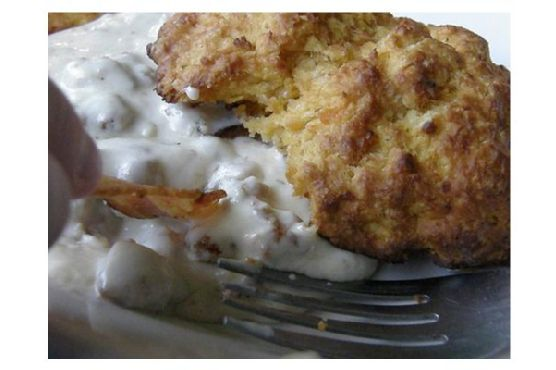
So, there I was on a lazy Sunday morning, craving something indulgent yet homey, and oh-so-satisfying. The kind of comfort food that just wraps you up in a warm hug — you know what I mean? That’s when I decided to whip up one of my go-to favorites: Breakfast Biscuits and Gravy. I mean, who can resist flaky biscuits smothered in rich, savory sausage gravy? Not me! They’re perfect for those mornings when you want to treat yourself without spending hours in the kitchen. Jump to Recipe

What You’ll Need

If you’ve got a well-stocked pantry, you’re already halfway there. This recipe relies on some everyday staples, along with a few flavor-boosting stars:

  • Flour — unbleached for the best texture
  • Baking powder
  • Salt — regular and a pinch of black salt for depth
  • Unsalted butter — because you can never have too much
  • Plain yogurt
  • Whole milk
  • Fresh sage leaves
  • Paprika
  • Ground allspice
  • Pork sausage
  • Black pepper

How to Make Breakfast Biscuits and Gravy

  1. Preheat your oven to 425°F. Trust me, getting that oven nice and hot is crucial for achieving biscuit perfection.
  2. Line a baking sheet with parchment paper — no one likes a sticky mess.
  3. In a large bowl, sift together the flour, baking powder, and salt. This is where the magic starts.
  4. Grab your pastry blender or two knives and cut in the butter. You’re aiming for a texture ranging from cornmeal to pea-sized bits. A quick blitz in the food processor works if you’re feeling fancy.
  5. Using a fork, mix in the yogurt followed by the milk. The dough should be soft and slightly sticky, so don’t sweat it if it feels a bit wet.
  6. Turn the dough onto a lightly floured surface and knead briefly — just enough to hold everything together. Roll it out about 1 1/4 inches thick and cut into rounds.
  7. While your biscuits are getting golden in the oven, let’s tackle the sausage. Combine all the sausage ingredients in a large bowl, mixing them up with your hands. Don’t be shy!
  8. Form small patties and cook them in a skillet over medium-high heat until crisp and browned on the outside, cooked through inside. About 8 minutes per side should do it.
  9. As the sausage sizzles, inhale that aromatic blend of sage and spices. It’s a thing of beauty!

Cook’s Notes

Here’s the deal: biscuits are one of those things that get better with practice, so don’t stress if your first batch isn’t perfect. Keep the butter cold for the flakiest layers, and don’t overwork the dough. You can make the sausage mixture ahead of time and keep it in the fridge for up to a day — just form and fry when ready. Leftover biscuits? Pop them in an airtight container, and they’ll last a couple of days; they’re great reheated in the oven.

Make It Your Own

Switch things up and put your own spin on this classic dish with these ideas:

  • Swap the pork sausage for turkey sausage if you’re leaning towards a lighter option.
  • Add a pinch of red pepper flakes if you crave a bit of heat in your morning.
  • For a vegetarian twist, use crispy tofu instead of sausage.
  • Throw in some cheddar cheese into the biscuit dough for an extra layer of flavor.

If you try this, I’d love to hear how it turns out — drop a comment or tag me! Cooking is all about sharing the love, and I can’t wait to see your versions and hear your stories. Enjoy every bite! 🍽️

Related update: Breakfast Biscuits and Gravy

Related update: Easy Baked Parmesan Chicken

Related update: Loaded Veggie Omelet

Triple Citrus Cake | Made by Meaghan Moineau

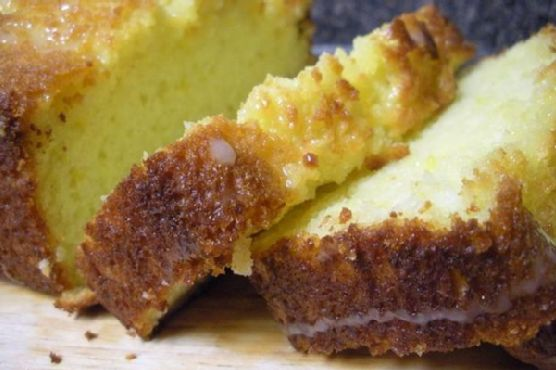
A few weekends ago, I had one of those mornings where you wake up craving something fresh and sunny to get your day going. It was gray and drizzly outside, and I wanted to bring a bit of brightness into the day. As I scanned my pantry, I spotted a forgotten lime yogurt, an orange rolling around with a couple of lemons in the fruit drawer, and a plan began to form. This Triple Citrus Cake is the kind of bake that feels like an instant mood-lifter. It’s got that perfect balance of tangy and sweet, and it’s way simpler than it sounds. Plus, it’s the kind of cake where you might already have most of the ingredients just hanging around. Every bite is like a little burst of sunshine, which sometimes is just what you need.

Jump to Recipe

What You’ll Need

Let me tell you, the best part about this ingredient list is that it’s the kind of thing you probably already have on hand. Here’s what you’ll need to create your own slice of citrusy heaven:

  • 1 1/2 cups flour
  • 2 teaspoons baking powder
  • 1/2 teaspoon salt
  • 3/4 cup lime yogurt
  • 1 cup sugar
  • 3 whole eggs
  • 1 teaspoon vanilla extract
  • 1/2 cup grapeseed oil
  • Zest of 1 lemon
  • 1/4 cup orange juice
  • 1 cup powdered sugar

How to Make Triple Citrus Cake

  1. Preheat your oven to 350 degrees. You want it nice and warm, ready to give your cake a cozy bake.
  2. In a medium bowl, whisk together the flour, baking powder, and salt. This is your dry team; they’ll hang out together until called.
  3. Grab your electric mixer and in a larger bowl, beat together the lime yogurt, eggs, sugar, vanilla, oil, and lemon zest. It’ll look silky smooth and smell divine.
  4. Gently fold the dry ingredients into the wet mixture using a spatula. You’re aiming for a batter that’s just combined; over-mixing is a no-go here.
  5. Coat a 9 x 5 loaf pan with floured baking spray or line with parchment paper and spray. Pour the batter in, smoothing the top so it’s even.
  6. Bake for 40-50 minutes, or until a cake tester comes out clean. The top will be golden brown and your kitchen will smell like citrus heaven.
  7. Let the cake cool in the pan for at least an hour. Patience, my friend. The wait is worth it.
  8. Once cool, transfer to a serving plate. Mix the powdered sugar with orange juice until you have a smooth glaze, then drizzle it over the cake. Watch as it glistens invitingly.

Cook’s Notes

When it comes to baking, patience is key, especially in letting the cake cool before you apply the glaze. Trust me, you don’t want to rush it or you’ll end up with a soggy mess. The cake keeps well for 3-4 days if covered tightly and stored at room temperature, though I doubt it’ll last that long! If you’re planning to make it ahead, bake the cake and store the glaze separately. Glaze just before serving for the best texture.

Make It Your Own

Looking to switch things up? Here are a few ideas:

  • Swap the lime yogurt for Greek yogurt and add a bit more lemon zest for an extra lemony punch.
  • Replace grapeseed oil with melted coconut oil for a subtle coconut twist.
  • Add a handful of poppy seeds to the batter for a delightful texture and a bit of visual flair.
  • Use a mix of blood orange juice for the glaze if you want a richer color and slightly different taste.

If you try this, I’d love to hear how it turns out — drop a comment or tag me in your cake pics! It always makes my day to see your creations. Happy baking! 🍋🍊🍋

Related update: Triple Citrus Cake

Related update: Roasted Strawberry Coconut Milk Ice Cream

Google Triples Gemini Antigravity Limits | Analysis by Brian Moineau

TL;DR

  • Google tripled Gemini usage limits for Antigravity twice in one week after developers hit caps within hours; other Gemini Apps surfaces kept tighter quotas. [1]
  • This is not generosity; it’s a live-fire test of compute-based metering for agentic dev tools that Google will extend and harden across Gemini Apps, Cloud, and Antigravity in 2026. [1][2][3]
  • Rivals (GitHub Copilot and AWS Q Developer) are shipping the same playbook—rate limits, usage credits, and request-based billing—so quota-aware workflows are now table stakes. [4][5][6]

What the source said

9to5Google reported during the week of Google I/O 2026 that Google introduced compute-based usage limits for Gemini and then raised Antigravity’s ceilings twice—first a 3× rate-limit increase and later a 3× weekly quota bump—after users hit caps within a few hours of work. Varun Mohan of Google DeepMind said some users reached the weekly limit “after a couple work sessions,” and Google reset paid-plan quotas two times in the same week. The site added that post-reset quotas remained below prior levels and that increases applied only to Antigravity, not to other Gemini Apps surfaces like web or mobile. [1]

Why it matters

Google Antigravity is the agent-first developer suite—CLI, desktop app, and orchestration layer—pitched at Google I/O 2026 as “agents that do work,” not just chat. Caps that bite during compile–test–debug loops jeopardize the IDE of record and erode trust on day 1 of an agent pitch. Teams that adopted Antigravity 2.0 following the I/O keynote now face a quota regime that can interrupt multi-step sessions mid-sprint. [2][7]

The people who feel the blast radius aren’t only individual coders. They include SRE leads forecasting throughput for Q3 2026, procurement managers matching AI spend to monthly budgets in USD, and vendors like JetBrains or the VS Code marketplace whose extensions fail if an agent loop ends early. The fact that Google raised Antigravity limits twice while leaving other Gemini surfaces unchanged signals a priority: keep developer stickiness in the IDE hub where session economics matter most. [1][3]

Original analysis

Contrarian read

  • Consensus: Two quota hikes in one week show that Google listened, and the worst is over.
  • My take: The hikes are a pressure release, not a reversal. Google is normalizing compute-based metering because agent loops are bursty and costly; Antigravity merely hit the wall first. Gemini access already hinges on plan-bound limits, and Cloud services publish quota regimes; expect more explicit meters, not fewer, through 2026. [3][7]

Why? Major rivals are aligning revenue to inference cost. GitHub begins request-based Copilot billing on June 1, 2026 and documents rate limits by surface. AWS Q Developer lists concrete service quotas per account and region. The industry favors quotas because they curb runaway loops and create predictable upsell ladders across Pro, Business, and Enterprise tiers. [5][6][4]

Back-of-envelope: the “lockout tax” on a team

Assumptions (midsize product group in the US):

  • Fully loaded developer cost: $120/hour.
  • Antigravity weekly limit hit “after a couple work sessions,” forcing context rebuilds, tool re-wiring, or model swapping; assume 15 minutes of friction per lockout per engineer. [1]
  • Ten engineers rely on Antigravity for code generation, refactors, and agent tasks; each hits one friction event per week.

Math (shown):

  • 0.25 hours × $120/hour = $30 friction per engineer per event.
  • $30 × 10 engineers = $300/week.
  • If two events per week before the second reset, that’s ~$600/week.
  • $600/week × 52 weeks ≈ $31,200/year.

Even if the second quota increase halves the friction, you still pay a five-figure ($10k+) annual “lockout tax” unless you add quota-aware automation—e.g., route to a backup model when Antigravity nears its ceiling or shift longer loops to off-peak/cloud jobs with batch scheduling. The exact number varies, but the slope is clear: invisible ceilings become silent productivity losses that compound. [1]

2x2: Who tolerates Gemini usage limits for Antigravity?

  • Budget high, tolerance high: S&P 500 engineering orgs and big tech platforms. They’ll buy higher tiers or negotiate enterprise quotas and SLOs; the risk is hidden throttling on new agent behaviors until contracts land. [6]
  • Budget high, tolerance low: YC and Series B startups in launch weeks. They’ll multi-home across Gemini, Copilot, and Claude; a single mid-sprint lockout pushes vendor diversification within 24 hours. [4][5]
  • Budget low, tolerance high: GitHub Student Pack users and hobbyists. They’ll live with caps but practice “quota hygiene” (shorter sessions, fewer tool calls) and push bulk tasks to cheaper or local options. [3]
  • Budget low, tolerance low: One-person US consultancies on fixed-fee milestones. They’ll switch IDE agents or plugins the first time a quota blocks a client deadline.

Named-stakeholder breakdown

  • Google: Keep Antigravity credible as the agentic coding cockpit announced at I/O 2026. Ship visible meters, predictable resets, and paid expansion paths that never strand a session mid-loop. [2][3]
  • GitHub (Copilot): The June 1, 2026 request-based billing shift lowers the PR cost of Google’s caps—“everyone’s doing it”—but raises expectations for in-IDE transparency and dashboards. [5][4]
  • AWS (Q Developer): Quota-first culture is an advantage; documented limits with knobs look safer to CIOs who want predictable spend and throughput. [6]
  • Tool vendors (JetBrains, VS Code extensions): Build quota-aware orchestration (retry/backoff + model failover) so long-running agent runs don’t collapse at 95% completion.
  • Team leads/procurement: Push for multi-vendor agent stacks and SLAs with concrete daily/weekly and per-session ceilings rather than vague “fair use.” [6][4]

What others are missing

The real unit of value is shifting from tokens to agent sessions in the IDE. Antigravity runs a loop of code edits, test runs, file ops, and tool invocations; a weekly token pool hides the cost shape of that loop. A cap that feels roomy for chat can choke a refactor+test+debug cycle in VS Code or JetBrains. That’s why Google raised Antigravity limits while leaving other Gemini surfaces unchanged: session economics bite first in the IDE, which needs session-oriented quotas and in-IDE telemetry to prevent brittle loops. [1][2][3]

What to watch next

  1. By June 30, 2026, Google will publish explicit per-tier Antigravity numeric ceilings (daily and weekly) and ship an in-product “quota meter” in the Antigravity UI or CLI release notes; you can verify this in public docs and changelogs. [2]

  2. By September 30, 2026, GitHub will add an in-IDE Copilot quota dashboard for Pro/Business that shows remaining weekly/monthly usage and reset times, confirmed via VS Code or JetBrains extension changelogs. [5][4]

  3. By Q4 2026, at least one mainstream IDE or agent framework will ship automatic “quota-aware scheduling” (defer/route/shorten loops near cap) with documented support for Google Antigravity and one rival such as Copilot or AWS Q Developer. [6][4]

My take

Raising Antigravity limits twice was the right triage in May 2026, but the message is louder than the move: agent work costs real compute, so quotas are product strategy. If Google wants developers to live in Antigravity, quotas must become a first-class UX surface—clear meters, graceful degradation, and paid escape hatches that never dead-end a sprint. Otherwise, Copilot’s request-based world and AWS’s quota-first culture will peel off teams that prize predictability in 2026 and 2027. The winners will be the tools that make quotas boring. [1][5][6]

Sources

  1. Google has tripled Gemini usage limits for Antigravity, twice — 9to5Google (https://9to5google.com/2026/05/21/google-has-tripled-gemini-usage-limits-for-antigravity-twice/) — Details the two 3× increases, user lockouts, and Varun Mohan’s quota resets during I/O week.

  2. All the news from the Google I/O 2026 Developer keynote — Google Developers Blog (https://developers.googleblog.com/all-the-news-from-the-google-io-2026-developer-keynote/) — Confirms Antigravity as Google’s agent-first developer platform introduced at I/O 2026.

  3. Gemini Apps limits & upgrades for Google AI subscribers — Google Support (https://support.google.com/gemini/answer/16275805?hl=en) — Documents plan-bound Gemini access and the existence of usage limits across tiers.

  4. Usage limits for GitHub Copilot — GitHub Docs (https://docs.github.com/en/enterprise-cloud%40latest/copilot/concepts/rate-limits) — Explains Copilot rate limits and guidance when users hit them.

  5. Requests in GitHub Copilot (usage-based billing) — GitHub Docs (https://docs.github.com/en/copilot/concepts/billing/copilot-requests) — States Copilot’s move to request-based, usage-linked billing starting June 1, 2026.

  6. Amazon Q Developer endpoints and quotas — AWS General Reference (https://docs.aws.amazon.com/general/latest/gr/amazonqdev.html) — Lists Q Developer service quotas and regions, illustrating quota-first design in rival tooling.

  7. Google is making Gemini CLI users switch to its new Antigravity 2.0 — TechRadar Pro (https://www.techradar.com/pro/google-is-making-gemini-cli-users-switch-to-its-new-antigravity-2-0-so-what-will-it-mean-for-you) — Independent coverage of Antigravity 2.0 (CLI and SDK) around the I/O 2026 timeframe.

Fat Free Gingerbread Cookies | Made by Meaghan Moineau

The other day, I found myself in one of those classic kitchen dilemmas. It was a chilly autumn afternoon, I was craving something warm and spicy, and I swear, every recipe I came across called for ingredients I didn’t have on hand. Determined not to let my sweet tooth win, I started rummaging through my pantry, and that’s when it hit me: fat-free gingerbread cookies! Yes, you read that right. These cookies are just what you need when you crave that cozy, ginger-spiced goodness but want to keep things light. Trust me, these cookies are packed with bold flavors, and you might already have most of these ingredients at home. Plus, they’re soft, chewy, and perfect for an afternoon treat or a holiday gathering.

Jump to Recipe

What You’ll Need

Okay, so these cookies are awesome because aside from being fat-free, they use simple ingredients that pack a punch. Here’s what you’ll need:

  • All-purpose flour
  • Whole wheat flour
  • Baking soda
  • Salt
  • Ground ginger
  • Cinnamon
  • Ground cloves
  • Black pepper
  • Fresh ground nutmeg
  • Ground allspice
  • Dark brown sugar
  • Blackstrap molasses
  • Apple sauce
  • Vanilla extract
  • Maple extract
  • Chai concentrate
  • Egg whites
  • Candied ginger
  • Granulated sugar
  • Cinnamon (for rolling)

How to Make Fat Free Gingerbread Cookies

  1. Start by sifting together the all-purpose flour, whole wheat flour, baking soda, salt, and all your spices. You’ll know it’s ready when the spices smell like a warm hug.
  2. In a large mixing bowl, combine the dark brown sugar, blackstrap molasses, apple sauce, vanilla extract, maple extract, and chai concentrate. Use an electric mixer and beat it for about four minutes until everything’s smooth and luscious.
  3. Add the egg whites into your molasses mixture. Beat for another minute until the whites are completely mixed in.
  4. Slowly incorporate your sifted dry ingredients into the wet mixture. Beat until everything is fully combined, creating a rich, aromatic dough. Stir in the candied ginger bits for that extra zing.
  5. Cover the dough and let it chill in the fridge for at least an hour. I personally prefer letting it chill overnight for a deeper flavor.
  6. When you’re ready to bake, preheat your oven to 350°F (175°C). Line a baking sheet with parchment paper or lightly grease it.
  7. Mix the granulated sugar with a dash of cinnamon in a shallow bowl. Scoop a tablespoon of dough, coat it in the cinnamon sugar, and shape it into a ball.
  8. Place each dough ball on the prepared baking sheet, leaving about three inches of space between them. They will spread out as they bake.
  9. Bake the cookies for 10-12 minutes until they’re beautifully puffed and you start to smell that delightful gingerbread aroma.
  10. Once out of the oven, transfer the cookies to a wire rack to cool. Trust me, waiting for them to cool is the hardest part!

Cook’s Notes

Baking these cookies is pretty straightforward, but here are a few tips to ensure they turn out perfect every time. First, don’t skip the chilling step. It helps the flavors meld together and keeps the dough from spreading too much. If you’re planning ahead, you can make the dough and keep it in the fridge for up to two days. Just remember to let it sit at room temperature for a few minutes if it’s too hard to scoop. For leftovers, these cookies stay fresh for about a week if kept in an airtight container. You can also freeze them for longer storage—just thaw before serving.

Make It Your Own

These cookies are versatile, so feel free to experiment with these ideas:

  • Swap the candied ginger for chocolate chips if you’re feeling a chocolate craving coming on.
  • Use pumpkin pie spice instead of the individual spices for a quicker spice mix.
  • Replace the chai concentrate with a strong brewed tea of your choice for a subtle flavor twist.
  • If you want a little crunch, add some finely chopped nuts like pecans or walnuts.

If you try this, I’d love to hear how it turns out—drop a comment or tag me! Baking is all about experimenting and having fun, so don’t be afraid to make these cookies your own. Enjoy every spicy, soft bite!

Related update: Fat Free Gingerbread Cookies

Related update: Triple Citrus Cake

Blueberry, Chocolate & Cocao Superfood Pancakes – Gluten-Free/Paleo/Vegan | Made by Meaghan Moineau

Last Tuesday morning was one of those days where I just needed a little something extra to kickstart the day. You know the ones — when your brain is stuck somewhere between sleep and waking, your mug of coffee is feeling more like a warm hug than a caffeine fix, and breakfast needs to be something special but not overly demanding. That’s when these Blueberry, Chocolate & Cacao Superfood Pancakes came to the rescue. They’re those perfect pancakes that feel like you’re treating yourself to something really indulgent, yet they’re totally guilt-free. Plus, they’re gluten-free, paleo, and vegan! It’s like a breakfast trifecta. Ready to dive in? Trust me, these are worth the short time it takes to whip them up.

Jump to Recipe

What You’ll Need

Here’s the best part: chances are you already have most of these goodies hanging out in your pantry. No need for a special trip to the store when the craving hits!

  • Almond flour
  • Coconut flour
  • Tapioca or arrowroot flour
  • Nut, hemp, or coconut milk
  • Baking powder
  • Vanilla bean paste or extract
  • Himalayan sea salt
  • Frozen blueberries
  • Cacao nibs
  • Dark chocolate

How to Make Blueberry, Chocolate & Cocao Superfood Pancakes – Gluten-Free/Paleo/Vegan

  1. Grab a mixing bowl and combine the almond flour, coconut flour, and tapioca or arrowroot flour with the baking powder and a pinch of Himalayan sea salt. Give it a good mix until everything is nicely blended.
  2. Pour in the nut, hemp, or coconut milk along with the vanilla bean paste or extract, and whisk it all together until you have a smooth, dreamy batter. Let this beauty sit for 10-15 minutes. It’s like letting the batter take a mini-vacation to thicken up.
  3. Heat a smidge of coconut oil in your favorite skillet over medium heat. Once it’s warm and cozy, pour just enough batter into the center to form a pancake.
  4. Cook until the edges start to brown and you see bubbles gracing the surface. This is your cue to sprinkle a few blueberries on the pancake.
  5. Flip the pancake with confidence, cook for another minute or two, then immediately sprinkle cacao nibs and dark chocolate on the top. Let them melt and meld into pure bliss.
  6. Remove the pancake once fully cooked and repeat with the rest of the batter. Stack them up, drizzle with a little agave if you’re feeling it, and savor the moment!

Cook’s Notes

These pancakes are wonderfully adaptable, so don’t stress if you’re missing an ingredient. You can even mix the dry ingredients the night before to save a few precious minutes in the morning rush. Storing leftovers? Just pop them in an airtight container in the fridge, and they’re good for a couple of days. Reheat in a skillet over low heat or simply enjoy them cold. Making a larger batch and freezing them is also an option; just layer parchment paper between each pancake to keep them from sticking together.

Make It Your Own

  • Swap out the frozen blueberries for fresh raspberries or chopped strawberries for a berry twist.
  • Substitute the cacao nibs with crushed pecans or walnuts for a nutty crunch.
  • If you’re not strictly vegan, a spoonful of Greek yogurt with honey makes an unbeatable topping.
  • For a tropical flair, toss in a handful of shredded coconut before flipping.

If you try this, I’d love to hear how it turns out — drop a comment or tag me! Enjoy every delicious bite of these pancakes, knowing you’re starting the day in the best way possible. 😊

Related update: Blueberry, Chocolate & Cocao Superfood Pancakes – Gluten-Free/Paleo/Vegan

Related update: Breakfast Biscuits and Gravy

Avocado and Orange Salad With Orange-Ginger Dressing | Made by Meaghan Moineau

Imagine this: it’s midweek, and your brain is fried from a day full of emails and Zoom calls. You open the fridge, and there it is, an avocado teetering on the edge of overripeness and a couple of oranges sitting pretty but untouched. Suddenly, inspiration strikes—why not combine these beauties into a refreshing salad that screams “spring” without actually requiring a season change? This Avocado and Orange Salad, dressed with a zingy Orange-Ginger Dressing, is like a mini-vacation for your taste buds. It’s quick, colorful, and destined to make you fall in love with simple ingredients all over again. Jump to Recipe

What You’ll Need

The beauty of this ingredient list is how effortlessly it combines pantry staples with fresh produce to create something magical.

  • Avocados – Perfectly ripe.
  • Oranges – Sweet and juicy.
  • Green onions – For a hint of sharpness.
  • Orange juice – Freshly squeezed, for that extra punch.
  • Lemon (juice) – To add a bit of zing.
  • Fresh ginger paste – Trust me, it’s worth it.
  • Agave syrup – For a touch of sweetness.
  • Olive oil – Smooth and lush.
  • Salt and pepper – To taste.

How to Make Avocado and Orange Salad With Orange-Ginger Dressing

  1. Begin by slicing your avocados and oranges. Let them overlap on a platter as if they’re chatting at a party.
  2. Don’t waste that orange carcass! Squeeze its juice over your arranged slices, letting it mingle and soften the edges of the avocado.
  3. Sprinkle green onions artfully over the top, like confetti, and add a pinch of salt to awaken those flavors.
  4. Cover the platter with cling film, tucking it into the fridge, so the salad chills out while you prepare the dressing.
  5. In a blender, combine orange juice, lemon juice, fresh ginger paste, agave syrup, and olive oil. Blend until the mixture is smooth and the ginger’s aroma wafts up deliciously.
  6. Season the dressing with salt and pepper, tasting it to find your perfect balance of sweet, spicy, and tangy.
  7. Just before serving, unveil your masterpiece from the fridge and drizzle the dressing generously over the salad.

Cook’s Notes

Here’s the lowdown on making this salad work like a charm:

  • Make sure your avocados are ripe but firm enough to hold their shape when sliced.
  • If you’re making this ahead, keep the dressing separate until just before serving to prevent the avocados from getting too mushy.
  • Leftovers? Unlikely. But if you do have some, store them in an airtight container and consume within a day for best results.
  • Be cautious with the salt. Remember, you can always add more, but you can’t take it out!

Make It Your Own

This salad is versatile enough to play with, so go ahead and shake things up:

  • Swap the oranges for grapefruit slices if you’re after a slightly more tart flavor.
  • Add some toasted almonds or walnuts for a crunchy contrast.
  • For a spicy kick, sprinkle in some red pepper flakes to the dressing.
  • Try a honey drizzle in place of agave if that’s more your style.

If you try this, I’d love to hear how it turns out—drop a comment or tag me! There’s nothing better than seeing your creations light up someone else’s table. Happy cooking!

Related update: Gluten Free Dairy Free Sugar Free Chinese Chicken Salad

iOS 27 Voice Control Signals Smarter Siri | Analysis by Brian Moineau

TL;DR

  • Apple’s 2019 launch of Voice Control in iOS 13 and macOS Catalina, plus 2020’s Screen Recognition in iOS 14, shows the OS can map visible UI to actions—exactly the substrate a more agentic Siri needs. [1][2]
  • Bloomberg reported in March 2024 that Apple discussed bringing Google’s Gemini to iPhone features, implying any “smarter Siri” will blend on‑device work with cloud assist that defines cost and latency trade‑offs. [4]
  • The real moat isn’t a chatbot veneer; it’s Apple’s OS‑level semantic map—accessibility labels in UIKit/SwiftUI and the App Intents framework, introduced at WWDC22—turning taps into addressable actions rivals can’t replicate on iOS. [3][9]

What the source said

Bloomberg’s March 2024 report by Mark Gurman said Apple and Google discussed integrating Gemini into iPhone AI features, including potential Siri enhancements; the piece framed this as complementary to Apple’s on‑device stack, not a replacement. [4]

Apple itself shipped two relevant building blocks years earlier: Voice Control arrived on June 3, 2019 with iOS 13/macOS Catalina as a system‑wide voice interface, and Screen Recognition landed in 2020 with iOS 14 to infer element structure when developers didn’t supply labels. [1][2]

Apple’s developer materials from June 2022 added App Intents, binding app entities and actions into a structured model that Siri, Shortcuts, and Spotlight can call—an explicit signal that per‑app automation would move from ad hoc to first‑class. [3]

MacRumors coverage in 2024 also highlighted a planned Siri redesign with a chat interface and more on‑device processing in iOS 18, aligning with the trajectory implied by Apple’s accessibility and intents investments. [6]

Why it matters

Accessibility users benefit first because robust “what’s on my screen?” interaction reduces mode errors and cognitive load in daily tasks on iPhones and iPads running Voice Control since 2019. [1]

For developers, semantics decide who wins: clear accessibility labels and App Intents make actions discoverable and routable, whereas missing traits push the system into brittle heuristics that feel broken. [3][9]

If cloud assist enters the loop, economics join reliability: every extra round‑trip to Gemini or a peer model adds dollars and milliseconds, shaping which Siri features scale to millions of daily requests. [4][5]

Historically, Apple’s platform wins—Automator in 2005 on Mac OS X 10.4 Tiger and the 2017 Workflow acquisition that became Shortcuts—came from making automation an OS primitive, not a bolt‑on. [8][10]

Original analysis

Apple’s accessibility stack is the agentic scaffold

Consensus says “Siri just needs a bigger LLM.” That’s a half‑truth. The strategic shift is Apple baking an OS‑level semantic model of the UI—via 2019 Voice Control, 2020 Screen Recognition, and 2022 App Intents—so an agent can reference what’s visible and act deterministically. [1][2][3]

Voice Control’s heritage (number overlays, element targeting) and Screen Recognition’s inferred labels imply Apple already maps pixels to selectors when developers fall short, which is the quiet superpower for third‑party apps. [1][2]

Historically analogous moves include Automator in 2005 creating action chains on the Mac and Shortcuts’ rise after the 2017 Workflow acquisition, which normalized user‑authored automations across iOS by 2018. [8][10]

The contrarian read: a “chatty” Siri matters less than a boringly reliable action layer; once taps become addresses, any competent model can orchestrate them, and Apple’s review‑enforced semantics keep that layer consistent. [3][9]

Back‑of‑envelope: the Gemini bill for “Siri that actually does stuff”

Assume Apple blends on‑device parsing with selective cloud calls, per Bloomberg’s 2024 reporting on Gemini talks. [4]

Working from publicly cited Gemini API prices: roughly $1.25 per 1M input tokens for 1.5 Pro and $0.075 per 1M for 1.5 Flash; output tokens often run 3–5× input cost, per industry summaries. These are proxies; Apple’s deal will differ. [5]

Scenario math (assumptions stated and shown):

  • Users: 1,000,000 people/day invoking agentic Siri twice (2,000,000 invocations/day).
  • Tokens per invocation: 3,000 input + 500 output (moderate, multi‑step task).
  • Input tokens/day: 2,000,000 × 3,000 = 6,000,000,000 → 6,000 “million‑token” units → 6,000 × $1.25 ≈ $7,500/day (if Pro‑class input). [5]
  • Output tokens/day: 2,000,000 × 500 = 1,000,000,000 → 1,000 units → if output costs 3× input rate, ≈ $3.75 per 1M → ~$3,750/day. [5]
  • Total: ≈ $11,250/day per 1M daily users → ≈ $4.1M/year; scale linearly to 50M daily users and you reach ≈ $205M/year.

Even with Flash‑tier calls, prompt compression, or on‑device summarization, a popular feature risks nine‑figure OpEx, which makes reliability and scope control first‑order product decisions, not polish. [5]

Named‑stakeholder breakdown (what this means for them)

  • Apple
    • The moat is the OS action layer: accessibility semantics plus App Intents shipped at WWDC22. Ship reliability and you minimize cloud fallbacks; miss, and token burn rises alongside latency. [3][5]
  • Google Cloud
    • A Gemini deal would bring sustained “agent minutes” rather than spiky chatbot traffic; Apple will optimize prompts to cut token counts, squeezing margins unless value‑based pricing emerges. [4][5]
  • Third‑party app developers
    • Accessibility labels, traits, and intents become growth levers; if Siri can’t find your “Add to cart” or “Post comment” intent, your competitor wins the invocation in Spotlight or Shortcuts. [3][9]
  • Regulators in the U.S. and EU
    • A brokered Siri that can route to multiple assistants (as reported) defuses “default” concerns under regimes like the DMA while keeping Apple in control of entry points. Watch how third‑party models access intents. [4]
  • Accessibility community
    • Immediate, concrete benefits accrue on devices from 2019 onward that run Voice Control; this cohort will surface edge cases (fatigue, dexterity, noisy rooms) that harden the on‑screen model. [1]

2×2: How Apple could roll out an agentic Siri

  • Axis 1: Execution locus (On‑device vs. Cloud‑assist).
  • Axis 2: Entry point (Accessibility‑first vs. Mainstream‑first).

Quadrants:

  • On‑device × Accessibility‑first: Voice Control (iOS 13, 2019) and Screen Recognition (iOS 14, 2020) deliver fast, private, deterministic targeting. [1][2]
  • Cloud‑assist × Accessibility‑first: When on‑device parsing fails, server‑side vision or ASR can backstop captioning and descriptions; Apple has shipped hybrid approaches in media apps.
  • On‑device × Mainstream‑first: App Intents‑driven Shortcuts and Spotlight actions (WWDC22 onward) cover quick local tasks with typed or spoken triggers. [3]
  • Cloud‑assist × Mainstream‑first: A “Siri agent” that reasons across apps with selective Gemini calls, as discussed in 2024 reporting, likely launches with usage caps and clear disclosure. [4][6]

The bet: start in the top‑left where Apple’s silicon and privacy story shine, then expand diagonally as reliability and unit economics improve. [1][2][5]

What others are missing

Coverage often fixates on a chat UI and model brand, but the plumbing matters more: Apple is turning accessibility metadata—labels, traits, and hints—plus App Intents domains into a de facto automation DSL that any compliant app inherits. [3][9]

Because Screen Recognition can infer structure when labels are missing, the system gains resilience across older apps, while review guidelines nudge new apps to expose entities and actions cleanly. That architecture removes the need for one‑off bot integrations and makes Siri’s competence scale with conformance. [2][9]

What to watch next

  1. By June 8, 2026: Apple demos Siri completing a multi‑step task across at least two third‑party apps in one request during the WWDC keynote, and explicitly marks the feature “beta” on a slide or in a footnote.

  2. By June 12, 2026: Apple posts WWDC sessions and docs expanding App Intents domains to cover at least one new commerce or social action category, verifiable in Developer Documentation change logs.

  3. By December 31, 2026: Natural‑language Voice Control expands beyond English to at least one additional language/locale listed on Apple’s public support matrices.

My take

Apple picked the right hill. “Agentic Siri” won’t be won by the cleverest model voice—it will be won by the OS that turns any pixel into a reliable action, the way Automator did for Mac tasks in 2005 and Shortcuts did for iOS workflows after 2017. [8][10]

If Apple ships a ruthlessly reliable action layer grounded in 2019–2022 primitives and adds cloud assist only where needed, Gemini becomes an accelerant, not a crutch—and Siri starts feeling like iOS itself waking up. [1][2][3][4]

Sources

  1. Apple Newsroom — “Apple introduces Voice Control in macOS Catalina and iOS 13” (June 3, 2019) — Establishes system‑wide Voice Control origins and scope across Apple platforms.

  2. Apple Developer Documentation — “Screen Recognition” (iOS 14, 2020) — Details on‑device inference that identifies UI elements when accessibility labels are missing.

  3. Apple Developer — “App Intents” (WWDC22 session and docs, June 2022) — Explains the framework linking app entities/actions to Siri, Shortcuts, and Spotlight.

  4. Bloomberg — “Apple in Talks With Google to Bring Gemini AI to iPhone” by Mark Gurman (March 2024) — Reports discussions that frame potential cloud assist for Siri.

  5. TechTarget — “Google Gemini pricing and models explained” (2024) — Provides indicative token pricing for Gemini 1.5 Pro and 1.5 Flash used in cost estimates.

  6. MacRumors — “iOS 18 to Feature Revamped Siri With On‑Device AI” (2024) — Summarizes expected Siri redesign and greater on‑device processing.

  7. Apple Newsroom — “Apple announces WWDC24 for June 10–14” (March 26, 2024) — Confirms Apple’s June WWDC cadence used for dating predictions.

  8. Wikipedia — “Automator (software)” (first released with Mac OS X 10.4 Tiger in 2005) — Historical analogue for OS‑level automation on the Mac.

  9. Apple Human Interface Guidelines — “Accessibility” (ongoing) — Documents labels, traits, and patterns that form the semantic substrate for automation.

  10. The Verge — “Apple acquires Workflow, the iOS automation app” (March 2017) — Context for Shortcuts’ lineage and Apple’s automation strategy.


Related update: We recently published an article that expands on this topic: read the latest post.

Curried Chicken Roll-Ups | Made by Meaghan Moineau

It was one of those nights where dinner plans were nonexistent and I was staring at the contents of my fridge, hoping for inspiration to strike. You know the kind of night where the thought of cooking something complicated is just… ugh. Enter the hero of this tale: Curried Chicken Roll-Ups. They’re quick, they’re easy, and they have just the right amount of zing to make you feel like you’ve put in way more effort than you actually have. These roll-ups are like a little flavor vacation on a weeknight—tangy, crunchy, and creamy all in one bite. Plus, they’re perfect for using up random bits of veggies you’ve got lounging about.

Jump to Recipe

What You’ll Need

Surprisingly, you probably have most of these ingredients chilling in your fridge or pantry right now, just waiting to be turned into something fabulous.

  • 1 can of chicken breast
  • 1/2 cup diced cucumber
  • 1/2 cup diced red bell pepper
  • 1/2 cup diced celery stalk
  • 2 tablespoons chopped green onion
  • 1/4 cup light mayonnaise
  • 1 tablespoon lime juice
  • 1 tablespoon red curry paste
  • 1/2 teaspoon garlic powder
  • 1/4 teaspoon paprika
  • 1/4 teaspoon chili powder
  • Salt and pepper to taste
  • 4 whole grain tortillas
  • 1 cup shredded lettuce

How to Make Curried Chicken Roll-Ups

  1. In a large bowl, place all the ingredients except for the tortillas and lettuce. Stir everything until it’s nicely mixed, and any large pieces of chicken have broken down into shreds.
  2. Heat a skillet over medium and lightly toast or warm your tortillas. You’re looking for them to be pliable and just a tad crispy, which makes rolling them up so much easier.
  3. Scoop out a quarter of your chicken salad mixture and spread it evenly over the top of one tortilla. It should cover the tortilla pretty much edge to edge.
  4. Sprinkle a quarter of your lettuce on top of the chicken salad. It’ll add that fresh crunch we’re all about.
  5. Gently, and I mean gently, roll up your tortilla as tightly as you can without tearing it. Think burrito, but more delicate.
  6. Take a serrated knife and carefully slice the roll into 4 or 6 pieces, depending on your desired serving size. Serve immediately or stash them in the fridge for later munching.

Cook’s Notes

These roll-ups are great for a make-ahead lunch because they hold up well without getting soggy. Just keep them wrapped in plastic wrap or a sealed container in the fridge, and they’ll be good for up to 3 days. If you’re a prep-ahead wizard, you can mix the chicken salad the night before, and it’ll be even tastier as the flavors meld overnight. One thing to watch out for: Make sure your tortillas are fresh and not too dry, or they’ll crack when you roll them. If you’re feeling fancy, you can even warm them with a dab of butter!

Make It Your Own

  • Swap the chicken for crispy tofu for a vegetarian twist. Just give it a quick sauté to ensure it’s nice and golden before adding it to your mix.
  • Add sliced avocado right on top of the lettuce for extra creaminess and a touch of luxury.
  • Use a spicy mayo instead of plain light mayo if you’re into a bit more heat and tang.
  • Try spinach leaves instead of lettuce for a bit more nutritional punch without sacrificing crunch.

If you try this, I’d love to hear how it turns out—drop a comment or tag me in your roll-up adventures! Happy rolling, friends!

Related update: Curried Chicken Roll-Ups

Related update: Fresh and Simple Swai Ceviche

Roast Chicken with Apples and Rosemary | Made by Meaghan Moineau

It was one of those fall evenings when the air felt crisp enough to warrant something warm and homely. I was rummaging through my pantry, looking for inspiration, when I spotted a basket of apples I’d forgotten about. That’s when it hit me: roast chicken with apples and rosemary. It’s a dish that sounds grand but is deceptively simple. Perfect for those days when you want the aroma of something wonderful wafting through your home, without spending hours in the kitchen. Trust me, the combination of sweet apples, aromatic rosemary, and the tangy kick from lemon balsamic vinegar makes this a dish you’ll want to repeat. It’s like autumn on a plate.

Jump to Recipe

What You’ll Need

I adore this recipe because you likely have most of these ingredients lounging in your kitchen already. Here’s what you’ll need to gather:

  • Fresh apples
  • Onions
  • Garlic
  • Fresh rosemary
  • Lemons
  • Raimondo Sicilian lemon balsamic vinegar
  • Seasoning for a rub (salt, pepper, maybe your secret mix?)
  • Roasting chickens
  • Canned stock

How to Make Roast Chicken with Apples and Rosemary

  1. Preheat your oven to 400°F. Set a rack in the lower third of the oven to allow for even heat distribution.
  2. Rinse the chicken under cold water, then pat it completely dry with paper towels. This step is crucial for crispy skin.
  3. In a shallow roasting pan, arrange the apples, rosemary, three lemons (halved), onions, and garlic in a single layer. Season generously with salt and pepper. Toss everything together, then drizzle with the lemon balsamic vinegar.
  4. Rub the chicken with your seasoning mix until well coated. Place it breast-side-up on top of the apple and rosemary mixture. For added flavor, stuff some of the apple and onion mix inside the chicken cavity.
  5. Roast the chicken for about 30 minutes until the breast feels firm and starts to brown slightly. The aroma will start making its way into every nook of your home.
  6. Using tongs, flip the chicken over, breast-side-down, and let it roast for another 20 minutes. This helps the chicken cook evenly and the skin to attain a beautiful golden color.
  7. The chicken is done when a thermometer inserted into the thickest part reads 175°F. Tilt the chicken to let the cavity juices drain into the pan, then transfer it to a cutting board to rest.
  8. Spoon off any fat from the roasting pan, then place it over high heat. Add the canned stock, scraping up all those tasty browned bits. Squeeze in the juice of the last lemon to brighten up the sauce.
  9. Carve the chicken and serve it with the apples and onions, passing the chunky jus at the table. Enjoy the applause from your dinner guests!

Cook’s Notes

Let’s chat about making this dish your best friend in the kitchen. First off, drying the chicken well is key; moisture on the skin is the enemy of crispiness. When flipping the chicken, be gentle to keep the skin intact. If you’re in a hurry, you can prepare the apple and rosemary mix ahead of time and store it in the fridge until you’re ready to roast. Leftovers make fantastic sandwiches or can be tossed with some greens for a vibrant salad. Store any extras in an airtight container in the fridge for up to three days. Reheat gently to avoid drying out the meat.

Make It Your Own

Here are a few ideas to tweak this dish to your liking:

  • Swap in pears instead of apples for a slightly different fruity twist.
  • Use thyme or sage in place of rosemary if that’s what you’ve got on hand.
  • Try a white wine vinegar instead of lemon balsamic for a milder acidity.
  • For a vegetarian version, use crispy tofu in place of chicken and adjust cooking time accordingly.

If you give this roast chicken a whirl, I’d love to see your masterpiece! Drop a comment below or tag me on social media. Cooking is always more fun when shared, don’t you think? Happy roasting!

Related update: Roast Chicken with Apples and Rosemary

Related update: Curried Chicken Roll-Ups

Cranberry-Orange Pistachio Chip Cookies | Made by Meaghan Moineau

It was one of those chilly October afternoons where the air feels crisp and the leaves are doing that magical thing they do—turning into a vibrant sea of reds, oranges, and yellows. I was craving something cozy but with a twist, something that fit the season without being a pumpkin-flavored cliché. That’s when the idea for Cranberry-Orange Pistachio Chip Cookies came to me. These cookies are the perfect blend of tart cranberries and zesty orange, with the unexpected crunch of pistachios and creamy white chocolate morsels. They’re a little bit fancy, but still easy enough to whip up on a whim. I promise, once you try them, you’ll want to make them part of your regular cookie rotation.

Jump to Recipe

What You’ll Need

I bet you already have most of these ingredients lounging in your pantry, just waiting to be transformed into something wonderful.

  • 2 1/4 cups all-purpose flour
  • 1 teaspoon baking soda
  • 1/2 teaspoon salt
  • 1 cup (2 sticks) butter, softened
  • 3/4 cup granulated sugar
  • 3/4 cup packed brown sugar
  • 1 teaspoon vanilla extract
  • 2 large eggs
  • 2 cups white nestlé® toll house® premier morsels
  • 1 cup chopped pistachios
  • 1 cup dried craisins
  • 1/2 cup chopped candied orange peel

How to Make Cranberry-Orange Pistachio Chip Cookies

  1. Preheat your oven to 375°F (190°C). The anticipation starts now as the kitchen warms up and gets ready for some cookie magic.
  2. In a small bowl, whisk together the flour, baking soda, and salt. This is your dry mix—it’s the base that holds all the other goodies together.
  3. In a large bowl, beat the butter, granulated sugar, brown sugar, and vanilla extract until creamy. You want it smooth and luscious, like frosting but thicker.
  4. Add the eggs one at a time, beating well after each addition. The batter will start to look pale and fluffy.
  5. Gradually beat in the flour mixture. Go slow here; you don’t want a flour storm in your kitchen.
  6. Fold in those beautiful white morsels, pistachios, dried cranberries, and orange peel. This is where the magic happens—the cookies are getting their personality.
  7. Drop rounded tablespoonfuls of dough onto parchment-lined baking sheets. Space them out, they need room to spread their deliciousness.
  8. Bake for 9 to 11 minutes or until golden brown. You’ll know they’re ready by the dreamy aroma and the slight browning at the edges.
  9. Cool on the baking sheets for a couple of minutes before moving to wire racks. This is the hardest part—waiting for them to cool completely.

Cook’s Notes

These cookies are a bit of a showstopper, but they’re really straightforward. A few tips:

  • Use the freshest pistachios you can find; their flavor really shines here.
  • If you don’t have candied orange peel, you can make your own or use fresh zest in a pinch—just a little extra sugar will balance the tartness.
  • These cookies are perfect for making ahead. You can freeze the dough balls, then bake as needed for a fresh cookie fix.
  • Leftovers will stay delicious in an airtight container for about a week, but honestly, they’ll probably disappear way before then.

Make It Your Own

Want to tweak these cookies to better suit your taste buds or pantry stash? Here are some ideas:

  • Swap the pistachios for almonds or walnuts if you prefer a different nutty note.
  • Try semi-sweet chocolate chips instead of white morsels for a deeper chocolate experience.
  • If dried craisins aren’t your thing, swap them out for dried cherries or even chopped dried apricots.
  • Add a hit of spice with a teaspoon of ground cinnamon or cardamom for a warm, cozy vibe.

If you try this, I’d love to hear how it turns out—drop a comment or tag me! Happy baking, and may your kitchen be filled with the sweet scent of these glorious cookies.

Related update: Cranberry-Orange Pistachio Chip Cookies

Related update: Fat Free Gingerbread Cookies