Flores Subpoenas Pull 25 NFL Teams | Analysis by Brian Moineau

TL;DR

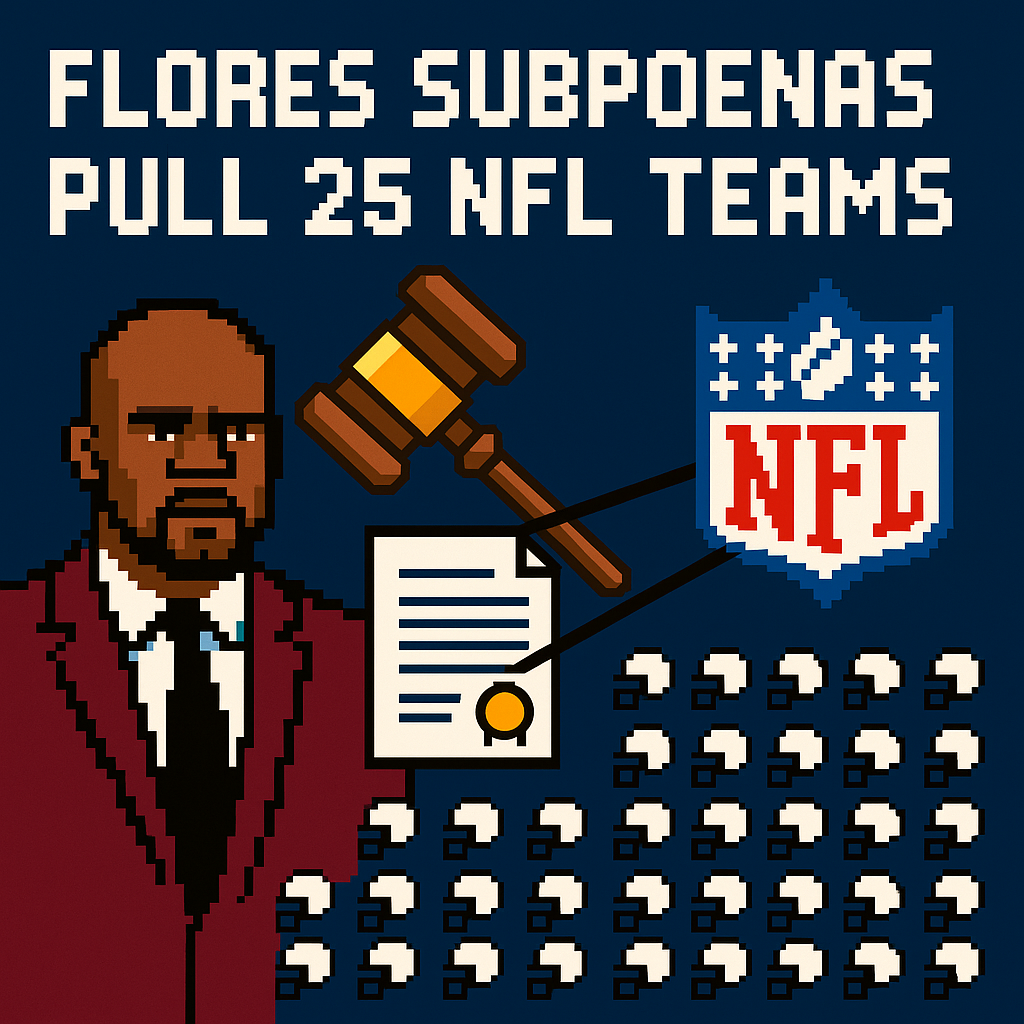
  • Brian Flores’ legal team subpoenaed 25 of the NFL’s 32 clubs and issued more than 1,000 discovery requests, pulling about four-fifths of the league into potential document and chat production tied to his race discrimination suit. [1]
  • The requests reportedly include a 24-year lookback, converting this into a long‑horizon paper-and-messages hunt well beyond the six teams named in the complaint. [1]
  • The real fight in 2026 isn’t email; it’s whether iMessage, WhatsApp, Slack, and Teams data survive preservation and production battles, because candid hiring chatter often moved off email after 2015. [6][10]

What the source said

ESPN reported that Flores’ counsel served subpoenas on 25 teams and sent more than 1,000 discovery requests in federal court, seeking communications, interview files, and policy documents on hiring practices that he says reflect systemic bias. The requests aim at “sham” interview evidence and Rooney Rule compliance trails from coaches’ slates to reference notes. The matter sits in the Southern District of New York with discovery disputes active, and the filing did not publicly identify which 25 clubs were subpoenaed. [1][2]

Why it matters

Since the NFL adopted the Rooney Rule in 2003, clubs have had to document certain interview steps, but those artifacts rarely see daylight; court‑ordered production could reveal how decision paths formed over two decades. For Black coordinators and position coaches, that means scorecards, finalist lists, and notes that show if “fit” correlated with predetermined choices. [3]

Owners, presidents, and general managers now face broad nonparty discovery risk across phone, cloud, and chat repositories. Even when courts narrow scope, long‑tail PR damage can follow—as it did in 2021 when leaked Washington Football Team materials led to Jon Gruden’s resignation after emails became public. [5]

Original analysis

Scope math and posture

  • Breadth: 25 of 32 clubs were subpoenaed—78.1% of the league. If you include the six defendant teams also named in filings, up to 31 clubs could be touched, or 96.9% of the NFL’s membership. 25 Ă· 32 ≈ 78.1%; (25 + 6) Ă· 32 ≈ 96.9%. [1]
  • Timeframe: A 24‑year lookback implies 25 clubs × 24 seasons = 600 club‑years of potentially responsive hiring material, even before you count the defendant teams. [1]
  • Posture: The case proceeds in S.D.N.Y. before Judge Valerie Caproni, who previously split claims between court and arbitration and is now refereeing discovery scope and burden fights. [2]

Back‑of‑envelope cost signal: Processing data to get it into review commonly runs tens to low hundreds of dollars per gigabyte before attorneys read a single message; $25–$125/GB is a published range, which scales fast across phones, laptops, and chat exports for dozens of custodians. The dollar figure is secondary to the institutional risk that candid strings surface in public filings or hearings. [4]

A simple 2×2 for where “smoking guns” live

  • Record type (structured vs. unstructured) × Custody (corporate vs. personal) creates four buckets:
    • Structured/corporate: applicant tracking systems, HRIS fields, and calendar invites from 2010–2024; low heat, high completeness.
    • Structured/personal: rare, e.g., interview scorecards saved in a coach’s personal Google Drive; moderate heat, tricky custody.
    • Unstructured/corporate: email threads and Slack/Teams channels created after 2016; high heat, improved admin logs.
    • Unstructured/personal: iMessage/WhatsApp/Signal on BYOD devices from executives and scouts; very high heat, highest spoliation risk if auto‑delete or “disappearing” settings were active. [6][7][10]

Historical analogue (what it predicts)

In October 2021, New York Times reporting on leaked emails tied to the Washington investigation triggered Jon Gruden’s resignation from the Raiders; those messages were collateral to another probe and not the centerpiece of a hiring lawsuit. When discovery spans most teams in 2026–2027, analogous reputational shrapnel becomes more likely even if the court narrows scope. Expect at least one unflattering exchange about “preselected” candidates to surface once exhibits become public. [5]

Contrarian read

Conventional wisdom says judges will prune the asks as a fishing expedition and the league will settle quickly to stop leaks. That overlooks coordination frictions: 25 nonparty clubs each have distinct counsel, archives, and risk tolerances, which complicates any global off‑ramp. It also misreads incentives in 2026, when validating documented interview processes offers the league a reason to litigate proportionality and preserve the narrative that Rooney Rule steps reflect genuine consideration. [1][2]

Named‑stakeholder breakdown

  • Judge Valerie Caproni (S.D.N.Y.): She will decide what portions of the 24‑year scope survive, which custodians matter, and whether mobile/chat data must be imaged and produced; those orders will set national headlines. [2]
  • NFL headquarters: Park Avenue lawyers must coordinate objections, search terms, and rolling productions across 25 nonparties, where a single email chain can sink months of DEI messaging. [1]
  • Giants, Broncos, Texans: As defendants named in Flores’ 2022 complaint, their 2019–2022 HC and coordinator searches face the closest scrutiny and earliest deadlines. [2]
  • Minnesota Vikings: Flores served as defensive coordinator in 2023, creating added sensitivity around any interview files or communications that reference his candidacies and evaluations. [1]
  • Black coordinator pipeline: QB, DC, and OC candidates interviewed between 2010 and 2024 could gain empirical artifacts—finalist slates, rubric scores—to contest “fit” narratives that often lack auditable evidence. [3]

What others are missing

The most consequential fight is over collaboration and mobile data, not email. In 2023, a federal court sanctioned Google for auto‑deleting Chats in a DOJ antitrust case, signaling that ephemeral or “history off” settings won’t shield candid business communications from discovery or sanctions. The FTC’s Model Second Request and modern ESI protocols explicitly press for Slack/Teams/WhatsApp data and mobile collections, which means clubs that failed to lock down BYOD phones when litigation was reasonably anticipated face real spoliation exposure. That is where interview‑theater vs. substantive‑consideration evidence will likely appear. [6][10][7]

What to watch next

  1. By August 30, 2026, Judge Caproni will narrow—but not quash—the nonparty subpoenas, compelling at least interview notes, finalist slates, and job descriptions from 2010–2024 for a subset of custodians.
  2. By December 31, 2026, at least one internal club communication about a head‑coach interview will appear in a public filing or hearing exhibit and trigger either an internal review or formal discipline announced by a team or the league.
  3. By November 15, 2026, at least one motion for sanctions alleging spoliation of chat or text messages (iMessage, WhatsApp, Slack, or Teams) will be filed on the public docket in S.D.N.Y. in this case.

Sources

[1] ESPN — Report on Flores’ subpoenas to 25 teams and 1,000+ discovery requests; anchors breadth, timeframe, and nonparty scope.
[2] Reuters — Coverage of Judge Valerie Caproni’s rulings in Flores v. NFL; establishes S.D.N.Y. posture and discovery/arbitration context.
[3] NFL Operations (Rooney Rule overview) — Documents the rule’s 2003 adoption and interview‑process intent; frames what records clubs likely kept.
[4] ComplexDiscovery ESI Pricing Survey (2023–2024) — Benchmarks eDiscovery processing costs in the $25–$125/GB range; supports cost math.
[5] New York Times (Oct. 11, 2021, Jon Gruden emails/resignation) — Historical analogue for collateral disclosure risk from unrelated probes.
[6] U.S. v. Google LLC (N.D. Cal. 2023, Chat spoliation order) — Demonstrates courts’ intolerance for ephemeral messaging deletions; pertinent to Slack/Chat/iMessage disputes.
[7] The Sedona Conference, Commentary on Ephemeral Messaging (2023) — Best‑practice guidance on preserving mobile and chat data; informs sanctions risk.
[10] FTC, Model Second Request (2021 update) — Explicitly addresses collaboration tools and mobile collections; maps to civil discovery expectations.


Related update: We recently published an article that expands on this topic: read the latest post.

Related update: We recently published an article that expands on this topic: read the latest post.


Related update: We recently published an article that expands on this topic: read the latest post.


Related update: We recently published an article that expands on this topic: read the latest post.

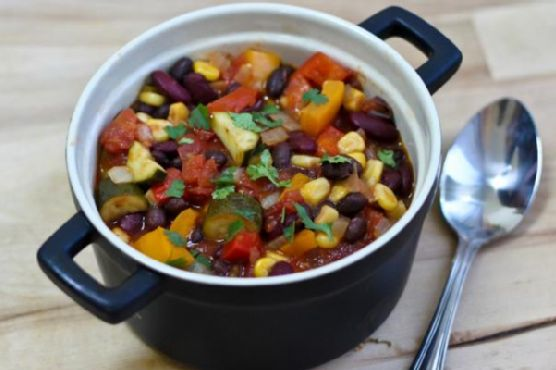
Smokey Rainbow Chili | Made by Meaghan Moineau

Last Tuesday, I found myself staring into the abyss that is my refrigerator, wondering what on earth I could whip up for dinner. You know those nights when you just can’t muster the energy to make anything extravagant but still crave something warm and satisfying? That’s when Smokey Rainbow Chili came to the rescue. Packed with colorful veggies and a kick of spice, this dish not only brightens up your plate but also your soul. Perfect for a chilly evening or when you need a bit of comfort without the fuss. It’s like a cozy blanket in a bowl, making it totally worth the little effort it takes to make.

Jump to Recipe

What You’ll Need

I bet you already have most of these tucked away in your pantry, just waiting to be transformed into something magical. Here’s what you’ll need:

  • 2 tablespoons of olive oil
  • 1 medium zucchini, diced
  • 1 large red bell pepper, diced
  • 1 large orange bell pepper, diced
  • 1 diced fresh jalapeno pepper
  • 4 cloves of garlic, minced
  • 1 large onion, chopped
  • 1 can (14.5 ounces) of stewed tomatoes with liquid
  • 1 can (6 ounces) of tomato paste
  • 1 can (15 ounces) of black beans, drained and rinsed
  • 1 can (15 ounces) of whole kernel corn, drained
  • 1 can (15 ounces) of red kidney beans, drained and rinsed
  • 1 tablespoon of smoked paprika
  • 2 tablespoons of chili powder
  • 1 teaspoon of dried oregano
  • 1/2 teaspoon of black ground pepper
  • 1/4 teaspoon of cayenne pepper (or more if you’re feeling brave!)

How to Make Smokey Rainbow Chili

  1. In a large pot, heat the olive oil over medium-high heat. You want it shimmering, not smoking.
  2. Add the zucchini, red bell pepper, orange bell pepper, jalapeno, garlic, and onion. Cook them for about 5 minutes or until they’re just tender and the kitchen smells like heaven.
  3. Pour in the stewed tomatoes with their liquid and stir in the tomato paste until it dissolves evenly, giving you a beautiful, rich base.
  4. Add the black beans, corn, and kidney beans, mixing them well into the tomatoey goodness.
  5. Sprinkle in the smoked paprika, chili powder, oregano, black pepper, and cayenne. Each stir should reveal a little rainbow of color and promise of flavor.
  6. Bring the pot to a boil. Keep an eye out for those bubbling edges that signal it’s time to turn the heat down.
  7. Reduce the heat to low and let it simmer for about an hour, stirring occasionally. If your veggie chunks are on the larger side, you might want to let it simmer a bit longer until they’re perfectly tender.

Cook’s Notes

Here’s the deal: the longer you let this chili simmer, the deeper the flavors get, so if you’ve got the time, let it do its thing. But if you’re in a rush, 30 minutes of simmering can still do wonders. Just taste as you go and adjust the seasoning to your liking. If you like your chili super thick, reduce the simmering time or add a bit less liquid from the tomatoes.

Got leftovers? This chili tastes even better the next day. Just pop it in the fridge for up to 3 days, or freeze it for a rainy day. When reheating, you might need to add a splash of water or broth to get it back to the perfect consistency.

Make It Your Own

  • Want some meat in there? Brown a pound of ground beef or turkey, and add it in after sauteing the veggies.
  • For a vegan protein boost, throw in some crispy tofu cubes once the chili is done simmering.
  • Craving more heat? Add an extra jalapeno or a splash of hot sauce to dial up the fire.
  • If you’re a fan of smoky flavors, double up on the smoked paprika or add a drop of liquid smoke.

If you try this, I’d love to hear how it turns out — drop a comment or tag me! My DMs are open for all your kitchen triumphs and tribulations. Happy cooking, friends!

Related update: Roast Chicken with Apples and Rosemary

Related update: Vietnamese Beef-Noodle Soup With Asian Greens, Okay Vietnamese/japanese

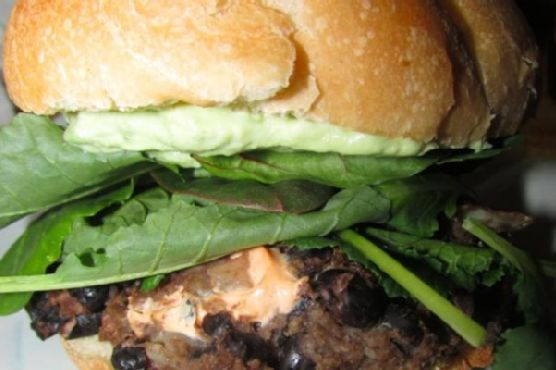
Chipotle Cheese Stuffed Black Bean Burgers with Avocado Creme | Made by Meaghan Moineau

Last Tuesday was one of those days where time slipped through my fingers like sand, and suddenly it was dinnertime, and I had no plan. I stared into the fridge, hoping for inspiration to magically appear, and then my eyes landed on a can of black beans. Instantly, I knew it was time to whip up one of my lifesavers: Chipotle Cheese Stuffed Black Bean Burgers with Avocado Creme. These beauties are my go-to when I need something quick but still wanna impress myself (and anyone else lucky enough to be around). They're packed with flavor, and honestly, who can resist anything stuffed with cheese? Plus, they're vegetarian-friendly and can be made with stuff you're likely to have on hand. They're savory, slightly spicy, and the creamy avocado topping just brings it all home.

Jump to Recipe

What You'll Need

Chances are you already have most of this list tucked away in your pantry or fridge. Here's what you'll need to get these burgers sizzling:

  • Canned black beans
  • Yellow diced onion
  • Diced mushrooms
  • Egg
  • Panko bread crumbs
  • Cumin
  • Chipotle chili powder
  • Salt and pepper
  • Wild olive oil
  • Approx cream cheese spread
  • Hamburger buns
  • Cheese
  • Spinach and tomato (optional)
  • Avocado
  • Sour cream
  • Lime juice
  • Sea salt

How to Make Chipotle Cheese Stuffed Black Bean Burgers with Avocado Creme

  1. Start by swirling a bit of olive oil in a skillet over medium heat. Toss in the diced mushrooms and onions. Sauté until they're softened and the aroma fills your kitchen, seasoning with a pinch of salt and pepper as you go.
  2. Drain the black beans and pour them into a medium bowl. Use a fork to mash them up; aim for a texture that's mostly smooth with some chunks left for interest.
  3. Mix in those sautéed mushrooms and onions, followed by the egg and bread crumbs. This is where it all starts coming together.
  4. Spice things up by adding cumin and a generous pinch of chipotle chili powder. Stir until everything is well combined, and take a moment to admire your handiwork.
  5. Now for the fun part: roll the mixture into burger patties. Whether you go for sliders or full-size is up to you. Create a little indent in the center of each and spoon in some cream cheese spread. Carefully mold the burger around the cheese, sealing it inside like a treasure.
  6. Heat a second swirl of olive oil in your skillet over medium heat. Cook the burgers two at a time, searing each side to a delicious golden brown, about 4 minutes on each side. If you're feeling cheesy, add sliced cheese on top now and cover the skillet to let it melt perfectly.
  7. While the burgers are sizzling, make your avocado creme. In a food processor or blender, combine avocado, sour cream, lime juice, and sea salt. Blend until smooth, tasting along the way to adjust the lime or sour cream to your liking.
  8. To serve, place each hot, cooked burger on an open toasted bun, top with optional spinach and tomato, and finish with a generous scoop of avocado creme before sandwiching it all with the top bun. Dig in while it's warm!

Cook's Notes

One of the best things about these burgers is how flexible they are. You can make the patties ahead of time and store them in the fridge for a day or two, or freeze them for up to a month. Just be sure to thaw completely before cooking. If you find your patties are falling apart, try adding a bit more bread crumbs to bind them better.

Leftovers, if you have any, are great for lunch the next day. Simply reheat in a skillet or microwave and enjoy them as they are, or get creative and crumble them into a salad or wrap.

Make It Your Own

  • Swap the cream cheese for goat cheese for a tangier filling.
  • For a vegan version, replace the egg with a flaxseed egg and use vegan cream cheese and cheese.
  • If you’re not a fan of mushrooms, substitute them with finely chopped bell peppers.
  • Add some chopped jalapeños to the mix for an extra spicy kick.

If you try this, I'd love to hear how it turns out — drop a comment or tag me! I always enjoy seeing the twists and tweaks you come up with. Happy cooking!

Pumpkin Pecan Streusel Cake – gluten free, soy free, vegan | Made by Meaghan Moineau

It was one of those dreary, chilly afternoons when all I wanted was to bury myself under a blanket with something sweet and comforting. My pantry was a hodgepodge of half-empty flours, a lonely can of pumpkin puree, and the remnants of a bag of chocolate chips. But somehow, out of that chaos, a masterpiece was born: the Pumpkin Pecan Streusel Cake. It’s like fall in every bite and the best part? You won’t find any gluten, soy, or animal products here. This cake is not only ridiculously delicious but also caters to almost every dietary restriction. And let’s be honest, anything with a streusel that’s crunchy with pecans and a drizzle of chocolate glaze is bound to be a crowd-pleaser.

Jump to Recipe

What You’ll Need

You probably have most of these ingredients lurking around your kitchen already. It’s a collection of pantry staples and a few key items, so grab your measuring spoons and let’s dive in.

  • **Red brown rice flour**
  • **Gluten free oat flour**
  • White rice flour
  • Sorghum flour
  • Tapioca flour
  • Light firmly brown sugar
  • **Roasted pumpkin puree**
  • Coconut yogurt
  • Bananas
  • Earth Balance soy-free spread
  • **Pecans**
  • Enjoy Life brand chocolate chips
  • **Ground ginger**
  • **Ground nutmeg**
  • **Aluminum-free baking soda**
  • **Aluminum-free baking powder**
  • Kosher salt
  • Apple cider vinegar

How to Make Pumpkin Pecan Streusel Cake – gluten free, soy free, vegan

  1. First things first, preheat your oven to 350°F (175°C). Let’s get this cake going!
  2. Mix the flours, brown sugar, cinnamon, and kosher salt in a small bowl. Add the Earth Balance spread and get your hands in there until the mix looks like coarse crumbs. Toss in the pecans and mix. Set aside this delightful streusel topping.
  3. Next up, measure your coconut milk and add the apple cider vinegar. Let it sit and work its magic till it looks all sour-creamy.
  4. In a medium bowl, whisk together the remaining flours, baking powder, baking soda, ground ginger, ground nutmeg, and kosher salt.
  5. In your mixer bowl, beat the Earth Balance and brown sugar together until they’re best friends, fluffy and well-mixed. Add the mashed banana, scraping down the sides of the bowl as needed. Follow with the pumpkin puree and your sour cream-esque coconut milk mixture. Mix on low speed till smooth.
  6. Throw in your flour mixture and stir until combined. The batter’s going to be thick, but that’s what we’re aiming for here.
  7. Spread half of this gloriously thick batter into a prepared cake pan. Sprinkle with half of that irresistible streusel. Layer on the remaining batter and spread it out evenly before topping with the rest of the streusel.
  8. Bake for 55-60 minutes. You’re looking for a clean toothpick when inserted into the center. Cool in the pan on a stovetop for 40 minutes. Patience, my friend.
  9. Once cooled, gently loosen the sides of the cake with a non-scratch knife, lift it out, and let it chill in the fridge for an hour.
  10. Meanwhile, melt the chocolate chips with Earth Balance over simmering water for a glossy glaze. Let it cool for a bit before drizzling over the cake.
  11. Remove the protective parchment paper and voila! You’ve got yourself a cake that’s ready to be devoured. Serve chilled or at room temp — your call!

Cook’s Notes

Now here’s the scoop: this cake loves a good chill in the fridge. It helps the flavors meld and makes slicing a breeze. Got leftovers? Keep them wrapped up in the fridge and they’ll stay fabulous for up to five days. If you prefer to prepare in parts, make the streusel in advance and keep it in the fridge for up to two days. Just don’t try to rush the cooling process. Trust me, it’s worth the wait for that perfect slice.

Make It Your Own

These swaps will keep things interesting, so don’t be shy about experimenting:

  • Swap out the pecans for walnuts if you’re feeling nutty in a different way.
  • Use mashed sweet potatoes instead of pumpkin for a twist on flavor.
  • Try adding a teaspoon of espresso powder to the glaze for a mocha flair.
  • If chocolate chips aren’t your thing, drizzle with a simple sugar glaze instead.

If you try this, I’d love to hear how it turns out — drop a comment or tag me! This cake has become a personal favorite, and I hope it brings as much joy to your table as it does to mine. Happy baking!

Related update: Pumpkin Pecan Streusel Cake – gluten free, soy free, vegan

Related update: Cranberry-Orange Pistachio Chip Cookies

Acuña Jr. Activated, Returns Tuesday | Analysis by Brian Moineau

TL;DR

  • Ronald Acuña Jr. is back: Atlanta activated him Monday and targeted him to play Tuesday in Miami after a left hamstring strain on May 2; this is more than a feel‑good headline. [1]
  • The real swing is wins above replacement: FanGraphs projects Acuña for ~4.3 WAR the rest of the way; replacing a 1.4‑WAR stopgap in right field is roughly a three‑win bump in four months. [4]
  • Walt Weiss won’t run him into the ground, and that creates a domino effect for Atlanta’s DH/right‑field usage and how they manufacture runs during a soft May/June schedule. [3]

What the source said

ESPN reports the Braves activated Ronald Acuña Jr. from the 10‑day injured list ahead of Monday night’s series opener against the Marlins, clearing the way for him to play Tuesday in Miami. He had been sidelined since May 2 because of a strained left hamstring. The framing is straightforward: roster move made, timing set, and a return date circled for the second game of the series. The piece situates the move within Atlanta’s road trip and emphasizes the club’s intention to get the reigning star back on the field after a two‑plus‑week absence. [1]

Why it matters

Two groups have the most on the line: Atlanta’s clubhouse and everyone chasing them in the NL East. For the Braves, a healthy Acuña instantly alters baserunning pressure, lengthens the lineup in front of Matt Olson and Austin Riley, and changes who gets squeezed out of DH/right‑field at‑bats. For the Phillies, Mets, and Marlins, three incremental Atlanta wins gained by upgrading from a stopgap to an MVP‑caliber leadoff hitter is the difference between a late‑September race and a mid‑August concession. [4][5]

There’s also portfolio risk management. Hamstrings recur when teams get greedy; Atlanta remembers 2021’s injury spiral and the sting of missing pieces in 2024. Weiss signaling “not every day” use is a tell that process, not emotion, will drive playing time—exactly what a club with roughly 78–80% division‑odds should do in May. [3][4]

Original analysis

Ronald Acuña Jr. to play Tuesday at Miami: what it really changes

The surface‑level read is obvious: Acuña returns, Braves get better. The deeper story is how much—and in what ways—Atlanta improves, and how they’ll ration the upgrade in late May.

  • Back‑of‑envelope calculation (wins swing, with math shown)

    • FanGraphs projects Ronald Acuña Jr. for 4.3 WAR the rest of the season (575 PA; 24 HR; 25 SB; 146 wRC+). [4]
    • A typical RF stopgap on Depth Charts sits near 1.4 WAR RoS. [4]
    • Delta ≈ 4.3 − 1.4 = 2.9 wins above replacement for the remainder of 2026. [4]
    • Said differently: over roughly 110–115 remaining games, Atlanta banks about +0.025 wins per game simply by having Acuña’s bat/legs instead of a competent platoon outfielder. [4]
    • That 2.9‑win swing matters in a postseason where seeding and a first‑round bye shift advancement odds by percentage points; FanGraphs listed Atlanta at 78.8% to win the NL East and 11.0% for the World Series on May 19, 2026. [4]
  • Named‑stakeholder breakdown

    • Walt Weiss (manager): He confirmed Acuña would play Tuesday but also telegraphed a non‑everyday cadence. Expect DH starts and occasional sit days to reduce sprint‑load spikes. [3]
    • Alex Anthopoulos (front office): This return lets AA evaluate whether the club still needs a right‑handed bench bat or late‑inning outfield defender by June 15, rather than forcing a May trade. The projections say patience is profitable. [4]
    • Matt Olson and Austin Riley: More first‑inning traffic. Acuña’s pre‑IL OBP sat at .362—below his peak but still premium table‑setting that forces fastballs into the heart of the order. [2]
    • NL East rivals (Phillies, Mets): Playoff‑odds math turns cruel. A three‑win RoS swing on Atlanta’s side erases your margin for bullpen meltdowns in July. [4][5]
    • Kyle Farmer (INF): His 10‑day IL stint was the corresponding move; his absence consolidates infield innings with Orlando Arcia and Ozzie Albies, which in turn tightens the DH/OF at‑bat crunch. [2]
  • A contrarian read

    • Consensus: “Acuña’s back; the Braves immediately regain their 2023‑level thunder.”
    • Counter: The first‑order gain is not slug—it’s reach base, run pressure, and pitch‑selection leverage. Before the strain, Acuña’s line was .252/.362/.378; the walk rate and OBP traveled, the lift didn’t. Expect DH starts and station‑to‑station baserunning for a week while he reloads the A‑swing, which still forces strike‑throwing for Olson and Riley and drives starter pitch counts in innings 1–3. [2]
  • A quick table: three deployment modes and their tradeoffs (next 10–14 days)

    Mode Usage Upside Risk Likely when
    DH‑heavy 5–6 DH starts/week; 0–1 RF Keeps hamstring load down; maximizes PAs Less outfield value; DH crunch with others Immediately vs Miami and entering Nationals series
    Mixed 3–4 DH, 2 RF Balances defense and rest; tests sprints Moderate reinjury risk if sprint spikes stack After first homestand if he responds well
    Full RF 5+ RF starts/week Restores baserunning + arm value Highest soft‑tissue risk before full ramp Late June if no setbacks

    The Washington Post’s line—he’ll play Tuesday, but not every day—tracks with “DH‑heavy, then mixed” while the staff watches how he comes out of high‑effort turns and first‑to‑third reads. [3]

Two final context levers to watch. First, Atlanta didn’t need to panic; even before Monday’s shutout loss, MLB.com’s team notes had the Braves leading or near the top in hits, slugging, average, RBIs, and runs. Adding a ~.360 OBP leadoff threat pushes the chain along without demanding instant long balls. [2] Second, Tuesday showed the blueprint: in his return, Acuña doubled, walked twice, and scored three times in an 8–4 win at loanDepot park. That is run manufacturing by presence, not just power. [5]

What others are missing

Coverage focuses on whether Acuña plays and where he bats; it glosses the cascading effect on role players and how that affects October seeding. Kyle Farmer’s IL move plus a DH‑tilted Acuña means fewer DH reps for Matt Olson off‑days and tighter lanes for Travis d’Arnaud and Jarred Kelenic, who each project for non‑zero RoS WAR. That subtly transfers late‑inning plate appearances to star bats more often—fewer “rest the core” days in June—at the cost of in‑game defensive flexibility. In a league where FanGraphs pegs Atlanta near a .544 rest‑of‑season win percentage, flipping even two toss‑up games via better ninth‑inning lineups can decide a bye. [2][4][5]

What to watch next

  1. By May 31, Acuña starts at DH in at least 6 of his first 10 team games back, with ≀3 starts in right field, reflecting a measured ramp. [3]
  2. By June 15, Atlanta’s leadoff OBP is ≄.370 over a rolling two‑week window, driven by Acuña’s walk rate stabilizing even if slug lags behind (.440 or lower in that span). [2]
  3. By the All‑Star break (mid‑July 2026), Acuña accrues ≄2.0 FanGraphs WAR on the season, consistent with his 4.3 RoS projection pace if health holds. [4]

My take

I’d treat Ronald Acuña Jr. like a blue‑chip asset in a portfolio that already beats the market. Let him terrorize pitchers from the DH slot for 10–14 days, accept a power lag, and weaponize his on‑base skill to tilt counts for Olson and Riley at Truist Park and on the road. The math says the upgrade from a 1.4‑WAR stopgap to a 4.3‑WAR superstar is worth roughly three wins; the risk says don’t chase the fourth by pushing him into right field too soon. [2][4][5]

Sources

[1] Braves’ Ronald Acuña Jr. to play Tuesday at Miami — ESPN (https://www.espn.com/mlb/story/_/id/48810095/atlanta-braves-activate-ronald-acuna-jr-injured-list) — News of activation from the 10‑day IL and the plan to play Tuesday versus Miami.

[2] Ronald Acuña Jr. activated from injured list — MLB.com (https://www.mlb.com/braves/news/ronald-acuna-jr-activated-from-injured-list) — Confirms activation, Kyle Farmer’s IL move, pre‑IL slash line, and Atlanta’s offensive leaderboards.

[3] Braves activate outfielder Ronald Acuña Jr. from the injured list — The Washington Post (https://www.washingtonpost.com/sports/mlb/2026/05/18/braves-ronald-acuna-activated/44d42a8e-530e-11f1-9c40-7a0a12d9e745_story.html) — Adds manager Walt Weiss’s “not every day” guidance and timeline context.

[4] 2026 Projections — Depth Charts (RoS), Atlanta Braves — FanGraphs (https://www.fangraphs.com/projections?fantasypreset=dashboard&lg=&pageitems=30&players=0&pos=all&sortcol=&sortdir=desc&statgroup=dashboard&stats=bat&team=16&type=rfangraphsdc) — Projects Acuña at 4.3 WAR RoS and a typical RF stopgap near 1.4 WAR; contextualizes team odds and RoS strength.

[5] Acuña scores three times in return as Braves beat Marlins 8–4 — The Washington Post (https://www.washingtonpost.com/sports/mlb/2026/05/19/atlanta-braves-miami-marlins-score/769de190-53e2-11f1-9c40-7a0a12d9e745_story.html) — Documents Tuesday’s game, Acuña’s double, two walks, and three runs, plus confirms series context.

[6] Braves’ Ronald Acuna: Back in lineup at DH


Related update: We recently published an article that expands on this topic: read the latest post.
Azteca Soup | Made by Meaghan Moineau

The other day, I found myself staring aimlessly into my pantry, contemplating the eternal question: "What's for dinner?" It was one of those never-ending Tuesdays, and I needed a dinner that was like a warm hug — something quick, cozy, and just a bit zesty to shake off the day's blues. That's when Azteca Soup became my savior. With a refrigerator already stocked with fresh vegetables and a trusty can of tomatoes, it felt like the universe was nudging me toward this comforting bowl of delight. This soup is like a fiesta in a bowl; it’s rich, tangy, and just spicy enough to dance on your taste buds without setting off fire alarms. It’s easy enough to whip up on a weeknight, but impressive enough to make you feel like a kitchen goddess (or god, no discrimination here).

Jump to Recipe

What You'll Need

You might be surprised at how many of these ingredients are already in your kitchen. This list is all about bold flavors and easy pantry staples.
  • Olive oil – for that luscious sautĂ© start.
  • 2 cloves garlic, minced
  • 1 onion, chopped
  • 1 jalapeno pepper, seeded and diced
  • 2 celery stalks, chopped
  • 1 can tomatoes, with juice reserved
  • 1 teaspoon chili powder
  • 1 teaspoon cumin
  • 1 cup fresh corn kernels
  • 2 tablespoons basil in ribbons
  • 3 cups vegetable stock
  • 2 tablespoons lime juice
  • 1 avocado, diced
  • Nacho chips
  • Sour cream, for serving
  • Basil shreds, for garnish

How to Make Azteca Soup

  1. In a medium saucepan, heat a splash of olive oil over medium heat. Toss in the garlic, onions, jalapeno pepper, and celery. Sauté until everything softens and becomes fragrant, about 5 minutes.
  2. Add the canned tomatoes, including the reserved juice, along with the chili powder and cumin. Cook this mixture down for about 10 minutes, stirring often. You'll know it's right when the tomatoes start breaking down, and the kitchen smells irresistible.
  3. Stir in the fresh corn and basil ribbons, followed by the vegetable stock. Bring it all to a gentle boil, then reduce the heat to a simmer. Let it bubble away for 15 minutes, letting all those flavors meld.
  4. Once done, remove the soup from heat. Stir in the fresh lime juice and diced avocado. The lime adds a bright kick, while the avocado brings a creamy contrast.
  5. Break a handful of nacho chips into each serving bowl. Ladle the hot soup on top, then add a generous dollop of sour cream. Scatter a few basil shreds and perch a nacho chip on top for good measure.
  6. Serve immediately to enjoy the full spectrum of flavors and textures. This makes enough for six people, whether it’s for a full lunch or a hearty starter.

Cook's Notes

Let's talk about a couple of things to keep in mind. First, sautĂ©ing your veggies just right is key — don't rush this step; it builds the flavor base. If you're making this ahead, the soup itself stores well in the fridge for a couple of days; just hold off on adding the avocado and chips until you're ready to serve. The avocado tends to go brown, and nobody wants soggy chips. Reheat gently, and add the fresh ingredients and garnishes once it's hot and ready to serve.

Make It Your Own

Here are some fun ways to tweak this soup to match your mood or pantry:
  • Swap the chicken for crispy tofu: If you're in the mood for some protein, toss in some tofu cubes, pan-fried to crisp perfection.
  • Heat lovers' edition: Throw in an extra jalapeno or a dash of hot sauce for an extra spicy kick.
  • Cheese, please: Mix in a handful of shredded cheddar or jack cheese right before serving for a gooey, melty twist.
  • Herbal touch: Substitute the basil with cilantro for a different but equally vibrant herbal note.
If you try this, I'd love to hear how it turns out — drop a comment or tag me! Sharing your kitchen adventures makes my day. I hope this Azteca Soup brings as much joy to your table as it does to mine. Happy cooking!

Easter Nest Sweet Cake With Sour Cream-Royal Icing and Pistachios | Made by Meaghan Moineau

It was one of those early spring afternoons when the sun was just starting to peek through the clouds, promising warmer days ahead. I was rifling through my pantry, craving something sweet but not overly indulgent. You know, a little treat to go with my afternoon tea. That’s when I remembered this Easter Nest Sweet Cake recipe. It’s a delightful blend of flavors and textures — a soft cake topped with a tangy sour cream-royal icing and the crunch of pistachios. Perfect for those days when you want something that feels special but comes together without too much fuss. Plus, it makes for a show-stopping centerpiece at any Easter gathering or spring brunch.

Jump to Recipe

What You’ll Need

You might find that most of these ingredients are already in your kitchen, just waiting to be transformed into something magical. Here’s what you’ll want to gather:

  • Unsalted butter – because decadent is the way to go.
  • Brown sugar – for that rich, caramel-like sweetness.
  • Eggs
  • Flour
  • Baking powder
  • Sour cream – adds a moist and tangy kick to the cake.
  • Icing sugar
  • Lemon juice – brings brightness to the icing.
  • Egg white
  • Pistachios, unshelled – for a nutty crunch.
  • Green food coloring – optional, but it gives the icing a festive touch.

How to Make Easter Nest Sweet Cake With Sour Cream-Royal Icing and Pistachios

  1. Preheat your oven to 190°C/375°F. Lightly grease a ring cake pan and set it aside. The anticipation starts here.
  2. In a medium bowl, use an electric mixer to beat the brown sugar, eggs, and unsalted butter until creamy — think smooth and dreamy. The sugar granules should almost disappear.
  3. Add the sour cream and flour to the mixture. Beat for a couple of minutes until everything is well combined. The batter should be thick and luscious.
  4. Pour the batter into your prepared cake pan, smoothing the top with a spatula. Bake for about 20 minutes. The cake should be golden brown and a skewer inserted in the center should come out clean.
  5. Let the cake cool in the pan for a few minutes, then transfer to a wire rack. The aroma is irresistible, but patience will pay off.
  6. For the icing, beat the egg white using a standard mixer until soft peaks form. Add lemon juice, icing sugar, and a drop of green food coloring if you’re feeling festive. Beat for a few more seconds until everything is just combined.
  7. Once the cake is cool, pour the royal icing generously over the top, letting it cascade down the sides. There’s something so satisfying about this step.
  8. Sprinkle with chopped pistachios, and get creative with your decorations. The crunch and subtle saltiness of the pistachios are a game-changer.

Cook’s Notes

Here’s the thing about this cake — it’s quite forgiving. If you find yourself without a ring pan, a regular cake pan or even a loaf pan will do in a pinch. Just keep an eye on the baking time. Store leftovers (if there are any!) in an airtight container at room temperature for up to three days. The icing may lose a little of its shine, but the flavor remains on point. If you’re planning ahead, bake the cake a day before and ice it on the day of serving for maximum freshness.

Make It Your Own

With a few tweaks, you can tailor this cake to suit different tastes or occasions:

  • Swap the pistachios for toasted almonds for a different nutty flavor.
  • If you’re not a fan of sour cream, try using Greek yogurt for a similar tanginess.
  • Feeling adventurous? Add a tablespoon of shredded coconut to the batter for extra texture.
  • For a citrus twist, incorporate the zest of one lemon into the cake batter.

If you try this, I’d love to hear how it turns out — drop a comment or tag me! And if you have any creative twists on this recipe, don’t keep it to yourself; I’m always on the lookout for new ideas. Happy baking!

Related update: Pumpkin Pecan Streusel Cake - gluten free, soy free, vegan

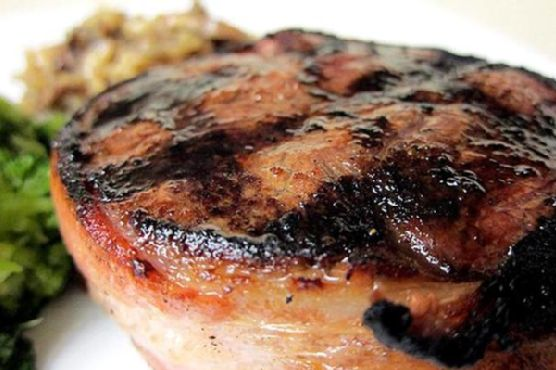
Bacon Wrapped Filet Mignon | Made by Meaghan Moineau

Last Tuesday, I found myself staring blankly into the fridge, desperately seeking inspiration for dinner after a long day of wrangling emails and chasing after my two-border collie pups, who were determined to shred every toy they own. Suddenly, a craving for something luxurious yet simple struck me—Bacon Wrapped Filet Mignon. It’s one of those dishes that sounds super fancy but is surprisingly easy to pull off. The genius pairing of tender beef with smoky bacon just hits all the right notes for a cozy, indulgent meal that feels like a mini celebration. And let’s be honest, we all need more of those! Plus, you can grill these beauties in under 30 minutes—perfect for when you’re short on time but still want to impress.

Jump to Recipe

What You’ll Need

I bet you have most of these already lurking in your pantry, just waiting to transform into something spectacular. No need for a lengthy grocery list here!

  • 2 beef tenderloin steaks
  • 2 slices of smoked bacon (room temperature)
  • 4 cloves of garlic
  • Salt & pepper to taste

How to Make Bacon Wrapped Filet Mignon

  1. First things first, get those tenderloins out and place them on a large dish. Now, take a deep breath and wrap a slice of room-temperature bacon around each filet. Gently stretch the bacon if needed, and secure its ends with a toothpick. It’s like giving your steak a delicious porky hug.
  2. Next, grab the garlic cloves. Cut them in half and rub both sides of each filet with the cut ends of the garlic. Trust me, this step infuses the steaks with a subtle, aromatic punch that’s absolutely divine.
  3. Season generously with salt and pepper on both sides—don’t be shy here, this is where the flavor magic starts to happen.
  4. Pre-heat your grill to very hot. You want it sizzling like a summer sidewalk.
  5. Using tongs, place each steak on the grill. For that perfect medium-rare, cook them for 3-4 minutes, rotating the steaks halfway through 90 degrees to achieve those Instagram-worthy grill marks.
  6. Flip the steaks over and grill the other side for another 3-4 minutes. The anticipation is killing me at this point.
  7. Remove the steaks from the grill and let them rest, loosely covered, for about 5 minutes. This step is crucial for locking in those juicy flavors before you remove the toothpicks and dive in.

Cook’s Notes

Let’s talk steak secrets! Always let your steaks rest at room temperature for about 20 minutes before you start wrapping them in bacon. This helps them cook more evenly. If you like your steak a bit more well-done, simply add a minute or two to each side. Got leftovers? Wrap them up and store them in the fridge—they make a killer steak salad the next day. And remember, sharp toothpicks are your friend for bacon security!

Make It Your Own

Why stop at classic when you can have fun experimenting? Here are a few ideas to jazz up your mignon:

  • Swap the garlic rub for a herb butter spread before grilling for a luscious, buttery finish.
  • Try using prosciutto instead of bacon for a slightly sweeter, more delicate wrap.
  • Add a sprinkle of blue cheese crumbles on top right after grilling for a tangy twist.
  • Serve alongside a creamy peppercorn sauce for an extra layer of flavor.

If you try this, I’d love to hear how it turns out—drop a comment or tag me on social media! Your gourmet adventure awaits, and I can’t wait to see where it takes you! đŸœïž

Related update: Bacon Wrapped Filet Mignon

How Gilbert’s Text Unleashed Jarrett Allen | Analysis by Brian Moineau

TL;DR

  • Dan Gilbert’s motivational text message to Jarrett Allen preceded a 23-point, tone‑setting Game 7 from the center as Cleveland routed Detroit 125–94; the Cavs also got an owner‑engineered road‑crowd boost. [1][2][3]
  • The real edge wasn’t mystical “alter ego” stuff; it was organizational design: owner→coach→player alignment (dinner, first play for Allen, clear role) plus 25 buses of fans that muted home‑court. [2][3][8]
  • If Cleveland keeps rewarding Allen early and often, that inside gravity can swing the Knicks series more than any single pep text ever will. [2]

What the source said

Cleveland.com reports that, two hours before Game 7 in Detroit on May 17, 2026, Cavaliers owner Dan Gilbert sent Jarrett Allen a short text—encouraging him to “be you”—that Allen said was the first such message he’d ever received from the boss. Gilbert also surprised the team with an impromptu visit at the Shinola Hotel, near his downtown Detroit headquarters. Allen responded with physical, emotional play in a 125–94 win, and teammates jokingly dubbed his persona “Game 7 J.A.” The piece frames Gilbert’s note as a nudge that brought out Allen’s alter ego and helped Cleveland advance. [1]

Why it matters

Stakeholders here aren’t just Jarrett Allen and Dan Gilbert. Kenny Atkinson (who ran the first play for Allen), Koby Altman (roster architect), and the Eastern‑finals opponent New York Knicks all feel the ripple effects when ownership steps directly into the motivational chain—especially on the road. [2][3]

Cleveland has been starving for post‑LeBron proof of concept. The Cavs just reached the East finals for the first time since 2018, not with a heliocentric scorer but via connectivity—delegated confidence to Allen, interior dominance, and a traveling fan bloc that shaved Detroit’s home‑court advantage. The upside: culture compounds. The downside: if results slip, owner‑coach‑player boundary lines get second‑guessed. [2][3]

Original analysis

Dan Gilbert’s motivational text message to Jarrett Allen was the tip of a larger system

Consensus read: Gilbert’s text “sparked” Allen’s alter ego and flipped Game 7. Contrarian read: The text was symbolic; the win flowed from structural moves—Atkinson’s first‑play call for Allen, a paint‑first script, and a road‑crowd countermeasure that made Little Caesars Arena feel half‑neutral. Atkinson said Gilbert’s Jarrett‑as‑spark comment pushed him to open with Allen; that is process, not magic. [2][3]

Back‑of‑envelope calculation (fan impact)

  • Known inputs:
    • 25 buses of Cavs supporters for Game 7; nearly 1,400 people reported. [3][8]
    • Little Caesars Arena basketball capacity ≈ 20,332. [4]
  • Math:
    • Share of building = 1,400 Ă· 20,332 ≈ 6.9%.
  • Why it matters: Flipping roughly 7% of the bowl to the road team doesn’t erase home‑court, but it narrows the gap in late‑clock noise and momentum. Cleveland ultimately won by 31 (125–94), but the early quiet set the platform for that avalanche. [2][5]

Named‑stakeholder breakdown

  • Dan Gilbert (Cavaliers owner): Proved that targeted, tangible ownership actions (message clarity, fan logistics) can change the temperature of a road Game 7—and buy a mountain of locker‑room trust. [2][3]
  • Kenny Atkinson (head coach): Gained a template—feed Allen early when stakes spike—which he tied directly to Gilbert’s “Jarrett is the spark” prompt; expect him to rinse‑repeat versus New York at Madison Square Garden. [2]
  • Jarrett Allen (center): Delivered 23 points in 25 minutes and became the tactical fulcrum; if he sustains early touches, his rim runs and seals bend coverage for Donovan Mitchell and Sam Merrill. [2][6]
  • New York Knicks (next opponent): Must decide whether to tag Allen harder on the roll (risking spray‑outs to Merrill) or live with contested 2s; either response drags them away from their preferred shell under Tom Thibodeau. [2]
  • League peers (owners/executives): Now have a case study showing “soft‑power” levers—hotel touchpoints, curated fan travel, player‑specific messages—can be both culture and performance tools when used sparingly. [3][8]

One more number ties it together. The Cavs pounded Detroit inside—Allen scored 23, Mobley 21 (44 combined), while Cleveland turned the third quarter into a runway. If you’re New York, you don’t scheme for a text; you scheme for a team that just scored 58 in the paint and dictated first actions to its 5. That’s scouting‑report material. [2][5][7]

2x2 framework: Owner involvement vs. outcome quality

  • Low involvement × Poor outcomes: Drifting model—players hunt their own motivation; no edge in the margins.
  • Low involvement × Good outcomes: Talent carries; culture feels transactional; brittle under stress.
  • High involvement × Poor outcomes: Meddling—unclear roles, mixed messages for coaches, locker‑room cynicism.
  • High involvement × Good outcomes (Cleveland’s Game 7): Targeted involvement aligned with coaching decisions; specific ask to a specific player; tangible fan strategy; no crossing of tactical lines. [2][3]

The most durable lesson is repeatability. Atkinson doesn’t need fresh texts to recreate the effect. He needs first‑five possessions that make Allen the axis. That was the hidden value inside the “alter ego” headline: the Cavs found a playoff identity on May 17, 2026, and it’s translatable to Madison Square Garden. [2]

What others are missing

Coverage gushes about the “Game 7 J.A.” persona, but the overlooked angle is geography as an asset. Gilbert lives and operates businesses in Detroit; the Cavs staged at the Shinola Hotel, footsteps from his HQ. That proximity let ownership collapse the gap between symbolic support and operational execution—showing up at dinner, aligning with Atkinson, and mobilizing buses before tickets disappeared. In a cap‑and‑tax league where roster tweaks are expensive, exploiting off‑court infrastructure (relationships, venue knowledge, ticket channels) is a market inefficiency. Cleveland executed it at scale in a 48‑hour window and walked out with a 31‑point road Game 7. [1][3][8]

What to watch next

  1. By May 25, 2026 (after two games of the East finals), Cleveland will script the first play for Allen in at least one game—watch the opening set for a deep seal or lob to test New York’s rim help. [2]

  2. By the end of the Knicks series (no later than June 5, 2026), Allen will average 10.0+ field‑goal attempts per game—evidence that the Cavs are institutionalizing the Game 7 formula, not chasing an “alter ego” buzz. [2][6]

  3. By the 2026–27 All‑Star break (February 2027), at least two other NBA teams will publicly subsidize 500+ fans for a playoff road game, copying Gilbert’s 25‑bus move as a competitive soft‑edge tactic. [3][8]

My take

I’m not romantic about pep texts. I am bullish on organizations that turn intent into design. Gilbert didn’t draw up horns‑sets; he made Allen matter before the ball went up and made the arena less hostile once it did. Atkinson then cashed it in with that first call and a paint‑first script, and Allen paid it off. If the Cavs keep treating the center as a primary on ramps one through five and keep sweating the margins, they’ll take a bite out of New York’s perimeter. The message that wins isn’t in Gilbert’s phone—it’s in Cleveland’s opening actions.

Sources

Tuna and Tofu Cold Dish | Made by Meaghan Moineau

So there I was, staring into my fridge on a Wednesday night, contemplating the sad assortment of leftovers and a few random ingredients when inspiration struck. It was one of those evenings where cooking seemed more like a Herculean task than a simple pleasure, and I just needed something refreshing yet satisfying. Enter my Tuna and Tofu Cold Dish. This dish is like a cool breeze on a hot day—simple, refreshing, and oh-so-satisfying. It’s the perfect quick fix when you’re juggling work, life, and everything in between. Plus, it’s surprisingly elegant for how little effort it takes. Trust me, this one’s a keeper for those nights when you want to pretend you’re at a fancy restaurant without changing out of your pajamas.

Jump to Recipe

What You’ll Need

This is a no-fuss, ingredient-light dish. Chances are you already have most of this in your kitchen, just waiting to be transformed into something delicious.

  • A block of silken tofu
  • A can of tuna in water, drained
  • White diced cherry tomatoes
  • A dash of white pepper
  • A pinch of salt
  • A splash of extra virgin olive oil
  • A few drops of vinegar
  • Light Kikkoman soy sauce
  • A clove of garlic, minced
  • Freshly cracked black pepper

How to Make Tuna and Tofu Cold Dish

  1. Start by cutting your block of silken tofu into small, bite-sized blocks. Be gentle here—silken tofu is as fragile as my willpower at a dessert buffet!
  2. Open the can of tuna and drain it well. Once drained, place the tuna in a bowl and gently squash it with a fork. Mix in a dash of white pepper and a pinch of salt to bring out its flavor.
  3. Take your cherry tomatoes and slice them thinly. The goal is to get them to release their sweet and tangy juices.
  4. On a serving plate, carefully place the tofu blocks. Top them with your sliced cherry tomatoes and then the seasoned tuna.
  5. For the sauce, mix together a good splash of extra virgin olive oil, a few drops of vinegar, and a dash of light Kikkoman soy sauce. Add the minced garlic and freshly cracked black pepper.
  6. Drizzle this fragrant sauce over your tofu, tuna, and tomatoes.
  7. Finish by sprinkling with toasted sesame seeds and diced spring onion for that extra pop of flavor and crunch. Serve immediately and enjoy the calm in a chaotic weeknight!

Cook’s Notes

This dish is a lifesaver on busy nights. It’s all about the balance of textures and flavors—the creamy tofu, the robust tuna, and the crunchy veggies. Once assembled, it’s best eaten right away to enjoy the freshness of the ingredients. If you want to prep ahead, mix the sauce earlier in the day and keep it in the fridge. Just wait to dress the dish until you’re ready to serve, or the tofu might get over-marinated and lose its delicate texture.

Make It Your Own

  • Swap the tuna for crispy tofu if you’re going plant-based. Just pan-fry tofu cubes until golden for a delightful contrast.
  • Try adding sliced avocado for a creamy twist. It pairs beautifully with the tofu and tuna.
  • For a spicy kick, mix a bit of Sriracha into the sauce. It’ll add warmth and complexity without overpowering the dish.
  • Switch up the herbs by adding fresh cilantro or basil instead of spring onion for a different flavor profile.

If you try this, I’d love to hear how it turns out—drop a comment or tag me! Your feedback makes this kitchen adventure all the more fun. Bon appĂ©tit, my fellow food explorers!

Related update: Tuna and Tofu Cold Dish

How to Make OREO Turkeys for Thanksgiving | Made by Meaghan Moineau

Thanksgiving at my place is never complete without a little bit of chaos and a lot of laughter. One year, I thought I’d try my hand at a new dessert after we had a bit of a mishap with the pumpkin pie (don’t ask!). In the spirit of whimsy and fun, I concocted these adorable little OREO Turkeys that not only saved the day but also became a family favorite. These treats are deceptively simple to make and a delightful project to get kids involved in. Plus, who can resist the combination of OREO cookies and chocolate? Trust me, once you try them, they’ll be a staple at every Thanksgiving feast. Jump to Recipe

What You’ll Need

This ingredient list is a breeze, and chances are you’re already stocked up on most of it, especially if you’ve got a sweet tooth like me!

  • OREO cookies (3 cups, crushed)
  • Cream cheese (softened)
  • Sweet semi baking chocolate (melted)
  • Candy corn
  • Candy eyes
  • Icing (as glue)

How to Make OREO Turkeys for Thanksgiving

  1. First up, grab a package of OREO cookies and crush them up finely. We’re talking almost powdery, so they mix well.
  2. Mix the crushed OREO cookies with softened cream cheese until you have a smooth, pliable dough. It should feel like a rich, chocolatey clay.
  3. Roll this mixture into one-inch balls. They should be small enough to handle easily but big enough to hold their own as a turkey body.
  4. Pop those balls into the freezer for a quick chill — about 10 minutes should do the trick. This helps them firm up for the chocolate dip.
  5. Dip each ball into the melted chocolate, making sure it’s completely coated, and place them on a cookie sheet lined with wax paper. The chocolate should be smooth and glossy.
  6. Refrigerate the chocolate-coated balls for 15 minutes to an hour. This gives them a nice, firm shell.
  7. Now the fun part: decorating! Stick 5 candy corn pieces into the back of each ball to create colorful tail feathers.
  8. Use icing as glue to attach candy eyes towards the front top of the ball. We want those eyes peering out cutely!
  9. For the finishing touch, take a candy corn and cut it into pieces. Use the white tip for a nose and stick it under the eyes, then use the orange pieces as feet. Your turkey should look absolutely adorable!

Cook’s Notes

If your cookie balls are too sticky to roll, try chilling the mixture for a bit longer. It should be firm yet pliable. Don’t worry if your OREO Turkeys aren’t perfect; their charm is in their handmade look! You can make these a day ahead and store them in the refrigerator to keep the chocolate nice and solid. Leftovers (if there are any) can be kept in an airtight container for up to a week.

Make It Your Own

  • Swap the candy eyes with mini chocolate chips. They’re just as cute and give a different texture.
  • Use white chocolate instead of semi-sweet for a sweeter, more vibrant look.
  • Try using different flavored OREOs, like mint or peanut butter, for a twist on the classic flavor.
  • Add a dash of cinnamon to the cream cheese mixture for a subtle, warm hint of spice.

If you try this recipe, I’d love to hear how it turns out — drop a comment or tag me on social media! Your feedback and creativity always make my day. Happy Thanksgiving, and may your kitchen be filled with delightful chaos!

Related update: How to Make OREO Turkeys for Thanksgiving

Grandma Inez’s Pineapple Pie | Made by Meaghan Moineau

Picture this: it’s a Tuesday evening, and the only thing standing between me and a total kitchen meltdown is the comforting prospect of pulling together Grandma Inez’s Pineapple Pie. I was staring down a pantry that looked more like a post-tornado disaster zone than the well-stocked haven I imagined. But there it was, hidden among the cans of neglected beans and a jar of something unrecognizable — a lone can of pineapple. That’s when I remembered this pie, a dessert that feels like a tropical vacation and a cozy hug all rolled into one. It’s quick, it’s a little quirky, and it’s a whole lot of delicious. A pie so luscious and breezy, it practically makes the kitchen clean itself. Well, almost.

Jump to Recipe

What You’ll Need

If you’ve got a stocked baking cupboard, you’re probably halfway there. The beauty of this pie is that it doesn’t ask for much — just a bit of finesse and a lot of love.

  • 1 pre-baked pie crust
  • 1 can crushed pineapple (keep the juice!)
  • 1 cup sugar (divided)
  • 1/4 cup butter
  • 3 tablespoons cornstarch
  • 1 teaspoon vanilla
  • 3 egg yolks
  • 3 egg whites
  • 1/4 teaspoon cream of tartar
  • 1/4 teaspoon salt
  • 1/2 cup water

How to Make Grandma Inez’s Pineapple Pie

  1. Start by creaming 3/4 cup of the sugar, butter, and egg yolks in a medium saucepan. Use a hand-held mixer to make it fluffy — a workout for your good arm, just until it’s pale and dreamy.
  2. Blend in the cornstarch and vanilla until smooth. It should look like a creamy potion, sweet and inviting.
  3. Add the water and that whole can of crushed pineapple, juice and all. Mix again, until everything feels like it’s come to a tropical accord.
  4. Transfer your saucepan to the stove and set it over medium heat. Stir constantly — think of it as a zen exercise — until the mix thickens. You’ll know it’s ready when it can coat the back of a spoon.
  5. Pour this luscious filling into your pre-baked pie crust, spreading it out like you’re tucking it into bed.
  6. Now, whip the egg whites until they’re foamy, like the top of a cappuccino. Gradually add the remaining 1/4 cup sugar, cream of tartar, and salt. Keep whipping until soft peaks form and the mixture is glossy like a magazine finish.
  7. Spread the meringue over the cooled pie. Use the back of a spoon to create little peaks, like waves on an ocean.
  8. Bake in a preheated 400°F oven for just a few minutes. Stay close! You want the meringue to be golden, not torched.
  9. Let it cool completely before slicing — if you can wait that long. Store in the fridge and sneak slices whenever you need a pick-me-up.

Cook’s Notes

A few tips to keep this pie from veering off course:

– Make sure your pie crust is completely cool before adding the filling — we want a crispy base, not a soggy one.
– Meringue can be a bit temperamental. Avoid making it on a humid day, or it might weep. No one likes a sad pie.
– The pie is best eaten within a day or two, but trust me, it rarely makes it that long. If you’ve got leftovers, keep them covered in the fridge. The meringue might lose its crispness, but it’ll still taste divine.

Make It Your Own

Here’s where you get to flex your creative muscles:

  • Swap the pineapple for mango or passion fruit for a different tropical twist.
  • Add a hint of ginger or nutmeg to the filling for a warm-spiced version.
  • Use almond extract instead of vanilla for a nutty, nuanced flavor.
  • Try topping with coconut flakes post-bake for an extra layer of texture and flavor.

If you try this, I’d love to hear how it turns out — drop a comment or tag me! Your kitchen is about to smell amazing, and I can’t wait for you to taste this slice of sunshine. Enjoy every bite!

Related update: Grandma Inez’s Pineapple Pie

Related update: How to Make OREO Turkeys for Thanksgiving

How Doughnuts Landed Him a Tech Job | Analysis by Brian Moineau

TL;DR

  • A Business Insider story shows a tech worker broke a 10‑month unemployment streak by bringing doughnuts to an office and introducing himself—an old‑school tactic that cut through an application pile and led to a hire. [1]
  • In 2024, Workday reported 173 million applications for 19 million requisitions and said applications grew 4× faster than openings; meanwhile, the BLS puts median jobless spells around 11.5 weeks and the mean near 25.3 weeks, making visibility tactics a rational bet. [2][3]
  • The move isn’t universally smart: it works where norms allow small, shared treats and walk‑ins; it backfires in regulated or policy‑heavy orgs that bar gifts—even doughnuts. [4][5]

What the source said

Business Insider recounts how a laid‑off tech professional, after months of ghosting, visited a local employer in person with a box of doughnuts and introduced himself at reception. Staff noticed, conversations followed, HR called that day, interviews ensued, and he landed the job. [1]

His spouse—an ex‑recruiter—had doubted the “drop‑in” approach, assuming it was outdated, yet six months later he’d earned a raise and a strong review. The author frames the doughnuts as a symbol of tenacity and a way to force a personal, human interaction in a process dominated by online applications and AI filters. The story’s moral: when the market is unforgiving, personality and presence can reopen closed doors. [1]

Why it matters

  • Stakeholders: job seekers in crowded funnels; small and midsize employers drowning in rĂ©sumĂ©s; HR teams managing policy and fairness; and platforms (LinkedIn/Indeed/Workday) that intermediate this dance. Workday says customers processed 173 million applications for 19 million requisitions in H1 2024; applications grew 4× faster than openings, so standing out—not just “applying more”—is the constraint. [3]

  • Stakes: money and time. The BLS shows median unemployment at 11.5 weeks and mean at 25.3 weeks in March–April 2026; every week saved is rent, healthcare, and momentum. Employers face non‑executive cost‑per‑hire around $5,475 and screening bottlenecks that add 8–9 days to cycles, which compounds vacancy costs. Moves that ethically surface signal earlier can compress both sides’ costs. [2][5]

Original analysis

Why “bringing doughnuts to an office” works (sometimes)

  • Contrarian read

    • Consensus: “Never bring gifts to interviews; it looks unprofessional or like a bribe.” Indeed’s own advice labels gifts inappropriate. [4]
    • Counterpoint: The story’s power isn’t the sugar; it’s forced salience plus reciprocity in a low‑stakes, shared format. In sectors that tolerate drop‑ins (local services, SMBs) and where staff can accept nominal food, a polite, five‑minute hello can move you from inbox commodity to remembered human—especially as HR tech scales screening. [3][4]
  • Back‑of‑envelope ROI (candidate)

    • Facts: Mean unemployment duration ≈ 25.3 weeks (Mar–Apr 2026). Median usual weekly earnings Q1 2026 ≈ $1,235. [2][6]
    • If an in‑person visit advances you by 4 weeks (“top of the pile”), that’s ~4 × $1,235 ≈ $4,940 in regained earnings. A $15–$20 box of doughnuts and a morning of time is trivial against that upside; even a one‑week acceleration yields ≈ $1,235. (Assumes eventual offer; the point is expected value, not guarantee.) [2][6]
  • Back‑of‑envelope ROI (employer)

    • SHRM’s 2025 benchmarking pegs non‑executive cost‑per‑hire at about $5,475 and says screening/interviewing alone average 8–9 days. Anything that surfaces a plausible, mission‑fit candidate sooner can trim cycle time and interview hours. [5]
  • The “Visibility × Norms” 2×2 (use to decide if this tactic is smart)

    • High‑visibility, loose norms (local services, media sales, many SMB offices): A short, courteous drop‑in with a shared treat for the floor can help. Keep it under five minutes and avoid putting anyone on the spot. [5]
    • High‑visibility, strict norms (federal, defense, hospitals, universities with gift caps): Don’t do it. Many orgs treat unsolicited food as a policy issue, and violating policy embarrasses staff and hurts your candidacy. [5]
    • Low‑visibility, loose norms (warehouse, trades depots, retail back‑office): A quick hello can still help but target shift leaders; highlight certifications (e.g., OSHA‑10) and availability rather than pastry. [5]
    • Low‑visibility, strict norms (finance HQs, regulated utilities, pharma labs): Stick to scheduled appointments, portfolio links, and employee‑referred intros. No food, no drop‑ins. [5]
  • Historical analogue

    • In 2016, a San Francisco job seeker delivered rĂ©sumĂ©s inside doughnut boxes to roughly 40 companies and scored 10 interviews—a classic “pattern interrupt” during a competitive tech hiring cycle. Workday’s 2024 finding that applications grew 4× faster than openings describes the same macro condition that makes analog contact effective again. [3][7]
  • Named‑stakeholder implications

    • Job boards/ATS vendors (LinkedIn, Indeed, Workday): Expect more “offline hacks” as seekers try to escape high‑volume funnels, increasing pressure to surface human signals (work samples, simulations) earlier. [3]
    • SMB employers: Codify front‑desk scripts for walk‑ins and treats: thank candidates, accept or decline per policy, route to a single intake contact, and maintain equity by logging all drop‑ins the same day. [5]
    • Candidates: If you try an in‑person nudge, honor compliance (no gifts where barred), make it about shared break‑room snacks—not person‑specific presents—and always pair it with a tailored rĂ©sumĂ© and online application number.

What others are missing

Coverage spotlights the charm, not the constraint: selection bandwidth. When Workday sees 173 million applications against 19 million requisitions in H1 2024, recruiters triage for sanity, not optimality. That means path‑dependent attention: who crosses a human’s field of view first. [3]

A respectful, policy‑compliant in‑person touch simply reorders the queue. Meanwhile, SHRM’s data shows screening and interviewing soak 8–9 days; a hallway micro‑audition can collapse a step. The doughnuts aren’t magic—they are a low‑friction attention token that converts a cold start into a warm referral inside the same day, which is why this tactic disproportionately benefits SMBs with thinner processes. [5]

What to watch next

  1. By December 31, 2026, at least two Fortune 100 employers will publish or update public recruiting guidelines that explicitly bar candidate‑provided food or gifts at reception or during interviews.
  2. By March 31, 2027, Workday (or a comparable HCM vendor) will report that application growth outpaced job openings year over year in at least half of tracked industries for 2026. [3]
  3. By June 30, 2027, at least one major job board (LinkedIn, Indeed, or ZipRecruiter) will pilot or announce a “verified walk‑in” or “office‑hours” feature to standardize equitable, scheduled alternatives to unsanctioned visits. [3][5]

My take

I’m pro‑“polite stunt,” anti‑“policy violation.” In a market that’s more filter than handshake, a small, inclusive gesture that gets you seen—as long as it doesn’t target a specific decision‑maker or breach gift rules—can tilt odds meaningfully. If I were job‑hunting at an SMB in 2026, I’d pair a skills‑first rĂ©sumĂ© with a five‑minute lobby intro and a box for the whole floor, not the boss. [3][4][5]

In regulated shops, I’d skip the treats and book posted office hours or ship a two‑minute demo video with measurable results (e.g., “cut cycle time 18% on a 2025 pilot”). The principle scales: earn five seconds of genuine attention, ethically. The doughnuts are just one way to buy those five seconds. [5]

Sources

[1] My husband was unemployed for 10 months. He finally landed a job when he turned up at an office with a box of doughnuts. — Business Insider (https://www.businessinsider.com/unemployed-husband-landed-job-unique-trick-2026-5) — The first‑person account that sparked this analysis.

[2] Table A‑12. Unemployed people by duration of unemployment — U.S. Bureau of Labor Statistics (https://www.bls.gov/news.release/empsit.t12.htm) — Confirms mean (25.3 weeks) and median (11.5 weeks) unemployment durations in March–April 2026.

[3] Workday Global Workforce Report press release (Sept. 10, 2024): “Job applications grew four times faster than job openings
 173M applications vs. 19M requisitions (H1 2024)” — Workday Newsroom (https://newsroom.workday.com/2024-09-10-Workday-Global-Workforce-Report-Job-Market-Tightens-as-AI-Reshapes-Hiring-Processes) — Quantifies the application glut that makes offline salience valuable.

[4] 7 Items To Bring to a Job Interview (FAQ: “Is it appropriate to bring a gift to a job interview? It’s inappropriate
”) — Indeed Career Guide (https://www.indeed.com/career-advice/interviewing/what-to-bring-to-a-job-interview) — Represents mainstream guidance against candidate gifts.

[5] SHRM releases 2025 Benchmarking Reports (screening/interviewing average 8–9 days; cost‑per‑hire benchmarks) — Society for Human Resource Management (https://www.shrm.org/about/press-room/shrm-releases-2025-benchmarking-reports–how-does-your-organizat) — Provides time‑to‑stage and cost context employers face.

[6] Median usual weekly earnings of full‑time workers, Q1 2026: $1,235 — U.S. Bureau of Labor Statistics (PDF) (https://www.bls.gov/news.release/pdf/wkyeng.pdf) — Used for back‑of‑envelope candidate ROI.

[7] Man scores 10 interviews by delivering rĂ©sumĂ© in a box of doughnuts — Good Morning America (https://www.goodmorningamerica.com/news/story/man-scores-10-interviews-resume-delivered-box-doughnuts-42609704) — Historical analogue showing the same “pattern interrupt” worked in 2016.


Related update: We recently published an article that expands on this topic: read the latest post.


Related update: We recently published an article that expands on this topic: read the latest post.

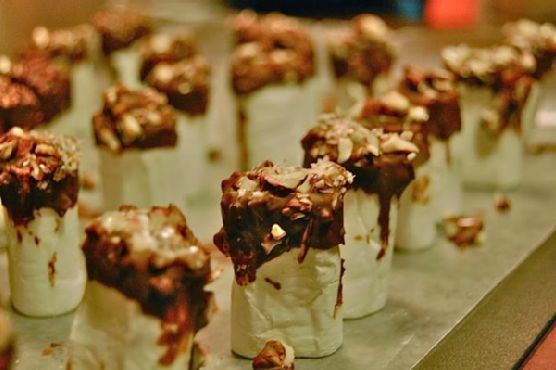
Candy Cane Chocolate Marshmallows | Made by Meaghan Moineau

Last winter, I found myself staring down a half-eaten box of candy canes—a festive gift from my overly enthusiastic neighbor. I adore peppermint, but there’s only so much peppermint tea one can drink! Desperate to create something my friends and family would devour, it hit me: those candy canes needed a sweet partner. Enter my Candy Cane Chocolate Marshmallows. Perfect for a cozy evening in your favorite fuzzy socks, these treats are surprisingly easy to make and look infinitely more impressive than the effort they require. They’re the kind of thing you whip up to wow guests during holiday gatherings or to simply satisfy that post-dinner sweet tooth while binge-watching your favorite show. Trust me, they’re a hit! Jump to Recipe

What You’ll Need

This recipe is like a scavenger hunt in your pantry; chances are you already have most of the goodies tucked away. Here’s what you’ll need:

  • Candy canes – the stars of the show!
  • Dark chocolate – for that rich, bittersweet contrast.
  • Marshmallows – go for the big, fluffy kind.
  • Milk chocolate – adds a creamy sweetness to balance the dark chocolate.

How to Make Candy Cane Chocolate Marshmallows

  1. First, let’s get those candy canes ready. Grab a few and crush them using the bottom of a sturdy glass or a mallet. You want pieces small enough to stick but not so tiny that they turn to dust. Set them aside.
  2. Set up a double boiler by placing a heat-safe bowl over a pot of simmering water. Make sure the bottom of the bowl doesn’t touch the water. Add the dark and milk chocolate to the bowl, stirring occasionally until the mixture is smooth and glossy.
  3. Now for the fun part—dip each marshmallow into the melted chocolate, ensuring it’s nicely coated but not drowning. Let the excess drip off back into the bowl.
  4. Immediately roll the chocolate-dipped marshmallow into the crushed candy canes. The pieces should stick to the chocolate, creating a delightful crunchy coating.
  5. Place each finished marshmallow on a sheet of wax paper. They’ll need to chill in the fridge for at least an hour, or until the chocolate has fully hardened.

Cook’s Notes

These little delights are pretty forgiving, so don’t stress if things get a bit messy. Here are a few pointers to keep you on track:

  • If you don’t have a double boiler, don’t sweat it. Use a microwave in short bursts to melt the chocolate, stirring in between.
  • Store your marshmallows in an airtight container in a cool, dry place. They should last up to a week, but honestly, they’ll probably disappear much sooner!
  • To make ahead, prepare them up to two days in advance. They’re the perfect treat to have waiting for last-minute guests or unexpected sweet cravings.

Make It Your Own

  • Try using white chocolate for a sweeter, milder twist. It pairs beautifully with peppermint!
  • For a nutty crunch, roll the chocolate-coated marshmallows in finely chopped hazelnuts instead of candy canes.
  • If you’re feeling adventurous, add a pinch of cayenne pepper to the melted chocolate for a spicy kick.
  • Not a fan of peppermint? Substitute with crushed graham crackers and sprinkle with a touch of cinnamon for a s’mores vibe.

If you try this, I’d love to hear how it turns out—drop a comment or tag me in your marshmallow masterpiece! Happy indulging, and may your winter be as sweet as these treats!

Related update: Candy Cane Chocolate Marshmallows

Related update: Grandma Inez’s Pineapple Pie

Related update: Tuna and Tofu Cold Dish

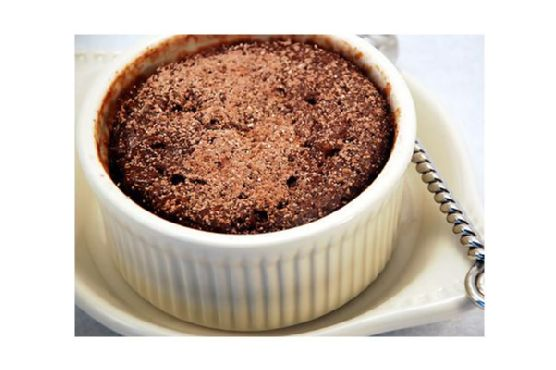
2 Minute Chocolate Yum | Made by Meaghan Moineau

It was one of those evenings where you stare into your pantry hoping for a miracle, and it just magically happens! I had a sweet tooth that just wouldn’t quit, but the thought of baking a whole cake felt like running a marathon in heels. Ever been there? Enter: the 2 Minute Chocolate Yum. It’s that indulgent treat that saves you from dessert FOMO when you’re short on time and ingredients. Seriously, it’s like a chocolate hug in a mug. Imagine something that’s as easy as making a cup of coffee but infinitely more rewarding. Just a quick whip and zap, and you’ve got a dessert that feels like it took way more effort than it did. Also, if you’ve got a sudden guest or a cranky kid demanding sweets, this is your lifesaver.

Jump to Recipe

What You’ll Need

This recipe is a pantry hero; chances are, you’ve got most of these on hand. Here’s what you’ll need to whip up some chocolate magic:

  • Cocoa powder
  • Egg
  • Flour
  • Milk
  • Oil
  • Salt
  • Sugar
  • Vanilla

How to Make 2 Minute Chocolate Yum

  1. In a small mixing bowl, combine the cocoa powder, egg, flour, milk, oil, salt, sugar, and vanilla. Whip them together until the mixture is smooth and glossy, much like a velvety chocolate drizzle.
  2. Divide the batter evenly between two 6-8 oz. ramekins. Fill them a little over halfway full so they have room to puff up in the microwave.
  3. Microwave one ramekin at a time for about 2 minutes. You’ll know it’s done when the cake is puffed and looks like it’s ready to burst with chocolatey goodness.
  4. Serve immediately. Top with a scoop of ice cream, a dollop of whipped cream, or just a sprinkle of powdered sugar and cocoa for that minimalist vibe.

Cook’s Notes

Let’s keep it real: microwaves vary, so you might need to adjust the cooking time based on your machine’s mood swings. Start with 90 seconds if you’re unsure and then zap it in 10-second intervals until perfect. If you want to save some batter for later, it holds up well covered in the fridge for a day. Just give it a good stir before microwaving. Stuck with leftovers? Unlikely, but if that happens, you can refrigerate and reheat gently. The texture might change a bit, but it’ll still hit the spot.

Make It Your Own

  • Black Forest Twist: Add a spoonful of cherry pie filling in the middle of the batter before cooking for a luscious surprise.
  • Nutty Buddy: Stir in a tablespoon of peanut butter for a chocolate-peanut butter dream.
  • Minty Fresh: A few drops of peppermint extract can turn this into a festive treat.
  • Spice It Up: Add a pinch of cinnamon or chili powder for a surprising kick.

If you try this, I’d love to hear how it turns out! Drop a comment or tag me on social media with your chocolatey creations. Keep those sweet moments coming!

Related update: 2 Minute Chocolate Yum

Related update: Candy Cane Chocolate Marshmallows

Rockstar May Block GTA 6 Review Copies | Analysis by Brian Moineau

TL;DR

  • Rockstar is reportedly planning zero GTA 6 review copies, corralling press into supervised preview “camps” to kill leaks; that flips the usual blockbuster playbook on its head. [1]
  • The trade is simple: sacrifice some trust and day‑one transparency to avoid a repeat of the 2022 breach that spilled 90+ clips—an event UK courts tied to Lapsus$ hacker Arion Kurtaj. [3]
  • If Rockstar hits a November 19, 2026 target date used here for modeling, the math says it can stomach a short‑term PR hit; a 5% wobble on a GTA‑scale opening is pocket change next to the cost of another megaleak. [5]

What the source said

Insider Gaming reports that Rockstar Games and Take‑Two do not plan to distribute traditional GTA 6 review codes. According to Brazilian journalist Pedro Henrique Lutti Lippe (speaking on the X do Controle podcast), press access would occur only at a controlled location under Rockstar supervision—no keys “in the wild.” The stated rationale is leak prevention ahead of what could be the biggest entertainment launch of the 2020s. The site notes this would diverge from the industry’s standard review process and from Rockstar’s own 2018 Red Dead Redemption 2 playbook. [1][6]

Why it matters

Two groups feel this most: buyers and the gatekeepers who usually shape pre‑release narratives. Players on PS5 and Xbox Series X/S won’t get the usual wave of day‑one independent performance checks; they’ll be buying on brand, marketing, and curated impressions. Meanwhile, outlets like IGN, GameSpot, Eurogamer, and The Verge lose their biggest traffic event of the decade if there’s no at‑home review cycle before launch.

For Rockstar and Take‑Two, the calculus is asymmetric. Another pre‑launch breach like the 2022 Lapsus$ incident would spoil story beats, trigger takedowns, and force reactive marketing. For a holiday 2026 target (e.g., mid‑November), maintaining control between now and launch may be worth more than a clean OpenCritic page on day zero. [3][2]

Original analysis

Contrarian read

  • Consensus: Withholding GTA 6 review copies harms consumer trust and risks another Cyberpunk‑style backlash.
  • My argument: For a monolith like GTA, withholding review codes is rational risk management, not consumer‑hostile obfuscation.

Evidence

  • Rockstar’s highest‑probability downside isn’t “mixed reviews”—it’s leaks. A UK jury found Lapsus$ member Arion Kurtaj guilty of hacking Rockstar; a court later handed him an indefinite hospital order, explicitly citing the GTA 6 breach in 2022. That episode created months of narrative drag. A second pre‑launch leak would be costlier than a day‑one review drought. [3]
  • Review restriction does not equal deception. In 2018, Red Dead Redemption 2 reviews landed the day before launch under embargo, proving Rockstar can—and historically did—enable robust critique while protecting spoilers. If they pivot now, it’s a response to a changed threat model, not an attempt to hide a shaky game. [6]
  • The Cyberpunk comparison is overused and inaccurate here. CD Projekt distributed PC codes while holding back console review access and restricting footage in 2020, contributing to a perception gap and an eventual Sony delisting. Rockstar’s rumored plan is platform‑agnostic and leak‑driven, not cherry‑picking a “good” SKU. [4]

Back‑of‑envelope math

  • Floor for opening revenue: GTA V did $1.0B in three days in 2013, before cross‑gen, before streaming reach exploded. Assume GTA 6 merely matches that floor in 2026 (a conservative stance). [5]
  • Suppose scrapping at‑home pre‑release reviews dents day‑three revenue by 5% due to cautious buyers. 5% of $1.0B ≈ $50M.
  • “Rockstar Summer Camp” costs: Fly 300 press/creators to two secure hubs (Los Angeles + London) for 3 days. Assume $2,500 travel, $1,000 lodging, $500 per diem + $2,000 per‑head venue/security/IT = ~$6,000 per person → $1.8M. Double it for redundancy/contingency → ~$3.6M.
  • Even if controlled previews recover only a fraction of lost trust, you’re still trading a hypothetical $50M downside for a dramatically lower chance of a nine‑figure brand hit from another leak. The expected‑value math favors control.

2x2: Review‑access strategy for mega‑launches

  • Open + Low risk: Example—RDR2 (2018) with at‑home codes and a day‑before embargo; upside is credibility and day‑one Metacritic clarity; downside is leak exposure. [6]
  • Open + High risk: Rare for story‑heavy tentpoles; upside is maximum transparency; downside is spoiler catastrophe.
  • Supervised + Low risk: Annualized franchises using limited betas or hands‑on; upside is message control with goodwill; downside is “stage‑managed” criticism.
  • Supervised + High risk: Example—GTA 6 rumor (no take‑home codes; secure events); upside is leak mitigation on the most breached Rockstar IP of the decade; downside is trust drag and influencer dominance. [1][3]

Named‑stakeholder breakdown

  • Rockstar/Take‑Two: Reduces leak vectors through 2026; accepts louder “wait for performance verdicts” messaging before any mid‑November street date. [1][3]
  • Sony/Microsoft: If no pre‑launch reviews, store placement leans on brand and pre‑orders on PS5 and Xbox Series X/S; both still benefit from a tentpole that can move hardware in Q4 2026.
  • Press outlets: Lose the biggest SEO event of 2026 unless Rockstar’s “camp” yields deep, linkable coverage; may pivot to service journalism (settings, performance tips) during launch week.
  • Influencers/streamers: Win by default. If embargoes lift at launch, livestreams set the first 24‑hour narrative on Twitch and YouTube.
  • Retailers (Best Buy, Amazon, GameStop): Pre‑order spikes remain strong; returns risk rises if early performance discourse skews negative after launch day.
  • Players: Fewer independent tech assessments before purchase; upside is fewer story spoilers and a lower chance of stumbling into leaked content in August–October 2026.

Historical analogue

  • Cyberpunk 2077 (December 2020) is the useful cautionary tale: PC‑only review codes + strict footage rules masked last‑gen console performance, leading to refunds and a PlayStation Store delisting. Rockstar’s rumored approach addresses a different problem—leaks—by eliminating at‑home pre‑release builds entirely. If anything, the Cyberpunk fiasco argues for avoiding fragmented, SKU‑selective review access. [4][5]

Bottom line: For almost any other game, I’d call this anti‑consumer. For GTA 6—an IP with a documented 2022 breach and a holiday 2026 target—“no review codes” is a defensible, if spiky, strategy. [3]

What others are missing

The power shift from critics to streamers if GTA 6 launches without at‑home reviews. In 2018, RDR2’s pre‑launch embargo drop let written reviews set tone and context before midnight. If that window disappears in 2026, Twitch and YouTube creators will dominate the first 12 hours of sentiment, and their incentives skew to spectacle, not verification. That changes which bugs get surfaced, which performance issues trend, and which missions become cultural touchpoints; it also forces Rockstar’s first post‑launch patch cadence to be judged live on stream, not filtered through a week of controlled code testing. [6]

What to watch next

  1. By July 2026, Rockstar will run at least two multi‑day, invite‑only GTA 6 preview events (one in North America, one in Europe) with escorted play sessions and no external capture. [1]

  2. In the week of a mid‑November 2026 launch (for example, November 17–23, 2026), the first wave of major outlet “reviews” will publish as impressions or “in‑progress” pieces, with final scores arriving 3–7 days later after retail playtime. [6]

  3. If any unauthorized pre‑release footage appears between September and November 2026, Rockstar will issue rapid DMCA takedowns within hours, explicitly referencing the 2022 breach in filings—signaling zero tolerance ahead of launch. [3]

My take

Rockstar is choosing certainty over goodwill, and I think they’re right—for this one product. GTA 6 will sell whether it’s crowned or crucified in week one. The only existential threat before a mid‑November 2026 launch is another leak that hijacks the conversation. Kill the risk, own the calendar, and let the game speak at launch; just don’t get cute with platform‑selective access or post‑hoc NDAs, which burned CD Projekt in 2020. [4]

Sources

[1] GTA 6 Review Copies Won’t Be Distributed, It’s Claimed — Insider Gaming (https://insider-gaming.com/gta-6-review-copes-codes-wont-be-sent-claim/) — Reports Pedro Henrique Lutti Lippe’s claim that Rockstar/Take‑Two won’t send review codes and will host supervised preview events.

[2] OpenCritic — FAQ and methodology (https://opencritic.com/faq) — Explains how day‑one averages and embargo timing affect score visibility.

[3] Lapsus$: GTA 6 hacker handed indefinite hospital order — BBC News (https://feeds.bbci.co.uk/news/technology-67663128) — Confirms Arion Kurtaj’s conviction and sentence tied to the Rockstar/GTA 6 breach.

[4] With Cyberpunk 2077’s review restrictions, CD PROJEKT RED played the system — Windows Central (https://www.windowscentral.com/cyberpunk-2077s-review-restrictions-cd-projekt-red-played-system) — Documents PC‑only review codes, strict NDAs, and the fallout that shaped the modern “review restriction” debate.

[5] Grand Theft Auto V Worldwide Sales Surpass $1 Billion in First Three Days — Take‑Two Interactive IR (https://ir.take2games.com/node/16191/pdf) — Establishes the $1B/3‑day benchmark used in the back‑of‑envelope calculation.

[6] Red Dead Redemption 2 Reviews Have Arrived — GameSpot (https://www.gamespot.com/articles/red-dead-redemption-2-reviews-have-arrived/1100-6462746/) — Shows Rockstar’s 2018 blueprint: at‑home review codes under a strict embargo the day before launch.

Gingerbread | Made by Meaghan Moineau

It was one of those blustery autumn afternoons when the wind just howls around your windows, and all you want is something to make the house smell amazing and your soul feel cozy. I was rummaging through my pantry, craving something spicy and sweet, when I realized I had everything I needed for gingerbread. You know that feeling when you stumble upon a recipe that makes your kitchen feel like a warm hug? This gingerbread is exactly that. It’s quick enough for a weeknight treat but feels special with its aromatic spices and deep molasses goodness. Plus, the glaze? Pure magic. Once you make it, you’ll want to drizzle it over everything.

Jump to Recipe

What You’ll Need

This gingerbread recipe is so forgiving and made with ingredients you probably already have hanging out in your kitchen.

  • Molasses
  • Salt
  • Eggs
  • Salad oil
  • Sugar
  • Soda
  • Water
  • Flour
  • Ginger
  • Cinnamon

How to Make Gingerbread

  1. In a large bowl, mix together the molasses, salad oil, sugar, ginger, cinnamon, and salt until the sugar dissolves and everything smells like holiday cheer.
  2. Add the eggs and beat the mixture until it becomes smooth and glossy.
  3. Dissolve the soda in 1/8 cup of boiling water, then stir it into the molasses mixture. You’ll see the batter start to bubble a little.
  4. Gradually add in the flour, alternating with the remaining water, stirring gently until the batter is smooth. It will be pretty thin, almost like pancake batter, but trust the process!
  5. Pour the batter into a greased 9″x13″ pan and bake at 350 degrees until the top is firm and a toothpick comes out clean. The edges will pull away slightly from the sides of the pan.
  6. While the gingerbread bakes, make the glaze: melt the butter, then stir in the milk and brown sugar. Bring to a boil and let it bubble away for about 4 minutes, stirring occasionally. It’ll thicken a bit as it cools.
  7. Once the gingerbread is done, let it cool slightly before drizzling the glaze over the top. Serve warm or wait until it’s cold—your call!

Cook’s Notes

This gingerbread can be stored covered at room temperature for up to 3 days, though it’s usually gone by day two in my house! If you want to make it ahead, it freezes beautifully. Just wrap it tightly in plastic wrap, and when you’re ready to enjoy, let it thaw at room temperature.

Watch out for overbaking. Because the batter is thin, it might cook faster than you think, especially if your oven runs hot. Check it a bit earlier than you’d expect.

  • For extra flavor depth, consider adding a pinch of nutmeg or cloves along with the ginger and cinnamon.
  • If you want to make the glaze ahead of time, you can reheat it gently before drizzling over the gingerbread.

Make It Your Own

  • Swap the salad oil with melted butter for a richer flavor.
  • Replace half of the flour with whole wheat flour for a heartier texture.
  • Add a handful of chopped walnuts or pecans for a nutty crunch.
  • Add a teaspoon of vanilla extract to the glaze for a hint of vanilla sweetness.

If you try this, I’d love to hear how it turns out—drop a comment or tag me! I promise this gingerbread will make your kitchen feel like the coziest place on earth.

Related update: Gingerbread

Related update: 2 Minute Chocolate Yum

AI-Exposed U.S. Jobs Show Early Decline | Analysis by Brian Moineau

TL;DR

What the source said

Gizmodo’s read of the 2025 OEWS release highlights a 0.2% year‑over‑year decline across 18 BLS‑flagged “artificial intelligence related occupations” while overall U.S. employment rose 0.8% in the same May‑to‑May window. [1][3] (https://gizmodo.com/american-jobs-with-ai-exposure-really-are-starting-to-disappear-data-show-2000759602, https://www.bls.gov/news.release/ocwage.nr0.htm)

Customer service representatives absorbed the sharpest hit, dropping about 130,180 positions (−4.8%) in the period, according to the same OEWS tables and coverage. [1][3] (https://gizmodo.com/american-jobs-with-ai-exposure-really-are-starting-to-disappear-data-show-2000759602, https://www.bls.gov/news.release/ocwage.nr0.htm)

The piece notes that “medical secretaries” bucked the trend with strong gains tied to healthcare expansion, which makes the rest of the 17‑occupation basket look superficially stable despite a two‑year slide. [1][2] (https://gizmodo.com/american-jobs-with-ai-exposure-really-are-starting-to-disappear-data-show-2000759602, https://www.business-standard.com/world-news/us-starting-to-witness-heavy-job-losses-in-occupations-exposed-to-ai-126051600082_1.html)

Gizmodo frames the evidence as early but directionally negative for back‑office, sales support, and service roles that feature standardized, screen‑based tasks. [1] (https://gizmodo.com/american-jobs-with-ai-exposure-really-are-starting-to-disappear-data-show-2000759602)

Why it matters

Contact centers, clerical back‑offices, field sales support, and entry‑level legal/admin roles employ millions in the United States; these “interface” layers sit exactly where LLMs and workflow tools can shave 10–60 seconds per task. [1][2] (https://gizmodo.com/american-jobs-with-ai-exposure-really-are-starting-to-disappear-data-show-2000759602, https://www.business-standard.com/world-news/us-starting-to-witness-heavy-job-losses-in-occupations-exposed-to-ai-126051600082_1.html)

For CFOs in healthcare, retail, insurance, and logistics, the math is simple: if each claim, chat, or form requires fewer human touches, you freeze reqs and let attrition do the rest. [6] (https://www.bls.gov/opub/mlr/2024/article/industry-and-occupational-employment-projections-overview-and-highlights-2023-33.htm)

Two consecutive years of measured declines in the non‑medical cohort suggest hiring bars are ratcheting up quarter by quarter, not just wobbling with the business cycle. [2][3] (https://www.business-standard.com/world-news/us-starting-to-witness-heavy-job-losses-in-occupations-exposed-to-ai-126051600082_1.html, https://www.bls.gov/news.release/ocwage.nr0.htm)

Original analysis

The signal inside the −0.2% headline

The 0.2% dip across 18 AI‑flagged occupations looks tiny until you unpack composition and compounding. [2][3] (https://www.business-standard.com/world-news/us-starting-to-witness-heavy-job-losses-in-occupations-exposed-to-ai-126051600082_1.html, https://www.bls.gov/news.release/ocwage.nr0.htm)

Back‑of‑envelope calculation:

The distribution matters: AI trims high‑volume, routinized, digitized job architectures first, rather than “all jobs” equally. [1][3] (https://gizmodo.com/american-jobs-with-ai-exposure-really-are-starting-to-disappear-data-show-2000759602, https://www.bls.gov/news.release/ocwage.nr0.htm)

A typology of American jobs with AI exposure

Use a two‑by‑two: Task Structure (Routinized ↔ Non‑routinized) vs. Human Stakes (Low‑stakes ↔ High‑stakes).

This mapping explains why the −1.6% slide clusters in interface roles while medical secretaries—buoyed by healthcare demand and compliance friction—buck the trend. [2][6] (https://www.business-standard.com/world-news/us-starting-to-witness-heavy-job-losses-in-occupations-exposed-to-ai-126051600082_1.html, https://www.bls.gov/opub/mlr/2024/article/industry-and-occupational-employment-projections-overview-and-highlights-2023-33.htm)

A historical analogue—with a twist

Electrification’s productivity payoff lagged factory re‑architecture by roughly 15–25 years, with major gains arriving circa 1915–1930 after plants reorganized around motors. [7] (https://en.wikipedia.org/wiki/Productivity_paradox)

Services in 2026 are already digitized “plants,” so AI can reduce headcount before broad productivity shows up in aggregates, flipping the old lag pattern. [5] (https://www.federalreserve.gov/econres/notes/feds-notes/ai-adoption-and-firms-job-posting-behavior-20260327.html)

Fed researchers, using Lightcast and BTOS data, find no aggregate posting decline so far at AI‑adopting firms, even as early‑career seats thin in high‑exposure roles tracked by the Dallas Fed. [5][4] (https://www.federalreserve.gov/econres/notes/feds-notes/ai-adoption-and-firms-job-posting-behavior-20260327.html, https://www.dallasfed.org/research/economics/2026/0106)

Contrarian read: The “no big deal” benchmark misses the pipeline

You will hear, “Relax—AI hasn’t dented total job postings or overall employment,” and the Fed’s 2026 note indeed shows AI‑related postings at just 1.6% of all firm postings so far. [5] (https://www.federalreserve.gov/econres/notes/feds-notes/ai-adoption-and-firms-job-posting-behavior-20260327.html)

The better benchmark is youth inflow: the Dallas Fed reports a 13% employment drop since 2022 for 22–25 year‑olds in the most AI‑exposed occupations, driven by weaker inflows rather than elevated layoffs. [4] (https://www.dallasfed.org/research/economics/2026/0106)

A single routing layer can remove the business case for hiring level‑1 reps even when aggregate U.S. unemployment looks steady. [1][5] (https://gizmodo.com/american-jobs-with-ai-exposure-really-are-starting-to-disappear-data-show-2000759602, https://www.federalreserve.gov/econres/notes/feds-notes/ai-adoption-and-firms-job-posting-behavior-20260327.html)

Named‑stakeholder breakdown

  • Teleperformance SE, Concentrix Corp., and TTEC Holdings: Expect margin tailwinds as automated deflection trims agents per client while interaction volumes grow; revenue tilts toward AI tooling and integration services.
  • Salesforce, Zendesk, and NICE: Service clouds turn into automation platforms, shifting pricing from agent seats to interactions and model assists as 2026–2027 product roadmaps harden.
  • Insurers and banks: Claims and credit clerks face hiring freezes, wider spans of control, and flatter promotion ladders as throughput targets rise quarter by quarter.
  • Community colleges and bootcamps: Placement rates for admin, support, and help‑desk tracks risk declines unless 2026–2027 curricula add “AI ops,” audit trails, and exception‑handling labs tied to regulated workflows.
  • State workforce boards in Texas, California, and Ohio: Bridge programs must reroute interface workers into regulated, field‑present roles—health support, inspection, and operations—where AI augments rather than replaces.

The story shows up not in mass layoffs but in non‑backfills and frozen requisitions, exactly what the OEWS and coverage already imply. [1][2][3] (https://gizmodo.com/american-jobs-with-ai-exposure-really-are-starting-to-disappear-data-show-2000759602, https://www.business-standard.com/world-news/us-starting-to-witness-heavy-job-losses-in-occupations-exposed-to-ai-126051600082_1.html, https://www.bls.gov/news.release/ocwage.nr0.htm)

What others are missing

The crucial angle is hiring inflows versus layoffs: Dallas Fed decomposition attributes the 2022–2025 deterioration for 22–25 year‑olds in high‑exposure jobs mainly to weaker inflows from “not in the labor force” into these roles, not to elevated separations. [4] (https://www.dallasfed.org/research/economics/2026/0106)

This matters because inflow declines rarely appear in corporate announcements or WARN data, yet they quietly erase local entry‑level ladders months before unemployment rates budge. [4] (https://www.dallasfed.org/research/economics/2026/0106)

Automation in professionalized service work typically starts by closing junior reqs and absorbing marginal load with software, which aligns with the 1.6% multi‑year slide outside medical secretaries. [2] (https://www.business-standard.com/world-news/us-starting-to-witness-heavy-job-losses-in-occupations-exposed-to-ai-126051600082_1.html)

What to watch next

  1. By Q4 2026, OEWS will show a third straight −1% to −2% year‑over‑year decline across the 17 non‑medical AI‑related occupations combined, confirming multi‑year substitution beyond a one‑off blip. [3] (https://www.bls.gov/news.release/ocwage.nr0.htm)
  2. By Q1 2027, earnings from at least two major BPOs—Teleperformance SE (EPA: TEP) and Concentrix Corp. (NASDAQ: CNXC)—will explicitly attribute gross‑margin expansion to AI call deflection/assist while reporting flat or declining average agents per client despite higher interaction counts.
  3. By June 2027, Federal Reserve/Lightcast analyses will still show neutral aggregate postings, but a higher share of service‑org postings will specify “AI‑assisted workflows,” alongside further drops in early‑career employment for 20–24 year‑olds in high‑exposure occupations. [5][4] (https://www.federalreserve.gov/econres/notes/feds-notes/ai-adoption-and-firms-job-posting-behavior-20260327.html, https://www.dallasfed.org/research/economics/2026/0106)

My take

The market has already repriced “interface jobs,” and the repeated −1.6% declines outside a single booming healthcare subcategory confirm where substitution lands first. [2] (https://www.business-standard.com/world-news/us-starting-to-witness-heavy-job-losses-in-occupations-exposed-to-ai-126051600082_1.html)

We are swapping people for software exactly where workflows are standardized and stakes are low, which will not crash headline U.S. employment but will starve tomorrow’s talent bench in 2027–2029. [1][3] (https://gizmodo.com/american-jobs-with-ai-exposure-really-are-starting-to-disappear-data-show-2000759602, https://www.bls.gov/news.release/ocwage.nr0.htm)

Service leaders should create new entry‑level roles—AI ops, compliance QA, and exception handling—with measurable skill ladders, or accept brittle orgs that fail the first time a model hallucinates on a regulated workflow. [6] (https://www.bls.gov/opub/mlr/2024/article/industry-and-occupational-employment-projections-overview-and-highlights-2023-33.htm)

Sources

[1] Gizmodo — American Jobs with AI Exposure Really Are Starting to Disappear, Data Show (https://gizmodo.com/american-jobs-with-ai-exposure-really-are-starting-to-disappear-data-show-2000759602) — News peg and core figures: −0.2% for AI‑flagged roles vs. +0.8% overall; −4.8% (~130,180) for customer service reps.

[2] Business Standard (summarizing Bloomberg) — US starting to witness heavy job losses in occupations exposed to AI (https://www.business-standard.com/world-news/us-starting-to-witness-heavy-job-losses-in-occupations-exposed-to-ai-126051600082_1.html) — Corroborates 18 BLS‑flagged occupations (~10M jobs), the −0.2% YoY dip, and the repeated −1.6% decline for the other 17 roles.

[3] U.S. Bureau of Labor Statistics — Occupational Employment and Wages, May 2025 (https://www.bls.gov/news.release/ocwage.nr0.htm) — Primary OEWS release underpinning the year‑over‑year comparisons.

[4] Federal Reserve Bank of Dallas — Young workers’ employment drops in occupations with high AI exposure (https://www.dallasfed.org/research/economics/2026/0106) — Shows a 13% decline since 2022 for 22–25 year‑olds in high‑exposure jobs and attributes it to weaker inflows.

[5] Board of Governors of the Federal Reserve System — AI Adoption and Firms’ Job‑Posting Behavior (https://www.federalreserve.gov/econres/notes/feds-notes/ai-adoption-and-firms-job-posting-behavior-20260327.html) — Finds no aggregate posting declines tied to AI adoption and notes AI‑related postings at 1.6%.

[6] Monthly Labor Review, U.S. Bureau of Labor Statistics — Industry and occupational employment projections overview and highlights, 2023–33 (https://www.bls.gov/opub/mlr/2024/article/industry-and-occupational-employment-projections-overview-and-highlights-2023-33.htm) — Context on sectoral demand, compliance friction, and where augmentation is more likely than substitution.

[7] Wikipedia — Productivity paradox (https://en.wikipedia.org/wiki/Productivity_paradox) — Background on historical lags, including the 1915–1930 period when reorganized factories converted electrification into measurable productivity.


Related update: We recently published an article that expands on this topic: read the latest post.


Related update: We recently published an article that expands on this topic: read the latest post.

AutoScientist: Automating Fine‑Tuning | Analysis by Brian Moineau

TL;DR

  • Adaption’s AutoScientist automates the fine‑tuning loop by co‑optimizing data and model “recipes,” claiming a 35% average gain over human‑configured runs and a 48%→64% win‑rate jump on in‑house evals, with a 30‑day free trial to spur adoption [1][2].
  • The real economic wedge isn’t “self‑training magic” but cycle‑time compression: fewer failed runs means fewer GPU‑hours and fewer human review cycles in a world where 8×H100 boxes list at ~$49.24/hour on CoreWeave as of 2026‑05 [4].
  • If AutoScientist scales, the center of gravity in AI moves from monolithic labs toward “continuous adaptation” stacks—yet credibility will hinge on public, contamination‑proof evals beyond SWE‑bench (2,294 GitHub issues) or ARC‑AGI (François Chollet’s 2019 challenge), which Adaption says aren’t applicable to its task‑specific tuning claims [1][6][7].

What the source said

TechCrunch reports that Adaption, led by CEO Sara Hooker, launched AutoScientist on May 13, 2026 to automate parts of model training and alignment for teams outside big labs; the product co‑optimizes both data and the model, building on Adaption’s Adaptive Data offering [1]. The company claims AutoScientist more than doubles win rates across models, citing a 48%→64% internal jump, but says benchmarks like SWE‑Bench (2023) and ARC‑AGI (2019) aren’t the right yardsticks because the tool adapts models to specific tasks [1][6][7]. To seed adoption, the lab is offering 30 days of free access via a hosted flow on Together AI and other providers, positioning the launch as a path to broader participation in frontier‑level fine‑tuning [1][2]. Hooker frames the release as expanding access to post‑training beyond a small set of incumbents in San Francisco and London, where most frontier efforts concentrate [1].

Why it matters

  • Stakeholders with the most to gain: mid‑market software companies and domain specialists in finance ops, legal review, and biotech R&D who hold terabyte‑scale proprietary corpora but lack a research team; automated data‑plus‑recipe search can turn those private datasets into tuned models in days instead of weeks, as Adaption’s 35% average gain claim suggests on Together‑hosted runs [2][5].
  • Stakeholders with the most to lose: centralized labs and annotation vendors whose moat rests on scarce talent and slow, manual post‑training; if a reliable loop reduces failed runs and human preference labeling, RLAIF‑style automation trims both GPU hours and label spend, echoing 2023 arXiv results where AI feedback matched RLHF on summarization/dialogue tasks [3][4].

Original analysis

Where AutoScientist fits: a 2×2 of “automation” vs. “capability locality”

  • Axes (2026 framing):
    • X: Capability locality (general alignment → task‑specific adaptation; e.g., ARC‑AGI or SWE‑bench vs. KYC document triage) [6][7].
    • Y: Automation level (manual sweeps/hand‑curation → autonomous loop with Vizier‑style early stopping and RLAIF‑grade AI feedback, 2017→2023) [3][9].
Example Capability locality Automation level Notes
RLHF pipelines (2020–2023) General Low–medium Human preference data; slow and expensive to iterate at scale [3].
Constitutional AI (Anthropic, 2022) General Medium–high AI critiques + rules reduce human labels; early RLAIF signal [8].
AutoScientist (Adaption, 2026) Task‑specific High Co‑optimizes data mixture and training recipes end‑to‑end; reports 35% average gain vs. human configs [2].
In‑house “AutoML for LLMs” (various teams) Task‑specific Medium Hyperparam search + small data curation; usually siloed in 1–2 orgs per vertical.

Consensus says “this democratizes frontier training.” The contrarian read: it only does if the loop produces audited, reproducible gains on public, de‑contaminated evals in 2026, not just on private leaderboards [1][2][6][7][3]. Adaption’s own post cites in‑house vertical evals and Together‑hosted fine‑tuning, while TechCrunch notes SWE‑bench and ARC‑AGI aren’t applicable; that stance is defensible for niche tasks but insufficient for procurement in sectors like banking and healthcare [1][2].

Back‑of‑envelope math: the cycle‑time wedge

  • Assume a typical team explores 10 fine‑tune variants per capability, each a 2‑hour run on an 8×H100 HGX box.
  • CoreWeave’s public on‑demand price for a single 8×H100 instance: $49.24/hour as listed in 2026 [4].
  • Manual loop cost: 10 runs × 2 h × $49.24 ≈ $984.80 per capability (work: 10 × 2 × 49.24 = 984.8).
  • If AutoScientist’s automated loop converges in 3 variants on average: 3 × 2 h × $49.24 ≈ $295.44 (work: 3 × 2 × 49.24 = 295.44).
  • Direct compute savings: ~$689 per capability (984.80 − 295.44 = 689.36). Add one ML engineer‑day saved per loop and you plausibly cut a 5‑day tuning sprint to <1 day, which Adaption explicitly targets with its end‑to‑end loop [2][4].

This is why co‑optimization matters economically in 2026: pruning dead‑end data mixtures and bad training recipes early can kill ~70% of unproductive runs, which reduces GPU burn and calendar time. If you also swap some human preference passes for AI feedback during RL steps—RLAIF achieved results comparable to RLHF on summarization and dialogue in 2023—you compress the annotation bottleneck too [3].

Historical analogue: Google Vizier (2017) and the playbook

In 2017, Google Vizier industrialized black‑box optimization across internal ML stacks at Google, moving teams from “sweep by feel” to Bayesian optimization with early stopping and metadata tracking [9]. Search, ads, and vision systems saw faster convergence and more reproducible wins under a service model, which reduced time‑to‑good‑config for thousands of experiments per quarter [9]. AutoScientist rhymes with that history, except the search space now spans both data and training‑process design, not just hyperparameters; the stakes are LLM post‑training, not CNNs for ImageNet. If Adaption ships Vizier‑grade reliability—transferable priors, safe early stopping, and experiment tracking—the productivity gains compound for orgs that fine‑tune weekly in 2026, not annually [2][9].

Named stakeholder breakdown

  • Adaption: must convert a 35% average uplift and 48%→64% internal win‑rate into third‑party results by summer 2026; the 30‑day free window is a smart way to crowdsource proof via reproducible runs [2].
  • Together AI: benefits if AutoScientist drives more token‑metered fine‑tunes on its platform; its per‑token pricing (published docs) aligns cost with experiment size and encourages more small runs per month [5].
  • Anthropic/OpenAI/Google DeepMind: pressure to show autonomous post‑training loops (RLAIF variants, self‑rewarding) improving task‑specific capability without brittle overfitting; prior art already shows AI‑as‑judge parity with RLHF in some settings as of 2023 [3].
  • CoreWeave/AWS: if automated loops cut total GPU hours per success, infra spend shifts toward “more projects, fewer hours per project,” with lower variance aiding capacity planning for 8×H100 fleets in U.S. regions [4][5].

What others are missing

The missing angle is evaluation governance for self‑improving loops that can “judge hack” themselves; Adaption says public benchmarks like SWE‑bench and ARC‑AGI don’t map to its targeted adaptations, and it uses in‑house domain evals instead [1][2][6][7]. That’s understandable, but reproducibility suffers without open harnesses, contamination audits, and independent graders, because modern LLMs can absorb benchmark artifacts during retrieval‑augmented training. The fix is not to pick a different benchmark; it’s to ship per‑domain, open eval suites with documented construction and grading, akin to SWE‑bench’s 2,294‑task corpus across 12 repos with verified patches and CI checks, so buyers in regulated industries can defend deltas in model risk reviews [6].

What to watch next

  1. By August 31, 2026, at least one independent lab (e.g., an academic group) publishes a head‑to‑head study showing AutoScientist’s co‑optimization beats a strong human‑configured baseline on a public, de‑contaminated domain eval by ≄15% relative margin.
  2. By Q4 2026, Together AI or a comparable host publicly attributes a measurable uptick (>20%) in monthly fine‑tune jobs to automated configuration systems like AutoScientist, citing per‑token billing data in docs or a blog.
  3. By March 2027, a major enterprise (Fortune 500) discloses in an investor filing or case study that automated training loops cut model‑iteration time by ≄50% for a business‑critical workflow (e.g., claims triage or code remediation), with at least one production KPI reported.

My take

AutoScientist is the right bet for 2026: automate the messy parts of post‑training, not just add more GPUs, and turn private data into capability faster with fewer failed runs [2]. I’m bullish on its ability to compress cycle time and spend, especially where proprietary corpora meet repeatable recipes and safe early‑stopping heuristics. But wins on internal evals won’t sway skeptical buyers in finance, health, or gov; publish auditable, contamination‑resistant harnesses and let outsiders reproduce the 35% average gain and 48%→64% win‑rate shift. If Adaption clears that bar by summer, it earns a seat at the frontier; if not, AutoScientist risks becoming another “trust us, it works” tool in a market that finally demands receipts [1][2].

Sources

  1. Adaption aims big with AutoScientist, an AI tool that helps models train themselves — TechCrunch (https://techcrunch.com/2026/05/13/adaption-aims-big-with-autoscientist-an-ai-tool-that-helps-models-train-themselves/) — Launch details, Hooker’s positioning, comments on benchmarks and the 30‑day free period.

  2. AutoScientist: Automating the Science of Model Training — Adaption (https://www.adaptionlabs.ai/blog/autoscientist) — Product claims (35% average gain; 48%→64% win‑rate), Together‑hosted fine‑tuning context, 30‑day free use.

  3. RLAIF vs. RLHF: Scaling Reinforcement Learning from Human Feedback with AI Feedback — arXiv (https://arxiv.org/abs/2309.00267) — Evidence that AI feedback can match RLHF on summarization/dialogue; supports automation of post‑training supervision.

  4. Instance Pricing (NVIDIA HGX H100) — CoreWeave (https://www.coreweave.com/pricing) — Public on‑demand price reference (~$49.24/hour for 8×H100 instances) used in the compute cost math.

  5. Fine‑tuning pricing — Together AI Docs (https://docs.together.ai/docs/fine-tuning-pricing) — Confirms token‑metered fine‑tuning economics and how jobs are costed on Together’s platform.

  6. SWE‑bench: Can Language Models Resolve Real‑World GitHub Issues? — arXiv (https://arxiv.org/abs/2310.06770) — Defines the 2,294‑task benchmark and methodology; context for public, auditable software evals.

  7. ARC‑AGI repository — GitHub (https://github.com/fchollet/ARC-AGI) — Official benchmark repository for ARC‑AGI; illustrates general‑reasoning evals and their limits for task‑specific tuning.

  8. Constitutional AI: Harmlessness from AI Feedback — arXiv (https://arxiv.org/abs/2212.08073) — Anthropic’s 2022 paper introducing rule‑based critique and AI feedback to cut human labels.

  9. Google Vizier: A Service for Black‑Box Optimization — KDD 2017 (https://dl.acm.org/doi/10.1145/3097983.3098043) — Historical analogue for service‑level optimization with Bayesian search and early stopping across Google ML teams.


Related update: We recently published an article that expands on this topic: read the latest post.

Woods’ Prescription Records Sealed | Analysis by Brian Moineau

Tiger Woods’s Prescription Records Will Be Shielded From The Public

Tiger Woods’s prescription records will be shielded from the public after a Florida judge approved a protective order that allows prosecutors to review the golfer’s medication history while keeping those records sealed from public view. The ruling comes as part of the investigation into Woods’s March 27 rollover crash and his subsequent arrest on suspicion of driving under the influence. (defector.com)

The headline reads like the final chapter of a long, public saga. But the ruling raises more questions than it answers: what will prosecutors actually learn from the records, why is privacy being preserved now, and how does this one courthouse decision fit into our hunger for transparency around high-profile incidents?

What the judge approved and what it means

A Martin County judge granted prosecutors access to Woods’s prescription records dating from January 1 through March 27, but only under a protective order. That means attorneys, law enforcement, court experts and Woods’s defense team may see the records — the wider public may not. The subpoena seeks details such as the names of drugs prescribed, dosages, refill dates and any warnings that accompanied the prescriptions. (investing.com)

Put plainly: investigators can use medical data to try to establish whether Woods’s prescriptions could have impaired him on the day of the crash. But the public will not get to read those pages. For victims of high-profile incidents and for a public used to immediate access to information, that difference matters.

Why prosecutors want the records

Prosecutors say prescription histories can show patterns: frequency of refills, dosage changes, and warnings about operating machinery — all of which could be relevant to proving impairment without a clear chemical standard for many prescription drugs. In Woods’s case, sheriff’s deputies reported finding two hydrocodone pills in his pocket at the crash scene, and officials said a breath test showed no recent alcohol consumption. Prescription records can help corroborate what was found at the scene and reveal whether Woods had been taking medications that might impair driving. (apnews.com)

Florida law provides mechanisms to obtain such records during criminal investigations. Defense counsel argued for privacy protections; the court balanced that interest against the prosecution’s need for evidence and chose to limit public disclosure while allowing investigative access. (apnews.com)

The privacy-transparency tension

This case sits at the crossroads of two strong impulses. On one hand, there is a public interest in transparency, especially when a celebrity’s conduct has potential public-safety implications. On the other hand, there are well-established privacy protections for medical records — and they matter for everyone, famous or not.

The protective order is a middle-ground legal tool. It allows the justice system to function by letting prosecutors gather evidence while attempting to prevent the release of sensitive medical details into the public domain. Still, sealing records in a high-profile case often fuels speculation. When the public cannot see evidence, rumor and narrative rush in to fill the gap. (courttv.com)

The facts we already know

  • The crash occurred on March 27 in Jupiter Island, Florida, when Woods’s Range Rover rolled over after an apparent high-speed maneuver; he was later arrested on suspicion of DUI. (apnews.com)
  • Deputies reported no recent alcohol on a breath test but found two hydrocodone pills on Woods at the scene. Woods has pleaded not guilty and has publicly said he will seek treatment. (apnews.com)
  • Prosecutors subpoenaed pharmacy records for the period from January 1 through March 27 to examine prescriptions, dosages, refill patterns and warnings. A judge approved the subpoena but issued a protective order shielding those records from public disclosure. (investing.com)

These are the key touchpoints. They don’t resolve the case; they frame what the prosecution can investigate.

Why the protective order matters beyond fame

Protective orders are not only for stars. They are routine in criminal litigation to safeguard sensitive information that could harm privacy, medical safety, or legal fairness if publicly disclosed. Still, when the subject is someone as well-known as Tiger Woods, the stakes feel different.

Sealing the records protects Woods’s medical privacy but also reduces public insight into a case that involves public safety and law enforcement transparency. Courts often balance these competing needs, but that balance can feel unsatisfying to the public — especially in a digital age where every development becomes fodder for commentary and conspiracy. (sportsanimal920.com)

The wider context: why people care

Woods’s personal history amplifies interest. He’s a household name, a symbol of sporting dominance, and someone who has publicly battled injuries and rehabilitation throughout his career. He survived a major car crash in 2021 and has undergone multiple surgeries; pain management has been part of his life and health story. That context makes prescription records more than dry paperwork — they’re part of a larger narrative about athlete health, chronic pain, and how society treats impairment. (en.wikipedia.org)

Transitioning from sympathy to accountability is hard. The public wants clarity: was this an isolated mistake, a consequence of medical treatment, or something else? The court’s decision to allow prosecutors access while shielding the records shifts that answer away from public view and into the courtroom.

How this might play out

Expect the prosecution to comb the records for patterns that could support a charge of impairment. The defense will likely push back on any evidence it deems invasive or irrelevant. If expert witnesses testify about the effects of prescribed medications, that testimony — though possibly summarized in court filings or hearings — may not disclose the underlying prescription sheets if the protective order holds.

The case could resolve through plea negotiations, dismissal, or trial; any of those outcomes may produce limited public disclosure depending on court rulings. But the limited visibility will keep the public relying on official statements and media reports rather than primary documents. (investing.com)

Final thoughts

High-profile cases like this expose tensions baked into both our legal system and our culture. We want accountability and we want privacy. We want the truth, but we also respect medical secrecy. The court’s protective order is a legal compromise, not a moral verdict.

What matters now is that the process proceeds with rigor. Evidence should be evaluated by experts, not by headlines. If justice requires disclosure, the courts can order it; if privacy is warranted, it should be preserved. Either way, the public deserves clear, careful explanations from those handling the case — because an informed public is less likely to substitute rumor for fact. (apnews.com)

Things to remember

  • The records cover January 1 to March 27, 2026. (investing.com)
  • Access is limited to investigators and legal teams under a protective order; they are not public records at this time. (defector.com)

Sources


Related update: We recently published an article that expands on this topic: read the latest post.