Mascarpone & Ricotta Cheese Cake | Made by Meaghan Moineau

It was one of those weeks when everything feels a bit too much, you know? Work was hectic, my laundry pile was threatening to engulf my sanity, and I was craving something sweet yet sophisticated. That’s when I remembered the Mascarpone & Ricotta Cheese Cake recipe I had scribbled in my notebook. This cake is a revelation — it’s rich but not heavy, creamy yet airy, and the perfect antidote to a busy week. It’s also surprisingly easy to make, which is a necessity for those of us who can barely remember if we brushed our hair this morning. So, if you’re in need of a little culinary therapy, this one’s for you.

Jump to Recipe

What You’ll Need

This recipe doesn’t call for anything too exotic. You’re likely to have most of it on hand, which makes it even more enticing when you’re trying to avoid yet another grocery run.

  • Graham crackers
  • Almonds
  • Butter (melted)
  • Salt
  • Sugar
  • Flour
  • Mascarpone cheese
  • Ricotta cheese
  • Whipped cream cheese
  • Eggs
  • Lemon juice
  • Vanilla extract

How to Make Mascarpone & Ricotta Cheese Cake

  1. Preheat your oven to 325°F (165°C). This step is your cue to take a deep breath – you’re about to create something amazing.
  2. For the crust, grind the graham crackers and almonds together. A food processor is effortless, but a mortar and pestle will do if you’re looking for an arm workout.
  3. Add the melted butter and a pinch of salt to your crumb mixture. Press it firmly into the bottom of a greased springform or deep-dish pie pan. Think of it as the tasty foundation for your masterpiece.
  4. Bake the crust for about 10 minutes until it’s set and slightly golden. Let it cool while you move on to the filling.
  5. Mix sugar and flour, then sprinkle this mix over the cooled crust. This tiny step is key to keeping your crust crisp, not soggy.
  6. In a large bowl, beat the cream cheese, mascarpone, ricotta, and sugar until smooth. This is where the magic begins to happen.
  7. Add in the lemon juice and vanilla, mixing until they’re just one with the cheese mixture.
  8. Beat in the eggs one at a time. It’s like a zen exercise, adding them patiently and watching the batter become silky smooth.
  9. Pour this luscious cheese mixture over your prepared crust, spreading it evenly.
  10. Bake for about 1 hour and 5 minutes. You’ll know it’s ready when the center is still wobbly when gently shaken, like a deliciously creamy dance.
  11. Let it cool on your countertop before refrigerating. Overnight is best, giving the flavors a chance to deepen and develop.

Cook’s Notes

A few things I’ve learned from making this cake: First, don’t skip the step of sprinkling flour and sugar over the crust. It’s a game-changer for texture. Second, when beating the cheeses and sugar, make sure everything is at room temperature — your batter will be smoother and easier to work with. Also, if you’re making this for a dinner party, you can absolutely prepare it a day or two in advance. It’ll only get better with a little rest in the fridge. Leftovers (if any!) should be stored in an airtight container and will keep for up to a week.

Make It Your Own

Here are a few ways to switch things up if you’re feeling adventurous:

  • Swap the almonds for walnuts or pecans for a different nutty undertone in the crust.
  • Use lime juice instead of lemon for a slightly tropical twist.
  • Add a tablespoon of cocoa powder to the crust for a subtle chocolatey vibe.
  • Top with a berry compote or fresh fruit before serving for an extra burst of color and flavor.

If you try this, I’d love to hear how it turns out — drop a comment or tag me! Whether it’s your first time or your fiftieth, this cake is sure to bring a bit of joy to your day. Happy baking, my friends!

Goes Well With

If you want to round out the meal, here’s what I’d pair it with over on meaghanmoineau.com:

Related update: Mascarpone & Ricotta Cheese Cake

Related update: Polish Rugelach

From Wedding DJ to Laid-Off Meta Engineer | Analysis by Brian Moineau

TL;DR

  • Meta layoffs aren’t just headcount math; they’re a structural reset that penalizes internally grown specialists—like AV-to-software engineering hybrids—whose skills tie to Meta-specific tooling in Menlo Park and beyond.
  • The onramp Henry Chen used (facilities/AV to SWE) shrank as Meta shed office space in 2023–2024 and reprioritized AI, collapsing demand for conference-room engineering while raising the bar for industry-standard system design. [1][3][6]
  • If Meta’s severance formula still resembles 2022’s (16 weeks + 2 weeks per year), a 10-year employee gets ~36 paid weeks—ample runway to re-skill—yet the faster AI cadence (Llama 2 in July 2023 → Llama 3 in April 2024, <12 months) raises the “re-entry tax” after any leave. [4][5]

What the source said

Business Insider profiles Henry Chen, a former Meta tech lead who joined as a contractor in 2012, transitioned from AV operations to software engineering, and was laid off in May 2026 after 13 years. He describes how Meta’s 2022–2023 layoffs curbed resources, then leadership reprioritized “building,” producing whiplash. A four-month paternity leave in late 2025 compounded the churn: more AI everywhere, new leaders, shifting priorities. After receiving severance, Chen paused, then restarted his search, working with a coach on industry-standard system design to counter Meta-specific tooling experience, and applying to collaboration tech, IT, and SWE roles via LinkedIn. [1]

Why it matters

Layoff coverage often stops at severance checks and sentiment. The real stakeholders here are mid-career internal-tool builders and collaboration engineers who thrived when Big Tech built offices, rooms, and custom glue code at hypergrowth scale. Meta cut 11,000 roles in November 2022 and another 10,000 in 2023 under its “year of efficiency,” flattening orgs and cancelling low-priority projects. That shifted the opportunity surface for people like Chen: fewer bespoke, office-centric systems to own; more pressure to prove value on portable, market-standard stacks. [2][4]

Investors and enterprise vendors straddle that same fault line. Meta’s shifting real estate posture—such as subleasing ~520,900 square feet in Menlo Park in 2023—reduces the internal demand that once justified homegrown collaboration tech, while rapid AI releases (Llama 2 in July 2023; Llama 3 in April 2024) require engineers to stay current with public, externally validated platforms. Skills earned inside the fortress no longer guarantee relevance outside it—or even back inside after a few months away. [3][5]

Original analysis

Meta layoffs as a structural reset, not a cycle

Consensus view in 2024–2026 coverage: “The AI boom offsets Big Tech layoffs by creating more—and better—jobs for software engineers.”
Contrarian read: In-house “glue” engineers are most exposed. Meta trimmed non-core projects in 2023 and flattened layers, then re-centered on fewer, higher-impact bets—including consumer AI that rides public model families like Llama. That shift reduces the surface area for custom, room-by-room conference tech and bespoke internal systems that aren’t strategic to AI scale. The result: fewer protected niches, more competition on broadly portable skills. [2][4][5]

Back-of-envelope: severance runway vs. skill half-life

  • Known 2022 severance formula: 16 weeks base + 2 weeks per year of service (no cap). [4]
  • If 2026 terms were similar (not guaranteed), a 10-year FTE would receive: 16 + (2 × 10) = 36 weeks of base pay.
  • Interpretation: 36 weeks ≈ 8–9 months of cash runway, assuming weekly payout parity. That covers time to refresh “industry-standard system design,” prep interviews, and ship a portfolio system—if the skill half-life isn’t shorter than the runway. [4]

Now, measure the skill half-life against Meta’s AI release cadence. Llama 2 (July 2023) to Llama 3 (April 2024) → ~9 months between major public milestones, with follow-ons like Llama 3.1 in 2024–2025. If you step away for four months (Chen’s paternity leave) and re-enter post-layoff, you’re already one to two releases behind in a stack that recruiters now treat as table stakes. In other words, the re-entry tax grew alongside model cadence. [5][1]

A 2×2: Where mid-career tech talent sits after Meta’s reset

Axes for this 2×2 in 2026:

  • X-axis: Skill portability (Meta-specific vs. industry-standard)
  • Y-axis: Platform churn (slow/mature vs. fast/AI-driven)

Quadrants with 2024–2026 examples:

  • High portability + fast churn (sweet spot): Backend/API engineers fluent in public clouds, retrieval, evaluation, and guardrails; they can track Llama releases and swap providers without deep rework. [5]
  • High portability + slow churn: Core infra SRE and security with compliance, networking, and observability on commodity stacks; resilient but less “AI-forward.”
  • Low portability + fast churn (highest risk): Internal collaboration/AV systems that once scaled conference rooms at Facebook’s growth clip, now squeezed by reduced office buildouts and public AI toolchains. [3][6]
  • Low portability + slow churn: Legacy internal tools whose rhythms don’t match 2024–2026 AI cycles; these roles are first to be labeled “non-core” in efficiency drives. [2][4]

Chen’s journey—AV to internal software to tech lead—thrived during the 2012–2019 office boom but slipped toward risk after real-estate contraction and AI’s rise unless retooled for open, portable AI systems. [1][3][5]

Named-stakeholder breakdown

  • Meta: Efficiency-era org charts favor fewer, standard platforms, with public AI releases (e.g., Llama 3 in April 2024) to accelerate external developer ecosystems; bespoke internal surface area shrinks. [2][5]
  • External hiring managers at mid-market SaaS: Opportunity to absorb ex-Big Tech ICs who can productionize collaboration stacks—if candidates show vendor-neutral patterns like Kafka, Terraform, and LLM ops rather than Metaism.
  • AV/collaboration vendors (Logitech, Crestron, Zoom): As Meta subleases space in Menlo Park and ceases use of certain offices noted in its 2023 10-K, buyers trend to standardized, managed solutions—good for vendors, tougher for internal AV software teams. [3][6]
  • Candidates with leave gaps (parents, caregivers): Faster AI releases raise the re-entry penalty; portfolios deployed on public clouds with Llama 3-class models signal currency better than internal-only achievements in 2026. [1][5]

Meta layoffs: the office footprint mattered more than you think

From 2021 to 2024, Meta’s office strategy shifted from acquiring and building to subleasing and impairing real estate, including ceasing use of certain offices such as Long Island City, New York, as noted in filings. Menlo Park subleases alone reached ~520,900 square feet in 2023. That directly shrank the physical canvas for conference-room engineering and the internal tooling around it. When the rooms stop growing, orchestration software becomes maintenance, not growth—and maintenance loses in efficiency cycles. [3][6]

What others are missing

Coverage debates whether AI replaces engineers; the overlooked angle is where it replaces internal glue. Meta’s public AI roadmap—Llama 2 to Llama 3—externalizes capability onto shared, well-documented platforms. That standardization narrows the moat around Meta-specific tools and boosts the premium for portable, externally verifiable work. Paired with an office real-estate retreat (subleases and impairments in 2023–2024), the classic “AV-to-SWE” ladder inside Big Tech breaks unless reframed as vendor-neutral systems atop public models and clouds. [3][5][6]

What to watch next

  1. By Q4 2026, at least one earnings call from Alphabet, Amazon, Apple, Meta, or Microsoft will explicitly cite “AI-driven efficiency in internal tooling” as a reason for flat or lower G&A headcount despite revenue growth.
  2. By Q2 2027, at least three S&P 500 companies will publish named case studies replacing bespoke collaboration-room software with standardized platforms, reporting cost savings ≥20% versus 2023 baselines.
  3. By year-end 2027, LLM-ops skills (evaluation, context management, safety filters) will appear as required or strongly preferred in 50%+ of senior SWE job listings across Meta, Snap, Pinterest, Reddit, and ByteDance/TikTok career pages.

My take

Chen’s story isn’t a morality play about loyalty versus layoffs; it’s a map of how moats moved in 2012–2026. Meta layoffs accelerated a reversion to portable skills and public platforms. If you built a career on scaling internal, office‑tethered systems during the 2012–2019 boom, treat 2026 like a forced migration. Ship something real on open models (Llama 3+), show system design that lives beyond a single employer, and assume the next release will hit before your next interview loop. The winners will translate fortress mastery into market fluency—on the clock, not in hindsight. [1][5]

Sources

  1. I went from wedding DJ to Meta engineer, then was laid off after 13 years. My last years there brought constant change. — Business Insider (https://www.businessinsider.com/wedding-dj-meta-software-engineer-career-big-tech-layoff-advice-2026-8#article) — First-person account of Henry Chen’s 13-year Meta career, late-2025 leave, and May 2026 layoff.

  2. Meta to cut another 10,000 jobs and cancel ‘low priority projects’ — TechCrunch (https://techcrunch.com/2023/03/14/meta-to-cut-another-10000-jobs-zuckerberg-says/) — Confirms 10,000 cuts in March 2023 and frames the “year of efficiency.”

  3. Q4 2023: Silicon Valley Office Market Report — Cresa (https://www.cresa.com/locations/north-america/california/silicon-valley-ca/market-research/q4-2023-silicon-valley-office-market-report) — Documents Meta subleasing ~520,900 sq ft in Menlo Park, signaling reduced in-house demand for room-scale collaboration tech.

  4. Mark Zuckerberg’s Message to Meta Employees (layoff memo, Nov. 9, 2022) — Meta Newsroom (https://about.fb.com/news/2022/11/mark-zuckerberg-layoff-message-to-employees/) — Provides the 16 weeks + 2 weeks/year severance formula used in 2022.

  5. Introducing Meta Llama 3 — Meta AI (https://ai.meta.com/blog/meta-llama-3/) — Establishes the April 18, 2024 release and Meta’s rapid, public AI model cadence.

  6. Meta Platforms, Inc. 2023 Form 10-K — Investor relations (https://s23.q4cdn.com/152113917/files/doc_downloads/2024/02/2023-10-K_Q4-final.pdf) — Details real-estate changes, including ceasing use of certain office space and associated impairment/sublease dynamics.


Related update: We recently published an article that expands on this topic: read the latest post.


Related update: We recently published an article that expands on this topic: read the latest post.

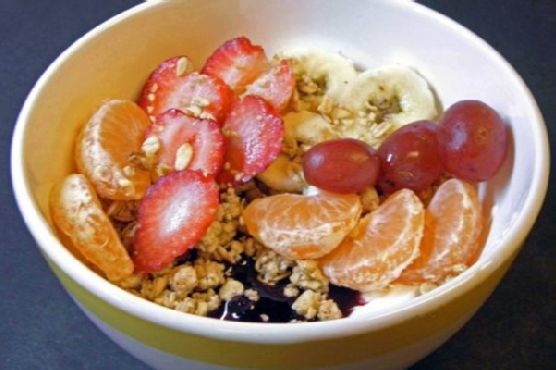
Home made organic maple granola with fresh fruit | Made by Meaghan Moineau

It was a rainy Tuesday afternoon, the kind where the clouds hang low and the air smells like earth. I found myself staring into my pantry, craving something that was both comforting and vibrant. My eyes landed on a jar of maple syrup, and I instantly knew what I needed: a warm batch of homemade granola with a medley of fresh fruit. This isn’t your average breakfast; it’s a hug in a bowl, the perfect blend of sweet and nutty with a touch of tang from dried cranberries. Just knowing that I could whip this up in about an hour, with ingredients I already had, made it even more appealing. By the time the granola was baking, the house smelled like a cozy blend of maple and toasted oats, and I couldn’t wait to dive in.

Jump to Recipe

What You’ll Need

The beauty of this recipe is in its simplicity. Chances are, you already have most of these at home, just waiting to be transformed into something magical:

  • Dark brown sugar
  • Cashew pieces
  • Dried cranberries
  • Dried raisins
  • Fresh fruit (your choice!)
  • Maple syrup
  • Vegetable oil; peanut oil preferred
  • Rolled oats
  • Salt
  • Slivered almonds

How to Make Homemade Organic Maple Granola with Fresh Fruit

  1. Preheat your oven to a cozy 250°F. This low temperature ensures each oat flake toasts evenly without burning.
  2. In a large mixing bowl, unite the rolled oats, cashew pieces, slivered almonds, a pinch of salt, and a smattering of dark brown sugar. Give it a gentle mix, letting your fingers enjoy the textures.
  3. Pour in the luscious maple syrup and your choice of vegetable oil. Stir everything thoroughly until every oat and nut is slicked with sweetness.
  4. Spread the mixture thinly and evenly on two baking tins with sides about an inch high. The secret to perfect granola is even spreading!
  5. Slide the tins into the oven and let them toast away for 45 to 60 minutes. Every 15 minutes, give them a careful stir and swap the tins’ positions. Your kitchen will soon smell like heaven.
  6. You’ll know it’s done when the granola has turned a lovely tan color and offers a gentle crunch. Remove the trays and let the granola cool completely.
  7. Once cooled, toss in the dried cranberries and raisins. Store your masterpiece in sealed plastic bags where it will stay delicious for up to two weeks, unrefrigerated.
  8. Serve with your favorite fresh fruits. I love a good mix of berries and sliced bananas for a refreshing twist.

Cook’s Notes

Granola is surprisingly forgiving, but here are a few pointers to make sure yours turns out just right:

  • Make sure your oats are evenly coated with the sugar, syrup, and oil mixture for ultimate flavor distribution.
  • Stirring every 15 minutes might sound like a chore, but it’s essential for that perfect golden tan and even texture.
  • If you like chunkier granola, press the mixture down slightly when spreading it on the tins before baking.
  • This granola makes a great make-ahead breakfast or snack. Just store it in a cool, dry place, and it’s ready whenever you are!

Make It Your Own

  • Swap the cashew pieces for pecans or walnuts if you want an extra buttery crunch.
  • Feeling spicy? Add a teaspoon of cinnamon or nutmeg to the oat mixture for a warm, autumnal vibe.
  • Experiment with the dried fruits — dried apricots or mangoes add a lovely sweetness.
  • Not a fan of maple? Try honey or agave syrup for a different but equally delightful flavor.

If you try this recipe, I’d love to hear how it turns out — drop a comment or tag me in your breakfast photos! I promise, your mornings are about to get a whole lot cozier.

Goes Well With

If you want to round out the meal, here’s what I’d pair it with over on meaghanmoineau.com:

Related update: Home made organic maple granola with fresh fruit

Related update: Healthy Southwestern Oatmeal

Garage-Sale Tech: Risks Worth Avoiding | Analysis by Brian Moineau

TL;DR

  • SlashGear’s 12-item “don’t buy at garage sales” list hits the basics, but misses the silent tripwires that flip the math: cloud shutdowns with firm dates (Belkin Wemo 1/31/2026), product safety recalls (CPSC’s Onewheel action), and hidden drive health due to USB bridges blocking S.M.A.R.T. telemetry. [1][6][5][11]
  • Treat garage-sale tech like an options trade: your upside is often <$50 off a known-good $70–$90 new 1TB SSD, while your downside includes $300+ in recovery time/fees or a bricked cloud product. The payoff is asymmetric—in the wrong direction. [2]
  • Do pre-purchase diligence: confirm cloud end dates (Wemo 1/31/2026), check recall lists (CPSC Onewheel, 2023), and verify storage health/endurance (e.g., ~600 TBW for many 1TB SSDs; S.M.A.R.T. often hidden over USB). [6][5][2][11]

What the source said

SlashGear warns bargain hunters away from 12 categories at yard sales—external drives, wireless earbuds, smartphones, smartwatches, TVs/streaming sticks, game consoles, cloud-tethered smart-home gadgets, micromobility, early VR headsets, pre‑2018 soundbars, printers, and older cameras—citing hard‑to‑measure wear, end of OS/app support, app‑only features, cloud shutdowns, and safety recalls (e.g., Quest 2 facial interface irritation recall in 2021). The thesis: “cheap” gear can turn worthless fast if a cloud dies or a sealed battery is toast. [1][9]

Why it matters

A $20 impulse buy can become a liability when the device holds your photos or your identity—or can injure you. The CPSC’s 2023 Onewheel recall covered 300,000 boards and cited four deaths, showing how a “deal” on micromobility can carry headline risk, civil exposure, and real harm; storage failures also create knock‑on losses that exceed sticker price. [5][10]

Stakeholders:

  • Consumers: Households risk data loss, safety, and refunds on devices with kill‑switch clouds like Wemo’s 2026 cutoff or defunct security systems like Nest Secure’s 2024 EOL. [6][7]
  • Platforms and brands (Belkin/Wemo; Google Nest): Companies save OPEX by sunsetting clouds, but pay in reputation, support costs, and potential regulatory scrutiny when hardware loses core functions. [6][7]
  • Refurbishers/resellers (Back Market, Gazelle): Either win trust with health checks, wipes, and warranties—or drown in chargebacks when bricked clouds or dead batteries surface.

Original analysis

The SlashGear list is directionally right. Here’s a sharper decision lens grounded in where risks actually come from.

— 2×2 Longevity Risk Matrix

  • High Cloud Reliance × High Battery Dependency: worst quadrant. Examples: app‑only smart home gear (Wemo switches) and first‑gen VR headsets with aging foam/cells. Belkin ends Wemo cloud/app support on January 31, 2026; many models lose remote/app/voice control afterward. Meta’s 2021 Quest 2 facial interface recall (~4M units) shows how wearables hide latent hazards. [6][9]
  • High Cloud Reliance × Low Battery Dependency: still risky. Hubs and security systems lose core functions on shutdown; Nest Secure support ended April 8, 2024, stranding installed bases. [7]
  • Low Cloud Reliance × High Battery Dependency: mixed bag. Earbuds and watches like AirPods can “work,” but sealed cells age invisibly and push you toward unit replacement instead of repair.
  • Low Cloud Reliance × Low Battery Dependency: safest. Passive speakers, wired headphones, DOCSIS modems with local admin, and mechanical keyboards with replaceable switches stay useful and fixable.

— Back‑of‑envelope: the “expected value” of a used external SSD
Assume a 1TB USB SSD for $25; a new reputable 1TB SSD costs ~$70–$90, and Samsung’s 970 EVO Plus rates 600 TBW (1TB) and 1200 TBW (2TB). [2]

  • Model a 10% failure chance in year one; data recovery plus time cost = $300. Expected downside: 0.10 × $300 = $30.
  • Net: $25 “saved” vs. $30 expected downside = −$5. The risk worsens if S.M.A.R.T. data is hidden by a USB bridge, which many enclosures do. If you can’t read health directly (SATA/NVMe), skip. [11]

— Contrarian read
Common advice says “If a used phone boots, it’s fine.” In 2026, support windows—not boot screens—determine value. Samsung’s 2024 Galaxy S24 line and Google’s current Pixels promise seven years of OS/security updates; most pre‑2021 Android phones won’t qualify. Apple historically lands in the 5–7 year range for major iOS updates, with security patches sometimes longer. A random 2018 Android can mean broken banking apps and unpatched CVEs. [3][4]

— Named‑stakeholder breakdown

  • Belkin (Wemo): A hard EOL date forces buyers to discount cloud‑tied SKUs at resale or avoid them entirely; expect “support until” labels to become table stakes. [6]
  • Google (Nest Secure): Ending support on April 8, 2024, shows even Big Tech will shutter ecosystems and offer compensation rather than indefinite service. Ownership looks like rent. [7]
  • Meta (Quest 2 foam recall): The 2021 recall near 4 million units reminds buyers that “wearables” can carry recall baggage into the secondhand market. [9]
  • Backblaze (reliability data): Fleet‑scale drive stats make failure probability visible; a driveway table does not. Buyers need tools and telemetry they rarely have on‑site. [10]

Gadgets to avoid at garage sales: a smarter short list

  • Cloud‑dependent devices with announced or plausible shutdowns (Wemo switches/plugs without robust local modes; Nest Secure kits). If you can’t confirm full local control today, pass. [6][7]
  • Micromobility with recall histories (Onewheel; CPSC cites four deaths and a 300,000‑unit recall in 2023). No bargain offsets that liability. [5]
  • Sealed‑cell wearables/earbuds (AirPods/most buds; older watches). Batteries age invisibly, and most models lack practical, economical battery swaps.
  • External drives you can’t S.M.A.R.T.-check on the spot. Endurance matters: 1TB SSDs commonly rate ~600 TBW; a heavy user could be close. USB bridges often hide health telemetry. [2][11]

What others are missing

The privacy landmine. ESET researchers bought used enterprise routers and found that 56% still held sensitive configs—VPN credentials, internal network maps, and customer data—exposing prior owners to breach, extortion, and compliance fallout. That same pattern can hit TVs with accounts, IP cameras with cloud ties, and NAS boxes with half‑erased users. The real question at a driveway table is whether you can truly purge every credential and backdoor without vendor cloud access; in many SKUs, the honest answer is “no.” [8]

What to watch next

  1. By December 31, 2026, at least one top‑10 U.S. electronics retailer (e.g., Best Buy/Amazon class) will publish “cloud support until” dates on smart‑home product pages, similar to phone OS support timelines.
  2. By June 30, 2027, the FTC or at least one state attorney general will open an action or rulemaking exploring “unfair or deceptive” smart‑device sunsets, with proposed requirements for pre‑sale disclosure of cloud EOL dates.
  3. By December 31, 2027, at least two major refurbishers will launch a standardized “Local‑Only Mode Certified” badge for smart devices that remain fully functional after cloud shutdowns—or they’ll drop those SKUs entirely.

My take

I buy used gear, but not blind: anything tied to a vendor server, a pristine lithium cell, or irreplaceable data stays on the table, even if the sticker says “$40 off.” Pay retail or certified refurb for cloud‑bound or sealed‑battery categories, and hunt yard sales for local‑first, repairable, or purely mechanical tech. Until brands post guaranteed cloud lifetimes—and regulators make them stick—treat cloud‑tethered garage‑sale gadgets as display pieces, not deals. Your money and your photos will survive the weekend.

Sources

  1. 12 Gadgets To Steer Clear Of At Garage Sales — SlashGear (https://www.slashgear.com/2228825/gadgets-steer-clear-of-avoid-at-garage-sales/) — The starting list of risky secondhand categories.
  2. 970 EVO Plus NVMe SSD Data Sheet — Samsung (https://image-us.samsung.com/SamsungUS/samsungbusiness/pdfs/SSD-970EVOPLUSDSHT-JUN19T-Final-6-27-19.pdf) — Confirms SSD endurance (TBW): 600 TBW for 1TB; 1200 TBW for 2TB.
  3. Galaxy S24 series gets seven years of Android updates — Android Authority (https://www.androidauthority.com/samsung-galaxy-s24-series-seven-years-software-updates-3402991/) — Establishes 7‑year OS/security support benchmark on Android.
  4. How long does Apple support iPhones? — Macworld (https://www.macworld.com/article/675021/how-long-does-apple-support-iphones.html) — Summarizes Apple’s typical 5–7 year iOS and security‑update windows.
  5. Future Motion Recalls 300,000 Onewheel Boards; Four Deaths Reported — CPSC (https://www.cpsc.gov/Recalls/2023/Future-Motion-Recalls-Onewheel-Self-Balancing-Electric-Skateboards-Due-to-Crash-Hazard-Four-Deaths-Reported?language=en) — Official safety recall underpinning micromobility risk.
  6. Wemo Support Ending — Belkin (https://www.belkin.com/th/support-article/?articleNum=335419) — Official notice that Wemo cloud/app support ends January 31, 2026.
  7. Support for Nest Secure ended on April 8, 2024 — Google (https://support.google.com/googlehome/answer/10191961?hl=en) — Confirms a high‑profile cloud shutdown date and impact.
  8. ESET finds sensitive data on used routers — ESET (https://www.eset.com/au/about/newsroom/press-releases1/press-releases/eset-discovers-corporate-secrets-and-data-on-recycled-company-routers/) — Documents privacy risk from secondhand network gear.
  9. Oculus/Meta Quest 2 Facial Interface Recall (~4M units) — CPSC (https://www.cpsc.gov/Recalls/2021/Facebook-Technologies-Recalls-Removable-Foam-Facial-Interfaces-for-Oculus-Quest-2-Virtual-Reality-Headsets-Due-to-Skin-Irritation-Hazard-Recall-Alert) — Validates VR wear‑related safety issue.
  10. Backblaze Drive Stats for 2024 — Backblaze (https://www.backblaze.com/blog/backblaze-drive-stats-for-2024/) — Provides empirical HDD/SSD reliability context and AFR data.
  11. Learn About S.M.A.R.T. — SanDisk (https://support-eu.sandisk.com/app/answers/detailweb/a_id/12163/related/1) — Notes S.M.A.R.T. health isn’t reliably available over many USB enclosures, limiting in‑field testing.


Related update: We recently published an article that expands on this topic: read the latest post.

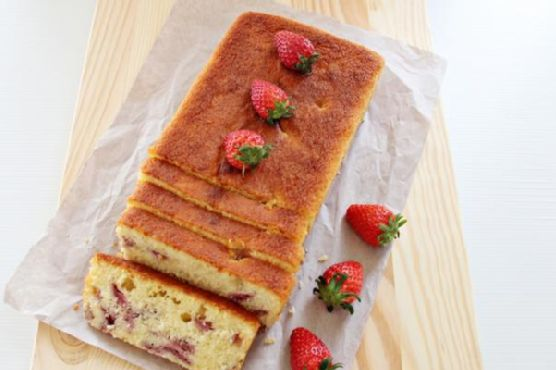
Lemon and Strawberry Loaf | Made by Meaghan Moineau

It was one of those Thursday afternoons when I found myself staring at the fridge, desperate for something sweet and a little different to snack on. You know the kind of day — a little bit drizzly, and the idea of a fragrant loaf filling the house with warmth seemed like the perfect antidote. I remembered some strawberries and a lonely lemon hanging out in the crisper drawer, and an idea sparked. This Lemon and Strawberry Loaf is a twist on your usual bake — think sweet strawberries mingling with zesty lemon and a hint of coconut. It’s a little slice of sunshine even when the weather outside is anything but. Plus, the recipe is straightforward enough to whip up on a whim.

Jump to Recipe

What You’ll Need

What’s great about this ingredient list is that you might already have most of these at home. It’s the kind of recipe that doesn’t require a last-minute supermarket dash.

  • Butter
  • Sugar
  • Eggs
  • Self-raising flour
  • Dessicated coconut
  • Natural yoghurt
  • Lemon (juice and rind)
  • Fresh strawberries

How to Make Lemon and Strawberry Loaf

  1. Preheat your oven to 180°C. While it heats up, line a 23cm x 12cm loaf tin with baking paper. Trust me, it’ll make your life easier when you’re trying to get that loaf out later.
  2. In a large bowl, beat the butter and sugar together until they’re pale and creamy. You want a texture that feels fluffy and light.
  3. Add the eggs, one by one, beating well after each addition. This will give you a smooth and well-incorporated mixture.
  4. Grate the lemon rind into the mixture and squeeze in the juice. That zesty aroma should hit you right in the face — it’s heavenly!
  5. Fold in the self-raising flour, dessicated coconut, and natural yoghurt with a rubber spatula. Be gentle; you’re aiming for a lovely, airy batter.
  6. Finally, fold in the fresh strawberries. Try to distribute them evenly so you don’t end up with a surprise berry-less slice.
  7. Pour the mixture into your prepared loaf tin, smoothing the top with the spatula to ensure it bakes evenly.
  8. Bake for 50-60 minutes. The loaf is done when a skewer inserted in the center comes out clean, and the top is beautifully golden.
  9. Let it cool in the tin for about 10 minutes, then turn it out onto a wire rack to cool completely. Waiting is the hardest part, but it’s worth it!

Cook’s Notes

This loaf is a keeper for a couple of days, tightly wrapped at room temperature. If you’re planning to make it ahead, it freezes well too. Just wrap it up snugly in plastic wrap and pop it in a ziplock bag. A tip if you’re in a rush: you can microwave slices directly from frozen — it’s like bringing back freshly baked magic!

  • Be careful not to overmix the batter once you’ve added the flour. Overmixing can make the loaf dense instead of light and fluffy.
  • For the strawberries, smaller pieces work best. They distribute better through the loaf, giving you a little strawberry burst in each bite.

Make It Your Own

  • Swap the strawberries for raspberries if you prefer a different berry twist.
  • For a tropical vibe, add a handful of chopped pineapple instead of strawberries, and you’ll feel like you’re on a mini-vacation.
  • If you’re out of self-raising flour, use plain flour with an extra teaspoon of baking powder.
  • Try adding a teaspoon of vanilla extract to the batter for an extra layer of flavor.

If you try this, I’d love to hear how it turns out — drop a comment or tag me! It’s always a joy to see your creations come to life. Happy baking, and may your kitchen be filled with the delicious aroma of lemon and strawberries!

Goes Well With

If you want to round out the meal, here’s what I’d pair it with over on meaghanmoineau.com:

Related update: Lemon and Strawberry Loaf

Related update: Mascarpone & Ricotta Cheese Cake

Red Sox Grit: Roster Rules August Surge | Analysis by Brian Moineau

TL;DR

  • MassLive framed a Red Sox “marathon” win around a taped-up hero and a manager drenched in sweat; the optics scream grit, but the substance is 26-man roster architecture paying off at Fenway Park in August 2026. [1]
  • The Tracy-era Sox have quietly layered in new left-handed looks (Jake Bennett, Payton Tolle) and post–April 26 process shifts that are giving opponents a fresh kind of pain on Boston’s late-summer schedule. [3][4][7]
  • The July surge to a 13-game streak isn’t a vibes story—it’s a systems story that echoes 1948 in length, but diverges in how Boston is winning at the margins against AL East lineups. [2][9]

What the source said

MassLive’s piece characterizes a Red Sox marathon—an exhausting, momentum-bending game at Fenway—in which a taped-up player turned into the late hero, and interim manager Chad Tracy walked off the field visibly soaked after extra innings. It highlights the vibe shift under Tracy, packaging the sweat, tape, and grind into a team identity and teasing a “new pain” for opponents who now have to survive Boston’s in-game adjustments and depth on humid August nights. The thrust: this 2026 group is comfortable making the game ugly when required, and they’ll wear you down with bullpen layers and matchup granularity rather than just one star turn. No long statistical treatise, just clear scenes of endurance and a club eager to make that aesthetic its calling card. [1]

Why it matters

  • Stakeholders with the most on the line aren’t just Tracy and the clubhouse. It’s chief baseball officer Craig Breslow—who fired Alex Cora on April 25, 2026 and elevated Tracy on April 26 at Fenway—betting the season on structural change and a manager who shares the front office’s cadence. If the grind-it-out wins stack, Breslow’s program hardens into mandate; if not, it looks like a midseason lurch. [3][4]

  • The AL East and Wild Card race won’t be decided by blowouts; it’ll be decided by five pitches in the 10th and a reliever’s third day in four in ballparks from Baltimore to St. Petersburg. Boston’s July 13-game run showed a repeatable floor, not just a ceiling, against Tampa Bay and others. That narrows variance and punishes teams that can’t match Boston’s late-game durability. [2]

Original analysis

Red Sox ‘marathon’ as a strategy, not a mood

Consensus read: the “marathon” win proves Boston’s grit and clubhouse chemistry. Contrarian read: the turnaround is structural—born of an April regime shift and tactical inventory that forces opponents into unfamiliar reps under the lights on Lansdowne Street. [1]

  • The Cora-to-Tracy handoff on April 25–26 reset the dugout’s decision loop—fewer sacred cows, more modular usage in the 7th through 11th innings. Tracy’s introduction came with Craig Breslow, Sam Kennedy, and ownership on the dais; that’s not optics, that’s alignment that shortens feedback cycles on bullpen roles and platoon gambits during a 162-game slate. [3][4][1]

  • New pain for opponents: left-handed shape and sequencing. Jake Bennett’s ascent (rookie starter with a carry fastball profile) inserts extension, plane, and tempo that AL hitters haven’t book-indexed yet, and his early-season workload has been managed with five days’ rest windows. Pair that with Payton Tolle’s scouting-report chaos—rookie adjustments, starter/reliever elasticity—and you get scouting churn every series at Fenway and on the road. Even when Tolle scuffled early, the pitch-mix uncertainty itself created planning friction for Tampa Bay and Detroit. [7][2]

Back-of-envelope calculation (with work):

  • Assume a typical “marathon” (11–13 innings) costs ~115–140 bullpen pitches after the starter: six relievers averaging 20–23 pitches each (6 × 21 = 126). That usage profile usually leaves two relievers down for 48 hours and a third on “break-glass” status. If Boston can shuttle one optionable arm to/from Triple-A Worcester every 48 hours, they can absorb two such games per week without burning top leverage arms, effectively converting the 26-man limit into a rolling 28–29 arm pool over seven days. This is roster math, not romance, and it matches the transactions carousel the club has run since late April. [1]

Historical analogue (with year):

  • The 13-game streak put this club in rare Red Sox company (1946, 1948). But 1948’s lesson isn’t romance; it’s attrition: that team won 96 and still lost a one-game pennant playoff to Cleveland at Fenway Park. Boston’s 2026 answer—multiple lefty looks and a bullpen with toggles—directly addresses that exact 1948 vulnerability: sameness late against right-handed thump. [2][9]

2×2 typology: how Boston is winning the long games

  • Axis A (Game Aesthetic): Pretty (clean, low-traffic) vs Ugly (traffic, pinch chains)
  • Axis B (Resource Stamina): Low (static bullpen) vs High (option/role agility)
  • 2026 Red Sox post–4/26: Ugly + High — embrace traffic, then win with matchup churn and Worcester shuttles. [4]
  • Old-model Sox pre–4/25: Pretty + Low — tried to win on talent/efficiency but ran thin in extra frames. The shift across quadrants explains the extra-inning poise during the July run. [3][2]

Named-stakeholder breakdown:

  • Chad Tracy — If marathon wins keep stacking, he turns “interim” from title to trivia by September in Boston. The sweat reads as buy-in; the chess moves are the point at Fenway. [4][2]
  • Craig Breslow — A bet on process. The streak validates the house cleaning; another six weeks of competent late-game run prevention could validate the blueprint inside 4 Jersey Street. [3][7]
  • Sonny Gray — The adult in the room. His pre-injury form set the staff’s standard and anchored that July run; a healthy August stabilizes the bullpen tax marathons impose. [2][6]
  • Willson Contreras — Power in the middle plus game-calling that can shepherd kids through high-leverage frames; his 2026 availability shapes volatility in one-run games. [2]
  • AL East rivals — They can match talent; can they match Boston’s pitch-shape diversity and bench/farm agility every 48 hours from Toronto to the Bronx? That’s a different sport. [2][7]

What others are missing

Coverage is skimming the optics—tape and sweat—while the real hinge is governance: how much autonomy Tracy has to run the late-game script versus Breslow’s hand on roster levers in Boston. Tracy publicly pushed back on the idea he’s a front-office puppet on NESN, which matters because buy-in at 10:45 p.m. in the 11th depends on players believing decisions are baseball-tough, not spreadsheet-imposed. That trust lubricates the exact moves—pinch-runner timing, third-time-through hooks, matchup relievers—that turn marathons under the Fenway lights; miss the org-chart dynamics and you misread why Boston looks calmer in chaos than it did in April 2026. [8][3][4]

What to watch next

  1. By August 18, 2026: One of Jake Bennett or Payton Tolle logs a 7+ K, 0 BB start at Fenway as unfamiliar left-handed looks continue to scramble advance reports; box scores will verify the K/BB line. [7]
  2. By August 31, 2026: Boston options and recalls at least two different relievers to/from Triple-A Worcester within a 10-day span surrounding an extra-inning game (10+), preserving top leverage arms; the transaction log will show names and dates. [8]
  3. By September 1, 2026: The Red Sox occupy an AL Wild Card slot and Chad Tracy’s Manager of the Year odds shorten to +150 or better at a major U.S. sportsbook, reflecting late-game run prevention gains. [2][4]

My take

I’m buying the thesis behind the sweat in Boston. The marathon theatrics are a tell: this club now wins the boring decisions—roster churn, pitch-shape diversity, usage discipline—and lets the drama sell itself on Yawkey Way’s successor, Jersey Street. If Sonny Gray stays upright and one of Bennett/Tolle cements a league-average starter floor, Boston’s September is less coin-flip than quiet strangulation of flawed lineups that crumble after the 9th. The lesson from 1948 is that excellence without elasticity breaks under playoff pressure; this version has elasticity and the 13-game evidence to prove it. [2][7][9]

Sources

  1. Red Sox’ ‘marathon’ included taped-up hero, ‘drenched in sweat’ manager, new ‘pain’ for opponents — MassLive (https://www.masslive.com/redsox/2026/08/red-sox-marathon-included-tape-up-hero-drenched-in-sweat-manager-new-pain-for-opponents.html) — Starting point that frames the “marathon” game and introduces the tape/sweat/new-pain storyline.

  2. Red Sox rout Rays for their first 13-game win streak since 1948 — MLB.com (https://www.mlb.com/redsox/news/red-sox-win-streak-reaches-13-games) — Confirms the July 2026 13-game streak and ties it historically to 1948.

  3. Red Sox Part Ways With Alex Cora and Members of the Coaching Staff — MLB.com (press release) (https://www.mlb.com/press-release/red-sox-part-ways-with-alex-cora-and-members-of-the-coaching-staff) — Establishes April 25, 2026 as the date Boston moved on from Cora.

  4. Chad Tracy introduced as Red Sox interim manager — MLB.com (https://www.mlb.com/redsox/news/chad-tracy-introduced-as-red-sox-interim-manager) — Details Tracy’s elevation on April 26, 2026 and the leadership alignment behind it.

  5. ‘I’m getting chills’: Red Sox extend winning streak to 13 games, their longest in 78 years — Boston.com (https://www.boston.com/sports/boston-red-sox/2026/07/19/im-getting-chills-red-sox-extend-winning-streak-to-13-games-their-longest-in-78-years/) — Adds local context and reaction to the streak milestone.

  6. Red Sox lose Sonny Gray to injury, but beat Tigers in Patriots’ Day game — CBS Boston (https://www.cbsnews.com/boston/news/boston-marathon-patriots-day-red-sox-tigers/) — Documents Gray’s Marathon Monday exit and the bullpen cover that followed.

  7. Jake Bennett off to strong start for Red Sox in rookie season — MLB.com (https://www.mlb.com/redsox/news/jake-bennett-off-to-strong-start-for-red-sox-in-rookie-season) — Explains Bennett’s profile and early results that underpin Boston’s new lefty pain point.

  8. Chad Tracy Quashes Rumors About How Red Sox Are Being Managed — NESN (https://nesn.com/boston-red-sox/news/chad-tracy-quashes-rumors-about-how-red-sox-are-being-managed/26351a31ee19998527e8b3ec) — Addresses the Tracy/Breslow autonomy question that shapes late-game trust.

  9. Timeline: 1940–1949 | Fenway Park Living Museum — MLB.com (https://www.mlb.com/redsox/ballpark/museum/timeline/1940-1949) — Anchors the 1948 analogue: 96 wins, one-game playoff loss to Cleveland.


Related update: We recently published an article that expands on this topic: read the latest post.


Related update: We recently published an article that expands on this topic: read the latest post.

Whole Wheat Dinner Rolls | Made by Meaghan Moineau

It was one of those Tuesday evenings when I realized I had promised fresh bread for dinner. The sun was setting, casting a warm, golden hue across my kitchen, and I could feel the cool breeze of autumn sneaking through the barely open window. That’s when it hit me — I needed something cozy yet impressive, but also forgiving enough to handle a bit of my mid-week chaos. Enter: these Whole Wheat Dinner Rolls. They’re not just any rolls; they’re the kind that make your kitchen smell like a bakery and your heart feel utterly content. I love how something so wholesome can come from ingredients I usually have stashed away in my pantry. Plus, they’re surprisingly easy to make, with a bit of patience and love.

Jump to Recipe

What You’ll Need

You’ll likely find most of these ingredients are staples in your kitchen, with a few stars that make these rolls stand out. Here’s what you’ll need:

  • 1 cup water
  • Cracked wheat (or Coaches Oats) – gives that lovely texture
  • 1/3 cup warm water
  • Dry active yeast – for that perfect rise
  • Granulated sugar – just a touch for the yeast
  • Butter – because everything is better with butter
  • 1 teaspoon table salt
  • Molasses – adds depth and color
  • Honey – a natural sweetness
  • 2 tablespoons wheat germ
  • 1 cup milk
  • 2 1/4 cups whole wheat flour
  • 2 cups all-purpose flour
  • Whole egg white – for that glossy finish

How to Make Whole Wheat Dinner Rolls

  1. In a small saucepan, bring 1 cup of water and the cracked wheat to a boil, then reduce the heat to medium-low and let it simmer for around 6 minutes. The kitchen will fill with a nutty aroma, and you’ll know it’s ready when the mixture has softened. Remove from the heat and allow it to cool to lukewarm.
  2. In a medium bowl, dissolve the yeast with the 1/3 cup of warm water and a tablespoon of sugar. Give it a quick stir and let it sit for about 10 minutes until it’s foamy and fragrant. It’ll be your sign that the yeast is happy and ready to work its magic.
  3. Add the cooled cracked wheat mixture to the yeast along with the butter, salt, molasses, honey, wheat germ, and milk in the bowl of an electric mixer. Use the paddle attachment to mix everything until just combined.
  4. Add 1 cup of the whole wheat flour and 2 cups of the all-purpose flour. Mix until the dough comes together. Switch to the dough hook attachment and gradually add the remaining whole wheat flour, about a quarter cup at a time, until the dough sticks less to the sides of the bowl.
  5. Let the mixer knead the dough on medium-low for about 8-10 minutes. The dough should be smooth and slightly tacky to the touch.
  6. Lightly oil a large bowl, place the dough inside, and cover it with a clean towel. Let it rise in a warm spot until it doubles in size — this could take anywhere from 1 to 2 hours, so be patient!
  7. Punch down the dough to release the air and divide it into 19 equally-sized pieces, about 2.5 ounces each. Shape them into balls and place them on a baking sheet lined with parchment paper. Cover with a towel and let them rise for another 45 minutes.
  8. While the rolls are rising, preheat your oven to 375°F. Place a dutch oven or oven-safe pot filled with water on the lowest shelf for added steam.
  9. Brush the risen rolls with an egg wash made by whisking the egg white with a bit of water. This will give them that irresistible sheen.
  10. Bake for 17-23 minutes until golden brown. The molasses will naturally darken the rolls, so don’t worry if they seem a little darker than expected. Once baked, let them cool on a wire rack.

Cook’s Notes

The key to these rolls is patience. Letting the dough rise properly will reward you with a tender crumb. If your kitchen is chilly, try placing the dough near a warm oven or in an off oven with the light on. For storage, keep them in an airtight container at room temperature for up to three days — if they last that long! To reheat, a quick zap in the microwave or a few minutes in a warm oven will bring them back to life. Freezing is an option too; just make sure they’re completely cooled before popping them in a freezer bag.

Make It Your Own

  • Cheesy Rolls: Add a cup of your favorite shredded cheese to the dough for a gooey surprise in every bite.
  • Herb-Infused: Mix in a tablespoon of dried rosemary or thyme into the dough for a fragrant herb twist.
  • Seeded Top: Sprinkle sesame or poppy seeds on top of the rolls before baking for an added crunch.
  • Sweet Cinnamon Swirl: Add a swirl of cinnamon sugar to the dough before shaping for a sweet counterpart to the savory meal.

If you try this recipe, I’d love to hear how it turns out for you — drop a comment or tag me in your photos! Whether they’re part of a holiday spread or a weeknight dinner, these rolls are sure to be a hit. Happy baking!

Goes Well With

If you want to round out the meal, here’s what I’d pair it with over on meaghanmoineau.com:

Related update: Whole Wheat Dinner Rolls

Related update: Cheddar Chile Beer Bread

Google retires Assistant for Gemini | Analysis by Brian Moineau

TL;DR

  • Google will shut down Google Assistant on Android phones, tablets, and Wear OS starting September 4, 2026; Gemini becomes the default assistant, with removal rolling out over “a few weeks.” [2][3]
  • This is a product swap from a deterministic voice UI to a generative AI agent; specific Assistant staples (some news/radio providers and Interpreter mode) remain incomplete in Gemini on mobile. [7][4]
  • Ecosystem impact is uneven: Android Auto projected from phones, watches, and headphones lose Assistant, while cars with Google built‑in keep Assistant “for a little longer,” setting up a multi‑year transition. [2][3]

What the source said

Inc., in a piece by Georgia Fearn, reports that Google will retire Google Assistant on Android and Wear OS, with Gemini taking over as the default experience after September 4, 2026. The article spells out which devices change (phones, tablets, Wear OS), how the switch to Gemini works, and how quickly access will be removed after the September date. It cites Google’s migration language about removal beginning on a specific day and continuing over a short window. The piece stays consumer‑focused—covering steps to switch and day‑one gaps rather than corporate strategy. [1]

Why it matters

Android’s 3B+ active devices mean changes to timers, messaging, or navigation affect routines at global scale; Google also says Gemini already serves 900M+ monthly users, so a push into hundreds of millions more shifts behavior from on‑device commands to cloud‑assisted interactions. That raises reliability and latency risks for commuters using Android Auto, runners wearing Wear OS, and anyone trained by Assistant’s crisp, single‑shot responses. [5][6]

OEMs like Samsung and Xiaomi, app providers such as Spotify and Pocket Casts, and automakers will all feel the switch. Android Auto projected from phones, Wear OS watches, and headphones lose Assistant beginning September 4, 2026; vehicles with Google built‑in keep Assistant “for a little longer,” fragmenting experiences by device class and market during the rollout. [2][3]

Original analysis

The Google Assistant shutdown is a platform control play, not just an AI upgrade

The consensus take says Gemini is smarter, so this is a routine retirement; my contrarian read is that Google wants one “assistive entry point” it fully controls across phones, wearables, cars, and home—without the legacy overhead of Assistant’s skills model and permissions plumbing.

  • Assistant’s third‑party “Conversational Actions” shut down in 2023, and 2024’s feature trims telegraphed end‑of‑life; Google’s plan to “upgrade” mobile Assistant users to Gemini and remove most mobile access later in the year formalized the path. September 4, 2026 is the cutover for Android and Wear OS, with removals rolling out in waves. [6][4][2][3]
  • Gemini is not feature‑identical on day one: Google’s help pages flag gaps in media providers, radio/news streams, and Interpreter mode on mobile, which the company is still closing. [7]

That feels like a downgrade to power users—unless you’re Google. A single agent (Gemini) standardizes UI, telemetry, and monetization across surfaces, and it gives Google one roadmap for agentic behaviors—Gemini Live, “Spark,” and proactive briefs—rather than retrofitting them into Assistant’s deterministic command parser. [6][4]

Back‑of‑envelope: what “full migration” could mean by 2027

  • Android active devices: “more than 3 billion.” [5]
  • Gemini monthly users today: “more than 900 million.” [6]

If 25% of Android’s active device base not already using Gemini monthly converts by mid‑2027, that’s 0.25 × 3.0B ≈ 750M additional monthly users. Add the current 900M and you get ≈ 1.65B monthly Gemini users—scale that rivals Google’s largest consumer categories outside Search, which explains a forced switch starting September 2026. This is a sizing exercise, not a forecast, but it shows why the migration math works. [5][6]

A 2×2 that explains user pain—and Google’s bet

  • Axis 1: Deterministic commands vs. Generative tasks
  • Axis 2: On‑device (low‑latency, private) vs. Cloud (context‑rich, agentic)

Assistant lived in the deterministic/on‑device quadrant for alarms, toggles, and local media control, with cloud fallbacks for web lookups. Gemini pushes hard into the generative/cloud quadrant—great for multi‑step queries and cross‑app orchestration, but historically worse for “one‑shot” tasks when latency or hallucinations appear. [4][6]

The short‑term pain you’ll feel on Android Auto or a Pixel Watch comes from this quadrant shift: fewer hard‑coded, instant flows; more flexible, sometimes slower agent behavior. Google is betting faster models and hybrid execution will make generative feel instant, while backfilling deterministic routines where complaints spike first. [4][6]

Named stakeholder breakdown

  • Google: Shuts down a fragmented stack and unifies investment behind one AI agent, aiming to grow Gemini well beyond 900M monthly users after the September 2026 cutover. Expect deeper ties to Search, Android, and Home surfaces to follow. [4][6]
  • Samsung (and Wear OS OEMs): Faces a 2026–2027 support burden as customers lose familiar Assistant watch behaviors; the upside is new on‑device Gemini models that can headline Galaxy and Pixel hardware in late‑2026 and 2027. [2][4]
  • Automakers: Android Auto (projected from phones) loses Assistant in September 2026; cars with Google built‑in keep Assistant longer, creating dual showroom experiences and support complexity by trim and region. Expect upsell pressure toward built‑in systems. [2][3]
  • Media partners (news, radio, podcasts): Integrations change or break in Gemini; renegotiations over deep‑linking, playback controls, and attribution are likely as Google patches feature gaps through 2026. [7]
  • Amazon Alexa: Gains an opening to reclaim smart‑home usage on Echo‑class devices while Gemini backfills features on Nest displays and third‑party hardware through the fall of 2026. [6][2]

What others are missing

The specific angle most coverage skips is device‑class asymmetry on September 4, 2026: Android and Wear OS lose Assistant first, which also affects headphones and Android Auto projected from phones, while Google TV, Nest Hub–class smart displays/speakers, and Google built‑in cars run on different deprecation clocks. Tom’s Guide and TechRadar cite the September start and carve‑outs, while Google’s blog emphasizes a staged upgrade for home and car without parity dates, guaranteeing mixed Gemini/Assistant households this fall. That fragmentation—Pixel on Gemini, Nest Hub on Assistant, and a split in the garage—is the hidden cost that will test whether Gemini can match “do this now” behaviors across every surface before churn sets in. [3][2][4]

What to watch next

  1. By October 31, 2026: Google adds at least two missing Assistant staples—either radio/news provider support or Interpreter mode—to Gemini on Android and highlights the change in a Help Center update.
  2. By December 31, 2026: Google publishes telemetry showing median latency for set‑a‑timer and add‑a‑stop voice tasks on Android Auto is ≤1.2 seconds, documented in an official blog post or support performance note.
  3. By March 31, 2027: A top‑10 automaker by 2025 sales publicly sets a firm handover date from Google Assistant to Gemini for Google built‑in infotainment, ending the “for a little longer” ambiguity.

My take

Google is right to kill Assistant and wrong to assume users won’t feel it in September 2026. The company can’t ship an agentic future while hauling a decade of Assistant cruft, so it’s ripping off the band‑aid; fair. But if Gemini can’t match one‑command reliability that made Assistant sticky in cars, kitchens, and on wrists, people will defect to simpler options—Alexa at home, hard buttons in the cabin, and zero voice on watches. I’d make the same strategic call and put ruthless focus on low‑latency, offline‑first “do this now” flows; if Gemini nails that by December 31, 2026, complaints fade, and if not, the brand eats months of avoidable pain.

Sources

[1] Google Is Finally Shutting Down the Google Assistant. Here’s What Android Users Need to Know — Inc. (https://www.inc.com/georgia-fearn/google-is-finally-shutting-down-the-google-assistant-heres-what-android-users-need-to-know/91385340) — Establishes the consumer‑side details (devices, dates, and switching steps) from a named reporter.
[2] Google Assistant will shut down for good on Android and Wear OS in September — TechRadar (https://www.techradar.com/ai-platforms-assistants/gemini/google-assistant-will-shut-down-for-good-on-android-and-wear-os-in-september-heres-what-you-need-to-do-next) — Confirms September 4, 2026, the phased removal window, and Android Auto vs. Google built‑in nuances.
[3] Google Assistant dies in September: what you need to know and how to switch to Gemini — Tom’s Guide (https://www.tomsguide.com/ai/google-gemini/google-assistant-dies-in-september-what-you-need-to-know-and-how-to-switch-to-gemini) — Cites Google’s email (“We will begin removing access… starting on September 4”) and lists impacted devices with switching instructions.
[4] The Assistant experience on mobile is upgrading to Gemini — Google (https://blog.google/products-and-platforms/products/gemini/google-assistant-gemini-mobile/) — Google’s official framing of the mobile upgrade and retirement of “classic” Assistant on most mobile devices.
[5] The Android Show I/O 2025: Android now at 3B+ active devices — Google (https://blog.google/products-and-platforms/platforms/android/the-android-show-io-2025/) — Establishes the 3B+ active device base used in the migration sizing.
[6] The Gemini app becomes more agentic, delivering proactive, 24/7 help — Google (https://blog.google/innovation-and-ai/products/gemini-app/next-evolution-gemini-app/) — States “more than 900 million” monthly Gemini users and outlines features like Gemini Live and proactive briefs.
[7] What you can do with your Gemini mobile app (Some features not supported) — Google Help (https://support.google.com/pixelphone/answer/14579631?hl=en-as) — Documents gaps vs. Assistant (media providers, radio/news streams, Interpreter mode) and the status of fixes.



Related update: We recently published an article that expands on this topic: read the latest post.


Related update: We recently published an article that expands on this topic: read the latest post.

Herb chicken with sweet potato mash and sautéed broccoli | Made by Meaghan Moineau

Picture this: it’s Tuesday night, and I’m staring into the depths of my fridge, trying to conjure up a meal that’s both satisfying and doesn’t involve calling for takeout. I spot a pack of chicken breasts and a couple of sweet potatoes that have been giving me the side-eye for a week. We’ve all been there, right? Enter my Herb Chicken with Sweet Potato Mash and Sautéed Broccoli — a dish that hits the sweet spot between comfort food and healthy eating. It’s the kind of meal that makes you feel like a domestic wizard, even if you’re just winging it on a busy weeknight. Plus, it’s easy on the ingredients and even easier on the prep.

Jump to Recipe

What You’ll Need

With a little luck, you might already have most of these ingredients on hand. It’s all about simple, fresh, and flavorful components that come together in harmony.

  • Broccoli
  • Mixed pack of Maggi So Juicy herbs
  • Olive oil
  • Diced russet potato
  • Black pepper and salt
  • Skinless boneless chicken breasts
  • Diced sweet potatoes
  • Unsalted butter

How to Make Herb Chicken with Sweet Potato Mash and Sautéed Broccoli

  1. First things first, preheat your oven to 350°F (180°C) or, if you’re using a convection oven, aim for 320°F (160°C). Follow the instructions on your herb pack to get the chicken prepped and into the oven. The aroma will start to fill your kitchen, and you’ll know you’re on the right track.
  2. About 15 minutes before the chicken is done, bring a pot of water to a boil. Toss in the diced russet potatoes and let them cook for about 5 minutes. This is when your kitchen starts smelling a bit like a Sunday roast — but on a Tuesday night!
  3. Add in the sweet potatoes to the boiling pot and cook until both types of potatoes are tender. They should give way easily when pierced with a fork.
  4. Drain the potatoes, then break out the masher. Add a generous amount of butter, and season with salt and pepper to your liking. Mash until smooth, tasting as you go. The buttery goodness is your reward, so don’t skimp!
  5. In a separate pan, heat up a splash of olive oil over medium heat. Toss in the broccoli florets and sauté them quickly until they’re tender but still bright green — about 5 minutes. This is where you’ll hear that lovely sizzle.
  6. Cover the broccoli to keep it warm and cozy while you finish up with the chicken.
  7. Once the chicken is done, let it cool for a minute before cutting the bag open and transferring it to a dish. Be gentle, the steam can be bossy!
  8. Slice the chicken breasts into chunky pieces, trying to keep the shape intact. This makes it look fancy when you’re plating, but don’t stress it too much if it falls apart a bit.
  9. Finally, assemble your plate: start with a generous scoop of sweet potato mash, lay the chicken pieces artfully on top, drizzle any remaining sauce over it, and add a side of that vibrant broccoli.

Cook’s Notes

Let’s chat practical tips. The potatoes can be a bit tricky if you overcook them, turning all mushy instead of mashable, so keep an eye on them. The chicken can be prepared in advance and stored in the fridge for up to 2 days — just reheat gently to keep it juicy. If you have leftovers, they make a perfect packed lunch for the next day. Just keep the components separate until you’re ready to eat to avoid sogginess.

Make It Your Own

Want to switch it up? Here are a few ideas to suit whatever mood you’re in:

  • Swap the chicken for crispy tofu for a vegetarian twist.
  • Try using cauliflower instead of broccoli for a slightly different flavor profile.
  • Spice up the mash with a pinch of cayenne pepper if you like a little heat.
  • Add a handful of shredded cheese to the mash for extra indulgence — because why not?

If you try this, I’d love to hear how it turns out — drop a comment or tag me! Let’s keep the kitchen magic alive together.

Goes Well With

If you want to round out the meal, here’s what I’d pair it with over on meaghanmoineau.com:

Related update: Herb chicken with sweet potato mash and sautéed broccoli

Related update: Salmon with roasted vegetables

Rising Mortgage Rates Squeeze Demand | Analysis by Brian Moineau

TL;DR

  • Mortgage rates climbed to a one-year high last week and immediately dented demand; applications fell 2.9% week over week and 5% year over year, with refinance activity down 9% versus 2025 [1].
  • The rate spike is tethered to energy headlines: oil’s drop early this week briefly pulled yields and mortgage rates lower again, underscoring how the Iran war shock is dictating borrowing costs as much as the Fed is [1][2][3].
  • Prices aren’t cracking: Redfin says the median sale price sat about $800 below its all-time high in mid-July near $408,804, so higher mortgage rates are squeezing affordability rather than forcing broad price declines [4].

What the source said

CNBC reports mortgage demand slumped as the average contract rate for a 30‑year fixed with conforming balances rose to 6.81% (points: 0.65, from 0.69) after the July FOMC meeting, with total applications down 2.9% week to week and 5% year over year [1]. Refinances dropped 2% on the week and 9% year over year, while purchase apps fell 4% week to week and 3% year over year, according to the MBA print carried by CNBC [1]. Mortgage News Daily observed rates eased to two‑week lows at the start of this week as Iran‑war rhetoric cooled and oil slipped, helping bonds and lender pricing [5]. MBA’s Mike Fratantoni said higher mortgage rates “weakened overall demand,” a comment carried in the August 5 CNBC write‑up [1].

Why it matters

The real stakeholders aren’t “homebuyers” in the abstract—they’re first‑timers in Phoenix or Tampa sizing their budgets against Redfin’s $408,804 national median, move‑up owners who locked ~3% mortgages in 2020–2021 per Freddie Mac archives, and lenders like Rocket Mortgage that live on daily rate sheets [4][6]. When mortgage rates pop on geopolitical oil scares, buyers don’t just delay—they lose purchasing power while list prices hold near records, and that redirects demand toward builder incentives, smaller homes, FHA, or the sidelines [1][4].

For the industry, the stakes extend past a slow August 2026. With Freddie Mac’s benchmark 30‑year rate printing 6.69% on August 6 and Redfin’s median price hovering just under peak, the gap between wages and monthly payments is widening again into Q3 2026 [2][4]. If the oil‑driven rate premium persists into fall, pipelines at lenders and agents thin out while builders like D.R. Horton lean harder on buydowns and credits to keep model‑home traffic converting [2][4].

Original analysis

Back‑of‑envelope: the payment punch

  • Assumption: national median sale price $408,804 in mid‑July (Redfin). With 20% down, loan amount ≈ $327,043 [4].
  • Payment at 6.81% (30‑yr): ≈ $2,134/month P&I (standard amortization on $327,043).
  • Payment at 6.49% (early‑July average per PMMS/MND): ≈ $2,065/month [5][6].
  • Delta from 6.49% to 6.81%: ≈ $69/month, or ~$828/year—enough to tip debt‑to‑income approvals at the margin [5][6].

This math explains why purchase apps retrench when headlines swing rates; a $69/month move isn’t abstract to a first‑time buyer near DTI limits, and it arrives faster than wages adjust or sellers cut list prices [1][4].

Contrarian read

  • Consensus: “Higher mortgage rates will finally force home prices down.”
  • My case: In 2026, higher rates are depressing transactions more than prices because inventory remains constrained and demand is elastic to payments, not sticker price; Redfin’s July read shows the median sale price about $800 below the all‑time high even as pending sales softened when the daily average rate flirted with a one‑year high near 6.85% in late July [4][5].

The more relevant lever isn’t the sticker; it’s the financing bundle. MBA’s survey shows average points fell to 0.65 from 0.69 even as the contract rate hit 6.81%, signaling lenders adjusted fees to keep APRs competitive when volatility spiked [1].

Historical analogue: 2013’s taper‑tantrum, updated

In mid‑2013, mortgage rates jumped from roughly 3.6% to 4.3–4.5% after the Fed’s taper talk; purchases cooled and refinances slumped, but prices advanced into year‑end, as the St. Louis Fed documented in a 2017 review [6][7]. Today rhymes—with a twist: the catalyst isn’t QE chatter; it’s geopolitics via oil, as seen when rates spiked into late July 2026, Freddie Mac’s weekly survey clocked 6.69% on August 6, then eased as crude fell on Iran de‑escalation headlines [2][3][5]. Expect choppy volumes and sticky prices again, not a straight‑line correction into Q4 2026 [2][4].

2x2: rate level vs. inventory tightness

  • High rates + tight inventory (July–August 2026): Low transactions, firm prices; builders deploy buydowns, and portals like Zillow/Redfin see steady traffic but weaker conversion [4][5].
  • High rates + loose inventory: Prices soften; 2018‑style discounts reappear; lock desks prioritize fee cuts over rate cuts to keep APRs steady [6].
  • Low rates + tight inventory: Bidding resurges; lenders refocus on capacity; refi mini‑cycle appears in cash‑out and consolidation cohorts near sub‑6.5% [5][6].
  • Low rates + loose inventory: Broad price discovery; sellers capitulate faster; volumes and prices both stabilize on affordability relief [6].

Named‑stakeholder breakdown

  • Rocket Mortgage, UWM, Mr. Cooper: Volatility is the business; headline rates near 6.85% in late July forced fee tinkering, while any sustained drift toward the mid‑6s could spark a small refi mini‑cycle in cash‑outs and debt consolidation [1][5].
  • D.R. Horton, Lennar, Pulte: Builders can manufacture “price” via 2‑1 buydowns and closing credits; oil‑driven dips in rates create brief booking windows, so sales teams will lean into lock‑and‑shop when Iran headlines soften [3][5].
  • Zillow, Redfin: With the median price near peak and new‑listing flow thin, site traffic holds while conversion hinges on payments; Redfin’s tracker shows pending sales move almost tick‑for‑tick with rate changes [4][5].

What others are missing

The oil‑to‑mortgage channel isn’t only wiggling the 10‑year; it’s reshaping the fee stack at the lock desk. MBA’s survey shows points fell to 0.65 even as the rate hit 6.81%, and Mortgage News Daily logged rapid lender repricing when Iran headlines eased and oil slipped, which means affordability now turns on a bundle—rate, points, and concessions—optimized (or not) against energy shocks [1][5]. Coverage that fixates on the headline rate misses those competitive tactics and the approval impact when lenders swap small rate moves for fee changes during intraday rallies [1][5].

What to watch next

  1. By September 30, 2026, Freddie Mac’s weekly 30‑year average prints below 6.5% at least once if Brent holds under $85/barrel for two consecutive weeks; otherwise it does not, linking crude to rate relief [2][3].
  2. By Q4 2026, the national median sale price sets a new high even if purchase apps remain below 2025 levels, confirming that volume—not price—is the primary shock absorber in this cycle [1][4].
  3. By October 31, 2026, at least two top‑10 builders report buydowns on 60%+ of Q3 closings in earnings commentary or 10‑Qs, reflecting payment‑first buyer behavior.

My take

I don’t buy the “rates up, prices must fall” story for H2 2026. Mortgage rates are being yanked by oil headlines as much as by the Fed, so every de‑escalation is a tradable window for locks, and every flare‑up steals approvals from the edge [2][3][5]. If you run a sales desk at a lender or a brokerage, build playbooks around volatility, not levels: capture locks on dips, pivot borrowers to lower‑point structures when oil pops, and borrow builder‑style incentives where you can [1][4][5]. The winners this year will be the fastest optimizers of payment per dollar, not the boldest price cutters [1][2][4][5].

Sources

  1. Mortgage rates hit their highest level in over a year, causing demand to drop below year-ago levels — CNBC (https://www.cnbc.com/2026/08/05/mortgage-rates-hit-their-highest-level-in-over-a-year.html) — MBA application data, 30‑year contract rate at 6.81%, and points shift signal fee tactics.
  2. Mortgage rates rise for 5th straight week, hitting levels not seen since 2025 for 2nd week in a row — AP (https://apnews.com/article/42d8262fb00b904fd7c2b906751610d7) — Freddie Mac’s 30‑year fixed at 6.69% on Aug. 6 and yield/inflation context.
  3. Oil prices drop after Trump orders US forces to hold off on new strikes against Iran — AP (https://apnews.com/article/194ab3d3130bb44de445cf3d05954beb) — Link between de‑escalation headlines and a crude drop that eased yields.
  4. Pending Home Sales Slip Amid Stubbornly High Housing Costs, Economic Uncertainty — Redfin (https://www.redfin.com/news/press-releases/pending-home-sales-slip-amid-stubbornly-high-housing-costs-economic-uncertainty/) — Median sale price near $408,804 and sensitivity of pending sales to weekly rate moves.
  5. Mortgage Rates Roughly Unchanged Versus Friday’s Lows — Mortgage News Daily (https://www.mortgagenewsdaily.com/markets/mortgage-rates-07272026) — Late‑July daily rate highs near 6.85% and commentary on lender repricing vs. oil/Iran news.
  6. Mortgage rates and affordability (PMMS background and archives) — Freddie Mac (https://www.freddiemac.com/pmms/pmms_archives) — Historical perspective on 2020–2021 sub‑3% rates and early‑July 2026 averages for comparisons.
  7. Could Housing Markets Face Another “Taper Tantrum” Moment? — St. Louis Fed (https://www.stlouisfed.org/on-the-economy/2017/march/housing-markets-face-taper-tantrum-moment) — 2013 analogue showing rate spikes slowed activity without a full‑blown housing slump.

Stuffed Chicken Breast | Made by Meaghan Moineau

It was one of those hectic Tuesday nights, the kind where even your sneakers feel mismatched and your to-do list is longer than your grocery receipt. I was rummaging through the fridge, a little desperate but mostly hopeful, when I found a few chicken breasts and some cream cheese. The idea to stuff them hit me like a lightning bolt of culinary genius (or maybe just hungry necessity). The result? A dish that’s become a lifesaver in my weeknight dinner rotation. This Stuffed Chicken Breast is the perfect blend of creamy, savory, and downright comforting — all without needing a pantry full of exotic ingredients. It’s quick, satisfying, and fancy enough to make you feel like a kitchen rockstar.

Jump to Recipe

What You’ll Need

Most of the magic happens with just a handful of ingredients. Chances are, you already have most of these at home:

  • 4 **skinless boneless chicken breasts**
  • 1 package of **cream cheese** (softened)
  • 3 **green onions**, chopped
  • Your favorite **chicken seasoning** blend
  • Olive oil-based cooking spray

How to Make Stuffed Chicken Breast

  1. First, give your chicken breasts a good rinse under cold water, then pat them dry with paper towels. This helps the seasoning stick and creates a delicious crispy exterior.
  2. Place each chicken breast on a cutting board and cut lengthwise. Be careful not to slice all the way through — you’re making a pocket, not a butterflied filet.
  3. In a small bowl, mix the softened cream cheese with the chopped green onions. The cream cheese should be smooth and the onions evenly distributed.
  4. Spoon the cream cheese mixture into each chicken breast pocket, then press the edges of the chicken firmly to close them around the filling.
  5. Spritz the top of each stuffed breast with the olive oil cooking spray. This not only prevents sticking but also helps the seasoning adhere perfectly.
  6. Liberally rub the chicken seasoning all over the outside of the chicken. Use your favorite blend — the more flavorful, the better!
  7. Preheat your oven to 375°F (190°C). Arrange the chicken breasts in a baking dish, ensuring they’re not too crowded.
  8. Bake for 25-30 minutes or until the chicken is cooked through and juices run clear. The edges of the cream cheese might bubble a bit, and the tops should turn a lovely golden brown.

Cook’s Notes

Here’s a little secret: if you overstuff the chicken, they might not close perfectly. Don’t worry! Use some toothpicks to secure them — just remember to remove them before serving. If you’re planning ahead, you can stuff the chicken a few hours before dinner and keep them in the fridge until you’re ready to bake. Leftovers can be stored in an airtight container for up to three days and are delicious reheated in the oven or sliced cold over a salad.

Make It Your Own

  • **Swap the Chicken for Crispy Tofu**: For a vegetarian version, use firm tofu. Slice and hollow out a pocket, then proceed with the stuffing and seasoning.
  • **Add Some Heat**: Mix a teaspoon of red pepper flakes into the cream cheese for a spicy kick.
  • **Herbal Twist**: Add chopped fresh basil or parsley to the cream cheese for an herby flavor boost.
  • **Cheese Swap**: Replace cream cheese with goat cheese for a tangier, more robust flavor.

If you try this, I’d love to hear how it turns out — drop a comment or tag me! Can’t wait to see your delicious creations. Happy cooking, friend!

Goes Well With

If you want to round out the meal, here’s what I’d pair it with over on meaghanmoineau.com:

Related update: Stuffed Chicken Breast

Related update: Herb chicken with sweet potato mash and sautéed broccoli

Project Helix: Xbox Backwards Promise | Analysis by Brian Moineau

TL;DR

  • Microsoft’s Project Helix backwards compatibility could span five Xbox generations and PC—but only if publishers opt in, making rights and revenue splits the real gatekeepers, not emulation engineering. [1]
  • Disc-to-digital is the Trojan horse: convert Xbox One/Series discs into perpetual licenses across “any Xbox device,” yet the rumored disc-less Helix and fragile licensing mean ownership still hinges on deals and uptime. [1][7][8]
  • The business math works if Microsoft sweetens the pot; the history of GeForce Now’s opt-in exodus shows what happens if it doesn’t—libraries shrink overnight. [1][4][5]

What the source said

The Verge reports a leaked Microsoft memo that pitches publishers on Project Helix, the next Xbox, promising it will run games from every Xbox generation (Original, 360, One, Series) plus PC—if publishers consent title-by-title. The memo also outlines a disc-to-digital program for Xbox One/Series discs that grants a digital license usable on “any Xbox device.” It adds that Xbox 360 games are coming to PC and will run on Helix, with some features targeted “as soon as 2027.” But Helix may launch without a disc drive, and both preservation initiatives are opt-in, leaving availability to publishers’ discretion. [1]

Why it matters

Microsoft needs a win after 1,900 Xbox/Activision-Blizzard layoffs in January 2024 and a public promise to reset strategy before FY27; leadership keeps tying growth to a broader ecosystem rather than console unit sales. The pitch—“your old games, everywhere we run”—is a concrete way to raise platform value by FY27 without betting solely on new AAA output. [2][3][12]

Publishers hold the kill switch. They decide which legacy SKUs (and which components inside them) get relicensed. The Forza delistings are the canary: music and car licenses expire, and even Microsoft-published games vanish from stores and subscriptions on a schedule. If opt-ins are stingy or temporary, Helix’s grand library becomes a rotating carousel, not an archive. [6]

Original analysis

Project Helix backwards compatibility: the tech is done; the spreadsheet isn’t

Microsoft is treating “backwards compatibility” as a business model, not a firmware checkbox. The leaked memo frames Helix and “Xbox PCs” as a single commercial surface for old games, dangling revenue carrots to get publishers to re-list back catalog on console and PC. That aligns with GDC-era framing that Helix is designed to play both Xbox console and PC games—a unified platform pitch that collapses previous generational walls. [1][2][3]

Contrarian read: the bottleneck is not emulation; it’s risk-adjusted ROI on rights cleanup. If you’re EA or Take-Two, every re-list forces a legal sweep—soundtrack, likenesses, middleware, regional trademarks—that can span 5–15 vendors per SKU. The upside is real—high-margin sales on decade-old software—but only if the split and pricing offset the legal lift and exposure. The memo’s tone (“Why publishers win”) telegraphs that Microsoft knows the lift is commercial, not technical. [1]

— Back-of-envelope: pricing the carrot
Assume Microsoft proposes a $9.99 “relicense fee” per disc-to-digital conversion (one-time) and a $14.99 price point for à la carte legacy downloads, with a 70/30 publisher split (assumption mirroring standard store economics).

  • If 5,000,000 users convert an average of 3 discs each at $9.99, gross conversion revenue is ≈ $149.85M (5,000,000 × 3 × $9.99).
  • If another 2,000,000 users buy 2 legacy titles annually at $14.99, incremental catalog sales are ≈ $59.96M (2,000,000 × 2 × $14.99).
  • Combined GMV ≈ $209.81M; at 70/30, publishers pocket ≈ $146.87M and Microsoft ≈ $62.94M, before any Game Pass halo. These modest adoption rates could rise if cross-device entitlements are frictionless. [1]

— Historical analogue: GeForce Now’s opt-in whiplash
In 2020, Nvidia tried “you already own it, so stream it.” Activision Blizzard, Bethesda, and 2K yanked catalogs, pushing Nvidia to an explicit opt-in model to prevent surprise removals. Even after the policy change, removals like 2K’s March 2020 exit showed how brittle access remains without renewable contracts. Helix bakes in opt-in from day one—a scar-learned move—but inherits the same fragility if a top publisher revisits terms in 12–24 months. [4][5][9][10]

— Named-stakeholder breakdown

  • Electronic Arts: Sports back catalogs are licensing landmines (music, athletes, leagues). Expect selective opt-ins for titles with clean rights, while annualized franchises stay sparse to avoid re-clearing global rights. [6]
  • Take-Two (Rockstar/2K): Priced for premium; will demand top billing and strong anti-piracy. Past caution on streaming/archival access suggests conservative opt-ins unless the deal is rich. [5][9]
  • Ubisoft: Deep library with fewer hard-licensed dependencies; more likely to bulk opt in and use Helix’s PC reach to cross-promote Ubisoft Connect entitlements.
  • Sega/Atlus: Cult classics benefit from PC reach and preservation narrative—low-cost, high-fan-goodwill; likely to test bundles and seasonal promos.
  • Microsoft Publishing: Must lead by example but is constrained by third-party licenses embedded in first-party games (Forza’s car/music deals). Expect “complete edition” replacements where feasible to avoid future delists. [6]

Two more levers matter. First, disc-to-digital. The rumor mill points to “Positron,” a conversion flow that turns Xbox One/Series discs into evergreen digital entitlements on your account—useful if Helix ships without an optical drive. That sidesteps plastic and supports a disc-less 2027 box. [7]

Outages and expirations still bite. If a license lapses or an entitlement server hiccups, a “digital” copy can fail to launch—exactly what players saw during the July 27, 2026 Xbox outage, when some disc titles failed checks. A conversion program doesn’t fix handshake dependencies; Microsoft needs offline-first fallbacks per title. [8]

Second, timing. The memo cites Xbox 360 on PC “as soon as 2027,” which lets Microsoft merchandise a new-platform moment with an old-platform hook. Done right, Helix launches into a reissue wave: curated 360 “seasons,” PC storefront tie-ins, and a Game Pass tier with legacy perks (cloud saves, display upgrades). Done wrong, we get a handful of safe picks and a lot of “coming soon.” [1][2]

What others are missing

The real platform risk isn’t “Will Helix emulate 360?” It’s “Will your license resolve when Xbox Live is down and a soundtrack expires?” The July 27, 2026 outage showed even disc-based games can fail entitlement checks; some discs now act as tokens for a download, not as a playable image. That means disc-to-digital won’t shield Helix from the next outage or a rights lapse: the same online handshake gates play. Any “largest library” promise needs two safety nets—offline-first executables for legacy titles and standardized fallbacks when a single licensed track expires. Absent those, the library is big on paper, brittle in practice. [8][11][6]

What to watch next

  1. By Q1 2027, Microsoft ships the first wave of Xbox 360 titles on PC with account-level cloud saves; distribution mixes à la carte sales and Game Pass catalog slots. [1][2]
  2. By Holiday 2027, Helix launches with a disc-less base model; any disc support arrives via a separate accessory or an older Xbox used as a “verification bridge.” [7]
  3. By mid-2028, at least one top-10 third-party publisher by global console revenue withdraws or narrows its Helix opt-ins, triggering removals of previously available legacy titles—echoing the 2020 GeForce Now pivot era. [4][5]

My take

Helix can be the first console that treats preservation as a business, not a memorial. I’m bullish—if Microsoft overpays, upfront, for publisher certainty and builds “offline-first” SKUs that don’t die when a server sneezes. I’d launch a “Game Pass Preservation” add-on that funds rights clean-up, guarantees multi-year availability windows, and publishes a public delist calendar. Without that, Helix risks being a gorgeous front end to a melting library; pay the tax, lock the licenses, and ship discs-in-spirit. [1][6][8]

Sources

  1. The next Xbox could play every Xbox game ever made — The Verge (https://www.theverge.com/games/974773/xbox-helix-disc-digital-backwards-compatibility-leaked-memo-opt-in) — Original report on the leaked Helix memo outlining five-generation support, disc-to-digital across “any Xbox device,” publisher opt-in, and a 2027 target for 360 features.

  2. Microsoft is planning to bring Xbox 360 games to PC, according to leaked documents — PC Gamer (https://www.pcgamer.com/gaming-industry/microsoft-is-reportedly-planning-to-bring-xbox-360-games-to-pc-according-to-leaked-documents/) — Confirms the memo’s 360-to-PC plan and expands on disc-to-digital tests tied to Project Helix.

  3. From GDC: Building the Next Generation of Xbox — Xbox Wire (https://news.xbox.com/en-us/2026/03/11/project-helix-building-next-generation-of-xbox/amp/) — Official framing that Helix is designed to play Xbox console and PC games, supporting the unified-platform thesis.

  4. Nvidia introduces ‘opt-in’ policy for GeForce Now to prevent game removals — TechSpot (https://www.techspot.com/news/85400-nvidia-introduces-opt-policy-geforce-now-prevent-game.html) — Documents the 2020 shift to opt-in after major publishers pulled out, a cautionary analogue for Helix’s opt-in model.

  5. Activision Blizzard abruptly removes its games from GeForce Now — Ars Technica (https://arstechnica.com/gaming/2020/02/activision-blizzard-abruptly-removes-its-games-from-geforce-now-streaming/) — Case study of rapid catalog contraction that illustrates the fragility of publisher permissions.

  6. Forza Horizon 4 Delisting FAQ — Forza Support (https://support.forzamotorsport.net/hc/en-us/articles/30662484986387-Forza-Horizon-4-Delisting-FAQ) — Primary-source example of licensed content expirations leading to delisting, even for Microsoft-published titles.

  7. Xbox might be testing ‘Positron’ disc-to-digital; Project Helix may be disc-less — TechRadar (https://www.techradar.com/gaming/xbox-might-be-following-playstations-lead-as-new-reports-claim-microsoft-is-testing-a-new-disc-to-digital-game-feature-called-positron-and-the-next-gen-project-helix-console-wont-have-a-disc-drive) — Reporting on the rumored conversion flow and the possibility that Helix ships without an optical drive.

  8. Xbox’s biggest outage in years showed even physical discs can fail — Windows Central (https://www.windowscentral.com/gaming/xbox/xboxs-biggest-outage-in-years-proved-something-uncomfortable-even-physical-discs-dont-mean-you-truly-own-your-games) — Details the July 27, 2026 outage where disc games failed entitlement checks, underscoring uptime risk.

  9. GeForce Now switches to opt-in after several removals — GameSpot (https://www.gamespot.com/articles/geforce-now-switches-to-optin-system-after-several/1100-6477964/) — Reinforces the move to opt-in and the publisher removal timeline in 2020.

  10. 2K Games pulls its titles from GeForce Now — Engadget (https://www.engadget.com/2020-03-06-nvidia-geforce-loses-2k-games.html) — Another documented pullout that illustrates how quickly libraries can change.

  11. Microsoft clarifies disc failures during Xbox outage — Tom’s Hardware (https://www.tomshardware.com/video-games/xbox/microsoft-says-physical-discs-should-not-have-stopped-working-during-the-xbox-outage-clarifies-issue-with-entitlement-checks-that-failed-to-read-licenses-correctly-update-on-the-way) — Confirms the outage affected even offline disc play due to entitlement checks and that Microsoft is issuing fixes.

  12. Microsoft lays off 1,900 workers across Xbox and Activision Blizzard — The Verge (https://www.theverge.com/2024/1/25/24050905/microsoft-activision-blizzard-layoffs-1900-xbox) — Context on the January 25, 2024 headcount cut that increases pressure on Xbox’s next strategic cycle.


Related update: We recently published an article that expands on this topic: read the latest post.


Related update: We recently published an article that expands on this topic: read the latest post.

Balsamic Roasted Vegetables | Made by Meaghan Moineau

It was one of those evenings when the leaves were just starting to turn, and there was a crisp snap in the air that made you want to stay in and bake something comforting. I was eyeing the mishmash of vegetables in my pantry and fridge, and the thought struck me—why not toss them all together and see what happens? With my trusty bottle of balsamic vinegar in hand, I embarked on a culinary adventure that turned into a beautiful medley of roasted goodness. This Balsamic Roasted Vegetables dish has become my go-to for a weeknight rescue mission—it’s hearty, flavorful, and a feast for the eyes and the palate. You’ll love how the balsamic vinegar caramelizes everything into a sweet-savory delight. Plus, it’s as easy as it is delicious!

Jump to Recipe

What You’ll Need

Chances are you already have most of this in your kitchen, and if not, they’re just a quick grocery trip away. Here’s the line-up:

  • Golden beets
  • Red beets
  • Bulb fennel
  • Red onion
  • Fingerling potatoes
  • Kabocha squash
  • Olive oil
  • Balsamic vinegar

How to Make Balsamic Roasted Vegetables

  1. First, give the beets and fingerling potatoes a good rinse and trim off any tops. Drizzle just enough olive oil over them to coat lightly, and place them on a baking sheet.
  2. Roast whole in a preheated oven at 400°F. After about 30 minutes, they should feel softened when you poke them with a fork but not fully cooked.
  3. Remove from the oven with some care (they’re hot!), peel the beets gently, and then halve them. You can leave the fingerlings whole or slice them lengthwise—both versions are equally tasty.
  4. While they cool a bit, quarter the fennel and red onion lengthwise. Slice the kabocha squash into 1/2-inch wedges.
  5. In a big mixing bowl, combine all the vegetables. Drizzle a generous amount of olive oil to coat them well.
  6. Add a hearty splash of balsamic vinegar—think about 1/4 cup. Toss in a couple of hearty pinches of Kosher salt, several good turns of fresh ground black pepper, and a small sprig of rosemary.
  7. Roast the vegetable mixture on the baking sheet for another 30-40 minutes, turning every so often, so everything gets evenly roasted. You’ll know they’re ready when they look golden and smell absolutely divine.

Cook’s Notes

Here’s a little pro-tip: make sure all the vegetables are cut to roughly the same size. This helps them cook evenly and saves you from a few burnt bits. If you’re prepping ahead, you can roast the initial batch of beets and potatoes earlier in the day. Just store them in the fridge and continue with the rest of the recipe when you’re ready to serve. If by some miracle you have leftovers, these veggies keep well in the fridge for up to three days and make a great cold salad topper or sandwich filling.

Make It Your Own

  • Swap the kabocha squash for sweet potatoes if you’re craving something a little different. They add a lovely sweetness.
  • If you’re out of red onion, try shallots for a milder flavor that caramelizes beautifully.
  • Throw in some brussels sprouts in place of or in addition to the fennel for a bit of crunchy texture.
  • For a Mediterranean twist, sprinkle some crumbled feta cheese over the warm vegetables just before serving.

If you try this, I’d love to hear how it turns out—drop a comment or tag me! Whether it’s a weeknight dinner or a holiday side, these roasted veggies are sure to impress. Happy cooking!

Goes Well With

If you want to round out the meal, here’s what I’d pair it with over on meaghanmoineau.com:

Related update: Balsamic Roasted Vegetables

Palworld Online: Garena’s Mobile MMORPG | Analysis by Brian Moineau

TL;DR

  • Garena is building Palworld Online, a mobile‑only MMORPG “reimagining” the hit survival‑collector for iOS and Android, targeted for 2026, with launch timeline details flagged as “coming soon.” [1][2]
  • This is not the long‑rumored straight mobile port: Garena’s MMO is one track while Krafton’s separate “Palworld Mobile” port project is another—two different mobile bets that could either compound brand reach or confuse it. [2][6]
  • The upside is Southeast Asia and Latin America scale plus free‑to‑play expertise via Free Fire; the risk is fragmentation, muddled progression, and monetization backlash from PC loyalists. [5][7]

What the source said

Eurogamer reports that Singapore‑based Garena announced Palworld Online, an officially licensed, mobile‑first MMORPG set in a “seamless open world,” with co‑op progression, PvE/PvP, and roaming world bosses, with no PC or console version mentioned. The announcement cites a new narrative setting and promises to preserve Palworld’s “depth, immersion, and freedom” while optimizing for phones, with the “timeline for its launch” still “coming soon.” Eurogamer highlights comments from Garena president Terry Zhao and Pocketpair CEO Takuro Mizobe, who both emphasize Garena’s mobile live‑ops experience and distribution reach. [1][7]

Why it matters

Two forces collide here: Palworld’s IP momentum and the mobile market’s consolidation around a handful of publishers with live‑ops muscle. Garena sits in that latter camp; Free Fire topped worldwide downloads with 37.1 million installs in January 2025, showing an engine across Indonesia, Brazil, and India that few can match. [5][7]

Stakeholders aren’t just “Palworld fans.” They include Sea Limited investors seeking a fresh tentpole beyond Free Fire; Pocketpair, which now stewards a cross‑media franchise spanning PC/console 1.0 (July 10, 2026), a Bushiroad TCG, and multiple licensed projects; and Apple/Google, for whom another top‑grossing live‑ops title means fresh IAP dollars even as non‑game spend overtook games in 2025. [2][4][8][9]

Original analysis

Contrarian read

  • Consensus: “A mobile‑only Palworld MMO will be a gacha‑ridden sideshow that alienates PC players.”
  • Counter: The design is segmentation, not cannibalization. Garena’s remit is to manufacture reach in markets where mobile is the default console; the PC/console 1.0 remains Pocketpair’s flagship. The distinct MMO track maximizes regional monetization without contorting the main game for phone constraints. Free Fire’s gravitational pull in SEA/LatAm—37.1 million downloads in January 2025 alone—shows how Garena can inject a new IP into its funnel at continental scale. [2][5][7]

Back‑of‑envelope scenario math

  • Known inputs: Palworld surpassed 32 million players one month after launch by Feb 19, 2025—mass awareness that lowers UA costs. [3]
  • Hypothesis A (soft‑launch baseline): If Palworld Online’s month‑one install base in Garena’s core markets hits 10% of Free Fire’s January 2025 downloads, that’s ~3.7 million installs. [5]
  • Spend model (illustrative, not a forecast):
    • Assume 25% Day‑30 MAU/installs, DAU/MAU of 20%, ARPDAU of $0.18 (typical mid‑core target; assumption).
    • Month‑one revenue ≈ 3.7m × 25% × 20% × $0.18 × 30 ≈ $10.0m gross; platform 30% cut → ~$7.0m net to publisher/licensor pool before royalties.
  • Sensitivity: If ARPDAU rises to $0.25 on events and DAU/MAU to 25%, month‑one gross clears ~$17m; halve either and you trend nearer ~$5m. The message: live‑ops levers, not install count alone, decide unit economics.

Named‑stakeholder breakdown

  • Garena (Sea Limited): A second franchise anchor beside Free Fire; if early cohorts monetize, Garena reduces Free Fire concentration risk flagged in Q3 2025 earnings commentary. [7]
  • Pocketpair: Royalty stream + regionalization without micromanaging shards, anti‑cheat, and telco/CDN minutiae on mobile; that cash and reach feed the 1.0 live‑ops roadmap and the Palworld Entertainment licensing machine. [2][3][8]
  • Krafton: Still developing a separate “Palworld Mobile” adaptation via PUBG Studios; closed alphas ran in Japan and Korea in Dec 2025, so product/brand positioning must avoid “two Palworlds on my phone?” confusion. [6]
  • Apple and Google: Another potential top‑grossing live‑ops title in 2026’s charts, with IAP design bounded by platform rules on subscriptions and loot‑box disclosures. [4]

2×2: Where Palworld Online could land

  • Axes: Depth (light → deep systems) vs. Friction (low → high session/monetization friction).
    • Low depth/low friction: Snackable collectible loops; fast top‑funnel, weak LTV.
    • High depth/low friction: The Genshin playbook on mobile—big world, friction‑managed; prized but expensive to run.
    • Low depth/high friction: Monetization traps; high churn and brand damage.
    • High depth/high friction: “PC MMO on a phone”; risks session fatigue and paywall whiplash.
  • Garena’s framing—“preserving depth, immersion, and freedom,” plus co‑op and world bosses—signals intent toward the high‑depth/low‑friction quadrant; execution will prove it. [2]

Comparison table: Palworld on phones in 2026

Track Developer/Publisher What it is Platforms Status Notes
Palworld Online Garena (licensed from Pocketpair) Mobile‑only MMORPG “reimagining” with new narrative, co‑op progression, PvE/PvP, roaming bosses iOS/Android Due 2026; launch timing details “coming soon” Quotes from Garena’s Terry Zhao and Pocketpair’s Takuro Mizobe emphasize mobile‑native tuning and live‑ops expertise. [1][2]
Palworld Mobile Krafton/PUBG Studios (licensed) Adaptation of the core survival‑collector for mobile iOS/Android Closed alpha in JP/KR Dec 2025; ongoing dev This is not Garena’s MMO; it’s the straight mobile adaptation track. [6]
Palworld 1.0 Pocketpair Mainline PC/console release PC, Xbox, PlayStation Launched July 10, 2026 Anchors the “premium + DLC/expansion” identity; likely cross‑promos into mobile. [2]

Historical rhyme

  • Diablo Immortal and Genshin showed that “mobile‑first” and “live‑ops heavy” can coexist with core‑gamer IPs when the mobile experience is purpose‑built rather than a squeezed‑down port; Garena’s language suggests it learned that lesson, and cadence plus generosity will matter more than raw scale. [2]

What others are missing

The real story is governance of the Palworld IP across multiple mobile tracks. There are two licensed mobile projects (Garena’s MMO and Krafton’s adaptation) plus a cross‑media push under Palworld Entertainment with Sony Music/Aniplex and a Bushiroad TCG that sold 3.5 million packs soon after launch. That’s a licensing juggernaut—and a coordination challenge. Who owns cosmetic canon, seasonal event lore, and cross‑inventory entitlements when a player moves between Garena’s MMO, Krafton’s port, and PC/console in 2026–2027? Without a clean taxonomy for “what lives where,” Pocketpair risks economy and narrative divergence across regions and games that becomes costly to unwind. [2][6][8][9]

What to watch next

  1. By Q4 2026, Garena runs a closed beta for Palworld Online in at least two SEA markets—Indonesia and Thailand—with local language support and regional servers.
  2. By Q1 2027, Pocketpair, Garena, and Krafton publish a joint “Palworld Account” FAQ that specifies whether cosmetics and battle‑pass progress carry across MMO, mobile adaptation, and PC/console.
  3. By June 30, 2027, Palworld Online hosts at least two co‑branded events with either Free Fire or Shopee in SEA, confirmed via in‑app event banners or official social channels.

My take

I’m bullish on Palworld Online—if Garena keeps friction low and generosity high in SEA and LatAm. Two mobile tracks sound messy, but they de‑risk the brand: the MMO can chase social loops and whales regionally while Krafton courts players who want Palworld‑as‑is on a phone. Pocketpair’s job is brand guardrails and shared login scaffolding; Garena’s job is a patient first year. Nail onboarding, pacing, and co‑op stickiness, and this funds bolder PC/console expansions; push hard monetization too early, and the West drags the brand through fire before the flywheel spins.

Sources

  1. An officially licensed Palworld MMORPG called Palworld Online has just been announced, and it's coming to iOS and Android later this year — Eurogamer (https://www.eurogamer.net/palworld-online-revealed-mobile-mmorpg) — Baseline announcement, features, and the “timeline for its launch” caveat.
  2. Palworld Online announced for iOS, Android — Gematsu (https://www.gematsu.com/2026/08/palworld-online-announced-for-ios-android) — Confirms Garena’s role, direct quotes from Garena’s Terry Zhao and Pocketpair’s Takuro Mizobe, and the positioning as a mobile‑native MMO.
  3. Palworld Blasts Past 32 Million Players — Pocketpair (https://www.pocketpair.jp/en/news/palworld-blasts-past-32-million-players/) — Official player milestone that underpins awareness and UA efficiency assumptions.
  4. State of Mobile 2026: App Spending Reaches $167 Billion — Sensor Tower (https://sensortower.com/press/press-release-boosted-by-gen-ai-services-consumers-spent-more-money-in-apps-than-games-for-first-time) — Documents that non‑game app spend overtook games in 2025 while reaffirming the overall mobile spend context.
  5. Top 10 Worldwide Mobile Games by Revenue and Downloads in January 2025 — Sensor Tower (https://sensortower.com/blog/top-10-worldwide-mobile-games-by-revenue-and-downloads-in-january-2025) — Shows Free Fire as the most downloaded game worldwide that month with 37.1 million installs, supporting Garena’s distribution power.
  6. 팰월드 모바일, 한국·일본에서 클로즈드 알파 테스트 진행 — KRAFTON (https://www.krafton.com/news/press/%ED%8C%B0%EC%9B%94%EB%93%9C-%EB%AA%A8%EB%B0%94%EC%9D%BC-%ED%95%9C%EA%B5%AD%C2%B7%EC%9D%BC%EB%B3%B8%EC%97%90%EC%84%9C-%ED%81%B4%EB%A1%9C%EC%A6%88%EB%93%9C-%EC%95%8C%ED%8C%8C-%ED%85%8C%EC%8A%A4/) — Confirms a separate, non‑Garena mobile project and its December 2025 closed alpha in JP/KR.
  7. Sea Q3 2025 Earnings Call Transcript — Sea Limited (https://cdn.sea.com/investor/3Q2025/VCQyb53nURvpodOR3CpG/2025.11.11%20Sea%20Third%20Quarter%202025%20Earnings%20Call%20Transcript.pdf) — Highlights Free Fire‑anchored momentum and cross‑media campaigns, reinforcing Garena’s live‑ops chops.
  8. Palworld Entertainment, Inc. — Palworld (https://palworld.co.jp/en/?target=about) — Details the Pocketpair–Sony Music–Aniplex joint venture that signals aggressive IP licensing expansion.
  9. Palworld OFFICIAL CARD GAME: 3.5 million packs sold — Bushiroad (https://en.palworld-official-cardgame.com/news/post-4) — Demonstrates immediate cross‑media demand, relevant to monetization runway and brand coordination.


Related update: We recently published an article that expands on this topic: read the latest post.

Classic Buttermilk Pie | Made by Meaghan Moineau

It was one of those quiet Sunday afternoons when the weather couldn’t quite decide if it wanted to be spring or cling to the last bits of winter. I was sitting in my kitchen, flipping through a stack of cookbooks, looking for inspiration that felt both nostalgic and fresh. That’s when I stumbled upon the idea of a buttermilk pie—something I hadn’t made in ages but suddenly craved. This pie is the perfect marriage of simplicity and comfort, with a custard-like filling that’s tart yet sweet and a buttery crust that feels like a warm hug. It’s one of those recipes that reminds you why you love to cook; it’s straightforward but yields something that feels much more than the sum of its parts. If you need a dessert that’s easy to make but impressive enough to make people think you spent all day in the kitchen, this is it.

Jump to Recipe

What You’ll Need

Chances are, you already have most of these ingredients lounging around in your pantry and fridge. The beauty of this recipe is its simplicity—no need to hunt down exotic ingredients.

  • 1/2 cup of butter, melted
  • 1 cup of buttermilk
  • 3 large eggs
  • 3 tablespoons of flour
  • 1 1/2 cups of sugar
  • 1 unbaked 9-inch pie shell
  • 1 teaspoon of vanilla extract

How to Make Classic Buttermilk Pie

  1. Preheat your oven to 325 degrees F. You want it nice and warm, ready to transform our ingredients into a slice of heaven.
  2. In a mixing bowl, beat the eggs slightly. You’re not going for a full-on froth here, just enough to break them up.
  3. Add the sugar and flour to the eggs, stirring until you have a smooth, pale mixture. This is where the magic begins!
  4. Next, pour in the melted butter and mix well. It should start to smell a bit like a bakery in your kitchen now.
  5. Add the buttermilk and vanilla extract, stirring until everything is well combined. The batter will be a lovely, creamy consistency.
  6. Take your unbaked pie shell and lightly dust the inside with a bit of flour. This helps the filling adhere to the crust without any soggy bottom mishaps.
  7. Pour the batter into the prepared pie shell, spreading it evenly. Sprinkle just a little more flour on top; it adds a subtle crusty top layer.
  8. Place the pie on the center rack of your oven and bake for about an hour. You’ll know it’s done when the custard is set and has a light, golden color. Your kitchen should smell like sugar, vanilla, and a hint of nostalgia.

Cook’s Notes

Let’s chat about some real talk here. First, don’t overbeat the eggs; we’re making pie, not meringue. As for the baking, every oven is a little different, so start checking around the 50-minute mark. The center should not jiggle like Jell-O; we want a gentle firmness. If you’re making this ahead of time, know that it keeps well in the fridge for up to three days. Just wrap it tightly in plastic wrap to keep it from drying out.

Make It Your Own

  • Lemon Zest Twist: Add a teaspoon of lemon zest for a citrusy lift that pairs wonderfully with the buttermilk.
  • Spiced Version: Sprinkle a pinch of nutmeg or cinnamon into the batter for a cozy, warm flavor.
  • Nutty Delight: Stir in a handful of toasted pecans for a delightful crunch in every bite.
  • Chocolate Lover’s: Drizzle some melted chocolate on top once the pie has cooled for a decadent touch.

If you try this, I’d love to hear how it turns out—drop a comment or tag me! Whether you stick to the classic or put your own spin on it, I’m sure it’ll be a hit. Happy baking!

Goes Well With

If you want to round out the meal, here’s what I’d pair it with over on meaghanmoineau.com:

Related update: Classic Buttermilk Pie

Related update: Lemon and Strawberry Loaf

Pocket 4P Crushes iPhone 17 Pro Video | Analysis by Brian Moineau

TL;DR

  • Osmo Pocket 4P vs iPhone 17 Pro video comes down to physics vs software: the 4P’s 1‑inch sensor, true 3‑axis gimbal, and 4K/240fps produce cleaner slow motion and steadier motion cadence than Apple’s computational stack can deliver at 4K/120fps. [2][3][4]
  • Apple’s iPhone 17 Pro fires back with Apple Log 2, ProRes/RAW, ACES integration, and a 13–24–100mm triple‑camera system, but it tops out at 4K/120fps and pushes 240fps down to 1080p. [2]
  • For video‑first creators in 2026, the 4P behaves like a pocket cine‑tool; for hybrid communicators in the U.S. and EU, the iPhone remains the Swiss Army knife, especially where DJI’s 4P availability remains uncertain. [2][3]

What the source said

Geeky Gadgets positions the DJI Osmo Pocket 4P as a filmmaker’s device and the Apple iPhone 17 Pro as a generalist phone camera. They cite the 4P’s 1‑inch sensor, 3‑axis mechanical gimbal, D‑Log 2, and 4K/240fps as the slow‑motion and stabilization edge. In contrast, the iPhone 17 Pro leans on Apple Log 2, ProRes/RAW, default punchy color, and digital stabilization to ship polished clips fast. The article concludes that these design philosophies drive outcomes: the 4P favors natural motion and color latitude, while the iPhone wins for speed and integration. [1]

Why it matters

Two constituencies collide here in 2026: creators who sell moving images, and everyone else who shoots video as a byproduct of communication. The first group optimizes for sensor size, shutter discipline, and motion cadence because those reduce re‑takes and speed color decisions on paid work. A pocketable 1‑inch sensor with a mechanical gimbal at 4K/240fps can replace rigs on a travel day and save reshoots on action b‑roll. [3][4]

The second group—newsroom producers in New York, product marketers at Series B startups, and solo founders—cares about speed and continuity. iPhone 17 Pro folds Apple Log 2, ProRes/RAW, and ACES into a device that also runs Messages, Notes, and Final Cut Pro for iPad in a single bag by 3 p.m. deadline. That integration can beat a purist’s image advantage during same‑day turnarounds. [2]

Original analysis

A 2x2: capture control vs turnaround speed

  • High capture control, slow turnaround: Osmo Pocket 4P, with a 1‑inch wide camera, 3‑axis gimbal, D‑Log 2, and 4K/240fps that minimizes EIS warping and micro‑jitters. [3][4]
  • High capture control, fast turnaround: Rare in 2026; you’d need 4P‑level motion (4K/240 + mechanical gimbal) and Apple‑grade ACES/ProRes integration in one unit, which neither 4P nor iPhone 17 Pro combines today. [2][4]
  • Low capture control, fast turnaround: iPhone 17 Pro, which pairs Apple Log 2, ProRes/RAW, ACES hooks, and wide app support, but caps slow‑mo at 4K/120fps and uses 1080p/240fps for the highest frame rate. [2]
  • Low capture control, slow turnaround: Think older AVCHD camcorders circa 2013 that needed transcodes and offered limited dynamic range; avoid for 2026 workflows.

Contrarian read

Consensus in 2026 says “phones are good enough,” but stabilized slow motion remains an exception. The 4P records 4K/240fps for UHD slow‑mo, while iPhone 17 Pro hits 4K/120fps and drops to 1080p for 240fps, which constrains reframing and denoising headroom. Mechanical stabilization also avoids EIS shimmer in parallax‑heavy pans around people and products. For motion‑critical shots, the 4P’s physics stack still beats phone software. [2][4]

Back‑of‑envelope math with shown work: slow‑down factor = capture fps ÷ timeline fps. For a 30fps master, 120fps → 120 ÷ 30 = 4×, and 240fps → 240 ÷ 30 = 8×. Using a 180‑degree shutter rule, nominal exposure times are ~1/240s at 120fps and ~1/480s at 240fps, which reduces motion blur but demands cleaner sensors or more light—precisely where a 1‑inch sensor helps at night or indoors. [4]

Named stakeholders: who wins and why

  • DJI: The 4P defends a moat—mechanical stabilization plus 4K/240 at UHD—and markets D‑Log 2, 10‑bit capture, and a 17‑stop dynamic‑range claim to counter phone HDR narratives. [4]
  • Apple: iPhone 17 Pro dominates capture‑to‑publish speed via Apple Log 2, ProRes/RAW, ACES, and end‑to‑end app support, but it still lacks 4K/240fps slow motion in 2026. [2]
  • Insta360: If U.S. retail for DJI remains murky, a rival pocket gimbal from a Shenzhen‑based competitor can siphon demand on shelves at B&H or Adorama where creators actually buy kits. [3]

The overlooked battleground: color pipelines

Both devices now “speak log” in 2026. Apple offers Apple Log 2 with ACES hooks and native ProRes/RAW workflows that slot into Final Cut Pro, DaVinci Resolve, and Premiere Pro. DJI touts 10‑bit D‑Log 2 and positions the 4P as best‑in‑class among its consumer cameras for dynamic range. Translation: iPhone 17 Pro plays nicer with ACES IDTs and editorial handoff, while 4P color can look more neutral but may require LUT discipline to match other cameras on multi‑cam corporate edits. [2][3][4]

What others are missing

Distribution strategy will pick the winner in the U.S. more than a spec sheet will. Digital Camera World hedges on U.S. retail status for the Osmo Pocket 4P and notes uncertainty around official channels, which implies creators could face gray‑market imports, slower firmware rollouts, and thinner accessory stock in stateside stores. That procurement risk nudges teams toward the iPhone 17 Pro when IT and finance sign off in places like California and Texas. If DJI doesn’t close this channel gap quickly, “physics wins” will keep losing actual purchase orders to “approved vendor.” [3][2]

What to watch next

  1. By October 31, 2026, Apple will ship an iOS or app update whose public release notes explicitly add ACES IDT support for Apple Log 2 in Final Cut Pro on macOS or iPadOS, tightening iPhone‑first pipelines.
  2. By November 30, 2026, at least one major U.S. retailer—B&H Photo, Adorama, or Best Buy—will either list the Osmo Pocket 4P for sale or publicly state it will not stock it, clarifying domestic availability.
  3. At CES 2027 in Las Vegas (January 2027), a major Android OEM—Samsung, Xiaomi, vivo, Oppo, or Motorola—will demo a smartphone with a built‑in micro‑gimbal or detachable gimbal module that records at 4K/120fps or higher.

My take

If video is the product in 2026, buy the tool that respects motion. The Osmo Pocket 4P’s 1‑inch sensor, 3‑axis gimbal, and 4K/240fps make it the only pocketable device I trust for fast action without digital wobble. I’d shoot travel reels, product b‑roll, and movement on the 4P, and keep the iPhone 17 Pro for interviews, quick deliverables, and one‑person news hits where Apple Log 2 and ProRes sprint straight into the edit. If U.S. availability stabilizes at retailers like B&H, the 4P becomes the default for creators paid to guide a viewer’s eye. [2][3][4]

Sources

  1. Osmo Pocket 4P 1‑Inch Sensor Beats iPhone 17 Pro for Video — Geeky Gadgets (https://www.geeky-gadgets.com/osmo-pocket-4p-vs-iphone-17-pro/) — Baseline comparison of stabilization, slow motion, and color approaches across both devices.

  2. iPhone 17 Pro and 17 Pro Max — Technical Specifications — Apple (https://www.apple.com/iphone-17-pro/specs/) — Confirms 13/24/100mm system, Apple Log 2, ProRes/RAW, ACES hooks, 4K/120fps, and 1080p/240fps limits.

  3. Want a DJI Osmo Pocket 4P? Here’s where to order and how to buy it — Digital Camera World (https://www.digitalcameraworld.com/cameras/video-cameras/want-a-dji-osmo-pocket-4p-heres-where-to-order-and-how-to-buy-it) — Details the 4P’s 1‑inch sensor, 60mm tele module, D‑Log 2, 4K/240fps, and flags uncertain U.S. availability.

  4. Osmo Pocket 4P Delivers Pro Filmmaking Capabilities — PR Newswire (https://www.prnewswire.com/apac/news-releases/osmo-pocket-4p-delivers-pro-filmmaking-capabilities-advancing-the-gimbal-camera-category-dji-pioneered-302813072.html) — Official launch release citing 10‑bit D‑Log 2 and up to 8× UHD slow motion at 4K/240fps, supporting the slow‑mo advantage.

Lemon – Garlic Chicken | Made by Meaghan Moineau

So there I was, standing in my kitchen on a random Tuesday night, staring at a pack of chicken breasts and feeling utterly uninspired. You know that feeling when you just want to whip up something that’s both comforting and a little zesty? Enter: my Lemon-Garlic Chicken recipe. It’s the kind of dish that makes you feel like a culinary genius with minimal effort. Perfectly tangy from the lemon, with a hint of garlic and freshness from mint, this chicken is a dream come true on a busy weeknight or even for a casual dinner party. And the best part? You likely have most of these ingredients just hanging out in your pantry. Trust me, by the time you’re done, your kitchen will smell like an Italian trattoria.

Jump to Recipe

What You’ll Need

Chances are you already have most of this. It’s all about simple ingredients that shine together.

  • Split whole chicken breasts
  • Fresh lemon juice
  • Olive oil
  • Garlic, minced
  • Fresh dried mint
  • Salt and pepper
  • Vegetable oil for grilling

How to Make Lemon – Garlic Chicken

  1. Start by giving those chicken breasts a good rinse under cold water, then pat them dry with paper towels. This step is key for achieving that perfect golden skin.
  2. In a shallow glass dish, place your chicken breasts snugly. You want them to mingle with every bit of that delicious marinade.
  3. In a bowl, whisk together the fresh lemon juice, a generous glug of olive oil, minced garlic, mint, salt, and pepper. The aromas will instantly lift your spirits!
  4. Pour this zingy marinade over the chicken. Make sure each piece is well-coated by flipping them around a bit. Cover the dish and let the magic happen in the fridge for several hours, or better yet, overnight.
  5. When you’re ready to grill, brush some vegetable oil on the grill grates. This helps prevent the chicken from sticking and tearing apart.
  6. Place the chicken on the grill, skin side up, about 6 inches from medium-hot coals. You’ll hear a satisfying sizzle as they hit the grates.
  7. Cook the chicken, turning it every 8 to 10 minutes, and baste occasionally with the marinade. You’ll know it’s ready when the skin is crispy and the juices run clear.

Cook’s Notes

Don’t rush the marinating process. The longer, the better — think of it as giving the chicken a luxurious spa day. If you’re short on time, even an hour can make a difference. Leftover chicken stores beautifully in the fridge for up to three days and makes for a fantastic salad topping. Avoid overcooking by checking for clear juices or using a meat thermometer for precision. If you’re without a grill, a hot oven works in a pinch — just broil at the end for that grilled vibe.

Make It Your Own

  • Swap the chicken for crispy tofu if you’re going plant-based. Marinate and grill as you would with chicken.
  • Try fresh thyme instead of mint for a different herbaceous note.
  • Add a dash of chili flakes to the marinade if you’re into spicy flavors.
  • For a more Mediterranean flair, toss in some olives and capers before grilling.

If you try this, I’d love to hear how it turns out — drop a comment or tag me! There’s nothing like a bit of kitchen creativity to make a recipe truly yours. Happy cooking!

Goes Well With

If you want to round out the meal, here’s what I’d pair it with over on meaghanmoineau.com:

Related update: Lemon – Garlic Chicken

Related update: Stuffed Chicken Breast

AI Prompting Kills Small Website Fees | Analysis by Brian Moineau

TL;DR

  • Business Insider’s Kelsey Vlamis copied Sam Altman’s exact ChatGPT prompt and, in under two hours, shipped a functioning group‑trip website—no hand coding required [1].
  • The business story is bundling: OpenAI’s Sites (public beta) turns a $20/month ChatGPT Plus subscription into an all‑in‑one builder‑and‑host, compressing the entry‑level website market and rerouting demand away from third‑party hosts [2][5].
  • If “vibe coding” becomes the default for simple apps, the first losers are low‑end hosting fees and small “brochure site” gigs; the winners are platforms with free or near‑free deployment paths (Cloudflare Pages, Render static sites) and any incumbent that pairs distribution with opinionated AI workflows [3][4][7].

What the source said

Kelsey Vlamis took Sam Altman’s prompt—asking ChatGPT to mine her chat history, plan three long‑weekend options for nine friends, build a coordination website, and draft an email—and got a live site within two hours, without writing code [1]. ChatGPT walked her through Terminal basics, GitHub, and deployment; she briefly paid $7.25/month on Render before being nudged toward free options [1][7]. OpenAI also pointed her to “Sites,” a public‑beta feature that lets Plus users create, edit, and host sites from inside ChatGPT [1][2]. The shipped site handled voting, budgeting, dates, and task assignment, and she iterated small changes via chat and redeploys [1].

Why it matters

Two business levers just moved. First, “vibe coding” converts intent into working software for non‑developers at consumer price points. Second, hosting is collapsing into the chat surface: a $20/month ChatGPT Plus plan with Sites (public beta) makes “ship a simple web app” feel like a zero‑incremental‑cost add‑on for millions of subscribers [2][5]. That threatens paid tiers where traditional builders and hosts monetize basics (Wix entry plans and managed static hosting) and reshapes the freelance “simple site” market [6].

Stakeholders include consumer site builders (Wix, Squarespace), infra and JAMstack deployers (Cloudflare, Render, Vercel), and small agencies that sell brochureware. Near‑term winners are platforms with generous free tiers and frictionless deploys—Cloudflare Pages and Render static sites—because they catch graduates who outgrow Sites or want custom domains and integrations without a surprise bill [3][4][7].

Original analysis

Consensus says “vibe coding” will steamroll no‑code and hosting; that’s lazy. The real motion is bundling: the point of creation (chat) is swallowing scaffolding and commodity hosting, just as Heroku (2007) and Google App Engine (2008) bundled deploy + runtime for developers before recommercializing around add‑ons and scale [10][11]. Distribution, commerce, and governance will re‑differentiate, echoing earlier cycles from GeoCities (1994) to GitHub Pages (2008) that started simple and later pushed users into richer stacks [9][10].

  • Back‑of‑envelope math

    • Replace a template site: A solo user on Wix will likely pay $17–$159/month when billed annually to remove branding, attach a domain, and access basics [6]. ChatGPT Plus is $20/month and, per OpenAI, Sites is available in public beta to Plus users—i.e., build/edit/host from the same surface [2][5]. If you already pay for Plus, the incremental cost to ship a simple public site is roughly $0/year versus at least $204/year for Wix’s entry plan ($17×12), before any transaction add‑ons [6]. Cloudflare Pages and Render static hosting both offer free routes, so if you outgrow Sites you can still deploy at $0 hosting cost and keep total spend near the $20/month you were paying anyway [3][7].
    • Arithmetic takeaway: Basic “presence” sites and micro‑tools will consolidate into Plus for subscribers.
    • Cost floor on hosting: Cloudflare Pages’ free plan supports up to 20,000 files per site on the Free tier—ample for personal projects and small marketing sites—undercutting paid entry hosting tiers for many use cases [4]. Render static sites are also free with managed TLS, which erases the old “but SSL and build pipelines are hard” objection [7].
  • 2×2: Complexity vs. Stakes (who wins where)

    • Simple + Low‑stakes (trip‑planners, checklists, RSVP pages): ChatGPT Sites wins. Fast iteration beats pixel‑perfect control.
    • Simple + High‑stakes (lead‑gen with compliance, data capture): Cloudflare/Render/Vercel + human review. You need auditability and integrations.
    • Complex + Low‑stakes (hobby SaaS, side projects): AI‑assisted frameworks (export from Sites or start on Pages/Render) with code‑level control.
    • Complex + High‑stakes (payments, PII, regulated workflows): Traditional engineering with AI copilots. Governance, testing, and SLAs dominate.
  • Named‑stakeholder breakdown

    • OpenAI: The moat is bundling. Sites keeps users “in the chat,” raises Plus stickiness, and pressures incumbents on the first dollar of spend [2][5].
    • Cloudflare: Quiet beneficiary. Pages’ free tier (20k file limit; Workers/Functions on a free allotment) absorbs migrations when users need domains, CI, or edge logic without a new bill line [3][4][8].
    • Render: Mixed bag. Free static sites blunt churn from Sites, but the “$5–$10/month” habit on entry hosting will deflate if “basic hosting” becomes a feature, not a product [7][12].
    • Wix/Squarespace: Risk on the bottom rung. If “Plus already in wallet” becomes normal, willingness to start a paid builder at $17+/month erodes; their counter is integrated commerce, templates, and distribution [5][6].
    • SMB agencies/freelancers: Fewer paid “brochure site” tickets; more paid “prompt ops + integration + QA.” The unit of work shifts from pages to workflows.
  • Historical analogue

    • GeoCities (1994–2009) proved that bundling creation + hosting pulls in amateurs first, then hits limits on commerce and control, which competitors monetize later [9].
    • Google App Engine’s 2008 beta and Heroku’s 2007 launch set the template for “free or cheap deploy, monetize on scale/add‑ons,” the same gravity now visible with Sites + free static hosts [10][11].

Contrarian read: The hot take is that Sites kills hosts; short‑term, the larger casualty is the “I’ll just spin up a $7/month server” tier. Cloudflare Pages is free and good enough for many; Render static sites are also free [3][7]. Hosting gravity is pulling to $0, not because OpenAI wants to be your forever host, but because free deploy paths make vibe‑coded prototypes stick. The money reappears in higher‑order services: payments, auth, analytics, compliance, and marketing—domains where Wix/Squarespace still have leverage and where infra players monetize usage instead of seats.

What others are missing

Governance at the creation layer will decide who captures value; OpenAI’s Sites help page states that conversations may be used to train models if “Improve the model for everyone” is on, and that Sites can include chat context, files, hosted URLs, logs, and operational data [2]. It also advises reviewing any feature that collects user content (forms, message boards, sign‑ins) before you publish [2]. That means a chat‑born site can become a data‑collection surface whose inputs might feed future training unless settings are managed. Enterprises and regulated SMBs will demand explicit controls, audit trails, and export paths—pressure that will either force OpenAI to harden Sites for compliance, or push serious users to Cloudflare/Render/Vercel where data boundaries are familiar [2][3][4].

What to watch next

  1. By November 30, 2026, at least one of Render, Vercel, or Cloudflare will ship an official “Import from ChatGPT Sites” workflow (CLI or dashboard), enabling one‑click export‑to‑deploy.

  2. By March 31, 2027, OpenAI will disclose a milestone of at least 1,000,000 ChatGPT Sites published (public or private) as part of a Plus/Pro retention update.

  3. By June 30, 2027, either Wix or Squarespace will launch a chat‑first builder that ingests prior user content (docs, posts, galleries) to auto‑scaffold an entire site—GA, not beta.

My take

Vibe coding for simple software wins because a $20/month Plus plan with Sites collapses scaffolding and hosting into one step, siphoning demand from $17–$30/month starter plans whose chief value was convenience [5][6]. The shift doesn’t end website builders or hosts; it ends charging rent for friction. The next wins accrue to whoever pairs chat‑native creation with distribution, commerce, and governance at named‑brand scale (Wix, Squarespace, Cloudflare, Render). If I ran Wix or Squarespace, I’d ship a ruthless “AI + go‑live” funnel now and make exporting to Cloudflare/Render painless.

Sources

  1. I tried the same ChatGPT prompt Sam Altman used to build a website and finally learned how to vibe code — Business Insider — First‑person test of Altman’s prompt; confirms Sites exists in public beta and that a non‑coder shipped a live site in under two hours.

  2. Creating and managing ChatGPT Sites — OpenAI Help Center — Documents Sites (public beta), hosting behavior, export/permissions considerations, and data‑use language relevant to governance.

  3. Cloudflare Pages — Cloudflare — Describes Pages as a free JAMstack deployment platform suitable for small apps and marketing sites.

  4. Limits for Cloudflare Pages — Cloudflare Docs — Specifies free‑tier constraints (for example, up to 20,000 files per site), anchoring the “free deploy is enough for many” claim.

  5. What is ChatGPT Plus? — OpenAI Help Center — Confirms Plus pricing at $20/month and clarifies subscription scope and data‑use settings.

  6. Wix Premium Plans — Wix — Lists current Wix plan price ranges ($17–$159/month when billed annually), used for cost comparison.

  7. Deploy static sites for free — Render Docs — States that static sites can be deployed on Render for free with managed TLS.

  8. Cloudflare Workers pricing — Cloudflare Docs — Details the free monthly allotment for Workers/Functions that pair with Pages.

  9. GeoCities — Wikipedia — Establishes a 1994–2009 precedent for bundled creation + hosting aimed at amateurs.

  10. Google App Engine — Wikipedia — Documents the 2008 launch of a managed app‑hosting platform that bundled deploy and infra.

  11. Heroku — Wikipedia — Notes the 2007 launch and the model of bundling deploy + runtime with monetization on add‑ons/scale.

  12. Render pricing — Render — Provides context for entry‑level monthly hosting habits in the single‑digit range.


Related update: We recently published an article that expands on this topic: read the latest post.

Fresh Fig, Walnut, Rosemary Upside Down Cake And A Crisp Citrusy Chardonnay | Made by Meaghan Moineau

Last Tuesday, as a chilly breeze snuck through the window and the sun set a little too early for my liking, I found myself craving something warm and indulgent. I had a pint of fresh figs begging to be the star of a dessert and an evening that called for comforting decadence. That’s when I decided to bake my Fresh Fig, Walnut, Rosemary Upside Down Cake. It’s the kind of cake that impresses with its gorgeous presentation yet is surprisingly easy to whip up on a busy weeknight. The combination of sweet figs, crunchy walnuts, and fragrant rosemary, baked to golden perfection, is perfect for those moments when you need a bit of comfort and a touch of elegance. Plus, nothing pairs better with this cake than a crisp, citrusy Chardonnay to round out the experience. If you’re as intrigued as I was, let’s get started! Jump to Recipe

What You’ll Need

Chances are you already have most of the ingredients for this cake just waiting to be transformed.

  • Unsalted butter
  • Light brown sugar
  • Fresh figs
  • Fresh rosemary
  • Walnut pieces
  • Flour
  • Baking powder
  • Salt
  • Eggs
  • Granulated sugar
  • Fresh lemon juice
  • Lemon extract
  • Citron vodka
  • Lemon zest
  • Vanilla extract

How to Make Fresh Fig, Walnut, Rosemary Upside Down Cake And A Crisp Citrusy Chardonnay

  1. Position a rack in the center of the oven and preheat it to 350 degrees. Place your trusty 9-inch round baking pan in the oven with the butter until it melts, which should take about 5 minutes.
  2. Once the butter has melted, carefully remove the pan and sprinkle light brown sugar evenly over the melted goodness. Nestle the figs, flesh side up, into this sugary bed. Add a sprinkle of rosemary—just a teaspoon to start.
  3. Fill in any gaps with walnut pieces, ensuring no corner is left behind.
  4. In a medium bowl, sift together flour, baking powder, and salt. In a separate bowl, beat eggs with granulated sugar at medium speed until creamy and inviting.
  5. Because I preferred using whole eggs, continue to beat the mixture for an additional 3 minutes until frothy and small bubbles form. Trust me, it’s worth it.
  6. Combine the flour mixture with the creamed mixture and beat until it’s a well-mixed batter that smells like heaven.
  7. Pour this batter evenly over the fruit in the pan, using a spatula to smooth the top with love and care.
  8. Bake for 35 to 40 minutes, keeping an eye out for that beautiful golden color and the clean toothpick test.
  9. Cool the cake on a wire rack for a good 10 minutes. Then, run a blunt knife around the edges, say a little prayer, and carefully invert it onto a serving plate.
  10. Serve warm or at room temperature, whatever suits your mood. And don’t forget to pair it with a bold cup of coffee or that chilled glass of Edna Valley 2010 Paragon Chardonnay.

Cook’s Notes

  • If you’re making this for a dinner party, you can prepare the batter a few hours in advance and refrigerate it. Just bring it back to room temperature before baking.
  • Leftovers keep well wrapped in the fridge for up to three days. Just zap a slice in the microwave for about 15 seconds to bring back its cozy warmth.
  • Common mistake: Be careful not to over-bake! The key is to pull it out of the oven as soon as a toothpick comes out clean to keep it from drying out.

Make It Your Own

  • Swap fresh figs with fresh peaches or pears for a seasonal twist.
  • Try using pecans instead of walnuts for a slightly different nutty flavor.
  • If you’re not into alcohol, replace the citron vodka with an equal amount of club soda with a dash of lemon extract.
  • Add a dash of cinnamon to the batter for a warm, spiced note that pairs wonderfully with the figs.

If you try this recipe, I’d love to hear how it turns out — drop a comment or tag me in your delicious creations! Happy baking, and may your kitchen be filled with the sweet scent of figs and the warmth of a good cake. Cheers!

Related update: Fresh Fig, Walnut, Rosemary Upside Down Cake And A Crisp Citrusy Chardonnay

Related update: Lemon – Garlic Chicken

Related update: Classic Buttermilk Pie

Scotch Eggs | Made by Meaghan Moineau

It was one of those days when I opened the fridge and felt like Old Mother Hubbard—empty shelves staring back at me and a gnawing hunger that wouldn’t quit. But there, nestled in the corner, were a dozen eggs and a pack of sausage that I’d forgotten about. That’s when inspiration hit: Scotch Eggs! Crispy on the outside, savory on the inside, and seriously satisfying. They’re perfect for when you want something that’s both comforting and kind of impressive. Plus, they’re easier to make than you’d think, even when you’re low on groceries like I was that day. Feel like giving it a go? It’s the kind of recipe that once you nail it, you’ll keep coming back to it. Seriously, your pantry probably has most of the ingredients already.

Jump to Recipe

What You’ll Need

These Scotch Eggs are all about simplicity and big flavors. Chances are you already have most of this in your kitchen:

  • 8 eggs (6 hard-boiled, 1 beaten for coating, and one for binding the sausage)
  • 1 pound bulk sausage
  • Corn meal, for dusting
  • Breadcrumbs, for coating

How to Make Scotch Eggs

  1. First, let’s get our workspace ready. Sprinkle some corn meal on a clean surface. This will stop the sausage from sticking to your hands and the counter.
  2. Divide the sausage into 8 portions. Think of them like little patties in waiting. Pat each one out to about 1/8 inch thick. You’re aiming for thin but not so thin that it tears easily.
  3. Wrap one sausage portion completely around each hard-boiled egg. Make sure to press the edges together to seal the egg in. You want each egg to be entirely encased in sausage goodness.
  4. Now, dip each sausage-covered egg into the beaten egg. Think of it as giving them a nice eggy bath before their breadcrumb spa treatment.
  5. Roll each egg in breadcrumbs until they are evenly coated. This is where the crunch factor is born, so don’t skimp on the coverage!
  6. Choose your cooking method: If you’re deep frying, heat your oil to about 350°F and carefully lower in the eggs, frying until they’re golden and crisp. If you prefer baking, place them on a baking sheet and pop them in a preheated oven at 375°F for about 20 minutes, or until they’re nicely browned and sizzling.

Cook’s Notes

Here’s the thing: Scotch Eggs can be a tiny bit tricky the first time around, but they’re totally worth it. If you’re boiling your own eggs, aim for a soft-boiled center that firms up slightly during cooking. Trust me, a perfectly cooked yolk is a little bit of heaven.

  • Make sure your eggs are well sealed. A little patchwork with extra sausage is fine if you spot gaps.
  • These bad boys can be made in advance. Just prepare them up to the breadcrumb stage and pop them in the fridge for a day, then cook when you’re ready to eat.
  • Leftovers can be reheated in the oven to keep them crispy.

Make It Your Own

  • Switch up the sausage for a spicy chorizo or Italian blend. A little heat adds an extra layer of flavor that’s hard to resist.
  • Use panko breadcrumbs instead of regular for an even crispier crust. Trust me, the extra crunch is worth it.
  • If you’re feeling adventurous, mix some fresh herbs or spices into the sausage before wrapping the eggs. Sage and thyme are killer additions.
  • Want a vegetarian option? Swap the sausage for seasoned mashed potatoes and coat in the same way. Bake rather than fry for a delicious crispy bite.

If you try this, I’d love to hear how it turns out—drop a comment or tag me! Happy cooking, and may your Scotch Eggs be as tasty as your dreams are big. Enjoy! 🍳🥚

Related update: Scotch Eggs